
Domaine d’Auvenay: Bonnes-Mares Grand Cru
A collector’s guide to Burgundy’s rarest Bonnes-Mares, with critical, market, provenance, and cellaring analysis.
Investment thesis and scope
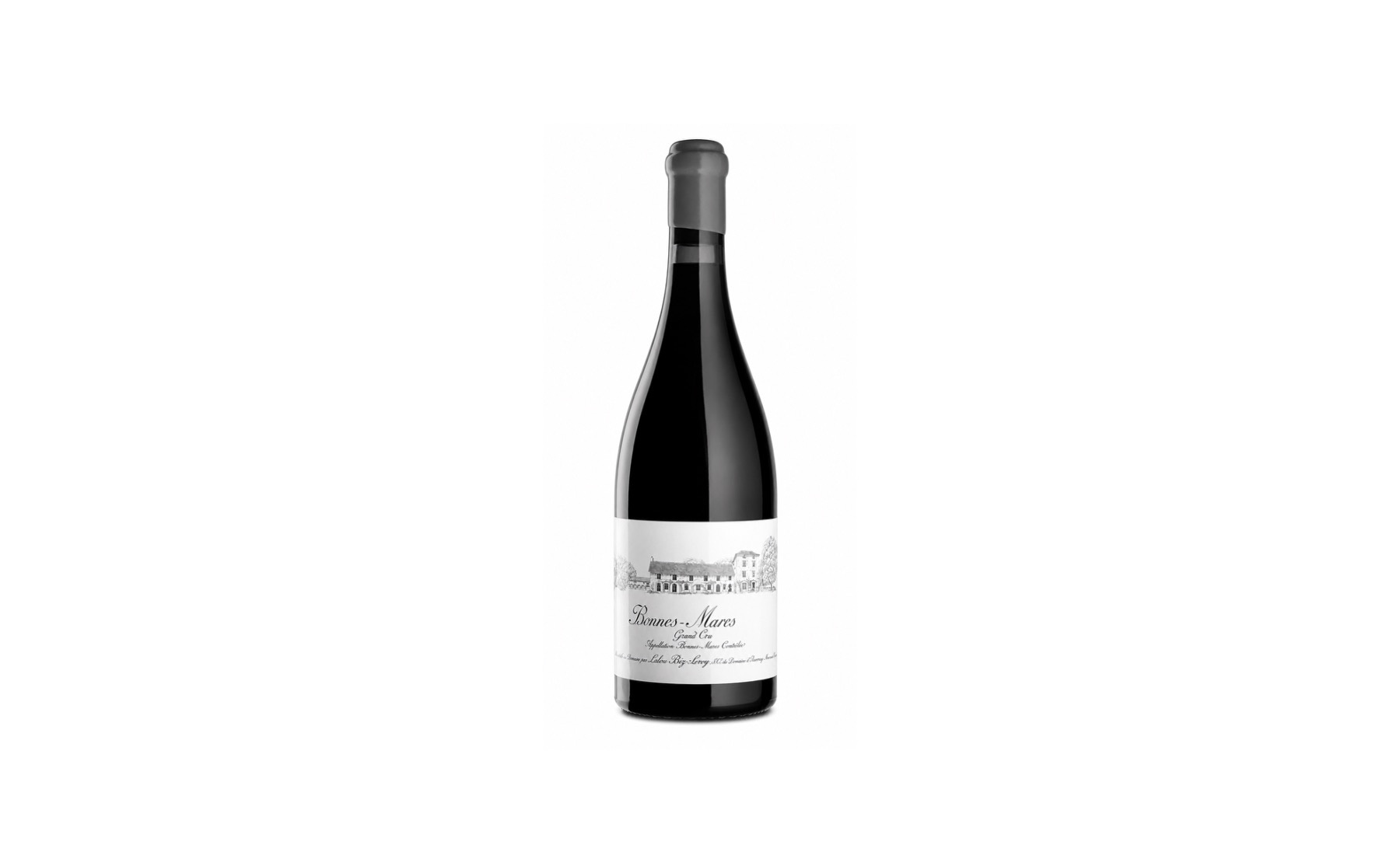
Domaine d’Auvenay Bonnes-Mares Grand Cru sits in a very unusual category: not a mass-traded blue-chip in the Bordeaux sense, and not even a broad-market Burgundy benchmark in the way of DRC, Rousseau, or Roumier, yet unquestionably one of the most prestigious and coveted Pinot Noirs in the global fine-wine hierarchy. The reasons are plain and documented: the wine comes from Lalou Bize-Leroy’s personal domaine, from a tiny Bonnes-Mares holding of about 0.25 hectares according to current specialist merchant materials, and from a climat whose official profile already promises grand cru scale, structure, and decades of longevity. Public auction and merchant data show that the wine trades in very small quantities at very high prices, while critic coverage—though sporadic, because production and access are so limited—has been consistently strong whenever the wine is reviewed.
For collectors, the most accurate classification is a combination of collector trophy, serious cellar wine, and selective investment asset. The trophy status is obvious from the scarcity and price level. The cellar value derives from Bonnes-Mares’ official aging profile and from critic evidence showing that mature bottles remain youthful and complex after two decades or more. The investment case is real, but narrower than for more liquid benchmark wines: auctions in Hong Kong, London, and the U.S. confirm global demand, yet public listings remain thin and vintage-by-vintage price discovery can be irregular. In other words, this is a high-prestige, high-friction asset—more akin to a private-market luxury collectible than to a deeply traded exchange-style fine wine. That distinction matters for serious buyers.
A practical limitation should be stated upfront. No vintage year was specified in your prompt, and d’Auvenay’s public technical footprint is deliberately sparse. This profile therefore evaluates the cuvée across benchmark vintages and current market evidence, rather than pretending there is a single “definitive” vintage reading for the wine as a whole. Where estate-specific technical data cannot be verified from public primary material, that absence is stated plainly.
Estate identity and terroir foundations
Estate background and leadership
The broader Leroy story is verifiable. Maison Leroy was founded in 1868 by François Leroy, and Lalou Bize-Leroy entered the family wine business in 1955. Wine Spectator reported in 2015 that she had been committed to biodynamic principles since founding her estate operations in 1988, and the official Domaine Leroy site states that she still oversees operations, assisted by long-time adviser Frédéric Roemer, who joined in 1994. Wine Spectator also reported that Lalou personally owned Domaine d’Auvenay, based above Saint-Romain, and that the vineyards under the d’Auvenay label encompassed 12.35 acres at the time of publication. More recent specialist sources place the domaine at roughly 3.87 hectares spread across 16 appellations, which is directionally consistent with that earlier acreage figure.
For collectors, the central leadership fact is not merely ownership but authorship. Domaine d’Auvenay is inseparable from Lalou Bize-Leroy’s personal philosophy: extreme attention to vineyard life, very low yields, high canopy management, whole-cluster fermentation, and élevage in new oak with no fining or filtration were all described in Wine Spectator’s 2015 profile as core estate practice across Leroy and d’Auvenay. The official Domaine Leroy site’s current language still presents Bize-Leroy as the active supervisory force, which matters commercially because the market price of d’Auvenay is bound not just to terroir, but to the living halo of Lalou herself. That is one reason the wine trades at a rarity premium beyond many Bonnes-Mares peers.
The Bonnes-Mares site and the d’Auvenay holding
Bonnes-Mares is an official Grand Cru AOC created on 8 December 1936. The appellation covers 14.99 hectares in Chambolle-Musigny and Morey-Saint-Denis, is planted exclusively to Pinot Noir, and has an easterly exposition at roughly 250 to 280 meters altitude. The BIVB describes the subsoil as limestone pavement and white marl underlying clay-flint soils on a gently sloping site; it also characterizes the wines as rich, fleshy, structured, and capable of 30 to 50 years of aging, with aromas that can evoke violet, humus, and underbrush. These are foundational facts for understanding the wine’s prestige and longevity.
Publicly accessible official estate material does not appear to publish a detailed parcel map for d’Auvenay’s Bonnes-Mares holding. However, multiple current specialist merchant sources converge on a holding of around 0.25 hectares, making d’Auvenay one of the smallest owners in the climat. Those same sources place the parcels on the southern end of Bonnes-Mares and describe a mix of red and white marl soils. Because I have not located a primary estate or INAO cadastral document online confirming the exact parcel history, that precise parcel narrative should be treated as well-supported trade information rather than as a formally documented estate disclosure. The scarcity implication, however, is amply corroborated by auction-house production figures.
Technical composition and production
The grape composition is straightforward: Bonnes-Mares is a red Grand Cru appellation for Pinot Noir, and d’Auvenay’s bottling is presented as Pinot Noir across merchant and auction sources. Alcohol levels in publicly visible market pages vary by vintage but commonly fall around 13.0% to 13.5%, with 1996, 2005, and 2008 shown at 13.0%, and 2009, 2013, and 2014 shown at 13.5% on current retail or market pages. No publicly accessible estate technical sheets surfaced in this research giving pH, total acidity, residual sugar, or sulfur data for the wine; those figures should therefore be treated as unavailable rather than guessed at.
Production is microscopic but not static. Auction-house catalogues provide the best verifiable vintage-specific evidence. Sotheby’s listed 1,186 bottles produced for the 2011; Christie’s listed 1,191 bottles for the 2014; Christie’s listed 1,134 bottles for the 2001; Sotheby’s listed 895 bottles for the 2005; and Christie’s listed only 589 bottles for the 2008. These are unusually informative numbers for Burgundy and make one point unmistakable: annual supply is tiny and materially variable. That variability is itself part of the wine’s collectibility, because it compresses already narrow market float.
Viticulture, vinification, and house style
Farming and vineyard work
Wine Spectator’s 2015 report remains the most concrete public source for d’Auvenay’s farming philosophy. It documents that Bize-Leroy decided in 1988 to eliminate chemical fertilizers, pesticides, and fungicides, beginning biodynamic farming that same year. The article also reports that she later stopped hedging the vines in 1999 because she believed it stressed the plant and affected pollination. The same source notes that the vines are trained higher than in conventional pruning and that shoot tips are curled around the top wire, making Leroy parcels visually distinctive in the landscape. For collectors, the relevance is not ideological romance but confidence in a long-established, estate-defining viticultural doctrine.
Wine Spectator also records Bize-Leroy’s explicit advocacy of very low yields, with comments indicating that she considered the legal limit of 35 hectoliters per hectare excessive and preferred something closer to 20 to 25 hl/ha. Separate merchant material on the d’Auvenay estate adds that dead vines are replaced through massal selection and that tressage rather than conventional hedging is used in canopy management. Because the latter details come from a specialist merchant rather than official estate documentation, they are best treated as trade-reported practice rather than primary-source disclosure; still, they are fully consistent with the farming profile described by Wine Spectator.
Cellar practice and stylistic consequences
On winemaking, Wine Spectator again provides rare specificity. It reported that grapes are harvested carefully, transported cool, sorted and weighed, then fermented in open-top vats whole, without destemming or crushing. Fermentations begin slowly at low temperatures; once fermentation is underway, the cap is punched down or juice is pumped over. After alcoholic fermentation, the wines go into 100% new oak barrels. Élevage is described as classic, with racking after malolactic fermentation, bottling after 14 to 18 months, and no fining or filtration. The article says this regimen applies at d’Auvenay as well as Domaine Leroy.
Analytically, these choices help explain why d’Auvenay Bonnes-Mares is so singular in the market. Bonnes-Mares as an appellation is often associated with power, flesh, and at times a slightly savage edge. Yet William Kelley’s review of the 2015, as reproduced by Farr Vintners, emphasized a “tensile and chalky” structure and concluded that this rendition was “emphatically Chambolle in personality,” despite the grandeur of the site. David Schildknecht’s account of the 2008 stressed both density and levity, noting smoky, floral, peppery complexity allied to almost electric vivacity. The critical through-line is therefore not brute force, but concentrated energy: a wine with grand cru amplitude, but also lift, mineral traction, and unusually fine structural articulation.
Vintage profile, tasting shape, and aging curve
Benchmark vintages and the shape of the years
Because no single vintage was specified, the sensible collector’s approach is to read d’Auvenay Bonnes-Mares through benchmark years that are both critically visible and commercially evidenced. Burgundy’s 2005 red vintage is described by Jancis Robinson as “quite exceptionally good,” while Decanter called the reds rich, full, smoothly textural, yet still fresh and elegant. At d’Auvenay, Allen Meadows scored the 2005 Bonnes-Mares 95 points. This makes 2005 a logical trophy vintage: classically great year, strong critic endorsement, and top-end asking prices in today’s retail market.
The 2008 is a different proposition and one of the most interesting for serious collectors. Jancis Robinson’s broader Burgundy description of 2008 emphasizes freshness and elevated acidity; at d’Auvenay, David Schildknecht reported average Pinot Noir yields of just 13 hl/ha, almost absurdly low even by Lalou’s standards, and awarded the wine 97 points. For collectors who prize structure, vinosity, and long cellar life over immediate opulence, 2008 looks especially compelling—and iDealwine’s publicly visible pricing history suggests that the market has rewarded that profile over time.
The 2009 Burgundy reds were widely admired for healthy fruit and seductive texture, but Jancis Robinson’s vintage overview also noted that some observers saw them as amiable and seductive rather than the last word in complexity. Antonio Galloni’s 94-point review of d’Auvenay’s 2009 fits that picture: he called the wine sleek, pliant, and already somewhat approachable, while still requiring patience. For buyers seeking a slightly earlier-opening expression of the wine, 2009 is plausible; for collectors optimizing for absolute austerity and tension, it may be a somewhat less obvious first choice than 2008 or 2015.
The 2014 and 2015 vintages show the wine’s dual nature. The BIVB and Decanter both cast 2014 as an excellent year, with balanced, elegant reds; 2015, by contrast, is presented by Jancis Robinson and Decanter as a low-yield, warm, deeply ripe vintage whose best wines invite comparison with 2005. William Kelley’s 96-point 2015 note confirms that the d’Auvenay version retained tangy acidity and chalky tension despite the warmth of the year. For collectors, 2014 is the more classical, somewhat more restrained avenue; 2015 is the bolder trophy vintage with especially strong critic-commercial alignment.
Professional tasting profile
Across the publicly visible reviews, the aromatic register is remarkably consistent and unusually refined for Bonnes-Mares. Kelley’s 2015 review describes peonies, cassis, raspberries, and citrus zest. Schildknecht’s 2008 emphasizes smoke, fresh and distilled raspberry, red currant, violet, rose, licorice, black pepper, and a faint animal savor. Decanter’s 1996 note, preserved on merchant review pages, adds plum, blackberry, mineral notes, peony, leather, and a savory roast nuance. The repeated combination is floral lift plus dark-red fruit plus a mineral-smoky undertow—more perfumed and composed than many stereotypes of the appellation would suggest.
On the palate, professional opinion points toward medium-full body rather than sheer mass; vivid acidity rather than softness; and tannins that are substantial but integrated into a long, tensile frame. Kelley called the 2015 understated yet intense. Schildknecht emphasized the paradox of levity and density in 2008. Decanter found the 1996 still youthfully dense and tannic after two decades. Taken together, these reviews support an analytical conclusion that d’Auvenay Bonnes-Mares is not merely a “rich grand cru Burgundy,” but a wine whose stature depends on its internal tension—its ability to turn concentration into line rather than breadth.
Aging potential and drinking window
Official appellation guidance from the BIVB places Bonnes-Mares in the 30-to-50-yearaging class, which is already substantial. Estate-specific critic evidence supports that framework. Decanter’s review of the 1996, written roughly 20 years after harvest, said the wine had “hardly seemed to evolve at all” and would improve for decades. Kelley’s 2015 review recommended drinking from 2030 to 2060. Schildknecht wrote in 2010 that he would want to follow the 2008 for at least the next 25 years. The wine is therefore not simply age-worthy in principle; it has been repeatedly shown to age on a very long, slow arc.
From a cellar-strategy perspective, bottle condition and format matter enormously. Auction houses repeatedly describe fill levels, seepage, scuffed capsules, importer slips, and bottle numbers. That language is not decorative. Wines that spend decades evolving under cork at this price level become acutely provenance sensitive, and the difference between pristine condition and merely acceptable condition can materially affect both drinking quality and resale value. Publicly visible auction data for d’Auvenay overwhelmingly centers on standard 75cl bottles; larger formats may exist, but I did not locate a primary or major-auction source in this research confirming a routine magnum program for this cuvée. Collectors should therefore assume bottle is the normal acquisition unit unless a major auction house documents otherwise.
Critical standing and market behavior
Critical reception
Public critic coverage is thinner than for more widely distributed grand cru Burgundy, but the visible record is strong. Bruce Sanderson scored the 2012 at 97 points in Wine Spectator’s 2015 Lalou Bize-Leroy feature. Decanter scored the 1996 at 97 points. David Schildknecht scored the 2008 at 97 points, and Fine+Rare’s page additionally attributes a 97-point score to Robert Parker’s publication stream for that wine. William Kelley gave the 2015 96 pointsin Wine Advocate in June 2018, while Allen Meadows scored the 2005 95 points in Burghound. Antonio Galloni scored the 2009 94 points in Wine Advocate in September 2011.
The pattern is revealing. The wine is not reviewed often enough to create a dense public score history, but when it is reviewed, it tends to land in the mid-90s to upper-90s. That matters commercially because scarcity alone can produce high prices, but scarcity plus consistent elite critical validation produces durable collector confidence. It also means the wine’s reputation has not depended on one single publication. Wine Spectator, Decanter, Burghound, Wine Advocate, and Vinous-linked review channels all appear in the public record.
A limitation should again be noted. Some older Jancis Robinson pages and Vinous material are visible only in part through public snippets, and several estate vintages remain effectively undocumented in open-access critical form. Collectors should not mistake this for weakness. It is a function of tiny production, limited release, and the rarity with which the wine is tasted or publicly offered. But it does mean that any buyer who wants a vintage-specific view should verify the individual bottle or lot against paid critic databases before purchase.
Market evidence and liquidity
The market case for d’Auvenay Bonnes-Mares is supported by both current pricing and auction behavior, but it is a specialist market, not a broad one. Fine+Rare’s page for the 2013cited a market average price of £6,600 per 75cl in bond, based on two listings across two merchants. Another Fine+Rare listing showed the 2014 at £6,667 in bond from a collector source. iDealwine shows a current estimate of €6,135 for the 2008, with an auction-history reference of €3,891 in 2018—an increase of roughly 58% to the current estimate. These are meaningful numbers for a single bottle of grand cru Burgundy.
Top-vintage retail asks go much higher. Millésima’s 2026 listing for the 2005 was €21,500 incl. VAT for a single 75cl bottle. Christian Wine Cellars listed the 2014 at €9,450 ex tax. A current Australian retail page listed the 2011 at AUD 16,300. These are asking prices rather than transaction-cleared averages, so they should not be treated as fair market value in a strict exchange sense; however, they do demonstrate how aggressively the market prices pristine-stock examples from elite vintages and top merchants.
Auction evidence confirms both desirability and volatility. Christie’s Hong Kong showed two bottles of 2014 realizing HKD 437,500 in 2025, or HKD 218,750 per bottle before buyer’s premium. Another Christie’s Hong Kong lot of two bottles of 2001 realized HKD 106,250, or HKD 53,125 per bottle, also in 2025. Sotheby’s listed three bottles of 2011 with an estimate of USD 15,000–20,000 and three bottles of 2014 with an estimate of £12,000–16,000. Even an older and weaker-vintage bottle such as the 1993 showed repeated U.S. auction sales from $5,336 down to $4,110 between April and May 2026 on WineBid. The conclusion is clear: this wine has auction-level demand, but pricing is highly vintage- and condition-sensitive, and the market is thin enough for realized levels to vary sharply.
Comparative context for collectors
Against Bonnes-Mares peers, d’Auvenay trades at a striking premium. Using Sotheby’s 2025 estimates, d’Auvenay’s 2014 sat at roughly £4,000 to £5,333 per bottle on estimate, while a six-bottle Sotheby’s lot of Roumier 2014 sat at roughly £1,667 to £2,167 per bottle on estimate. Fine+Rare’s Chambolle page listed Comte Georges de Vogüé 2014 at £2,875 in bond, versus £6,667 in bond for d’Auvenay 2014. This is not a small branding premium; it is a materially higher valuation tier.
What differentiates it? Not appellation rank—those peers are also grand cru Bonnes-Mares. The premium comes from a combination of minuscule scale, Lalou Bize-Leroy’s broader market halo, and the perception that d’Auvenay is not merely another top Bonnes-Mares but one of Burgundy’s ultra-luxury rarities. That places it closer, economically, to a trophy collectible like a leading DRC bottling than to an otherwise excellent but more regularly traded grand cru Burgundy. The trade-off is liquidity: compared with Roumier or de Vogüé, d’Auvenay is less frequently offered, less easily price-checked, and more dependent on elite channels. That makes it powerful as a prestige asset, but slightly less efficient as a trading vehicle.
Provenance, buying strategy, and collector verdict
Provenance, authenticity, and buying discipline
For a wine of this price and scarcity, provenance is not a secondary issue. It is central to value. Christie’s and Sotheby’s lot descriptions routinely call out bottle numbers, original wooden cases, condition of wax capsules, seepage, damaged importer slips, label quality, and fill levels. The 2001 two-bottle Christie’s lot, for example, identified bottle numbers and total production, while noting wrinkled labels and one capsule showing old seepage. Sotheby’s 2005 lot highlighted consecutive bottle numbers and original tissues. This is the right way to think about the wine: each bottle is an individual luxury object whose utility depends on its chain of custody as much as on the printed label.
The practical buying hierarchy is therefore straightforward. First choice is immaculate ex-domaine or merchant-stock wine with documented provenance. Second choice is a major auction house lot with full condition reporting and, ideally, original case material. Third choice is a well-known specialist merchant with bonded storage and a willingness to disclose source. The least desirable channel is opaque secondary trading, especially where price looks “too reasonable” against prevailing market evidence. Because the wine’s market value is so high and public production is so small, authenticity risk is logically elevated even if this research did not locate a public lawsuit or official warning specific to Bonnes-Mares d’Auvenay. That point should be treated as analytical caution, not as a claim of documented counterfeit rate.
Food pairing for fine dining
As an appellation, the BIVB recommends Bonnes-Mares with roasted game, stews, fine wine-based sauces, duck, and strong-flavored cheeses. That official guidance is entirely sensible for d’Auvenay as well. In youth or early maturity, the wine’s density, acidity, and tannin argue for structured dishes: pigeon, roast duck, venison, or veal with reduced jus. With age—particularly in vintages such as 1996, 2008, or 2015 as they move into tertiary complexity—the wine should become even more compelling with feathered game, mushroom-rich preparations, and classical sauces drawing on stock, reduction, and forest-floor aromatics. This is a gastronomic grand cru, not a casual luxury bottle.
Final collector verdict
Collector classification: Buy to cellar, Buy as a collector trophy, and Buy only with perfect provenance. For buyers with a genuine luxury-wine allocation strategy, it also qualifies as a selective hold rather than a routine trading wine. The case for purchase is strongest when the bottle combines a benchmark vintage, pristine condition, and transparent chain of custody. The case is weaker when provenance is vague, labels or wax are materially compromised, or the asking price assumes perfect condition without proving it.
The most attractive targets depend on collector intent. For long-term, prestige-driven cellaring, 2015 and 2005 stand out as headline trophy vintages; 2008 is especially attractive for collectors who value tension, structure, and the chance that the market still somewhat underappreciates classical profiles; 2014 is a high-quality, highly tradable modern vintage with strong recent auction evidence; and 1996 remains a benchmark for mature grandeur and proof of longevity. Buyers seeking relative value should look hardest at vintages where critical acclaim is high but current market heat is less frenzied than the very top trophy years.
In final hierarchy terms, Domaine d’Auvenay Bonnes-Mares Grand Cru is not merely a top Burgundy; it is a luxury micro-asset within Burgundy—a wine whose prestige exceeds its volume, whose scarcity exceeds most peers in the appellation, and whose investment relevance is real precisely because it is so difficult to source. That said, it is not the ideal bottle for every investor. Those seeking deep liquidity, easy pricing transparency, or frequent market comparables will find better instruments elsewhere. Those building a world-class French cellar, however—especially one aimed at rarity, Burgundian authorship, and long-term symbolic value—will find very few Pinot Noirs more compelling.