

Yquem’s Buried Bottles and the Memory of Sauternes
Eight nineteenth-century bottles of Château d’Yquem, hidden for decades beneath a Czech chapel, reveal the endurance of Sauternes
There are wines that age, and there are wines that seem to pass through history with a strange immunity to time. Château d’Yquem belongs to the second category. Its greatest bottles do not merely survive decades; they gather meaning from them. They become witnesses, not only to a vintage, but to the hands that harvested, the cellars that guarded, the families that owned, the wars that displaced, and the institutions that forgot.
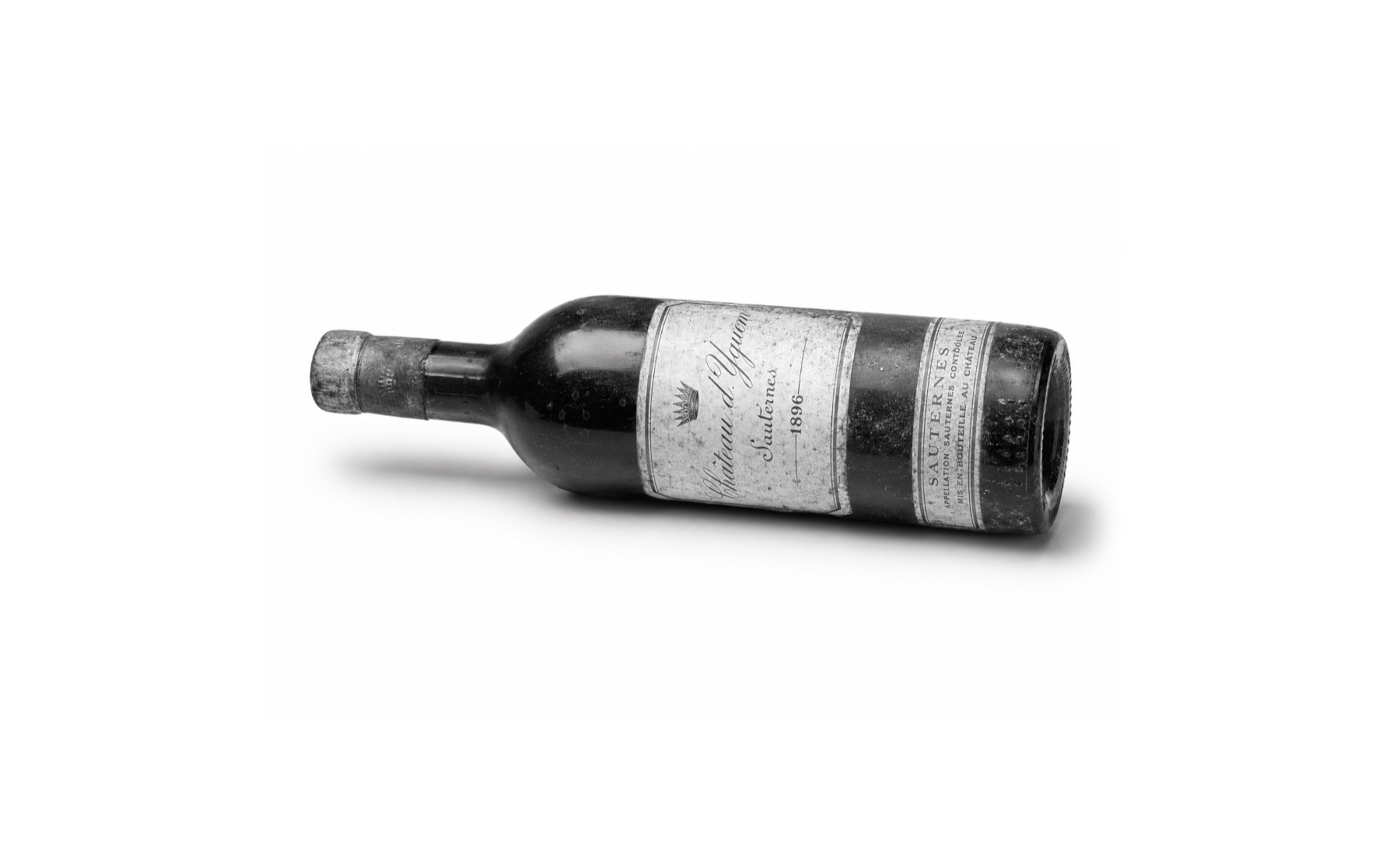
The recent reconditioning of eight old bottles of Château d’Yquem, discovered in the Czech Republic beneath the floor of a chapel at the medieval site of Becov, is more than an anecdote for collectors. It is a rare convergence of wine history, European political upheaval, technical conservation, and the singular biology of Sauternes. Some of the bottles are believed to date from the late nineteenth century, including the 1892 and 1896 vintages. Their journey back to Yquem for assessment, topping-up, and recorking places them within a broader story: the extraordinary capacity of botrytised sweet wine to endure, and the responsibility involved in preserving it.
For connoisseurs of French wine, this episode is not simply about rarity. It asks a deeper question. What, exactly, is being preserved when an ancient bottle is restored? The liquid itself, certainly. But also provenance, memory, craftsmanship, and the fragile continuity between a vineyard and its past.
The Becov Discovery: Wine Beneath a Chapel Floor
The bottles formed part of a larger cache of around 130 wines found at Becov, in western Czechia. The site had once belonged to the Beaufort-Spontin family, an aristocratic, German-speaking house with transnational European roots. After the Second World War, the property was confiscated by Czechoslovakia. Its contents, like so many aristocratic possessions in post-war Central Europe, entered a long period of displacement, bureaucratic custody, and partial oblivion.
The wine collection was hidden beneath the floor of a chapel. It was identified in 1985 by the communist secret police, but another treasure at the same site, a valuable medieval reliquary, drew most of the attention. The bottles remained in place for decades longer, effectively suspended between discovery and recognition. Only during a later inventory, roughly a decade ago, did the wine collection receive the focused attention it deserved.
This layered history matters. Old wine is never only agricultural. Its survival often depends on accident, secrecy, neglect, and chance. In the case of the Becov Yquem bottles, the conditions of concealment protected them from the ordinary destiny of great wine: consumption, trade, speculation, or dispersal. Their survival was not the result of a carefully documented cellar programme, but of historical interruption.
That interruption now gives the bottles an unusual status. They are both cultural artefacts and living wines, objects of heritage and vessels of taste.
What Reconditioning Means for Historic Bottles
The return of these bottles to Château d’Yquem was not a symbolic gesture alone. Reconditioning is a delicate technical intervention, especially when the bottles are more than a century old. Over time, even well-stored bottles experience gradual evaporation. Ullage increases; corks weaken; oxygen risk rises. A bottle can remain precious, yet become vulnerable.
At Yquem, the process involves careful evaluation before intervention. The estate assesses the condition of the wine, the integrity of the glass, and the likely authenticity and date of the bottle. Only when the examination is favourable can reconditioning proceed. In practical terms, this may include topping up the bottle to compensate for natural evaporation and replacing the cork to secure future preservation.
For fine-wine collectors, the word reconditioning can raise questions. Does such an intervention alter the purity of the object? Does it preserve the wine, or does it disturb its historical integrity? In the case of very old bottles, the answer lies in balance. A fragile cork and low fill level may leave a bottle exposed to irreversible deterioration. Judicious reconditioning, carried out by the original estate, can extend the life of the wine while preserving its identity.
With Yquem, the estate’s role is especially important. Few domaines command such historical continuity, technical knowledge, and intimate familiarity with their own ancient bottles. Reconditioning here is not cosmetic. It is custodial.
Why Sauternes Can Endure for Centuries
The survival of old Château d’Yquem is not a romantic mystery. It is grounded in the chemistry and biology of Sauternes.
Sauternes is produced from grapes affected by Botrytis cinerea under specific climatic conditions. When the fungus develops beneficially, it becomes noble rot. It pierces the grape skins, encourages water evaporation, concentrates sugars and acids, and transforms aroma precursors. The result is not merely sweetness, but density, texture, and aromatic complexity.
Sugar plays an obvious role in longevity. It contributes to stability and balance, particularly when matched by sufficient acidity and extract. But sugar alone does not explain the astonishing endurance of the greatest Sauternes. Botrytis also alters the chemical architecture of the wine. Some unstable molecules are effectively transformed before vinification, reducing their later susceptibility to oxidation. This pre-oxidative effect helps explain why old Sauternes can remain coherent long after many dry white wines would have collapsed.
Yquem sits at the summit of this tradition because of selection. The estate’s harvest is famously exacting, requiring multiple passes through the vineyard to pick only grapes at the desired stage of botrytisation. In some years, little or no wine may be made under the grand vin label. This discipline gives Yquem its paradoxical character: sumptuous but controlled, opulent yet precise, capable of evolving into something less like fruit than atmosphere.
A young Yquem may speak of apricot, citrus peel, saffron, honey, and flowers. With great age, the register darkens. The finest old bottles can move toward roasted coffee, bitter chocolate, resin, spice, antique wood, incense, dried fruit, and exotic balsamic notes. The wine does not simply become sweeter or heavier. It becomes more architectural.
The Nineteenth-Century Vintages: 1892 and 1896
Bottles from 1892 and 1896 carry particular fascination because they belong to a formative period in modern wine history. The late nineteenth century was marked by phylloxera, replanting, changing viticultural practices, and the gradual consolidation of estate reputations in international markets. A surviving bottle of Yquem from this era is therefore not only a sensory object. It is a fragment of Bordeaux before the twentieth century redrew Europe’s political, social, and commercial maps.
To taste such a wine, when condition allows, is not to taste the past in a simple or literal sense. Time has changed the wine beyond any resemblance to its youth. Yet the structure that remains can reveal the original architecture of the vintage and the vineyard. Acidity, concentration, botrytis character, sweetness, and oxidative evolution all speak in altered but intelligible forms.
This is one reason old Sauternes occupies a unique place in the fine-wine imagination. Great red Bordeaux can become ethereal with age, but it often depends on tannin, bottle condition, and cellar history in ways that make extreme longevity precarious. Dry white Burgundy may achieve profound complexity, yet its old age can be fragile. Sauternes, when made at the highest level, possesses a different temporal logic. It is built not to resist time unchanged, but to metabolise it.
Wine as Cultural Heritage
The decision to return the reconditioned bottles to Becov, where they are expected to be displayed publicly, is significant. It frames them as heritage rather than merchandise. Although the wider collection has been given a substantial estimated value, no auction sale has been announced. That restraint matters.
Fine wine increasingly exists between two worlds. On one side, it is a luxury asset, tracked, priced, traded, and stored in professional reserves. On the other, it remains an agricultural and cultural creation, inseparable from place, season, labour, and memory. The Becov Yquem bottles remind us that the second world must not be entirely absorbed by the first.
Their value is not reducible to scarcity or market price. These bottles survived war, confiscation, concealment, political regime change, administrative neglect, rediscovery, and scientific scrutiny. Their significance lies in the chain of custody, however interrupted, that connects a Sauternes harvest in the 1890s to a Czech chapel floor and back to the estate that made them.
To display them at Becov is to acknowledge that wine belongs not only to cellars and collectors, but to European history. The story crosses borders: Bordeaux, Bohemia, aristocratic Europe, communist Czechoslovakia, modern Czech heritage institutions, and the present-day fine-wine world.
Château d’Yquem Beyond Luxury
Yquem is often discussed in the language of grandeur: the greatest sweet wine, the most famous Sauternes, the legendary estate. Such formulations are understandable, but they can obscure the more interesting truth. Yquem’s greatness is not simply a matter of prestige. It is the result of a demanding relationship between climate, fungus, human judgement, and time.
The Becov bottles sharpen that truth. They show that Yquem is not merely a collectible name. It is a wine with enough internal stability to remain meaningful after more than a century, provided the bottle has not been fatally compromised. Its endurance is not accidental. It is the consequence of Sauternes itself: noble rot, concentration, acidity, selection, and patient élevage.
At the same time, these bottles reveal the limits of control. No estate, however meticulous, can fully govern the afterlife of its wines. Bottles travel. They are inherited, hidden, forgotten, confiscated, rediscovered. They pass through hands and regimes. Their meanings change. A wine made to be drunk becomes evidence. A bottle stored for pleasure becomes an archival object. A cork becomes a vulnerability. A fill level becomes a historical clue.
This is why the reconditioning of the Becov Yquem bottles feels quietly profound. It is not an act of revival in the theatrical sense. It is an act of continuity. The estate receives back a fragment of its own past, examines it, stabilises it, and sends it onward.
The Future of the Becov Collection
The remaining bottles in the Becov collection may undergo further analysis, and possibly reconditioning where appropriate. That work will require patience. Each bottle must be treated not as a generic old wine, but as an individual object with its own risks, provenance, and condition.
For scholars of wine, such collections offer valuable insight into historical trade patterns, aristocratic consumption, bottle formats, glassmaking, cork survival, and cellar conditions. For oenologists, they offer rare opportunities to understand the evolution of aged wines under unusual circumstances. For collectors, they are reminders that provenance is never a decorative detail. It is the spine of value.
Yet the greatest lesson may be simpler. Wine survives when it is protected, but also when it is respected. The Becov bottles were hidden by history. Their preservation now depends on expertise.
Liquid Memory, Preserved with Care
The story of the eight Château d’Yquem bottles found beneath a Czech chapel is compelling because it resists easy categorisation. It is not merely a treasure story, nor a collector’s curiosity, nor a technical note about old corks and ullage. It is a meditation on what great wine can carry.
Sauternes has always occupied a distinctive place in French wine culture. It is a wine of patience, risk, and transformation. Its nobility depends on a fungus that must arrive under the right conditions and be read with precision by those who harvest. Its greatest examples can outlive the people who made them, bought them, hid them, and forgot them.
These Yquem bottles have returned from a long silence. They will not return as they were. No old wine ever does. But through careful reconditioning, they may continue to exist as rare witnesses to a vineyard, a vintage, a vanished aristocratic cellar, and a European century marked by rupture.
In an age when fine wine is often measured by scores, release prices, and secondary-market movement, the Becov Yquem bottles offer another measure of greatness: the ability of a wine to remain culturally alive long after its original world has disappeared.