
Yquem 1811: The Comet Vintage Returns to Auction
Yquem 1811 returns to auction, carrying the myth, rarity and historical weight of Bordeaux’s Comet Vintage
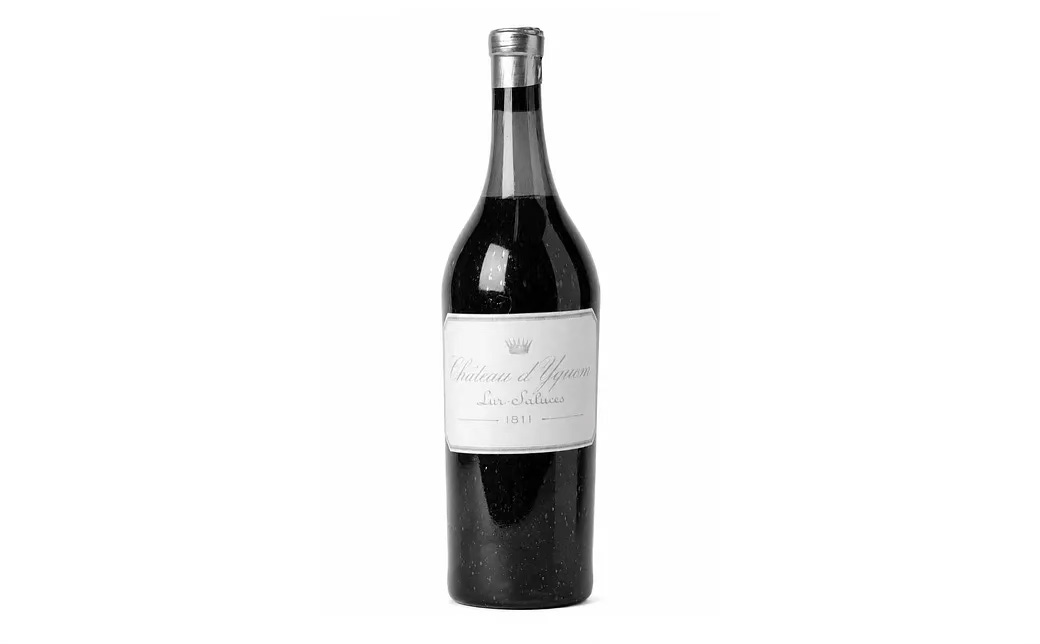
There are wines whose value lies in excellence, and there are wines whose value has passed into the realm of historical memory. Château d’Yquem 1811 belongs to the second category. It is not merely an old bottle of Sauternes. It is a surviving witness to a year that has acquired almost mythic status in the annals of fine wine: the so-called Comet Vintage, shaped by exceptional weather, imperial history, and the long afterlife of one of Bordeaux’s most revered estates.
On 31 May, a bottle of Château d’Yquem 1811 will be offered at auction in the Hérault as part of a sale titled Les Phares, devoted to selected works and objects of distinction. Among sculptures, paintings, and other rare pieces, the Yquem occupies a category of its own. Its appeal is not decorative, but temporal. It compresses more than two hundred years into a single hand-blown glass vessel.
The estimate, between €60,000 and €80,000, reflects far more than the prestige of the château. The 1811 vintage is among the rarest authenticated Yquems still in private hands. Only around ten bottles of this year are believed to remain verified, a number that places the wine beyond normal collector logic. At this level, provenance, condition, and historical resonance become inseparable.
A Bottle Preserved Across Two Centuries
The bottle is described as being in relatively sound condition, especially given its age. The label and cork are reportedly close to immaculate, and the original mouth-blown glass remains intact. For collectors of ancient wine, such details matter profoundly. They help establish authenticity, but they also preserve the material identity of the object itself.
A bottle of this age is not simply a container for wine. It is an artefact of early nineteenth-century viticulture, glassmaking, commerce, and taste. The slight irregularities of hand-blown glass, the survival of the label, the integrity of the cork: each element contributes to the credibility and fascination of the lot.
For Château d’Yquem, that fascination is especially potent. Long regarded as the supreme estate of Sauternes, Yquem occupies a singular position in Bordeaux. Its wines have historically combined concentration, sweetness, acidity, and longevity in ways that few other white wines can rival. The estate’s greatest vintages are not merely durable; they evolve into something that can remain intellectually and sensorially compelling across generations.
Why 1811 Became a Legend
The year 1811 has long been described as one of the great modern vintages. Its reputation rests on three intertwined elements.
The first is climatic. The growing season was exceptional, producing wines of unusual depth and balance. In the case of Sauternes, where botrytis, ripeness, and acidity must converge with rare precision, such conditions could create wines of extraordinary longevity.
The second is celestial. The Great Comet of 1811 was visible for an unusually long period and became embedded in European cultural memory. Wine history, never immune to symbolism, adopted the year as the Comet Vintage. The association gave the wines of 1811 an aura that extended beyond their agricultural qualities.
The third is historical. Napoleon Bonaparte, known to have admired Yquem, was on the threshold of the Russian campaign. A significant share of the vintage was exported to Russia, further entwining the wine with the political and aristocratic networks of the age. In retrospect, the vintage seems to stand at the edge of an empire’s turning point.
For a connoisseur, this is precisely where the fascination deepens. The bottle is not valuable because it is old alone. It is valuable because its age intersects with a specific moment when climate, astronomy, diplomacy, and luxury all left traces in the same wine.
The Lur Saluces Era and the Memory of Yquem
The 1811 Yquem was produced under the long historical continuity of the Lur Saluces family, who owned the château until 1996. Their stewardship forms an essential part of Yquem’s identity. Over generations, the estate’s reputation was built not on volume, but on selection, patience, and the willingness to release or withhold wine according to quality.
Yquem’s greatness has always depended on an unusual form of severity. In Sauternes, where noble rot can create wines of immense richness, the finest estates must work through multiple passages in the vineyard, selecting grapes at different stages of botrytised maturity. This costly and laborious approach helps explain why the best Yquem vintages have historically achieved such concentration and complexity.
An 1811 bottle, therefore, is not only a rarity of vintage. It is a fragment from the early history of one of wine’s most exacting traditions.
Can a Wine from 1811 Still Be Drinkable?
The question is inevitable, though it may not be the most important one. A wine of this age exists at the boundary between drink and relic. Yet Sauternes, and Yquem in particular, is among the few categories where such longevity remains plausible.
The high sugar content, balancing acidity, and concentration of botrytised grapes can allow great Sauternes to endure for extraordinary periods. Over time, sweetness recedes in perception, aromatics deepen, and the wine may move toward notes of dried fruit, caramel, spice, tea, citrus peel, wax, and sometimes a remarkable savoury dryness.
This particular vintage was last tasted in 1998 by Michael Broadbent, the wine critic and auctioneer whose experience with historic bottles was exceptionally deep. His impression suggested that the wine still possessed depth, length, and a dry finish. That tasting note has become part of the bottle’s modern mythology, reinforcing the possibility that the wine’s contents remain viable.
Still, for most potential buyers, consumption may be secondary. Opening such a bottle would be an act of great consequence. Keeping it intact preserves an increasingly rare piece of vinous history. Drinking it would transform the object into an experience, but only once.
The 2011 Record and the Modern Market for Historic Wine
This bottle also carries a more recent distinction. In 2011, it was acquired by Christian Vanneque, former sommelier of La Tour d’Argent, through The Antique Wine Company for €85,000. That sale established it as the most expensive bottle of white wine in the world according to Guinness World Records.
The forthcoming auction estimate of €60,000 to €80,000 is therefore notable. It sits below the previous record price, yet the market for historic fine wine is not governed by simple linear appreciation. Condition, provenance, buyer appetite, macroeconomic mood, and confidence in authenticity all matter. Ancient bottles occupy a narrower and more specialised segment than contemporary blue-chip Burgundy or first-growth Bordeaux.
Collectors today are often more cautious, but also more sophisticated. They understand that the value of a bottle like Yquem 1811 depends on documentation as much as romance. The strongest bidders will not be buying sweetness, acidity, or tertiary complexity alone. They will be buying a documented survivor of one of wine history’s most storied years.
Why This Bottle Matters
The return of Château d’Yquem 1811 to auction is a reminder of how certain wines transcend the usual categories of collecting. It is not comparable to a recent case of grand cru Burgundy, nor to a vertical of classified growth Bordeaux. It is closer to a manuscript, a painting, or a rare scientific instrument: an object whose meaning depends on survival.
Its importance lies in the convergence of rarity, provenance, and symbolic force. The Comet Vintage remains one of those phrases that can still stir the imagination of serious wine lovers, precisely because it belongs to a time when wine, nature, and history were more openly read through one another.
For Sauternes, the sale is also a quiet act of recognition. In recent decades, the category has often struggled commercially despite its greatness. Yet bottles such as this remind us that the finest sweet wines of Bordeaux have produced some of the most age-worthy and intellectually resonant wines ever made.