
Sauta Roc: Languedoc Pézenas "In Treccio"
Three varieties, three soils, 3,000 bottles: a natural Languedoc Pézenas red whose geological complexity outpaces its young reputation
Introduction
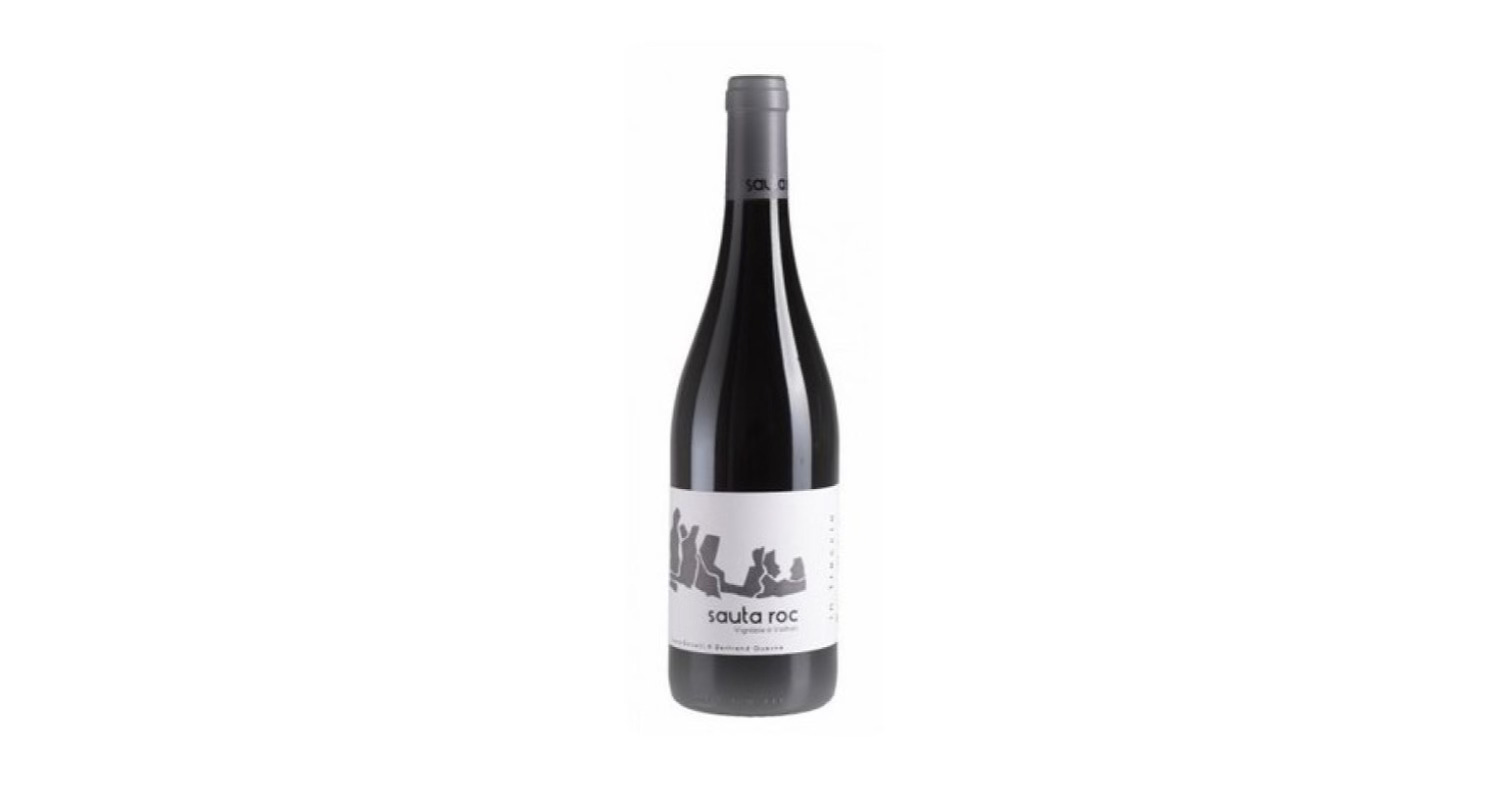
In Treccio is a red wine produced by Domaine Sauta Roc under the AOC Languedoc Pézenas appellation, from vineyards in the commune of Vailhan, Hérault, in the Languedoc region of southern France. It is a blend of Syrah, Grenache Noir, and Carignan, vinified according to natural-wine principles and aged in a combination of stainless steel and discreetly used barrels. The wine’s name—Italian for “interweaving” or “braided”—references both the entanglement of grape varieties and terroirs in the blend and the Italian background of the domaine’s founders, Laura Borrelli and Bertrand Quesne, who established Sauta Roc in 2016 after working in Tuscany.
To position In Treccio within the hierarchy of French fine wine is to confront a category problem. This is not a wine that fits the established frameworks of classification, critical prestige, or market speculation that govern the discourse around Bordeaux, Burgundy, or even the northern Rhône. It belongs instead to a different and newer current in French winemaking: the movement of small-scale, terroir-driven, minimal-intervention producers who have established themselves in the Languedoc over the past two decades, drawn by the region’s geological diversity, its affordable land, and the regulatory flexibility that allows serious winemaking without the constraints of more tightly codified appellations.
The Pézenas denomination, created in 2006 within the broader AOC Languedoc framework, represents one of the most geologically compelling terroirs in the south of France. Its soils—schist, basalt, and limestone, shaped by volcanic activity, metamorphic compression, and marine sedimentation across hundreds of millions of years—give the wines a mineral signature and structural identity that distinguishes them from the softer, more fruit-forward profiles of lower-lying Languedoc terroirs. In Treccio is produced from parcels that sit on this complex geological mosaic at approximately 180 metres of elevation, in a microclimate buffered by the Montagne Noire to the north and open to Mediterranean air currents from the southeast.
The wine does not have a cult following in the conventional sense. It is not allocated, not scored by the major international critics, not traded on secondary markets, and not collected as an investment vehicle. Its reputation exists within the specialist network of natural-wine retailers, importers, and informed consumers who constitute the primary audience for wines of this type. Within that network, In Treccio has earned recognition: a star in the 2019 edition of the Guide Hachette des Vins for the 2016 vintage, a citation in the 2020 edition for the 2017, and a steady 4.0-star average on Vivino from community reviews. These markers are modest by the standards of establishment fine wine, but they are significant for a cuvée whose entire production history spans fewer than ten vintages from a domaine that did not exist before 2016.
The critical turning points in In Treccio’s brief history are inseparable from the broader turning points of the Pézenas denomination and the Languedoc as a whole. The denomination’s creation in 2006 provided a regulatory framework that validated the quality of specific terroirs within the vast Languedoc region. The arrival of Borrelli and Quesne in 2016 represented one instance of a larger pattern: the migration of young, philosophically committed winemakers to the Languedoc, where they could acquire vineyard land at a fraction of the cost of Burgundy or the Rhône and apply the principles of natural viticulture and winemaking to soils of genuine distinction. In Treccio is, in this sense, both a specific wine and a representative case—an expression of what happens when a coherent winemaking philosophy meets a terroir of considerable geological complexity within a regulatory framework still in the early stages of establishing its identity.
This document examines In Treccio with the seriousness that its terroir, its winemaking ambition, and the informed interest of its audience deserve. It is written not to promote but to analyse: to establish what is known, to identify what remains uncertain, and to provide the serious collector and professional with the factual basis for their own assessment.
Vineyard and Terroir
Location and Parcel Composition
The grapes for In Treccio are sourced from Domaine Sauta Roc’s holdings in and around the commune of Vailhan, approximately fifteen kilometres north of the town of Pézenas in the Hérault department. The domaine’s total vineyard extends to approximately nine hectares across fourteen parcels, of which a subset is dedicated to the red varieties that enter the In Treccio blend. Vailhan lies within the northern sector of the Pézenas denomination—a triangular zone in the heart of the Hérault, bordered to the east by the Hérault river and sheltered to the north by the Montagne Noire massif.
The fourteen-parcel structure is significant. Rather than drawing from a single, continuous vineyard block, In Treccio is assembled from grapes grown across multiple micro-sites, each with its own soil profile, aspect, and vine material. This fragmentation—common among small Languedoc domaines, where vineyard holdings are often acquired parcel by parcel over time—provides the winemakers with a palette of terroir expressions that can be blended for complexity, but also introduces variability: the performance of each parcel is sensitive to its specific characteristics in any given year.
Soil Types and Geological Context
The vineyard’s geological profile is dominated by three soil types: schist, basalt, and limestone. This tri-partite mosaic is one of the defining features of the Vailhan terroir and, more broadly, of the Pézenas denomination’s northern sector.
The schist formations are metamorphic rocks of Palaeozoic origin—the compressed, foliated remnants of ancient marine sediments. Schist soils are characteristically lean, acidic, well-drained, and heat-retentive. In viticultural terms, they produce wines of mineral tension, aromatic precision, and structural finesse. Schist is the signature soil of some of the Languedoc’s most respected terroirs, including Saint-Chinian and Faugères, and its presence at Vailhan connects Sauta Roc to this broader geological tradition.
The basalt is volcanic in origin, deposited during the Strombolian eruptions of the late Pliocene and early Pleistocene epochs—approximately 1.9 to 1.4 million years ago. These eruptions are part of the same volcanic complex that created the dramatic landscapes of the nearby Lac du Salagou basin, with its red Permian ruffe rocks and dark basalt columns. Basalt soils are typically deep, mineral-rich, and water-retentive relative to schist, producing wines of greater depth, colour intensity, and structural weight. The volcanic origin of these soils is a distinctive feature that sets the Vailhan terroir apart from the predominantly sedimentary geology of most Languedoc vineyards.
The limestone parcels represent a third geological epoch and a third viticultural character. Limestone soils are alkaline, free-draining, and rich in calcium carbonate, producing wines of aromatic lift, structural elegance, and often pronounced acidity. The combination of schist, basalt, and limestone within a single domaine provides a range of terroir expressions that is unusual for an estate of nine hectares and constitutes In Treccio’s principal claim to complexity: the finished wine is an interweaving not merely of grape varieties but of geologically distinct substrates.
Altitude, Exposure, and Microclimate
Vailhan sits at an average altitude of approximately 180 metres, with vineyard parcels distributed across the gently undulating terrain surrounding the village. This elevation is modest in absolute terms but significant relative to the lower-lying Pézenas plain (approximately 20 metres), providing measurably cooler nighttime temperatures and a diurnal range that promotes the retention of acidity in the grapes—a critical factor in a Mediterranean climate where over-ripeness and excessive alcohol are persistent risks.
The Pézenas zone experiences a Mediterranean climate classified as Csa under the Köppen system: warm, dry summers and mild, wet winters. Mean annual temperature is approximately 14.5°C, with July–August peaks averaging 28°C and February lows around 12°C. Annual precipitation averages 904 millimetres, heavily concentrated in autumn (October alone averages 147 millimetres) and virtually absent in summer (July averages just 21 millimetres). The region records an average of 316 days of sunshine per year.
The microclimate at Vailhan is moderated by its position: sheltered from cold northerly winds by the Montagne Noire, yet open to the Marin and other south-easterly breezes that bring Mediterranean moisture and moderate daytime temperatures. This positioning reduces frost risk in spring and limits extreme heat stress in summer, while the area’s stony, well-drained soils ensure that autumn rains do not waterlog the vines. These conditions are broadly favourable for the production of balanced, structured red wines from Syrah, Grenache, and Carignan—the varieties that constitute In Treccio.
Old Vines and Planting Material
The domaine’s vine material includes both established plantings inherited from prior cultivators and parcels managed under Borrelli and Quesne’s stewardship since 2016. Specific vine ages are not publicly disclosed, but the presence of old Carignan—a variety with a long history of cultivation in the Languedoc, often found in mature, low-yielding bushvines (gobelet-trained)—is consistent with a domaine that includes legacy plantings of considerable age. The AOC Pézenas regulations stipulate that vines cannot enter production until their seventh year, further restricting the contribution of young plantings to the appellation wine.
Farming Philosophy
The vineyard is farmed organically from the domaine’s inception, with no synthetic herbicides, pesticides, or fertilisers. Cover crops are used to combat erosion—a significant concern on the sloped schist and basalt soils—and to promote soil biodiversity. The farming approach is described by the domaine as oriented toward soil preservation and agroforestry principles, though the specifics of these practices are not exhaustively documented. The organic philosophy is not merely a marketing choice but a functional necessity for natural-wine production: indigenous-yeast fermentation, which is central to the domaine’s winemaking, requires a healthy vineyard microbiome that is incompatible with heavy chemical inputs.
Climatic Sensitivity
The terroir’s sensitivity to vintage variation is expressed primarily through the interaction of rainfall patterns, temperature extremes, and soil drainage. In exceptionally dry years, the schist and limestone parcels—both naturally free-draining—can impose severe hydric stress, particularly on younger or shallowly rooted vines. In wet autumns, the basalt parcels’ greater water retention can delay maturation and increase disease pressure. The blend of soil types provides a measure of natural insurance: the diversity of drainage and water-retention characteristics across fourteen parcels means that conditions that are challenging on one soil type may be favourable on another, allowing the winemaker to compensate through blending.
Grape Composition and Viticultural Choices
Varietal Blend
In Treccio is a multi-varietal blend anchored by three grapes: Syrah (approximately 50%), Grenache Noir (approximately 30–35%), and Carignan (approximately 15–20%). This composition adheres to the AOC Languedoc Pézenas regulations, which require that the primary varieties (Syrah, Grenache Noir, and Mourvèdre) constitute a minimum of 70% of the blend, with no single variety exceeding 75%, and which permit Carignan and Cinsault as supplementary varieties up to a maximum of 30%.
The choice to lead with Syrah is consistent with the terroir: Syrah thrives on the well-drained schist soils of the northern Pézenas zone, where it produces wines of aromatic complexity, structural depth, and tannic finesse. Grenache Noir contributes mid-palate generosity, warmth, and the kind of fruit density that provides counterweight to Syrah’s more angular structure. Carignan—the historic workhorse of the Languedoc, long associated with bulk production but increasingly recognised for its quality potential on old, low-yielding bushvines—adds colour, acidity, and a distinctive tannic grain that can lift and extend the finish.
The Logic of the Blend
The name In Treccio—“interweaving”—is not merely decorative. It describes the wine’s structural principle: the deliberate entanglement of three varieties with complementary characteristics, grown on three soil types with distinct geological profiles, to produce a wine whose complexity arises from the interaction of its components rather than from the dominance of any single element. Syrah provides the skeletal structure and aromatic framework; Grenache fills the mid-palate with warmth and textural roundness; Carignan adds brightness, grip, and the slightly rustic tannic character that is one of the Languedoc’s most authentic signatures.
The proportions appear to be broadly consistent across vintages, though minor adjustments presumably reflect the relative performance of each variety in a given year. In cooler or wetter vintages, the Grenache proportion may increase to provide ripeness and flesh; in hotter years, the Syrah and Carignan components may dominate, providing the acidity and tannic structure needed to prevent the wine from becoming ponderous.
Yield Control
The AOC Languedoc Pézenas imposes a maximum yield of 45 hectolitres per hectare—a moderate limit by Languedoc standards, though generous compared to the top Rhône or Burgundy appellations. The actual yields at Sauta Roc are likely well below this ceiling: the organic farming regime, the naturally low-yielding schist and basalt soils, and the vine age of the legacy plantings all contribute to natural yield restriction. Production of In Treccio has been documented at 2,000 to 3,000 bottles per vintage—an extremely small volume that implies yields in the range of 20–30 hectolitres per hectare from the relevant parcels, consistent with the low-yield, high-concentration philosophy of serious Languedoc production.
Viticultural Practices
Manual harvesting is standard at the domaine, as is typical for natural-wine producers at this scale. The grapes are picked by hand, sorted in the vineyard, and transported to the cellar in the village of Vailhan for vinification. Beyond these fundamentals, specific viticultural practices—pruning methods, canopy management, green-harvest protocols—are not extensively documented in public sources, consistent with the domaine’s characteristically understated public communications.
Vinification and Élevage
Harvest and Reception
The harvest at Sauta Roc is conducted manually, with grapes picked by hand and sorted in the vineyard. The small scale of production—between 2,000 and 3,000 bottles of In Treccio per vintage—means that the harvest for this cuvée involves a modest quantity of fruit, allowing a level of individual attention that is impractical at larger volumes. Grapes are transported to the domaine’s cellar, housed in an old building in the village of Vailhan, where vinification takes place under the direct oversight of Borrelli and Quesne.
Fermentation
Each grape variety is vinified separately, preserving the distinct character of Syrah, Grenache, and Carignan until the blending stage. Fermentation is conducted with indigenous yeasts—the naturally occurring microbial populations present on the grape skins and in the cellar environment. This is a defining choice of natural winemaking: indigenous yeasts produce fermentations that are less predictable than those driven by commercial cultures but that are believed to express greater site specificity and aromatic complexity. The trade-off is an increased risk of stuck fermentation or off-flavour development, risks that are managed through careful fruit selection and cellar hygiene rather than through chemical intervention.
No oenological products are used during fermentation. Temperature control is achieved through the thermal mass of the cellar and the vessel material rather than through active refrigeration, though the specific temperatures at which fermentation proceeds are not publicly documented. The fermentation vessels are primarily stainless steel tanks, chosen for their neutrality and ease of cleaning.
Élevage: Stainless Steel and Discreet Barrel Use
The élevage of In Treccio involves a combination of stainless steel and barrel ageing. This is a significant detail that distinguishes the wine from the domaine’s white cuvées, which are aged exclusively in stainless steel. The barrels used for In Treccio are not new oak but used vessels—barrels that have been through multiple cycles of wine and have therefore lost most of their extractable tannin and flavour compounds. The domaine describes this as a “discreet ageing” philosophy: the barrel’s role is to provide gentle micro-oxygenation and gradual tannic integration rather than to impart the toasty, vanilla, or spice notes associated with new oak.
The choice of used rather than new barrels is consistent with the domaine’s broader winemaking philosophy: transparency over intervention, terroir expression over winemaker signature. The barrel component provides a structural benefit—softening tannins, stabilising colour, and adding a subtle oxidative complexity—without compromising the wine’s essential character as a terroir-driven, variety-expressive blend. The specific barrel origins, tonneliers, and toast levels are not publicly disclosed, a further reflection of the understated approach.
The duration of élevage is not precisely documented for In Treccio, but the AOC Pézenas requirement for a minimum of one year of ageing before release provides a lower bound. Given the wine’s structural ambition and the domaine’s general practice, an ageing period of twelve to eighteen months across stainless steel and barrel is a reasonable inference.
Sulphur and Bottling
Sulphur dioxide additions are minimised, consistent with natural-wine principles. The exact levels are not publicly stated, but the domaine’s listing on the Raisin platform and its distribution through natural-wine specialist channels indicate that total sulphur levels are well below the conventional threshold and likely below the limits that natural-wine certifying bodies (where applicable) would stipulate. The wine is bottled at the domaine. Whether fining or filtration is employed is not documented; many natural-wine producers at this scale eschew both, preferring to bottle unfiltered to preserve textural density and microbial complexity. This choice, where practised, may result in sediment formation during ageing—a feature rather than a defect for the wine’s intended audience.
Vintage-by-Vintage Analysis
In Treccio’s production history begins with the 2016 vintage and extends, at the time of writing, through the early 2020s. This is a brief record—fewer than ten vintages—and the analytical depth available for each is necessarily constrained by the wine’s small production volume, limited critical coverage, and young domaine history. What follows is an assessment of each documented vintage, drawing on available Hachette Guide entries, community reviews, retailer descriptions, and the broader context of Pézenas and Languedoc vintage conditions.
2016: The Inaugural Vintage
The 2016 growing season in the Languedoc was characterised by a dry, warm summer following a relatively mild winter—conditions that promoted even ripening and concentrated fruit across the region. For a domaine in its first year of operation, the 2016 represented both an opportunity and a trial: the opportunity to establish a house style with ripe, high-quality fruit, and the trial of vinifying unfamiliar parcels with vine material of varying age and condition. Production was approximately 3,000 bottles.
The wine received a star in the 2019 edition of the Guide Hachette des Vins—an award determined by blind tasting and classified as “a very successful wine.” This is a meaningful validation for a debut vintage from an unknown domaine. The Hachette assessment indicated a wine of black-fruit character, supple palate, and soft tannins, with a recommended drinking window of 2020–2022. The star rating suggests a wine that, while not profound, demonstrated competence, balance, and a clear sense of terroir identity from the outset. As the inaugural vintage, the 2016 In Treccio is also the wine that defined the cuvée’s initial stylistic parameters: Syrah-led, medium-bodied, fruit-forward but structurally coherent, with the mineral undertone of the schist and basalt terroir audible beneath the primary fruit.
2017: Confirmation Under Pressure
The 2017 vintage across the Languedoc was more challenging than 2016, with drought conditions through much of the growing season imposing significant hydric stress on the vines. For a domaine farming organically on lean, stony soils, drought poses a particular risk: without the buffer of synthetic irrigation or chemical nutrition, the vines are entirely dependent on their root systems and the soil’s natural water reserves. Production dropped to approximately 2,000 bottles, reflecting either reduced yields, more stringent selection, or both.
The 2017 In Treccio was cited in the 2020 edition of the Guide Hachette—a step below the previous year’s star but still a positive recognition, indicating a wine deemed worthy of mention by the blind-tasting panel. The recommended drinking window of 2020–2025 suggests greater structural depth than the 2016, consistent with the concentration effects of drought-induced low yields. Community tasting descriptions reference blueberry, black cherry, and spice, with an elegant tannic structure and a long, fruit-driven finish. The 2017 confirmed that In Treccio was not a one-vintage phenomenon: the domaine had demonstrated the capacity to produce creditable wine under more demanding conditions.
2018: The Generous Year
The 2018 vintage in the Languedoc was widely regarded as one of the warmest and driest in recent memory, with excellent conditions for red-wine production across the region. Heat accumulation was well above average, and harvest took place under near-ideal conditions—dry, warm days with cool nights. For In Treccio, 2018 likely produced a wine of greater richness and aromatic intensity than the preceding vintages, with the Grenache component in particular benefiting from the warmth. The challenge in such vintages is to preserve freshness and avoid the ponderous, over-ripe character that afflicts many southern French reds in hot years. The schist and basalt terroir, with its natural drainage and heat-regulation properties, would have provided some buffer against this risk, and the stainless-steel ageing regime would have preserved acidity and aromatic definition.
Specific critical reception for the 2018 In Treccio is limited in available sources, though the wine appears in specialist retailer listings, indicating successful commercial placement. The 2018 represents the vintage in which the domaine’s vineyard management was in its third year—still early, but past the initial period of learning and adjustment.
2019: Deepening Ambition
The 2019 growing season brought another warm, relatively dry year to the Languedoc, though with somewhat more rainfall than 2018 and a more gradual build of heat through the summer. The Pézenas area benefited from well-timed late-season rain that relieved drought stress without compromising fruit quality at harvest. The 2019 In Treccio is positioned in a period when the domaine was hitting its stride—three full harvests of experience, a deepening understanding of the parcels, and the beginning of vine response to organic management.
While the 2019 In Treccio does not appear to have received a formal Hachette entry (the 2019 Codolièra, the domaine’s other Pézenas red, received a star in the 2022 edition), it is documented in retailer and community databases with positive reception. The Vivino community average of 4.0 for In Treccio across vintages suggests consistent consumer satisfaction, and the 2019 is likely among the stronger expressions given the favourable vintage conditions.
2020: The Pandemic Vintage
The 2020 vintage was shaped as much by the global pandemic as by climatic conditions. Logistical disruptions affected harvest labour, cellar operations, and distribution channels across the Languedoc. The growing season itself was warm and dry, producing concentrated fruit with good phenolic maturity. For a two-person operation like Sauta Roc, the pandemic’s impact on labour availability and market access would have been acutely felt, though the domaine’s small scale and direct-distribution model may have provided some resilience compared to larger, more commercially exposed producers.
The 2020 In Treccio represents a wine made under unusual external pressures, though the fundamental quality of the vintage conditions—warmth, dryness, concentration—was sound. The drinking window for this vintage is likely 2023–2030, though this is an inference from vintage character and general Pézenas ageing trajectories rather than a documented recommendation.
2021: Classical Restraint
The 2021 vintage across the Languedoc was cooler and wetter than the preceding trio of warm years, producing wines of more classical proportions: lower alcohol, higher acidity, firmer tannins, and a more restrained aromatic profile. For In Treccio, 2021 likely produced a wine of greater tension and freshness than the 2018 or 2019, with the Syrah component in particular showing the aromatic precision and tannic definition that the variety achieves in cooler conditions. The Carignan component, with its natural acidity and structural grip, would have been an asset in a year that favoured structure over opulence.
The 2021 is potentially one of the most interesting In Treccio vintages for collectors who value freshness and terroir transparency over warmth and fruit density. It is also the type of vintage that tests a natural winemaker’s skill: lower-sugar musts and higher acidity demand more careful fermentation management, and the absence of oenological safety nets (cultured yeasts, acidification, chaptalization) places the entire burden of quality on fruit selection and cellar judgement.
2022 and Beyond
The 2022 vintage in the Languedoc was again warm and dry, returning to the pattern of recent hot years. Sauta Roc’s 2022 In Treccio, if produced (and there is no evidence to the contrary), would reflect these conditions: ripe, concentrated fruit with the attendant challenge of preserving freshness. The 2023 vintage, still in barrel or recently released at the time of writing, adds another data point to a still-short record.
Across this brief span, In Treccio’s vintage arc is readable less as a detailed historical narrative and more as a series of calibrations: the progressive fine-tuning of a consistent set of principles—organic farming, indigenous yeasts, stainless-steel-and-barrel ageing, Syrah-Grenache-Carignan blending—in response to the year-to-year variability of a Mediterranean climate and the evolving maturity of the vine material. The record is too short to identify long-term patterns with confidence, but the early signs are of a domaine that is learning quickly and producing wines of increasing assurance.
Style, Identity, and Structural Sensory Profile
Core Stylistic Signature
In Treccio’s identity is built on a structural principle of tension rather than power. The wine is medium-bodied by Languedoc standards—neither the dense, extracted, high-alcohol style that characterises much commercial Languedoc production nor the excessively light, carbonic-maceration-driven style that defines one pole of the natural-wine movement. Its register is between these extremes: a wine of moderate weight, definite tannic structure, and a mineral-inflected finish that reflects the geological diversity of its source parcels.
The Syrah dominance gives the wine its structural backbone—a firm, fine-grained tannic framework that provides the architecture for medium-term ageing. The Grenache component contributes the mid-palate flesh and warmth that prevent the wine from feeling angular or austere. The Carignan adds a distinctive textural element: a slightly rustic, grippy tannin and a brightness of acidity that lifts the finish and extends the palate. The interplay of these three elements—Syrah’s structure, Grenache’s warmth, Carignan’s grip—is what the name “In Treccio” describes.
The absence of new oak in the ageing regime is a defining stylistic choice. Without the toasty, vanilla-laden overlay that new barrels impart, the wine’s aromatic and textural character is driven entirely by fruit, fermentation, and terroir. This produces a style that is more transparent and site-specific than oak-aged wines of comparable structure, but also one that is more exposed: there is no barrel character to mask deficiencies in fruit quality or to provide a unifying aromatic framework across vintages. The wine succeeds or fails on the quality of its raw material and the precision of its blending.
Evolution in Bottle
The wine’s short history limits what can be said about its bottle evolution with empirical certainty. The Hachette Guide’s recommended drinking window for the 2016—two to six years from release—suggests a wine intended for medium-term consumption rather than extended cellaring. The 2017’s longer window (2020–2025) indicates somewhat greater structural depth. In general, natural wines with low sulphur levels evolve more rapidly than conventionally made wines, with primary fruit receding earlier and tertiary complexity developing—or, in less favourable cases, oxidative deterioration setting in—on a compressed timeline. This characteristic is consistent with a drinking trajectory of three to eight years for most vintages, with the best vintages potentially offering rewarding drinking to ten years.
Comparative Identity
Within the Pézenas denomination, In Treccio occupies a position defined by its scale, its winemaking philosophy, and its terroir specificity. It is not directly comparable to the denomination’s larger, more commercially established producers, whose wines are often made in greater volume, with more conventional cellar techniques, and at price points that reflect broader distribution and brand recognition. It is more usefully compared to the wines of other small natural-wine producers in the immediate area—Domaine Turner Pageot in Gabian, for instance—or to the broader category of artisanal Pézenas reds.
Against the great Languedoc benchmarks—La Grange des Pères, Mas Jullien, Domaine de Montcalmès, Mas de Daumas Gassac—In Treccio is a fundamentally different proposition. Those estates produce wines of established reputation, critical consensus, and—in the case of La Grange des Pères—near-cult status. In Treccio is younger, smaller, less widely reviewed, and less expensively priced. The comparison is instructive not because the wines are equivalent but because they share a philosophical orientation: terroir-driven winemaking, organic or biodynamic farming, minimal intervention, and a conviction that the Languedoc’s best sites deserve the same seriousness of approach that is applied to more prestigious regions.
What distinguishes In Treccio within this peer group is the specificity of its terroir claim. The schist-basalt-limestone mosaic is not merely a marketing narrative; it is a verifiable geological reality that produces a wine of identifiable mineral character and structural diversity. Whether this terroir distinction translates into long-term quality consistency remains to be demonstrated across a broader range of vintages, but the early evidence is encouraging.
Aging Potential and Cellaring
Short-Term (1–3 Years)
In its youth, In Treccio is a wine of primary fruit character, with the Syrah’s dark-fruit intensity, the Grenache’s warmth, and the Carignan’s brightness all clearly articulated. The wine is approachable from release, consistent with the broader natural-wine philosophy of producing wines that offer immediate pleasure. Serving at 15–17°C and allowing thirty to sixty minutes of aeration will optimise the expression of young In Treccio.
Medium-Term (3–8 Years)
The medium-term window is likely In Treccio’s sweet spot. Over three to eight years, the primary fruit recedes, the tannins soften and integrate, and secondary complexity—earth, herb, spice, mineral—begins to emerge. The used-barrel component of the élevage contributes a subtle oxidative dimension that promotes this integration. The Hachette drinking windows for the 2016 (2020–2022) and 2017 (2020–2025) are consistent with this trajectory, suggesting that In Treccio reaches its optimal expression within approximately five to seven years of the vintage.
Long-Term (8+ Years)
Extended ageing of In Treccio beyond eight to ten years carries both potential and risk. The potential lies in the wine’s structural components: the tannic framework provided by Syrah and Carignan, the acidity preserved by the stainless-steel regime and the limestone-parcel fruit, and the concentration resulting from low yields on lean soils. These elements provide the raw material for genuine bottle development. The risk lies in the wine’s low sulphur levels and natural-winemaking provenance: wines with minimal preservative additions are inherently more vulnerable to premature oxidation, microbial instability, and the adverse effects of imperfect storage conditions. For bottles stored in ideal conditions—stable 12–14°C, 65–75% humidity, darkness, stillness—the best vintages of In Treccio may reward ageing to ten or even twelve years. For bottles stored less carefully, the window narrows considerably.
Storage Recommendations
Given the wine’s low-sulphur profile, storage conditions are more critical than for conventionally made wines. Temperature stability is paramount: fluctuations above 16°C or repeated temperature swings will accelerate oxidative degradation. Bottles should be stored on their sides to maintain cork contact, in darkness, and away from vibration. The collector should also be aware that natural wines with residual microbial activity may occasionally develop bottle variation—differences between bottles from the same case—that is a known characteristic of the category rather than a defect.
Market Value and Investment Perspective
Pricing
In Treccio is priced in the €15–€20 range at retail, depending on vintage and retailer. This positions it in the mid-range of the Languedoc natural-wine market: above the cheapest vins de soif and entry-level Pézenas reds, but well below the premium tier occupied by established domaines like Montcalmès, Mas Jullien, or La Grange des Pères. The pricing is accessible by any serious-wine standard and represents significant value relative to wines of comparable ambition from more prestigious appellations.
There is no evidence of price escalation across vintages. The 2016 and 2017 appear to have been released at similar price points, and subsequent vintages have remained within the same bracket. This stability reflects both the domaine’s lack of critical-driven demand inflation and the Languedoc’s broader position as a value-oriented region within the French fine-wine hierarchy.
Production Volume and Scarcity
With production documented at 2,000 to 3,000 bottles per vintage, In Treccio is an extremely small-production wine. This volume is comparable to the rarest Burgundy micro-cuvées and well below the output of most classified Bordeaux or top Rhône estates. However, scarcity at this level does not function in the same way as it does for established collectibles: the demand side of the equation is correspondingly small. In Treccio’s audience is limited to specialist natural-wine channels, and the wine does not generate the kind of competitive demand that transforms scarcity into price premiums.
Secondary Market
There is no meaningful secondary market for In Treccio. The wine does not appear on Liv-ex, in auction catalogues, or on the major secondary-market platforms that track fine-wine trading. This is entirely consistent with its market tier: natural wines from young Languedoc domaines do not, as a category, trade on secondary markets. They are purchased for consumption rather than for speculation or portfolio construction.
For the collector, this means that In Treccio is an acquisition-only proposition. There is no liquidity mechanism for resale, no price index to benchmark, and no auction record to reference. The wine’s value to the buyer is entirely experiential and intellectual rather than financial. This is not a limitation so much as a definitional characteristic of the market segment in which In Treccio operates.
Risk Factors
The principal risks to In Treccio’s market position are structural rather than speculative. The domaine’s dependence on two individuals creates succession risk. The Pézenas denomination’s still-developing market recognition limits the wine’s visibility and the price premium it can command. The natural-wine market, while growing, is susceptible to shifts in consumer taste and critical fashion. And the wine’s low-sulphur profile creates storage and longevity risks that are higher than for conventionally made wines. None of these risks are acute, but they are real and should inform the collector’s expectations.
Cultural and Gastronomic Significance
Cultural Context
In Treccio’s cultural significance is inseparable from the broader story of the Languedoc’s transformation—from France’s bulk-wine factory to a source of some of the country’s most compelling terroir-driven bottles. The wine belongs to a generation of cuvées that embody this transformation in their DNA: produced by young, internationally experienced winemakers on sites of genuine geological distinction, using methods that privilege terroir expression over commercial conformity. The Italian name on a French label, the Occitan terroir vocabulary (Sauta Roc, Peira Levada, Codolièra), the philosophical orientation toward transparency and non-intervention—all of these elements situate In Treccio within a cultural current that is as much about identity and values as it is about wine.
The wine does not appear on legendary restaurant wine lists or in the records of historic tastings. Its presence is in a different register: the lists of specialist natural-wine bars in Paris, Berlin, Tokyo, and New York; the inventories of independent importers who curate portfolios around philosophy rather than prestige; and the personal collections of wine professionals and enthusiasts who seek out producers at the margins of the mainstream. This is a wine of the natural-wine culture, and its significance is measured within that culture’s own terms.
Gastronomic Relevance
In Treccio’s medium body, moderate tannin, and mineral-driven structure make it a versatile table wine with a natural affinity for Mediterranean cuisine. In its youth, the wine’s fruit intensity and structural freshness pair well with grilled meats, herbed roasts, and charcuterie—the traditional fare of the Languedoc and Provence. Lamb, in particular, is a natural match: the meat’s gentle gaminess harmonises with the wine’s earthy, herbal undertones, while the Syrah’s tannic structure provides the counterpoint that lamb requires.
As the wine matures and its primary fruit recedes in favour of tertiary complexity, it becomes better suited to simpler, more delicately flavoured preparations: roast chicken, grilled vegetables, soft-aged cheeses, and the kind of rustic, ingredient-driven cooking that is the Languedoc’s great gastronomic tradition. The wine’s mineral finish and moderate alcohol (typically within the Pézenas minimum of 12.5%) make it a particularly agreeable companion to food, with the kind of palate-cleansing acidity that sustains interest across a multi-course meal.
The recommended serving temperature of 15–17°C is worth observing: In Treccio, like most Mediterranean reds of moderate body, loses its definition and freshness when served too warm. A slight chill accentuates the wine’s mineral character and structural precision, qualities that are easily overwhelmed by excessive warmth.
Conclusion
In Treccio is a wine whose significance exceeds its current reputation. Produced in quantities of 2,000 to 3,000 bottles per vintage from organically farmed parcels of schist, basalt, and limestone in the commune of Vailhan, it represents a serious attempt to translate one of the Languedoc’s most geologically complex terroirs into a wine of transparency, structural coherence, and site-specific identity. The blend of Syrah, Grenache, and Carignan—interweaving three varieties across three soil types—is not merely an assemblage of convenience but a deliberate expression of terroir diversity, executed with the consistency and philosophical clarity that characterise serious natural winemaking.
The wine’s strengths are genuine. The terroir is distinctive and geologically verifiable. The winemaking philosophy is coherent and produces wines of identifiable character: mineral-inflected, medium-bodied, structurally defined, with a transparency of fruit and terroir expression that is the hallmark of well-executed natural vinification. The Hachette Guide recognition confirms that the wine can pass the scrutiny of blind tasting by an established French wine authority. The pricing—€15–€20 at retail—is accessible and represents a quality-to-price ratio that is difficult to match in more established French appellations.
The vulnerabilities are equally real. The domaine’s entire history spans fewer than ten vintages; the vine material is still maturing under current management; the winemakers’ understanding of their parcels is still deepening. The two-person ownership structure, while enabling philosophical coherence, creates concentration risk. The low-sulphur profile limits cellaring horizons relative to conventionally made wines. The Pézenas denomination, while geologically compelling, has not yet achieved the market recognition that would amplify the wine’s visibility or justify significant price premiums. And the absence of a secondary market means that In Treccio exists purely as a consumption proposition, without the financial optionality that attaches to more established collectibles.
For the serious collector, In Treccio offers something that the prestige market rarely provides: the opportunity to engage with a wine at the beginning of its trajectory, before critical consensus has calcified and market pricing has adjusted. The geology beneath the vines is millions of years old; the domaine has existed for less than a decade; the cuvée is still finding its voice. To buy and drink In Treccio now is to participate in that process of discovery—to taste not a finished narrative but a work in progress, and to form one’s own assessment before the verdict of time and criticism is delivered.
The interweaving—of varieties, of soils, of traditions—continues. The thread is still being drawn.