
Record Early Harvest in Champagne and Bordeaux Begins on 6 August
Champagne and Bordeaux begin picking on 6 August as rapid ripening pushes France’s 2026 harvest into uncharted territory.
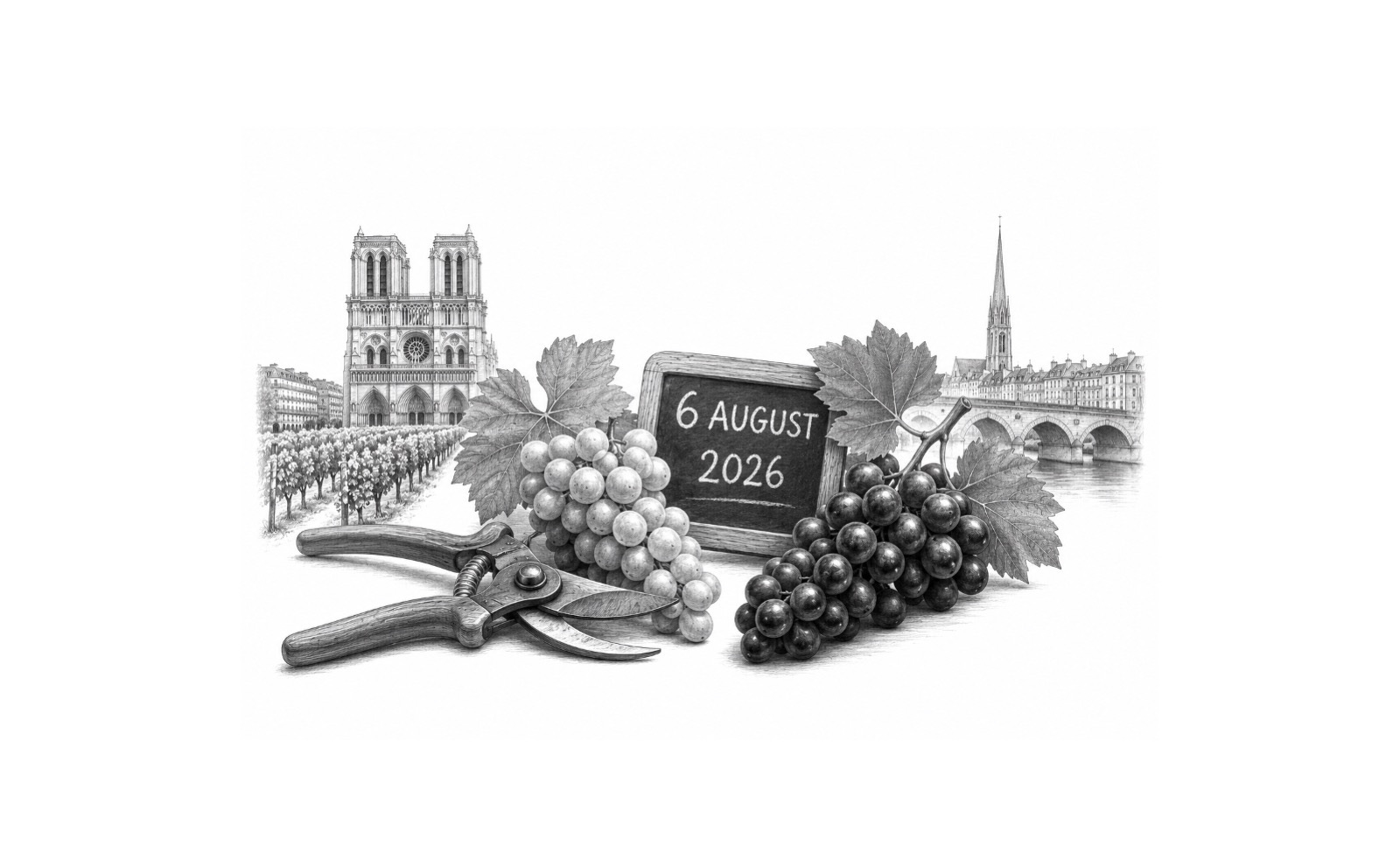
The 2026 French wine harvest has crossed another climatic threshold. On 6 August, growers in both Champagne and Bordeaux began cutting grapes at dates that would once have seemed improbable, even in the warmest corners of either region.
In Champagne, the first Chardonnay was picked in Montgueux after an exceptional acceleration in ripening. Farther south, Bordeaux cooperatives began bringing in Merlot and Sémillon intended for Crémant de Bordeaux. In both regions, the decision was driven not by the calendar but by the composition of the fruit.
Sugar levels were climbing quickly, while the acidity essential to sparkling wine was becoming increasingly precious. Waiting for conventional harvest dates risked losing the balance that producers seek for wines built around freshness, tension and moderate alcohol.
This record early harvest in Champagne and Bordeaux is therefore more than an arresting date. It illustrates how rapidly growers must now interpret their vineyards and organise their work when summer conditions compress the final stages of ripening.
Champagne begins before the official harvest dates
At Montgueux, a chalk-rich outcrop near Troyes in the Aube, winegrower Vincent Finot requested permission to begin harvesting Chardonnay on 6 August. The grapes had already passed 11% potential alcohol, making further delay difficult to justify.
The figures gathered across Champagne were equally striking. Samples taken on 3 August showed an average potential alcohol level of 8.2%, following an increase of 3.4 percentage points in only one week. By the morning of 6 August, some monitored parcels had gained approximately another degree.
According to Sébastien Debuisson, director of research, development and innovation at Champagne’s interprofessional body, the vineyards were running at least ten days ahead of 2025— itself considered a remarkably early season.
The speed of change placed Champagne’s traditional harvest framework under immediate pressure. The publication of the official opening dates was brought forward from 15 to 12 August, although even the revised timetable could not accommodate every vineyard.
Growers in especially advanced sectors, including Montgueux, the southern Sézannais and parts of the Seine valley, could instead apply to begin earlier. Such exemptions allow individual villages or estates to respond to actual grape maturity rather than wait for a region-wide starting signal.
Why the Champagne harvest could not wait
Ripeness in Champagne cannot be judged by sugar alone. Grapes destined for sparkling wine must also retain sufficient acidity and aromatic clarity. The aim is not maximum richness, but a composition that can support fermentation, blending and prolonged ageing.
Despite the rapid accumulation of sugar, analyses at the beginning of August still showed total acidity above 13 grams per litre, accompanied by healthy levels of malic acid. Those measurements suggested that the fruit had not yet lost the freshness required for balanced base wines.
The difficulty lay in predicting how long that equilibrium would last. When ripening moves quickly, the interval between grapes that are not quite ready and grapes that have gone too far can become unexpectedly narrow.
Cluster weight was still increasing slightly, although the regional average was not expected to exceed around 110 grams when picking became more widespread between 12 and 14 August. Another period of intense heat was forecast to coincide with that expansion of the harvest, adding to the urgency.
For growers, the calculation was therefore finely poised. A few additional days might bring marginally more juice, but they could also raise potential alcohol and reduce acidity. In a vintage moving at unusual speed, waiting for greater volume could compromise the shape of the wine.
Bordeaux joins the record early harvest
The same tension between ripeness and freshness was already visible in Bordeaux. On 6 August, the first Merlot and Sémillon grapes were collected for Crémant de Bordeaux in vineyards around Branne and Saint-Léger-de-Vignague, within the Entre-deux-Mers.
The fruit was arriving at approximately 9% potential alcohol, with total acidity between 7 and 8 grams per litre. For sparkling-wine production, those figures indicated that the desired balance had been reached.
Bordeaux Families, the cooperative group behind the Louis Vallon range, began the harvest a full week earlier than in 2025, when picking started on 13 August. That previous date had already been considered unusually early.
The choice of Merlot may surprise readers who associate the variety chiefly with the generous red wines of Bordeaux’s Right Bank. Yet when harvested at lower sugar levels and with ample acidity, it can contribute fruit and texture to sparkling blends. Sémillon, meanwhile, brings its own combination of body and freshness when picked before full maturity.
Crémant production depends on this earlier window. Grapes intended for still Bordeaux wines can remain on the vine to develop more sugar, flavour and phenolic maturity. Sparkling-wine fruit must be gathered before that progression carries it beyond the lighter, sharper profile required for the style.
Early maturity does not guarantee generous yields
The speed of the 2026 harvest should not be confused with abundance. In Bordeaux, the limited size of the berries indicated that volumes could remain constrained. Producers would have welcomed rainfall capable of swelling the fruit without upsetting its condition, but the hoped-for combination of high quality and generous quantity did not materialise.
Bordeaux Families nevertheless continues to see potential in Crémant de Bordeaux. Based on the vineyard area under production and the size of the crop, the group is targeting output of 3.5 million bottles in 2027 from approximately 750 hectares.
That ambition reflects the growing strategic importance of sparkling wine within Bordeaux. Crémant offers growers another destination for white and red varieties, while allowing the region to participate in demand for traditionally made French sparkling wines beyond Champagne.
Yet the 2026 season also demonstrates the precision this category requires. Commercial opportunity alone cannot determine the picking date. Once acidity begins to fall and sugar rises, the vineyard imposes its own deadline.
What the 2026 early harvest means for French wine
An early harvest is not automatically a sign of either an exceptional or a difficult vintage. The final quality of the wines will depend on the condition of the grapes, decisions in the cellar and the ability of each producer to preserve balance.
What is already clear is that the working rhythm of both Champagne and Bordeaux is changing. Harvest preparation, seasonal labour, pressing facilities and transport must all be ready sooner when ripening accelerates. A date that once marked the final weeks of monitoring can now become the beginning of active picking.
In Champagne, the system of village-specific opening dates still provides a degree of flexibility, but the events of August 2026 show why close observation at parcel level has become indispensable. Regional averages can describe a trend; they cannot determine the ideal moment for every vineyard.
Bordeaux’s Crémant producers face a similar reality. Their grapes may need to be harvested while neighbouring parcels intended for still wine remain weeks from maturity. The distinction between wine styles is increasingly expressed not only through winemaking, but through precisely timed decisions in the vineyard.
The record early harvest in Champagne and Bordeaux will inevitably become part of the wider discussion surrounding warmer growing seasons in France. For now, however, growers are dealing with its practical consequences rather than its symbolism.
The secateurs have already begun their work. In 2026, the vintage did not wait for tradition to catch up.