
Pulse: Rethinking Bordeaux for a New Generation
At Larrivet Haut-Brion, design meets wine to engage Gen Z
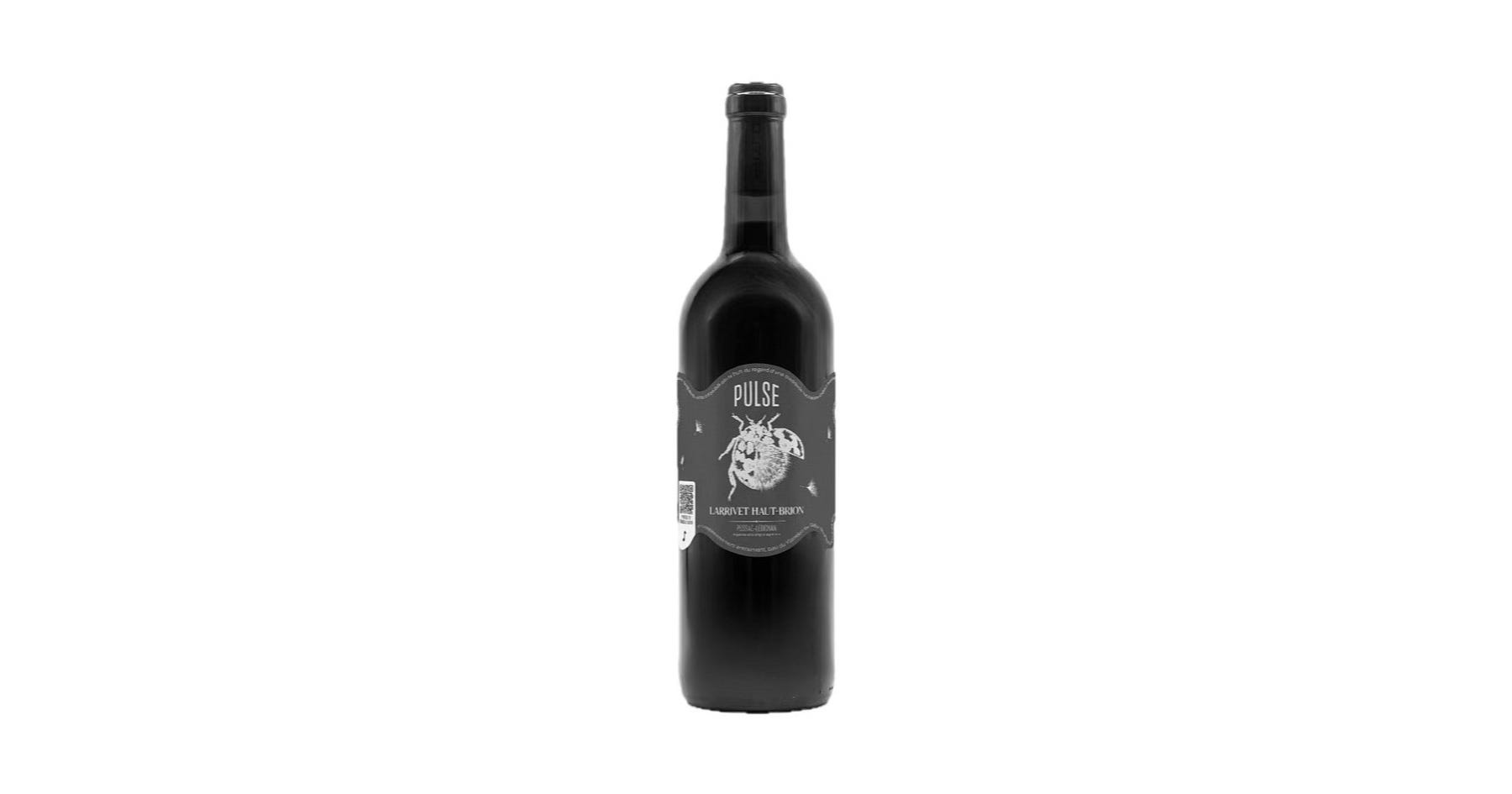
In Pessac-Léognan, a region shaped by tradition, change tends to come quietly. At Château Larrivet Haut-Brion, the focus has shifted: not on preserving ritual for its own sake, but on finding ways to keep it relevant without losing its substance.
The challenge is well understood across the fine wine world: a younger generation, less bound by inherited habits, approaches wine with curiosity but also with distance. The codes—linguistic, aesthetic, even social—can appear opaque. Rather than simplifying the product itself, Larrivet Haut-Brion has chosen to reconsider the framework through which it is encountered.
From Observation to Creation
The initiative began not in the vineyard, but in dialogue. Under the direction of Charlotte Mignon and the Gervoson family, the estate turned outward, inviting students from the Bordeaux campus of the École de Création Visuelle to engage directly with the question: how does Generation Z perceive wine today?
Over the course of an intensive workshop in autumn 2025, these young designers were immersed in the estate’s philosophy, including its forward-looking “Vignoble du Futur” project. The exercise was deliberately open-ended. Rather than focusing on oenology, participants were asked to rethink the container—not only as an object, but as an interface between wine and its contemporary audience.
From this process emerged four finalist concepts. The selected proposal, by 23-year-old Laure Dubernet, stood apart for its coherence: an approach that integrates portability, aesthetics, and social interaction without reducing the wine to a mere accessory.
Pulse: Object, Experience, Intention
The resulting cuvée, Pulse, is less a rupture than a recalibration. It does not seek to imitate the codes of youth culture, but to meet them on more fluid terms.
At its core lies a set of clearly articulated principles:
Transmission: an intuitive aesthetic, freed from technical verbosity, oriented toward shared experience
Responsibility: a lighter, recyclable glass bottle, designed to reduce environmental impact, and the deliberate absence of a capsule
Mobility: a format conceived to accompany movement, complemented by a handcrafted shoulder support in leather and macramé
Flexibility: a broader reflection on distribution, including the possibility of bulk purchasing, aligning with evolving consumption habits
This is not merely packaging innovation. It is an attempt to align the physical presence of wine with the rhythms of contemporary life—less static, more participatory.
The Wine Itself
Within the bottle, the composition remains firmly anchored in Bordeaux identity. The 2024 vintage presents a blend of 90% Merlot and 10% Cabernet Franc, vinified primarily in stainless steel with a modest use of wood. The resulting profile privileges clarity over structure: bright fruit, supple texture, and a measured alcohol level of 12.5%.
This stylistic choice is deliberate. It does not aim for simplification, but for immediacy—a wine that can be approached without preparation, yet still retains the integrity of its origin.
A Language Beyond the Glass
Pulse extends beyond the liquid. Its visual identity—marked by a red label featuring a hybrid emblem between vegetal and animal forms—suggests a symbolic continuity between nature and imagination. A QR code offers access to a curated playlist, introducing an additional sensory dimension. These elements do not redefine wine, but situate it within a broader cultural ecosystem.
For Larrivet Haut-Brion, the underlying observation is clear: the traditional pathways of transmission—family, ritual, formal education—are no longer sufficient. Wine must now find new points of entry, new occasions for encounter.
Toward a More Open Bordeaux
Pulse should not be understood as a departure from Bordeaux’s heritage, but as a proposition within it. It acknowledges that the future of fine wine may depend less on preserving established codes than on their thoughtful evolution.
In this sense, the project resonates beyond its immediate context. It suggests that the vitality of wine culture lies not only in its capacity to endure, but in its willingness to be reinterpreted—patiently, intelligently, and without losing sight of what made it worth transmitting in the first place.
Pulse is, for now, a first movement. Its significance will depend on what follows.