
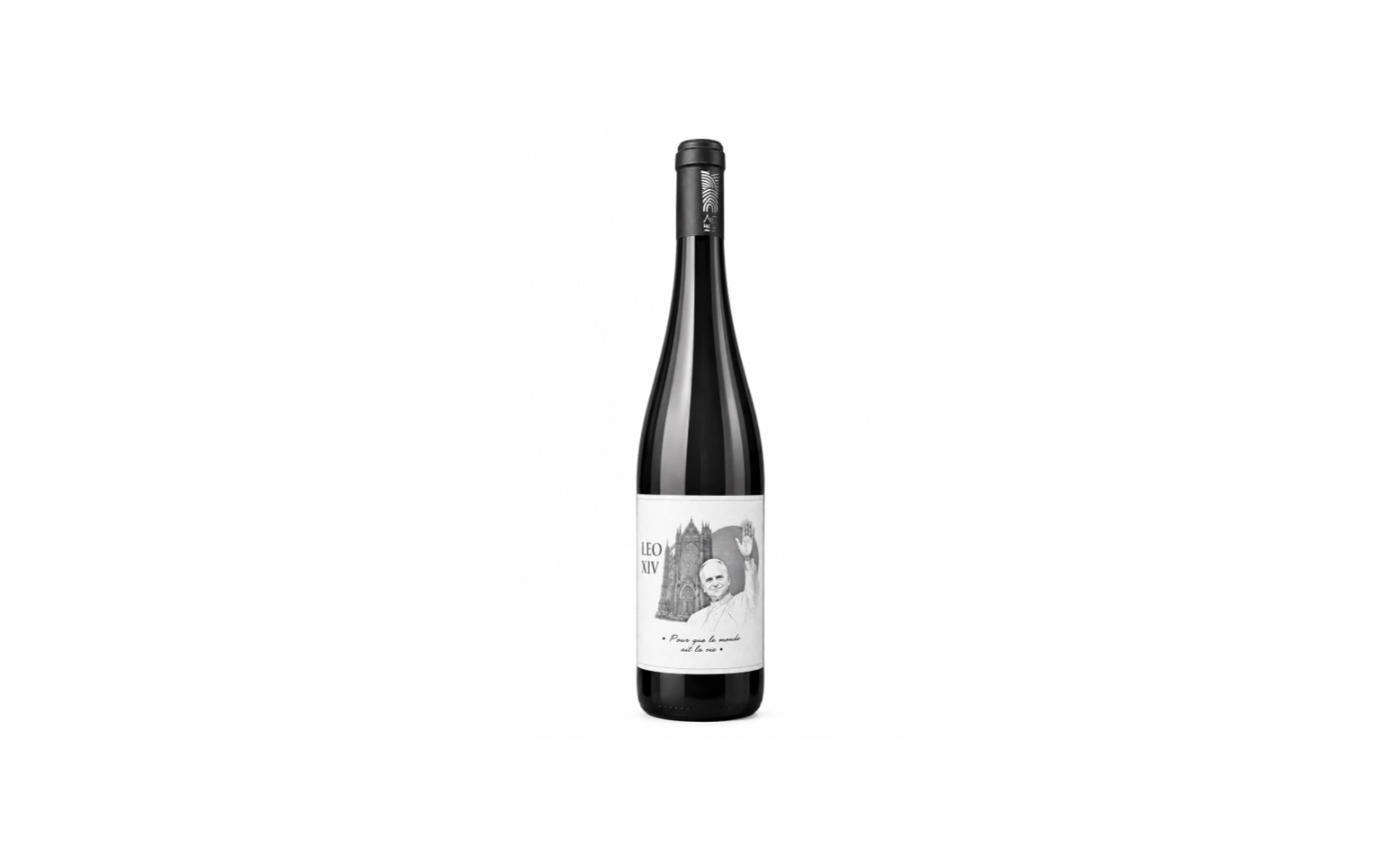
As Pope Leo XIV visits France from 25 to 28 September, the ceremonies and public appearances naturally command most of the attention. In Moselle, however, his final stop in Metz has also prompted a distinctly vinous response. Domaine de la Joyeuse has produced a small Pope Leo XIV wine based on Auxerrois, turning a major international event into an unexpected showcase for one of north-eastern France’s quieter wine regions.
Only 500 bottles were prepared. They were gone within 48 hours.
The speed of the sell-out may suggest a collector’s item first and a wine second. Yet behind the commemorative label lies a more interesting story: a family domaine in transition, a grape variety that rarely occupies centre stage, and a reminder that wine can become a remarkably intimate expression of place even when the occasion surrounding it is anything but small.
How the Pope Leo XIV wine began
The idea did not begin as a carefully planned wine release.
Arnaud Stapurewicz, who took over Domaine de la Joyeuse from his father earlier this year, was discussing ways of marking the papal visit with a local church representative. Beer initially entered the conversation, reflecting another activity the domaine has recently begun exploring.
Wine soon emerged as the more natural choice.
There was, however, very little time to create a new cuvée from scratch. The solution was already in the cellar: Auxerrois that had originally been intended for use in sparkling wine. Material from the 2022 and 2025 vintages was brought together to form the special bottling.
What began as a practical response to a tight deadline therefore became an unusual still-wine project, built around a grape that Stapurewicz was already working with rather than a wine conceived purely for its label.
The Diocese of Metz approved the project, and the bottle was subsequently offered through the church’s official sales channels connected with the visit.
Auxerrois puts Moselle in the picture
For French wine drinkers accustomed to the celebrated names of Burgundy, Bordeaux, Champagne or the Rhône, Moselle can still feel like a region waiting to be discovered. That makes the choice of Auxerrois particularly apt.
The grape remains far less familiar internationally than France’s headline white varieties. Here, though, it gives the special cuvée a genuinely local identity. Rather than dressing up a generic wine as a papal souvenir, Domaine de la Joyeuse was able to put a piece of its existing cellar and its regional viticultural character behind the project.
That distinction matters.
Commemorative bottles can easily become exercises in packaging. This one is interesting precisely because the occasion draws attention back towards the vineyard. Anyone encountering the bottle because of Pope Leo XIV also encounters the name Auxerrois and, perhaps for the first time, the wines of Moselle.
For a small French appellation, that kind of visibility is difficult to manufacture.
A Pope Leo XIV wine made during harvest
The timing added another complication. The project took shape as the domaine was immersed in harvest, hardly the quietest moment in a winegrower’s calendar.
Producing the bottle required more than selecting the wine. A dedicated label had to be designed and printed at speed, with imagery connecting the cuvée to both Pope Leo XIV and Metz Cathedral. The result was deliberately commemorative: a bottle intended to recall a particular moment in the city’s history as much as a particular wine.
The response exceeded expectations. All 500 bottles sold within two days, while requests continued to arrive after the allocation had disappeared.
The modest production inevitably contributed to the demand, but the enthusiasm also reflects the unusual intersection of faith, regional identity and wine. For buyers, the bottle is unlikely to be viewed solely through the conventional language of tasting and cellaring. It is part wine, part memento and part record of an event.
Domaine de la Joyeuse beyond the commemorative bottle
The story also arrives at a transitional moment for Domaine de la Joyeuse.
Having recently succeeded his father at the estate, Stapurewicz is looking beyond wine production alone. Like many growers working on a modest scale, he is exploring complementary activities, including craft brewing, facilities for seminars and wine tourism.
The papal cuvée therefore offers valuable exposure, but it is not intended to redefine the domaine. Its importance lies in the moment rather than in establishing a new range of personality-led wines.
Even the estate’s name is tied more closely to landscape than celebrity. La Joyeuse takes its name from a spring running through the vineyard, where a stone bearing the name has stood since the early 18th century. It is a small detail, but one that places the domaine firmly within its local geography.
That sense of place is ultimately more enduring than the image on the special label.
From papal souvenir to a glimpse of French wine beyond the famous regions
The limited cuvée was sold at €18 per bottle, with proceeds helping to meet costs associated with the papal visit. Its immediate commercial life was remarkably brief: 500 bottles and two days were enough to exhaust the release.
Its wider significance may last longer.
For serious followers of French wine, the episode is a useful reminder that some of the country’s most engaging stories unfold well beyond its famous vineyard landscapes. Moselle does not possess the global recognition of France’s major regions, and Auxerrois rarely inspires the attention given to the world’s fashionable white grapes. Yet precisely for those reasons, this small Pope Leo XIV wine offers something worth noticing.
The papal visit created the occasion. The wine points somewhere else: towards a small domaine, an overlooked grape and a corner of French viticulture with its own identity.
In the end, that may be the more interesting souvenir.