
Pessac-Léognan 2025: Precision Over Power
A restrained, finely etched vintage shaped by freshness, balance, and terroir expression across Bordeaux’s most cerebral appellation
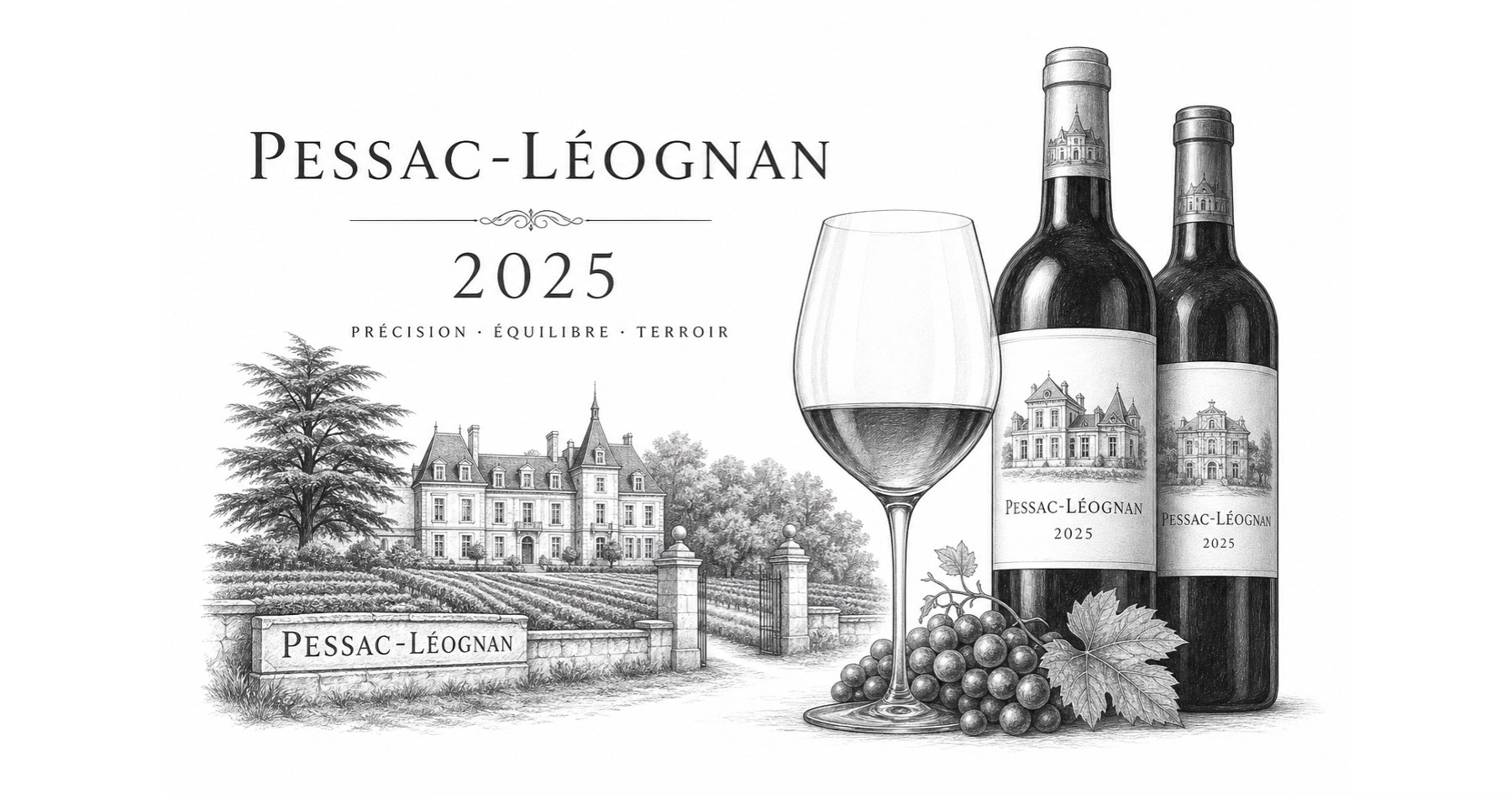
There are vintages that impress by scale, and others that endure through definition. In Pessac-Léognan, 2025 belongs decisively to the latter category. Across both reds and whites, the wines reveal a striking coherence: a shared commitment to freshness, controlled extraction, and a renewed emphasis on textural finesse rather than sheer mass.
The picture that emerges is not one of austerity, but of restraint carefully measured against ripeness. Even where merlot dominates—a relatively uncommon feature at the highest level—the wines retain lift and clarity, avoiding any suggestion of excess.
A Vintage Defined by Balance
The growing season, while limiting in yield, appears to have concentrated not power but purity. Alcohol levels remain moderate, structures are finely calibrated, and aromatic expression leans toward precision rather than exuberance.
In the leading estates, this equilibrium translates into wines of remarkable poise. The reds show a tactile quality—often described as powdery or velvety—paired with a freshness that carries through to long, articulate finishes. The whites, meanwhile, benefit from judicious picking decisions, particularly for sémillon, preserving tension without sacrificing depth.
What is perhaps most compelling is the sense that extraction has been handled with unusual restraint. There is density, certainly, but it emerges organically from the fruit rather than from technique.
The First Growths and Their Circle
At the summit, the reference points remain unchanged, yet their expression in 2025 subtly shifts.
Haut-Brion, in red, presents a profile that could be described as classical in structure but modern in articulation. A significant proportion of merlot contributes to suppleness, yet the wine retains remarkable freshness and length. The finish unfolds gradually, revealing layers of fruit without any heaviness.
La Mission Haut-Brion follows a similar path, though with a slightly broader attack. Its signature lies in the interplay between flesh and definition: a wine that opens generously but resolves into a finely grained, aristocratic structure.
Among the whites, both estates demonstrate how early harvesting decisions can redefine balance. The resulting wines are marked by clarity of fruit, vibrant acidity, and a controlled richness that avoids any sense of opulence.
Cabernet Franc Ascendant
One of the more intriguing aspects of the vintage is the role of cabernet franc, particularly at estates such as Les Carmes Haut-Brion. Here, it forms the backbone of the blend, contributing not only aromatic complexity but also a distinctive saline and mineral edge.
The use of whole-bunch fermentation further amplifies this identity, introducing subtle bitter notes and umami nuances that add depth without weight. The result is a wine that feels both contemporary and firmly rooted in its terroir—an expression of limestone precision rendered through a modern lens.
The Language of Texture
Across the appellation, texture becomes the defining vocabulary.
At Haut-Bailly, extraction is handled with notable discretion, yielding tannins that are not merely ripe but seamlessly integrated. The wine flows rather than asserts, its elegance emerging from continuity rather than contrast.
Smith Haut Lafitte offers a different interpretation: here, the fruit is vividly defined, with a graphite-laced structure and a fine, almost powdery mouthfeel. There is underlying power, but it remains deliberately contained.
Domaine de Chevalier, consistent with its style, privileges harmony over spectacle. Both red and white wines emphasize precision, with finely tuned structures and a natural sense of proportion.
Whites: Tension and Quiet Complexity
If the reds articulate the vintage’s philosophy, the whites refine it further.
The leading examples show a remarkable interplay between density and tension. Aromatically, they move beyond simple varietal expression, integrating notes of citrus zest, white and yellow fruits, and delicate floral nuances into a coherent whole.
Latour-Martillac and Carbonnieux illustrate this particularly well, combining pulpy mid-palates with a driving acidity that sustains the wines through long, saline finishes.
Even in more modest cuvées, the emphasis on freshness and balance is evident. The vintage seems to have imposed a discipline that benefits the entire hierarchy of the appellation.
A Cohesive Appellation
Beyond the classified growths, a broader pattern emerges. Estates such as Malartic-Lagravière, Larrivet Haut-Brion, and Olivier deliver wines that are less about ambition than about precision. Their success lies in achieving equilibrium—between fruit and structure, ripeness and freshness—without overreaching.
Even where élevage remains visible, as in certain more structured wines, the underlying material suggests that time will resolve these elements into a more harmonious whole.
Conclusion: The Intelligence of Restraint
Pessac-Léognan 2025 does not seek to dazzle. Its achievement is subtler, and perhaps more enduring.
It is a vintage that reaffirms the intellectual dimension of Bordeaux—the idea that greatness lies not in accumulation, but in calibration. Each decision, from harvest timing to extraction, appears guided by a single objective: to preserve the integrity of the fruit and the clarity of the terroir.
For the patient collector, these wines will offer a slow unfolding rather than immediate spectacle. For the attentive taster, they already provide something rarer: a sense of quiet precision, where every element finds its place without excess.
In that balance, Pessac-Léognan once again defines its singular voice within Bordeaux.