
Paul-Vincent Avril, La Revue du vin de France Vigneron of the Year 2026
Measured rigor and terroir intelligence at Châteauneuf-du-Pape.
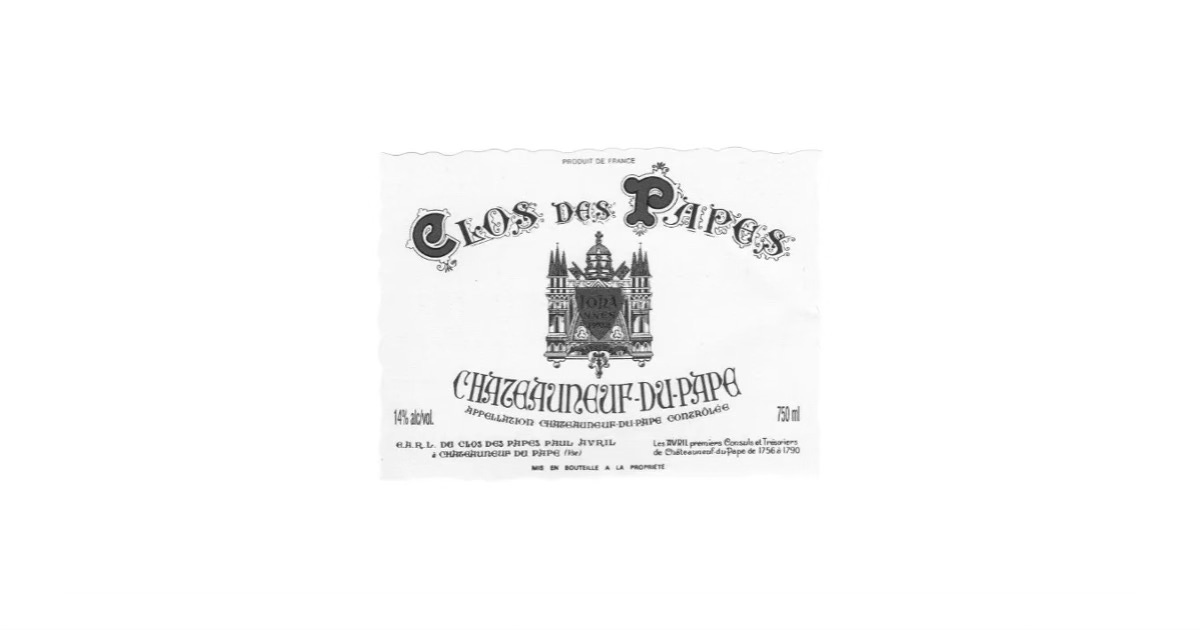
Each year, the Grands Prix of La Revue du vin de France recognize the figures who quietly but decisively shape the French wine landscape. For 2026, the distinction of Vigneron of the Year is awarded to Paul‑Vincent Avril, a choice that resonates well beyond the boundaries of Châteauneuf‑du‑Pape.
The appellation is rich in capable producers; truly exceptional ones are rarer. Avril belongs to that narrow circle whose work remains consistent across vintages of very different temperaments. The steadiness of his wines is not the result of technical intervention, but of decisions made early and upheld with discipline: harvest timing guided by phenolic maturity, fermentations that seek clarity rather than effect, and élevage calibrated to serve fruit and place, never to dominate them.
An Assemblage Philosophy, One Wine Only
At the heart of Avril’s approach lies a conviction inherited and refined: Châteauneuf-du-Pape is, by nature, a wine of assembled terroirs and grape varieties. Rather than parceling this diversity into multiple cuvées, he expresses it through a single wine in each color.
The estate spans 35 hectares across twenty-four parcels distributed throughout the appellation, predominantly red, with a modest proportion of white. The varietal balance departs from convention: grenache forms just over half of the plantings, while mourvèdre occupies an unusually significant share, complemented by syrah and a small range of secondary varieties. Mourvèdre, in Avril’s view, brings structural freshness and supports grenache over time, particularly as wines age. In response to climatic irregularities, he has also renewed his commitment to counoise and cinsault, varieties he considers well suited to preserving balance without relying on acidity.
Notably, Avril prefers to speak of climatic instability rather than change. Over four decades, his harvest dates have shifted only marginally, reinforcing his belief that observation matters more than dogma.
Precision in the Vineyard
While the cellar philosophy remains close to that established by his father, Paul-Vincent Avril has sharpened the focus in the vineyards. His standards are exacting. Soil analyses guide minimal, targeted interventions, always with the understanding that the vine thrives when it is neither overfed nor pushed to exhaustion. Controlled vigor is encouraged, yields are deliberately restrained, and selection begins before grapes reach the cellar.
Bulk sales have never been part of the estate’s practice. The goal is quality at the source, with yields rarely exceeding 25 hectoliters per hectare and, in demanding years, falling well below that threshold. For Avril, respect for terroir is inseparable from the discipline of limitation.
Maturity Without Heaviness
Avril’s wines are built on phenolic maturity rather than early picking. The aim is tannins that feel resolved and supple, delivering freshness through texture rather than acidity. This approach runs counter to current anxieties around alcohol levels, yet he maintains that harvesting too early often accentuates heat and dryness rather than mitigating them.
Élevage is deliberately brief and takes place in seasoned foudres, with no new oak. The intention is transparency. Fruit remains vivid, structure remains intact, and the imprint of wood is absent. Despite natural alcohol levels that can approach the upper limits of the appellation, the wines retain an unexpected sense of poise.
A Personal, Uncompromising Expression
What distinguishes Paul-Vincent Avril’s work is not a pursuit of consensus but a fidelity to personal taste and conviction. His wines are not designed to follow trends or to seek immediate approval. They carry character, depth, and an aristocratic restraint that reveals itself fully over time.
The La Revue du vin de France’s recognition acknowledges more than technical mastery. It honors a coherent vision: one that affirms Châteauneuf-du-Pape as a wine of complexity and longevity, shaped by restraint as much as by power, and guided by a vigneron who trusts the land enough to let it speak for itself.