
Old Vines, New Scrutiny: France Reframes a Wine Label
France brings new scrutiny to vieilles vignes, linking old-vine claims to age, proof and consumer trust
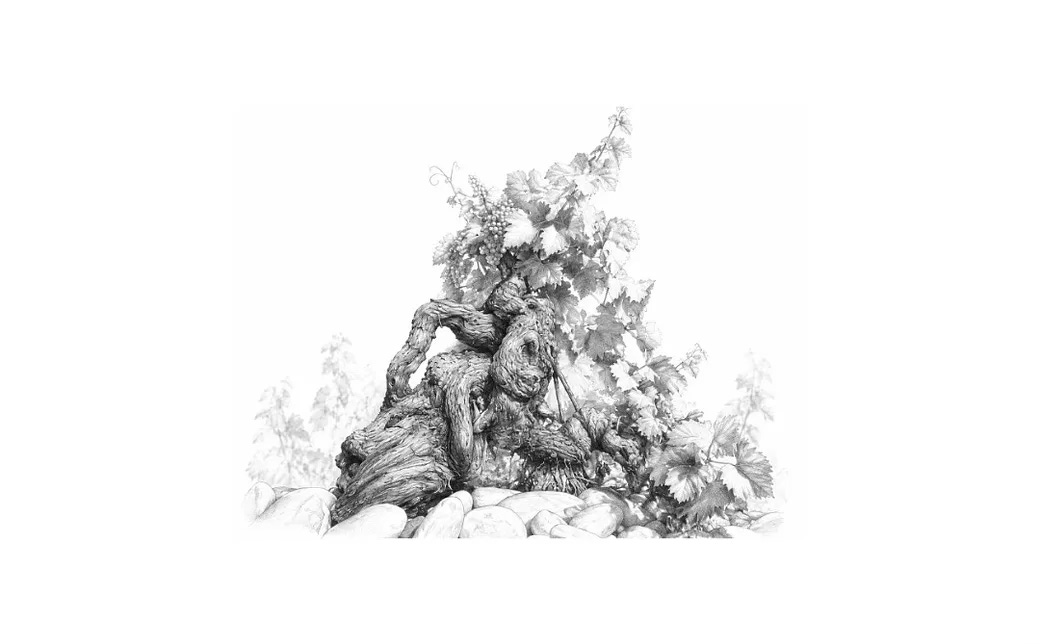
In the hierarchy of French wine language, few expressions carry as much quiet emotional force as vieilles vignes. The words suggest depth without naming it directly. They evoke roots descending through fractured limestone, granite, schist, clay or gravel; yields reduced not by marketing intention but by time itself; a vine that has survived frost, drought, fashion and economic pressure.
For the connoisseur, vieilles vignes has never been decorative. It implies a relationship between age, place and concentration: wine drawn from parcels whose rhythm has slowed, where vigour is moderated and the grower’s work is less about imposing form than preserving balance.
Precisely because the phrase is so powerful, it has always required trust. Until recently, that trust rested on custom, producer reputation and regional usage. In France, vieilles vignes has not been defined by binding national regulation. The result has been a familiar grey zone: a term of great symbolic value, understood in spirit, but not legally fixed with precision.
That grey zone is narrowing.
France’s consumer protection and anti-fraud authority, the DGCCRF, has signalled a new doctrine for assessing vieilles vignes labelling. Its position reflects the benchmark adopted in 2024 by the Organisation Internationale de la Vigne et du Vin: old-vine status should refer to a parcel 35 years old, with at least 85% of the vines meeting that threshold.
This is not yet binding French law. But it is becoming the reference point.
Why “Vieilles Vignes” Matters
The appeal of old vines is not a recent invention. In Burgundy, the Rhône, Beaujolais, Champagne, the Loire and parts of Bordeaux, old parcels have long been prized for translating site with unusual restraint and authority. Their value lies not in age alone, but in what age can bring with careful farming and genuine terroir.
Old vines often produce less fruit. Their root systems may explore deeper soil horizons. Their response to hydric stress can be more moderated. Berries may be smaller and ripening more even. In the best circumstances, the wines show density without heaviness, aromatic precision without obvious extraction, and a structural calm younger vines rarely achieve.
But these qualities are not automatic. A neglected old parcel may produce tired wine. A well-farmed younger vineyard may yield something more compelling. Age is an indicator, not a guarantee. Still, in the fine-wine market, it remains meaningful. It influences consumer perception, critic attention and bottle price.
That is why the integrity of the term matters.
When vieilles vignes appears on a label, it is not neutral information. It shapes expectation. It suggests rarity, lower yields, authenticity, and a link to patrimony. Used carelessly, it can distort competition between producers who preserve genuinely old parcels and those who borrow the language without substance.
From Custom to Doctrine
Until now, the DGCCRF has assessed the use of vieilles vignes case by case. In the absence of a legal definition, the authority considered whether the term was clear, precise and understandable for consumers, as required by European food information rules. It also considered whether it could amount to a misleading commercial practice under French consumer law.
This approach left room for local tradition. What counted as old in one appellation might not have meant the same elsewhere. A 30-year-old parcel in a recently planted region could be treated differently from a 50-year-old parcel in a historic cru.
The OIV’s 35-year benchmark changes the conversation. It does not erase regional nuance, but it offers administrations and professional bodies a common reference point. For the DGCCRF, it provides a framework for identifying abuse, especially where there are no documents proving vine age, or where the vines are plainly younger than 35 years.
In practical terms, the message is clear: a vieilles vignes claim attached to vines over 35 years old is likely to be easier to defend. A claim attached to younger vines will need strong justification, if it can be justified at all.
Education Before Sanction
The DGCCRF’s tone is notable. At this stage, the authority is privileging educational follow-up rather than punitive action. Current cases appear to be handled through warnings and professional guidance, reflecting the fact that the OIV definition has not yet been incorporated into enforceable French law.
This matters. Producers are being informed that the doctrine has evolved, but they are not yet facing a fully codified national rule. The DGCCRF has indicated, however, that it reserves the possibility of stronger action where a claim is manifestly misleading.
That distinction is important. A vigneron using vieilles vignes for a parcel of 33 or 34 years, where local usage has historically been flexible, is not in the same position as an operator applying the term to clearly young vines with no supporting evidence. The latter risks moving from ambiguity into deception.
For serious estates, the lesson is less about fear than discipline. The romantic vocabulary of wine is now being asked to submit to traceability.
The Documents Behind the Words
The future of vieilles vignes will not be decided only on labels. It will be decided in vineyard records, production logs and the chain linking parcel to bottle.
The key issue is proof. Producers who use the term will increasingly need to show that the claim corresponds to identifiable parcels. Vine age should be supported by documentation. Grapes from those parcels should be traceable through vinification, élevage, blending and bottling. If the wine is assembled from several sources, the share of old-vine fruit must match the claim made to consumers.
This is especially relevant where old-vine cuvées are blended from multiple parcels, or where a domaine uses vieilles vignes as a house designation rather than a strict parcel indication. The looser the practice, the greater the need for internal clarity.
For producers working at the highest level, such discipline should not be burdensome. The best domaines already know the age, history and behaviour of their parcels in detail. Many can recite planting dates, massal selections, rootstocks and replanting episodes with archival precision. For them, the new doctrine may strengthen the value of their work. It creates a clearer distinction between genuine patrimonial viticulture and vague old-vine rhetoric.
What It Means for Collectors
For collectors and fine-wine buyers, the development is welcome. The market has long rewarded terms that signal authenticity: lieu-dit, sélection parcellaire, monopole, franc de pied, non greffé, vieilles vignes. Some are tightly defined; others rely more heavily on trust.
A clearer benchmark for vieilles vignes will not eliminate judgement. It will not tell us whether the wine is great, nor explain farming quality, genetic diversity, soil health, pruning or yields. But it will make the phrase more accountable.
That accountability is valuable in an era when wine labels are dense with cues of prestige. The connoisseur does not need every word to become sterile. Wine would be poorer if stripped of poetry. But poetry on a label must still correspond to reality.
The finest use of vieilles vignes is not as ornament but as information with cultural weight. It tells the buyer that the wine comes from vines that have endured long enough to become part of the identity of a place. It also says something about the grower’s choices: to preserve, rather than replace; to accept lower yields; to maintain a living inheritance.
The Rhône as Early Testing Ground
Reports of controls in the Rhône Valley suggest that the new doctrine is already shaping administrative practice. This is not surprising. The Rhône contains many wines where old-vine claims carry real commercial and qualitative significance, from venerable Grenache in the southern crus to Syrah parcels in the northern appellations.
In such regions, the distinction between old and merely mature vines is not trivial. A 20-year-old vineyard may produce excellent wine. But it does not occupy the same viticultural, historical or symbolic category as a parcel planted more than half a century ago. The label should not blur that distinction.
At the same time, professional bodies are right to ask for readable, harmonised rules. Producers need clarity across regions, not a patchwork of interpretations. A national benchmark, aligned with international doctrine and applied with proportionality, would serve consumers and growers alike.
A Necessary Clarification
The move toward a 35-year reference point belongs to a broader evolution in wine governance. Wine’s language is being scrutinised more closely because consumers, especially at the premium end, pay for origin, method and authenticity. Claims that once passed as tradition are now expected to withstand documentary examination.
This is not a threat to French wine culture. It protects it.
The phrase vieilles vignes deserves to mean something. It should not be diluted into a vague suggestion of rustic charm or artisanal seriousness. If the term is to retain its prestige, it must be reserved for wines whose vineyards genuinely carry the age implied.
The DGCCRF’s approach appears measured: educational where the law remains unsettled, firmer where claims become plainly misleading. That balance gives the profession time to adapt while signalling that wine’s old vocabulary cannot remain exempt from modern transparency.
For estates with authentic old vines, this clarification may prove useful. For consumers, it offers a more reliable reading of the bottle. For French wine, it is a reminder that heritage is strongest when it can be verified.
The old vines need no embellishment. Their authority is already written underground. The label’s task is simply to tell the truth.