
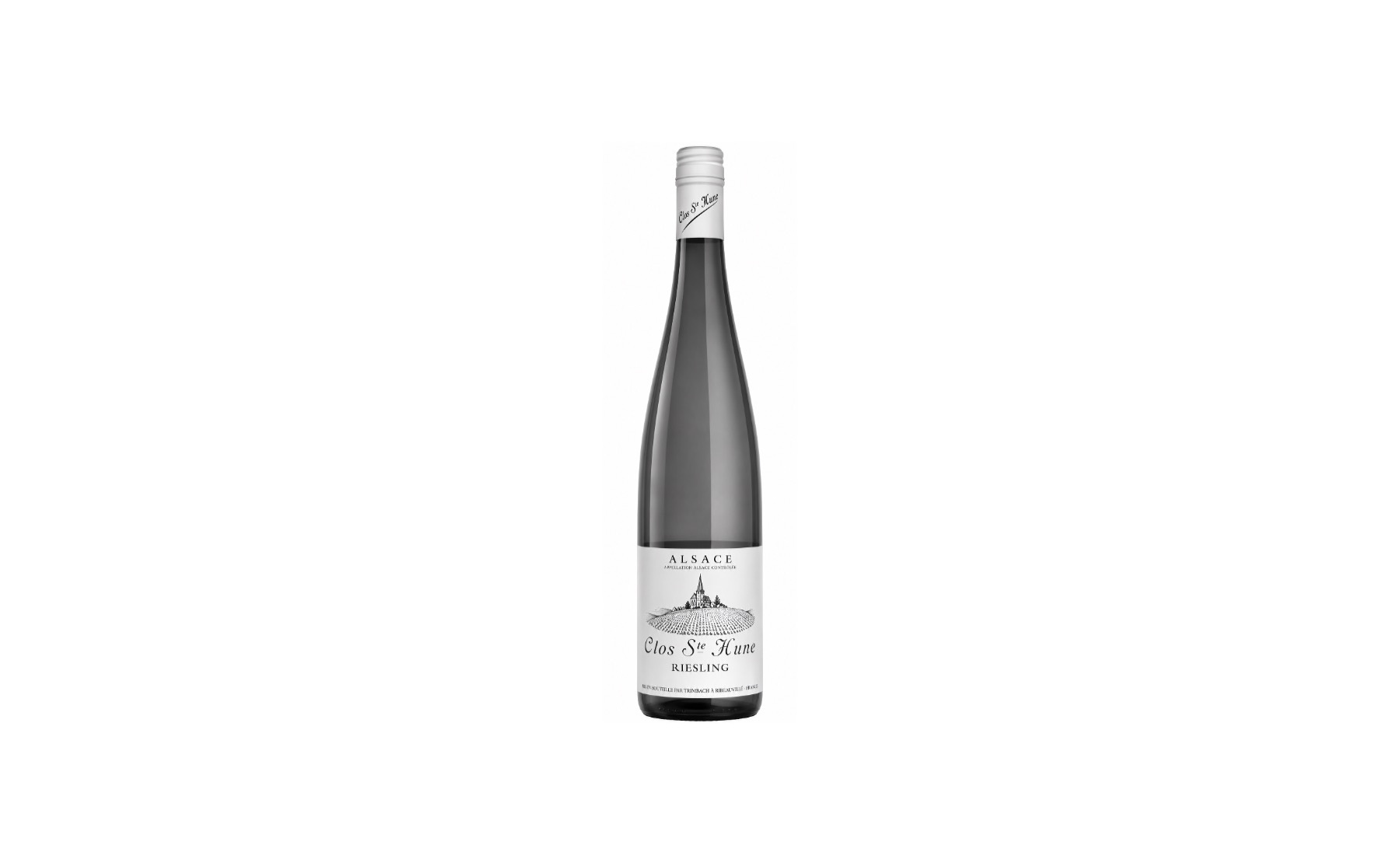
Produced from just 1.67 hectares in the heart of Alsace’s Rosacker Grand Cru, Trimbach’s Clos Sainte Hune has become an international benchmark for dry Riesling. Its exceptional reputation rests on old vines, limestone-rich soils, restrained winemaking and an extraordinary capacity to evolve for decades. For discerning drinkers and collectors alike, it is a wine in which patience is not merely rewarded but essential.
An Alsace legend without a Grand Cru label
In the world of French fine wine, prestige generally follows a familiar hierarchy of appellations and classifications. Maison Trimbach’s Clos Sainte Hune is a notable exception. Although its grapes come exclusively from a small parcel within the celebrated Rosacker Grand Cru at Hunawihr, the wine is bottled under the broader Alsace appellation rather than the Alsace Grand Cru designation.
This distinction is deliberate. The Trimbach family has maintained its historic vineyard identity rather than adopting the grand-cru classification, reflecting a longstanding conviction that the reputation of an individual site and the wine it produces can speak more convincingly than a formal designation.
Clos Sainte Hune is made entirely from Riesling and represents the pinnacle of Trimbach’s single-vineyard production. It is among the few Alsatian dry white wines whose reputation extends beyond regional excellence into the international market for rare, ageworthy fine wine.
The Trimbach family’s winemaking history dates to 1626, while its ownership of the Clos Sainte Hune parcel extends back more than two centuries. The earliest surviving label dates from 1919 and is recognisably similar to the one used today.
The vineyard’s name carries a local legend. Sainte Hune refers to Huna, a figure associated with the village of Hunawihr who, according to tradition, transformed water from the village fountain into wine during a time of famine. The story forms part of the cultural identity of a wine whose modern reputation is founded on something more tangible: a remarkably consistent expression of a particular vineyard.
That reputation was shaped over decades by successive generations of the family, notably Bernard and Pierre Trimbach. Pierre, who directed winemaking from 1979 and died in January 2026, was especially influential in establishing the estate’s modern reputation for dry, precise and long-lived wines. Julien Trimbach, representing the thirteenth generation, carries that philosophy forward.
Rosacker: The limestone heart of Clos Sainte Hune
The vineyard lies in the centre of Rosacker, a 26.18-hectare Grand Cru overlooking Hunawihr on the eastern foothills of the Vosges.
Rosacker rises from approximately 260 to 330 metres above sea level, with predominantly eastern and south-eastern exposures. Clos Sainte Hune occupies a gently inclined, sheltered section of the vineyard with a more specifically south-south-eastern orientation.
Its geological foundations are particularly important.
The soils derive from Triassic Muschelkalk and Lettenkohle formations, combining limestone, dolomite and calcareous marl with clay and sandstone-derived material. These relatively deep soils retain useful reserves of water, moderating the effects of dry growing seasons.
The surrounding Vosges mountains provide a further advantage. Their rain-shadow effect limits Atlantic rainfall, while the enclosed valley around Hunawihr protects the vineyard from strong winds. Rosacker is consequently regarded as a comparatively cool, dry and late-ripening site.
For Riesling, this combination is especially favourable. Grapes can develop flavour gradually while retaining the natural acidity fundamental to the variety’s precision and longevity. The relatively low incidence of botrytis also supports Trimbach’s preference for clean, fully ripe fruit destined for dry vinification.
In the glass, Clos Sainte Hune is frequently described in terms of limestone, crushed stone, chalk and salinity. These are useful descriptions of its sensory character rather than evidence that minerals from the soil are literally transferred into flavour. The more defensible relationship lies in the vineyard’s influence on ripening, water availability, acidity and the development of aromatic complexity.
What distinguishes Clos Sainte Hune is not an extreme vineyard position, but the balance of its natural conditions. Its sheltered exposure, deep calcareous soils and relatively gradual ripening help produce wines of remarkable concentration without sacrificing freshness.
Old vines, organic viticulture and measured production
Clos Sainte Hune covers only 1.67 hectares, planted exclusively to Riesling.
The vines average approximately 60 years of age, with the oldest exceeding 80 years. Planting density is around 5,500 vines per hectare, and pruning follows the double-Guyot system, adapted to the estate’s approach to preserving vine health and longevity.
Old vines are not a guarantee of superior wine, but their established root systems and naturally moderated vigour can contribute to balanced ripening and consistent concentration. In Clos Sainte Hune, these characteristics complement the vineyard’s substantial soil depth and reliable water reserves.
The parcel also occupies a significant place in Trimbach’s environmental development. Organic cultivation began here in 2008, before the approach was extended more widely across the estate. Trimbach’s vineyards and its partner-grower supply have been officially certified organic since 2023.
Vineyard management combines manual work, careful canopy control and soil cultivation adapted to individual parcels. The estate also uses winter sheep grazing and biodiversity measures, including trees and hedgerows.
Harvesting is carried out by hand, with picking timed to achieve full maturity while preserving the acidity that defines the wine.
Production is exceptionally limited. Trimbach generally cites around 7,000 bottles annually, although its technical material also gives higher figures and actual production varies considerably between vintages. Some years yield much less; in 1980 and 1984, the estate elected not to produce the wine at all.
Scarcity is therefore structural rather than simply the result of limited commercial allocation. A tiny vineyard sets the fundamental production ceiling, while vintage conditions and the estate’s quality standards determine how much wine ultimately reaches the market.
Winemaking defined by restraint
Clos Sainte Hune’s cellar philosophy is built around preserving the character of Riesling rather than adding richness through overt winemaking influence.
Following manual harvesting, the grapes are gently pressed using pneumatic equipment. The juice is clarified before fermentation, which is carried out at controlled temperatures of approximately 18–20°C, generally over three to four weeks.
Trimbach’s technical descriptions emphasise stainless-steel fermentation and the absence of oak ageing. Other producer material acknowledges the use of old casks for vinification in some circumstances. Historical cellar practice may therefore differ between vintages, but conspicuous new-oak character has never been the intended stylistic signature.
The wine is fermented to dryness, and malolactic fermentation is avoided to retain its natural freshness and acidity. Fine-lees maturation contributes subtle texture without compromising the directness of the fruit.
Bottling generally takes place in the spring following harvest. The wine then undergoes prolonged bottle maturation before commercial release, with Trimbach specifying a minimum of six years for Clos Sainte Hune.
This decision is central to its identity. The estate absorbs the cost of holding inventory for years, allowing the wine to begin its development in a controlled environment before reaching collectors and merchants.
Even this extended maturation, however, should not be confused with full readiness to drink. Clos Sainte Hune is frequently still youthful when released.
A Riesling of concentration, precision and remarkable length
Clos Sainte Hune is not generally a wine of immediate aromatic exuberance. Its appeal lies in the relationship between concentration, acidity and a distinctive sense of restraint.
In youth, the aromatic profile typically centres on lemon, citrus peel, pear, white and yellow peach, quince and delicate white flowers. Herbal accents and impressions of crushed stone or chalk contribute complexity without obscuring the fruit.
On the palate, concentration is considerable, but the wine rarely feels excessively broad. Pronounced acidity provides the structural framework, while a dense, finely textured mid-palate gives substance to the fruit. The finish is typically persistent, often displaying the saline or stony character frequently associated with the vineyard.
Its dryness is essential to the style. Unlike richer Alsatian expressions where residual sugar can contribute weight and generosity, Clos Sainte Hune derives much of its presence from fruit concentration, extract, texture and acidity.
The result is a wine that can appear austere in its earliest years, particularly when tasted beside more immediately generous Rieslings.
With bottle age, the personality changes substantially. Citrus and stone-fruit aromas acquire honeyed, smoky and more savoury complexity. The texture becomes increasingly integrated, while the acidity—when the vintage and storage conditions are favourable—retains an astonishing capacity to give definition to the wine.
A mature Clos Sainte Hune can therefore combine aromatic richness with an almost paradoxical impression of freshness. It is this balance, rather than concentration alone, that explains its enduring reputation.
The extraordinary rewards of bottle age
Few dry white wines have a documented ageing history as persuasive as Clos Sainte Hune.
At the estate’s centenary tasting in 2024, mature vintages demonstrated the wine’s capacity to remain compelling after several decades. The 1967, then more than half a century old, was still alive, dry and expressive, while celebrated vintages such as 1971, 1976 and 1990 continued to display impressive vitality.
This does not mean every bottle will survive for fifty years. Vintage quality, storage temperature, cork integrity and individual bottle condition become increasingly important over time. Nevertheless, the evidence from mature tastings establishes that Clos Sainte Hune can develop far beyond the ageing horizons commonly associated with dry white wine.
The producer recommends substantial patience, preferably at least ten years from the vintage. For collectors seeking mature aromatic complexity, significantly longer cellaring may be worthwhile.
Several vintages stand out within the wine’s history.
The 1971 and 1976 are historical benchmarks, admired for their combination of power, elegance and longevity. Both have demonstrated remarkable resilience in retrospective tastings.
The 1990 is a particularly important reference. Produced from exceptionally ripe, healthy grapes, it combined 14.5% alcohol with just 4 g/l residual sugar and substantial acidity. Its concentration and enduring freshness have made it one of the defining modern vintages.
The 2001 is another highly regarded year, combining depth, precision and long-term potential. The 2012, meanwhile, deserves attention as a less obvious success: a Clos Sainte Hune that has impressed despite the vintage’s less celebrated general reputation.
More recently, the 2019 has emerged as a contemporary benchmark. Awarded 100 points by James Suckling at the centenary assessment, it combines exceptional concentration with freshness, refined peach fruit and remarkable length. Despite its critical acclaim, its best years are likely still ahead.
The 2020 is also an important recent release, although critics have differed in their enthusiasm for its precise standing. It remains a wine to approach with patience rather than an expectation of immediate maturity.
One unusual historical exception deserves mention. In 1989, the entire Clos Sainte Hune crop was made as a Vendange Tardive, retaining substantially more residual sugar than the standard dry wine. It represents a rare stylistic departure and should be considered separately when comparing vintages or market prices.
For present-day drinking, well-stored bottles from the 2000s are particularly interesting because they can combine developed complexity with structural freshness. Vintages from the 1990s and earlier may offer extraordinary experiences, but provenance increasingly determines whether their potential has been preserved.
Clos Sainte Hune in the fine-wine market
Clos Sainte Hune occupies an unusual commercial position. It is one of Alsace’s most prestigious and expensive dry wines, yet its production and secondary-market presence remain modest compared with the dominant investment names of Bordeaux and Burgundy.
Its value rests on several mutually reinforcing qualities: a clearly identified historic vineyard, extremely limited production, longstanding critical recognition, remarkable ageing potential and a producer with an established international reputation.
The wine has also demonstrated sufficient market activity to attract the attention of specialist fine-wine platforms. Liv-ex included Clos Sainte Hune in the second tier of its 2021 Classification, confirming its established presence within the international fine-wine trading market.
European retail offers observed in early November 2026 placed the 2020 vintage at approximately €300–€430 per 75cl bottle, depending on merchant and tax treatment. These are advertised prices, not completed transactions, and do not establish the amount a collector could obtain by reselling a bottle.
Magnums attract particular attention. Commercially available from the 2007 vintage onward, they offer both greater format scarcity and the potential advantages of slower maturation. Recent European asking prices for a 2018 magnum have ranged roughly from €575 to €750, although the premium varies according to vintage, merchant and tax status.
Auction results provide a different perspective on value.
In September 2025, Christie’s sold six bottles of Clos Sainte Hune 2006 for £812.50, with the lot presented in two original three-bottle wooden cases and described as being in excellent appearance. The result illustrates that auction pricing can differ substantially from contemporary retail offers, even for an established collector wine.
That sale should not be treated as a universal price reference. Its valuation depends on the specific vintage, lot composition, condition and sale terms. Published auction results also require careful interpretation of buyer’s premiums, taxes and other charges.
Clos Sainte Hune appears periodically at major international auction houses, including Christie’s, Acker and Zachys, as well as specialist European platforms such as iDealwine. The activity demonstrates genuine secondary-market demand, although trading depth is limited compared with more liquid Bordeaux and Burgundy benchmarks.
Its scarcity is unquestionable; its liquidity is considerably less secure.
For investors, that distinction matters. A rare wine may be highly desirable yet difficult to sell quickly at an attractive price. Transaction costs, storage, insurance and auction commissions can absorb a meaningful portion of any appreciation.
Clos Sainte Hune is consequently better understood as a long-term collectible with potential financial value than as an instrument for short-term speculation.
What collectors should look for
The strongest collecting argument for Clos Sainte Hune is the possibility of acquiring a wine whose greatest qualities may emerge decades after its vintage.
Its long production history also makes it attractive for vertical collections. A carefully assembled sequence of vintages offers insight into changing weather conditions, the evolution of viticultural practices and the continuity of the Trimbach house style.
For collectors prioritising future drinking, established vintages such as 1990 and 2001 remain compelling when supported by excellent provenance. The 2012 offers an intriguing alternative to more celebrated years, while 2019 and 2020 appeal particularly to those building cellars for the longer term.
As bottles age, condition becomes central to their desirability.
A sound provenance record should establish where the wine has been stored, how it has been transported and whether it has experienced potentially damaging temperature fluctuations. Fill levels, capsule integrity, seepage and label condition all warrant examination.
Original wooden cases can strengthen the provenance narrative and enhance the appeal of complete lots, although packaging alone cannot establish authenticity.
There is no compelling publicly documented evidence that Clos Sainte Hune is a widespread counterfeiting target. Nevertheless, its reputation and value justify careful purchasing through reputable merchants and auction houses, particularly for exceptional old vintages.
The principal danger is not necessarily acquiring a false bottle, but paying a premium for one whose storage history has compromised the very ageing potential that makes the wine desirable.
Serving and food pairing
Clos Sainte Hune deserves attentive service, particularly when opening bottles that have spent decades in the cellar.
Younger vintages are best served at approximately 10–12°C, allowing the wine to warm gradually in the glass. Serving too cold can suppress its aromatic detail and accentuate its naturally firm structure.
Older vintages generally benefit from a slightly less chilled presentation, closer to 12°C, so that their tertiary complexity can emerge.
Young examples may respond positively to some aeration, but prolonged decanting should not be automatic. Mature bottles are better opened carefully and assessed before deciding whether additional air is beneficial. Particularly old examples may lose delicate aromatic nuances through excessive exposure.
The wine’s acidity, concentration and dry character make it especially well suited to refined dishes where richness is balanced by freshness.
Turbot or sole with beurre blanc is a natural pairing. The wine’s acidity offsets the butter, while its concentration complements the texture of the fish without overwhelming its flavour.
Langoustines, particularly with delicate shellfish reductions, offer another compelling match. At the centenary celebration, Clos Sainte Hune was paired with dishes including langoustine tartare with caviar, demonstrating its affinity with restrained marine flavours and salinity.
With age, its possibilities expand.
Bresse chicken with morels, veal with a cream-and-mushroom sauce, or a carefully prepared truffle dish can complement the wine’s increasingly savoury aromatic character. Mature Comté is another attractive possibility, combining nutty depth and umami with sufficient structure to stand alongside the Riesling.
The guiding principle is balance. Heavy sweetness, aggressive spice or excessive aromatic intensity can obscure the precision that makes Clos Sainte Hune distinctive.
How it compares with other great Rieslings
Within Maison Trimbach’s portfolio, the most relevant comparison is Riesling Cuvée Frédéric Emile.
Historically sourced from the Geisberg and Osterberg sectors around Ribeauvillé, Frédéric Emile shares the estate’s commitment to dryness, freshness and long-term development. It is produced in greater quantity and generally commands a substantially lower price.
For drinkers seeking to understand the Trimbach style without committing to the cost of Clos Sainte Hune, Frédéric Emile represents a persuasive alternative.
Clos Sainte Hune, however, offers a more narrowly defined vineyard identity, greater scarcity and a deeper association with the international collector market.
Elsewhere in Alsace, the finest dry Rieslings from grand-cru vineyards such as Schlossberg, Rangen and Schoenenbourg provide worthwhile comparisons. Each expresses a different geological and climatic identity, and differences in winemaking philosophy or residual sugar can result in substantially different styles.
Clos Sainte Hune’s particular distinction lies in the combination of its small, fixed vineyard source, restrained winemaking, delayed release and documented longevity.
Its price may be high relative to most Alsatian wines, but in the broader context of rare French white wine, its positioning is less extraordinary. Many top white Burgundies with comparable scarcity and ageing potential command considerably higher prices.
That does not make Clos Sainte Hune inexpensive. It does, however, underline that its valuation reflects more than fashion or critical scores. The underlying qualities—vineyard identity, historical continuity, tiny production and proven ability to age—are substantial.
Gallico Vinum Verdict
Clos Sainte Hune is one of the clearest expressions of what great dry Riesling can achieve when terroir, restraint and time converge.
Its reputation is supported by an unusually convincing combination of vineyard distinction, historical continuity and mature-bottle performance. The wine’s ability to retain freshness and develop complexity over several decades places it among France’s most accomplished ageworthy white wines.
For enthusiasts, its greatest attraction is intellectual and sensory: the opportunity to experience a highly individual vineyard through the evolution of Riesling.
For collectors, the appeal is reinforced by scarcity, a century-old label identity, landmark vintages and the possibility of assembling meaningful vertical collections.
For investors, the proposition is more qualified. Demand is established, but liquidity remains limited, and returns depend heavily on acquisition price, provenance and transaction costs.
Gallico Vinum considers Clos Sainte Hune most compelling as a wine to acquire with the intention—and the patience—to drink at maturity. Its financial collectability is a valuable secondary quality; its lasting distinction is the extraordinary experience a sound, mature bottle can provide.