
In Burgundy, succession is rarely just a question of replacing one name with another. A technical director carries years of accumulated knowledge: how individual parcels respond to a dry summer, when a particular Chardonnay needs patience rather than intervention, or how a Pinot Noir vineyard behaves when harvest arrives earlier than expected. At Maison Champy, that knowledge is now being passed on deliberately rather than abruptly.
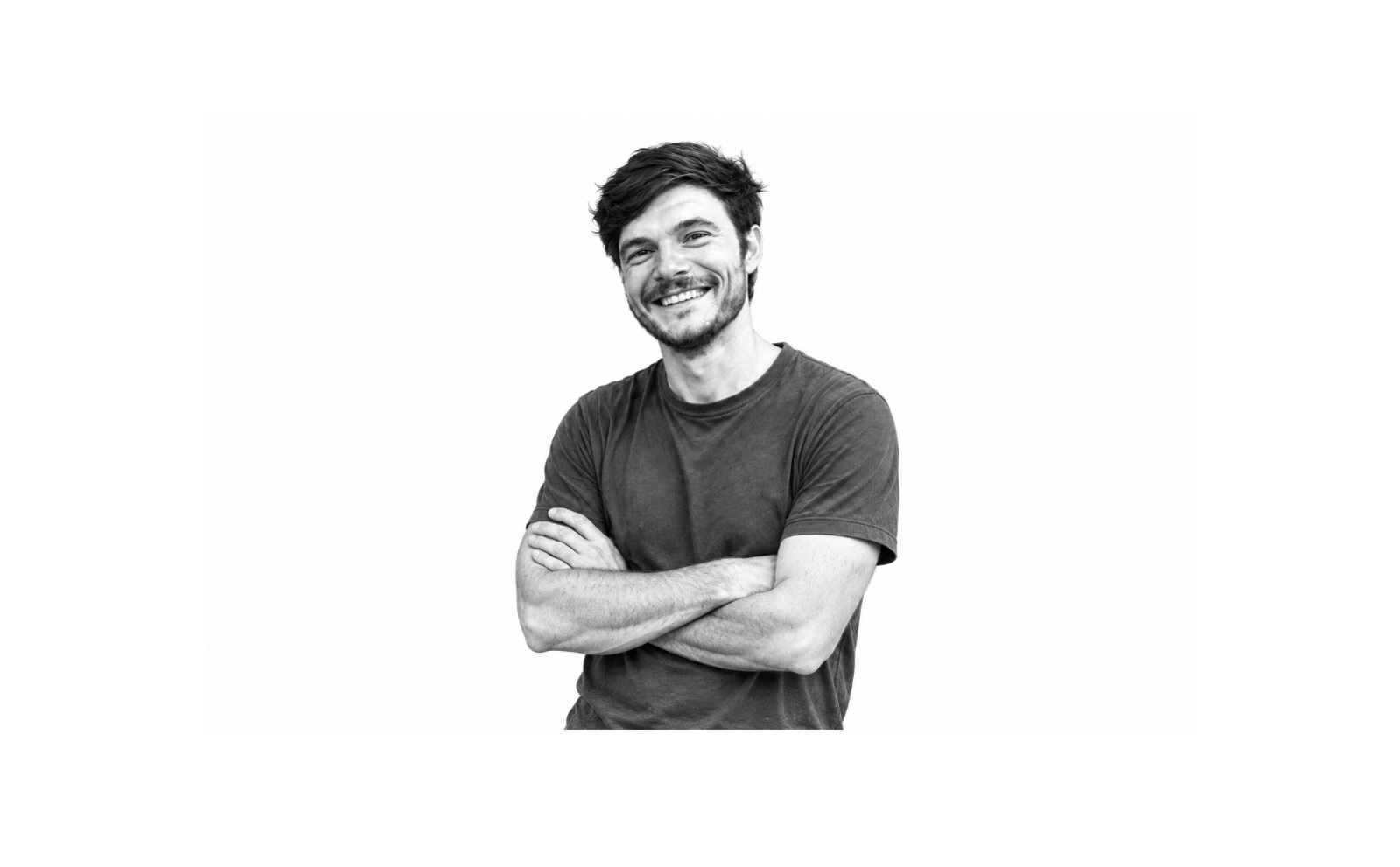
The 2026 vintage marks the beginning of that transition. Jérémie Carré, who joined the Beaune house in January as its new vineyard and wine manager, has spent his first growing season working alongside technical director and oenologist Dimitri Bazas. After 28 harvests, Bazas remains closely involved while Carré gradually prepares to assume greater responsibility.
It is less a changing of the guard than a period of overlap—a valuable luxury in a region where understanding a vineyard is measured in vintages rather than months.
A familiar return to Maison Champy
For Carré, the appointment is also a return.
He first encountered Maison Champy from inside the business in 2015, when he completed a placement there as part of his viticulture and oenology studies. Eleven years later, he has come back with considerably more experience and a career shaped almost entirely by Burgundy.
His connection with the Côte de Beaune runs deeper than that early internship. Carré comes from a winegrowing family in Volnay and grew up around the Carré-Courbin estate, close to vineyards associated with Maison Champy. Vineyard work was therefore part of his surroundings long before it became his profession.
That familiarity gives the appointment an unusual sense of continuity. Carré is not arriving in Beaune to discover the region; he is returning to a landscape whose vineyards, villages and working rhythms have accompanied much of his life.
From Dijon to Meursault
After his initial training, Carré continued his studies in Dijon and obtained France’s Diplôme National d’Œnologue in 2017. What followed was a series of positions that gradually broadened his perspective beyond his family background in Volnay.
A period in Switzerland with Charles Rolaz added experience outside Burgundy before Carré returned to the Côte d’Or. The most substantial chapter came at Domaine Rémi Jobard in Meursault, where he worked across seven vintages.
For an oenologist, Meursault is a particularly instructive place to spend those formative years. Chardonnay occupies centre stage, but the best wines depend less on a single cellar recipe than on sensitivity to site, maturity, élevage and texture. Carré’s years there gave him extensive experience with white Burgundy before he moved to Domaine Pierre Vincent in Auxey-Duresses as technical manager.
His return to Maison Champy therefore brings together several strands: a Volnay upbringing, formal oenological training, experience beyond France and sustained work in some of the Côte de Beaune’s most Chardonnay-focused vineyards.
Why Maison Champy is taking its time
The gradual nature of the handover may prove as significant as the appointment itself.
Dimitri Bazas has accumulated nearly three decades of harvest experience at Maison Champy. That kind of tenure creates knowledge that cannot easily be written into a cellar manual. It lies in comparisons between vintages, the memory of individual parcels and thousands of small decisions made in vineyard and winery.
Rather than separating one era sharply from the next, Maison Champy has chosen to put Bazas and Carré together through the growing season and harvest. During the 2026 vintage, the two have been able to compare observations and make decisions side by side.
For Carré, that offers the opportunity to understand not only how the wines are made today, but why particular choices became part of the house’s approach in the first place.
There is also a broader Burgundian logic to this kind of transition. The region places enormous emphasis on the identity of individual sites, yet terroir does not express itself in a vacuum. Farming, harvest dates, extraction, vessels and élevage all influence how clearly a vineyard ultimately speaks. Continuity of experience can therefore matter as much as continuity of ownership.
A 21-hectare vineyard to learn parcel by parcel
Maison Champy works with a 21-hectare estate in the Côte de Beaune, giving Carré a substantial range of vineyard situations to absorb.
That diversity makes the handover particularly relevant. Managing Burgundy cannot simply mean applying a house style uniformly from one parcel to another. The challenge is almost the reverse: developing enough consistency in viticulture and winemaking to allow differences between sites to remain visible.
Carré’s stated approach is centred on precision, respect for terroir and retaining an artisanal character. Those are familiar aspirations in contemporary Burgundy, but their meaning ultimately depends on practice—how vineyards are farmed and how restrained or assertive the winemaking becomes when conditions vary from one year to the next.
His first vintage alongside Bazas therefore matters less as an opportunity to announce a new direction than as a chance to observe, understand and establish continuity.
Maison Champy prepares for its next era
Wine estates often present succession as a clean break: one winemaker leaves, another arrives, and a new chapter is declared immediately. Viticulture rarely works so neatly.
At Maison Champy, the more interesting story is the decision to allow two generations of experience to coexist for a time. Bazas brings the memory of 28 harvests; Carré arrives with the perspective of someone who knows the Côte de Beaune intimately but has developed his skills through several different cellars.
The result is a transition that appears intended to evolve rather than disrupt.
For followers of Burgundy, the coming vintages will make that evolution visible in the only place that finally matters: the wines themselves.