

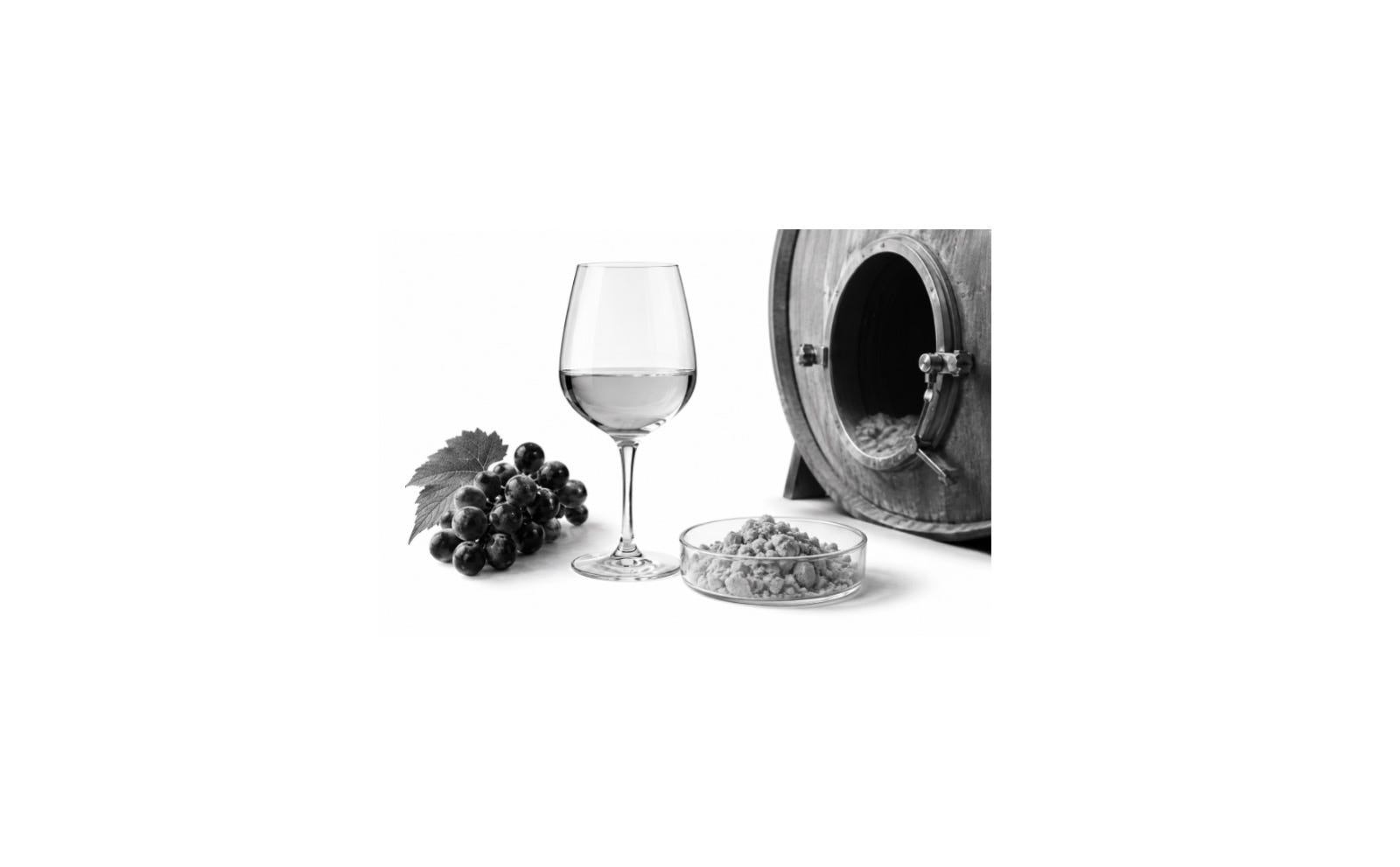
Making a white wine from red grapes is already an exercise in restraint. Colour must be kept in check, extraction carefully limited and freshness preserved. But once that pale juice has been secured, another question emerges: how can a still blanc de noirs gain depth without losing the delicacy that makes the style compelling?
For a number of French winemakers, part of the answer lies at the bottom of the fermentation vessel. Lees ageing for blanc de noirs can bring additional texture, aromatic complexity and, in some cases, greater capacity to develop in bottle. What makes the approach particularly interesting is that the lees do not necessarily have to come from the wine itself. Some producers deliberately introduce lees from white grape varieties, using them almost as another component of the élevage.
The result is not a single recognisable style. Rather, these wines illustrate how lees can become a subtle tool for shaping the personality of whites made from grapes more commonly associated with red wine.
Why Lees Ageing for Blanc de Noirs Matters
Lees are the deposits left after fermentation, containing spent yeast and other fine particles. In careful élevage, the finer portion can remain in contact with the wine for weeks or months. That contact can alter the way a wine feels and develops, often giving a broader mid-palate and a sense of additional depth.
Those qualities can be particularly useful in a still blanc de noirs. Varieties such as Merlot, Grenache or Cinsault can produce convincing white wines, but their aromatic expression in this form is not necessarily as immediately pronounced as that of a classic white variety. Lees offer one way of building complexity without relying on overt extraction or heavily marked oak.
The technique is also highly dependent on proportion, timing and the condition of the lees. The aim is rarely to make the richest possible wine. The more interesting challenge is to gain volume while retaining the freshness and line that distinguish a successful blanc de noirs.
The Vessel Can Change the Conversation
At Domaine des Diables, Guillaume Philip works with a still blanc de noirs made in equal parts from Grenache and Cinsault. Only the earliest juice is selected, before pressing introduces greater colour and extraction.
Fermentation takes place at around 15–16°C in 600-litre demi-muids, where the wine remains for six months before moving into an unusual vessel: a horizontal concrete egg.
Its shape is central to the élevage. Natural movement within the vessel keeps the lees circulating rather than allowing them simply to settle at the bottom, increasing their contact with the wine. Philip associates the method with a rounder, almost creamy texture while preserving the wine’s tension.
It is a useful reminder that lees ageing is not simply a question of leaving a wine undisturbed on sediment. Vessel shape, movement and the duration of contact all influence the result. Bâtonnage is one solution; a vessel that encourages natural circulation offers another.
When the Lees Come From Another Grape
Some of the most intriguing examples involve transferring lees between wines.
At Domaine Entretan in Roubia, in the Aude, organic grower Nicolas Pétré makes a blanc de noirs from Lledoner Pelut, a naturally lightly coloured relative of Grenache. Rather than relying solely on its own fermentation deposits, he introduces lees from Chardonnay.
The sequence begins when the Chardonnay has completed fermentation. Pétré retains only part of those lees with the Chardonnay, moving the remainder into the Lledoner Pelut while that wine is still fermenting. Once fermentation is complete, the coarser deposits are removed and the blanc de noirs continues its élevage on finer lees, with regular stirring during the following months.
For Pétré, the effect is not merely textural. He finds that the Chardonnay lees increase aromatic intensity in a grape that can otherwise be relatively restrained in its white expression. They can also contribute a slight bitterness, which in the right proportion adds another dimension to the palate.
Importantly, he does not regard more as automatically better. Even a modest addition can noticeably change the wine. That principle is fundamental to the technique: transferred lees should support the identity of the blanc de noirs rather than replace it.
Merlot Blanc de Noirs Gains Another Dimension
A similar philosophy appears in Bordeaux.
At Vignobles Boutinon in Saint-Quentin-de-Baron, in Entre-deux-Mers, Jérôme Boutinon produces a small quantity of blanc de noirs from Merlot. Colour control begins immediately: only the first pale juices are retained, as later fractions become too strongly coloured for the style he wants.
The Merlot ferments at approximately 15–16°C before being racked and aged on its fine lees. When the vintage allows, Boutinon supplements these with lees from Sauvignon Blanc, provided he can remove them without compromising the Sauvignon itself.
Regular bâtonnage then continues through the early part of the élevage. Boutinon associates the process with additional substance and complexity, including nuances reminiscent of dried fruit and hazelnut.
His experience also points towards another reason growers are interested in lees: the possible contribution to a wine’s ability to develop gracefully. Boutinon has found that his blanc de noirs can retain its appeal with several years of age, making lees contact relevant not only to texture at release but to the wine’s longer evolution.
Colombard Lees Bring Freshness in the Minervois
At Domaine des Maels in Argens-Minervois, Frédéric Schwertz takes the idea in another direction. His blanc de noirs, made from Merlot or Cinsault, can receive lees from Colombard.
The timing follows the rhythm of the harvest. Colombard is picked before Merlot, allowing its fermentation to finish while the red variety destined for blanc de noirs is still active. The freshly available Colombard lees can therefore be incorporated into the fermenting Merlot before the wine is eventually racked and left on a smaller proportion of fine lees through the autumn.
Schwertz can also work with Roussanne lees, but he favours Colombard when seeking a fresher, more expressive result. In his experience, they bring additional volume as well as brighter fruit and citrus-like nuances that are less naturally evident in a white wine made from Merlot.
The technique reveals something important about using lees from another variety: the choice is not neutral. Chardonnay, Sauvignon Blanc, Colombard and Roussanne do not necessarily contribute in the same way. For the winemaker, selecting the source of the lees becomes another means of adjusting the final balance.
Lees Ageing for Blanc de Noirs Is About Restraint
These examples might suggest that lees are an easy route to greater richness, but the most thoughtful approaches are defined by restraint.
A blanc de noirs needs enough body to feel complete, yet too much lees influence can blur its precision. Aromatic contributions from another variety can be useful, but they can also overshadow the original wine. Regular stirring may enhance contact, while excessive intervention can push the texture further than intended.
There is also a distinction between coarse deposits and fine lees. Several of these growers rack their wines after fermentation to remove the heavier material before continuing the élevage on the finer fraction. The latter is the part they value for longer contact.
For the drinker, this helps explain why two apparently similar blanc de noirs can feel so different. The grape variety matters, but so do the origin of the lees, the amount retained, the frequency of bâtonnage and the vessel in which the wine rests.
Colour Remains the Crucial Constraint
The particular challenge of blanc de noirs is that decisions about lees cannot be separated from decisions about colour.
Oenologist Nicolas Dutour of Laboratoire Dubernet points out that very clear, pale juice can be aged on its own lees without presenting the same difficulties as more deeply coloured must. When colour correction becomes necessary, however, cellar handling requires greater care.
Activated charcoal may be used at the must stage to reduce unwanted pigmentation. According to Dutour, allowing charcoal to remain through fermentation or élevage can create a risk of colour reappearing later as anthocyanins are released. In such circumstances, replacing the wine’s own lees with fresh lees from a white grape variety can offer a more controlled route.
Freshness and cleanliness of the lees themselves are equally important. Lees intended for reuse should come from sound wine of the same vintage and be collected promptly after alcoholic fermentation. Most importantly, they need to be tasted and assessed before going anywhere near another cuvée. Lees showing reductive or otherwise degraded aromas are not a useful ingredient simply because they are available.
More Than a By-product
The most revealing aspect of lees ageing for blanc de noirs is perhaps the shift in perspective it represents. Lees are not merely residue left after fermentation. In the hands of an attentive winemaker, they become part of the vocabulary of élevage.
They can broaden a restrained Merlot blanc, lend aromatic energy to Lledoner Pelut, soften the shape of Grenache and Cinsault, or introduce the fresher register of Colombard or Sauvignon Blanc. Yet the best results appear to depend less on the pursuit of richness than on precision: pale juice, healthy lees, measured additions and a clear sense of the wine one is trying to preserve.
Still blanc de noirs remains a relatively unusual corner of French wine, far removed from the more familiar sparkling examples associated with the term. That makes it particularly revealing. By separating red grapes from their expected colour and then building texture through careful lees work, these wines show just how much of a wine’s character is created not only in the vineyard, but during the quieter months that follow fermentation.