
Latricières-Chambertin Grand Cru
Latricières-Chambertin Grand Cru: Gevrey power, cool-climate precision, and collector-grade Burgundy scarcity
Overview & History
Latricières-Chambertin is one of the nine grands crus of Gevrey-Chambertin in the Côte de Nuits, Burgundy’s most powerful and historically celebrated red-wine corridor. It lies immediately south of Chambertin itself, at the southern end of the Gevrey grand cru band, before the slope moves toward Morey-Saint-Denis. In the hierarchy of Burgundy, this is absolute top-tier land: grand cru, Pinot Noir, Côte de Nuits, Gevrey-Chambertin.
Yet Latricières-Chambertin occupies a fascinating position. It is not Chambertin or Chambertin-Clos de Bèze in market prestige. Nor does it have the same universal collector magnetism as Rousseau’s Chambertin, DRC’s Romanée-Conti, Roumier’s Musigny, or Leroy’s top crus. Its appeal is more specialist, more discreet, and in many ways more interesting for sophisticated Burgundy buyers.
The appellation was formally recognized as a grand cru in 1937. Historically, its name has been linked to lean, stony, relatively austere ground. “Latricières” is often interpreted as referring to poor or infertile soil, which is significant: in Burgundy, poverty of soil often means concentration, low natural yields, and a wine that speaks more through structure, minerality, and tension than through easy charm.
For investment value, the crucial historical developments are not only the 1937 classification, but the later consolidation of Burgundy’s global reputation, the rise of producer-led pricing, and the extraordinary scarcity premium attached to grands crus from Gevrey-Chambertin. Latricières-Chambertin has benefited from all three. It remains less expensive than Chambertin and Clos de Bèze from comparable producers, but it sits close enough geographically and qualitatively to attract buyers looking for blue-chip Burgundy exposure without paying the very highest Gevrey premiums.
The most important modern value driver is producer reputation. The vineyard’s market identity is led by names such as Domaine Leroy, Domaine Faiveley, Domaine Trapet Père & Fils, Domaine Rossignol-Trapet, Domaine Duroché, Arnoux-Lachaux, and selected négociant bottlings from houses such as Louis Jadot and Joseph Drouhin. Among these, Leroy and Arnoux-Lachaux trade in a different universe of scarcity and brand-driven pricing, while Faiveley, Trapet, Duroché, and Rossignol-Trapet form the more investable “serious collector” core.
Terroir & Viticulture
Latricières-Chambertin covers roughly 7.3 hectares, making it small even by global fine-wine standards, though not quite as tiny as some Burgundy grands crus. It is entirely a red-wine appellation, based on Pinot Noir. Under the appellation rules, Pinot Noir is the principal grape, while small proportions of accessory varieties are technically permitted, though serious bottlings are effectively understood as Pinot Noir expressions.
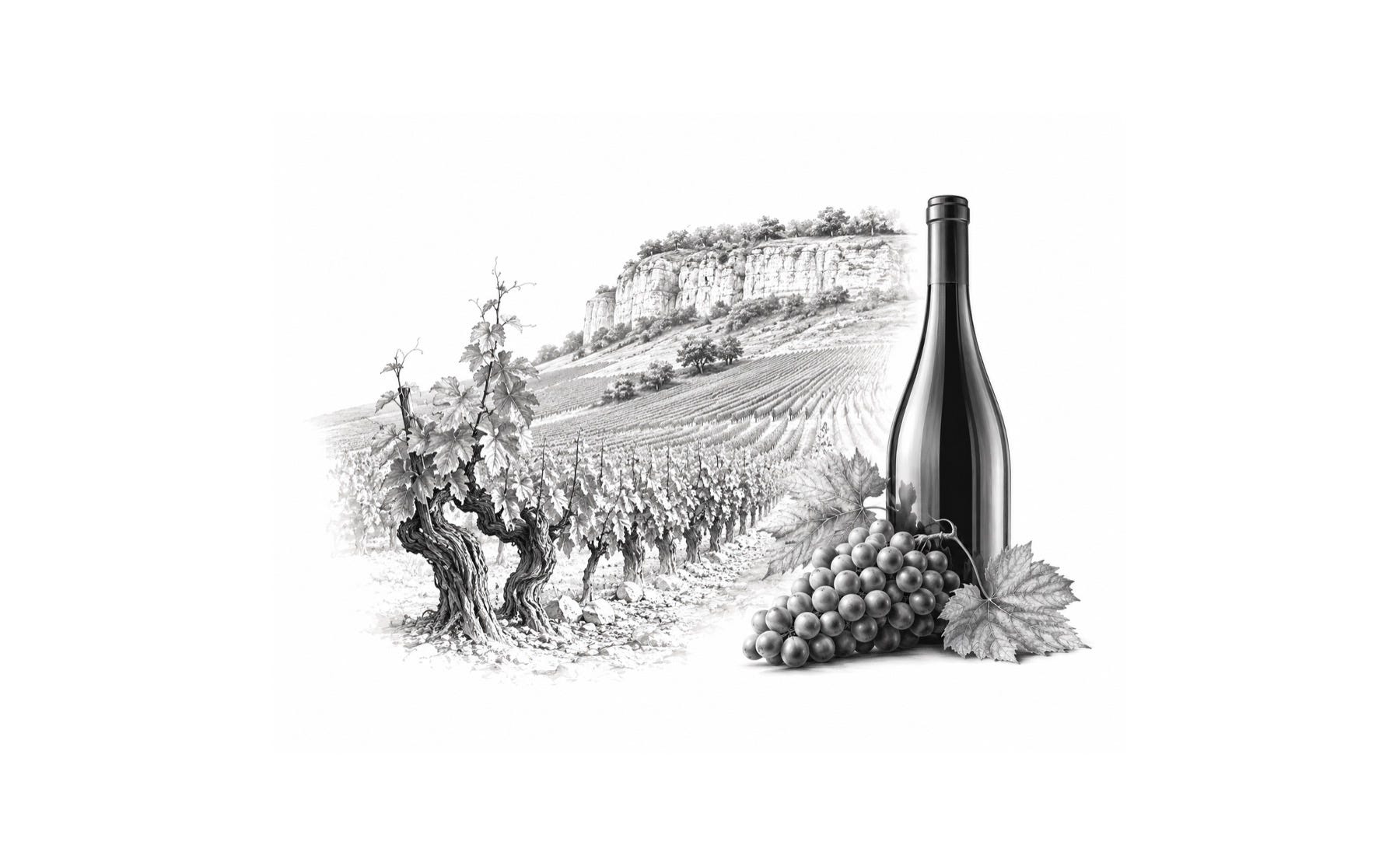
The vineyard sits on the upper-middle slope, directly adjacent to Chambertin. Its position is one of the keys to its identity. It shares geological continuity with Chambertin and Chambertin-Clos de Bèze, but it is cooler, more restrained, and often less immediately opulent. A combe, or small valley, above the vineyard helps bring cooling air into the site. In warm vintages this is increasingly valuable, because Latricières can retain freshness and structure where warmer sites may become broader or more solar.
Soils are limestone-dominant, often thin, stony, and well-drained, with marl and complex alluvial influences in parts of the vineyard. The best wines often show a firm mineral spine: not simply “power,” but a cold, rocky, almost architectural tension. Compared with Charmes-Chambertin, which can be more generous and seductive, Latricières tends to be more linear, darker, more reserved, and slower to unfold. Compared with Chambertin, it is usually less massive and less complete, but it can be more sharply etched.
Topography and exposure are classic Côte de Nuits: east to south-east facing slopes, excellent drainage, and enough altitude to preserve aromatic precision. Vine age varies by producer and parcel. Some estates work with old vines, including plantings dating back to the first half of the twentieth century. Domaine Trapet, for example, has a parcel with old vines planted in 1938. Such old-vine material contributes to the density and depth that serious collectors seek.
Viticulture among the leading domaines has moved strongly toward organic, biodynamic, or highly sustainable farming. Trapet and Rossignol-Trapet are associated with biodynamic practices. Leroy is famous for extremely low yields, meticulous vineyard work, and biodynamic farming. Duroché has become one of the most admired modern Gevrey domaines, prized for precision and transparency. Faiveley, once known for more extracted and structured wines, has refined its style over recent decades, and its Latricières-Chambertin is now among the most respected wines in the appellation.
The terroir’s great distinction is its paradox: grand cru Gevrey power, but with cool-climate discipline. Latricières is not usually the most flamboyant Gevrey grand cru. Its finest bottles appeal to collectors who value tension, longevity, savory complexity, and mineral depth.
Wine Style & Top Wines
Latricières-Chambertin is typically firm, structured, mineral, and slow-maturing. In youth, it can show black cherry, dark raspberry, wild strawberry, rose petal, spice, licorice, smoke, crushed stone, and sometimes a cool herbal or forest-floor note. With age, the best bottles develop sous-bois, truffle, game, dried flowers, tea leaf, spice, and a noble savory complexity.
The wines are rarely simple or immediately lush. They usually need time. Serious examples should be cellared for at least 8–12 years from vintage, with top producers and strong vintages capable of 20–30 years or more. The most ageworthy bottles come from producers with old vines, low yields, careful élevage, and strong track records in grand cru Gevrey.
Leading Producers and Cuvées
Domaine Leroy
The rarest and most expensive reference point. Leroy’s Latricières-Chambertin is not merely an appellation play; it is a Lalou Bize-Leroy scarcity asset. Volumes are microscopic, pricing is brand-driven, and bottles trade more like luxury collectibles than ordinary fine wine. For investors, provenance is everything. This is a trophy wine rather than a practical drinking or portfolio-building purchase.
Domaine Faiveley
One of the most important and reliable producers in the appellation. Faiveley’s Latricières-Chambertin combines scale of reputation with serious grand cru quality. Modern vintages show more polish and refinement than the more muscular wines of previous generations. For collectors, Faiveley is one of the most compelling “core” names because it offers prestige, availability, critical recognition, and better liquidity than many smaller domaines.
Domaine Trapet Père & Fils
Trapet’s Latricières-Chambertin is one of the most intellectually satisfying expressions of the cru. It tends to emphasize depth, aromatic purity, biodynamic vitality, and cool-site structure. Chambertin remains the domaine’s flagship, but Latricières has a strong following among Burgundy lovers who value finesse and terroir transparency.
Domaine Rossignol-Trapet
A serious and often comparatively undervalued source. The wines are typically elegant, savory, and balanced, with good cellaring ability. For collectors who want grand cru Gevrey without entering the extreme price tier, Rossignol-Trapet can be attractive.
Domaine Duroché
One of the most exciting modern names in Gevrey-Chambertin. Duroché’s wines have gained a strong collector following, and production can be very limited. The Latricières-Chambertin is increasingly sought after, especially by buyers who track rising-star domaines before they become fully priced.
Arnoux-Lachaux
Where available, this is a high-demand, scarcity-driven bottling. Pricing has been strongly influenced by the domaine’s dramatic rise in reputation. Liquidity can be strong among informed Burgundy collectors, but entry prices are already high and sensitive to broader Burgundy-market corrections.
Louis Jadot, Joseph Drouhin, Camus, Drouhin-Laroze, Albert Bichot, David Duband, Nicolas Potel/Roche de Bellène
These can offer useful access points, especially for mature drinking, but they are generally more producer- and vintage-specific from an investment perspective. They may be excellent bottles, but not all have the same secondary-market pull as Leroy, Faiveley, Trapet, Duroché, or Arnoux-Lachaux.
Classification & Production
Latricières-Chambertin is an official grand cru appellation of the Côte de Nuits, located in the commune of Gevrey-Chambertin. It is red wine only and classified at the highest level of Burgundy’s appellation hierarchy.
The production surface is approximately 7.3 hectares. Maximum authorized yields are around 45 hectolitres per hectare, though top producers often crop well below this level, especially in difficult years or where old vines naturally produce less. Recent reported crop figures indicate production in the broad range of only tens of thousands of bottles annually across the entire appellation. This is not a wine category that can be scaled.
Scarcity is driven by several factors:
First, the vineyard is small. Even before producer selection, there is simply not much Latricières-Chambertin.
Second, parcels are divided among a limited number of domaines and maisons, which fragments supply. Collectors are not buying “Latricières” in the abstract; they are buying Faiveley, Trapet, Duroché, Leroy, or another specific name.
Third, the best domaines release tiny allocations. The strongest bottles often disappear into private cellars, restaurants, and merchant allocation networks.
Fourth, Burgundy’s global buyer base has expanded dramatically. Demand now comes not only from France, the UK, and the US, but also from collectors in Asia, Northern Europe, and increasingly from younger high-net-worth buyers who view Burgundy as the pinnacle of wine scarcity.
Finally, climate change may increase the relative desirability of cooler sites. Latricières’ cooler position could become a long-term advantage, especially in warm vintages.
Market & Investment Analysis
Secondary-Market Performance and Price Trends
Latricières-Chambertin has participated in the broader Burgundy re-rating of the past decade. From the mid-2010s to the 2020–2022 market peak, top Burgundy prices rose sharply, driven by scarcity, global demand, strong critical attention, and the perception that grand cru Burgundy is structurally under-supplied. Since late 2022, the fine-wine market has corrected, and Burgundy has not been immune. However, the strongest Burgundy names remain materially higher than they were five years ago, and top-tier scarce wines continue to attract demand when pricing is realistic.
Latricières-Chambertin’s performance is highly producer-specific. Leroy, Arnoux-Lachaux, and Duroché are scarcity-led and can move sharply because of limited supply and brand momentum. Faiveley and Trapet tend to be more stable, with broader distribution and better reference pricing. Rossignol-Trapet may offer relative value but lower immediate liquidity.
The appellation does not trade with the same depth as Chambertin, Chambertin-Clos de Bèze, Musigny, Romanée-Saint-Vivant, La Tâche, or Rousseau’s Clos Saint-Jacques. This matters. Latricières-Chambertin is investable, but only when producer selection, vintage quality, entry price, and provenance are carefully controlled.
Liquidity and Auction Demand
Liquidity is strongest for Leroy, Arnoux-Lachaux, Duroché, Faiveley, and Trapet. Leroy is in the trophy category: extremely rare, globally recognized, and capable of attracting aggressive bidding when provenance is strong. Faiveley and Trapet are more practical for collectors because they appear more regularly and have clearer price discovery. Duroché is increasingly liquid among Burgundy specialists, though supply remains narrow.
Auction demand is strongest for pristine bottles from excellent vintages, ideally with original packaging, professional storage, and a clean chain of ownership. Single bottles can sell, but full cases, original wooden cases, and magnums are more attractive to serious collectors. For older vintages, condition becomes decisive: fill level, capsule, label, color, and storage history matter enormously.
Release Pricing vs Secondary Market
New-release Burgundy pricing has become a major risk factor. Many 2019, 2020, 2021, and 2022 releases entered the market at elevated levels, sometimes leaving limited upside for early buyers. In a softer market, the secondary price may not immediately exceed release price, especially for producers outside the most extreme scarcity tier.
The best strategy is not to buy Latricières-Chambertin automatically on release. Instead, compare release pricing with available back vintages. In some cases, mature or semi-mature bottles from strong years may offer better value than the latest vintage. This is particularly true for Faiveley, Trapet, and Rossignol-Trapet. For Duroché, Arnoux-Lachaux, and Leroy, allocations are so scarce that release access may still be valuable, but only if pricing is not already inflated by speculative demand.
Comparison with Neighboring and Competing Appellations
Chambertin
Chambertin is more prestigious, more powerful, and more liquid. It commands a major premium. Latricières offers proximity and serious quality at a discount, but it does not fully replicate Chambertin’s market depth or symbolic status.
Chambertin-Clos de Bèze
Clos de Bèze is generally more seductive, aromatic, and prestigious. It is also more expensive. Latricières is cooler, firmer, and more understated.
Charmes-Chambertin / Mazoyères-Chambertin
Charmes is often more accessible and fruit-forward, but quality can be uneven because of size and producer variability. Latricières is generally a more serious terroir for buyers who prioritize structure and longevity, though Charmes from Rousseau or other top names may command stronger market attention.
Mazis-Chambertin
Mazis is powerful, sometimes wild, and highly respected. It can be more dramatic than Latricières. Latricières is usually more linear and mineral.
Ruchottes-Chambertin
Ruchottes is perhaps the closest philosophical comparison: cool, refined, mineral, and often under the radar relative to Chambertin and Clos de Bèze. Ruchottes may have stronger visibility because of Rousseau’s presence; Latricières lacks that same “Rousseau effect.”
Clos de la Roche and Clos Saint-Denis
Moving into Morey-Saint-Denis, Clos de la Roche competes strongly in the grand cru market, especially from producers such as Dujac and Ponsot. Latricières tends to appeal more to Gevrey loyalists who want structure and cool power.
Investment Thesis
Latricières-Chambertin is a strong specialist Burgundy holding, but not a blanket buy across all producers. Its investment case rests on scarcity, grand cru status, proximity to Chambertin, improving recognition among collectors, and the increasing value of cooler terroirs in warm vintages.
The strongest investment candidates are:
Domaine Leroy: trophy-grade, ultra-scarce, suitable only for high-budget collectors who can verify provenance.
Arnoux-Lachaux: high-demand, high-volatility scarcity play.
Domaine Duroché: rising-star, high-conviction Burgundy specialist buy.
Domaine Faiveley: best balance of reputation, availability, liquidity, and relative value.
Domaine Trapet Père & Fils: excellent long-term cellar and collector holding, especially in strong vintages.
Domaine Rossignol-Trapet: value-oriented grand cru exposure, more for drinking collectors than pure investors.
Strengths
Latricières-Chambertin offers authentic grand cru terroir, small production, long aging potential, and a price discount to Chambertin and Clos de Bèze. It is especially attractive in an era when Burgundy buyers are increasingly looking beyond the most famous labels for undervalued or under-recognized climats. Its cool-site profile may age well not only in bottle, but also as a market narrative.
Risks
The main risk is liquidity. Outside the top producers, Latricières can be slower to resell than more famous Burgundy names. Another risk is producer variability: the appellation alone is not enough. Entry price also matters greatly, especially after the 2020–2022 Burgundy boom. Finally, the broader fine-wine market has undergone a correction, and recovery may be gradual rather than explosive.
Recommendation
Investment Rating: Selective Strong Buy / Core Satellite Holding
Latricières-Chambertin should not be the first Burgundy position in a fine-wine portfolio. Chambertin, Chambertin-Clos de Bèze, Musigny, Romanée-Saint-Vivant, La Tâche, Richebourg, and top Rousseau or DRC wines remain more liquid core holdings. But for collectors who already own blue-chip Burgundy, Latricières-Chambertin is an excellent “core satellite” position.
The best buying strategy is disciplined and producer-led:
Buy Faiveley, Trapet, and Duroché in strong vintages when pricing is sensible. Buy Leroy or Arnoux-Lachaux only with impeccable provenance and acceptance of higher volatility. Consider Rossignol-Trapet for value, drinking, and long-term cellar satisfaction rather than maximum liquidity.
For serious collectors, Latricières-Chambertin offers one of Burgundy’s most compelling combinations: grand cru legitimacy, relative discretion, geological seriousness, scarcity, and a market price that can still look rational beside Chambertin and Clos de Bèze. It is not the loudest Gevrey grand cru. That is precisely why it deserves attention.