
Lalande-de-Pomerol’s Quiet Precision in the Primeurs Era
A focused reading of Château Pavillon Beauregard and the evolving identity of Lalande-de-Pomerol in recent en primeur releases
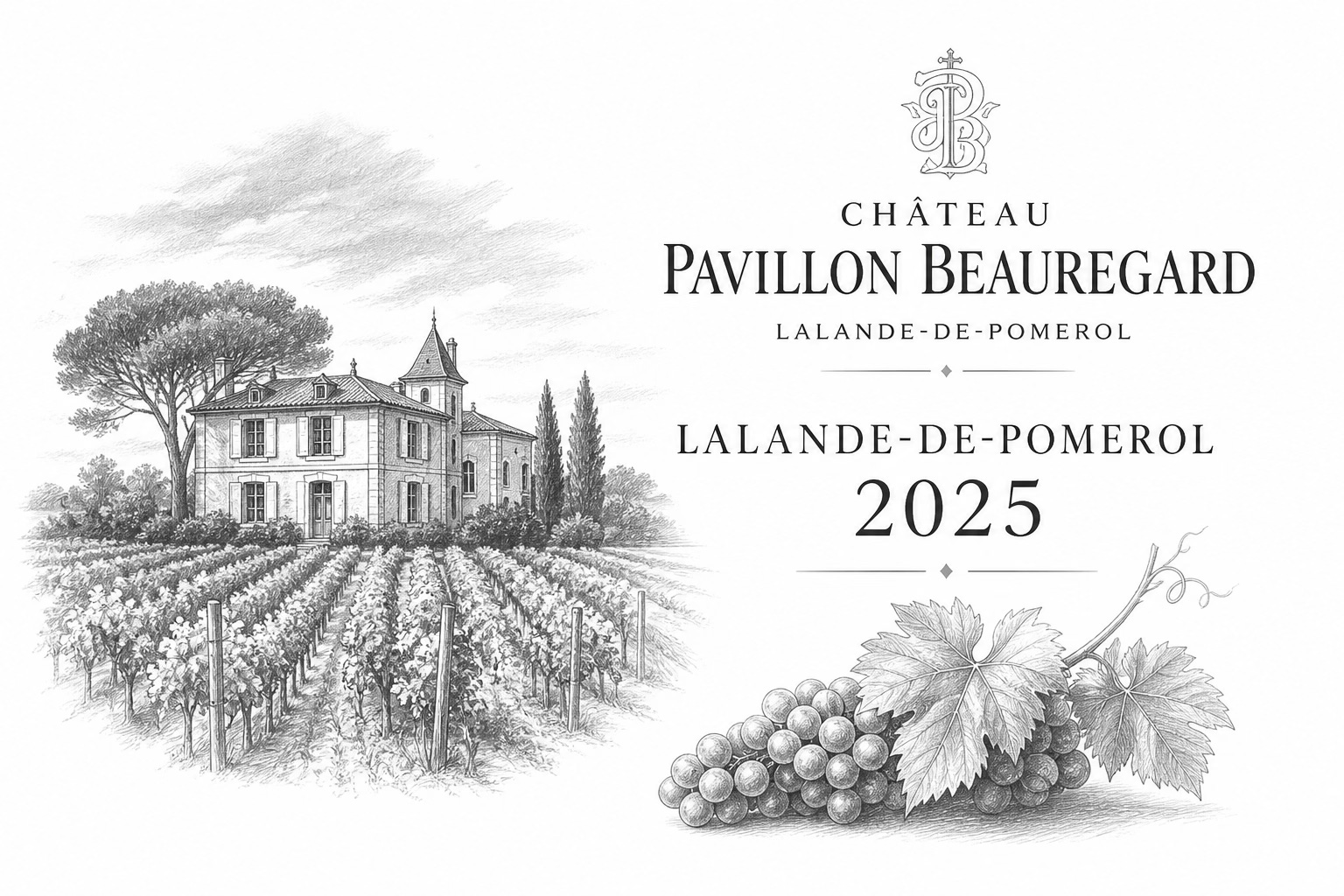
In the hierarchy of Bordeaux, certain appellations speak in a lower register. Lalande-de-Pomerol has long occupied this position—adjacent to greatness, yet defined by its own more restrained, often introspective voice. In recent primeur tastings, however, the appellation reveals a growing clarity of purpose, shaped by careful vineyard selection and a refined understanding of terroir expression.
Among the estates illustrating this shift, Château Pavillon Beauregard offers a particularly telling example. Situated in Néac and connected to the broader Beauregard holdings of the Moulin and Cathiard families, the estate has undergone a quiet but meaningful recalibration. Rather than expanding ambition outward, it has narrowed its focus inward—toward its most expressive parcels.
This strategic contraction has yielded a wine of notable coherence. The fruit profile is luminous without veering into excess, suggesting both ripeness and restraint. There is a clarity here that reflects not only vineyard selection but also a disciplined approach to extraction. The tannins, while generous, are carefully managed—supple in texture yet structurally present, giving the wine a composed architecture rather than overt weight.
The style remains firmly grounded in the identity of Lalande-de-Pomerol. There is a certain rusticity—not as a flaw, but as a defining nuance. It manifests in the tactile grain of the tannins and in a subtle aromatic edge that recalls camphor on the finish. This note, often overlooked, contributes a sense of lift and complexity, preventing the wine from settling into mere softness.
What emerges is a wine that balances power with proportion. It does not seek to rival the opulence of neighboring Pomerol, nor does it retreat into austerity. Instead, it occupies a middle ground that feels increasingly deliberate. The structure is present but not rigid; the fruit is expressive but not demonstrative.
The broader implication for Lalande-de-Pomerol is significant. As estates refine their vineyard strategies and vinification choices, the appellation moves away from its historical perception as a secondary alternative. It becomes, instead, a study in measured expression—where precision, rather than scale, defines quality.
In the context of the en primeur system, this evolution is particularly relevant. Wines such as Château Pavillon Beauregard, assessed in the range of 90–92 points , suggest not only consistency but also a growing confidence in stylistic direction. They reward attention rather than immediate impact, inviting a more contemplative reading.
For the connoisseur, this is precisely where Lalande-de-Pomerol now holds its appeal. It is an appellation that does not announce itself loudly, but one that, with careful observation, reveals a nuanced and increasingly articulate identity.