
Klevener: Alsace’s Quiet Revival of Savagnin Rose
A rare Alsatian grape, once nearly lost, re-emerges with precision, freshness, and quiet depth on the slopes south of Obernai
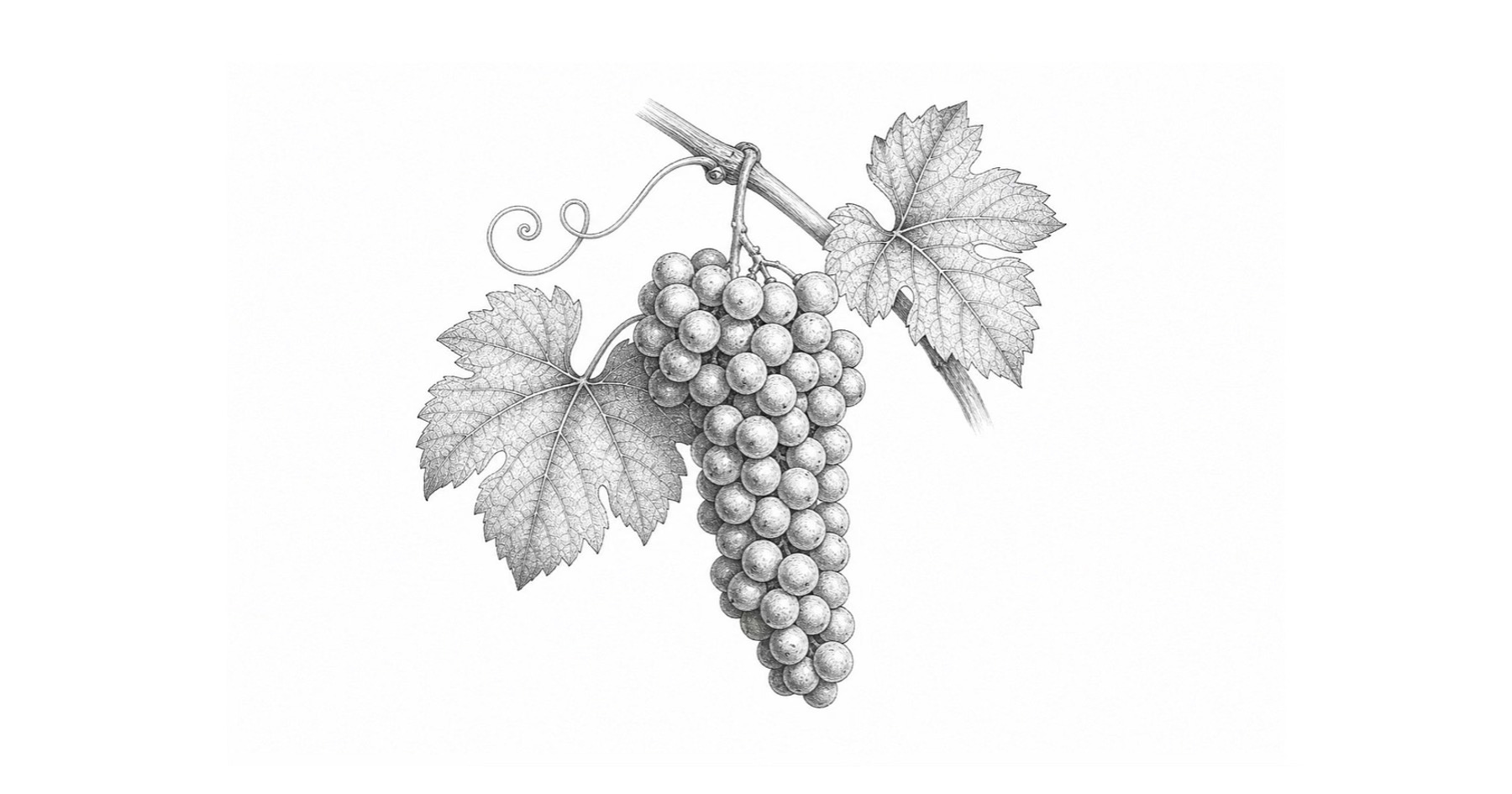
South of Obernai, where the Vosges foothills soften into gentle slopes, a discreet yet meaningful chapter of Alsatian viticulture continues to unfold. Here, on the clay-limestone and sandy soils of the Auboden hillside, a small group of growers sustains a grape that once stood on the brink of disappearance: klevener, known in ampelographic terms as Savagnin Rose.
Its story is neither linear nor secure. By 1970, barely three hectares remained planted, a vestige of a once-recognized variety that had gradually fallen out of favor. The turning point came with its formal recognition within the Alsace appellation in 1971, followed by its classification as a complementary geographical denomination. These administrative decisions did not merely preserve a name—they allowed a fragile viticultural lineage to endure.
Today, around ninety hectares are officially classified across a tightly defined zone encompassing Heiligenstein and neighboring villages such as Gertwiller and Bourgheim. Yet only about half of this surface is actively claimed by roughly forty producers. The scale remains intimate, almost fragmented, reflecting both the challenges and the devotion required to cultivate this singular grape.
Between Jura restraint and Alsatian expression
Klevener occupies a fascinating position within the Traminer family. It is closely related to the Savagnin Blanc of the Jura and can be understood as a precursor to Gewurztraminer, its more aromatic and opulent descendant. Where Gewurztraminer leans toward exuberance, Savagnin Rose remains more measured—its spice restrained, its structure more linear.
In dry expressions, the wines often evoke the clarity and tension of ouillé Savagnin from the Jura: precise, saline, and quietly persistent. These are wines that integrate seamlessly at the table, their freshness cutting through richness while maintaining aromatic subtlety. When harvested with slightly higher ripeness, klevener develops a more generous texture—fleshy without heaviness—layered with delicate spice rather than overt perfume.
Vinification choices play a decisive role. Stainless steel and large traditional foudres remain the preferred vessels, preserving the grape’s aromatic integrity. Experiments with barrique have largely proven less convincing, the imprint of oak tending to obscure rather than enhance. Amphorae, by contrast, offer a more compelling alternative. Their neutral yet textural influence seems to refine the grape’s natural breadth, lending both clarity and dimension.
The question of style
The diversity of approaches—dry, off-dry, occasionally richer interpretations—creates a certain ambiguity around klevener’s identity. Unlike more codified Alsatian varieties, it resists a singular stylistic definition. This plurality can complicate its reading, yet it also reflects a living tradition rather than a fixed model.
At its most articulate, a small measure of residual sugar does not detract from precision but instead supports the wine’s structure. The terroir, particularly on the Auboden slope, absorbs this richness with ease, translating it into balance rather than excess. With time, the wines evolve toward notes of dried fruits, nuts, honey, and undergrowth—an aromatic register that speaks more of quiet maturity than immediate charm.
A discreet future
Klevener remains a marginal presence within Alsace, both in surface area and recognition. Yet its persistence is not accidental. It endures because a handful of growers continue to see in it something essential: a link between regions, between past and present, and between expression and restraint.
In an era where clarity of identity often comes at the cost of diversity, Savagnin Rose offers a different proposition. It invites attention rather than demands it, revealing itself gradually—through texture, through nuance, and through the steady continuity of those who have chosen not to let it vanish.