
Jacques Selosse: Extra-Brut Grand Cru Blanc de Blancs Avize "Les Chantereines"
A proof of concept in 600 bottles: Avize chalk, Burgundy oak, and the perpetual reserve that distils Selosse's revolution to a single parcel
Introduction
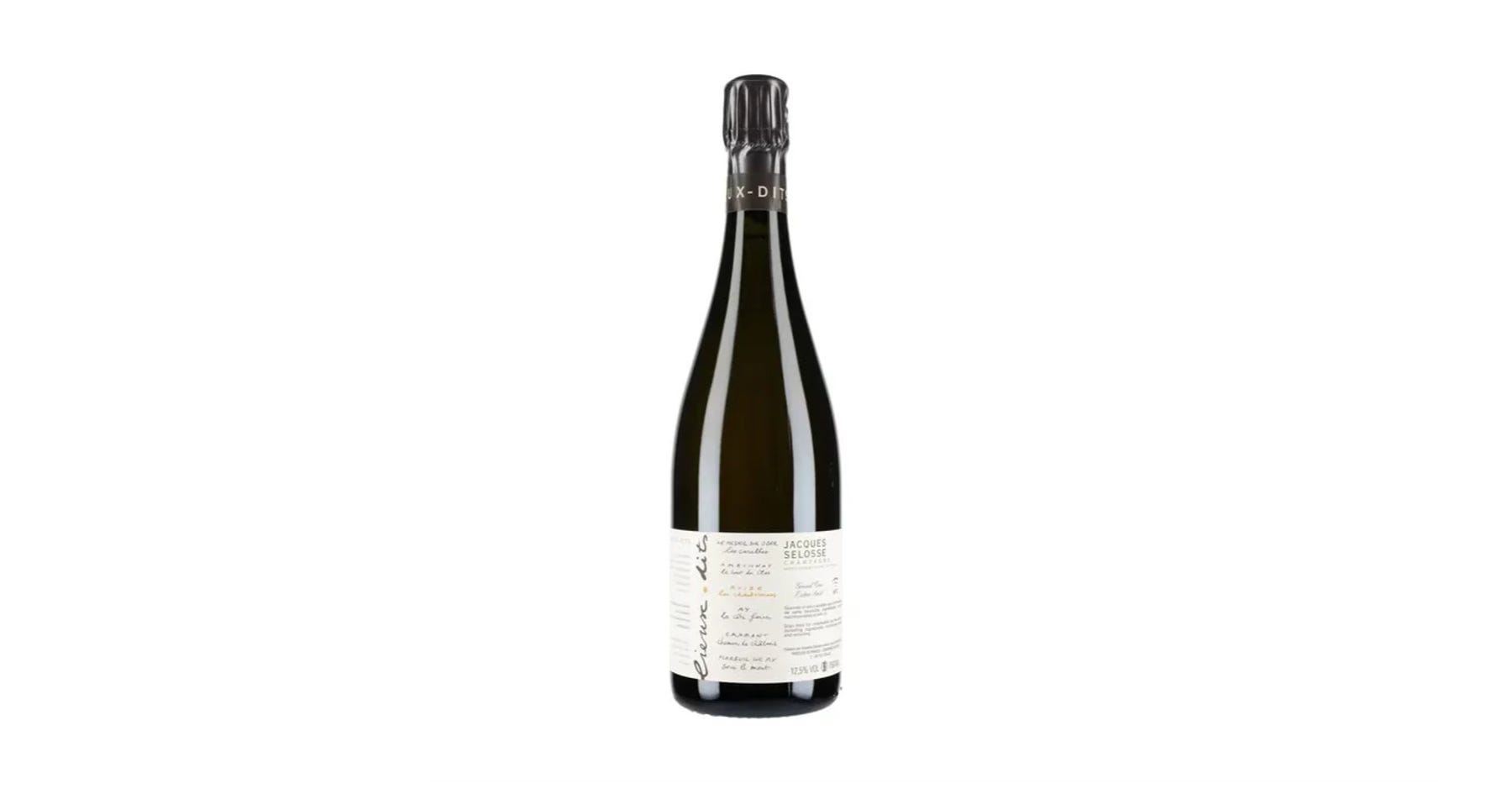
Les Chantereines is the wine through which Jacques Selosse articulates the essence of Avize—the Grand Cru village that has been the family’s home since the mid-twentieth century and the philosophical centre of one of the most consequential revolutions in the modern history of Champagne. It is a single-vineyard Blanc de Blancs, produced from a steep east-facing chalk parcel of approximately 0.8 hectares in the commune of Avize, vinified in Burgundy oak, built on a perpetual-reserve blending system, and released in quantities of approximately 600 bottles per disgorgement. It is, by any conventional measure, one of the rarest, most expensive, and most critically scrutinised Champagnes in existence.
The wine belongs to the Lieux-Dits series, introduced by Anselme Selosse around 2010 as the logical culmination of his Burgundy-inspired philosophy: six single-vineyard Champagnes from identified parcels across the Côte des Blancs and the Montagne de Reims, each vinified identically and each built on a perpetual blend that minimises vintage variation while maximising site-specific expression. Within this series, Les Chantereines occupies a position of particular significance: it is the Avize expression, the home-village wine, the parcel that also contributes to the solera-based Substance cuvée—the domaine’s most celebrated bottling. To taste Les Chantereines is to isolate one thread from the tapestry of Substance and to examine it in its unblended form: a single parcel, a single grape variety, a single commune, expressed through the prism of Selosse’s radical winemaking.
The critical turning points in the wine’s short history are those of the domaine itself: Anselme’s return from Burgundy in 1980, the adoption of oak fermentation, the establishment of the solera system in 1986, the progressive reduction of yields and dosage, and the conceptualisation of the Lieux-Dits programme. Les Chantereines, first released from a 2005 base vintage, is a product of all these decisions—the endpoint of a philosophical trajectory that began three decades earlier. Its cult following is a function of its quality, its scarcity, and its status as the purest expression of Avize chalk available from the producer who redefined what Champagne could be.
Within the broader narrative of French fine wine, Les Chantereines represents something genuinely new: a Champagne conceived and produced as a terroir wine in the Burgundian sense, from a single identified parcel, with the ambition of expressing geological and microclimatic specificity rather than house style or vintage character. That this ambition is pursued through a perpetual blend rather than a vintage bottling is itself a statement: the wine’s identity is the place, not the year, and the perpetual blend serves to distil that identity across time.
Vineyard and Terroir
Location and Classification
Les Chantereines lies within the commune of Avize, classified as Grand Cru for Chardonnay production and situated at the heart of the Côte des Blancs—the 20-kilometre south-facing escarpment that produces the finest chalk-based Chardonnay in Champagne. Avize occupies a central position on this slope, flanked by Cramant to the north and Oger to the south, and its wines have historically been regarded as combining the mineral austerity of Le Mesnil-sur-Oger with the generosity and breadth of Cramant—a synthesis that gives Avize Chardonnay its distinctive completeness.
The parcel extends to approximately 0.8 hectares on a steep, east-facing slope. This orientation provides morning and midday sun exposure while offering protection from the intense afternoon heat that, in warmer vintages, can accelerate ripening and reduce acidity—a balance that is critical in a region where preserving freshness and maintaining acid structure are essential to the production of fine sparkling wine. The steepness of the slope promotes natural drainage, reduces the risk of waterlogging, and forces vine roots deep into the chalk substrate in search of moisture and nutrients.
Soil and Geology
The geological foundation of Les Chantereines is Campanian chalk—the belemnite-rich Cretaceous formation that underlies the entire Côte des Blancs and that constitutes Champagne’s most prized viticultural substrate. This chalk, composed of the fossilised remains of marine organisms deposited approximately 70 to 80 million years ago, possesses unique physical properties: it is porous enough to absorb and retain substantial quantities of water—up to 40 percent of its volume—while providing the drainage and root penetration characteristics that prevent waterlogging and promote deep root development. The topsoil is a calcareous mixture of clay, sand, silt, and chalk fragments, thin enough on the steep slope of Les Chantereines to expose vine roots to the chalk substrate at relatively shallow depth.
The chalk serves multiple viticultural functions. As a water reservoir, it buffers the vines against drought stress during dry periods and moderates excess moisture during wet ones. As a pH regulator, it maintains the alkaline soil conditions that promote the uptake of minerals and trace elements that contribute to the wine’s characteristic salinity and mineral expression. As a heat sink, it absorbs solar radiation during the day and releases it slowly during the night, extending the effective ripening period and moderating diurnal temperature variation. These properties are not unique to Les Chantereines—they characterise the entire Côte des Blancs—but the specific combination of slope, exposure, and chalk depth within this parcel creates a microsite of particular concentration and mineral intensity.
Vine Age and Farming
The vines in Les Chantereines are among the oldest in the Selosse holdings. The parcel was acquired by Jacques Selosse (Anselme’s father) in the mid-twentieth century, and plantings from that era would now exceed 70 years of age. These old vines provide the deep root systems, low natural vigour, and concentrated fruit that distinguish the finest expressions of chalk-based Chardonnay. The vineyard is farmed organically, consistent with the domaine-wide approach that Anselme adopted in the 1970s: no chemical pesticides, herbicides, or synthetic fertilisers, with yields maintained at approximately half the legal maximum through natural vigour moderation and hard pruning.
Sensitivity to Climatic Variation
The east-facing exposure of Les Chantereines makes it sensitive to vintage character in specific ways. In cool, late-ripening years, the morning sun exposure may not provide sufficient thermal accumulation for complete phenolic maturity, producing base wines of higher acidity and leaner structure. In warm years, the same exposure provides natural protection against overripeness, preserving the freshness and tension that the perpetual blend requires. The perpetual-reserve system mitigates the most extreme expressions of vintage variation by blending across multiple years, but the character of each year’s contribution to the reserve is nonetheless shaped by the climatic conditions of the vintage—a dynamic that gives each disgorgement its subtle but perceptible individuality.
Grape Composition and Viticultural Choices
Les Chantereines is produced entirely from Chardonnay, as required by its Blanc de Blancs designation and consistent with the Grand Cru classification of Avize, which is authorised exclusively for this variety. Chardonnay’s affinity with chalk-based soils is the geological and varietal foundation upon which the entire Côte des Blancs is built: the variety’s capacity to transmit mineral character, to maintain acidity at high levels of ripeness, and to develop complexity through extended ageing on lees makes it uniquely suited to the production of fine Champagne from these soils.
The domaine maintains massal selections propagated from its oldest plantings, notably from the Chemin de Châlons parcel in Cramant (planted around 1938), preserving a genetic diversity that predates the widespread adoption of clonal material in Champagne. This genetic heritage contributes to the complexity and layered character of the wines, offering a broader range of aromatic and structural expression than single-clone plantings can provide.
Yield management is central to the Selosse approach. The organic farming regime, combined with the old-vine vigour moderation and deliberate pruning practices, maintains yields at levels well below the Champagne legal maximum—often approximately half. These low yields produce fruit of exceptional concentration, phenolic maturity, and extract, qualities that are essential for wines destined to undergo extended oak ageing and to carry minimal dosage without appearing thin or unbalanced. The hand-harvesting protocol, standard across all Selosse holdings, ensures that only sound, fully ripe fruit enters the winery.
Vinification and Élevage
Pressing and Fermentation
Following hand-harvest and careful selection, the grapes are pressed and the must is transferred to Burgundy oak barrels for primary fermentation. The domaine employs a range of barrel sizes: standard 228-litre pièces, 400-litre fûts, and 600-litre demi-muids, each offering a different ratio of oak surface to wine volume and therefore a different intensity of oak influence and oxygen exchange. Approximately 20 percent of the barrels are new; the remainder are older, neutral vessels that contribute texture and controlled oxidation without overt wood flavour.
Fermentation proceeds with indigenous yeasts—a hallmark of the Selosse approach that produces longer, less predictable fermentations than commercial yeast strains but that contributes to the aromatic complexity and site-specificity of the finished wine. Malolactic fermentation is neither blocked nor encouraged; it proceeds naturally according to the conditions of the vintage, producing wines of variable but authentic acidity profile from year to year.
The Perpetual Blend
Les Chantereines is not a vintage wine but a perpetual blend, built on a reserve system that Anselme initiated with a 2005 base vintage. Each year, a portion of the new wine from the Les Chantereines parcel is added to the existing reserve, and a portion of the reserve is drawn off for bottling. This system—a smaller-scale adaptation of the solera principle employed for the Substance cuvée—produces a base wine that carries the accumulated complexity of multiple vintages while maintaining the site-specific character of the single parcel. The distinction from Substance is important: where Substance draws on a solera initiated in 1986 and blends fruit from multiple Avize parcels (including Les Chantereines and Les Marvillannes), the Lieux-Dits Les Chantereines isolates the single parcel and employs a shorter-history perpetual reserve, producing a wine that is more site-specific and more responsive to recent vintage character than the fully matured Substance blend.
Élevage and Bottling
The base wine ages for approximately one year on fine lees in oak before being bottled for secondary fermentation. Bâtonnage is employed during this period to build textural complexity and mid-palate weight. Following bottling, the wine undergoes an extended period of ageing on lees in bottle before disgorgement. The Extra-Brut designation indicates a dosage of less than 6 grams per litre—a level that, given Selosse’s general practice of minimal dosage (often 1.5 to 5 grams per litre), is likely at the lower end of this range. The low dosage places the full burden of balance on the fruit’s natural concentration, the lees-derived complexity, and the structural framework provided by the oak ageing and the perpetual blend.
Each release carries a disgorgement date, which is critical information for collectors: the date indicates when the wine was removed from its lees and therefore how long it has been developing in bottle post-disgorgement. Wines tasted shortly after disgorgement may show a different character—more youthful, more taut, more oxidatively restrained—than the same release tasted months or years later. This variability is inherent to the Extra-Brut, low-dosage style and adds a further dimension of complexity to the assessment and cellaring of the wine.
Vintage-by-Vintage Analysis
The term “vintage-by-vintage” requires qualification for a wine produced as a perpetual blend. Les Chantereines does not bear a vintage designation; each release represents a multi-year assemblage drawn from the perpetual reserve. The meaningful unit of analysis is therefore the disgorgement rather than the vintage, with each disgorgement reflecting the cumulative contributions of multiple harvests and the specific moment at which the wine was released from its lees. The following analysis addresses the wine’s evolution through its release history, with reference to the base-vintage contributions and disgorgement context where this information is available.
Early Releases (circa 2010–2014)
The first releases of Les Chantereines, drawn from a perpetual reserve initiated with the 2005 base vintage, arrived in a market that was only beginning to understand the Lieux-Dits concept. These early disgorgements showed the wine at its most youthful and most directly site-expressive: the chalk minerality of Avize was prominent, the oak influence from the relatively young reserve was more perceptible than it would become in later releases, and the wine’s structure was taut and tensile, with a linearity that reflected both the young reserve and the minimal dosage. Critics noted the wine’s ambition and complexity while acknowledging that the perpetual blend had not yet achieved the depth and layering that longer reserve histories would provide.
Maturation of the Reserve (2015–2019)
As the perpetual reserve accumulated additional vintages—including contributions from the strong 2008, 2012, and 2014 harvests—the wine gained in complexity and textural richness. Disgorgements from this period show a broader, more multi-dimensional expression: the chalk minerality remains but is now integrated into a richer matrix of lees-derived complexity, subtle oxidative development, and the layered depth that the perpetual blend is designed to produce. The comparison with earlier releases is instructive: the wine has not changed its fundamental identity—it remains a mineral, tensile, chalk-driven Blanc de Blancs—but it has deepened, broadened, and acquired a complexity that the younger reserve could not deliver.
Critical reception during this period placed Les Chantereines among the finest single-vineyard Champagnes being produced, with assessments consistently above 93 points from specialist critics. Antonio Galloni of Vinous praised the Lieux-Dits series as among the most important Champagne releases of the modern era, and Peter Liem described Selosse’s wines as rare examples of multi-voiced complexity. The oxidative character—a hallmark of the Selosse style—was noted as both a distinguishing virtue and a potential barrier to acceptance among consumers who define Champagne by freshness and fruit-forward brightness.
Current Releases (2020–Present)
The most recent disgorgements of Les Chantereines benefit from a perpetual reserve now spanning nearly two decades of contributions. The wine has achieved a maturity of expression that the earliest releases could only suggest: the chalk minerality, the oxidative complexity, the textural weight from oak and lees, and the depth from the accumulated reserve all converge in a wine of remarkable completeness. These releases also reflect the transition from Anselme’s stewardship to Guillaume’s, though the perpetual-blend format means that any changes in winemaking approach will manifest only gradually, diluted into the existing reserve over many years.
The 2020s releases also arrive in a market context significantly different from that of a decade earlier: the grower-Champagne movement that Selosse inspired has matured, producing dozens of serious single-vineyard expressions from other producers, and the price premium for Selosse over these alternatives has widened. The question of whether Les Chantereines justifies its price relative to this expanded competition is one that the market is actively reassessing, and the answer depends largely on whether the collector values the accumulated complexity of Selosse’s extended perpetual reserve and oak-aged base wines over the fresher, more immediately accessible expressions that other grower estates produce.
Style, Identity, and Structural Sensory Profile
The core stylistic identity of Les Chantereines is defined by three elements: the mineral austerity of Avize chalk, the textural weight and oxidative complexity of Burgundy-barrel ageing, and the layered depth of the perpetual blend. These three elements interact to produce a Champagne that is, in Jancis Robinson’s formulation, “much more wine than champagne, even though it has bubbles.” The effervescence, while fine and persistent, is subordinate to the wine’s deeper structural qualities: it serves as a textural element rather than a defining characteristic.
The wine’s texture is its most immediately distinguishing quality. Where conventional Champagne achieves its textural effect through mousse and dosage, Les Chantereines achieves it through extract, lees complexity, and the waxy, slightly resinous quality that oak ageing imparts. The mid-palate has a density and viscosity that recalls great white Burgundy rather than sparkling wine, and the finish extends with a saline, mineral persistence that is directly attributable to the chalk substrate.
Compared to other benchmark Avize Blanc de Blancs—Pierre Péters’ cuvées, Agrapart’s parcellaires, or the broader Avize component of prestige cuvées like Salon’s Le Mesnil bottling—Les Chantereines occupies an extreme position: the most vinous, the most oxidative, the most texturally dense. Where Péters emphasises fruit purity and crystalline minerality, and where Salon pursues crystalline austerity through extended lees ageing without oak, Selosse pursues depth through oak, oxidation, and the accumulated complexity of the perpetual reserve. These are fundamentally different readings of chalk terroir, and the collector’s preference for one over another is ultimately a matter of aesthetic disposition rather than absolute quality.
In bottle, the wine evolves slowly and unpredictably. Post-disgorgement, it can appear austere and reticent, with the oxidative elements in sharp relief against a framework of high acidity and minimal dosage. With six to twelve months of post-disgorgement rest, it begins to integrate, the oxidative and reductive elements finding a balance that allows the terroir character to emerge more clearly. Over years, the wine develops the honeyed, toasted, deeply mineral complexity that characterises the finest aged Champagnes—though the Selosse oxidative style means that this development proceeds from a different starting point and along a different trajectory than wines aged in a more reductive idiom.
Aging Potential and Cellaring
Short-Term (0–3 Years Post-Disgorgement)
In the immediate period following disgorgement, Les Chantereines is drinkable but often not at its most communicative. The oxidative elements can appear prominent, and the wine’s structural components—acidity, extract, mineral salinity—may not yet be fully integrated. A resting period of six to twelve months post-disgorgement is recommended before opening, to allow the wine to recover from the disruption of disgorgement and to begin the integration process.
Medium-Term (3–10 Years Post-Disgorgement)
This window represents the period of greatest interest for most collectors. The wine’s oxidative and mineral elements achieve a balance that reveals the terroir character with increasing clarity, and the textural complexity from the perpetual reserve and oak élevage develops into a fully resolved expression. The mousse softens slightly, contributing to a creamier texture, and the finish gains in length and mineral persistence. For most disgorgements, this window represents the optimal drinking period.
Long-Term (10–20+ Years Post-Disgorgement)
The combination of high acidity, low dosage, extract from old vines, and the structural framework provided by oak ageing gives Les Chantereines the potential for extended development. However, the Selosse oxidative style introduces a variable that complicates long-term cellaring predictions: wines that have already undergone significant oxidative development in barrel may have less development potential in bottle than wines that have been aged in a more reductive environment. The risk of the wine evolving past its optimal point—developing the flat, tired character of excessive oxidation—is real and must be weighed against the potential reward of extraordinary complexity. Provenance and storage conditions are critical, and only impeccably stored bottles should be considered for cellaring beyond a decade.
Storage Conditions
Ideal storage conditions are consistent with those for fine Champagne: constant temperature between 10°C and 12°C, humidity between 70% and 80%, horizontal bottle position, and complete absence of light and vibration. The low dosage and oxidative ageing style make Les Chantereines particularly sensitive to temperature fluctuations, which can accelerate oxidative degradation in a wine that already carries a degree of deliberate oxidative character.
Market Value and Investment Perspective
Pricing
Les Chantereines commands retail prices of approximately 780 to 1,135 USD per bottle, depending on market, vintage of disgorgement, and availability. Auction prices have ranged from approximately 470 to 1,060 EUR, with the most recent disgorgements trading at the upper end of this range. The complete Lieux-Dits six-bottle collection, the format in which the wine is often sold, commands 3,000 to 5,000 USD or more, with some retailers pricing above 7,500 USD. These prices place Les Chantereines among the most expensive Champagnes in the world, exceeded only by the rarest vintage releases of Krug, Salon, and a handful of other prestige bottlings.
Scarcity
The production of approximately 600 bottles per disgorgement is vanishingly small—a figure that ensures structural scarcity regardless of demand levels. Distribution is managed through the domaine’s strict allocation system, and access typically requires the purchase of the full Lieux-Dits collection rather than individual bottles. This distribution model limits market visibility but concentrates demand among the most committed collectors, creating a supply-demand dynamic that supports price levels but constrains liquidity.
Secondary Market
The secondary market for Les Chantereines is active but thin. The tiny production volumes mean that relatively few bottles circulate, and when they appear at auction or on specialist platforms, they tend to trade at or above retail pricing. Liquidity is limited by the small number of bottles available and by the specialised nature of the collector base: this is not a wine that attracts casual buyers or speculative traders, but one that appeals to a narrow cohort of Champagne specialists, Selosse devotees, and collectors of extreme-rarity wines.
Comparative Position and Risks
Relative to comparable single-vineyard Champagnes—Pierre Péters’ Les Chétillon, Agrapart’s Vénus, or Egly-Ouriet’s single-vineyard bottlings—Les Chantereines commands a significant premium, reflecting both the Selosse brand’s cult status and the wine’s genuinely distinctive character. The principal risks to this premium include: the potential for the oxidative style to fall out of fashion; the emergence of competing single-vineyard Champagnes from other grower estates at lower price points; the generational transition at the domaine, which introduces uncertainty about future stylistic direction; and the broader risk of Champagne market correction, should the economic conditions sustaining ultra-premium pricing change.
Cultural and Gastronomic Significance
Les Chantereines represents, in concentrated form, the cultural proposition that has defined Jacques Selosse’s contribution to French wine: that Champagne is a terroir wine, that individual parcels can express themselves with the specificity and depth associated with the finest vineyards of Burgundy, and that this expression is worth pursuing at whatever cost in yield, production volume, or commercial accessibility. The wine’s presence on the most serious wine lists in the world—in Paris, London, New York, Tokyo, and Copenhagen—signals a restaurant’s engagement with the idea that Champagne belongs in the conversation of terroir-driven fine wine, not merely as an aperitif category.
Within French wine culture, the Lieux-Dits series—and Les Chantereines as its Avize expression—occupies a position of intellectual authority. It is the wine that sommeliers, winemakers, and critics reference when discussing the frontier of terroir expression in sparkling wine. Its influence extends beyond Champagne to the broader conversation about site-specificity, minimal intervention, and the relationship between viticulture and vinification in the production of fine wine.
Gastronomic Relevance
The wine’s vinous weight, oxidative complexity, and minimal dosage make it an unusually versatile gastronomic partner. In youth, the taut acidity and mineral intensity pair naturally with raw shellfish—oysters from Cancale or Marennes-Oléron, langoustines, sea urchin—where the wine’s salinity and textural density create a dialogue of remarkable precision. Sashimi of white fish, ceviche, and tartare preparations find in Les Chantereines a partner that matches their delicacy while contributing a depth of flavour that lighter Champagnes cannot provide.
At maturity, as the oxidative complexity deepens and the mousse softens, the pairing possibilities expand to encompass richer preparations: turbot in beurre blanc, lobster with cream, roasted sweetbreads, or aged Comté and Gruyère. Japanese kaiseki cuisine, with its emphasis on seasonal ingredients, textural contrast, and umami depth, provides a particularly rewarding context for mature Les Chantereines. The wine’s combination of acidity, mineral salinity, and oxidative complexity can navigate the multiple courses and flavour registers of a kaiseki meal with an ease that few other wines—Champagne or otherwise—can match.
The wine’s role at the table ultimately reflects its identity: it is not a wine of celebration or aperitif convenience but a wine of contemplation and engagement. It asks the diner to pay attention, to set aside expectations about what Champagne should taste like, and to meet the wine on its own terms. This quality—demanding, rewarding, and entirely consistent with the philosophy that produced it—is the essence of the Selosse contribution to the culture of fine wine.
Conclusion
Les Chantereines is, at its most essential, a proof of concept: the demonstration that a single parcel of Champagne vineyard, farmed organically at extreme low yields, vinified in Burgundy oak, and released through a perpetual-reserve system in quantities of 600 bottles, can produce a wine of depth, complexity, and terroir specificity comparable to the finest still wines of France. This was Anselme Selosse’s original proposition, articulated four decades ago, and Les Chantereines is among its most concentrated expressions.
The wine’s strengths are inseparable from its limitations. The oxidative style produces extraordinary complexity but constrains the audience to those who embrace or at least accept that character. The perpetual blend provides accumulated depth but makes the wine resistant to conventional vintage analysis and cellaring prediction. The tiny production ensures exclusivity but limits accessibility and market liquidity. The pricing, while consistent with the wine’s scarcity and the domaine’s cult status, places it beyond the reach of all but the most dedicated collectors and exposes it to the risks of market correction and shifting taste.
For those who accept these terms, Les Chantereines offers something that is genuinely rare in the wine world: a Champagne that operates as a terroir wine, that reveals the geological character of Avize chalk with a transparency and depth that no other producer achieves in quite the same way, and that rewards patience, attention, and the willingness to reconsider what Champagne can be. It is not a wine for every occasion or every palate. It is a wine for those who have already understood Champagne’s conventional pleasures and who seek something beyond them—a wine that, like the revolution it represents, asks not to be liked but to be understood.