

Jacques Selosse: Extra-Brut Grand Cru Blanc de Blancs Avize "Les Chantereines"
600 bottles from century-old vines, a perpetual reserve reaching back to 2003, and an argument for site over method.
Introduction
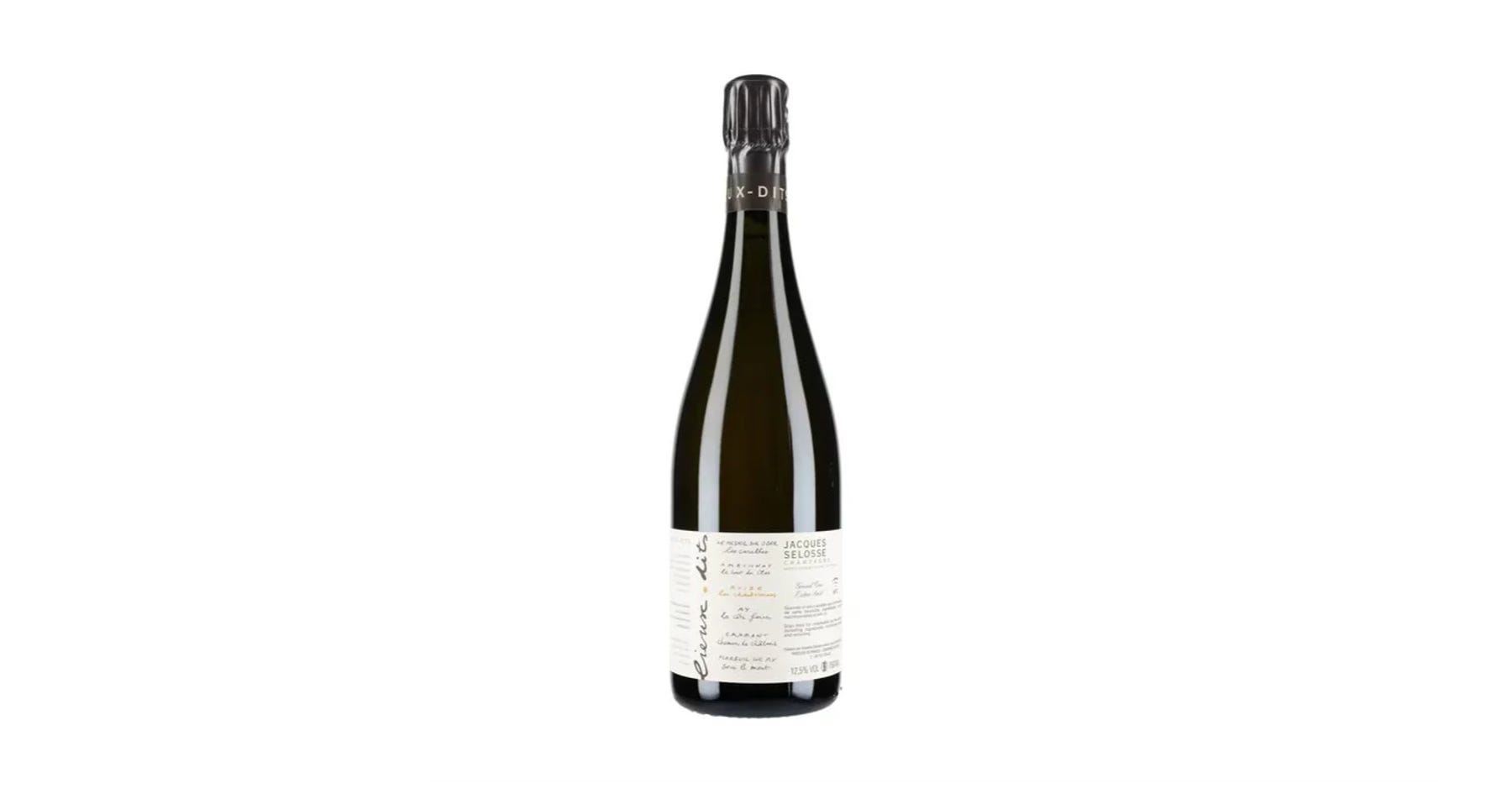
Les Chantereines is the Avize expression within Jacques Selosse’s Lieux-Dits collection—a series of six single-vineyard, single-village Champagnes launched in 2010 that represent the most uncompromising articulation of terroir-driven sparkling winemaking in the appellation. It is an Extra-Brut Grand Cru Blanc de Blancs, 100% Chardonnay, produced from one of the oldest vineyard parcels in the Côte des Blancs: vines planted in 1922, 1928, 1935, and 1945, rooted in the Campanian chalk that defines Avize’s identity. Production is approximately 600 bottles per year. It is, by almost any measure, one of the rarest and most site-specific Champagnes in existence.
The wine’s significance extends beyond rarity. Les Chantereines is, in effect, a pure distillation of the proposition that animated Anselme Selosse’s career: that a single parcel of vines, farmed with obsessive attention to soil health and harvested at full physiological ripeness, can produce a Champagne that speaks with the specificity of a great Burgundy climat. It is the parcel that also contributes approximately half the fruit to Substance, the domaine’s solera-based non-vintage cuvée and arguably its most celebrated wine. In the Lieux-Dits context, Les Chantereines functions as the Avize reference point—a benchmark against which the other five single-vineyard expressions (from Cramant, Le Mesnil-sur-Oger, Aÿ, Ambonnay, and Mareuil-sur-Aÿ) are implicitly measured.
Les Chantereines is not sold individually. It is available only as part of the six-bottle Lieux-Dits case, of which approximately 300 are released each year. This distribution model is not a marketing strategy; it is a philosophical statement. The six wines are intended to be tasted comparatively, as a demonstration that identical winemaking applied to different terroirs produces fundamentally different wines. In this framework, Les Chantereines is both a standalone expression and a component of an argument—one that has reshaped the way collectors, sommeliers, and critics think about Champagne’s capacity for site-specific expression.
The wine debuted with the 2005 base vintage (though the parcel was vinified separately from 2003). Across its roughly two decades of production, Les Chantereines has attracted critical attention from Antonio Galloni at Vinous, Robert Camuto at Wine Spectator, Richard Juhlin, and others. The CellarTracker community average stands at 95 points across some 45 reviews; the Wine-Searcher aggregate critic score is 96. These are not the metrics by which the wine is best understood, but they confirm its standing at the apex of Champagne quality.
Within the broader narrative of French fine wine, Les Chantereines belongs to a small category of wines that derive their significance not from classification, brand heritage, or volume, but from the irreducible specificity of a single piece of ground. It sits alongside wines like Salon’s Le Mesnil, Krug’s Clos du Mesnil, and Philipponnat’s Clos des Goisses as a Champagne defined by a singular vineyard identity—but with the crucial distinction that it emerges from an estate of 8.3 hectares rather than a corporate house, and that its winemaking philosophy is radically non-interventionist by Champagne standards.
Vineyard and Terroir
Location and Parcel Composition
Les Chantereines is a lieu-dit situated on the outskirts of Avize, on a gentle-to-steep east-facing slope within the Grand Cru commune. According to Vinous’s detailed retrospective tasting report (June 2023), Selosse holds two parcels in Chantereines. The oldest parcel measures 0.31 hectares and was planted in 1929 (other estate sources cite initial plantings as early as 1922, with additional plantings in 1928, 1935, and 1945). A second, slightly larger parcel of approximately 0.45 hectares has been replanted more recently and, as of 2023, was not yet in production. The majority of the vineyard was acquired by Jacques Selosse, the domaine’s founder, in 1945—making it one of the estate’s earliest and most historically significant holdings.
The parcel is located at the edge of the village, a few hundred metres south along the plateau from the domaine’s cellars, as described by Wine Spectator’s Robert Camuto, who visited the site with Anselme Selosse. The vineyard slopes gently eastward, receiving morning sun—an exposure that promotes slow, even ripening while protecting from the intensity of afternoon heat. In the context of Avize’s topography, where the most-valued parcels typically sit on the mid-slope where the balance between clay overburden and chalk bedrock is most nuanced, Les Chantereines occupies a distinctive position.
Soils and Geology
Avize lies at the heart of the Côte des Blancs, a narrow escarpment running roughly north-south, geologically defined by Campanian chalk—a formation approximately 80 million years old composed of the calcareous skeletons of billions of microscopic marine algae (coccolithophores). This chalk is highly porous, capable of absorbing up to 40% of its weight in water, then slowly releasing moisture to vine roots during dry periods. It provides exceptional natural drainage while acting as a moisture reservoir—a dual function that is critical to vine health in both wet and dry seasons.
Les Chantereines is specifically characterised by clay-rich soils over this chalk base, as described by Antonio Galloni at Vinous. The clay component is significant: it adds weight, body, and textural density to the resulting wines, distinguishing them from parcels lower on the Avize slope where pure chalk predominates and wines tend toward greater linearity and tension. The geological profile of Les Chantereines thus predisposes it toward a style of Avize Chardonnay that is broader, more powerful, and more texturally complex than the commune’s most skeletal expressions—a character clearly legible in the finished wine.
Microclimate and Exposure
The east-facing orientation ensures early morning sun exposure, which is advantageous in a cool continental climate where ripening is a persistent challenge. Morning warmth dries dew quickly, reducing disease pressure, while the absence of intense afternoon sun preserves acidity—the structural foundation of great Champagne. The gentle slope promotes natural air drainage, reducing frost risk in the vulnerable spring period, though lower parcels in Avize remain susceptible.
The proximity of forest at the upper reaches of the Avize slope creates a microclimate effect: the tree canopy moderates temperature extremes and can influence humidity levels. Les Chantereines, situated on the plateau’s edge, benefits from this moderating influence without the excessive clay and shade that can make the very highest parcels problematic in cool vintages.
Vine Age and Farming Philosophy
The oldest vines in Les Chantereines date to 1922—over a century old at the time of writing. Additional plantings followed in 1928, 1935, and 1945. This vine stock is among the oldest in Champagne and constitutes a biological asset that is, in the literal sense, irreplaceable: it would take generations of growth for newly planted vines to develop comparable root depth, yield self-regulation, and flavour complexity. The deep root systems of these centenarian vines penetrate far into the chalk subsoil, drawing moisture and minerals that shallow-rooted younger plantings cannot access.
The estate’s farming philosophy, developed over decades by Anselme Selosse and now continued by his son Guillaume, defies easy categorisation. It evolved through phases of agrobiology (1990–1996), biodynamics (1996–2002), and then a more individualistic approach inspired by the ideas of Japanese philosopher Masanobu Fukuoka and the principles of permaculture. The domaine has deliberately avoided organic or biodynamic certification in order to retain flexibility. No chemical fertilisers, synthetic pesticides, or herbicides are used. Cover crops grow freely between rows. The land is sometimes worked with horse-drawn ploughs. Yields are held low through strict pruning and the natural self-regulation of old, low-vigour vines.
Les Chantereines is farmed with the same approach applied across the domaine’s 54 parcels, but the parcel’s extreme vine age means it demands—and rewards—particular sensitivity to the year-to-year variability of climate. In cool, wet vintages, the deep roots and low vigour of the old vines provide a buffer; in hot, dry years, the chalk subsoil’s moisture reserve is critical. The parcel’s east-facing exposure, which avoids excessive afternoon heat, offers an additional margin of resilience in increasingly warm seasons—a factor whose importance has grown with climate change.
Grape Composition and Viticultural Choices
Les Chantereines is 100% Chardonnay, as are all three Côte des Blancs Lieux-Dits. There has been no change to this composition since the wine’s inception. In the context of Avize, which is planted exclusively to Chardonnay by regulatory classification and by overwhelming practice, this is both expected and significant: the wine is a pure expression of a single variety on a single site, with no blending of varieties to moderate or round the character.
The vine material is massal selection, not clonal. The oldest plantings (1922–1945) predate the widespread introduction of clonal selections in Champagne and carry a genetic diversity that is no longer commercially available. This diversity contributes to the complexity of the resulting must: different genetic lines ripen at slightly different rates, produce slightly different flavour profiles, and respond to seasonal conditions in different ways. The aggregate effect is a wine of greater internal complexity than could be produced from a single clone.
Yield control is achieved primarily through the natural low vigour of the old vines, supplemented by careful pruning. Selosse does not publish precise yield figures for individual parcels, but the domaine’s overall approach prioritises physiological ripeness over volume. Harvesting is done entirely by hand, often later than most Champenois neighbours, at a point of full maturity. Anselme Selosse has noted that a touch of botrytis is occasionally accepted for the additional complexity it can contribute—a practice that is deeply heterodox in Champagne. In Wine Spectator’s 2024 profile, Camuto reported that Anselme monitors seed counts in the grapes: fruit from parcels with typically one seed per grape is fermented in smaller 228-litre Burgundy barrels (sometimes new), while fruit from parcels with two or more seeds is directed to larger 400-litre used barrels, to avoid excessive tannin extraction from the wood.
Vinification and Élevage
Les Chantereines has been vinified as a separate parcel since 2003 and first released as a Lieux-Dit with the 2005 base vintage. The vinification follows the domaine’s established methodology, applied consistently across all cuvées but calibrated to the specific character of the fruit.
Pressing and Fermentation
After hand-harvesting, the grapes undergo gentle pressing. The juice is transferred directly to oak barrels—not stainless steel, which is entirely absent from the Selosse cellar. Fermentation is conducted in small Burgundy-format oak barrels of 228 litres, with less than 20% new oak in any given year and no barrels older than six years. As noted, the barrel size may vary depending on the seed count of the grapes in a given year. Indigenous yeasts, cultivated from the estate’s own vineyards, are used for all fermentations. No commercial yeast strains are employed.
Malolactic fermentation is categorically prevented. This is one of the defining technical choices of the Selosse house style: by preserving the natural malic acidity of the must, the wines retain a structural tension and longevity potential that is fundamental to their character. The absence of malolactic conversion also means the wines can appear austere and tightly wound in youth, requiring patience—or deliberate aeration—before revealing their depth.
Élevage and Blending
The base wine spends approximately 11 months on its fine lees in barrel, during which bâtonnage (lees stirring) is practised regularly—Anselme has described doing this once a week with a steel rod. This extended lees contact builds textural richness and complexity. Sulphur additions are kept to an absolute minimum, sometimes not applied until bottling.
The Lieux-Dits wines, including Les Chantereines, are produced using what the Rare Wine Company describes as a “mini-solera” system. This is more precisely a perpetual reserve: the wine from the current base vintage is blended with a reserve of all preceding vintages just prior to bottling. The reserve is then replenished, and the blended wine is bottled for secondary fermentation. This approach erases the marker of vintage—the base year is indicated on the bottle, but each release carries within it the accumulated character of every harvest since 2003. As Anselme Selosse has said: “When everything changes, what remains is a terroir.”
The proportion of the current vintage in the final blend varies from year to year, depending on the size of the harvest and the volume of the reserve. The wine then spends approximately six years on lees in bottle before disgorgement. Disgorgement is performed by hand, often to order, and the wine is typically released approximately six months after disgorgement. Dosage is extremely low to zero—the wine is labelled Extra Brut, and only fruit sugar is used. The wine is neither fined nor filtered.
Implications for Ageing Potential
The combination of barrel fermentation, preserved malic acidity, extended lees ageing, minimal dosage, and the perpetual-reserve blending system creates a wine of considerable structural complexity. The oak contributes micro-oxygenation during élevage, building a framework of controlled oxidative development that continues to evolve in bottle. The absence of malolactic fermentation provides a scaffolding of acidity that can support decades of further evolution. The perpetual reserve adds depth and stability that purely single-vintage wines cannot match.
Release-by-Release Analysis
Les Chantereines is a non-vintage wine with a base year indicated on each release. Because the perpetual reserve means every bottle contains a fraction of every preceding vintage, the conventional notion of a “vintage” applies only loosely. Nonetheless, the base year shapes each release’s primary character. The parcel was vinified separately from 2003, and the first Lieux-Dit release used a 2005 base. CellarTracker records, combined with Vinous and other sources, confirm the following base years: 2004 (earliest documented), 2005, 2006, 2008, 2010, 2011, 2012, 2013, 2014, 2016, 2017, and 2018.
The Early Releases (Base 2004–2006)
The earliest releases were foundational in both senses. The 2004 base represents the first documented production, emerging from the initial years of separate vinification. The 2005 base was the official debut of the Lieux-Dit bottling, produced during a year of strong climatic balance in Champagne. The 2006 base is particularly significant: as documented by Antonio Galloni at Vinous, 2006 was the last vintage in which Anselme Selosse produced the Millésimé entirely from Les Chantereines and the neighbouring Maladries du Midi parcels. This means the 2006 base Chantereines Lieux-Dit would have been produced from fruit destined for two of the domaine’s most important cuvées simultaneously. These early releases established the wine’s identity: broad, powerful, and texturally dense by Avize standards, with the depth of the old vines clearly legible.
The Maturing Phase (Base 2008–2012)
The 2008 base drew from one of Champagne’s most celebrated modern vintages: a year of marked acidity and precision, following a cool growing season. In the context of Les Chantereines’ naturally broad, clay-influenced style, the 2008 base likely produced a release of unusual tension—the site’s richness counterbalanced by the vintage’s structural rigour. The 2010 base came from a vintage of moderate quality and lower yields, testing the perpetual reserve’s capacity to smooth vintage irregularity. The 2011 base, from a warm and early-ripening year, would have brought generosity and forward fruit. The 2012 base, from a challenging season of frost, rain, and uneven ripeness, represents precisely the kind of vintage in which the solera system proves its worth: the reserve’s accumulated complexity compensates for the deficiencies of a single difficult year.
The Galloni Assessment: Base 2013
The 2013 base release, disgorged on 17 February 2020, was tasted by Antonio Galloni at Vinous as part of a comprehensive retrospective tasting and dinner in June 2023. Galloni described it as showing “all the breadth and resonance of Avize,” noting that the wine was “a bit more oxidative in style than the other Blanc de Blancs in this flight, but that works quite well with the wine’s natural intensity and textural feel.” He called it “gorgeous.” The 2013 growing season in Champagne was cool and late, with harvest delayed into October—a season that tends to favour the domaine’s approach of waiting for full physiological ripeness. The result was a release of concentrated minerality and structural depth.
Recent Releases (Base 2014–2018)
The 2014 base was assessed in Lieux-Dits comparative tastings, where it scored in the range of 93+ points on CellarTracker, slightly behind the Carelles (Le Mesnil) and Sous le Mont (Mareuil-sur-Aÿ) from the same release cycle. The 2014 vintage in Champagne was initially challenging—wet conditions through much of the growing season—but a warm, dry September salvaged the harvest, producing wines of good concentration if occasionally uneven acidity. In the 2016 base, Champagne experienced a historically difficult year: April frost devastated vineyards across the region. In Avize, the frost of April 2016 was particularly severe, destroying an estimated 75% of the potential crop. This extreme yield reduction concentrates the surviving fruit but also means the perpetual reserve carries a disproportionate influence in that release. The 2017 and 2018 bases are the most recent documented. The 2017 vintage was early and generous; 2018 was warm and ripe. Both represent the beginning of Guillaume Selosse’s stewardship, and early assessments on CellarTracker suggest the wines maintain the house’s characteristic intensity and oxidative complexity.
A structural observation across releases: the perpetual reserve system means that later releases carry an increasingly complex accumulation of prior vintages. A 2018 base release contains traces of every vintage back to 2003—a timespan encompassing cool years (2008, 2013), warm years (2011, 2018), frost-affected years (2016), and climatically balanced years (2005, 2006). The wine therefore becomes, with each successive release, a more complete expression of the site across climatic variation—which is precisely the intention.
Style, Identity, and Structural Sensory Profile
Les Chantereines occupies a specific position within the Selosse range and within Avize’s broader spectrum of expression. Its core identity can be understood through comparison with its immediate peers—the other two Chardonnay Lieux-Dits—and with the domaine’s blended cuvées.
Relative to Les Carelles (Le Mesnil-sur-Oger), which tends toward greater linearity, tension, and austere chalk-driven minerality, Les Chantereines is broader, more texturally saturated, and more overtly powerful. The clay component in its soils gives the wine a mid-palate density that Le Mesnil, with its predominantly pure chalk, does not produce. Relative to Chemin de Châlons (Cramant), which Galloni has described as a wine of “nerve” and “tension,” Les Chantereines again shows greater weight and breadth. Within the Lieux-Dits Blanc de Blancs trio, it is the most vinous, the most overtly oxidative, and the most generous in texture—the expression of Avize’s particular combination of clay, chalk, and east-facing slope.
The wine’s oxidative character is its most debated feature. The combination of barrel fermentation, extended lees ageing, and minimal sulphur creates a level of controlled oxidative development that produces toasted, nutty, and savoury notes absent from conventionally vinified Champagne. This is not oxidation in the pejorative sense—it is a deliberate stylistic framework, analogous to the controlled oxidation of great Jura wines or fino Sherry. As Richard Juhlin has noted, “Selosse wines have certainly always been oxidative since 1986, but never oxidised.” The distinction is critical: the wines retain freshness and acidity beneath the savoury, tertiary complexity.
Structurally, Les Chantereines presents medium-to-full body, a fine and persistent mousse (less aggressive than most Champagne, reflecting the extended lees ageing), firm acidity preserved by the absence of malolactic fermentation, and a finish that is both saline and mineral. The texture is oily and dense, with a grip or phenolic quality that CellarTracker reviewers have noted—one described it as “somewhat fatiguing on the palate,” not as criticism but as acknowledgment of the wine’s sheer intensity. This is a Champagne that demands attention rather than offering easy pleasure. It is closer in its sensory demands to a great Premier Cru Meursault or Puligny-Montrachet than to a conventional Blanc de Blancs.
Comparisons with benchmark wines of the appellation are illuminating but imprecise. Salon, the definitive single-village Le Mesnil expression, is more linear and reductive, with a skeletal purity that Les Chantereines does not seek. Krug Clos du Mesnil, also from Le Mesnil, is vinified in oak but with a larger proportion of new wood and a fundamentally different blending philosophy. Among grower producers, Agrapart’s l’Avizoise, from old vines at the top of the Avize slope, is perhaps the closest terroir comparison—but Agrapart works in a less oxidative register, and the resulting wines are more immediately fruity and accessible. Les Chantereines stands alone in its combination of site, vine age, winemaking method, and philosophical intention.
Aging Potential and Cellaring
The Rare Wine Company advises that Selosse’s wines, “like great White Burgundy, benefit from extended cellaring and/or aeration before serving, and should not be served too cold.” This guidance applies with particular force to Les Chantereines, which is among the most structured and tightly wound wines in the range.
Short-Term (0–5 Years Post-Disgorgement)
In the months immediately following disgorgement, Les Chantereines is typically closed and austere. The absence of malolactic fermentation and the extremely low dosage mean there is no cushion of softness to make the wine approachable in youth. The domaine recommends at least six months of post-disgorgement rest, and many experienced tasters suggest one to two years is preferable. During this phase, the wine shows its structural architecture—acidity, chalk-driven minerality, phenolic grip—without yet revealing the layers of complexity that develop with time.
Medium-Term (5–15 Years Post-Disgorgement)
This is the window in which Les Chantereines begins to show its full character. The oxidative development initiated in barrel continues in bottle, adding depth and savoury complexity. The acidity, which can seem severe in youth, integrates and becomes a vehicle for flavour rather than a barrier to it. The perpetual-reserve component adds an additional layer of evolved, tertiary character that deepens over this timeframe. For most releases, the sweet spot likely falls between seven and twelve years post-disgorgement, when structure and complexity are in balance.
Long-Term (15+ Years Post-Disgorgement)
The combination of preserved malic acidity, the perpetual reserve’s depth, and the wine’s overall structural intensity suggests that well-stored bottles have the potential to develop for two decades or more after disgorgement. However, Champagne’s ageing trajectory is non-linear: at some point, the mousse begins to soften and the wine transitions from sparkling to vinous. For Les Chantereines, with its already vinous character and fine mousse, this transition may be more graceful than for lighter Champagnes. The oldest documented releases (base 2004–2005, disgorged around 2010–2012) are now over a decade post-disgorgement and, by available reports, remain vibrant.
Storage Conditions
Optimal cellaring requires stable temperature (10–12°C), darkness, adequate humidity (70–80%), absence of vibration, and horizontal storage. Given the wine’s minimal sulphur protection and absence of filtration, it is more sensitive to storage conditions than heavily processed Champagne. Temperature fluctuations and light exposure will accelerate oxidation beyond the controlled level intended by the winemaker, potentially pushing the wine from oxidative complexity to outright decline.
Market Value and Investment Perspective
Pricing and Scarcity
Wine-Searcher reports an average price of approximately $1,135 per bottle (ex-tax), with retail listings ranging from roughly $843 to $1,351 depending on disgorgement date and retailer. On specialist French merchants such as Vins et Millésimes, individual Lieux-Dits bottles are listed at approximately €550–€660 (inc. VAT), and the complete six-bottle case at €3,500–€4,700.
The scarcity is absolute and structural. Production of approximately 600 bottles per year from a 0.31-hectare parcel of century-old vines cannot be increased. The second parcel (0.45 hectares) is being replanted, but newly planted vines will take a decade or more before they contribute meaningfully to wine quality at the standard the domaine requires. Les Chantereines and Chemin de Châlons are the two most restricted Lieux-Dits—they cannot be purchased individually and are available only within the six-bottle collection.
Secondary Market Behaviour
Les Chantereines appears at auction rarely and in minuscule quantities. On iDealwine, lots are typically single bottles, with hammer prices reflecting the wine’s extreme rarity. The broader Selosse auction market provides context: Sotheby’s reported Jacques Selosse among the top five Champagne producers by auction sales value in 2023, at approximately 4% of their Champagne sales in USD-equivalent terms. The Lieux-Dits, as the rarest offerings in the range, command a premium over the already elevated prices of Initial and Version Originale.
Liquidity is low. This is a wine for collectors who acquire it to drink, or for long-term holding by those who value extreme rarity. It is not a trading wine in the way that Dom Pérignon, Cristal, or even Krug Grande Cuvée are trading wines. There is insufficient secondary-market volume to generate reliable price indices or trend analysis. The practical reality is that most bottles are consumed rather than resold.
Risks
The principal risks for holders are: the generational transition (whether Guillaume Selosse can sustain the quality and philosophical intensity that created the market), the vine-replanting issue (the second parcel’s young vines will eventually enter production, potentially altering the wine’s character), and the broader softening of ultra-premium wine markets, which has affected Burgundy and could extend to cult Champagne. The oxidative style’s niche appeal also limits the wine’s potential buyer pool relative to more conventionally styled prestige cuvées. Against these risks, the wine’s absolute scarcity and irreproducible terroir base provide a floor of support that few wines can match.
Cultural and Gastronomic Significance
Les Chantereines exists in a rarefied stratum of wine culture. It is not a wine that appears on restaurant wine lists in any conventional sense—its production of 600 bottles per year, available only in six-bottle cases, effectively precludes standard on-premise distribution. Where it appears, it is as a statement piece: at private tastings, collector dinners, and the kind of gastronomic events where the wines are themselves the occasion.
The domaine’s own Hôtel-Restaurant Les Avisés, acquired in 2011, is the most natural setting to encounter the wine. The restaurant, located in Avize, integrates the Selosse wines into a full gastronomic context—a deliberate expression of Anselme’s belief that wine is inseparable from food, place, and culture. Occasional aperitif tastings are organised exclusively for hotel guests, at €50–60 per person, conducted in French.
Les Chantereines’ gastronomic relevance is exceptional precisely because it is a Champagne that functions as a wine. Its weight, texture, and complexity make it unsuitable for casual apéritif service but ideal for pairing with cuisine of comparable intensity and refinement. At its best, it stands alongside—and in some contexts surpasses—great still Burgundy as a partner for dishes that demand both acidity and depth: shellfish (langoustines, sea urchin, coquilles Saint-Jacques), white truffle preparations, aged Comté or Parmesan, poached turbot with beurre blanc, or simply with a succession of artisanal cheeses. At advanced maturity, the wine’s increasing savoury and nutty complexity opens additional pairing possibilities with umami-rich preparations: dashi-based broths, aged soy-marinated dishes, and mushroom-based cuisine.
Within French wine culture more broadly, Les Chantereines belongs to the tradition of vins de méditation—wines intended not for consumption but for contemplation. Its existence is an argument: that a single parcel of chalk and clay in Avize, tended by a single family across three generations, can produce a wine that merits the same seriousness of attention given to the great single-vineyard Burgundies. That this argument has been largely accepted—by critics, collectors, and a growing number of chefs and sommeliers—is itself a cultural achievement of considerable significance.
Conclusion
Jacques Selosse’s Les Chantereines is, in the strictest sense, a minor wine: 600 bottles per year from a third of a hectare, available only as part of a six-bottle collection that itself numbers just 300 cases annually. Its market footprint is negligible; its presence in public discourse is disproportionately large. This disproportion is the point. Les Chantereines was conceived not as a commercial product but as an argument—a demonstration that a single lieu-dit in Champagne can produce a wine of absolute site-specificity, one whose identity persists across vintage variation and whose character is irreducible to method alone.
The argument rests on foundations that remain solid. The vineyard’s century-old vines, its position on clay-over-chalk soil with east-facing exposure, and its integration into the domaine’s perpetual-reserve system create a wine that cannot be replicated by any other producer, on any other site, with any other vine material. The winemaking—barrel fermentation, indigenous yeasts, no malolactic, minimal dosage—amplifies rather than creates the terroir’s voice. The perpetual reserve, now containing traces of every vintage since 2003, gives the wine a temporal depth that single-vintage bottlings cannot achieve.
The vulnerabilities are real but manageable. The generational transition to Guillaume appears, by all available evidence, to have preserved the estate’s philosophical core. The replanting of the second parcel will eventually expand the vineyard’s productive capacity, but the domaine’s history suggests this will be managed with characteristic patience. The broader question—whether a wine this scarce, this expensive, and this stylistically demanding can sustain its position in an increasingly crowded landscape of cult Champagne—is ultimately a question about whether the market values authenticity or novelty. Les Chantereines offers the former in its purest available form.
For the collector, professional, or enthusiast who encounters a bottle, the experience is not one of pleasure alone but of understanding: this is what a specific piece of ground in Avize, tended across a century and interpreted through a singular winemaking philosophy, has to say. The wine does not seek to be liked. It seeks to be comprehended.