
Henri Jayer: The Winemaker Who Redefined Burgundy
From Cros Parantoux to cold maceration, how Henri Jayer reshaped Burgundy and became one of fine wine’s most coveted names.
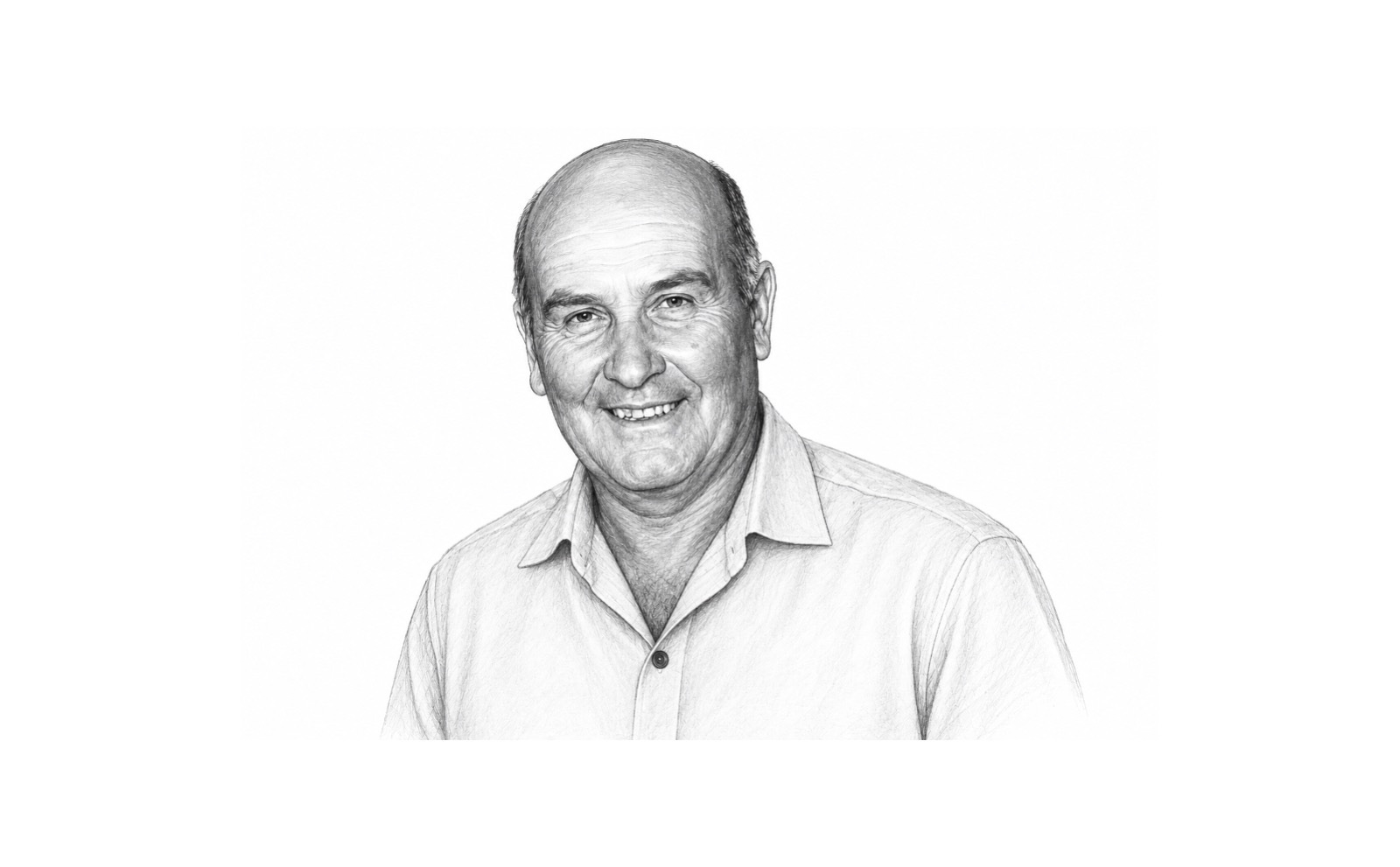
Few names in Burgundy inspire the combination of reverence, curiosity and acquisitive desire attached to Henri Jayer. His bottles have become trophies of the fine-wine market, his methods have influenced generations of growers, and the vineyard most closely associated with him — Vosne-Romanée Premier Cru Cros Parantoux — has acquired an almost mythic status.
Yet the fascination of Jayer is not simply a story about rarity or auction prices. It is a story about scale: one man working an unusually small patchwork of vineyards, paying almost obsessive attention to fruit quality, and shaping Pinot Noir with methods that were deliberate without being showy. It is also a story about land he did not always own, a difficult hillside that other growers had largely neglected, and a philosophy passed directly to winemakers who would help define modern Vosne-Romanée.
Henri Jayer was born in Vosne-Romanée on February 6, 1922, into a winegrowing family. He studied oenology in Dijon in the 1940s, while his practical involvement in viticulture had already begun during the Second World War. He died in Dijon on September 20, 2006, aged 84.
To understand why his wines now occupy such a singular place in Burgundy, however, it is necessary to look beyond the legend.
Henri Jayer before the legend
Jayer’s career emerged from a Burgundy very different from the region encountered by today’s collectors. In the postwar decades, many vineyards were economically fragile, ownership could be highly fragmented, and the distinction between farming a parcel and owning it was fundamental.
Jayer worked vineyards belonging to the Camuzet family under Burgundy’s tenant and sharecropping arrangements. Domaine Méo-Camuzet’s own history identifies him as one of the estate’s historic tenant farmers. This matters because several celebrated wines associated with Jayer came from land that should not automatically be described as his personal property. His career was built from a mixture of inherited or family land and vineyards farmed for other owners.
Even the question of when “Domaine Henri Jayer” began resists a neat answer. Christie’s identifies 1945 as Jayer’s first vintage, while contemporary obituary reporting says he was producing wine under his own label by the 1950s. Other historical accounts point toward greater independence in bottling around the end of that decade. These are best understood as different milestones — first vintage, own-label production and increasingly independent domaine bottling — rather than forced into a single foundation date.
That ambiguity is revealing. Jayer did not emerge as a modern wine brand constructed around a launch year and a marketing identity. His reputation grew from the vineyards outward.
Cros Parantoux: the vineyard that made Henri Jayer immortal
No place is more closely connected with Henri Jayer than Cros Parantoux, a Premier Cru climat of Vosne-Romanée covering only about 1.01 hectares.
Its position alone is enough to excite Burgundy lovers. Cros Parantoux lies beside the Grand Cru Richebourg and above Les Brûlées, on a relatively high, cool, east-facing slope. The terrain is stony, the soils shallow, and ripening tends to be slower — conditions capable of preserving acidity while Pinot Noir develops maturity.
Today that sounds like the description of a coveted terroir. In Jayer’s early career, it was hardly an obvious prize.
Beginning in the 1950s, Jayer acquired and replanted small sections of the neglected site with Pinot Noir. Accounts of its redevelopment emphasize how physically difficult the work was. The ground was so hard and rocky that later histories describe the use of explosives to break it up before planting.
This is one reason the Cros Parantoux story has become so powerful. It presents Jayer not as a winemaker who simply inherited a great vineyard at the height of its fame, but as a grower who recognized potential in a difficult site and invested extraordinary labor in bringing it back into production.
For years, however, there was no standalone Henri Jayer Cros Parantoux.
Before 1978, grapes from the site went into Jayer’s Vosne-Romanée village wine. The 1978 vintage became the first separately bottled Cros Parantoux, beginning the sequence that would eventually rank among the most sought-after wines in Burgundy. Jayer’s final vintage of the wine was 2001.
That relatively short dedicated-bottling history is central to its rarity. There is no century-long back catalogue of Henri Jayer Cros Parantoux. The wine belongs to a tightly bounded era, produced from a tiny vineyard and in small quantities.
More than Cros Parantoux: Henri Jayer’s great Burgundy wines
Cros Parantoux may dominate the mythology, but reducing Henri Jayer to one vineyard misses the range of his work.
His name is also closely associated with Richebourg Grand Cru, one of Vosne-Romanée’s most celebrated vineyards. Jayer vinified Richebourg through arrangements that included Méo-Camuzet land, with 1987 identified as his last vintage of the wine.
He made Echézeaux Grand Cru, with documented parcels including Les Cruots and Les Treux, and he inherited Echézeaux land as part of his family holdings. Other important wines included Vosne-Romanée Premier Cru Les Brûlées, Nuits-Saint-Georges Premier Cru Les Meurgers, Vosne-Romanée Premier Cru Beaumonts/Beaux Monts, and his Vosne-Romanée village bottling.
The labels themselves can make the Jayer universe complicated. Henri also made wines from vineyards belonging to his brothers Georges and Lucien, meaning bottles can appear under Domaine Lucien Jayer, Domaine Georges Jayer or Domaine Henri Jayer even when Henri was responsible for the winemaking. Christie’s identifies the word “Réserve” as a designation for Domaine Henri Jayer wines produced and bottled by Henri himself.
For collectors, that complexity is not trivia. Understanding Jayer requires understanding Burgundy’s family structures, vineyard ownership and historical labelling practices rather than relying on the producer name alone.
What made Henri Jayer’s winemaking different?
Jayer’s reputation rests as much on method as terroir.
His daughters described a man who combined formal oenological education with relentless observation and experimentation. Grape selection was rigorous: they recalled him checking harvesting baskets before the fruit even reached the sorting table and rejecting berries that failed his standards.
His nephew and protégé Emmanuel Rouget remembered the same vineyard-first mentality. Henri and his wife Marcelle worked in the vines six days a week, closely watching the condition of the plants and resisting mechanization adopted simply because it was modern. Contemporary reporting also associated Jayer with reduced chemical use, plowing for weed control, short pruning and low yields.
The point was not asceticism for its own sake. Jayer wanted exceptionally clean, ripe fruit because it gave him greater freedom in the cellar.
Once there, his methods were precise.
He became strongly associated with total destemming, removing the stems before fermentation. He practiced a pre-fermentation cold maceration, with Christie’s describing roughly four to five days at around 15°C. He worked with natural yeasts and was an early practitioner of systematic temperature control in Burgundy, techniques used to emphasize fruit expression and freshness.
He also used the sorting table systematically, controlled barrel maturation closely, minimized rackings and did not filter his finished wines. Bottling was done by hand using a traditional device known as a chèvre.
These practices sound familiar in contemporary fine Burgundy. That familiarity is itself part of Jayer’s influence.
Did Henri Jayer invent cold maceration?
One of the most repeated claims about Henri Jayer concerns cold maceration, sometimes called a cold soak: keeping grapes cool before alcoholic fermentation begins in order to manage extraction and emphasize aromatic and fruit characteristics.
Jayer undoubtedly became one of the technique’s most important modern Burgundy advocates. His documented practice involved several days of pre-fermentation maceration at controlled temperature, and Domaine Méo-Camuzet remembers him as one of the early systematic users of temperature-controlled vinification.
But describing him as the uncontested “inventor” of cold maceration goes further than the available evidence supports.
A more accurate description is also more interesting: Henri Jayer pioneered and helped popularize systematic pre-fermentation cold maceration and controlled vinification in modern Burgundy. His significance lies not in winning a simplistic race for invention, but in demonstrating how a set of techniques could be integrated into a coherent vision of Pinot Noir.
Controlled intervention, not winemaking minimalism
Jayer is also sometimes described as a non-interventionist. That term needs care.
Emmanuel Rouget characterized his approach as avoiding unnecessary intervention once immaculate fruit arrived in the winery. Yet Jayer was hardly passive. Sorting was rigorous. Destemming was deliberate. Cold maceration was controlled. Barrel aging was closely supervised. Bottling decisions mattered.
His philosophy is therefore better understood as precision without needless manipulation rather than a refusal to use technique.
This distinction helps explain why Jayer remains relevant. He offered an alternative to two extremes: aggressive technological winemaking on one hand and romanticized laissez-faire winemaking on the other. His methods started with obsessive viticulture and then used cellar technique selectively to preserve what he wanted from the fruit.
The small size of his operation reinforced that philosophy. Rouget recalled that Jayer deliberately kept his cellar small because he wanted to control the entire process himself and did not seek more grapes than he could personally manage.
In a wine world increasingly fascinated by scale, Jayer became influential partly because he refused it.
Henri Jayer, Emmanuel Rouget and Jean-Nicolas Méo
The clearest measure of Jayer’s legacy may be found not in auction catalogues but in the winemakers he taught.
Emmanuel Rouget, his nephew, began working alongside Jayer in 1976. He became Jayer’s principal family successor, eventually taking on vineyards his uncle had farmed and transmitting that accumulated knowledge to another generation.
Jayer also played a formative role in the career of Jean-Nicolas Méo. When Méo returned permanently to Vosne-Romanée in 1989, Henri Jayer was one of his mentors. Domaine Méo-Camuzet explicitly credits Jayer with sharing his winemaking knowledge, while emphasizing that Méo drew inspiration from Jayer rather than merely copying him.
That distinction matters. Jayer’s legacy is not a recipe.
It is a way of thinking about Burgundy: start with the vineyard, demand healthy and carefully selected fruit, keep yields controlled, understand temperature and extraction, avoid unnecessary manipulation, and make only as much wine as you can follow closely.
The fact that those principles were passed directly to producers who continued shaping Vosne-Romanée after Jayer’s retirement gives his influence a traceable lineage.
How America helped build the Henri Jayer phenomenon
Henri Jayer’s international fame was not created in Burgundy alone.
His U.S. importer, Martine Saunier, later described America as crucial to the growth of his reputation. She recalled taking barrel samples of the 1978 vintage to Los Angeles, where the wines generated strong interest among retailers. American consumers became increasingly aware of Jayer from the late 1970s onward, and California Pinot Noir producer Jim Clendenen regarded him as both a mentor and a friend.
Jayer’s daughters likewise remembered becoming increasingly conscious of their father’s international stature, including his trips to the United States during the 1990s.
The timing proved consequential. Global demand for fine Burgundy would expand dramatically, while Jayer’s production could never expand with it.
His output was inherently constrained by his vineyards and by his determination to remain personally involved. Production fell further after 1987, when Méo-Camuzet resumed control of parcels Jayer had been farming, including his final vintages of Richebourg and Les Brûlées.
Scarcity was therefore structural long before Henri Jayer became an auction-house icon.
Retirement — and the significance of the 2001 vintage
Even Jayer’s retirement cannot be reduced to a single clean date.
His withdrawal from active production was gradual during the mid-1990s, with different accounts placing the transition between roughly 1994 and 1996. Christie’s gives 1995 as his official retirement, while Emmanuel Rouget increasingly took over responsibilities.
But the more important date for collectors is much clearer: 2001 was Henri Jayer’s final vintage under his own name.
That finite endpoint transformed every surviving bottle into part of a permanently limited historical supply. No future vintage can dilute the rarity. Every bottle opened reduces the remaining stock.
And that is where the story of Henri Jayer moves from vineyard history into the psychology — and danger — of the fine-wine market.
Why Henri Jayer wines became so expensive
Jayer bottles sit at the intersection of almost every factor capable of driving demand in collectible wine: famous terroirs, tiny production, an influential winemaker, limited surviving stock, finite vintages and a compelling personal story.
Historic auction results illustrate the intensity of that demand.
At a Christie’s Hong Kong sale in 2012 devoted to wines from Henri Jayer’s private cellar, all 102 lots sold, realizing HK$66,029,700, which Christie’s reported as approximately US$8.51 million at the exchange rates used for the sale. Twelve bottles of 1985 Cros Parantoux alone sold for HK$2,057,000 including buyer’s premium.
An even larger moment came in Geneva in 2018. The Baghera/wines “Heritage” sale of the family’s remaining cellar reserve reached CHF34.5 million. A vertical collection of 15 magnums of Cros Parantoux, spanning vintages from 1978 to 2001, sold for CHF1.16 million including premium.
In 2025, individual Christie’s results included £27,500 for a magnum of 2001 Cros Parantoux and £68,750 for six bottles of 1995 Cros Parantoux.
These figures are spectacular, but they should not be mistaken for a universal current “Henri Jayer price.” Vintage, bottle size, condition, provenance, auction venue and buyer’s premium can radically change the result. Historical auction transactions are snapshots, not a single market valuation.
The extraordinary provenance story of the 2018 Henri Jayer cellar sale
The 2018 auction provides one of the most fascinating details in Jayer collecting.
The remaining private cellar inherited by his daughters Lydie and Dominique contained more than a thousand bottles and magnums, with the preferred inventory count recorded as 855 standard bottles and 209 magnums.
Yet many bottles appeared with remarkably fresh labels.
Under normal circumstances, a pristine label on a decades-old bottle can raise questions. In this case, however, the explanation was unusual and documented: Jayer had traditionally stored many bottles in his own cellar sur pile, without labels or capsules. In February 2018, shortly before the collection left the domaine, the bottles were labelled and capsuled. Emmanuel Rouget recalled doing the work manually with Lydie and Dominique using Jayer’s original equipment.
In other words, a bottle of old Henri Jayer wine can legitimately carry a label applied decades after the vintage.
For collectors, few examples demonstrate more clearly why provenance matters more than appearances.
Baghera stated that wines in the sale had remained in the Domaine Henri Jayer cellar, appeared in cellar and customs inventory records, and were transferred to Geneva under the supervision of a sworn bailiff. Bottles also received traceability protection for the auction.
That unusually detailed chain of custody became especially important because Henri Jayer is also one of the names most vulnerable to the darker side of collectible wine.
Henri Jayer and the problem of counterfeit wine
The extraordinary value of Jayer bottles has inevitably attracted counterfeiters.
Fraud involving wines purporting to be Henri Jayer has been documented in the fine-wine trade. Importer Martine Saunier was reported to have assisted FBI inquiries following incidents involving fraudulent bottles carrying the names of producers she represented, particularly Jayer.
A separate U.S. court case filed in California recorded allegations involving four bottles labelled as 1990 Henri Jayer Vosne-Romanée Premier Cru Cros Parantoux that a plaintiff claimed were fake. Importantly, the court document records the allegation and ensuing litigation; it does not establish every claim as a judicial finding, and the court noted shortcomings in allegations concerning the seller’s knowledge.
For anyone considering an expensive Jayer bottle, the lesson is straightforward: a famous vintage, convincing label and correct-looking capsule are not sufficient on their own.
The bottle’s chain of custody, storage history, source and supporting documentation are essential parts of its identity.
In the rare-wine market, provenance is not an accessory to Henri Jayer. It is part of the wine’s value.
Henri Jayer’s Enduring Influence on Burgundy”
The prices can distract from what made Jayer important in the first place.
Long before Cros Parantoux became an auction-room obsession, Henri Jayer was demonstrating a model of Burgundy built around close vineyard observation, low yields, uncompromising selection, small-scale production and highly controlled but restrained cellar work.
He helped revive a neglected terroir that is now one of Vosne-Romanée’s most famous Premier Crus. He became closely associated with methods — notably destemming, cold maceration and temperature control — that would become highly influential in modern Pinot Noir vinification. And he taught people who carried elements of his philosophy into the next generation.
The connection between past and present is particularly visible at Cros Parantoux itself. Domaine Méo-Camuzet says the Jayer family retains the largest share, while Méo-Camuzet works about 0.30 hectare of the 1.01-hectare climat.
The vineyard survives beyond the man who made it famous. So does his influence.
Henri Jayer’s true legacy
There is an obvious temptation to tell the Henri Jayer story through superlatives: the rarest bottles, the greatest Pinot Noir, the most expensive Burgundy.
But superlatives are a poor substitute for understanding.
Jayer’s achievement was more tangible. He identified the promise of difficult land. He paid attention to individual berries before they reached the vat. He kept his operation small enough to remain personally involved. He embraced techniques when they served the character of the fruit, not simply because they represented progress. And he passed his knowledge directly to Emmanuel Rouget and Jean-Nicolas Méo.
Cros Parantoux embodies all of it.
A tiny, rocky, cool Premier Cru once regarded as barely worth the effort became the vineyard most synonymous with one of Burgundy’s defining winemakers. Its transformation from neglected ground to vinous icon mirrors Jayer’s own ascent from local grower and tenant farmer to an international reference point for Pinot Noir.
The auction prices came later.
The legend began in the vineyard.