
EU Wine Funding Under Pressure: Why France Is Fighting to Protect Support for the Wine Sector
French senators urge stronger backing for EU wine funding as negotiations over the next Common Agricultural Policy gather pace.
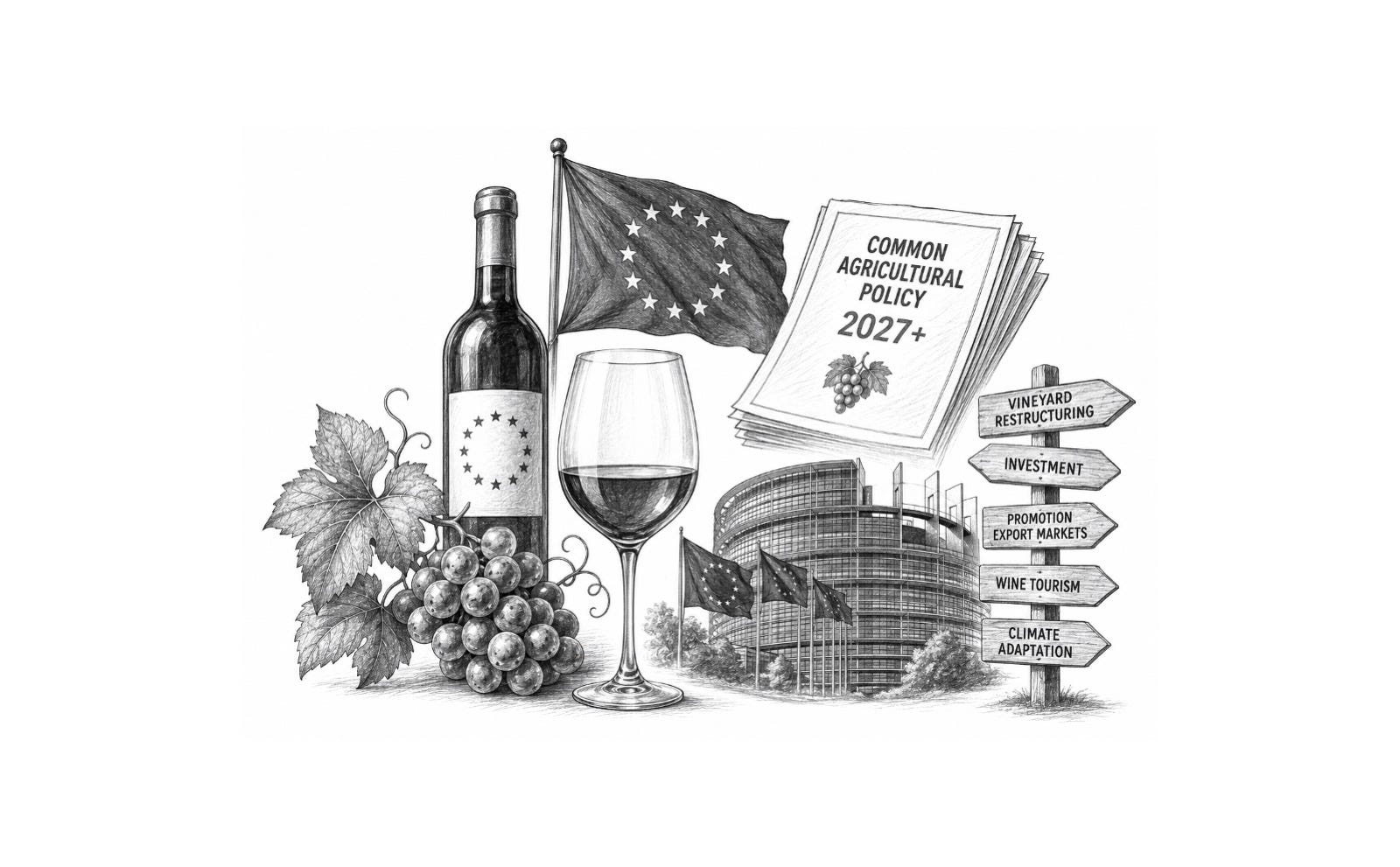
For most wine lovers, discussions in Brussels about agricultural budgets can feel remote from the pleasures of the glass. Yet the future of European wine funding could shape the vineyards of tomorrow just as profoundly as climate, terroir or consumer demand.
As negotiations continue over the European Union’s post-2027 Common Agricultural Policy (CAP), French senators have stepped forward to defend the financial framework that has supported the country’s wine industry for decades. Their concern centres on the future of the wine-specific measures within the Common Market Organisation (CMO), a cornerstone of European wine policy that many producers regard as essential for long-term investment.
While no final decisions have been made, the debate highlights a broader question facing European viticulture: how should public support evolve as wine regions confront economic uncertainty, climate adaptation and changing global markets?
Why the Wine CMO Matters
The wine sector occupies a distinctive place within the Common Agricultural Policy. Unlike many other agricultural programmes, the wine Common Market Organisation provides dedicated funding specifically designed for the needs of vineyards and wine businesses.
For France, these resources help finance vineyard restructuring, investment in wineries, promotion in export markets outside the European Union and the management of winemaking by-products. They are intended not simply as financial assistance, but as tools that allow producers to modernise, adapt and remain competitive over the long term.
More recently, French authorities have also announced support for collective wine tourism initiatives, recognising that attracting visitors has become an increasingly important part of many wine regions’ economic future.
French Senators Seek Guarantees
Several members of the French Senate have submitted written questions to the Ministry of Agriculture expressing concern that proposed reforms to the next CAP could weaken this established system.
At the heart of the discussion is the possibility that future wine funding might become less uniform across the European Union, with greater responsibility shifting to individual member states. Such a change could reduce the predictability that producers have relied upon when planning investments extending over many years.
The senators argue that maintaining a dedicated national allocation for the wine sector would provide the stability needed for projects ranging from vineyard renewal and climate adaptation to international promotion and wine tourism development.
Although their questions were submitted individually, they share a remarkably consistent message, reflecting concerns that have been voiced across the French wine industry in recent months.
A European Debate Beyond France
France is far from alone in watching these negotiations closely.
Wine organisations in Spain, France and Italy have all expressed interest in preserving robust European support for viticulture. According to the senators, discussions within the Council of the European Union have produced encouraging signals, with several member states supporting the principle of maintaining protected funding for the wine sector. Others, however, remain unconvinced, leaving the final outcome uncertain.
The debate illustrates the complexity of agricultural policy within the European Union. Every budget negotiation requires balancing national priorities, overall spending limits and the differing needs of individual farming sectors.
For wine, the stakes extend well beyond annual production figures. Vineyard renewal, environmental adaptation and export development often require investments whose benefits may not be realised for many years.
Investment Requires Stability
Viticulture is unlike many other agricultural activities because decisions made today often shape vineyards for decades.
Replacing vines, introducing new planting strategies or investing in cellar equipment involves significant capital and long planning horizons. Growers therefore depend on policies that offer a reasonable degree of continuity.
Support mechanisms have also become increasingly important as European vineyards respond to more frequent weather extremes and the practical challenges of adapting to climate change. Public funding cannot eliminate those risks, but it can help producers make the investments needed to improve resilience.
For many in the sector, the debate is therefore less about subsidies than about creating stable conditions in which businesses can plan confidently for the future.
France’s Position in Brussels
As negotiations continue, attention is turning towards the position that France will defend at European level.
The senators have asked the government not only to support the continuation of dedicated wine funding but also to preserve existing European co-financing rates and ensure that eligibility rules remain broad enough to include the diversity of operators within the wine sector.
The French government is also being asked how it intends to build support among other member states, recognising that reforms to the Common Agricultural Policy are ultimately decided through negotiation rather than unilateral action.
Decisions That Reach Every Vineyard
The outcome of the post-2027 CAP negotiations will influence far more than government budgets. It will affect how European wine regions finance vineyard renewal, respond to environmental challenges, develop wine tourism and compete in international markets.
For French producers, the issue is particularly significant because the country’s vineyards represent an extraordinary diversity of appellations, production models and business sizes. A stable European framework provides a degree of consistency across that varied landscape.
As the negotiations unfold, the discussion serves as a reminder that the future of French wine depends not only on nature and craftsmanship but also on the policy decisions made far beyond the vineyard rows. For wine lovers, these debates may seem distant today, but they will help shape the bottles that reach cellars and tables in the years ahead.