
Drappier Eclose 2012: Form, Time, and Champagne
A rare cuvée shaped by oak, geometry, and generational vision
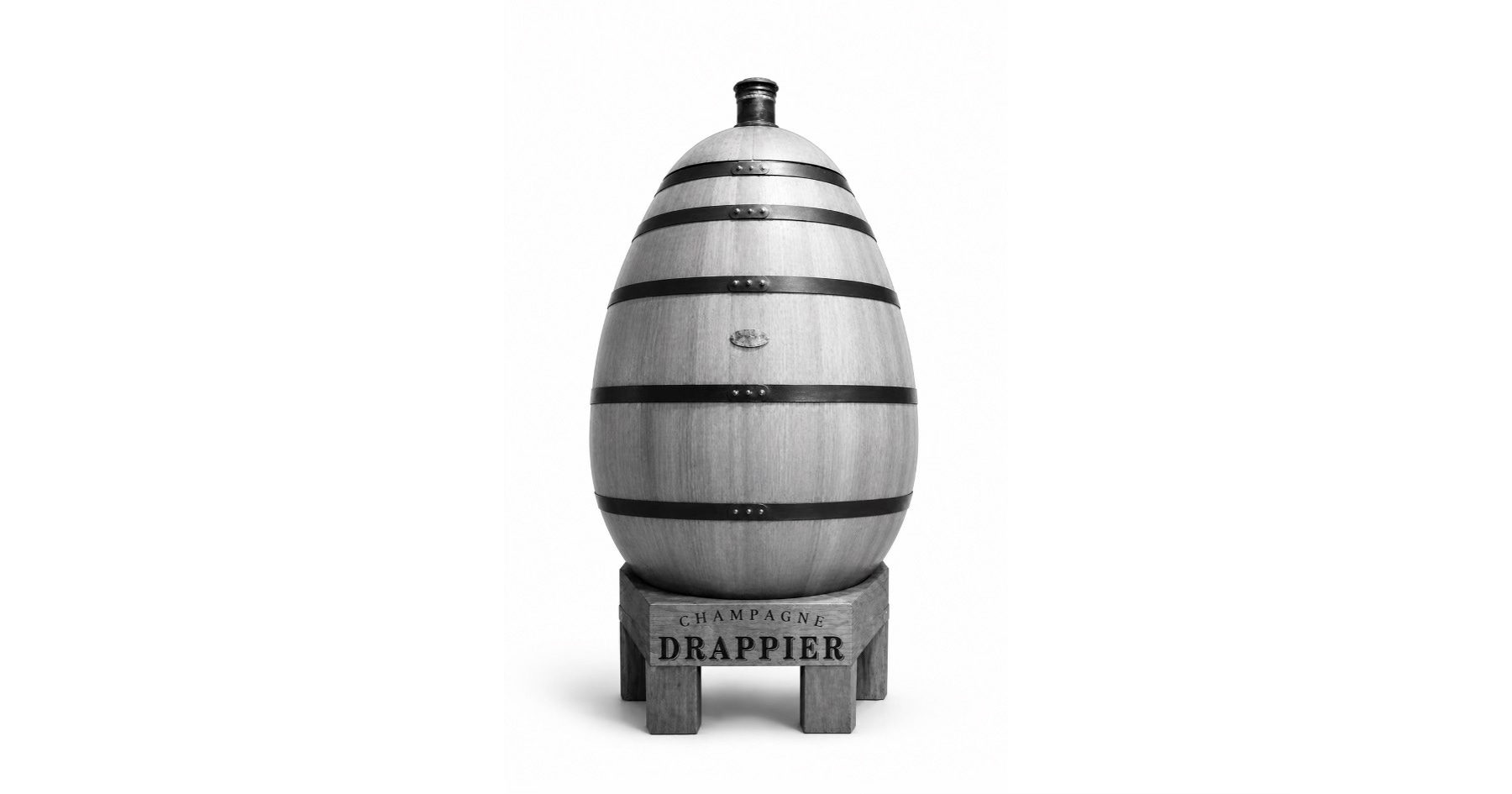
In the quiet village of Urville, where chalk soils shape some of the region’s most distinctive expressions, Champagne Drappier continues to refine a singular approach to Champagne. Its latest cuvée, Eclose 2012, produced in just 574 bottles, emerges not only from vineyard expertise but from an extended reflection on form, material, and time.
The origins of this wine lie as much in the cellar as in the vines. While the Sendrée parcel—known for its intensely calcareous soils—provides the structural backbone, the defining gesture occurred in 2010, with the acquisition of three oak vessels shaped like eggs. Installed in historic cellars once occupied by Cistercian monks of Clairvaux Abbey, these casks introduce a striking departure from conventional élevage.
The Geometry of Fermentation
Egg-shaped vessels have become increasingly visible across contemporary wineries, often crafted from concrete or clay. Drappier’s choice of oak distinguishes itself both technically and philosophically. Wood allows for controlled micro-oxygenation, a subtle exchange that refines texture without diminishing precision. The absence of angles within the oval structure encourages a continuous internal movement of the lees, effectively creating a natural bâtonnage.
This dynamic circulation—sometimes likened to organic growth patterns—fosters a wine of heightened integration. Rather than imposing structure, the vessel supports it, allowing the material of the wine to evolve with minimal intervention. The result is not an overt stylistic imprint, but an adjustment in rhythm: fermentation and maturation unfolding with a different cadence.
The Discipline of a Vintage
The choice of 2012 situates Eclose within one of Champagne’s most compelling recent vintages. A severe winter, with temperatures dropping to extreme lows, ensured a deep dormancy in the vines. This was followed by a warm, dry summer that allowed for optimal ripening. The season’s equilibrium was disrupted only by spring hailstorms, significantly reducing yields.
Scarcity, in this context, is not a constructed rarity but the direct consequence of climatic conditions. The vintage’s structure—defined by both tension and maturity—provides a framework capable of sustaining extended aging. After three years in oak, the wine rested for a full decade on lees in bottle, reinforcing both its depth and its compositional clarity.
Between Structure and Sensation
Eclose 2012 draws on a familiar Drappier foundation: a majority of Pinot Noir, complemented by Chardonnay. Yet its expression diverges through texture and aromatic nuance. The nose unfolds with restrained complexity—beeswax, dried chamomile, and a faint suggestion of white truffle. On the palate, the mousse is finely integrated, supporting a layered structure marked by white fruit and a persistent, gently bitter finish.
The wine’s identity resides less in immediate impact than in its progression. It reveals itself gradually, moving from generosity toward precision, from amplitude toward definition. This controlled evolution reflects both the nature of the vintage and the influence of the élevage.
Transmission and Renewal
At Drappier, innovation does not appear as rupture. The presence of Hugo and Antoine Drappier alongside Michel signals a generational transition that is active rather than symbolic. New cuvées have emerged in recent years, each exploring different facets of Champagne’s potential while remaining anchored in the house’s principles: low intervention, restrained dosage, and a commitment to expressive viticulture.
This continuity is evident in projects that revisit lesser-used grape varieties or refine established blends. The objective is not diversification for its own sake, but a more precise articulation of identity—one that aligns with evolving expectations of terroir transparency.
A Cuvée as Inquiry
Eclose 2012 occupies a distinct position within the Drappier portfolio. Its limited production and extended maturation suggest a wine conceived as an exploration rather than a standard bearer. It examines how form—here, the geometry of an oak vessel—can influence the life of a wine without overshadowing its origin.
In Champagne, where tradition often defines the parameters of innovation, such projects serve a particular function. They test the elasticity of established practices, offering insights that may inform future directions without displacing the foundations of the appellation.
In this sense, Eclose is less a departure than a continuation by other means. It reflects a house attentive to its past, yet willing to interrogate it—patiently, and with precision.