
Domaine Vincent Dauvissat: Chablis Grand Cru 'Les Clos'
Kimmeridgian limestone, biodynamic conviction, and four decades of uncompromising terroir transparency in Chablis' greatest Grand Cru
Introduction
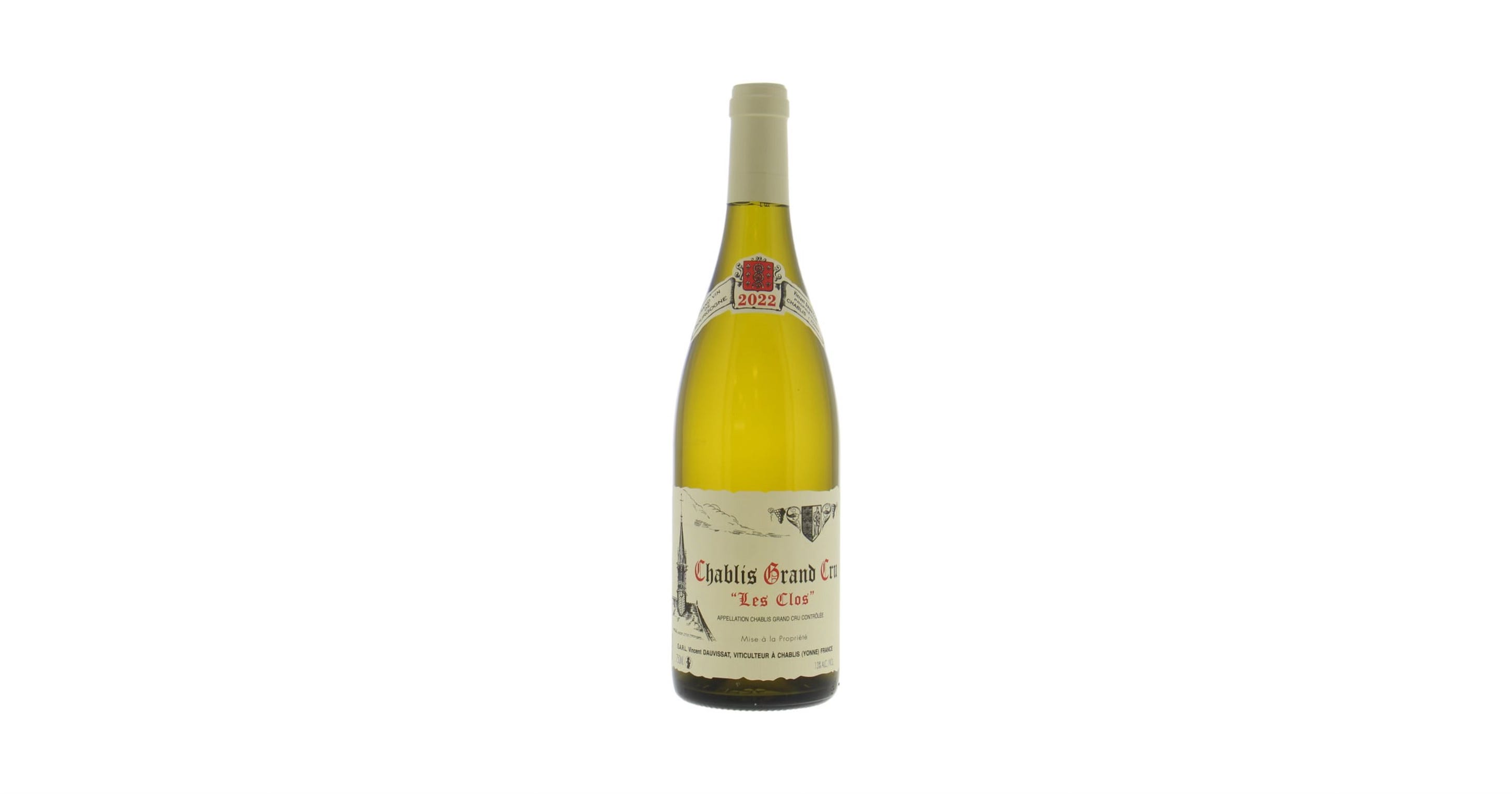
If there is a single wine that embodies the tension between the ancient and the modern in Chablis—between geological time and the decisions made in a single harvest—it is the Grand Cru Les Clos from Domaine Vincent Dauvissat. Les Clos is the largest and most revered of the seven Chablis Grand Cru climats, a 26-hectare amphitheatre of Kimmeridgian limestone that has produced wines of exceptional depth and longevity for centuries. That a quiet, uncompromising vigneronne family should be recognized as one of its two or three finest interpreters is a story that illuminates not only the potential of the vineyard itself but also the broader transformation of Chablis from a region of commercial utility to one of France’s most compelling terroir narratives.
Domaine Vincent Dauvissat traces its origins to 1931, when Robert Dauvissat established the family estate. His son René expanded both the holdings and the reputation; Vincent, who joined the domaine in 1976 and assumed full direction in 1989, has elevated the property to a status shared by only one peer—Domaine Raveneau. Together, these two producers are regularly described as the twin pillars of Chablis, the vignerons who demonstrated, through decades of rigorous work, that Chablis at its best is not merely a refreshing white wine but one of France’s greatest expressions of terroir-driven Chardonnay. Vincent Dauvissat’s contribution has been to deepen that argument: through the adoption of organic and biodynamic viticulture, through a steadfast commitment to oak-aged élevage at a time when the region was retreating into stainless steel, and through a cellar philosophy of minimal intervention that allows the Kimmeridgian bedrock to speak with extraordinary clarity.
The cult following around Dauvissat’s Les Clos has grown steadily since the 1990s, fueled by critical consensus, scarcity, and the wine’s remarkable capacity to evolve over decades. It is a wine that operates on a different timescale from most white Burgundy—austere and reticent in youth, it unfolds with patience into something of profound mineral complexity, a quality that has made it a touchstone for collectors who measure wine by what it becomes rather than what it is on release. In the broader hierarchy of French fine wine, the Dauvissat Les Clos occupies a singular position: a white wine of Grand Cru stature, produced in volumes of a few thousand bottles, with a proven track record of development spanning three to four decades, yet still priced below what an equivalent reputation would command in the Côte d’Or. That disparity is narrowing, and the arc of the wine’s market trajectory suggests that the era of relative accessibility may be drawing to a close.
The critical turning points in the domaine’s history are few but decisive. The first was Vincent’s assumption of control in 1989, which initiated a gradual but unmistakable sharpening of quality across the range. The second was the adoption of biodynamic practices in the late 1990s, under the influence of Pierre Masson, formalized from 2002 onward—a move that deepened root penetration, intensified mineral expression, and gave the wines a vibrancy that has only grown more pronounced with time. The third, less often discussed, is the philosophical decision to maintain oak élevage in old pièces at a moment when the majority of Chablis producers were abandoning wood entirely in favor of stainless steel. This choice, which Vincent inherited from his father and grandfather, has become a defining element of the house style: the wines possess a textural dimension and oxidative stability that their stainless-steel counterparts often lack, without ever tasting of oak. It is a calibration of great subtlety, and it sets the Dauvissat Les Clos apart from nearly every other interpretation of this vineyard.
Vineyard and Terroir
Location and Classification
Les Clos lies on the right bank of the Serein river, immediately southeast of the town of Chablis, occupying the central and most prestigious section of the Grand Cru hillside. At 26 hectares, it is the largest of the seven Chablis Grand Cru climats—Blanchot, Bougros, Grenouilles, Les Clos, Preuses, Valmur, and Vaudésir—and is widely regarded as the most complete and age-worthy of them all. The vineyard sits on a southwest-facing slope at elevations between approximately 150 and 200 meters, with a gradient steep enough to ensure excellent drainage and solar exposure from midday through evening.
Domaine Vincent Dauvissat holds 1.70 hectares within Les Clos, a substantial parcel that provides the fruit for what many consider the domaine’s most profound wine. The estate’s total holdings encompass 12.7 hectares distributed across the Chablis hierarchy: 1.1 hectares of Petit Chablis, 3.1 hectares of Chablis, 6 hectares of Premier Cru (including the celebrated Séchét, Vaillons, La Forest, and Montmains), and 2.7 hectares of Grand Cru, the remainder being a hectare in Les Preuses. The scale is modest—this is a family domaine, not a négociant operation—and the modest production volumes are a direct consequence of the Dauvissat commitment to estate-grown, hand-farmed viticulture.
Geology and Soil Composition
The geological identity of Les Clos is Kimmeridgian: the soils are calcareous clay marls dating to approximately 150 million years ago, during the Upper Jurassic period, when the Chablis region lay beneath a shallow sea. The defining feature of Kimmeridgian soils is the abundant presence of fossilized marine organisms, most notably the tiny oyster shell Exogyra virgula—comma-shaped fossils that are visible throughout the vineyard’s surface and subsoil. These fossils, along with the calcium-rich marl matrix in which they are embedded, contribute to the intensely mineral, almost iodine-inflected character that distinguishes Chablis Grand Cru from Chardonnay produced on other geological substrates.
Within Les Clos, there is meaningful variation in soil depth and composition. The upper portions of the slope tend toward stony, shallower limestone soils that produce wines of taut, incisive structure—bold, fresh, and vertically composed. Further down the slope, where clay content increases and soils deepen, the wines take on greater weight and richness without losing their mineral spine. The Dauvissat parcels benefit from this internal diversity, contributing complexity to the finished wine that a single-soil-type parcel could not achieve. The excellent drainage provided by the slope’s gradient and the fractured limestone bedrock forces vine roots deep into the substrate, a process that has been further enhanced by the domaine’s biodynamic soil management.
Exposure, Microclimate, and Drainage
The southwest orientation of Les Clos is critical to the vineyard’s success in the marginal climate of Chablis. The slope receives direct sunlight from roughly noon through evening, maximizing thermal accumulation during the growing season while the cooler morning hours help preserve acidity—a balance that is essential to the style of wine the vineyard produces. The Serein valley channels cool air currents that moderate temperatures during hot periods and, crucially, promote air circulation that reduces fungal disease pressure.
Frost, however, remains the perennial viticultural hazard of Chablis. The valley floor and lower slopes are particularly vulnerable, and spring frost events have caused significant losses in numerous vintages. The relatively elevated position of the Dauvissat parcels within Les Clos provides some protection, but the risk is never entirely absent. The domaine’s response to frost has been pragmatic rather than interventionist: there is no use of frost-protection heating systems, and the approach relies instead on careful canopy management and the resilience of biodynamically farmed vines to recover from frost damage.
Farming Philosophy
Vincent Dauvissat’s conversion to biodynamic viticulture, initiated in the late 1990s under the mentorship of Pierre Masson and formalized from 2002, represents one of the most significant philosophical commitments in the recent history of Chablis. The domaine practices organic viticulture certified through recognized bodies and follows biodynamic principles throughout its holdings. Specific practices include the use of biodynamic preparations, ongoing soil cultivation to promote microbial activity, grass cover between rows for biodiversity and erosion control, and hand-harvesting of all fruit.
The impact on vine health and wine quality has been profound. Biodynamic management has deepened root penetration into the Kimmeridgian bedrock, intensified the mineral character of the wines, and increased the vines’ resilience to climatic stress. The domaine’s old vines in Vaillons, some exceeding 65 years of age, yield less than 25 hectoliters per hectare—a level of natural self-regulation that speaks to the vigor balance achieved through biodynamic farming. In the Grand Cru parcels, yields are controlled to a maximum of approximately 50 hectoliters per hectare, though in practice they are often lower, depending on vintage conditions.
Sensitivity to Climatic Variation
Chablis occupies one of the most northerly positions in the Burgundy viticultural region, and its wines are consequently among the most vintage-sensitive in France. The Les Clos vineyard, despite its favorable exposure, is not immune to this variability. Cool, wet vintages can delay ripening and challenge extraction; warm vintages can accelerate sugar accumulation and compress the window for optimal harvest timing. The Kimmeridgian soils, with their clay component, retain more moisture than the purely granitic soils found in Alsace or the Rhône, which can be both an advantage in drought years and a liability in wet ones.
What distinguishes the Dauvissat response to climatic variation is a refusal to compensate through cellar intervention. Vincent does not chaptalize in warm years to reach a target richness, nor does he acidify in years of lower natural acidity. The wine is what the vintage gives—a transparency of approach that makes the Dauvissat Les Clos one of the most reliable barometers of vintage character in the entire Chablis appellation.
Grape Composition and Viticultural Choices
The Dauvissat Les Clos is, by appellation regulation and longstanding practice, a mono-varietal wine produced entirely from Chardonnay. Chablis Grand Cru legislation permits no other grape variety, and the historical identity of the vineyard is inseparable from the Chardonnay grape’s expression on Kimmeridgian limestone—a combination that produces wines of a character fundamentally distinct from Chardonnay grown on the granitic, clay-limestone, or alluvial soils of other French regions.
Specific clonal and massal selection data for the Dauvissat parcels within Les Clos is not publicly disclosed. In Chablis, producers typically employ a combination of approved Burgundian Chardonnay clones and massal selections propagated from their own older vines. Given the domaine’s biodynamic philosophy and the emphasis on vine individuality and soil connection, it is reasonable to infer a preference for massal selection material, which offers greater genetic diversity and tends to produce wines of more complex expression—though this remains a matter of informed inference rather than confirmed estate policy.
Yield management is fundamental to the quality of the Les Clos bottling. Grand Cru regulations establish maximum yields at approximately 50 hectoliters per hectare, but the Dauvissat domaine frequently operates below this ceiling, particularly in the Grand Cru parcels where vine age and biodynamic farming naturally moderate vigor. Hard pruning, attentive canopy management through the growing season, and green harvesting in prolific years all contribute to the concentration and balance of the final wine. The grapes are harvested exclusively by hand, with selection made in the vineyard at the moment of picking—a practice that, while standard among the finest Chablis producers, is far from universal in a region where machine harvesting remains common.
Vinification and Élevage
Harvest and Pre-Fermentation
The harvest at Domaine Dauvissat is conducted entirely by hand, with grapes transported to the winery intact—the fruit is not de-stemmed before pressing. Whole-cluster pressing, while more commonly associated with Champagne, is a long-standing Dauvissat practice that emphasizes gentleness and juice quality. The must is allowed to settle naturally before fermentation begins.
Fermentation
Fermentation proceeds in two types of vessel: enameled steel cuvées and small oak barrels (pièces). The use of both vessels is a distinctive feature of the Dauvissat approach, providing a blend of reductive precision from the steel and subtle oxidative complexity from the wood. Fermentation is spontaneous, relying entirely on indigenous yeasts—no commercial cultures are employed. This choice, consistent with the domaine’s broader philosophy of minimal intervention, introduces a degree of unpredictability but also contributes to the aromatic complexity and site-specificity of the finished wine.
Malolactic fermentation is allowed to proceed naturally and is not blocked. In practice, this means that the wine undergoes full malolactic conversion, softening the malic acidity into lactic acid and contributing to the textural richness that characterizes the Dauvissat style. The timing of malolactic completion varies by vintage and by vessel, adding another layer of complexity to the blending process.
Oak and Élevage
The use of oak at Domaine Dauvissat is one of the defining elements of the house style and one of the most debated aspects of Chablis winemaking more broadly. The wines are aged in small Burgundian pièces—228-liter barrels—sourced from Nevers oak. Critically, the proportion of new oak is extremely low, typically in the range of five to ten percent. The majority of the barrels are six to eight years old or older, having already given up most of their primary wood character. The result is a wine that derives structural benefits from barrel aging—micro-oxygenation, textural enrichment, and enhanced aging potential—without acquiring overt oak flavors.
René Dauvissat articulated the philosophical rationale for this approach with clarity: oak, he argued, adds character to Chablis and helps soften the wine’s inherent austerity, while without it, the wines are too hard and unyielding. This is not an argument for oaky Chablis but for the judicious use of neutral wood as a vessel that shapes the wine’s texture and oxygen exposure without imposing its own flavor. The élevage lasts approximately 18 months on fine lees, during which time bâtonnage—the periodic stirring of lees within the barrel—is employed to enrich the mid-palate and contribute to the wine’s distinctive creamy minerality.
This extended élevage, combined with the gentle oxidative environment of old oak, gives the Dauvissat Les Clos a stability and longevity that sets it apart from shorter-élevage, stainless-steel Chablis. The wines emerge from barrel with a textural completeness and an oxidative resilience that are immediately apparent on tasting and that become even more evident with decades of bottle age.
Bottling
Sulfur additions are kept to a minimum, consistent with biodynamic principles. The wine is bottled with minimal manipulation, and the domaine avoids heavy fining or filtration where possible. The result is a wine that retains its lees-derived complexity and textural richness through to the bottle—qualities that contribute significantly to its aging trajectory. Total production of the Les Clos bottling is modest, typically numbering several thousand bottles per vintage, a figure determined by the 1.70-hectare parcel size, vintage yields, and the non-negotiable quality standards that the domaine applies.
Vintage-by-Vintage Analysis
The following analysis traces the evolution of Domaine Vincent Dauvissat’s Chablis Grand Cru Les Clos across documented vintages, with emphasis on climatic context, stylistic expression, and critical reception. The vintage history of this wine is also the history of Chablis itself—a region where climate, frost, hail, and the subtle decisions of harvest timing shape each year’s character with unusual force.
The Robert and René Era (Pre-1989)
Vintages produced under Robert and René Dauvissat’s stewardship established the domaine’s reputation for age-worthy, mineral-driven Chablis. These wines, where they survive in well-stored cellars, are documents of a period when Chablis Grand Cru was less commercially pressured and more individually expressive. The 1982 vintage, tasted by Jancis Robinson decades after release, showed remarkable vitality—evidence of the inherent longevity that the Dauvissat approach to oak élevage and lees aging confers. The 1983 vintage has been referenced in retrospective tastings organized by Vinous covering Dauvissat Les Clos from 1983 to 2015, confirming the wine’s capacity to evolve over a span of three decades and more.
Wines from the 1970s and early 1980s, when available at auction, command significant premiums as historical curiosities as much as drinking experiences. Their survival testifies to the structural soundness of the Dauvissat style and to the protection that careful oak élevage affords against premature oxidation—a problem that has plagued many other white Burgundies from this period.
The Vincent Transition (1989–1997)
Vincent’s assumption of winemaking responsibility in 1989 coincided with a series of strong Chablis vintages. The 1989 and 1990 vintages were both warm and generous, producing Les Clos of concentration and immediate appeal—wines that, while impressive young, have also aged gracefully into their third decade. The 1992 vintage was more challenging, with rain during harvest requiring rigorous selection; the resulting wine is lighter but possesses the mineral finesse that marks Dauvissat Les Clos even in lesser years.
The 1995 and 1996 vintages represent two contrasting expressions of the vineyard under Vincent’s early stewardship. The 1995 is richer and more opulent, reflecting a warm season; the 1996 is taut, high-acid, and built for long aging—a vintage that many specialists consider among the finest Chablis of the decade. Both wines demonstrate the clarity of vision that Vincent brought to the domaine: a commitment to letting vintage character express itself without corrective intervention.
The Biodynamic Awakening (1998–2005)
The late 1990s mark the beginning of Vincent’s engagement with biodynamic viticulture, and the wines from this period show a progressive deepening of mineral expression. The 2000 vintage, produced from vines in the early stages of biodynamic conversion, already hints at the increased precision that would become the domaine’s signature. The 2002 vintage—the first produced under formalized biodynamic practice—is a landmark wine: focused, intensely mineral, with a salinity and vertical structure that set a new benchmark for the cuvée.
The 2003 vintage presented an extreme challenge: a heat wave of historic proportions produced grapes of unprecedented ripeness across Burgundy. The Dauvissat Les Clos from 2003 is atypical—broader, lower in acidity, and more tropical in character than any other release in the domaine’s history. It is a fascinating anomaly, illuminating the limits of terroir expression under extreme climatic stress, and a wine that divides opinion: some find it rich and compelling; others regard it as a departure from the vineyard’s essential character.
The 2004 and 2005 vintages represent a return to more classical conditions. The 2004 is cool, precise, and age-worthy—a vintage that was underappreciated on release but that has gained stature with time. The 2005 combines concentration with structural elegance, benefiting from a warm but not excessive growing season that allowed full phenolic ripeness without sacrificing acidity. It is among the most highly regarded vintages of the mid-2000s.
Maturity of the Biodynamic Estate (2006–2012)
By 2006, the biodynamic practices at Dauvissat had been in place for nearly a decade, and the wines reflect a deepening relationship between vine, soil, and farming. The 2006 vintage produced a Les Clos of notable depth and concentration, with the saline, iodine-tinged minerality that has become increasingly pronounced in the domaine’s wines. Auction records for 2006 Dauvissat Les Clos confirm its desirability among collectors.
The 2007 vintage was lighter, reflecting a cool and irregular growing season. It is a wine of charm rather than power, best consumed in the medium term. The 2008, by contrast, is a classic Chablis vintage—high acidity, crystalline precision, and a taut mineral framework that promises decades of development. For many critics, 2008 Dauvissat Les Clos is one of the finest white Burgundies of the vintage.
2009 brought warmth and generosity, producing a richer, more opulent Les Clos. The wine’s natural richness is tempered by the mineral spine of the vineyard and the structural framework of the élevage, but it is stylistically closer to the 2005 than to the 2008. The 2010 vintage is exceptional: a combination of concentration, acidity, and mineral intensity that many regard as among the finest Dauvissat Les Clos of the modern era. It was described at the time as a wine of monumental structure, and its aging trajectory has confirmed that assessment.
The 2011 vintage, assessed at 93 points by Allen Meadows of Burghound, is a strong if not transcendent release—a vintage of good balance and moderate aging potential that lacks the last degree of concentration found in 2010 or 2008. The 2012 is more generous, with a warm growing season producing a wine of broad, textured appeal that offers earlier accessibility without sacrificing longevity.
The Modern Run (2013–2022)
From 2013 onward, the Dauvissat Les Clos enters a period of sustained excellence that represents the fullest expression of Vincent’s viticultural and winemaking philosophy. The 2013 vintage, produced in a cool year, is quintessentially Chablis: lean, mineral, high-acid, and built for the long haul. It is a wine that will reward a decade or more of cellaring and that shows the vineyard’s capacity to produce wines of power from structure rather than from ripeness.
The 2014 is more classical, with moderate concentration and a balanced structural profile. The vintage was challenging—wet conditions during harvest required strict selection—but the Dauvissat bottling navigates the difficulties with characteristic precision. It is a wine for medium-term drinking, without the extra dimension that distinguishes the great vintages.
2015 was a warm, dry vintage that produced concentrated, powerful wines across Chablis. The Dauvissat Les Clos 2015 has been extensively discussed in retrospective tastings; its richness and density are balanced by the mineral authority of the vineyard. It is among the fuller expressions of the cuvée in the modern era, with the structural backbone to age for two decades or more.
The 2016 vintage is considered by many critics to be one of the finest recent Les Clos from this domaine. Assessments reaching 95 points confirm a wine of exceptional precision and mineral depth, produced in a year that began with devastating April frost across Chablis—frost that destroyed a significant proportion of the crop and concentrated the surviving fruit. The reduced yields contributed to a wine of unusual intensity, and the vintage’s inherent balance between acidity and concentration suggests an aging trajectory measured in decades.
The 2017 vintage, assessed at 94 points by Burghound, is described as an elegant expression with cool, iodine-inflected aromas, oyster shell minerality, and a palate of fine linearity. The growing season was warm but punctuated by spring frost, and the resulting wine balances richness with the austerity that the vineyard imposes.
2018 brought another warm vintage, producing a Les Clos of breadth and concentration. Critical reception has been strong, and the wine’s combination of power and mineral focus suggests considerable aging potential. The warmth of the vintage is evident but controlled—the biodynamic vines, deeply rooted in Kimmeridgian marl, maintained freshness even as sugar levels rose.
The 2019 vintage is one of the most highly regarded recent releases, with aggregate assessments reaching 96 points across multiple critics and a CellarTracker community average of 94.8. The wine displays citrus-driven purity, intense mineral concentration, and a structural completeness that places it among the finest Dauvissat Les Clos of the decade. Its aging potential is formidable.
The 2020 vintage received 96 points from Allen Meadows, who described it as a legitimate candidate for wine-of-the-vintage honors. The growing season was marked by early budbreak and dry conditions, producing a wine of size, weight, and power underscored by mineral-driven intensity. The combination of floral restraint and structural authority suggests a wine that will develop complexity over a twenty-year horizon.
The 2021 vintage, assessed at approximately 93 points in aggregate, represents a cooler, more classically proportioned expression. The growing season was marked by frost and rain, requiring rigorous selection, and the resulting wine emphasizes freshness, minerality, and elegance over power—a return to the leaner style that many traditionalists prefer.
The 2022 vintage is the most recently released at the time of writing. Allen Meadows awarded 96 points with a rare “Don’t miss!” designation; William Kelley of the Wine Advocate placed it at 94–96 points. The wine is described as full-bodied, satiny, and enveloping, with a deep and muscular core of ripe citrus, white flowers, beeswax, and nutmeg. It is a vintage that combines the generosity of a warm year with the mineral authority of Les Clos—a synthesis that represents the domaine at or near its peak.
Style, Identity, and Structural Sensory Profile
The core stylistic identity of the Dauvissat Les Clos is defined by a paradox: it is a wine of profound weight and mineral density that nonetheless conveys an impression of transparency and lift. This tension—between substance and ethereality, between power and precision—is the wine’s animating principle and the quality that distinguishes it from other interpretations of the same vineyard.
The use of old oak pièces for élevage imparts a textural dimension that is immediately apparent in comparison with stainless-steel-raised Chablis. The mid-palate of a Dauvissat Les Clos has a viscosity and creaminess that derives from lees contact in a gently oxidative environment—a quality that is often described as richness but is more accurately understood as structural complexity. The wine does not taste of oak; rather, the oak has shaped its texture in the way that a frame shapes a painting, defining the boundaries within which the mineral expression of the vineyard can unfold.
In its youth, the wine is typically austere, often almost forbiddingly so. The primary fruit is present but subsumed within a framework of acidity, salinity, and mineral tension. Aromatic expression is restrained; the wine reveals itself through structure and texture rather than through perfume. This is a characteristic that rewards patience and that can disappoint those expecting immediate gratification—a warning that bears repeating for any collector new to the domaine.
With five to ten years of bottle age, the wine begins to open. The mineral elements integrate with the fruit, and secondary complexity emerges: notes of beeswax, crushed shell, iodine, and a faintly smoky quality that many attribute to the Kimmeridgian terroir. The texture broadens, the finish lengthens, and the wine begins to communicate the depth of its origins. At fifteen to twenty years, in great vintages, the Dauvissat Les Clos achieves a state of equilibrium that few white wines can match: a wine of extraordinary length, complexity, and mineral resonance, with the quiet authority of something that has arrived at its destination and intends to remain.
Compared to Domaine Raveneau’s Les Clos, the Dauvissat expression tends toward slightly greater breadth and textural generosity. Raveneau’s version is often more taut, more focused, with a linear intensity that can be electrifying in youth. The Dauvissat, by contrast, offers a broader canvas—more enveloping, more texturally rich—while maintaining equivalent mineral depth. This distinction is subtle and vintage-dependent, but it is consistently perceptible to those who taste the two side by side. Among other producers, William Fèvre’s Les Clos, from the vineyard’s largest single holding at 4.11 hectares, offers a more commercial, technically polished expression—elegant and reliable but lacking the biodynamic vibrancy and textural complexity of the Dauvissat. Long-Depaquit, under the Albert Bichot umbrella, produces a competent Les Clos that rarely achieves the same level of mineral definition.
Aging Potential and Cellaring
Short-Term (1–5 Years)
In the immediate years following release, the Dauvissat Les Clos is at its most reserved. The wine’s structural components—acidity, minerality, extract—are in sharp relief, and the integrative work of bottle age has not yet begun. For lighter vintages (2007, 2011, 2014), this window may offer adequate if not optimal drinking. For strong structural vintages (2008, 2010, 2016, 2019, 2020, 2022), opening bottles this early is strongly discouraged; the wine will offer only a fraction of its eventual complexity.
Medium-Term (5–15 Years)
The transformation that occurs in the Dauvissat Les Clos between five and fifteen years of age is one of the most compelling arguments for cellar patience in white wine. The mineral and fruit elements begin to harmonize, the texture broadens and gains creaminess from lees-derived complexity, and secondary and tertiary notes emerge with increasing clarity. For the majority of vintages, the window between eight and fifteen years represents the sweet spot—a period of developing complexity combined with residual youthful energy.
Long-Term (15–30+ Years)
The greatest vintages of Dauvissat Les Clos have proven their capacity to evolve over thirty years and beyond. The 1982, tasted by Jancis Robinson at 36 years of age, showed plenty of life ahead—a testament to the wine’s structural soundness and the protective benefits of oak élevage. The retrospective tasting organized by Vinous, spanning 1983 to 2015, confirmed that even vintages not universally regarded as exceptional on release could develop remarkable complexity with sufficient time. For the 2010, 2016, 2019, and 2020 vintages, a cellaring horizon of twenty-five to thirty years is not unreasonable.
Storage Conditions and Risks
Optimal storage conditions for the Dauvissat Les Clos are consistent with those for fine white Burgundy: constant temperatures between 10°C and 13°C, humidity between 65% and 80%, and complete absence of light, vibration, and strong odors. The wines are moderately robust in storage, benefiting from the structural framework of their oak élevage, but they are not immune to the premature oxidation that has affected white Burgundy more broadly. Provenance is therefore a critical consideration for any collector acquiring older vintages; bottles with uncertain storage histories should be approached with caution.
The rewards of extended aging are substantial: a mature Dauvissat Les Clos is one of the most complete and intellectually stimulating white wines in the world, a wine that repays attention and contemplation in ways that few others can. The risks are commensurately real—premature oxidation, cork failure, or simple disappointment when a bottle fails to meet decades of expectation. The calculus favors patience, but it is a calculus that demands good storage and a willingness to accept occasional loss.
Market Value and Investment Perspective
Historical Price Evolution
The market trajectory of Dauvissat Les Clos over the past two decades is one of steady, accelerating appreciation. From prices that were, by Grand Cru Burgundy standards, remarkably accessible in the early 2000s—often under 100 USD at retail—the wine has moved into a range of approximately 150 to 400 USD per bottle for current vintages, with older and more celebrated releases commanding higher premiums. This appreciation reflects the convergence of several factors: the growing critical consensus around Dauvissat as one of Burgundy’s finest producers, the increasing recognition of Chablis Grand Cru as an age-worthy category, and the inexorable arithmetic of limited supply against expanding global demand.
Scarcity and Production
The domaine’s total annual production is approximately 50,000 bottles across all appellations, from Petit Chablis to Grand Cru. The Les Clos bottling, sourced from 1.70 hectares and subject to Grand Cru yield restrictions, accounts for a modest fraction of this total—likely in the range of 5,000 to 7,000 bottles in a normal vintage, and significantly less in years affected by frost or other losses. This is a production volume comparable to many of the most sought-after white Burgundies from the Côte de Beaune, and the supply-demand imbalance is reflected in the wine’s increasing difficulty to source through normal retail channels.
Secondary Market and Liquidity
The Dauvissat Les Clos appears regularly at major auction houses including Sotheby’s, Christie’s, and specialist platforms. Recent auction estimates for the 2022 vintage suggest a range of 1,600 to 2,800 USD for a six-bottle lot—a figure that implies a per-bottle value at or above current retail pricing, indicating strong secondary-market demand. Older vintages (2006 and earlier) trade in smaller quantities and at variable premiums depending on provenance and storage documentation.
Relative to Domaine Raveneau’s Les Clos, the Dauvissat bottling has historically traded at a modest discount—a differential that has narrowed in recent years as both wines have appreciated. Relative to the broader Chablis Grand Cru market, the Dauvissat commands a significant premium, reflecting its status as one of the two or three most sought-after wines in the appellation.
Collector Versus Investor Appeal
The Dauvissat Les Clos appeals primarily to serious collectors who intend to drink the wine—a demographic that values provenance, aging potential, and terroir authenticity above speculative return. The wine’s investment characteristics are sound—limited production, strong critical consensus, proven longevity—but the secondary market for Chablis, while growing, remains less liquid than for red Burgundy, Bordeaux, or Champagne. Investors seeking rapid capital appreciation may find more efficient vehicles elsewhere; collectors seeking a wine that will reward patience and develop extraordinary complexity over decades are well served.
Risks
Principal risks to the wine’s market position include: the persistent undervaluation of Chablis relative to Côte d’Or Burgundy (which, while frustrating for existing holders, actually represents the primary value proposition for new buyers); the unpredictability of frost damage, which can dramatically reduce production volumes and create vintage-to-vintage supply inconsistency; and the broader risk of premature oxidation in white Burgundy, which can undermine confidence in the longevity claims of even the finest producers. Climate change represents a double-edged risk: warmer temperatures may reduce frost frequency but could also alter the acidity-ripeness balance that defines the Chablis style.
Cultural and Gastronomic Significance
Vincent Dauvissat’s Les Clos occupies a position of quiet authority on the world’s most serious wine lists. It is a wine that signals the depth of a restaurant’s Burgundy program—its presence communicates an understanding that Chablis is not a category of refreshment but a terroir of Grand Cru stature. In Paris, London, New York, and Tokyo, the wine appears on lists curated by sommeliers who regard it as one of the benchmarks against which other Chardonnays are measured.
Within French wine culture, Dauvissat’s role extends beyond the commercial. Together with Raveneau, the domaine has been instrumental in the Chablis renaissance—the reappraisal of the region that began in the 1990s and has gathered momentum ever since. This reappraisal was, in part, a corrective to the damage done by decades of misappropriation of the Chablis name by New World producers, particularly in the United States, where “Chablis” was used as a generic label for any inexpensive white wine. The quality of wines like Dauvissat’s Les Clos served as incontrovertible evidence that authentic Chablis—Chablis from Kimmeridgian limestone, made by vignerons with intimate knowledge of their terroir—was something entirely different from its imitators.
Gastronomic Relevance
The Dauvissat Les Clos is among the most gastronomically versatile of all Grand Cru white Burgundies, its mineral intensity and structural completeness allowing it to partner with a broad range of cuisines and preparations. In youth, the wine’s high acidity and saline, iodine-inflected minerality make it a natural companion to raw shellfish—oysters, in particular, create a pairing of almost geological resonance, the Exogyra virgula fossils of the vineyard finding their echo in the briny vitality of the plate. Crab, lobster, langoustines, and other crustaceans in light preparations are equally successful.
At maturity, as the wine develops beeswax, toasted hazelnut, and honeyed complexity, the pairing possibilities expand to encompass richer preparations: turbot in beurre blanc, vol-au-vent of sweetbreads, roasted poultry with cream sauce, and the great Burgundian classics of jambon perséillé and époisses—though the cheese pairing requires a wine of sufficient age and development to stand against the pungency of the fromage. Japanese cuisine, with its emphasis on umami, texture, and mineral purity, offers particularly rewarding possibilities: aged Dauvissat Les Clos with sashimi of hirame or a fine preparation of simmered tofu achieves a harmony that transcends the usual parameters of wine-and-food pairing.
The wine’s role at the table ultimately reflects its character: it is not a wine that flatters but one that engages. It asks something of the diner—attention, patience, a willingness to meet it on its own terms—and it rewards that engagement with an experience of depth and complexity that few white wines in the world can equal.
Conclusion
The Chablis Grand Cru Les Clos from Domaine Vincent Dauvissat is one of the great white wines of France—a statement that, even a generation ago, might have required qualification or defense but that today stands as a matter of broad critical consensus. The wine’s authority derives not from power or opulence but from the depth of its mineral expression, the integrity of its farming, and the patience of its winemaking. It is a wine that insists on being understood on its own terms, and those terms are geological: the Kimmeridgian marls of Les Clos, the fossilized shells of ancient seas, the slow work of roots in fractured limestone—these are the forces that shape the wine more than any decision made in the cellar.
Vincent Dauvissat’s stewardship has been defined by the principle that the vigneron’s highest ambition is transparency: to allow the terroir to express itself without interference, to accept vintage variation as a feature rather than a flaw, and to resist the temptation to make the wine easier, softer, or more immediately appealing. The result is a body of work that spans four decades and that constitutes one of the most compelling arguments for terroir-driven viticulture in the modern era.
For collectors, the Dauvissat Les Clos represents a convergence of quality, authenticity, and relative value that is increasingly difficult to find in French fine wine. The wines are scarce but not yet impossible to acquire; they are expensive but not yet priced at the levels that their quality warrants relative to comparable wines from the Côte de Beaune; and they age with a grace and complexity that justify the decades of patience they demand. The trajectory of the past quarter-century—deepening quality, growing reputation, rising prices—suggests that the window of relative accessibility is narrowing. Those who act now, and cellar with care, will be rewarded with one of the most profound expressions of Chardonnay that the world has to offer.