
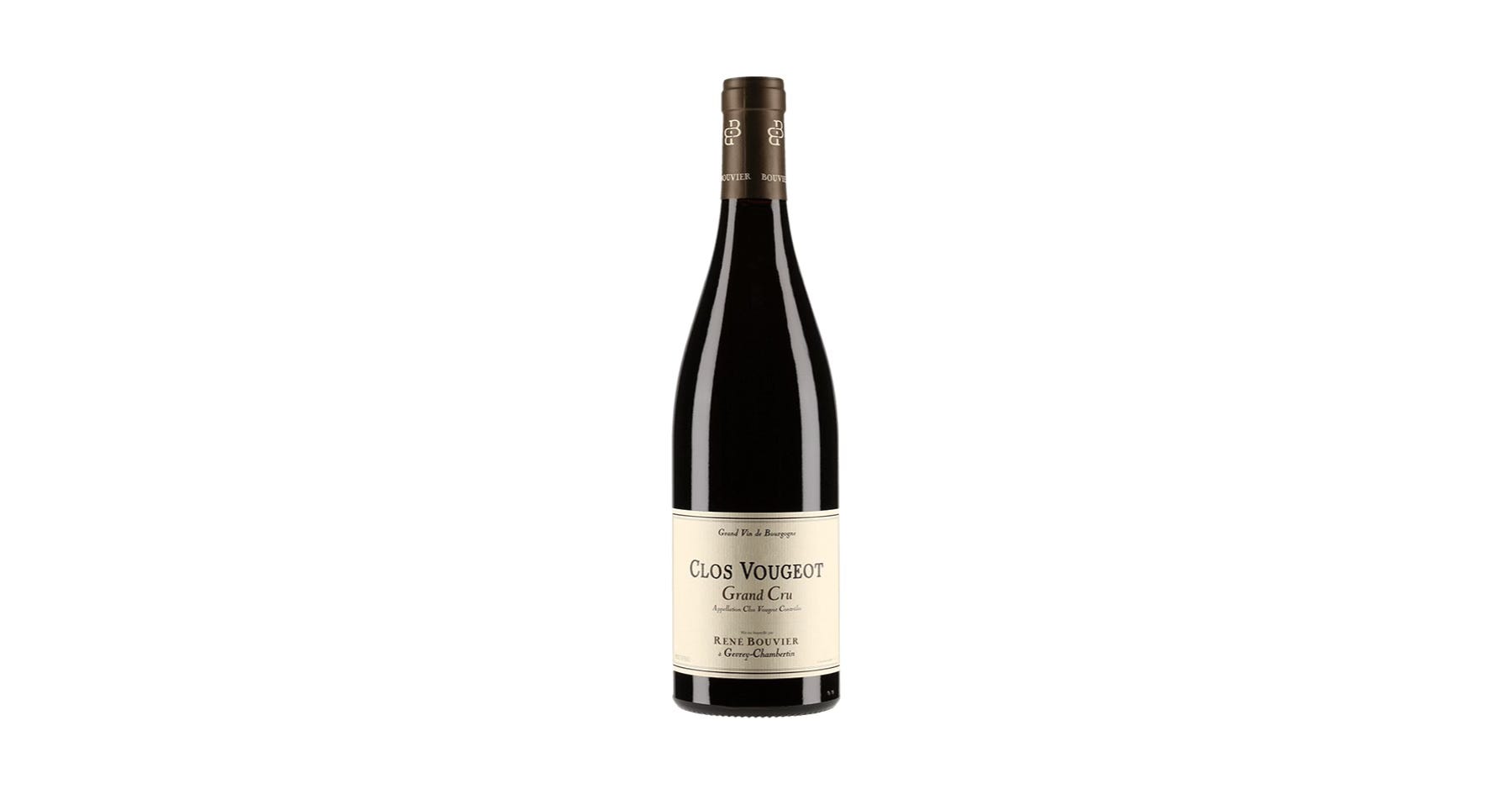
Domaine René Bouvier: Clos Vougeot Grand Cru
Old vines, organic rigour, and quiet conviction: a Grand Cru that asks to be judged by what it is rather than what classification suggests
Introduction
The Clos de Vougeot is Burgundy’s most paradoxical Grand Cru: a 50.6-hectare walled vineyard of immense historical significance, founded by Cistercian monks in the twelfth century, whose geological diversity is so extreme that the wines produced from different sectors of the same enclosed space can bear almost no resemblance to one another. With over 80 proprietors cultivating approximately 100 parcels, the appellation is a microcosm of Burgundy’s defining tension between the prestige of a classified name and the reality of what lies beneath its surface. There are Clos de Vougeot wines of genuine Grand Cru stature, produced from shallow-soiled, well-drained parcels on the upper slope near the château; and there are Clos de Vougeot wines that would struggle to justify Premier Cru status, produced from deep, clay-heavy alluvial soils on the flat terrain adjacent to the RN 74. The classification does not distinguish between them. The market, increasingly, does.
Domaine René Bouvier’s contribution to this complex landscape is a single cuvée from a small parcel of approximately 0.4 hectares, held en fermage, producing roughly four barrels per vintage—a quantity so modest that fewer than 100 cases reach the market in most years. The parcel is planted with vines averaging 55 years of age, situated on clay soils whose composition has been compared to those of Vosne-Romanée, producing a wine of delicate, fine-grained tannin that stands in contrast to the more robust, extracted expressions that dominate the Clos de Vougeot appellation. It is a niche wine from a niche producer within a niche sector of a Grand Cru—a positioning that limits its visibility but that, for the informed collector, may constitute its most interesting quality.
The Bouvier Clos de Vougeot fits into the broader narrative of the domaine’s evolution under Bernard Bouvier: the organic conversion completed in 2013, the shift from extraction to infusion, the commitment to terroir transparency that has progressively defined the house style. It is also a case study in the challenge of producing Grand Cru wine from leased rather than owned land—a structural condition that affects continuity, investment incentive, and the depth of the vigneron-terroir relationship. For all these reasons, the wine merits serious attention: not because it is the greatest Clos de Vougeot—it does not claim to be—but because it illustrates, in miniature, the questions that the entire appellation raises about classification, terroir, ownership, and the meaning of Grand Cru in the twenty-first century.
Vineyard and Terroir
The Clos de Vougeot: Historical and Geological Context
The Clos de Vougeot was established by the monks of the Abbey of Cîteau beginning with vineyard donations between 1109 and 1115, with the enclosing stone wall completed in 1336. It was classified as Grand Cru in 1937 and, at 50.6 hectares, is the largest Grand Cru vineyard in the Côte de Nuits. The château at its centre, built in stages from the twelfth to the sixteenth centuries, serves today as the headquarters of the Confrérie des Chevaliers du Tastevin, Burgundy’s most prominent wine brotherhood. The vineyard’s history is inseparable from the history of Burgundian viticulture itself: the monks of Cîteau were among the first to practise systematic terroir analysis, and their development of the Clos de Vougeot over two centuries represents one of the earliest examples of vineyard classification by quality.
The geological structure of the Clos de Vougeot is the source of its paradox. The vineyard slopes gently from approximately 255 metres at the western, upper edge near the château to approximately 240 metres at the eastern, lower edge adjacent to the RN 74. This 15-metre altitude differential, modest by the standards of many Burgundian hillsides, encompasses dramatic variation in soil composition, drainage, and viticultural potential.
The Three-Tier Hierarchy
The upper slope, nearest the château, is composed of coarse gravel over Bathonian limestone, with shallow topsoils of approximately 40 centimetres depth, iron-rich marl deposits, and chalky, well-drained oolitic limestone. These soils force deep root penetration and moderate vine vigour, producing wines of concentration, mineral complexity, and structural authority. This is the sector that most clearly justifies the Grand Cru classification, and it is where the parcels of the most celebrated producers—Leroy, Méo-Camuzet, Anne Gros—are concentrated.
The middle slope comprises softer limestone with clay and gravel, producing wines of moderate depth and structure. Many critics consider this sector borderline—equivalent in quality to the best Premier Cru sites of Vougeot or adjacent communes, but benefiting from the Grand Cru classification conferred by the undifferentiated appellation.
The lower slope, extending to the flat terrain near the road, is composed of humus-rich alluvial clay and marl with poor drainage characteristics and deeper soil profiles. Wines from this sector tend toward fleshiness and accessibility rather than mineral complexity, and their claim to Grand Cru status is the most contested aspect of the Clos de Vougeot’s classification. The monks themselves understood this hierarchy: historical accounts record that the upper-slope wine was reserved for bishops, the middle-slope for princes and popes, and the lower-slope for communal use—an informal classification by quality that the modern Grand Cru designation has abolished but that the wines themselves continue to reflect.
The Bouvier Parcel
Domaine René Bouvier’s parcel within the Clos de Vougeot extends to approximately 0.4 hectares (40 ares), held en fermage. The soils are characterised by a clay composition that the domaine compares to those of Vosne-Romanée—a description that suggests a middle-to-lower slope position where clay content increases and limestone influence diminishes relative to the upper reaches. The vine age, averaging approximately 55 years, provides root depth and natural vigour moderation that partially compensate for the less ideal drainage characteristics of clay-dominant soils.
The parcel is farmed under the domaine’s certified organic regime, implemented across all holdings since 2013. Hand-harvesting, natural grass cover, soil plowing, herbal treatments, and organic composts are standard practice. The low yields characteristic of the domaine’s approach—typically 20 to 25 hectolitres per hectare—further concentrate the fruit from a soil type that, without careful yield management, tends toward dilution and overproduction.
Sensitivity to Climatic Variation
The Clos de Vougeot’s lower-altitude sections are particularly sensitive to vintage variation. In wet years, the poor drainage of the clay-heavy lower and middle slopes can lead to waterlogging, diluted fruit, and disease pressure. In warm, dry years, these same soils retain sufficient moisture to sustain vine health where shallower, better-drained upper-slope soils may struggle. The Bouvier parcel’s clay composition makes it a beneficiary of warm vintages and a casualty of wet ones—a vintage sensitivity that is reflected in the marked differences between the wine’s strongest and weakest expressions.
Grape Composition and Viticultural Choices
The Bouvier Clos de Vougeot is produced entirely from Pinot Noir, as required by appellation regulations. The vines, averaging approximately 55 years of age, represent a mature planting that has achieved the root depth and canopy balance necessary for concentrated, terroir-expressive fruit. Specific information regarding clonal versus massal selection within the parcel is not publicly disclosed; however, the vine age suggests a planting history that predates the widespread adoption of clonal material in Burgundy, making it likely that the parcel contains a degree of genetic diversity derived from massal propagation.
Yield control is managed through the domaine’s standard organic practices: no chemical fertilisers, natural grass cover to moderate vigour, and hard pruning. The yields of 20 to 25 hectolitres per hectare that characterise the domaine’s approach are well below the Grand Cru maximum and serve to concentrate flavour and phenolic extract in a soil type that, at higher yields, tends to produce wines of diluted character. The hand-harvesting protocol, standard across all Bouvier holdings, ensures that fruit quality is assessed and maintained at the point of picking.
The challenge of producing compelling wine from this soil type and parcel position is fundamentally one of concentration and structure. The clay-dominant soils of the middle and lower Clos de Vougeot produce fruit of naturally softer tannin and rounder texture than the limestone-dominated upper slope. The domaine’s viticultural response—low yields, old vines, organic farming—is designed to extract the maximum expression from these conditions, producing a wine that compensates for the parcel’s structural limitations through concentration, vine age, and farming intensity.
Vinification and Élevage
The vinification of the Bouvier Clos de Vougeot follows the domaine’s general protocols, adapted to the wine’s Grand Cru status and the specific characteristics of the parcel. The grapes are hand-harvested, sorted on vibrating tables, and gravity-fed into fermentation vessels. Whole-cluster inclusion of 20 to 30 percent—the range employed across the domaine since 2010—adds textural length and aromatic complexity to a wine whose clay-derived softness benefits from the structural contribution of stems. Fermentation proceeds with indigenous yeasts, a practice consistent with the organic philosophy and with Bernard Bouvier’s commitment to terroir-specific expression.
Élevage takes place in French oak barrels for approximately 16 to 18 months, with a new-oak proportion of 20 to 30 percent. This is a moderate oak regime for a Grand Cru—lower than the 50 percent new oak applied to the domaine’s Charmes-Chambertin, reflecting Bernard’s judgment that the Clos de Vougeot parcel’s naturally delicate tannin structure does not require or benefit from the additional structural imposition of higher new-oak percentages. Since 2008, the domaine has also employed 600-litre demi-muids alongside standard 228-litre pièces, providing a gentler, slower oak influence that complements the wine’s inherent finesse.
The wine is bottled without excessive fining or filtration, preserving the textural detail and lees-derived complexity that the extended élevage develops. The total production of approximately four barrels per vintage—roughly 100 cases—means that the wine is vinified as a single lot, without the option of blending between multiple vessels or parcels. This simplicity of production is both a constraint and an advantage: there is no room for correction, but there is also no risk of dilution through blending with lesser material. The wine is what the parcel and the vintage give, unmediated.
Vintage-by-Vintage Analysis
The Bouvier Clos de Vougeot is produced in small quantities, and comprehensive vintage-by-vintage documentation is less widely available than for larger-production Grand Cru bottlings. The following analysis draws on available critical assessments, vintage context, and the known characteristics of the parcel and the domaine’s winemaking evolution. It should be read as a composite portrait rather than an exhaustive chronology.
The Pre-Organic Period (Before 2009)
Vintages produced before the domaine’s conversion to organic viticulture reflect an earlier winemaking philosophy: greater extraction, potentially higher yields, and a less refined relationship between vine and soil. While specific assessments of early Bouvier Clos de Vougeot vintages are scarce in public critical literature, the general trajectory of the domaine during this period—competent but not yet distinctive—suggests wines of adequate quality that did not fully exploit the Grand Cru classification. The 2005 and 2006 vintages, produced in strong years, likely represent the strongest wines of this period.
2009: Generosity and Warmth
The 2009 vintage was warm and generous across Burgundy, producing ripe, concentrated wines of immediate appeal. The Bouvier Clos de Vougeot from 2009, assessed at approximately 90 points, reflects the vintage’s warmth in its fuller body and rounder tannin structure. The clay soils of the parcel retained sufficient moisture through the dry summer to sustain vine health, and the resulting wine shows the easy, supple character that marks the best clay-based Clos de Vougeots from warm years. It is a wine that has drunk well from relatively early and that is now approaching the end of its optimal window.
2010: A Classical Year
The 2010 growing season combined warmth with acidity-preserving freshness, producing wines of notable balance across the Côte de Nuits. The Bouvier Clos de Vougeot from this vintage benefits from the year’s natural structure, showing greater depth and mineral definition than the 2009. This is a vintage where the parcel’s clay character is supported rather than softened by the growing conditions, and the wine rewards continued cellaring.
2012: After the Storm
The 2012 vintage was marked by significant hail damage across much of the Côte de Nuits, reducing yields and concentrating the surviving fruit. The Bouvier Clos de Vougeot 2012, assessed at approximately 90 points, shows the unexpected depth that severely cropped vintages can produce—a wine of greater intensity than the vineyard typically delivers. The hail’s natural selection effect compensated, in part, for the parcel’s tendency toward softness, producing a wine of more assertive character than the norm.
The Organic Transition (2013–2015)
The 2013 vintage, the first produced under certified organic viticulture, marks a philosophical as well as a practical turning point. Cool and classically structured, the 2013 Clos de Vougeot reflects both the vintage’s inherent freshness and the beginning of the organic regime’s influence on soil health and vine balance. Assessed at approximately 94 points, it represents a significant step up in quality and a signal of the improvements that organic conversion would progressively deliver.
The 2014 vintage, assessed at approximately 94 points, showed the domaine’s increasing command of the parcel under organic management. A challenging year for many Burgundy producers, the 2014 rewarded those who maintained rigorous vineyard practices, and the Bouvier bottling demonstrated the concentration and balance that careful organic farming can achieve even in difficult conditions.
The 2015 combined warmth and concentration with the increasingly apparent benefits of organic viticulture, producing a Clos de Vougeot of notable richness and structural completeness. The warm vintage played to the parcel’s strengths, and the organic regime’s moderation of yields ensured that the warmth was expressed as depth rather than overripeness.
2016–2019: Frost, Refinement, and Consistency
The 2016 vintage was devastated by spring frost across much of the Côte de Nuits, and the Clos de Vougeot’s lower-altitude position made it particularly vulnerable. Yields were drastically reduced, and the resulting wine—from whatever fruit survived—carries the concentration of extreme natural selection. The 2017 offered a warmer, more accessible expression; the 2018 combined warmth with the increasing precision of the Bouvier approach; and the 2019 returned to a more classically balanced profile, with the bright acidity and mineral definition that the best vintages of this decade have produced.
2020–2023: The Current Era
The vintages from 2020 onward represent the domaine at its most confident. The 2020, produced in a warm, dry year, shows concentration and depth tempered by the freshness that organic farming and low yields preserve. The 2021, assessed at approximately 94 points, navigated a difficult vintage of frost and rain with characteristic Bouvier restraint, producing a wine of cool-climate precision and mineral clarity. The 2022, assessed at approximately 94 points, is one of the stronger recent releases, reflecting the vintage’s natural concentration and the domaine’s refined approach to extraction and élevage. The 2023, assessed at approximately 95 points, suggests a continuation of the upward trajectory—the highest-scored Bouvier Clos de Vougeot to date, and a vintage that consolidates the wine’s position as a serious if unheralded Grand Cru expression.
Style, Identity, and Structural Sensory Profile
The Bouvier Clos de Vougeot occupies a distinctive position within the appellation: it is a Grand Cru of delicacy rather than power, of textural finesse rather than structural authority. The clay-dominated soils of the parcel produce naturally soft, round tannins—a quality that Bernard Bouvier’s light-extraction approach accentuates rather than counteracts. Where other Clos de Vougeot producers may seek to impose structure through extraction, new oak, or concentration, the Bouvier bottling embraces the parcel’s inherent character: supple, velvety, and almost sweet in tannin, with a mid-palate weight that recalls Vosne-Romanée more than the firmer, more angular expressions typical of upper-slope Clos de Vougeot.
This stylistic identity is both the wine’s strength and its limitation. For drinkers who value transparency and finesse, the Bouvier Clos de Vougeot offers an authentic expression of a specific sector of a complex vineyard—a reading of terroir that is honest about its origins and unembellished by winemaking artifice. For those who expect Grand Cru to deliver monumental structure and decades of development, the wine may appear insufficiently serious—an impression that says more about the expectations attached to the classification than about the quality of the wine itself.
Compared to the Clos de Vougeot of Domaine Leroy, which draws from parcels across all three slope sections and is produced with biodynamic intensity at extreme low yields, the Bouvier is lighter, simpler, and more immediately accessible. Compared to Méo-Camuzet’s Grand Maupertuis, from the vineyard’s most prized sector, it lacks the mineral depth and structural authority that the upper slope delivers. But compared to many of the 80-plus producers who bottle Clos de Vougeot from parcels of variable quality, the Bouvier stands out for its integrity: it is a wine that does not pretend to be something its terroir cannot deliver, and that offers instead a distinctive, site-specific expression within the broad spectrum of the appellation.
In bottle, the wine evolves along a moderate trajectory. The soft tannins and round texture make it approachable relatively early—within five to seven years of vintage—while the concentration derived from low yields and old vines provides sufficient structure for a further decade of development. The best vintages (2013, 2014, 2021, 2022, 2023) can develop genuine complexity with ten to fifteen years of cellaring, though they do not possess the structural reserve for the multi-decade aging that the finest upper-slope Clos de Vougeots can achieve.
Aging Potential and Cellaring
Short-Term (1–5 Years)
The Bouvier Clos de Vougeot is more accessible in youth than many Grand Cru Burgundies, reflecting the soft tannin structure and round texture derived from its clay soils. In this window, the wine offers primary fruit expression and the supple, velvety character that characterises the parcel. For lighter vintages or those where the wine is intended for current consumption, this window may be appropriate.
Medium-Term (5–15 Years)
The optimal drinking window for most vintages falls between approximately seven and fifteen years of age. During this period, the primary fruit evolves into secondary complexity—earthy, truffle-inflected, subtly gamey—while the tannins resolve fully and the wine achieves its fullest expression of balance and terroir character. The 2013, 2014, and 2015 vintages are currently within or approaching this window and represent ideal candidates for near-term cellaring.
Long-Term (15+ Years)
Extended aging beyond fifteen years is realistic only for the strongest, most structured vintages—those where vintage conditions have provided the acidity, tannin, and concentration necessary to sustain development. The 2021, 2022, and 2023 vintages, with their strong critical assessments and structural balance, are the most likely candidates for extended cellaring among recent releases. However, the wine’s inherent delicacy of structure means that the margin for error in storage is slim: temperature fluctuations, light exposure, or humidity imbalance will degrade the wine more rapidly than a more robustly structured Grand Cru.
Storage Conditions
Ideal cellaring conditions are consistent with those for fine Burgundy: constant temperature between 12°C and 14°C, humidity between 65% and 80%, and complete absence of light, vibration, and strong odours. Provenance is a critical consideration for any Burgundy Grand Cru, but it is particularly important for a wine of this delicacy, where the structural buffer against storage damage is less generous than for more heavily extracted or more tannically concentrated expressions.
Market Value and Investment Perspective
Pricing
The Bouvier Clos de Vougeot trades at prices that are accessible by Grand Cru Burgundy standards. Recent vintage pricing in the range of 130 to 270 EUR per bottle, depending on market and vintage, places it well below the Clos de Vougeot of the appellation’s most celebrated producers—Leroy, Méo-Camuzet, Anne Gros, Grivot—whose bottles routinely command multiples of this figure. This pricing reflects the domaine’s Marsannay-based reputation, the en fermage status of the parcel, and the relative obscurity of the cuvée within the broader Clos de Vougeot landscape.
Scarcity and Production
The production of approximately four barrels per vintage—roughly 100 cases or fewer—makes this among the smallest-production Clos de Vougeot bottlings on the market. This scarcity is a function of parcel size rather than deliberate supply restriction, and it means that the wine is effectively available only to collectors and retailers with established allocation relationships with the domaine or its négociant partners. For those who can access it, the combination of Grand Cru classification, certified organic production, and tiny volume at accessible pricing represents a genuine value proposition.
Secondary Market
Liquidity on the secondary market is minimal. The wine’s small production, low public profile, and the domaine’s association with Marsannay rather than with the commune of Vougeot mean that it does not appear regularly at auction and is not the subject of speculative trading. When bottles do circulate on secondary platforms, they tend to trade at or near retail levels. For collectors whose interest is in drinking rather than trading, this limited liquidity is irrelevant; for investors, it represents a structural limitation that effectively precludes the wine as an investment vehicle.
Comparative Position
Within the Clos de Vougeot appellation, the Bouvier bottling occupies the lower end of the price spectrum while achieving quality assessments in the 90–95-point range—a quality-to-price ratio that is among the most favourable in the appellation. The question is whether this ratio reflects genuine undervaluation or an accurate market assessment of the parcel’s position within the vineyard’s quality hierarchy. The answer, probably, is some of both: the wine is undervalued relative to its organic credentials, vine age, and careful winemaking, but it is appropriately priced relative to the parcel’s soil type and slope position, which do not yield wines of the structural authority associated with the Clos de Vougeot’s finest sectors.
Cultural and Gastronomic Significance
The Clos de Vougeot occupies a central position in the cultural mythology of Burgundy. The château at its heart, now home to the Confrérie des Chevaliers du Tastevin, hosts ceremonial dinners and wine events that have served for nearly a century as the public face of Burgundian wine culture. The vineyard itself—visible from the Route des Grands Crus, enclosed by its medieval wall—is among the most photographed and symbolically freighted landscapes in the wine world. To produce wine from within this enclosure is to participate in a tradition that extends back nearly a millennium, and even a small parcel of 0.4 hectares held en fermage carries the weight of that association.
The Bouvier Clos de Vougeot’s presence on wine lists is necessarily limited by its tiny production. Where it does appear, it serves a function similar to other small-production Grand Cru Burgundies: a point of discovery for sommeliers who seek to offer their guests access to classified terroir at prices that the more celebrated bottlings cannot match. Its organic credentials add a further dimension of appeal in restaurants where sustainability and provenance are valued alongside quality.
Gastronomic Relevance
The wine’s soft, round tannin structure and supple texture make it a natural partner for a range of preparations. In its youth, the velvety palate and bright fruit pair well with preparations of moderate richness: duck breast, roasted guinea fowl, veal with mushroom sauce, or the classic Burgundian œufs en meurette. The absence of aggressive tannin makes it more versatile at the table than more heavily structured Grand Crus, which can dominate lighter preparations.
At maturity, as the wine develops earthy, truffle-like complexity and its tannins fully resolve, the pairing possibilities expand to include game preparations, braised meats, and aged cheeses—Époisses, Ami du Chambertin, or aged Comté—where the wine’s savoury complexity and medium body provide a complement rather than a contrast. The Bouvier Clos de Vougeot is, in gastronomic terms, a wine of versatility rather than spectacle: it enhances rather than dominates, accommodates rather than demands. This quality, which might be considered a limitation in the tasting room, is a genuine virtue at the table.
Conclusion
The Clos de Vougeot Grand Cru from Domaine René Bouvier is not a wine that seeks the spotlight. Its production is too small, its domaine too modest in reputation, and its parcel position within the vineyard too far from the most celebrated sectors to command the attention that the classification might theoretically warrant. What it offers instead is something increasingly rare in Grand Cru Burgundy: an honest wine from a specific place, produced with organic rigour and stylistic restraint, at a price that allows it to be consumed rather than merely collected.
The wine’s strengths are genuine: the 55-year-old vines provide concentration and complexity; the organic farming deepens terroir expression; the light-extraction approach produces a wine of delicacy and textural refinement; and the clay-based terroir delivers a softness and approachability that give the wine a distinctive identity within the Clos de Vougeot appellation. The recent upward trajectory of critical assessments—from approximately 90 points in 2009 and 2012 to 94–95 points in the 2021–2023 vintages—confirms a domaine that is progressively realising the potential of its Grand Cru holding.
The vulnerabilities are equally clear: the en fermage status introduces structural uncertainty; the parcel’s soil type and position limit the wine’s structural ambition relative to the appellation’s finest sectors; the domaine’s Marsannay identity constrains market perception; and the tiny production limits visibility and commercial significance. These are constraints that no amount of winemaking skill can entirely overcome, and they define the ceiling of what this particular Clos de Vougeot can achieve.
For the collector who understands these terms, the Bouvier Clos de Vougeot represents a form of value that the Burgundy market does not always recognise: Grand Cru classification, organic certification, old-vine concentration, and artisanal-scale production at a fraction of the cost of the appellation’s prestige bottlings. It is a wine that asks to be judged by what it is rather than by what its classification suggests it should be—and what it is, at its best, is a graceful, site-specific expression of a complex and contested terroir, made by a family whose patience and conviction have steadily earned the right to be taken seriously.