

Domaine René Bouvier: Clos Vougeot Grand Cru
A Grand Cru of quiet refinement and compelling value from Burgundy's rising star
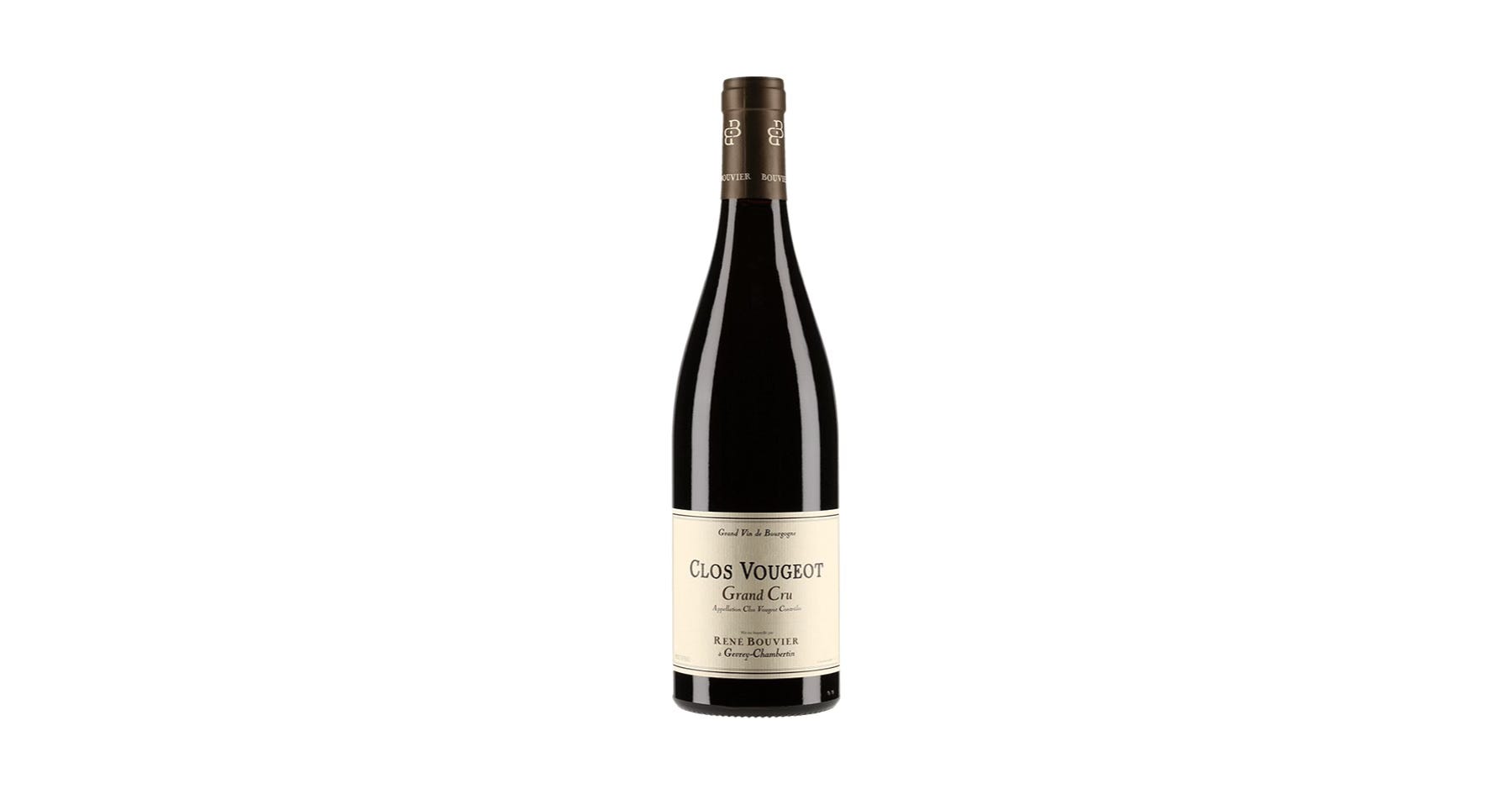
Introduction: Place, History, and Position Within the French Wine Narrative
Within the constellation of Burgundy’s grand cru vineyards, Clos de Vougeot occupies a singular and contested position. At 50.6 hectares, it is the largest single vineyard in the Côte de Nuits entitled to grand cru status, a distinction that simultaneously elevates and complicates its reputation. Unlike the compact, geologically uniform parcels of Romanée-Conti or La Tâche, Clos Vougeot’s expansive walled enclosure encompasses terrain that ranges from genuinely exceptional to demonstrably ordinary—a heterogeneity that has made producer selection the defining variable in any serious engagement with its wines.
It is within this complex landscape that Domaine René Bouvier has cultivated a discreet but increasingly respected position. The domaine, founded in 1910 by Henri Bouvier in Marsannay and now directed by the third-generation vigneron Bernard Bouvier, holds 40 ares (0.4 hectares) of vines within the Clos Vougeot appellation under a fermage (rental) arrangement established around 2000. While the domaine’s identity has historically been rooted in Marsannay—where Bernard Bouvier serves as president of the local syndicate and has been instrumental in elevating the appellation’s standing—the Clos Vougeot bottling represents the apex of a portfolio that extends from regional Bourgogne to three grand crus: Charmes-Chambertin, Échezeaux, and Clos Vougeot itself.
The evolution of Domaine René Bouvier mirrors broader shifts in Burgundian viticulture over the past three decades. Bernard Bouvier, who signed his first vintage in 1986 and assumed sole control of the domaine in 1992, has navigated the region’s progression from an era of extraction-focused winemaking toward a philosophy emphasizing infusion, textural expression, and terroir transparency. As Jasper Morris MW has noted, it took time for the wine world to recognize the quality transformation occurring at this address: “It took me a while to appreciate just how good Bernard Bouvier’s wines are these days. In a quiet way he has been fine tuning his offer, moving more in the direction of whole bunch vinification and indeed several no added sulphur cuvées, while working with sufficient care and attention to avoid any deviations in the wines.”
The critical turning point in the domaine’s trajectory can be dated with some precision to the years 2001–2009. In 2001, Bernard implemented fundamental qualitative changes: manual harvesting in small 20-kilogram crates, rigorous sorting tables, and gravity-based fermentation protocols. In 2006, the construction of a new, purpose-built winery in Gevrey-Chambertin enabled experimentation with extended élevage, demi-muids (600-liter barrels), and concrete egg-shaped vessels. Finally, 2009 marked the formal transition to organic viticulture, with certification achieved for the 2013 vintage.
The Clos Vougeot from Domaine René Bouvier thus represents a wine that has evolved alongside its producer’s maturation—a grand cru that, in the hands of a skilled practitioner, demonstrates how the thoughtful application of contemporary viticultural and enological philosophy can extract genuine nobility from the storied but uneven terroir within the ancient walls.
Vineyard and Terroir
Location and Parcel Composition
Domaine René Bouvier’s Clos Vougeot holding comprises a single parcel of 40 ares (0.4 hectares), situated within the medieval walls that have defined the vineyard’s boundaries since their completion in 1336. The parcel is held under fermage, one of several grand cru and premier cru parcels that Bernard Bouvier began working through partnership arrangements from 2000 onwards.
The precise location of the Bouvier parcel within the Clos has not been explicitly disclosed in official domaine communications—a common discretion among growers who prefer not to invite direct comparisons with the complex terroir hierarchy that has made Clos Vougeot among the most debated of Burgundy’s grands crus. What can be stated with confidence, based on the character of the wines produced, is that the parcel displays characteristics consistent with mid-slope or clay-influenced sections of the vineyard. Bernard Bouvier himself has noted that the Clos Vougeot produces “a wine with very delicate tannins, almost sweet” due to “a kind of clay which is quite similar to the clay in Vosne-Romanée.”
The Geological Context of Clos Vougeot
The Clos Vougeot vineyard occupies a gently sloping rectangle oriented from northwest (at approximately 280 meters elevation near the château) down toward the east and south, reaching the N74 road at roughly 240 meters. This elevation range—substantial for a single grand cru—accounts for much of the vineyard’s internal diversity.
The soils have been extensively studied and can be broadly divided into three zones, reflecting the Cistercian monks’ historic practice of producing three distinct cuvées:
Upper Section (Cuvée des Papes)
The highest portion, bordering the grand cru vineyards Musigny and Grands Échezeaux, consists of light, chalky, gravelly soils on oolitic Jurassic limestone with excellent drainage. Cool breezes from the Combe d’Orveau ravine moderate temperatures. The soil profile features a thin layer of clay over ancient limestone, producing wines of structure, minerality, and aging potential.
Middle Section (Cuvée du Roi)
The mid-slope comprises softer limestone with a more generous clay presence, moderate gravel content, and reasonable drainage. Comparable in general position to many premier cru vineyards of the Côte de Nuits, this section produces wines of balance—neither the ethereal structure of the summit nor the generosity of the plain.
Lower Section (Cuvée des Moines)
The eastern portion adjacent to the N74 consists of humus-rich alluvial clay over Jurassic-era rocks. Nearly flat, with poor drainage, this section produces wines of weight and immediacy but typically less complexity and aging potential.
The INAO’s 1937 classification decision to treat the entire walled enclosure as a single grand cru—rather than subdividing according to terroir quality—has been the source of ongoing debate. As Jancis Robinson has observed, “Conventionally it is supposed that the best wines of Clos de Vougeot come from the best-drained upper third of the vineyard near such other grands crus as Le Musigny and Échezeaux.”
Vine Age and Planting
The vines in Domaine René Bouvier’s Clos Vougeot parcel average approximately 55 years of age (as of 2014 vintage documentation), placing them among the more mature holdings in the domaine’s portfolio, though not approaching the exceptional age of certain Gevrey-Chambertin plots (where the “Racine du Temps” cuvée derives from vines over 90 years old).
Bernard Bouvier employs massal selection—the propagation of cuttings from the domaine’s own superior vines—rather than relying on commercial clonal material. As he has stated: “My vines are pinot fin, selection massale. The berries are small and the yields are low.”
Farming Philosophy
The domaine transitioned to organic viticulture in 2009, achieving official certification with the 2013 vintage. However, since 2016, while continuing to follow organic principles in practice, the domaine has chosen not to maintain official certification—a decision increasingly common among quality-focused Burgundian producers who find the bureaucratic requirements burdensome without providing additional value to their established protocols.
Core viticultural practices include:
Soil Management
Winter plowing with controlled grass cover during the growing season, promoting microbial life and auxiliary fauna
Yield Control
Severe winter pruning (both Guyot and single cordon systems employed), limiting vines to 8 bunches of grapes, resulting in yields averaging 30-35 hectoliters per hectare in normal years, dropping to 20 hl/ha in difficult vintages—well below the appellation’s permitted 35 hl/ha
Disease Management
Ecological approach emphasizing biodiversity and soil health to enhance vine resilience
Harvest Timing
Meticulous attention to physiological and phenolic ripeness, picking neither too early nor too late according to each climat’s characteristics
Climatic Sensitivity
The Clos Vougeot’s internal heterogeneity renders it particularly sensitive to vintage variation. In hot, dry years, the lower sections’ retention of moisture can prove advantageous, while the upper slopes may stress excessively. In cool, wet years, the superior drainage of the upper sections becomes critical, while the bottom slopes struggle with excess water. This climatic calculus makes the Clos one of the grand crus where producer skill and parcel position interact most dramatically.
Grape Composition and Viticultural Choices
Variety
The Clos Vougeot Grand Cru appellation is an AOC exclusively for red wine produced from Pinot Noir, though INAO regulations technically permit up to 15 percent Pinot Blanc, Pinot Gris, or Chardonnay. In practice, virtually all plantings are Pinot Noir, and Domaine René Bouvier’s parcel is entirely planted to this variety.
Historically, the Cistercians cultivated both Pinot Noir and Chardonnay within the Clos, but the latter was removed before the mid-nineteenth century. The appellation rules also permit the now-extinct Renevey variety in principle, though its replantation has been forbidden since 1938.
Clonal versus Massal Selection
Domaine René Bouvier maintains a commitment to massal selection as a philosophical cornerstone. Bernard Bouvier’s reference to “pinot fin”—the traditional Burgundian term for fine-berried Pinot Noir—indicates a preference for heritage plant material over modern high-yielding clones. This approach contributes to the small berry size and natural yield restriction that characterize the domaine’s fruit.
Yield Control
The domaine’s approach to yield management is multifaceted:
Pruning
Winter pruning limits bud count
Green Harvest:
Thinning conducted as necessary, though severe winter pruning typically minimizes the need
Bunch Limitation
Target of 8 bunches per vine
Resulting Yields: Approximately 30 hl/ha for grand cru, significantly below the permitted maximum
The concentration achieved through these practices enables the extended extraction-free maceration periods that define the domaine’s modern style.
Vinification and Élevage
Harvest and Reception
All harvesting at Domaine René Bouvier is conducted manually, with grapes collected in small 20-kilogram crates to prevent crushing and premature oxidation. Upon arrival at the winery—the modern facility constructed in 2006 in Gevrey-Chambertin—the fruit passes across two sorting tables operated by multiple personnel, ensuring only healthy, optimally ripe berries proceed to fermentation.
The decision regarding harvest timing reflects Bernard Bouvier’s evolution away from the late-picking, high-extraction philosophy prevalent in 1990s Burgundy. As he has acknowledged: “When I started out I was too young. My wines were too extracted, too concentrated. But then again, that was what it was like in the 1990s.”
Fermentation
The fermentation protocol has evolved significantly, particularly since 2010 when whole-bunch fermentation became a central element of the domaine’s approach:
Destemming Ratio
Approximately 50% whole bunches for most cuvées; for grand crus, this may reach 60% or higher
Vessels
Traditional Burgundian open-top fermenters, enabling manual punch-downs
Indigenous Yeast
Fermentation proceeds without added enzymes or cultured yeast, relying on native populations
Duration
Approximately 20 days total maceration
Temperature Control
Active monitoring to maintain optimal fermentation conditions
Extraction
Light extraction only—Bernard Bouvier describes his philosophy as “infusion” rather than extraction, a conscious rejection of the aggressive techniques once common in the region
This whole-bunch approach, as articulated by Henri Jayer’s philosophy that Bernard Bouvier cites, adds structure from stem tannins while preserving primary fruit expression and contributing spice complexity. The technique typically results in lower finished alcohol levels and enhanced aging potential.
Oak and Élevage
Following pressing with a pneumatic press, the wine is transferred to French oak barrels for aging:
New Oak Percentage
20-30% new barrels for the Clos Vougeot
Barrel Size
Predominantly 228-liter pièces, with increasing use of 600-liter demi-muids across the portfolio to preserve freshness
Duration
16-18 months
Cellar Conditions
Purpose-built facility with controlled temperature and humidity
Bernard Bouvier’s reduced reliance on new oak represents another departure from his earlier approach. As French wine guides have noted, “Un usage plus modéré du bois neuf et des choix de maturité plus précis ont donné dernièrement des vins beaucoup plus aboutis” (”A more moderate use of new wood and more precise ripeness choices have recently produced much more accomplished wines”).
Bottling
Following oak aging, wines spend an additional period—typically 6-8 months—in stainless steel tanks before bottling. Bottling is conducted under cork for standard cuvées, with the domaine also producing some “no added sulphur” bottlings using technical corks designed to maintain stability without sulfur dioxide.
Vintage-by-Vintage Analysis
Note: Domaine René Bouvier began producing Clos Vougeot around 2000 through fermage arrangements. The following analysis covers documented vintages, recognizing that the earliest releases may predate widely published critical assessments.
Pre-2009: The Formation Period
The vintages from approximately 2000-2008 represent the domaine’s initial period with Clos Vougeot, coinciding with Bernard Bouvier’s implementation of quality-focused changes but predating the organic conversion and the refinement of extraction philosophy that would define later releases. These wines, while competent, reflect the more extracted style prevalent in Burgundy during this era.
2009: The Pivot Year
The 2009 vintage marked the formal commencement of organic viticulture at the domaine. In the cellar, Burgundy experienced a warm, ripe vintage characterized by accessible fruit and softer tannins than typical. For Bouvier’s Clos Vougeot, this represented both the culmination of earlier approaches and the beginning of transformation.
Climatic Conditions
Warm growing season, early harvest
Style
Generous, fruit-forward, immediately approachableS
Structure
Softer tannins, moderate acidity
Current Status
Approaching optimal drinking; will hold but not improve significantly
Drinking Window
2015-2030
2010: Classical Framework
The 2010 vintage returned Burgundy to a more classical profile with higher acidity and greater structure following the opulent 2009.
Climatic Conditions
Return to cooler conditions, excellent sugar-acid balance
Style
Structured, linear, classic Côte de Nuits character
Structure
Firm tannins, vibrant acidity
Current Status
Beginning to open; exceptional aging potential
Drinking Window
2020-2040
2011: Early Challenge
A difficult vintage marked by variable weather patterns posed the first major test of the domaine’s evolving philosophy.
Climatic Conditions
Limited sunshine, comparisons to problematic 2007
Style
Lighter bodied, forward aromatics
Structure
Delicate tannins, adequate acidity
Current Status
Drink now; limited further potential
Drinking Window
2016-2026
2012: Resilience and Redemption
The 2012 vintage demonstrated resilience after a challenging growing season. As Clive Coates MW documented, the year began disastrously—”April, May and June were almost uninterruptedly cold, wet and miserable”—yet finished with concentrated, healthy fruit following an excellent late summer.
Climatic Conditions
Difficult spring, late flowering, saved by dry harvest period
Viticultural Note
First vintage with organic certification (though practices began earlier)
Style
Soft tannins with surprising depth, immediate appeal combined with aging capacity
Structure
Concentration comparable to 2005 and 2010 despite approachable character
Critical Reception
Strong reviews noting exceptional balance of accessibility and structure
Drinking Window
2020-2042+, currently in excellent drinking window
Recommended Service
Decant; serve at 16-18°C
2013: Challenging Navigation
The 2013 vintage presented one of the decade’s most difficult viticultural challenges.
Climatic Conditions
Wet spring, devastating hailstorms, warm summer threatening rot
Style
Charming, lighter frame, pretty fruit flavors
Structure
Balanced acidity, moderate tannins
Critical Reception
Variable by producer; better examples show finesse
Current Status
Drinking well now
Drinking Window
2018-2028
2014: Underestimated Elegance
Following frost and hail challenges, a warm September salvaged the vintage, producing wines initially underestimated but increasingly appreciated.
Climatic Conditions
Early challenges, saving September warmth
Parcel Details
From 40-are terroir, vines averaging 55 years
Style
Lighter frame, potent acidity, traditional profile
Structure
18 months in cask (20-30% new), velvety texture, finesse-driven
Critical Reception
Growing appreciation with bottle age
Drinking Window
2020-2035
2015: Modern Classic
The 2015 vintage produced what many consider the finest Burgundy reds since 2010 or 2005—wines of structural harmony and extraordinary concentration.
Climatic Conditions
Warm, consistent growing season without major stress events
Style
Rich fruit, full body, impeccable balance
Structure
Structure, fruit, and acidity in complete harmony
Critical Reception
Extraordinary enthusiasm; comparisons to 2005
Aging Potential
Exceptional; 15-30 years
Drinking Window
2023-2050
2016: Frost’s Shadow, Quality’s Triumph
Historically low yields due to spring frost resulted in tiny quantities of exceptional quality.
Climatic Conditions
Devastating frost reduced crop dramatically
Production Impact
Among lowest yields in recent memory
Style
Concentrated, structured, terroir-expressive
Structure
Dense but not aggressive tannins
Critical Reception
Outstanding where quantity exists
Drinking Window
2024-2045
2017: Abundant Elegance
Plentiful yields produced elegant, classic-styled wines—neither the structure of 2016 nor the generosity of 2015.
Climatic Conditions
Early growing season, adequate rainfall
Style
Elegant, classic Burgundy character
Structure
Accessible tannins, good freshness
Critical Reception
Strong across appellations
Drinking Window
2022-2037
2018: Solar Intensity
A notably warm vintage requiring careful management to maintain freshness.
Climatic Conditions
Hot, dry summer; early harvest (began August 25 for many domaines)
Viticultural Note
Fully ripened tannins; potential for over-extraction mitigated by Bouvier’s infusion approach
Style
Gourmet, dense profiles with black fruit dominance
Structure
Silky, melted tannins; beautiful consistency
Critical Reception
“VERY SUCCESSFUL” according to domaine; Bettane & Desseauve awarded 4 stars
Élevage
Standard 50% whole bunch, 20% new oak
Drinking Window
2025-2045
2019: Benchmark Achievement
Another warm vintage producing wines of exceptional expression, with Bernard Bouvier noting the beginning of a quality transformation.
Climatic Conditions
Warm, dry; required precise harvest timing
Style
Pure, terroir-expressive, refined
Structure
Balanced, long
Critical Reception
Universally praised by major critics including Jasper Morris, Allen Meadows (Burghound), William Kelley (Wine Advocate)
Drinking Window
2025-2048
2020: Exceptional Conditions, Exceptional Results
The earliest harvest in Burgundy’s modern history produced wines of extraordinary quality.
Climatic Conditions
Ideal growing season; harvest began August 25
Production Note
Low yields (lower than 2021 at some domaines)
Vinification
At least 60% whole bunch, 20% new wood
Style
Incredible color, gourmet and dense, black fruit profiles
Structure
Silky, melted tannins; high density with freshness
Critical Reception
“A great, very great vintage” (domaine); 15-20 year minimum aging potential
Jasper Morris MW Assessment
“In a quiet way he has been fine tuning his offer”; wines taste “very good
Drinking Window
2028-2055
2021: Frost’s Test
Severe April frost devastated yields across Burgundy; the domaine lost approximately 60% of production.
Climatic Conditions
Strong frost in April affecting both Chardonnay and Pinot Noir; subsequent coulure and millerandage
Production Impact
Roughly 40% of normal yield
Viticultural Response
Significant sorting required to retain only healthy grapes
Style
Expected concentration due to low yields
Structure:
0-day fermentation typical
Drinking Window
2027-2045
2022: Bountiful Quality
A return to more generous production without sacrificing quality.
Climatic Conditions
Favorable growing season following difficult 2021
Harvest Note
Began September 5; rapid picking with two teams and two sorting tables
Vinification
50% whole bunches, 20% new oak (standard protocol)
Style
Superb terroir expression; fruity whites with mineral tension
Critical Reception
Scores of 90-95/100 from Guide RVF; Bernard Bouvier named “Maître ès Pinot Noir” of the year by Bourgogne Aujourd’hui
Current Status
In élevage (18 months standard); bottling expected Spring 2024
Drinking Window
2028-2050
2023-2024: Emerging Vintages
Continuing the domaine’s trajectory of quality refinement, with 2023 and 2024 currently in production.
Style, Identity, and Structural Sensory Profile
Core Stylistic Signature
The Clos Vougeot of Domaine René Bouvier occupies a distinctive position within the appellation’s broad stylistic spectrum. Bernard Bouvier himself has characterized the parcel’s clay-influenced terroir as producing “a wine with very delicate tannins, almost sweet,” drawing comparison to the renowned silkiness of Vosne-Romanée while suggesting affinity with the finesse of Chambolle-Musigny.
This positioning—between the power of Gevrey and the elegance of Chambolle—reflects both the intrinsic character of the parcel and Bernard Bouvier’s winemaking philosophy. His commitment to “infusion” over extraction, the progressive incorporation of whole-bunch fermentation, and the moderate use of new oak collectively produce wines of texture rather than density, length rather than weight, and complexity rather than concentration.
Structural Framework
The structural profile of Bouvier’s Clos Vougeot across mature vintages typically presents:
Tannic Architecture
Fine-grained, integrated tannins that register as texture rather than grip. The whole-bunch component contributes stem tannins that add vertical structure while the extraction-light approach preserves the supple quality that Bernard associates with Vosne-Romanée.
Acidity
Vibrant but not angular, providing the backbone for aging without dominating youthful expression. The domaine’s refusal to pick excessively late ensures preservation of natural acidity even in warm vintages.
Body and Weight
Medium to medium-full body; never the massive, concentrated style associated with certain Clos Vougeot producers. The wines favor precision over power.
Length and Persistence
Extended finish marked by mineral and spice notes—particularly the licorice and white pepper signatures noted in multiple critical assessments.
Evolution in Bottle
In youth (years 1-5), the wines present fresh fruit framed by evident but unobtrusive tannins, with the whole-bunch contribution adding spice complexity. The moderate new oak integrates quickly.
In maturity (years 8-15), secondary and tertiary development emerges: the “velvet touch” that Bernard associates with aged Vosne-Romanée, alongside earthy, truffle, and sous-bois characteristics typical of mature Côte de Nuits Pinot Noir.
At full development (15-25+ years for strong vintages), the wines achieve the textural complexity that Jacky Rigaux describes as evoking “silk, velvet, taffeta”—the mark of fully realized terroir expression.
Comparative Identity
Positioned against benchmark Clos Vougeot producers, Bouvier’s interpretation registers as mid-weight and finesse-oriented rather than powerful. The wines lack the massive concentration of Domaine Leroy’s biodynamically farmed parcel or the architectural density of Château de la Tour’s old-vine expressions. Instead, they align with producers emphasizing elegance and integration: the style of Méo-Camuzet’s mid-slope holdings or the more refined expressions from Anne Gros.
Within Bouvier’s own portfolio, the Clos Vougeot represents a stylistic midpoint—more refined than the robust Gevrey-Chambertin “Racine du Temps” from 90-year-old vines, less ethereal than the Chambolle-Musigny premier cru “Les Fuées,” more substantial than the Échezeaux from En Orveaux.
Aging Potential and Cellaring
Documented Longevity
Based on vertical tastings and critical assessments, Domaine René Bouvier’s Clos Vougeot demonstrates aging potential consistent with well-made Côte de Nuits grand cru, though perhaps not at the extreme longevity of the appellation’s most concentrated examples.
Short-term (1-5 years)
Accessible but undeveloped; primary fruit dominates
Medium-term (5-15 years)
Optimal drinking window for most vintages; integration of fruit, structure, and developing complexity
Long-term (15-30 years)
Best vintages (2010, 2015, 2020) continue to develop; others plateau and potentially decline
The domaine’s own assessment of the 2020 vintage—”15 to 20 years minimum” aging potential—provides a useful benchmark for exceptional years.
Vintage-Specific Projections
Cellar Conditions
Optimal storage requires:
Temperature: 12-14°C (54-57°F) stable
Humidity: 70-75%
Light: Complete darkness
Position: Horizontal
Vibration: Minimal
Risks of Extended Aging
The moderate extraction and whole-bunch component that define modern Bouvier wines may pose theoretical longevity questions compared to more densely structured examples. However, recent vintages have been crafted with explicit attention to aging—the whole-bunch tannins and preserved acidity both contribute to structural longevity.
Market Value and Investment Perspective
Production Volumes
From the 40-are parcel, annual production amounts to approximately 4 barrels or roughly 1,200-1,400 bottles in normal vintages, varying significantly with yield fluctuations. This places Bouvier’s Clos Vougeot among the smaller productions from the appellation, comparable to several other fermage-based bottlings but far below the volumes from larger holders such as Château de la Tour (approximately 5 hectares) or Louis Jadot.
Historical Pricing
Market pricing for Domaine René Bouvier’s Clos Vougeot has followed the broader Burgundy appreciation curve while remaining significantly below the appellation’s premium producers:
Current Market
Approximately €200-250 per bottle at retail for recent vintages; 2014 vintage available at approximately €225 per bottle (2025 prices)
Comparative Positioning
This places Bouvier substantially below Domaine Leroy (€3,500+), Méo-Camuzet (€500-700), or Anne Gros (€400-500), but generally in line with or slightly above mid-tier négociant offerings such as Louis Latour (€275-350).
Secondary Market Liquidity
Given the modest production volumes and the domaine’s lower international profile compared to benchmark producers, secondary market liquidity for Bouvier’s Clos Vougeot remains limited. Bottles appear infrequently at major auction houses, with most trading occurring through specialist retailers and direct channels.
Investment Considerations
Potential Upside Factors:
Growing critical recognition, particularly from Jasper Morris MW and Bourgogne Aujourd’hui
2022 recognition of Bernard Bouvier as “Maître ès Pinot Noir”
Consistent quality improvements since 2009 organic conversion
Relative value compared to benchmark producers
Risk Factors:
Limited brand recognition outside specialist circles
Fermage arrangement creates potential long-term uncertainty regarding parcel access
Modest production limits collector interest
No track record of multi-decade auction performance
Assessment
Domaine René Bouvier’s Clos Vougeot represents a compelling proposition for informed collectors seeking quality at relative value, but lacks the investment-grade liquidity and brand recognition required for pure financial speculation.
Cultural and Gastronomic Significance
The Clos Vougeot in French Wine Culture
The Clos Vougeot vineyard occupies an unparalleled position in French wine culture, serving since 1934 as the headquarters of the Confrérie des Chevaliers du Tastevin—the ceremonial brotherhood dedicated to promoting Burgundian wine. The annual Tastevinage events at the château, which unite wine and gastronomy in celebration, have made the Clos synonymous with Burgundy’s cultural identity.
Domaine René Bouvier participates in this cultural framework through charitable contributions and the broader Festival Musique & Vin au Clos Vougeot, which brings together internationally renowned musicians and Burgundian vignerons under the patronage of Aubert de Villaine and other regional luminaries.
Restaurant Presence
The domaine’s wines appear on wine lists at Michelin-starred restaurants in France and internationally. Bernard Bouvier’s profile as an ambassador for the Côte de Nuits has facilitated placement at establishments seeking authentic producer relationships.
Gastronomic Pairings
The Clos Vougeot’s structural profile and flavor characteristics suggest specific gastronomic applications:
Classic Pairings:
Épaule d’agneau (shoulder of lamb) roasted with herbs
Faisan aux pommes (pheasant with apples)
Game birds prepared in traditional Burgundian styles
Cheese Selections:
Époisses (washed-rind, regional classic)
Mont d’Or (seasonal, rich, earthy)
Aged Comté (nutty, complex)
Service Recommendations:
Temperature: 16-18°C
Decanting: Recommended for wines under 10 years
Glassware: Large-bowled Burgundy glass
Maturity Considerations
Younger vintages pair well with richer preparations where robust fruit and tannin can match fat and protein. Mature examples suit more delicate treatments—roasted squab, for instance—where the wine’s tertiary complexity can shine without competition.
Conclusion
Domaine René Bouvier’s Clos Vougeot Grand Cru represents an instructive case study in the modern Burgundian value proposition: a wine from one of the region’s most storied (if internally diverse) vineyards, produced by a grower of increasing refinement and recognition, available at prices well below those commanded by the appellation’s elite names.
The wine’s evolution over two decades mirrors Bernard Bouvier’s own journey from youthful extraction to mature finesse. The 40-are parcel, worked under fermage since approximately 2000, has benefited from the domaine’s progressive transformation: organic viticulture from 2009, whole-bunch fermentation from 2010, reduced oak regimens, and the overarching philosophy of infusion that now characterizes the house style.
For collectors, the Clos Vougeot occupies the apex of Bouvier’s portfolio—one of three grand crus, alongside Échezeaux and Charmes-Chambertin. It offers, as Bernard himself suggests, the silky, “almost sweet” tannins evocative of Vosne-Romanée combined with the finesse associated with neighboring Chambolle-Musigny. The resulting wine lacks the massive structure of certain Clos Vougeot interpretations but compensates with textural interest, precise expression of vintage character, and genuine gastronomic utility.
The risks and limitations are equally clear: modest production constrains market presence, the fermage arrangement introduces long-term uncertainty, and the domaine’s secondary market track record remains limited. For investment-focused buyers, these factors counsel caution. For collectors prioritizing drinking pleasure, terroir expression, and considered value, Domaine René Bouvier’s Clos Vougeot merits serious consideration.
As Jasper Morris MW has observed of the domaine’s current output: “In a quiet way he has been fine tuning his offer.” The quiet continues, but the quality now speaks for itself.