
Domaine Louis Claude Desvignes: Morgon Côte du Py Javernières "Les Impénitents"
Centenary Gamay on blue schist, fermented without oak or compromise — Morgon's most radical argument for Beaujolais cru greatness
Introduction
Les Impénitents is a single-vineyard cuvée of Morgon produced by Domaine Louis Claude Desvignes from three parcels of centenary vines within the Javernières lieu-dit, at the foot of the Côte du Py—the most celebrated hill in the Beaujolais region. First produced in 2009, it is made from 100% Gamay Noir à Jus Blanc, fermented semi-carbonically with 95% whole clusters in concrete vats, aged without oak, and bottled with minimal sulphur. The vines were planted in 1912 and 1914—immediately after the phylloxera reconstruction—making them among the oldest continuously producing Gamay vines in France.
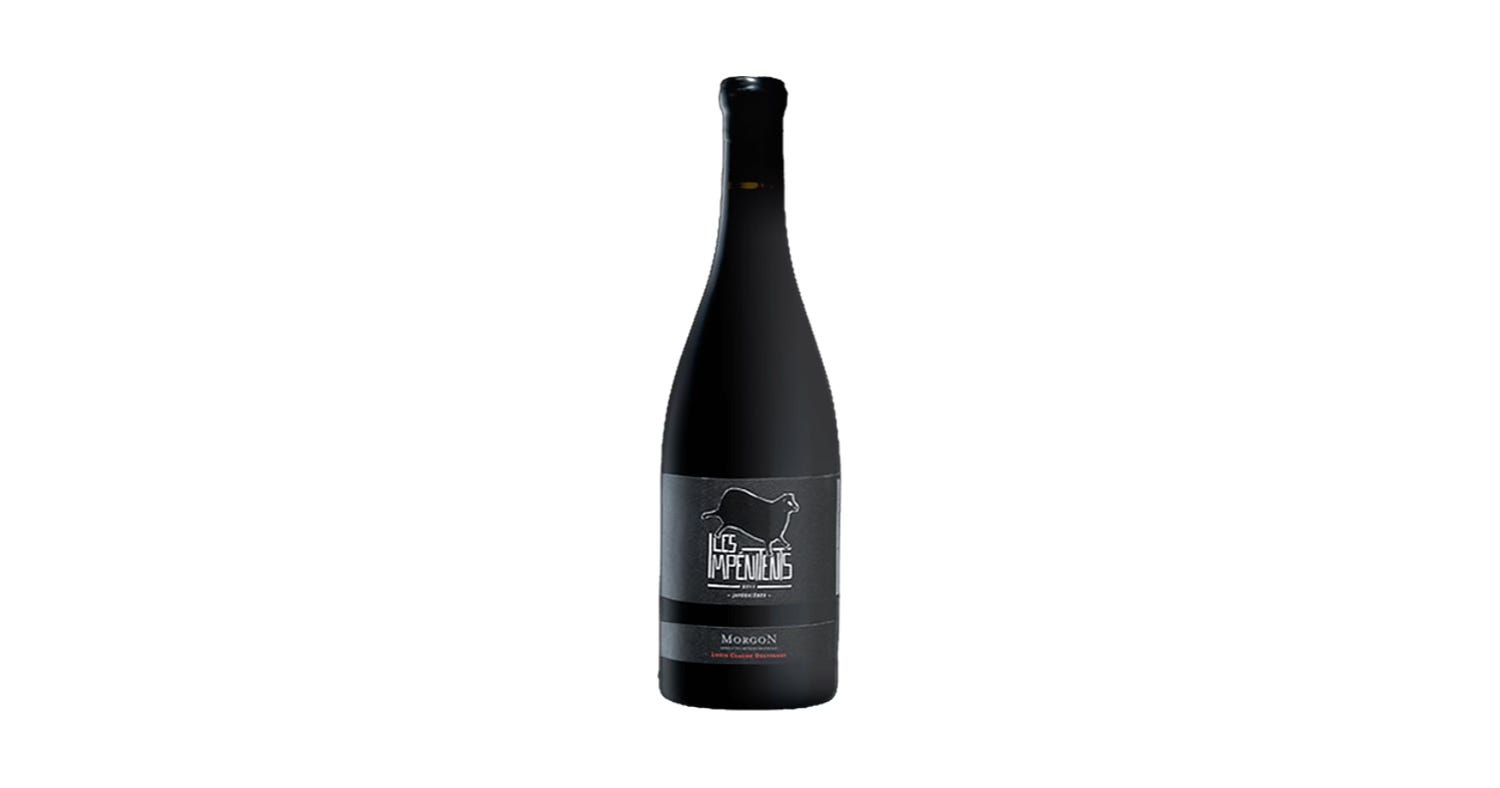
The wine’s name carries a specific and deliberate provocation. In the 1980s, when virtually every Beaujolais producer adopted thermovinification—hot pre-fermentation maceration designed to extract colour and fruit quickly, at the expense of structure and terroir expression—Louis-Claude Desvignes refused. He was catalogued by his peers and by the local establishment as an “impénitent traditionaliste”: an unrepentant traditionalist, stubbornly committed to semi-carbonic maceration, concrete vats, and the kind of restrained, structured Morgon that the market of the time did not want. When his children, Claude-Emmanuelle and Louis-Benoît Desvignes, created this cuvée in 2009 from the domaine’s oldest and finest parcels, they named it in honour of their father’s refusal to capitulate. The label bears a black sheep.
This act of naming is not merely sentimental. It positions Les Impénitents within a specific narrative of French wine: the story of producers who resisted the industrialisation of their appellations and whose vindication came not from the market of their own time but from a subsequent generation of critics, importers, and consumers who discovered that the wines they had dismissed were, in fact, the wines that aged, that expressed terroir, and that repaid serious attention. In Beaujolais, this narrative is inseparable from the story of the “Gang of Four”—Marcel Lapierre, Jean Foillard, Guy Breton, and Jean-Paul Thévenet—who, under the mentorship of the chemist and oenologist Jules Chauvet, pioneered natural winemaking in Morgon and Fleurie from the early 1980s. Louis-Claude Desvignes was not a member of this group, but he was their neighbour, their philosophical ally, and their contemporary. Les Impénitents is the monument to that alliance.
Within the Morgon appellation—the second-largest of Beaujolais’s ten crus, covering 1,114 hectares across the commune of Villié-Morgon—Les Impénitents occupies a position of exceptional prestige. It is among the most expensive Morgon wines on the market, regularly scoring 93–98 points from major critics, and its 2022 vintage received 95 points from Robert Parker’s Wine Advocate and 98 from the Revue du Vin de France. Production is extremely limited—approximately 2,500 to 3,500 bottles per year from 0.8 hectares—making it one of the scarcest serious Gamay wines in existence.
The wine’s significance extends beyond its own quality. It is an argument—made in the glass, vintage after vintage—for the proposition that Gamay Noir, grown on the right soils by the right hands, can produce wines of a complexity, longevity, and intellectual seriousness that rival those of any grape variety in France. In an era when the Beaujolais crus are seeking formal Premier Cru and Grand Cru recognition from the INAO, Les Impénitents represents the kind of evidence that such a classification would need to cite. It is, in the most literal sense, a proof of concept for the greatness of Morgon.
Vineyard and Terroir
The Côte du Py
The Côte du Py is a 358-metre hill located south of Villié-Morgon, above the hamlet of Haut Morgon. It is the most famous lieu-dit in the Morgon appellation and one of the most celebrated vineyard sites in the Beaujolais. The hill’s prominence is geological: it is composed of blue diorite and blue schist—metamorphic rocks of extraordinary antiquity, estimated at 400 to 430 million years old, formed in ancient oceanic subduction zones during the Silurian and Devonian periods. This geological substrate, known locally as “pierre bleue” (blue stone), is unique within Beaujolais and is the source of the mineral intensity, structural depth, and aging potential that distinguish Côte du Py wines from all other Morgons.
The soil is classified as “roche pourrie”—rotten rock—a term that describes the highly decomposed state of the blue schist and diorite. This decomposed material is rich in manganese, iron oxide, and trace minerals including quartz and mica. The blue colour of the stones derives from glaucophane, a sodium-alumina silicate mineral formed under metamorphic pressure. The soils are thin, stony, and exceptionally well drained, forcing vine roots deep into the fractured rock matrix in search of water and nutrients. This rooting environment induces controlled hydric stress that concentrates flavour and promotes the phenolic complexity that is the hallmark of great Côte du Py Gamay.
Javernières: The Specific Lieu-Dit
Javernières is a lieu-dit located at the foot of the Côte du Py, on its southern and eastern flanks. Its soils differ from the upper slopes of the hill: they are heavier, stickier, and more deeply impregnated with iron-rich red clay. The decomposed schist and volcanic rock of the upper Côte du Py gives way here to a denser, more clay-dominant substrate that retains more water and produces wines of somewhat greater weight and flesh than those from the leaner, stonier upper parcels. This distinction within the Côte du Py—between the mineral austerity of the summit and the fleshy generosity of the base—is one of the site’s most interesting terroir features, and it is central to the character of Les Impénitents.
The Les Impénitents Parcels
Les Impénitents is produced from three specific parcels within Javernières, totalling 0.8 hectares. The vines were planted in 1912 and 1914—in the immediate aftermath of the phylloxera reconstruction—making them among the oldest continuously cultivated Gamay plantings in the Beaujolais. At over 110 years of age, these vines produce extremely low yields of intensely concentrated fruit. The deep, iron-rich clay soils of Javernières, combined with the age of the vine material and the organic farming regime, create the conditions for a wine of unusual density and complexity.
The parcels are east-facing, receiving morning sunlight that promotes gradual, even ripening without the intensity of full southern exposure. This orientation contributes to the preservation of acidity and aromatic freshness—qualities that are critical for the wine’s aging potential and that distinguish it from more overtly powerful, sun-drenched expressions of Côte du Py.
Farming Philosophy
The domaine achieved full organic certification in 2023, though organic principles had been practised for several years prior under the stewardship of the eighth generation. The farming approach includes hand harvesting, the avoidance of synthetic herbicides and pesticides, and a general orientation toward soil health and biodiversity. The estate does not practise biodynamic farming in a formal sense but shares the minimal-intervention philosophy of its Beaujolais neighbours.
The centenary vine material of Les Impénitents presents specific viticultural challenges: old vines are naturally low-yielding but also fragile, requiring careful canopy management and disease prevention. The loss of individual vines to age, disease, or weather cannot be fully compensated by replanting, as young vines would not produce fruit of comparable quality for decades. The 0.8-hectare holding is, in this sense, an irreplaceable asset—one whose gradual attrition imposes an upper limit on production that no amount of investment can override.
Microclimate and Climatic Sensitivity
The Morgon appellation experiences a climate that is moderately oceanic with continental tendencies and Mediterranean influences—a tripartite climatic identity that produces significant vintage variation. The Côte du Py’s elevation and exposure provide some buffering: south to southeast aspects promote ripening, while the hill’s altitude provides cooler nighttime temperatures that preserve acidity. The Javernières parcels, at the base of the hill, are somewhat warmer than the summit, with heavier soils that retain more moisture—a combination that provides some resilience in drought years but can increase disease pressure in wet vintages.
Gamay Noir is inherently sensitive to vintage conditions: its thin skin makes it vulnerable to rot in wet autumns, while its tendency toward high yields in generous years requires vigilant management. The old vines of Les Impénitents naturally self-regulate, producing small berries of high concentration, but their age also makes them more sensitive to extreme heat stress and to the hail events that periodically devastate Beaujolais vineyards.
Grape Composition and Viticultural Choices
The Grape: Gamay Noir à Jus Blanc
Les Impénitents is made from 100% Gamay Noir à Jus Blanc, the sole permitted red grape variety under Morgon AOC regulations. Gamay is a variety of ancient Burgundian origin—documented since the fourteenth century, when Philippe le Hardi famously banned it from the Côte d’Or as an “unfaithful” and “vile” plant—that found its ideal home on the granitic and schistose soils of the Beaujolais. On these soils, in the hands of serious producers, Gamay produces wines of a character entirely different from the light, fruity stereotype that the variety’s association with Beaujolais Nouveau has perpetuated: deep, structured, mineral-driven, capable of significant aging, and expressive of site with a precision that rivals Pinot Noir on the best Burgundian terroirs.
Vine Age and Plant Material
The vines of Les Impénitents, planted in 1912 and 1914, represent massal-selection material from the immediate post-phylloxera era. These are not modern clonal selections but genetically diverse populations propagated from the best-performing vines of the pre-phylloxera vineyard—a viticultural heritage that is increasingly rare as older plantings are replaced with clonal material. The genetic diversity of massal selections contributes to complexity in the resulting wine: each vine is subtly different, and the aggregate fruit from a population of genetically varied individuals produces a more multidimensional wine than fruit from a genetically uniform clonal planting.
At over 110 years of age, the vines are at the extreme end of productive life. Their root systems are profoundly deep, penetrating the fractured blue schist and iron-rich clay of Javernières to access water and mineral nutrients that younger vines cannot reach. Their canopies are small and sparse, their berry clusters tiny and loose, their yields minimal. This natural restriction of production is the principal mechanism by which the vines concentrate flavour and achieve the phenolic intensity that defines Les Impénitents.
Yield Control
Morgon AOC regulations permit a maximum yield of 10,000 kilograms per hectare (approximately 56 hectolitres per hectare at standard pressing ratios). The actual yields of the Les Impénitents parcels are dramatically below this ceiling: the combination of vine age, organic farming on lean soils, and the natural vigour limitations of centenary plants produces yields that are likely in the range of 20–30 hectolitres per hectare, consistent with the extremely small production volume of approximately 2,500 to 3,500 bottles from 0.8 hectares.
Vinification and Élevage
Harvest and Reception
The harvest is conducted entirely by hand—a mandatory requirement under Morgon AOC regulations, which also stipulate transport in low trailers to preserve berry integrity. For Les Impénitents, the harvest date is determined by phenolic ripeness in the three centenary parcels, with picking typically occurring in the second half of September, though the exact date varies with vintage conditions. The fruit is sorted in the vineyard and transported whole-cluster to the cellar.
Semi-Carbonic Maceration
The vinification of Les Impénitents follows the traditional Beaujolais method of semi-carbonic maceration—a technique that is fundamentally different from both full carbonic maceration (which requires external CO₂ injection) and conventional Burgundian vinification (which involves destemming and crushing). In the Beaujolais method, whole grape clusters—95% of the total in the case of Les Impénitents, with 5% destemmed—are placed in closed concrete vats without added CO₂. The weight of the clusters at the top crushes the berries at the bottom, initiating conventional yeast fermentation. This fermentation produces CO₂ naturally, which rises and fills the vat, creating an anaerobic environment in which the intact berries in the middle and upper layers undergo intracellular enzymatic fermentation.
This dual fermentation process—yeast fermentation at the bottom, enzymatic fermentation in the intact berries above—produces a wine that combines the structural depth and tannic grip of conventional extraction with the aromatic purity, textural silkiness, and fruit transparency of carbonic maceration. The 5% destemming contributes an additional dimension of tannic structure without overwhelming the whole-cluster character. The vatting period for Les Impénitents is approximately eleven days—longer than many commercial Beaujolais (which may vat for as few as four to six days) but shorter than the most extended macerations practised by some producers. This duration reflects a calculated balance: long enough to extract structure and complexity from the concentrated old-vine fruit, short enough to preserve the aromatic purity and textural finesse that are central to the wine’s identity.
Élevage: Concrete, No Oak
After fermentation, the free-run juice is drained from the vat and the remaining grape clusters are pressed. The press wine and free-run juice are combined and aged in concrete vessels for an extended period—documented at approximately ten months for the Javernières cuvées. The absence of oak is absolute and deliberate: no barrels, no barriques, no fûts of any kind are used in the ageing of Les Impénitents. This is the most philosophically significant winemaking decision at the domaine, and it connects directly to the “impénitent” stance that the wine’s name commemorates.
Concrete provides a neutral, non-extractive ageing environment: it does not contribute tannin, flavour, or aromatic compounds to the wine in the way that oak does. What it does provide is a gentle, micro-porous oxygenation—less aggressive than barrel ageing, but sufficient to promote gradual tannic integration, colour stabilisation, and the development of secondary complexity. The result is a wine in which every element of aroma, texture, and structure derives from the grape, the fermentation, and the terroir—without the intermediary of wood.
Sulphur and Bottling
Sulphur dioxide is used at minimal levels: the domaine documents additions of approximately 1–2 grams per hectolitre after malolactic fermentation, with occasional further additions at bottling. These are extremely low levels by conventional standards—well below the thresholds that natural-wine practitioners consider acceptable—and place Les Impénitents firmly within the natural-wine category, though the domaine does not employ the zero-sulphur approach of the most radical practitioners. The wine is lightly filtered before bottling—a non-sterile filtration that removes gross solids without stripping textural density or microbial complexity.
Vintage-by-Vintage Analysis
Les Impénitents was first produced in 2009 and has been made in most subsequent vintages. The following analysis covers the cuvée’s entire production history, drawing on critical assessments, vintage conditions in the Beaujolais, and the structural characteristics of each release.
2009: The Inaugural Vintage
The 2009 vintage in Beaujolais was warm, dry, and generous—a year that produced ripe, concentrated wines across the region. For the debut of Les Impénitents, these conditions were propitious: the centenary vines, with their deep root systems and naturally restricted yields, produced fruit of exceptional concentration, and the warm vintage ensured full phenolic maturity. The wine announced itself as something new in Morgon: a Gamay of unusual density and structural depth, with the kind of tannic grip and mineral intensity that challenged the variety’s reputation for lightness. As a debut vintage, the 2009 established the cuvée’s stylistic parameters and demonstrated that the old Javernières parcels were capable of producing a wine of genuine singularity.
2010: Classical Structure
The 2010 was a cooler, more classical vintage—the antithesis of the warm 2009. Lower temperatures and a longer growing season produced wines of greater acidity, firmer tannins, and more restrained fruit expression. For Les Impénitents, 2010 would have tested the limits of the old vines’ ability to achieve full ripeness in a cool year, but the Côte du Py’s favourable exposure and the vines’ deep roots likely provided sufficient buffering. The resulting wine, if consistent with the vintage profile, would be more structured and taut than the 2009, with a longer aging trajectory and a more intellectual, less immediately gratifying character.
2011: Precocious Warmth
The 2011 was an early, warm vintage across France, with an unusually hot spring accelerating the growing cycle. Beaujolais producers faced the challenge of maintaining balance in wines from grapes that ripened quickly and accumulated sugar rapidly. The old vines of Les Impénitents, with their naturally low vigour and deep rooting, would have resisted this acceleration more effectively than younger plantings, potentially producing a wine of greater balance than the vintage’s general profile suggests.
2012: Resilience Under Pressure
The 2012 growing season was difficult: a cold, wet spring was followed by uneven summer weather, and many Beaujolais producers struggled with disease pressure and irregular ripening. For a domaine farming organically on old vines, 2012 demanded rigorous vineyard management and ruthless selection. Production may have been reduced, and the resulting wine would reflect the vintage’s challenges: leaner, more angular, perhaps more nervously structured than the best years, but potentially offering a distinctive expression of the terroir under duress.
2013: Cool-Year Precision
The 2013 was another cool vintage, producing wines of moderate body and high acidity across Beaujolais. For Les Impénitents, this meant a wine of greater freshness and aromatic precision than the warmer vintages, with the Javernières’ iron-rich clay providing enough thermal buffering to avoid underripe, green character. These cool-year vintages are often among the most interesting for collectors: their higher acidity and more restrained structure tend to age particularly well, gaining complexity and nuance over time.
2014: The Return of Generosity
The 2014 offered more favourable conditions: a warm, dry late summer and autumn after a challenging spring. Beaujolais benefited from ideal harvest weather, and the wines of this vintage tend to combine fruit generosity with good structural definition. For Les Impénitents, 2014 likely produced a wine of greater approachability than the 2012 or 2013, with riper fruit and more integrated tannins.
2015: Solar Concentration
The 2015 was one of the warmest and driest vintages in recent Beaujolais history, producing deeply concentrated, powerful wines. The challenge was to preserve freshness and avoid the over-ripe, jammy character that afflicts Gamay in extreme heat. The old vines of Les Impénitents, with their deep roots and natural vigour regulation, were better positioned than most to navigate this vintage, and the east-facing exposure of the Javernières parcels provided some relief from afternoon heat. The 2015 Les Impénitents is likely among the most powerful and concentrated expressions of the cuvée, requiring patience before it reveals its full complexity.
2016: Classical Equilibrium
The 2016 was a late-ripening, classical vintage that produced wines of exceptional balance and finesse across the Beaujolais crus. The long, slow growing season allowed gradual flavour development without the sugar rush of hotter years, and the resulting wines tend to combine structural elegance with aromatic complexity. For Les Impénitents, 2016 may represent an ideal expression of the terroir: concentrated enough to reward aging, balanced enough to offer pleasure in relative youth, and marked by the kind of mineral precision that the blue-schist substrate of Côte du Py contributes in favourable conditions.
2017: Frost and Recovery
The 2017 growing season was devastated across much of France by severe late-April frost, and Beaujolais was among the hardest-hit regions. Many producers lost a significant portion of their crop, and the surviving vines produced fruit that was necessarily more concentrated but also potentially irregular in quality. Production of Les Impénitents in 2017 may have been reduced or, in the worst case, the cuvée may not have been produced at all. Where the old vines survived, the extreme natural selection imposed by frost would have produced fruit of exceptional intensity.
2018: Warmth and Abundance
The 2018 was another warm, generous vintage that favoured red-wine production across France. Beaujolais benefited from excellent conditions, and the wines of this year tend to be ripe, full-bodied, and immediately appealing. Les Impénitents 2018 would have been a wine of considerable opulence by the cuvée’s standards, with the Javernières’ clay soils contributing flesh and weight, and the old-vine concentration adding depth.
2019: Balance and Intensity
The 2019 was warm but more balanced than 2018, with better-preserved acidity and a more refined tannic structure across the region. The wines are widely regarded as among the best of the recent run of warm vintages. For Les Impénitents, 2019 likely produced a wine of both intensity and elegance—a combination that the cuvée achieves most compellingly in vintages that offer both ripeness and structural definition.
2020: Pandemic Vintage, Excellent Conditions
The 2020 vintage was shaped by pandemic disruptions but blessed by favourable growing conditions: a warm, dry season produced ripe, concentrated fruit. Les Impénitents 2020 received 93 points from Gilman and was described in tasting notes as displaying finesse with well-ripened red berry character, a suave and tasty palate, superb tannins and roundness, and considerable aging potential. This is a vintage that confirms the cuvée’s capacity for both immediate pleasure and long-term development. The recommended price of approximately €55–66 places it firmly in the premium tier of Morgon.
2021: Cool-Year Challenge
The 2021 was cooler and wetter than the preceding trio of warm vintages, producing wines of lower alcohol, higher acidity, and more classical proportions. For Les Impénitents, 2021 represents a test of the terroir’s resilience in less favourable conditions. The old vines’ depth of rooting and the Javernières’ clay soils would have provided some thermal and hydric buffering, but achieving full phenolic ripeness in a cool year demands precise harvest timing and careful cellar management. The resulting wine may prove to be one of the most age-worthy in the cuvée’s history, with the kind of nervy, tensile structure that rewards patience.
2022: The Critical Triumph
The 2022 vintage marks the highest-scoring release of Les Impénitents to date. The wine received 95 points from Robert Parker’s Wine Advocate, 98 from the Revue du Vin de France, and 18.5/20 from Bourgogne Aujourd’hui—scores that place it among the most critically acclaimed Gamay wines ever produced. The vintage conditions were warm and dry, producing ripe, concentrated fruit with the structural depth to support extended ageing. The wine retailed at approximately €50–60 ex-VAT—a price that, while high by Beaujolais standards, remains extraordinary value by the standards of French wines receiving comparable critical acclaim from established regions.
The 2022 is the vintage that most emphatically validates the Impénitents project: the argument that centenary Gamay on Côte du Py schist, fermented traditionally in concrete, can produce a wine of genuine greatness. It is also the vintage that has most effectively expanded the cuvée’s audience beyond the specialist Beaujolais community to the broader world of fine-wine collectors and professionals.
2023 and Beyond
Early assessments of the 2023 vintage suggest another strong year for Beaujolais, though specific critical scores for Les Impénitents were not available at the time of writing. The cuvée’s trajectory across its first fifteen vintages is one of steady qualitative ascent, driven by the deepening experience of Claude-Emmanuelle and Louis-Benoît Desvignes, the ongoing maturation of the vineyard under organic management, and the broader warming of the climate that has favoured phenolic ripeness in the Beaujolais. The principal uncertainty is the sustainability of the centenary vine material: at over 110 years of age, the vines are approaching the outer limits of productive life, and the inevitable loss of individual plants will progressively reduce yields and eventually necessitate difficult decisions about replanting.
Style, Identity, and Structural Sensory Profile
Core Stylistic Signature
Les Impénitents is the most intense and structured wine in the Desvignes portfolio—a position it occupies not through winemaking intervention but through the intrinsic quality of its source material. The centenary vines, the iron-rich clay of Javernières, the semi-carbonic whole-cluster fermentation, and the concrete ageing produce a wine that is, paradoxically, both powerful and transparent: deeply coloured, firmly structured, and texturally dense, yet without the opacity or heaviness that extraction-driven winemaking typically imparts.
The structural signature is built on three elements. First, a tannic framework that is fine-grained rather than muscular—a quality that derives from the whole-cluster fermentation and the inherently silky tannin profile of old-vine Gamay. Second, an acidity that is bright, persistent, and mineral-inflected—a product of the schist-derived terroir, the east-facing exposure, and the low-sulphur winemaking that preserves natural acidity. Third, a mid-palate density that is the unmistakable signature of centenary vine material: a visceral concentration that fills the mouth without weight, the difference between a wine that is dense and one that is merely heavy.
Evolution in Bottle
The wine’s evolution follows a trajectory that is now well documented through the cuvée’s fifteen-year history. In its youth (one to three years), Les Impénitents presents primary fruit intensity overlaid with the slightly reductive, mineral character of concrete ageing. The tannins are present but fine; the acidity is lively; the overall impression is of energy and compression. Between three and seven years, the wine opens and integrates: the primary fruit recedes, secondary complexity emerges (earth, mineral, spice, herbal nuance), and the tannic structure softens into a more supple, textural frame. Beyond seven years, the best vintages enter a tertiary phase in which the wine’s site-specific character—the iron, the manganese, the mineral signature of the blue schist—becomes the dominant element, and the wine begins to display the phenomenon that the French call “morgonner”: the mysterious transformation by which aged Morgon acquires characteristics more commonly associated with Pinot Noir.
Comparative Identity
Within Morgon, Les Impénitents occupies a position comparable to the top cuvées of Jean Foillard (Côte du Py), Marcel Lapierre’s estate (now managed by Mathieu Lapierre), and Jean-Marc Burgaud’s single-vineyard expressions. Against Foillard’s Côte du Py, Les Impénitents tends toward greater density and structural weight, reflecting the clay-rich Javernières terroir versus Foillard’s stonier upper-slope parcels. Against Lapierre’s wines, it is more structured and less immediately charming, trading Lapierre’s ethereal purity for a more brooding, mineral-driven intensity.
Beyond Morgon, the relevant comparison is with the finest wines of Moulin-à-Vent—the cru widely considered the most age-worthy in Beaujolais. Where Moulin-à-Vent’s pink granite produces wines of a broader, more Burgundian architecture, Les Impénitents’ blue schist and iron-rich clay produce a more angular, mineral, and vertically structured wine. The two are complementary rather than competitive: different expressions of what Gamay Noir can achieve on different geological substrates, each making the case for the variety’s potential in its own terms.
Aging Potential and Cellaring
Short-Term (1–4 Years)
In its youth, Les Impénitents is a wine of considerable energy and intensity. The primary fruit is vivid and concentrated, the tannins are fine but present, and the acidity is bright and driving. The wine is approachable from release but does not yet reveal its full complexity. Serving at 14–16°C with an hour of decanting is recommended.
Medium-Term (5–10 Years)
The medium-term window is where Les Impénitents begins to reveal its deeper qualities. The primary fruit integrates with secondary complexity—earth, mineral, herb, spice—and the tannic structure softens into a more supple, textural frame. The wine’s site-specific character emerges more clearly, and the phenomenon of “morgonner” begins to take effect. This is the optimal drinking window for most vintages, though the greatest years will continue to develop beyond it.
Long-Term (10–20+ Years)
The proven longevity of top Morgon wines from the Côte du Py extends well beyond a decade, with the finest examples developing for twenty years and more. Les Impénitents, with its centenary vine material, old-vine concentration, and structural depth, is among the best candidates for extended ageing in the entire Beaujolais. The low sulphur levels introduce some risk of premature oxidation in bottles stored imperfectly, but under ideal conditions—12–14°C, 65–75% humidity, darkness, stillness—the wine’s natural tannic and acidic reserves should sustain development for fifteen to twenty years in the best vintages. The 2009 inaugural vintage, now over fifteen years old, provides the earliest test of this hypothesis.
Storage Considerations
The wine’s low-sulphur profile makes it more sensitive to storage conditions than conventionally made wines. Temperature stability is paramount; fluctuations above 16°C or repeated thermal swings will accelerate oxidative degradation. Cork quality is a variable that cannot be controlled after purchase. The collector should expect some bottle variation—a characteristic of the natural-wine category—and should purchase in sufficient quantity to accommodate occasional disappointment alongside the majority of excellent bottles.
Market Value and Investment Perspective
Pricing
Les Impénitents is priced at approximately €50–66 ex-VAT at release (€60–75 inc-VAT; $70–75 in US markets), placing it among the ten most expensive red wines from the Morgon appellation. This pricing is high by Beaujolais standards—the vast majority of cru Beaujolais retails for €10–25—but represents extraordinary value by the standards of French wines receiving comparable critical acclaim. A wine scoring 95 from Parker and 98 from the RVF would command multiples of this price in Burgundy, the Rhône, or Bordeaux.
Pricing has been broadly stable across vintages, with modest increases reflecting both the general inflation of fine-wine prices and the growing critical recognition of the cuvée. There is no evidence of speculative price spikes or the allocation-driven inflation that characterises more commercially visible collectibles.
Production Volume and Scarcity
With 0.8 hectares of centenary vines and yields likely in the 20–30 hectolitres-per-hectare range, annual production of Les Impénitents is estimated at 2,500 to 3,500 bottles. This is an extraordinarily small volume—comparable to the rarest Burgundy monopole bottlings and dramatically below the output of even small-production Bordeaux or Rhône estates. The scarcity is genuine and irreducible: the vineyard cannot be expanded, the old vines cannot be replaced, and yields cannot be increased without compromising quality.
Secondary Market
Les Impénitents has a nascent but growing secondary-market presence. As the cuvée’s critical profile has risen—particularly following the extraordinary scores for the 2022 vintage—secondary-market interest has increased, though the wine does not yet trade with the regularity or liquidity of established collectibles. Auction appearances are infrequent, and Liv-ex tracking is limited. For the collector, this means that the primary market remains the most reliable acquisition channel, and that resale liquidity, while improving, is not guaranteed.
Investment Considerations
Les Impénitents is primarily a collector’s wine rather than an investor’s wine. Its appeal lies in the quality of the drinking experience, the rarity of the production, and the cultural significance of what it represents—rather than in any expectation of financial return. The risks to its market position include the inherent fragility of centenary vine material (which places an absolute ceiling on production and will eventually necessitate replanting), the limited liquidity of the secondary market, and the concentration risk of a two-person domaine without publicly articulated succession planning. A significant regulatory development—the INAO’s 2024 decision to restrict the use of Morgon’s climat names on labels, beginning with the 2024 vintage—could affect the wine’s labelling and, by extension, its market identity, though the full implications of this ruling remain to be seen.
Cultural and Gastronomic Significance
Cultural Context
Les Impénitents belongs to the cultural tradition of Beaujolais resistance—the refusal, by a small number of principled producers, to subordinate terroir expression to market convenience. This tradition has its intellectual roots in the work of Jules Chauvet, the Beaujolais-born chemist and oenologist who, from the 1960s onward, argued that the region’s unique geology and viticultural heritage deserved the same seriousness of approach that was applied to Burgundy. Chauvet’s influence on Marcel Lapierre, Jean Foillard, and their generation is well documented; his influence on Louis-Claude Desvignes, while less celebrated, was part of the same intellectual current.
The wine’s name—with its connotation of unrepentance, of principled refusal—resonates beyond the specific context of 1980s thermovinification. It speaks to a broader theme in French wine culture: the tension between tradition and modernisation, between the imperatives of the market and the convictions of the vigneron. The black sheep on the label is an emblem of this tension—a symbol that the domaine’s audience recognises and that positions the wine within a counter-cultural tradition that has, over time, become the orthodoxy of serious Beaujolais production.
The wine’s role in the broader narrative of French fine wine is increasingly significant. As the Beaujolais crus pursue Premier Cru and Grand Cru recognition from the INAO, wines like Les Impénitents provide the evidentiary basis for such reclassification. The argument that Côte du Py deserves formal recognition as a site of the first rank is strengthened every time Les Impénitents receives critical scores comparable to those of Premier Cru Burgundy or top northern Rhône wines. It is, in this sense, a wine with institutional implications—a bottle whose quality affects not just its own market position but the regulatory and classificatory future of an entire appellation.
Gastronomic Relevance
Les Impénitents’ structural profile—medium to full-bodied, firmly structured, with bright acidity and fine tannins—makes it a remarkably versatile table wine. In its youth, the wine’s fruit intensity and structural energy pair naturally with the charcuterie, terrines, and grilled meats of the Lyonnais tradition—the gastronomic heartland that Beaujolais has served for centuries. The saucisson de Lyon, the andouillette, the poulet de Bresse en demi-deuil: these are the ancestral companions of serious Morgon.
At intermediate maturity (five to ten years), the wine’s increasing complexity and softening tannins expand its range to include roasted game birds, braised rabbit, mushroom-based preparations, and the richer charcuterie of the Rhone valley. The iron and mineral character of the wine provides an especially compelling match with dishes that feature earthy, ferruginous flavours: lentils du Puy, grilled pigeon, and duck confit.
At full maturity (ten to fifteen years), Les Impénitents’ tertiary complexity and Pinot-like refinement call for preparations of greater delicacy: roasted veal, simple grilled lamb with herbs, aged hard cheeses (particularly Beaufort and Comté), and the kind of understated, ingredient-driven cooking that allows the wine’s nuance to emerge without competition. Serving temperature matters: 14–16°C is optimal, preserving the wine’s freshness and structural precision.
Conclusion
Les Impénitents is a wine that carries a weight of meaning disproportionate to its 0.8 hectares of vineyard and its 2,500 to 3,500 bottles of annual production. It is, simultaneously, a single-vineyard expression of centenary Gamay on one of France’s most distinctive geological substrates; a tribute to a winemaker who refused to compromise his methods when the market demanded it; an argument for the classification-level quality of the Beaujolais crus; and a practical demonstration that minimal-intervention winemaking, applied to exceptional raw material, can produce wines of genuine depth and longevity.
The wine’s strengths are formidable. The terroir—blue schist and iron-rich clay at the foot of the Côte du Py—is geologically verifiable and of demonstrable quality. The vine material—massal-selection Gamay planted in 1912–1914—is irreplaceable. The winemaking philosophy—whole-cluster semi-carbonic maceration, concrete ageing, no oak, minimal sulphur—is coherent, historically grounded, and produces wines of identifiable and distinguished character. The critical reception, culminating in the 2022 vintage’s 95/98-point scores, confirms that the wine can stand alongside the finest expressions of any appellation in France.
The vulnerabilities are real but of a kind that is inherent to the estate’s nature rather than correctable through management. The centenary vines are an aging, irreplaceable asset whose productive life, while not immediately threatened, is finite. The two-person ownership structure creates concentration risk. The regulatory environment is in flux, with the INAO’s restriction on climat labelling potentially affecting the wine’s market identity. And the low-sulphur winemaking, while central to the wine’s character, limits cellaring horizons for bottles stored in less than ideal conditions.
For the serious collector, Les Impénitents represents an opportunity that is both specific and representative. Specifically, it offers one of France’s most compelling quality-to-price propositions: a wine of genuine critical acclaim, extreme scarcity, and demonstrable aging potential at a fraction of the cost of comparably scored wines from Burgundy, the Rhône, or Bordeaux. Representatively, it embodies the argument that the Beaujolais crus—and Morgon’s Côte du Py in particular—belong in the conversation about France’s greatest vineyard sites.
The impenitent ones did not relent. The wine that bears their name has vindicated their stubbornness. What remains is for the rest of the wine world to catch up—and for the geology, the vines, and the concrete vats to continue the work they have been doing, without apology, for over a century.