

Domaine Leroy Musigny Grand Cru
Tiny parcels, biodynamic viticulture, rare bottles and a market aura unlike any other.
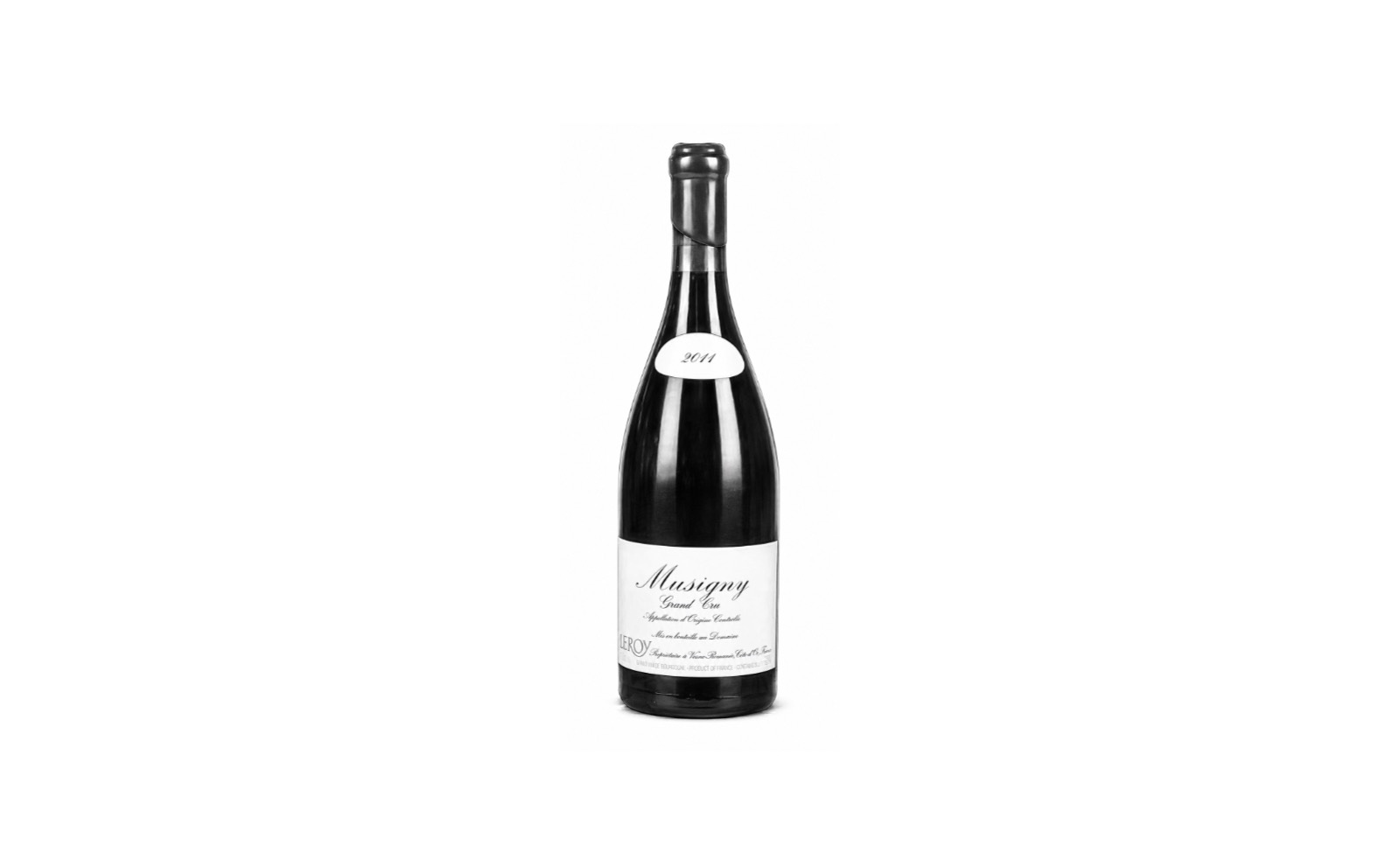
There are rare wines, and then there is Domaine Leroy Musigny Grand Cru. Made from just 0.27 hectare of one of Burgundy’s most exalted vineyards, it sits at the intersection of microscopic supply, extraordinary terroir, Lalou Bize-Leroy’s uncompromising philosophy and a secondary market capable of turning single bottles into major financial events.
Yet the fascination surrounding Leroy Musigny is not simply a story of price. Its real appeal begins on the slope above Chambolle-Musigny, with four tiny parcels of vines and a complicated ownership history that reaches further back than the date currently displayed on Domaine Leroy’s own website. It continues through biodynamic farming, dramatically low estate yields and production figures that can fall to only a few hundred bottles in a vintage. And it culminates in a wine whose scarcity has helped make it one of the most coveted names in Burgundy.
Understanding Domaine Leroy Musigny therefore means separating legend from what can actually be established—and discovering that the documented story is remarkable enough on its own.
What is Domaine Leroy Musigny Grand Cru?
Musigny is a Grand Cru appellation of the Côte de Nuits, produced in the commune of Chambolle-Musigny. Its appellation dates to September 11, 1936, while the vineyard boundaries had already been formally delimited in 1929. The vineyard occupies an elevated site above Clos de Vougeot, between the Les Amoureuses Premier Cru climat and Échezeaux Grand Cru.
Domaine Leroy’s Musigny is a red wine. Pinot Noir defines red Musigny, although the appellation itself is unusual among the great vineyards of the Côte de Nuits because it may also produce white wine from Chardonnay. In 2022, the Bourgogne Wine Board recorded 10.13 hectares of red Musigny under production and another 0.66 hectare of white Musigny.
Against that already tiny backdrop, Domaine Leroy’s presence is minuscule: 0.27 hectare divided among four parcels. Two lie in the central part of Les Musigny and two in its lower northern portion. The domaine describes them as east-facing, with red clay in the soils.
Using the 2022 red-Musigny area as the denominator, those 0.27 hectare correspond to roughly 2.67% of the appellation’s red area under production. It is a calculated comparison rather than an official ownership statistic, but it conveys the scale immediately: Domaine Leroy is making one of Burgundy’s most celebrated wines from an area smaller than many urban parks.
Musigny terroir: why this Chambolle-Musigny slope matters
Musigny occupies one of those Burgundy sites where geography seems almost designed for fine Pinot Noir.
The vineyards rise from roughly 260 metres to nearly 300 metres above sea level, reaching toward the Combe d’Orveau at the southern end. The slope itself is substantial, around 8 to 14%, and sits on a rocky limestone terrace.
The soils are shallow, with red clay particularly evident higher on the slope. They are generally described as more clay-rich and less calcareous than those of neighbouring Grands Crus, while the underlying Jurassic rock is approximately 150 million years old.
Within the appellation are three officially named climats or lieux-dits: La Combe d’Orveau, Les Musigny and Les Petits Musigny. Domaine Leroy’s vines are in Les Musigny.
This geology is part of what gives Musigny its formidable reputation, but the appellation is also associated with an unusual combination of perfume and structure. The Bourgogne Wine Board’s general profile of red Musigny evokes wild rose, violet, blackcurrant and raspberry, followed with maturity by leather, earthy humus and other tertiary nuances. On the palate, the appellation is characterized as balanced, tannic, complex and long. Those descriptors apply to Musigny as a whole rather than specifically to Domaine Leroy, but they help explain the stylistic frame in which the wine sits.
Four parcels—and a more complicated history than “acquired in 1990”
Domaine Leroy’s own vineyard information currently gives 1990 as the acquisition date for Musigny. Taken literally, that might suggest the domaine had no Musigny before then.
The surviving bottle record tells a different story.
A 1988 Domaine Leroy Musigny has been catalogued independently by both Sotheby’s and Bonhams, with total production recorded as only 300 bottles. That means Domaine Leroy Musigny demonstrably existed before 1990.
The historical picture becomes clearer when the individual parcels are considered. Sotheby’s has described the 0.27-hectare holding as containing both original Leroy vineyards and land acquired in 1990. Specialist cadastral work likewise places the two northern plots in Leroy ownership before Domaine Leroy itself was formed, while identifying the central parcels as later additions.
Those two central Les Musigny parcels are reported as cadastral plots 29 and 30, measuring 0.0495 and 0.1405 hectare respectively. Together they total 0.1900 hectare and are reported to have come from Domaine Moine-Hudelot in 1990. They lie amid holdings associated with Domaine Comte Georges de Vogüé.
The most defensible version of the story, then, is not that Leroy suddenly acquired an entire Musigny holding in 1990. Rather, part of today’s holding was already associated with Leroy, with additional parcels added in 1990.
For collectors, this is more than a footnote. In Burgundy, parcel provenance is part of a wine’s identity. A difference of a few rows of vines can mean a different history, exposition or lineage—and in a holding as small as Leroy’s Musigny, every fraction of a hectare matters.
Lalou Bize-Leroy and the creation of Domaine Leroy
The wider Leroy story stretches much further back than Domaine Leroy itself.
Maison Leroy traces its commercial origins to 1868, when François Leroy established the family wine business. Domaine Leroy, the vineyard estate responsible for the Musigny discussed here, dates from 1988.
By then, Lalou Bize-Leroy was already one of Burgundy’s defining personalities. She had run Maison Leroy and, from 1974, co-directed Domaine de la Romanée-Conti alongside Aubert de Villaine.
The creation of Domaine Leroy followed the 1988 purchase of Domaine Charles Noëllat, a highly significant acquisition that brought vineyards including Richebourg, Romanée-Saint-Vivant and Clos de Vougeot, alongside Premier Cru holdings. Family vineyards were incorporated as well. The following year, the purchase of Domaine Philippe Remy added parcels in three more Grands Crus.
From those beginnings emerged an estate that would become almost synonymous with uncompromising viticulture, tiny yields and extreme scarcity.
Musigny is perhaps the purest expression of that equation.
Biodynamic viticulture and the Leroy philosophy
Biodynamics has become common vocabulary in fine wine, but Domaine Leroy was associated with the approach decades before it became fashionable across Burgundy.
The domaine’s philosophy places low yields at the heart of its viticultural approach and describes Lalou Bize-Leroy’s progression from organic farming into biodynamic viticulture. Sotheby’s has likewise identified her as one of Burgundy’s early adopters and specifically describes the vines behind the 1991 Musigny as biodynamically cultivated, while noting that certification had not yet been obtained at that time.
What matters is the distinction between verified practice and assumptions about certification. Biodynamic viticulture is firmly associated with Domaine Leroy; a specific current certification status for the Musigny parcels should not be stated without additional documentation.
The same caution applies to yields.
Estate yields have at times been reported at around 11 hectolitres per hectare and seldom much above 16 hl/ha, exceptionally low levels even by the standards of top Burgundy. Those figures refer to the estate broadly, however, rather than to a fixed annual Musigny yield.
That distinction becomes important because the documented bottle counts for Musigny vary dramatically from vintage to vintage.
How is Domaine Leroy Musigny made?
For a wine so famous, surprisingly little reliable public information exists in the form of a standardized technical recipe.
Domaine Leroy’s cellar decisions have evolved over time, including berry selection, the use of stems during fermentation, cooper choices, oak and toast. What is not firmly established is a fixed Musigny formula covering details such as whole-cluster percentages, fermentation temperature, maceration length, percentage of new oak or barrel-aging duration.
That absence is worth emphasizing because celebrated Burgundy often attracts precise-sounding technical claims that become repeated until they acquire the appearance of fact.
Musigny at Domaine Leroy is better understood as the product of a viticultural and winemaking philosophy rather than a recipe: highly selective farming, very low yields and decisions adapted to individual vintages.
What does Domaine Leroy Musigny taste like?
Domaine Leroy’s description of Musigny centres on red and dark fruit, floral aromas including rose and violet, and increasingly savoury and earthy complexity as the wine ages. Those themes closely echo the broader profile traditionally associated with Musigny, where blackcurrant, raspberry, violet and rose may evolve toward leather and humus with maturity.
What makes the wine so compelling to Burgundy enthusiasts is the tension implicit in Musigny itself: perfume without fragility, power without obvious heaviness, and longevity without sacrificing aromatic finesse.
There is also strong critical recognition around the label. In September 2025, Wine-Searcher displayed an aggregated critic score of 98/100 for Leroy Musigny. That figure reflects an aggregation across the wine’s critical record, not a score belonging to one specific vintage.
For anyone looking at a bottle, vintage matters enormously. “Domaine Leroy Musigny” is not a single immutable experience. Age, growing season, bottle condition, provenance and storage can all be decisive, especially when individual bottles are several decades old.
How rare is Domaine Leroy Musigny?
This is where the numbers become extraordinary.
There is no single fixed annual production figure for Domaine Leroy Musigny. Auction catalogues documenting specific vintages show just how much output can vary.
The 1988 vintage is recorded at 300 bottles. In 1990, production was only 292 bottles. Yet 1992 reached 1,164 bottles, the highest figure among the documented vintages in the available set. The 1993 vintage is recorded at 870 bottles.
Later examples often sit nearer the 600-bottle mark—but still vary. Production is documented at 586 bottles in 1997, 585 in 1998, 584 in 2000, 596 in 2001 and 602 in 2002. The 2009 vintage is recorded at 592 bottles, while 2011 rose to 892 and 2013 is documented at 618.
Those figures explain why statements such as “Leroy makes about 600 bottles of Musigny every year” are misleading. Some years land near that number; others do not come close. In the documented vintages, production ranges from 292 to 1,164 bottles.
And even the upper end is tiny.
For perspective, Musigny as a whole remains a small appellation. The Bourgogne Wine Board’s five-year average for 2017–2021 was 255 hectolitres of red Musigny, equivalent by its methodology to roughly 33,915 bottles across the appellation.
Domaine Leroy occupies only a sliver of that world.
Numbered bottles and the importance of provenance
At this level of rarity and value, the bottle itself becomes an object of documentation.
Major auction catalogues frequently record individual Leroy Musigny bottle numbers. Published examples include 1998 bottle #0239, 2000 #0186, 2001 #0089 and 2011 #00206. A Christie’s listing for a 2013 bottle identified it as #00221 and noted that a Prooftag was attached.
That does not establish one universal authentication system across every vintage. It does, however, illustrate the degree of scrutiny applied when bottles enter the fine-wine market.
Condition reports can be equally important. Auction houses routinely note details such as wax condition, seepage, label wear, fill level and capsule condition. With mature Burgundy—and especially bottles trading at five-figure sums—such details can materially affect both desirability and price.
For Domaine Leroy Musigny, provenance is not administrative trivia. It is part of the wine’s economic value.
Why Domaine Leroy Musigny became one of the world’s most expensive wines
Scarcity alone does not create a market legend. Reputation, critical acclaim, producer prestige and demand must converge with it.
With Leroy Musigny, they did.
In November 2018, Wine-Searcher ranked the wine second on its annual list of the world’s most expensive wines, at an average price of $17,783. By April 2019, Leroy Musigny had moved to the top of the database at an average of $22,049, up from $13,843 a year earlier—a reported increase of 59%.
The trajectory was not a straight line. By July 2020, the average had fallen to $17,224. Wine-Searcher said the figure had peaked at $22,484 in April 2019 and fallen as low as $14,514 in August of that year.
That volatility is an important corrective to the popular image of collectible Burgundy as an asset that simply becomes more expensive every year.
Then came another surge.
In September 2025, Leroy Musigny once again headed Wine-Searcher’s most-expensive-wines ranking. Its global average retail price was described as almost $50,000 per bottle, having risen by nearly 30%—about $11,050 per bottle—since the previous year’s ranking.
There is no equivalent single verified August 2026 global retail figure in the available material, so that 2025 value should not simply be rolled forward and presented as a current price.
Auction prices tell a different story
Retail averages and auction results are often discussed together, but they measure different things.
A dramatic example arrived at Bonhams in November 2025, when three 750 ml bottles of Domaine Leroy Musigny 2009 sold for HK$875,000 including premium. The pre-sale estimate had been HK$400,000 to HK$550,000, and Bonhams stated that only 592 bottles of the 2009 vintage had been produced.
That HK$875,000 result cannot be divided by three and treated as directly equivalent to an average retail price. Auction values reflect a particular vintage, lot configuration, provenance, bottle condition, buyer’s premium and market moment.
Recent Sotheby’s catalogues further illustrate the level at which individual bottles operate. In April 2026, a single 1993 Leroy Musigny carried an estimate of HK$130,000–150,000, while a 2002 bottle was estimated at HK$180,000–220,000. A July 2026 Sotheby’s offering of one 1997 bottle carried an estimate of HK$110,000–140,000. These were estimates, not verified final sale prices.
The lesson is simple: there is no meaningful single answer to “What does Domaine Leroy Musigny cost?” without defining vintage, bottle condition, sales channel and date.
The economics of 0.27 hectare
The extraordinary market value of Leroy Musigny becomes easier to understand when its physical scale is kept in view.
The domaine’s 0.27 hectare is split between four parcels. Production in documented vintages frequently amounts to only several hundred bottles. Sotheby’s described Leroy as the fifth-largest Musigny owner in 2023—a reminder of just how fragmented ownership in this Grand Cru can be.
This is one of Burgundy’s defining paradoxes. Some of the world’s most internationally visible luxury products are generated by plots of land so small that their boundaries can be crossed in minutes.
The brand may be global. The physical source remains almost impossibly local.
And unlike luxury goods whose production can expand when demand rises, a Burgundy vineyard cannot simply manufacture more terroir. The four Leroy parcels cannot be scaled up without ceasing to be those parcels.
That immovable constraint sits at the heart of Musigny’s scarcity.
Domaine Leroy Musigny and the mythology of Burgundy
Few wines attract mythology as easily as top Burgundy. The combination is irresistible: ancient vineyards, microscopic holdings, powerful personalities, tiny vintages and prices that seem detached from the everyday wine market.
Domaine Leroy Musigny contains all of those ingredients.
But its story becomes more interesting, not less, when the exaggerations are stripped away.
The wine does not have one fixed annual production number. Not every detail of its vinification is publicly established. A biodynamic philosophy should not automatically be turned into an unsupported certification claim. A retail-market average is not the same thing as an auction result. And the commonly stated 1990 acquisition date does not comfortably explain documented bottles from 1988.
What remains is more compelling than a simplified legend: four parcels covering 0.27 hectare; a combination of pre-existing Leroy vines and land added in 1990; a Grand Cru vineyard shaped by limestone, red clay and altitude; a domaine built around exceptionally low yields and biodynamic farming; and vintages that may amount to only a few hundred bottles.
That is scarcity in its most literal form.
Why collectors continue to chase Domaine Leroy Musigny
A collector buying Domaine Leroy Musigny is rarely buying only fermented Pinot Noir.
The bottle connects several layers of Burgundy history at once: Musigny’s Grand Cru status, Chambolle-Musigny’s reputation for aromatic finesse, the Leroy family’s wine business dating to the nineteenth century, the creation of Domaine Leroy in 1988, Lalou Bize-Leroy’s influence on modern Burgundy and the almost obsessive attention now paid to provenance in the global fine-wine market.
Then there is the fundamental fact that hardly any exists.
Even a vintage with 1,000-plus documented bottles would be tiny by normal fine-wine standards. A year with fewer than 300 is almost absurdly scarce once bottles have been consumed, opened at restaurants, damaged, lost to poor storage or absorbed into long-term private collections.
Every passing decade effectively makes mature examples harder to encounter.
That is one reason auction catalogues record details down to individual bottle numbers and wax condition. At this level, a bottle is both wine and historical object.
Domaine Leroy Musigny Grand Cru: rarity with roots
It is tempting to define Domaine Leroy Musigny by the almost $50,000 retail average attached to the label in 2025, or by spectacular auction lots such as the three 2009 bottles that brought HK$875,000.
Those numbers certainly reveal the intensity of demand.
But they are consequences rather than the beginning of the story.
The beginning is 0.27 hectare of Musigny.
Four parcels. Pinot Noir growing on an east-facing Burgundian slope. Shallow soils over Jurassic limestone. Red clay. Biodynamic viticulture. Yields kept extraordinarily low across the estate. A holding assembled through more than one phase of Leroy ownership. And individual vintages that may result in only several hundred documented bottles.
That combination cannot be replicated at scale.
It is why Domaine Leroy Musigny Grand Cru has moved far beyond the conventional category of “expensive wine.” For Burgundy collectors, it represents an extreme expression of the region’s defining idea: that an almost vanishingly small piece of land, farmed with extraordinary conviction, can produce a wine desired around the world.
The price may change. Auction records will certainly change. Bottles will become rarer as the years pass.
The 0.27 hectare at the heart of it all does not.