

Domaine Leroy: Latricières-Chambertin Grand Cru
Collector’s profile of Leroy’s 0.57-hectare Latricières, where cool-site finesse meets Burgundian cult status
Introduction
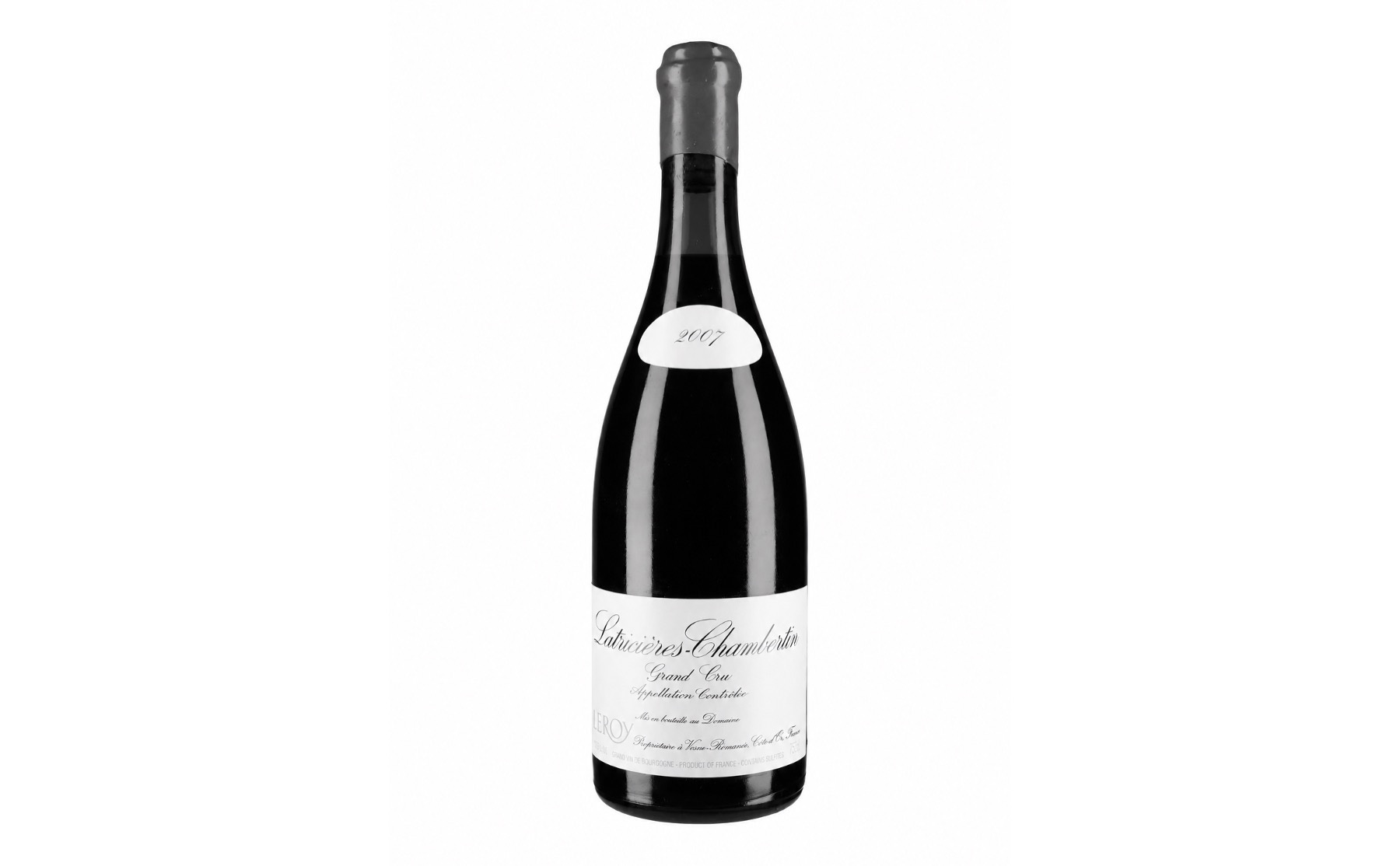
Among the great red Burgundies that matter to collectors and investors, Domaine Leroy Latricières-Chambertin Grand Cru occupies a particularly exacting niche. It is not the broadest or most immediately monumental wine in the Leroy range, yet it is one of the clearest demonstrations of Lalou Bize-Leroy’s ability to intensify a site without suppressing its identity. Public auction and merchant records identify Leroy’s holding at just 0.57 hectares, while the appellation itself is exceptionally small: the BIVB’s appellation sheet reported 6.80 hectares in production in 2018, and GuildSomm describes Latricières-Chambertin as a 7.35-hectare grand cru. That combination of a tiny climat and a minute Leroy parcel is the foundation of the wine’s rarity.
The market has long recognized that rarity. Wine-Searcher ranked Domaine Leroy Latricières-Chambertin among the world’s best Burgundies at an aggregate critic score of 96 with an average price of $5,037 in late 2020, and among the world’s greatest wines at 97 with an average price of $7,865 in late 2022. Liv-ex’s 2019 classification placed it in the first tier of fine wine, with a listed price of £32,590 per 12x75cl. This is therefore not simply a great Burgundy; it is a blue-chip Burgundy whose prestige is validated by both critical standing and market depth.
What makes the wine especially compelling is the tension at its core. Latricières-Chambertin is widely regarded as Gevrey-Chambertin’s coolest and more mineral grand cru site, with shallower soils and a harder subsoil than neighboring Chambertin. Allen Meadows, quoted in a report on a 1990 Leroy tasting, called Latricières “a connoisseur’s wine” and “a wine of finesse,” emphasizing its elegance and subtle minerality. In Leroy’s hands, that instinct for finesse is not replaced by sheer opulence; it is sharpened, deepened, and rendered unusually textural.
Estate and producer background
The institutional roots of Domaine Leroy run back to Maison Leroy, founded in 1868 by François Leroy. The official domaine history states that Domaine Leroy itself was founded in 1988, and Wine Spectator’s 2015 profile records the decisive expansion steps that shaped the estate: the purchase of Domaine Charles Noëllat in Vosne-Romanée in 1988, followed by Domaine Philippe Remy in Gevrey-Chambertin in 1989. Decanter likewise describes the estate as a roughly 22-hectare domaine assembled under Lalou Bize-Leroy and distinguished by an exceptional spread of grand cru holdings.
Lalou Bize-Leroy’s stature in Burgundy is inseparable from this wine’s identity. She inherited a family legacy linked not only to Maison Leroy but also to Domaine de la Romanée-Conti, where Wine Spectator notes she served as co-director from 1974 to 1992. Yet the most consequential decision for Domaine Leroy was philosophical rather than corporate: a conversion to biodynamics at the estate’s inception. Decanter describes that choice as strikingly unconventional in Burgundy in 1988, and Jancis Robinson wrote that Lalou was among Burgundy’s early and influential adopters of biodynamic viticulture on the holdings that became Domaine Leroy.
The estate’s governing idea is that viticulture must serve terroir rather than dominate it. Robinson reported Lalou’s view that once biodynamic farming had been firmly established, the wines no longer needed “making” in any heavy-handed sense, and Neal Martin later described a tasting at the domaine as a true master-class in terroir, with the wines made in near-identical fashion so that site differences could speak with maximum clarity. That is the essential lens through which collectors should understand Leroy Latricières-Chambertin: it is not a recipe wine, but a site wine subjected to radical viticultural discipline.
Terroir analysis
Latricières-Chambertin lies in the southern grand cru sector of Gevrey-Chambertin, between roughly 240 and 280 meters in altitude. The BIVB’s appellation sheet places the climat on the upper section of the slope, with upper soils described as brown and partly alluvial or pebbly scree, and lower soils as clay-limestone in varying proportions. The same source identifies hard Bathonian limestone higher on the slope and Bajocian marls lower down. GuildSomm adds that Latricières is typically the coolest grand cru in Gevrey, that it sits beside Chambertin, and that its soils are shallower with a harder subsoil than Chambertin. Domaine Leroy’s own site describes the appellation as benefiting from an optimal east-southeast exposure.
Those details matter because they explain the wine’s shape. Poorer, shallower soils and a cooler microclimate generally mean less easy amplitude and more structural tension. The climat’s historical reputation reflects exactly that profile: Allen Meadows’ description of Latricières as a wine of finesse and subtle minerality is fully consistent with GuildSomm’s emphasis on its cooler position and poorer soils. William Kelley’s note on Leroy’s 2015 captures the stylistic consequence with unusual precision, describing a wine of superb concentration and intensity that nevertheless remains delicate, transparent, and driven by a vibrant saline finish.
For collectors comparing it with neighboring grand crus, the key distinction is that Latricières generally delivers less immediate breadth than Chambertin and less overt sensuality than Clos de Bèze, but more mineral line, aromatic reserve, and tensile refinement. When Leroy succeeds here—and the historical record shows that she often does—the wine can achieve something rare even by grand cru Burgundy standards: density without heaviness, richness without sweetness, and longevity built as much on inner tension as on raw extract. That combination is one of the signatures that sets this bottle apart from many globally famous Pinot Noirs, which often trade more on obvious fruit amplitude or oak polish than on site-derived austerity and salinity.
Viticulture, élevage, and technical composition
Domaine Leroy’s viticulture is famously severe. Wine Spectator’s estate profile reports that Lalou Bize-Leroy stopped using chemical fertilizers, pesticides, and fungicides in 1988, and that the domaine’s average vine age is around 60 years, pruned to allow only four clusters per vine. The same profile states that yields have averaged 1.1 tons per acre since 1988, less than half the regional allowable maximum. Vinous reported yields of just 15.4 hectoliters per hectare across the domaine in 2019—minute by any standard, even for elite Burgundy.
The cellar work is traditional in vocabulary but uncompromising in execution. According to Wine Spectator, the grapes are harvested carefully, transported cold, sorted and weighed, and then placed whole into open-top vats without destemming or crushing. Fermentations begin slowly at low temperature; once underway, the cap is punched down and juice may be pumped over. The same report emphasizes the importance of native yeasts as transmitters of place. After alcoholic fermentation, the wines go into 100% new oak barrels, not to emphasize wood flavor, but as part of Lalou’s pursuit of the best possible material conditions for the wine. Élevage is classical: racking after malolactic fermentation, then bottling after roughly 14 to 18 months in barrel, without fining or filtration. Neal Martin’s 2011 Leroy report adds that the new oak is often so seamlessly integrated that it can be difficult to identify blind.
Technical composition
At the appellation level, BIVB identifies Latricières-Chambertin as a red grand cru planted to Pinot Noir, and reputable producer and merchant references likewise list the wine as Pinot Noir from a 0.57-hectare parcel. Publicly listed bottle data suggest alcohol commonly around 13% in mature vintages, though producer-disclosed technical data are not available for every year in public sources. More revealing than ABV is the scarcity of finished wine: Sotheby’s documented total production of 879 bottles for the 1991 vintage and 1,215 bottles for the 2002 vintage, which gives collectors a concrete sense of how little materially reaches the market in any given year.
Vintage chronicle
The 0.57-hectare Latricières parcel was added to Leroy’s holdings in 1989, and 1989 is also the earliest publicly documented vintage readily located in auction records. The chronology below therefore follows Burgundy’s red-wine growing seasons from that first documented Leroy Latricières vintage onward; where public visibility into individual later releases is incomplete, the annual characterizations follow the authoritative regional vintage records published by Jancis Robinson and Decanter.
Recent vintages
2024 remains under critical assessment, but early reporting describes a small, difficult year after significant hardship in the vineyards. 2023 delivered the largest harvest in Burgundy’s history according to the BIVB, with charming, fruity reds, slightly higher acidity than 2022, and no marked heat-stress character. 2022 is described by Jancis Robinson as good to excellent, producing ripe, classically proportioned Pinot Noir for medium- to long-term drinking. 2021 was a year of frost, cool and wet spring weather, mildew, botrytis, and rain near harvest, saved only by September sunshine; the wines are light, elegant, and best approached earlier. 2020 brought warm, dry conditions, minimal disease pressure, impeccable fruit quality, balanced acidities, and excellent long-term potential.
Contemporary classics
2019 was very warm, with repeated heatwaves that lowered yields and produced concentrated Pinot Noirs suited to medium- and long-term cellaring. 2018 followed a wet winter with a very hot summer; volumes were more generous, the wines often flattering and juicy, though some critics have raised questions about ultimate ageing distinction. 2017 was bountiful by Burgundy standards, giving fruity reds with moderate acidity and soft tannins. 2016 was one of the decade’s most complicated years, with frost, hail, and mildew crushing yields and creating strong site-by-site variation. 2015 combined low yields, warmth, small berries, and early harvest conditions to produce a potentially outstanding year, one frequently compared in quality to 2005.
Difficult but often rewarding years
2014 began with a mild winter and promising flowering, but a cool, wet summer forced growers to rely on a fine September; the resulting reds are relatively light. 2013 suffered a cold spring, delayed flowering, hail, and uneven ripening, yet September dryness rescued a small crop of balanced fruit. 2012 was battered by rot, mildew, hail, cold spells, heatwaves, and thunderstorms, delivering tiny volumes but often surprisingly attractive wines with soft tannins. 2011 turned out better than feared after summer rain. 2010 is a classic high-acid, low-volume Côte de Nuits vintage of very good quality. 2009 was dry and warm, with ripe tannins and lower acidity, making the wines approachable comparatively early. 2008 was ravaged by coulure, mildew, and hail before late sunshine rescued the crop, leaving high acidity as the hallmark. 2007 required ruthless selection after rot pressure. 2006 was inconsistent, but the best wines are pure and expressive. 2005 was exceptional. 2004offered a large crop of lighter, crisp wines. 2003 was the heatwave year: old vines occasionally produced monumental wines, but raisining and atypical tannin profiles were real hazards.
Mature vintages
2002 was a good year, reasonably dry and sugar-boosted by September. 2001 was wet and variable, with the best low-yield wines capable of long development. 2000 saw rain and rot at harvest and generally made softer, earlier-drinking wines. 1999 was outstanding for both quality and quantity. 1998 often produced tough, sturdy wines. 1997 made charming wines for relatively early drinking. 1996 is defined by very high acidity. 1995 yielded a reduced crop of initially austere wines that filled out in bottle. 1994 was highly variable. 1993 remains underrated and durable. 1992 was soft and tender. 1991 is not to be overlooked in the Côte de Nuits, where the grapes had ripened before the rains. 1990 was a great success: rich, fragrant, and majestic in the best vineyards. 1989 was nearly as successful as 1990, though usually less intense and often immediately charming.
Tasting profile, aging trajectory, and gastronomy
Professional notes across vintages suggest that Domaine Leroy Latricières-Chambertin has a remarkably consistent sensory architecture. In appearance, official appellation material describes the wines as deeply colored, ranging from ruby toward black-cherry tones. On the nose, the wine habitually moves between dark cherry, cassis, blackberry, rose petal, spice, licorice, forest floor, and ferrous or ore-like notes. The 2010 showed roses, mint, and silky red berries; the 2015 rose petal, black cherry, cassis, rich spice, and dark chocolate; the 2005 licorice, spice cake, cherry preserve, humus, and a striking mineral impression. This is not a simple fruit-led perfume. Even in ripe years, the aromatic field tends to pull toward mineral, floral, and savory complexity.
On the palate, the wine’s signature is the union of concentration and line. The 2009, in Antonio Galloni’s account, saturated the palate with layered black fruit and carried all elements effortlessly into a substantial finish. Yet the 2010 was “weightless” and “seamless,” and Kelley’s 2015, despite superb concentration, was described as delicate, transparent, and marked by a vibrant saline finish. Those notes capture the essential paradox of the wine: medium-bodied in classical Burgundian terms, but intensely packed; tannic, but usually fine-boned rather than blunt; rich, but rarely thick; and almost always driven by acidity and mineral persistence rather than by sweetness or extraction alone.
The drinking window is strongly vintage-dependent, but the broader pattern is clear. BIVB places the cellar potential of the appellation at roughly 10 to 15 years and more, and leading critics repeatedly point to long development: Galloni projected the 2009 from 2019 to 2034, and the 2010 from 2020 to 2040. In practice, top vintages from Leroy should be treated as 15- to 30-year wines, with the strongest years fully capable of longer survival when provenance is ideal. Lesser or lighter vintages may come around earlier, but the wine’s structure nearly always rewards patience.
For the table, the wine deserves dishes with savor, blood, and restraint rather than excessive sweetness. BIVB’s official pairings for Gevrey’s grands crus include feathered game, roast lamb in gravy, chicken in red wine sauce, glazed poultry, rib steak, and pungent regional cheeses such as Époisses, Langres, and Ami du Chambertin. At a refined level, that translates especially well to roast pigeon or squab, saddle of lamb, venison loin, Bresse chicken with a reduced jus, or mature washed-rind cheeses served without sweet accompaniments. The wine’s saline-mineral spine and savory tertiary register reward classical French cuisine far more convincingly than modern sugary glazes or overt smoke.
Critical standing, comparative context, and investment case
The critical archive is impressive not because every vintage is scored identically highly, but because the wine remains compelling across radically different seasons. Robert Parker awarded the 1991 a perfect 100 points. Decanter scored the 1990 at 96. Pierre Rovani gave the 1997 93 points. Wine Advocate notes reproduced by Cult Wines show 96 for 2005, 95 for 2009, 97 for 2010, 91 for 2011, and 97 for 2015. For 2019, Liv-ex’s survey of Jancis Robinson’s top Burgundy scores records Domaine Leroy Latricières-Chambertin at 18.5+, placing it among the upper echelon of the vintage. The pattern is unmistakable: this is a grand cru that serious critics do not treat as a supporting actor within the Leroy range, even if its fame is sometimes overshadowed by Chambertin, Musigny, or Richebourg.
For collectors, the comparative context within the appellation is essential. Faiveley’s Latricières is often described in terms of refinement, linearity, and overt minerality; Trapet’s version, with significant whole-cluster use in 2019, showed vigor, balance, and a splendid mineral finish; Rossignol-Trapet’s 2013 was praised for bright redcurrant, cranberry, potpourri, and fine mineralité. Those are all archetypally Latricières expressions. Leroy differs not by abandoning that profile, but by loading it with greater extract, deeper textural authority, and usually more dramatic aging potential, all while preserving the climat’s cooler-site elegance. That is what makes Leroy the collector’s benchmark in the appellation: not brute force, but superior concentration aligned with terroir fidelity.
From an investment perspective, the evidence is equally strong. Wine-Searcher’s aggregate pricing moved from $5,037 in 2020 to $7,865 in 2022 across vintages, and its 2020 analysis noted that the wine’s average price had risen by almost 25% in the prior year. Liv-ex placed it in the first tier of fine wine in 2019, while Decanter reported that Domaine Leroy topped the Liv-ex Power 100 in 2022 for the third consecutive year. Current dealer-tracked pricing on Cult Wines shows the magnitude of mature-vintage value: approximately £50,110 per 12x75cl for 2005, £72,900 for 2009, £66,150 for 2011, and £121,800 for 2015. This is unmistakably a wine that trades in the rarefied zone of trophy Burgundy rather than merely expensive Burgundy.
Scarcity is not an abstract talking point here; it is physically documented. Sotheby’s recorded only 879 bottles for the 1991 vintage and 1,215 bottles for the 2002. Farr Vintners’ 2023 Leroy release also underlines another market reality: Leroy’s release cadence can involve mature back-vintages rather than a simple annual forward flow, which contributes to irregular availability and heightened competition for clean provenance. For investors, that means the wine is genuinely scarce but also highly sensitive to condition, storage history, and source reputation. In other words, it is a blue-chip asset, but one that should be bought with a far stricter provenance filter than more liquid benchmark labels.
What differentiates the wine globally is that its cult status is not built on flamboyance. Many of the world’s iconic Pinot Noirs are beloved for immediate sensuality; Leroy Latricières is coveted because it manages something rarer—grand cru Pinot Noir of real density that still speaks in the language of cool-site mineral drive, floral lift, ferrous nuance, and saline persistence. That is why it matters not only inside Latricières-Chambertin, not only inside Burgundy, but also in the wider hierarchy of the world’s most serious collector wines.
Conclusion
Domaine Leroy Latricières-Chambertin Grand Cru stands at the intersection of scarcity, terroir precision, and market prestige. Its parcel is tiny, its viticulture radical, its élevage uncompromising, and its critical history unusually consistent. Within the appellation, it is arguably the reference point for collectors seeking the most profound version of Latricières’ cooler, finer, more mineral personality. Within Burgundy more broadly, it is one of the clearest proofs that Lalou Bize-Leroy’s greatness lies not merely in owning famous vineyards, but in extracting from each climat an intensified yet legible truth. For the serious buyer, that is the central proposition of this wine: not simply rarity, not simply price performance, but a singular union of Burgundian site expression and blue-chip collectability.