

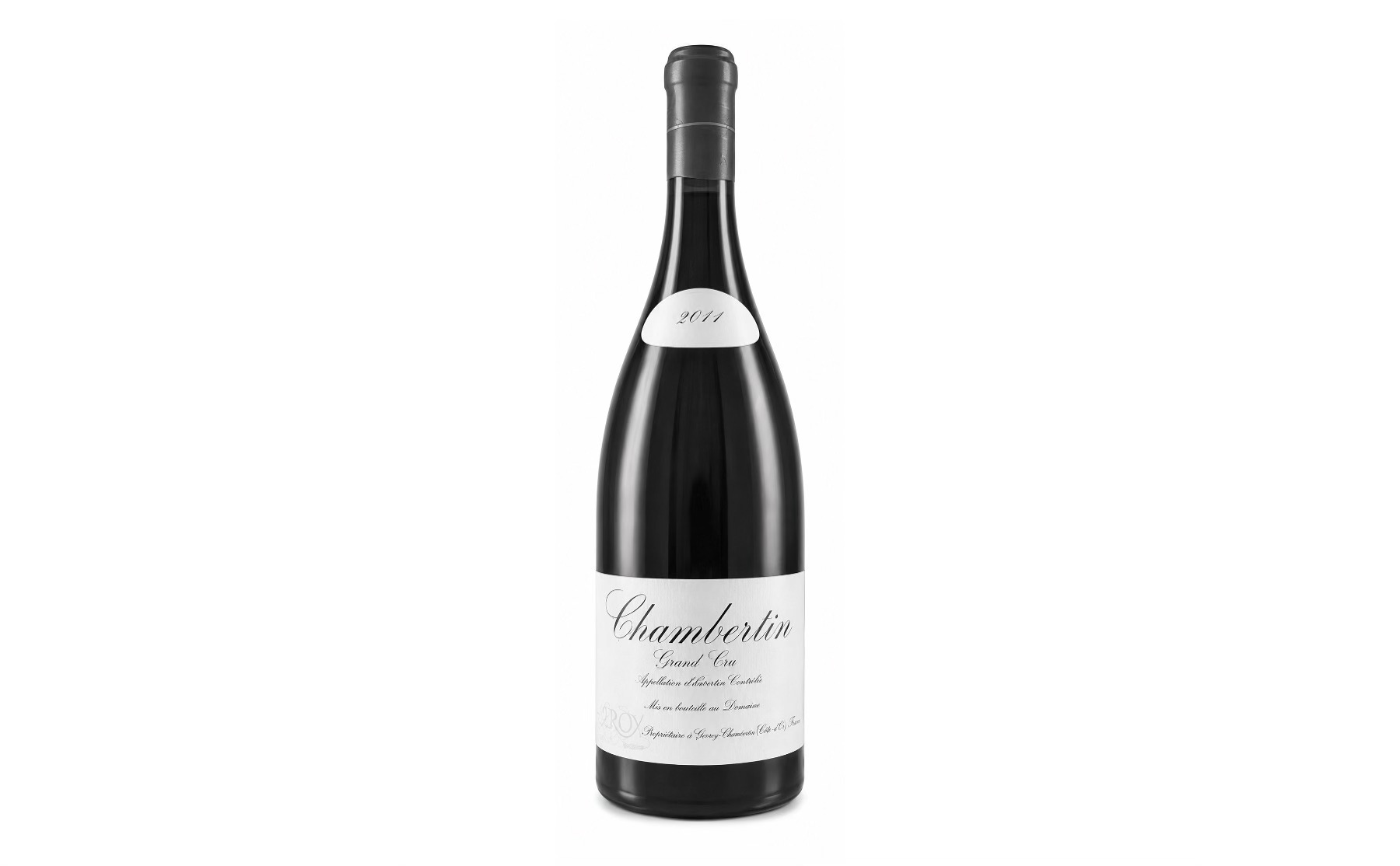
Domaine Leroy: Chambertin Grand Cru
Ultra-scarce biodynamic Chambertin from Lalou Bize-Leroy, uniting regal terroir authority with an elite global market profile
Introduction
Domaine Leroy Chambertin Grand Cru belongs to the narrow band of red Burgundies that function simultaneously as great wines, collector trophies, and thinly traded luxury assets. The Chambertin climat itself is one of Gevrey-Chambertin’s historic grands crus, covers about 13.19 hectares, has carried the Chambertin name since the 13th century, and was formally recognized as Grand Cru in 1937. Domaine Leroy’s holding is only 0.70 hectare, a microscopic scale that materially shapes both the wine’s rarity and its market behavior. In contemporary fine-wine trade, Leroy has repeatedly ranked at or near the summit of the Liv-ex Power 100, while Sotheby’s reported in 2024 that three bottles of the 2011 Domaine Leroy Chambertin realized more than €16,600 per bottle.
For serious collectors, the wine’s stature rests on more than scarcity. It brings together Chambertin’s inherently sovereign terroir, Lalou Bize-Leroy’s uncompromising biodynamic doctrine, and an estate style that critics have long distinguished for its saturation of fruit, velvety texture, and unusual authority. The result is a wine that is not merely expensive because it is rare; it is rare because the entire estate is engineered around exceptionally low yields, extreme selection, and delayed release.
Estate and Producer Background
Domaine Leroy was founded by Lalou Bize-Leroy in 1988, but its roots run back to 1868, when her great-grandfather François Leroy established Maison Leroy. The family’s connection to Burgundy’s highest echelon deepened in 1942, when Henri Leroy acquired a 50% stake in Domaine de la Romanée-Conti. Lalou entered the family business in 1955, later served as co-director of DRC from 1974 to 1992, and then built Domaine Leroy by acquiring vineyard assets from Domaine Charles Noëllat in 1988 and, crucially for Gevrey-Chambertin, from Domaine Philippe Rémy in 1989. That sequence matters for collectors: older Leroy Chambertin bottlings such as the 1955 or 1961 belong to Maison Leroy, whereas Domaine Leroy Chambertin is a wine of the modern estate era.
The estate’s philosophy is inseparable from Lalou Bize-Leroy’s belief that wine quality begins with vine vitality rather than cellar intervention. Wine Spectator reported that she stopped all chemical inputs in April 1988 and began biodynamics that same year; she later described biodynamics not as a technique but as a way of understanding land and vine more deeply. Her refusal in 1993 to intensify chemical treatments against mildew cost the estate much of that crop, but she regarded the episode as a turning point because the vines survived and recovered. That philosophical severity has become central to the domaine’s prestige.
Reputation in Burgundy is therefore not simply a matter of grand cru addresses. It is the combination of addresses and method. The official domaine presentation emphasizes low-yield, old-vine, cellar-worthy Pinot Noir and Chardonnay, while Decanter has treated Leroy as one of Burgundy’s defining elite domains. Wine Spectator, in a long profile on Lalou Bize-Leroy, placed Domaine Leroy in the same comparative frame as DRC, de Vogüé, Roumier, and Rousseau, but noted that Leroy’s wines often show more obvious fruit and a richer, more velvety texture than their peers.
Terroir Analysis
Chambertin sits at the northern end of the Côte d’Or, on the east-facing slopes of Gevrey-Chambertin. The official Burgundy appellation dossier describes the grand cru sector as lying on a hill of hard rock, with brown upper-slope soils that are partly alluvial and partly scree, and lower sections of clay-limestone over Jurassic marls and limestones rich in marine fossils. A producer map from Domaine Dujac adds finer geological detail: mid-slope to upper-slope exposure, a steep gradient above 5%, elevations roughly from 273 to 302 meters, and soils that move from reddish-brown stony earth with crinoidal limestone fragments toward patches of oyster-shell-bearing material and Premeaux limestone fragments. Domaine Leroy’s own vineyard page describes its Chambertin holding as easterly in aspect, with alluvial, scree, brown-soil, and clay-limestone components.
That combination of slope, exposure, and geology explains why Chambertin tastes like Chambertin rather than simply “great Pinot Noir.” The limestone-rich upper zones promote drainage, root penetration, and a tensile mineral frame; the clay-limestone components regulate hydric stress and support depth of fruit; the east-facing exposition preserves morning light without the excessive heat burden of a more westerly orientation. In practice, this is why Chambertin’s best wines unite breadth and structure rather than choosing between them. Burgundy’s official tasting profile for Gevrey’s grands crus stresses power, opulence, elegance, and longevity; Rousseau’s official Chambertin sheet calls it “the wine of kings,” powerful and concentrated with persistent mouthfeel; Leroy’s own descriptor is more tactile, emphasizing voluptuousness and both red and black berry fruit. The terroir therefore points not to delicacy alone, but to authority moderated by finesse.
Technical composition. Chambertin Grand Cru is red Burgundy from Pinot Noir only, and Decanter’s public wine page for the 2009 Domaine Leroy Chambertin lists the wine as 100% Pinot Noir. Domaine Leroy’s current official parcel size is 0.70 hectare. Publicly available alcohol figures are not consistently disclosed for each vintage, but viticultural data are more revealing here than label ABV: Lalou Bize-Leroy has publicly argued that quality depends on yields around 20–25 hl/ha rather than Burgundy’s far higher legal ceilings. By inference, a 0.70-hectare parcel cropped at roughly 24 hl/ha would yield only about 2,200 bottles before any further losses from severe sorting, which helps explain the wine’s chronic scarcity.
Viticulture and Winemaking
If terroir is the foundation, farming is the amplifier. Wine Spectator reported that the average vine age at Domaine Leroy is about 60 years, that the vines are pruned to carry only four clusters per plant, and that the estate’s average yield since 1988 has been around 1.1 tons per acre, far below regional norms. Lalou Bize-Leroy argued in the same profile that even 35 hl/ha was too high, saying that 20 to 24 or 25 hl/ha was more reasonable for genuine concentration. Jancis Robinson separately reported average estate yields of only 10 hl/ha in 2010 and 9 hl/ha in 2012. Wine Spectator also noted that Leroy stopped hedging vines in 1999 because Bize-Leroy believed trimming the apex bud disrupted pollination and the next year’s cycle; the estate’s vines are consequently trained higher than conventional norms.
The cellar regimen is classical in outline but unusually exacting in execution. Fruit is harvested carefully, transported cold, sorted and weighed, then placed whole into open-top fermenters without destemming or crushing. Fermentation begins slowly with indigenous yeasts, after which extraction proceeds through punch-downs or pump-overs depending on the wine’s progress. After alcoholic fermentation, the wines enter 100% new oak barrels; élevage is then described as classical, with one racking after malolactic fermentation and bottling after roughly 14 to 18 months, without fining or filtration. The point is not cosmetic luxury but the preservation and transmission of site character. Bize-Leroy herself has argued that now that biodynamics are firmly established, the wines increasingly need less “making,” because the climats assert themselves more clearly each year.
For collectors, the significance of this regimen is straightforward. Whole-cluster fermentation without crude green character, very low yields, and full new-oak élevage on fruit of exceptional concentration are what give Leroy wines their unusual combination of density and lift. The oak is not absent, but it is rarely the dominant impression; rather, it functions as a structural sheath around fruit that is already naturally concentrated. This is one reason Leroy can produce wines of textural amplitude without losing Burgundy’s essential line of acidity and terroir definition.
Vintage Report
A point of precision is necessary. For this wine, pre-1989 “Leroy Chambertin” references often belong to Maison Leroy rather than Domaine Leroy. The modern Domaine Leroy Chambertin should be read from the Gevrey acquisition era onward, beginning with 1989. Publicly indexed market and critic sources confirm a modern domaine sequence that includes 1989, 1990, much of the 1990s and 2000s, and at least 2010 through 2019.
In the founding decade, 1989 was nearly on the level of 1990 in Jancis Robinson’s Burgundy red chart and produced wines of real charm; 1990 was a major success, rich and fragrant, with top vineyards making majestic wines. The historically underrated 1993 vintage delivered healthy grapes and well-colored, fruity wines with staying power, while 1994 suffered from damaging rain and variability. The reduced crop of 1995 yielded initially austere wines that broadened in bottle; 1996 remains defined by very high acidity; 1997 was charming and comparatively early-drinking; 1998 gave thick skins and, often, tougher wines; and 1999 delivered the rare conjunction of scale and quality, with concentration, ripe tannin, and the capacity to drink well both young and old. For a producer as exacting as Leroy, that arc means 1990 and 1999 remain especially important reference points, while 1995 and 1996 reward mature-cellar patience.
The 2000s were more uneven but potentially magnificent in the right hands. Jancis Robinson describes 2000 as difficult, with rain and rot during harvest, though better in the Côte de Nuits than much of the Côte de Beaune; 2001 was cool, wet, and variable; 2002 was good and relatively dry, with early charm; 2003 was the notorious heatwave year, capable of producing monumental wines from old vines but often atypical; 2004 was larger, lighter, and crisper; 2005 was outstanding and classically great; 2006 could be pure and expressive at best but austere at worst; 2007 demanded draconian selection after a dank summer; 2008 was deeply difficult until late September sunshine rescued the crop; and 2009 finally offered dry, warm conditions with ripe tannins and lower acidity. In domaine terms, 2005 and 2009 are the commanding modern classics, while 2008 and 2007 are years where Leroy’s selection discipline matters more than generic vintage reputation.
The 2010s restored a long sequence of high-collectibility vintages, though not all in the same style. Jancis Robinson characterizes 2010 as high-acid, low-volume, and especially strong in the Côte de Nuits; 2011 as better than expected; 2012 as rot-plagued and bizarrely erratic but yielding surprisingly seductive wines with soft tannins and tiny volumes; 2013 as late, cold, and small-cropped yet balanced; 2014 as mild early, cool and wet in summer, then rescued by September; 2015 as a very fine warm, low-yield vintage with comparisons to 2005; 2016 as a year devastated by hail, frost, and mildew; 2017 as bounteous and accessible; 2018 as hot and generous, sometimes blurring qualitative distinctions; and 2019 as very warm, concentrated, and reduced in yield by heatwaves. On top of those regional reports, Vinous and Parker publicly index Domaine Leroy Chambertin bottlings in 2016, 2017, 2018, and 2019, while Parker’s search pages show 100-point recognition for several of those recent high-water marks.
Tasting Profile and Drinking Horizon
A professional tasting profile of Domaine Leroy Chambertin Grand Cru must be understood as a composite across strong vintages rather than a substitute for a single-vintage note. Appearance: typically deep ruby to black-cherry in tone. Nose: black cherry, blackberry, plum, violet or rose-petal lift, licorice, spice, truffle, underbrush, and—especially in riper years—orange rind, dark chocolate, and dark floral notes. Palate: full-bodied by Pinot Noir standards, with mouthfilling fruit concentration, substantial but refined tannins, and acidity that provides internal scaffolding rather than overt sharpness. Burgundy’s official tasting profile emphasizes power, opulence, elegance, and a sappy texture; Parker’s 2019 note adds plum, berry, truffle, dark chocolate, violets, and spice; Decanter’s older notes stress profundity, depth, and the sense of a great deal of wine in the glass; Jancis Robinson’s 2010 note called it “majestic,” and her 2012 review emphasized striking complexity and intensity.
The textural signature is especially important. Wine Spectator’s estate profile distinguishes Leroy from several great peers by the sheer fruit saturation and velvet of the wines. That is exactly the point serious tasters often make about Leroy Chambertin: it does not dilute Chambertin’s authority into prettiness, but neither is it merely massive. The wine tends to combine grand-cru power with a tactile, almost enveloping finish. In the finest years, it feels both architectural and plush.
For aging, the broad appellation rule is easy: Burgundy’s official guidance gives the Gevrey grands crus a minimum keeping potential of ten years. In practice, top Chambertin is a much longer proposition. Rousseau’s published maturity guidance places Chambertin across windows such as 15–25, 20–30, and 25–35 years depending on vintage. Lalou Bize-Leroy herself told Jancis Robinson in 2012 that if she were choosing a Chambertin to drink then, she would pick 1955 first, then 1999, with 2001 also performing well. For Domaine Leroy Chambertin, a prudent collector’s rule is therefore that strong vintages usually deserve at least 12 to 15 years from harvest, with first-rate years capable of evolving for 30 years or significantly more.
At table, the wine calls for cuisine with equal seriousness but no brutality. Burgundy’s official pairing advice favors feathered game, roast lamb, chicken in red wine sauce, glazed poultry, rib steak, and soft-centered cheeses; iDealwine’s pairing suggestions for the wine itself include coq au Chambertin, filet of beef with truffle, and roast partridge. In refined service, that translates especially well to pigeon with jus corsé, venison with black truffle, Bresse poultry with morels, and classical game preparations where sauce depth can meet the wine’s persistence without crushing its aromatic range.
Critical Reception, Market Position, and Comparative Context
Critical reception confirms the wine’s standing among Burgundy’s reference-point bottlings. Public Parker sources show 100-point scores for the 2010, 2015, 2018, and 2019 Domaine Leroy Chambertin Grand Cru. Parker’s public text for the 2019 describes a wine of plum and berry fruit, orange rind, black truffle, dark chocolate, violet, and spice, full-bodied and multidimensional. Wine Spectator scored the 2012 Chambertin at 98. Decanter’s public summaries on the 2009, 2007, and 1998 vintages speak of profundity, class, concentration, and balance rather than easy immediacy. Jancis Robinson’s public review entries describe the 2010 as a majestic Chambertin, the 2012 as exceptionally complex and intense, and the 2009 under Lalou’s own favored appellation of “Monsieur Le Chambertin.” These are not casual plaudits; they are the language critics reserve for wines that sit at the top of the category.
In market terms, the wine occupies a rarefied but complicated place. Jancis Robinson wrote that Leroy wines are strictly allocated, and Wine Spectator reported that Domaine wines are released only when Lalou Bize-Leroy judges them ready. That supports pricing but reduces market fluidity. Liv-ex has repeatedly highlighted Leroy’s exceptional brand power while also noting that Domaine Leroy is not included in the Liv-ex 1000 because of lack of liquidity; the same Liv-ex reporting notes that Burgundy’s top names often trade with materially wider spreads than Bordeaux first growths. Pricing evidence is emphatic: iDealwine records the 1995 Domaine Leroy Chambertin rising from €420 at auction in 2003 to €5,571 in 2024, while Sotheby’s reported more than €16,600 per bottle for the 2011 in 2024. In other words, scarcity has translated into dramatic long-term appreciation, but investors should understand that this is trophy-asset territory rather than highly liquid benchmark-wine territory.
For collectors comparing within the appellation, Armand Rousseau remains the indispensable Chambertin benchmark: its official holding is 2.55 hectares, and Rousseau’s own sheet presents Chambertin as powerful, concentrated, and structurally persistent. Rossignol-Trapet offers another highly serious comparator, with biodynamic farming, slope-spanning parcels, an average vine age of 55 years, and a profile defined by power and long aging. What separates Leroy is not simply that it is biodynamic—Rossignol-Trapet is, too—but that its scale is smaller, its yield philosophy more radical, and its textural signature more overtly sumptuous. Wine Spectator’s long-standing description of Leroy as more velvety and richly fruited than peers such as Rousseau, Roumier, de Vogüé, or DRC remains highly useful. Globally, that makes Domaine Leroy Chambertin unusual even among top wines: unlike first-growth Bordeaux or Napa cult Cabernet, its prestige derives from microscopic production and a single historic climat, while its secondary-market behavior is constrained by thin supply rather than expanded by brand scale.
Conclusion
Domaine Leroy Chambertin Grand Cru stands at the summit of Gevrey-Chambertin not because it replaces the appellation’s classical model, but because it intensifies it. Chambertin already supplies the architecture: east-facing slope, limestone authority, clay-limestone depth, and one of Burgundy’s sovereign grand cru identities. Leroy adds another order of rigor through biodynamic farming, severe yield restriction, exacting sorting, classical but assertive élevage, and a release discipline that privileges readiness over volume. The wine’s profile is therefore unmistakable: grand-cru scale, profound aromatic layering, deep but not heavy fruit, velvet texture, and a finish built for decades rather than display. For collectors and investors, it is one of Burgundy’s clearest examples of a wine whose rarity, critical standing, and market prestige are mutually reinforcing. The principal limitation in public-source research is that exact vintage indexing for this cuvée is not perfectly continuous across databases, and older “Leroy Chambertin” references may belong to Maison Leroy rather than Domaine Leroy. Within those limits, the evidence is decisive: this is one of the very greatest collectible Pinot Noirs in the world, and among Chambertins it occupies the most luxurious, texturally commanding end of the spectrum.