
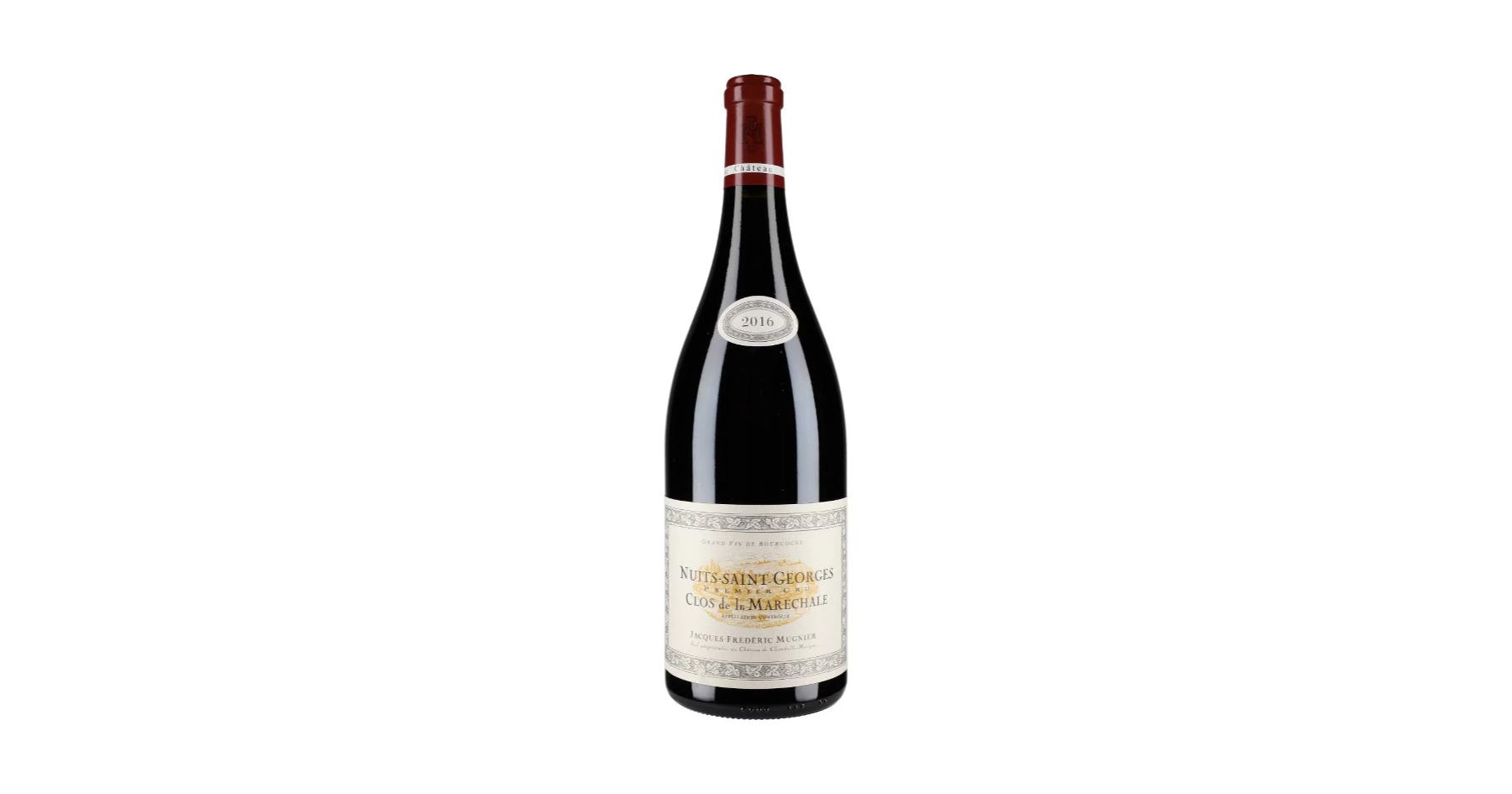
Domaine Jacques-Frédéric Mugnier: Nuits-Saint-Georges Premier Cru "Clos de la Maréchale"
Burgundy's largest monopole restored: how two decades of subtraction transformed an anonymous Premier Cru into a collector's essential
Introduction
The Clos de la Maréchale is one of Burgundy’s most singular vineyard sites: a walled enclosure of nearly ten hectares in the southern extremity of the Nuits-Saint-Georges appellation, classified as Premier Cru, and held as a monopole by a single family since 1902. It is the largest privately owned monopole in the Côte d’Or—larger than the Clos de Tart, the Clos des Lambrays, or any other single-owner vineyard in the region—and since 2004, it has been vinified by Frédéric Mugnier, a winemaker whose philosophy of minimal intervention and radical transparency has transformed the wine’s identity from the robust, heavily extracted expression it was under its previous custodian to something altogether more refined, more site-specific, and more intellectually demanding.
The wine’s history is defined by a rupture. For 53 years, from 1950 to 2003, the vineyard was leased to Maison Faiveley, one of the largest négociants in Burgundy, who farmed it conventionally and produced a wine in a style consistent with their broader portfolio: generous, structured, and built for extraction. When the lease expired and the vineyard reverted to the Mugnier family, Frédéric Mugnier inaugurated a new era with the 2004 vintage—a wine of immediate distinction, lighter, more fragrant, and more precisely drawn than anything the vineyard had produced under Faiveley. This transition is not merely a change of label; it is a case study in how the same terroir can yield fundamentally different wines depending on the viticultural and vinification decisions applied to it.
Within the broader narrative of Burgundy and French fine wine, the Clos de la Maréchale under Mugnier occupies a distinctive position. It is the wine through which the widest audience encounters the Mugnier aesthetic—a point of entry for collectors and restaurants who cannot access the tiny-production Musigny, Bonnes-Mares, or Les Amoureuses that constitute the domaine’s most celebrated cuvées. But it is not merely an entry-level wine; its Premier Cru classification, its monopole status, and its geological distinctiveness give it an identity that is fully autonomous and increasingly recognised on its own terms. For collectors, it represents one of the most compelling intersections of quality, relative accessibility, and terroir authenticity available in the Côte de Nuits.
The critical turning points in the wine’s recent history are clear: the Mugnier family’s acquisition of the vineyard in 1902; the lease to Faiveley in 1950, which removed the wine from family control for half a century; and the recovery of the vineyard in 2004, which returned it to domaine management and initiated the transformation that has defined the wine ever since. To these must be added a quieter but no less significant event: the revival of a white Clos de la Maréchale from the 2005 vintage, produced from a small parcel of Chardonnay established by top-grafting onto existing Pinot Noir rootstock—an unusual and historically resonant addition to the domaine’s range.
Vineyard and Terroir
Location, Size, and Monopole Status
The Clos de la Maréchale lies at the southern extremity of the commune of Prémeaux-Prissey, within the Nuits-Saint-Georges appellation, adjacent to the Beaune-Dijon road (the RN 74). It extends over 9 hectares and 76 ares—approximately 9.76 hectares—making it the largest monopole in the entire Côte d’Or. The vineyard is a true clos: a walled enclosure on all four sides, with stone walls built by Louis Champy in the 1820s that delineate a contiguous viticultural unit of rare scale for Burgundy.
The vineyard’s name has evolved over time: it was recorded as “Clos des Fourches” in 1855, then as “Clos Maréchal” in 1892, before acquiring its current designation in the early twentieth century. The Mugnier family has held sole ownership since 1902, when the vineyard was purchased from the Marey-Monge family—the same family from whom the original Frédéric Mugnier had acquired his Chambolle-Musigny holdings during the phylloxera crisis.
Geology and Soil Composition
The geological substrate of the Clos de la Maréchale is Prémeaux limestone of the Bathonian period, dating to approximately 150 to 200 million years ago. This is a fundamentally different formation from the Comblanchien limestone that underlies the Chambolle-Musigny vineyards to the north and that contributes to the perfumed, ethereal character of those wines. The Prémeaux limestone produces wines of gentler, rounder tannin structure—a geological distinction that is directly legible in the contrasting styles of the domaine’s Chambolle and Nuits-Saint-Georges bottlings.
The soils are clay-limestone, with a high proportion of oolitic limestone pebbles and a shallow topsoil of approximately 50 centimetres overlying solid limestone bedrock. Pink Comblanchien limestone appears in the subsoil, adding a further layer of geological complexity. The combination of shallow soil and permeable limestone base ensures rapid drainage—a critical advantage in wet vintages—while the clay component provides sufficient moisture retention to sustain the vines through dry periods. The rich mixture of limestone, clay, pebbles, and sand creates a growing environment that moderates vine vigour and promotes the mineral expression that characterises the wine.
Exposure, Altitude, and Microclimate
The vineyard occupies a gentle slope of approximately 5 to 6 percent gradient, at an altitude of 240 to 260 metres, with an east to southeast exposure. This orientation provides morning and midday sun exposure while offering some protection from the intense afternoon heat that can accelerate ripening and reduce acidity—a balance that is particularly valuable in the warmer vintages that have become more frequent in recent decades. The position at the southern margin of the Nuits-Saint-Georges appellation gives the vineyard a slightly warmer mesoclimate than the more northerly Premier Cru sites of the commune, contributing to a roundness and accessibility in the wine that distinguishes it from the more austere expressions typical of central Nuits-Saint-Georges.
The surrounding stone walls serve a viticultural as well as a demarcative function: they absorb and re-radiate heat, creating a sheltered microclimate within the enclosure that moderates frost risk in spring and extends the effective growing season. The walls also reduce wind exposure and create a degree of atmospheric stability that can be beneficial during the critical flowering and veraison periods.
Internal Parcel Variation
At nearly ten hectares, the Clos de la Maréchale contains meaningful internal variation in soil depth, drainage, and exposure. The upper portions of the vineyard, closer to the slope, tend toward shallower soils and greater drainage, producing fruit of more concentrated mineral character. The lower portions, nearer the road, have deeper soils with higher clay content, yielding fruit of broader texture and earlier accessibility. Frédéric Mugnier vinifies these different sectors with attention to their individual characteristics, though the wine is ultimately assembled as a single cuvée—a choice that reflects a philosophy of expressing the clos as a whole rather than fragmenting it into sub-parcels.
Farming Philosophy
The vineyard is farmed without herbicides or synthetic pesticides, following a low-intervention approach that prioritises soil health, biodiversity, and the long-term viability of the vine ecosystem. Frédéric Mugnier eliminated chemical fertilisers early in his tenure, allowing yields to self-regulate and encouraging deeper root penetration into the limestone bedrock. The domaine does not hold formal organic or biodynamic certification but operates in accordance with the principles of sustainable, environmentally conscious viticulture. The transition from conventional farming under Faiveley to the current regime has been gradual and cumulative, with observable improvements in soil structure, vine balance, and wine quality over the two decades of Mugnier management.
Grape Composition and Viticultural Choices
The Clos de la Maréchale produces both red and white wine—an unusual distinction for a Nuits-Saint-Georges Premier Cru. The red, which accounts for the vast majority of production, is made entirely from Pinot Noir. The white, revived with the 2005 vintage, is produced from approximately 0.6 hectares of Chardonnay established through top-grafting onto existing Pinot Noir rootstock—a technique that preserves the deep, mature root systems of the original vines while changing the fruiting variety. This method, rare in Burgundy, was chosen to honour the historical presence of Chardonnay in the vineyard, evidenced by exceptional old bottles discovered in the domaine’s cellar.
Specific clonal or massal selection data for the vineyard is not publicly disclosed. Given the vineyard’s size and the diversity of its plantings—including vines of varying ages and origins, some predating the Faiveley era—it is reasonable to infer a degree of genetic diversity within the Pinot Noir population. The top-grafted Chardonnay vines required several years to establish and produce fruit of sufficient quality for Premier Cru bottling, a delay that Frédéric accepted as necessary for the integrity of the wine.
Yield management is integral to the domaine’s viticultural approach. The elimination of chemical fertilisers and the commitment to low-intervention farming have resulted in naturally moderate yields that vary with vintage conditions. In years of frost or hail—the white wine production has been reduced by as much as 75 percent in affected vintages—the consequences for volume are accepted without compensatory intervention. The philosophy is one of accepting what the vineyard gives, a principle that extends from the field to the cellar.
Vinification and Élevage
Red Wine
The red Clos de la Maréchale is produced following the domaine’s characteristic minimal-intervention approach. The grapes are harvested by hand and fully destemmed—Frédéric Mugnier has expressed interest in whole-cluster fermentation but finds practical reasons that typically prevent it. A cold maceration of approximately three days precedes fermentation, which proceeds with indigenous yeasts in old open wooden vats over 15 to 20 days. The approach to extraction is deliberately gentle: there is no pumping during fermentation, and the extraction regime avoids the aggressive pigeage that characterised many Burgundian domaines in the 1990s and 2000s.
Following fermentation, the wine enters élevage in French oak barrels with approximately 15 percent new oak—a proportion that is notably lower than that employed by many producers of comparable classification and that reflects Frédéric’s conviction that oak should serve as a neutral vessel for controlled micro-oxygenation rather than as a flavouring agent. The wine spends approximately 18 months in barrel before being racked into stainless steel tanks in April, where it rests for a further three months before bottling in June or July. The total élevage thus extends to approximately 21 months. The wines are bottled without fining or filtration, preserving the lees-derived complexity and textural nuance that are essential to their character.
White Wine
The white Clos de la Maréchale, produced from the 0.6-hectare Chardonnay parcel, follows a distinct vinification path. The wine is aged for 12 months on fine lees in neutral oak, a shorter élevage than the red that preserves the variety’s aromatic freshness while allowing sufficient lees contact to develop textural richness and complexity. The white is produced in very small quantities and has become one of the rarer wines in the Mugnier portfolio—a Nuits-Saint-Georges blanc from a monopole premier cru, with no equivalent among other producers.
Philosophy of Non-Intervention
The unifying principle across both wines is restraint. Frédéric Mugnier’s winemaking operates through what he describes as a “philosophy of subtraction”: the removal of obstacles to natural expression rather than the addition of winemaking artifice. In the context of the Clos de la Maréchale, this philosophy has produced a wine that stands in sharp contrast to the Faiveley era. Where Faiveley’s version was robust, extracted, and built for immediate impact, the Mugnier version is lighter, more precisely drawn, and designed to reveal its complexity gradually over years of bottle age. The transformation is not merely stylistic but philosophical: it reflects a fundamentally different understanding of what the vineyard is capable of expressing and what the role of the winemaker should be in facilitating that expression.
Vintage-by-Vintage Analysis
The following analysis covers every vintage of the Clos de la Maréchale produced under Mugnier management, from the inaugural 2004 to the most recent releases. The pre-2004 wines, produced by Faiveley under lease, are referenced for historical context but are not the subject of this study. The Mugnier era, now spanning two decades, provides sufficient history to trace the wine’s evolution and to assess how it expresses vintage variation within a consistent philosophical framework.
2004: The Inaugural Vintage
The 2004 vintage was Frédéric Mugnier’s first from the Clos de la Maréchale, bottled in 2006. It arrived freighted with expectation: the recovery of Burgundy’s largest monopole from a 53-year lease was a significant event, and the wine community was keenly interested in how the vineyard would respond to the Mugnier approach. The 2004 growing season was classically structured—moderate temperatures, adequate rainfall, a long and even ripening period—and produced a wine of notable refinement for a first effort. Critics described a nose of black cherries, dark berries, peppercorn, espresso, and complex soil tones, with a palate that was deep, full-bodied, and well-balanced, carrying fine-grained tannins and a soil-driven finish. The wine was inevitably transitional—the vineyard had been farmed conventionally under Faiveley, and the conversion to Mugnier’s low-intervention regime had only just begun—but it immediately established the direction of travel: lighter, more transparent, and more terroir-specific than anything the site had produced in the preceding decades. Scored in the 87–89 range, it was a foundation rather than a summit.
2005: Confirmation
The 2005 vintage provided the first compelling evidence of the vineyard’s potential under Mugnier management. A warm, dry growing season produced concentrated fruit of excellent phenolic maturity, and Frédéric’s light-extraction approach yielded a wine described as elegantly fleshy, medium to full-bodied, with layered aromas of black cherries, espresso, raw cocoa, and rich soil tones. The tannins were ripe and well-integrated, supported by lively acidity that gave the wine a structural completeness absent in many Nuits-Saint-Georges from this generous vintage. Scored in the 88–89 range, it drank superbly from early evaluation but promised further development. The 2005 also marked the inaugural vintage of the white Clos de la Maréchale—a small but symbolically important addition that expanded the vineyard’s expressive range. It was later cited as a benchmark vintage for the cuvée, a comparison point to which subsequent vintages would be referred.
2006: A Peak
The 2006 vintage represents one of the highest critical assessments in the wine’s Mugnier-era history, with a score of 95 from Allen Meadows at Burghound. The growing season was characterised by a warm, dry summer followed by a cool, extended autumn that preserved acidity and allowed slow, even ripening—conditions that rewarded Frédéric’s patient approach to harvest timing. The resulting wine combined depth and precision in a balance that few producers achieved across the Côte de Nuits in this vintage. For collectors, the 2006 remains one of the most sought-after Mugnier Clos de la Maréchale releases and a demonstration of what the vineyard can deliver when vintage conditions align with the winemaker’s non-interventionist philosophy.
2007: Lighter but Balanced
A cooler, more challenging growing season produced a 2007 of lighter structure and more immediately accessible fruit. Assessed at approximately 92 points, the wine showed the delicate balance of fruit, acidity, and tannin that the Mugnier approach facilitates even in lesser vintages. It has drunk well from relatively early and is not a wine destined for extended cellaring, but it offered a graceful expression of the vineyard in a year that many Nuits-Saint-Georges producers found difficult.
2008: Structure and Patience
The 2008 vintage reversed the 2007’s lightness, producing a wine of notable structure and tannic backbone. Assessed at approximately 91 points, the wine showed red berry intensity, fine acidity, and prominent backend tannins that required patience to resolve. Notes of black cherries, sweet spices, flowers, and liquorice gave the wine aromatic complexity, but the structural firmness marked it as a wine for medium- to long-term cellaring. The shift to the combined wood-and-tank élevage, introduced with this vintage, may have contributed to the wine’s fruit purity and aromatic definition.
2009: Generosity Within Restraint
The 2009 growing season was warm and generous across Burgundy, and the Clos de la Maréchale responded with a wine of unusual expressiveness. Jasper Morris MW described it as wonderfully smooth, poised, and long on the finish. Critics noted a nose of unusual explosiveness—atypical for the Mugnier style—with black cherries, dark berries, chocolate, soil tones, woodsmoke, and game-bird complexity. The palate was deep, full-bodied, and texturally refined, with fine-grained tannins and a breadth that reflected the vintage’s warmth without sacrificing the site’s characteristic elegance. The 2009 demonstrates the vineyard’s capacity to absorb vintage generosity into a framework of precision—a quality that distinguishes it from many Nuits-Saint-Georges from this year, which tended toward overripeness and structural looseness.
2010: Satin Texture
The 2010 produced a wine of bright, ripe, expressive fruit with a satin texture that rippled elegantly across the palate. Sweet fruit encased fresh acidity in a balance that combined immediate appeal with structural promise. The vintage’s natural concentration and balance made it one of the more effortless successes of the Mugnier era—a wine that required no special pleading and that confirmed the vineyard’s trajectory of increasing refinement under domaine management.
2011: Harmony in a Minor Key
The 2011 growing season was uneven, with early warmth followed by cooler conditions that tested ripening consistency. The resulting wine, assessed at approximately 91 points, showed ripe cranberry on the nose and a supple, silky palate with a refreshing lift at the finish. It is a wine of harmony rather than power—a lighter vintage expression that nevertheless maintains the Mugnier signature of balance and textural finesse. Best enjoyed in the medium term, it represents the kind of vintage that rewards the Mugnier approach: where other producers might have struggled to extract sufficient structure, the light-touch method produced a wine of charm and completeness.
2012: Depth After Adversity
A devastating hailstorm in July 2012 dramatically reduced the crop within the Clos de la Maréchale, concentrating the surviving fruit and producing a wine of unexpected depth. Assessed at approximately 90 points, the 2012 showed rich aromas of deep red and black fruits, morello cherry on the palate, and excellent depth supported by ripe, thicker tannins. It is stylistically fuller than the surrounding vintages—an effect of nature’s selection rather than winemaking choice—and an interesting anomaly that illustrates how viticultural adversity can, paradoxically, produce wines of distinctive character.
2013: Classical Austerity
A cool, late-ripening vintage produced a 2013 of classical proportions: lean, mineral, high-acid, and structured for patience. Assessed at approximately 91 points, it is a wine that typifies the cooler-vintage style within the Mugnier idiom—restrained, site-specific, and built on acidity and extract rather than fruit richness. For collectors who value Burgundy’s capacity for intellectual complexity over sensory indulgence, the 2013 is among the more rewarding recent vintages.
2014: Steady Course
The 2014 offered moderate concentration and classical balance—a vintage of competent execution without exceptional ambition. The wine is well-made and true to site, suitable for medium-term consumption, and representative of the Clos de la Maréchale’s consistency under Mugnier management even in years that do not generate headlines.
2015: A Benchmark Return
The 2015 was widely recognised as one of the strongest Mugnier Clos de la Maréchale since the domaine’s first vintages. William Kelley of the Wine Advocate scored it at 93+ points; Allen Meadows gave it 92; Tim Atkin MW scored 93; and John Gilman of View from the Cellar assessed it at 92. The wine was described as strongly reminiscent of the excellent 2005—a reference that speaks to its combination of concentration, structural completeness, and the particular balance of richness and freshness that the Prémeaux limestone terroir can deliver in warm but not excessive vintages. The 2015 is a candidate for long cellaring and one of the wines that has done the most to establish the Mugnier Clos de la Maréchale as a serious collectors’ wine in its own right.
2016: Suave Despite Frost
Spring frosts in 2016 dramatically reduced yields across much of the Côte de Nuits, and the Clos de la Maréchale was not spared. The surviving fruit, however, produced a wine assessed at approximately 92 points and described as suave structurally—a quality that reflects both the natural concentration of the reduced crop and Frédéric’s increasingly assured handling of the vineyard. The 2016 is a wine of elegance and restraint, built for the medium to long term, and a strong expression of what the Mugnier approach can achieve even in adversity.
2017: Red Fruit and Autumn
The 2017 offered a more immediately accessible expression, assessed at approximately 91 points. Red fruit—strawberry, cherry, redcurrant—presented alongside autumnal notes of mushroom, dried flowers, and spice. The tannins were soft and well-integrated, making this a vintage of particular drinkability in the medium term. It lacks the structural depth of the 2015 or 2016 but possesses an easy charm that speaks to the vineyard’s capacity for finesse at every level of concentration.
2018: Warm Year, Measured Response
The 2018 growing season was warm across Burgundy, and the Clos de la Maréchale responded with a wine of moderate concentration assessed at approximately 91 points. Frédéric’s light-extraction approach and low new-oak percentage ensured that the warmth of the vintage was expressed as generosity rather than heaviness—a calibration that distinguished this wine from many of its appellation peers in a year that tested the balance between richness and freshness.
2019: Layered Return to Form
The 2019 was described by critics as a return to classicism after the warm 2018, assessed at approximately 91 points. Aromas of cherries and cassis blended with hints of warm spices, loamy soil, and subtle carnal notes. The palate was medium to full-bodied, layered and multidimensional, with elegantly chalky tannins and bright, girdling acids. The 2019 showed the vineyard reasserting its identity after a vintage that had pushed it toward a warmer stylistic register, and it confirmed the site’s resilience and consistency under Mugnier management.
2020: Poise and Plum
The 2020 vintage, assessed at approximately 92 points, produced a wine of notable plummy depth and structural poise. Neal Martin described a lovely dark plummy bouquet with kirsch and liquorice, medium-bodied palate with grainy tannins, black cherries, and hints of peppermint. The vintage’s combination of concentration and freshness—the product of a warm, dry summer moderated by timely September rains—produced a wine that balances immediate appeal with aging potential.
2021: Cool-Climate Precision
The 2021 growing season was marked by frost, rain, and a late harvest—conditions that tested every producer on the Côte de Nuits. The Clos de la Maréchale, assessed at approximately 91 points, responded with a wine of cool-climate precision: lighter in body than the 2020, fresher in acidity, and more overtly mineral in character. It is a vintage that favours the Mugnier approach, where light extraction and minimal intervention allow the vineyard’s natural freshness to express itself without the support of ripe fruit concentration.
2022: A New High
The 2022 vintage represents the highest critical assessment of the Mugnier Clos de la Maréchale since the 2006, with an aggregate score of approximately 93 and a notable 96-point assessment from James Suckling. The growing season combined warmth with sufficient rainfall to maintain vine health, and the resulting wine shows the concentration and structural completeness that the vineyard achieves in its finest years. The 2022 is a candidate for extended cellaring and a vintage that consolidates the Clos de la Maréchale’s position as one of the most compelling Premier Cru wines on the Côte de Nuits.
Style, Identity, and Structural Sensory Profile
The core stylistic signature of the Mugnier Clos de la Maréchale is one of measured depth and textural refinement—a wine that is fuller and more immediately expressive than the domaine’s Chambolle-Musigny bottlings but that shares their fundamental commitment to transparency, balance, and the subordination of winemaking to terroir. It is, within the Mugnier portfolio, the wine of substance: darker in fruit, firmer in tannin, rounder in texture, and more immediately accessible than the ethereal Chambolle wines. But it achieves this substance without heaviness, maintaining a poise and a mineral clarity that distinguish it from the more robust, extraction-driven Nuits-Saint-Georges that dominate the appellation.
The Prémeaux limestone substrate gives the wine a tannin profile that is gentler and more elegant than the firmer, more austere tannins produced by the Comblanchien limestone of central Nuits-Saint-Georges. This geological distinction is the wine’s most important structural characteristic: it explains why the Clos de la Maréchale, despite its Nuits-Saint-Georges appellation, has more in common texturally with the wines of Chambolle-Musigny than with its nominal peers. It is this quality—a bridge between Chambolle finesse and Nuits structure—that makes the wine distinctive and that aligns it so naturally with the Mugnier house style.
In bottle, the wine evolves along a trajectory of progressive refinement. In its first five years, the fruit is present but framed by tannin and acidity that require resolution. Between five and ten years, the characteristic floral notes—iris, white lilac—emerge alongside red fruit, and the tannins soften into a silky, integrated mid-palate. At ten to fifteen years and beyond, the wine achieves its full expression: a balance of fruit, mineral, and secondary complexity—earthy, subtly gamey, spiced—that rewards contemplation and that can sustain itself for a further decade or more in the best vintages.
Compared to other Nuits-Saint-Georges Premier Cru monopoles—the Clos de la Forêt-Saint-Georges (L’Arlot), the Clos des Grandes Vignes (Thomas-Moillard)—the Mugnier Clos de la Maréchale is the most refined, the lightest in extraction, and the most transparently expressive of its site. Compared to the Faiveley-era wines from the same vineyard, it is a different wine entirely: where Faiveley produced something robust and built for immediate impact, Mugnier produces something elegant and built for revelation through time.
Aging Potential and Cellaring
Short-Term (1–5 Years)
In the years immediately following release, the Clos de la Maréchale is approachable but incomplete. The fruit is present, the tannins are fine-grained, and the wine can be enjoyed at the table with appropriate food—but the full complexity of the site has not yet emerged. For lighter vintages (2007, 2011, 2017), this window may represent an acceptable drinking period. For structured vintages (2006, 2015, 2022), opening bottles this early sacrifices the wine’s eventual reward.
Medium-Term (5–15 Years)
The Clos de la Maréchale enters its optimal drinking window between approximately eight and fifteen years of age. The characteristic floral and mineral notes emerge, the tannins integrate fully, and the wine develops the earthy, spiced secondary complexity that is its most distinctive and pleasurable quality. The majority of vintages reach their peak expression within this window, and for all but the most structured releases, this represents the ideal period for consumption.
Long-Term (15–30+ Years)
The finest vintages—the 2005, 2006, 2009, 2010, 2015, 2016, 2022—possess the structural framework necessary for cellaring of twenty to thirty years. The combination of fine tannin, bright acidity, and mineral extract provides the foundation for extended development, and wines of this quality develop a tertiary complexity—game, truffle, dried flowers, forest floor—that is among Pinot Noir’s most compelling expressions. However, the Mugnier style’s relative lightness of extraction means that the wines are inherently more delicate in structure than the most concentrated Nuits-Saint-Georges, and storage conditions must be impeccable to realise this potential.
Storage and Risks
Ideal storage conditions are consistent with those for fine red Burgundy: constant temperature between 12°C and 14°C, humidity between 65% and 80%, and complete absence of light, vibration, and strong odours. The principal risk of extended aging is premature oxidation, a concern that affects Burgundy more broadly and that is not entirely predictable. The wines’ unfined, unfiltered character and minimal sulphur additions make provenance and storage history critical considerations for any collector acquiring bottles for long-term cellaring.
Market Value and Investment Perspective
Historical Price Evolution
The Mugnier Clos de la Maréchale has appreciated steadily since the 2004 inaugural vintage, driven by the convergence of critical recognition, the domaine’s growing reputation, and the broader inflation affecting top Burgundy. Current retail prices for recent vintages cluster in the range of 140 to 200 EUR per bottle, with the 2022 vintage commanding a premium consistent with its elevated critical scores. Earlier vintages—the 2004 through 2008—trade at variable premiums on the secondary market, with the 2006 in particular attracting collector interest.
The price trajectory reflects a wine that has moved from relative obscurity to established desirability within two decades. At its launch in 2004, the Clos de la Maréchale was an unknown quantity—a Premier Cru from a domaine known primarily for its Chambolle grands crus, produced from a vineyard previously associated with a négociant style. The subsequent demonstration of quality, vintage after vintage, has progressively built market confidence.
Production Volumes and Scarcity
The Clos de la Maréchale’s nearly 10-hectare surface provides significantly more production volume than the domaine’s tiny Chambolle parcels. While exact annual bottle counts are not publicly disclosed by the estate, the vineyard’s size suggests a production capacity of several thousand cases per vintage—a figure that makes the wine meaningfully more available than the Musigny or Les Amoureuses, where production is measured in hundreds of cases. Vintage-to-vintage variation due to frost, hail, and other hazards introduces supply variability, but the wine is generally obtainable through specialist retailers and négociant channels without the extreme allocation pressure that attends the domaine’s Grand Cru cuvées.
Secondary Market and Liquidity
The Clos de la Maréchale trades on the secondary market with moderate but growing liquidity. It appears at auction less frequently than the Musigny or Les Amoureuses—reflecting both its larger production and its lower per-bottle value—but commands consistent interest when it does appear. Auction starting prices for recent vintages range from approximately 140 to 165 EUR per bottle, with the strongest vintages achieving premiums. The wine’s secondary-market performance tracks the broader trajectory of top Burgundy Premier Cru, with steady appreciation but without the speculative intensity that characterises the Grand Cru market.
Comparative Position
Relative to other Nuits-Saint-Georges Premiers Crus, the Mugnier Clos de la Maréchale commands a significant premium—a reflection of the domaine’s reputation, the monopole status, and the wine’s consistent critical reception. Relative to the domaine’s own Chambolle bottlings, it represents by far the most accessible entry point: the Musigny Grand Cru trades at approximately 3,000 USD, the Amoureuses at approximately 2,500 USD, while the Clos de la Maréchale can be acquired for a fraction of these figures. This positioning makes it the natural choice for collectors who wish to experience the Mugnier aesthetic without the financial commitment required by the top cuvées.
Risks
The principal risks to the wine’s market position include: the succession uncertainty at the domaine, which could alter winemaking style and quality in unpredictable ways; the broader risk of Burgundy price correction, should the economic conditions sustaining current demand levels change; and the specific risk of vintage-to-vintage supply disruption from frost and hail, which can create gaps in availability that disrupt collector relationships and cellar planning. The white Clos de la Maréchale, produced in very limited quantities, faces the additional risk of crop loss to a degree that can render entire vintages commercially insignificant.
Cultural and Gastronomic Significance
The Clos de la Maréchale’s cultural significance extends beyond its viticultural identity. As Burgundy’s largest monopole, it represents a model of ownership and stewardship that has become increasingly rare in a region where vineyard fragmentation is the norm. The intact clos—a walled vineyard of nearly ten hectares, held by a single family for over a century—is a physical monument to a form of viticulture that predates the modern era of parcellisation and shared ownership. Its recovery by Frédéric Mugnier in 2004, after more than half a century of absentee management, is one of the most compelling narratives of restoration in contemporary Burgundy.
On restaurant wine lists, the Clos de la Maréchale serves a specific function: it is the Mugnier wine that sommeliers can actually offer by the bottle, in quantities sufficient to sustain a list position. The Musigny and Les Amoureuses, if they appear at all, tend to be limited to a handful of bottles at trophy prices; the Clos de la Maréchale, while by no means commonplace, can be present in sufficient depth to serve as a reliable by-the-bottle offering. This practical availability, combined with its quality and the cachet of the Mugnier name, has made it a staple of serious Burgundy programmes in restaurants across Paris, London, New York, and Tokyo.
Gastronomic Relevance
The wine’s combination of structural depth and textural refinement makes it exceptionally versatile at the table. In its youth, the firm but fine-grained tannins and fresh acidity pair naturally with red meats, particularly veal and game, where the wine’s structure can support rich, savoury preparations without overwhelming them. Rack of pork, with its combination of softness and juiciness, is a particularly successful pairing—the tannic personality of the wine cuts through the meat’s richness while complementing its savoury depth. Charcuterie, a staple of Burgundian gastronomy, provides another natural match.
At maturity, as the tannins soften and the wine develops floral, earthy, and spiced complexity, the pairing possibilities expand to include preparations of greater delicacy: roasted duck with root vegetables, braised game birds, or the classical Burgundian dishes of coq au vin and bœuf bourguignon—preparations in which the wine’s savoury depth and Pinot Noir transparency create a dialogue with the food rather than competing with it. The white Clos de la Maréchale, with its buttery richness and mineral backbone, pairs well with lobster, turbot, and the richer preparations of Burgundian cuisine that call for a white of substance and complexity.
The wine’s role at the table ultimately reflects its broader identity: it is not a wine that seeks to impress through power or density, but one that earns its place through balance, refinement, and the quiet authority of a great vineyard expressed through the lens of a singular winemaking philosophy.
Conclusion
The Clos de la Maréchale under Frédéric Mugnier represents one of the most successful restorations in modern Burgundy. In two decades of domaine management, the wine has been transformed from a competent but anonymous Nuits-Saint-Georges Premier Cru—one of many produced by a large négociant from a leased vineyard—into a wine of distinctive character, critical acclaim, and growing collector interest. The transformation has been achieved through consistency rather than spectacle: the same philosophy of subtraction applied vintage after vintage, the same commitment to light extraction and minimal intervention, the same willingness to let the vineyard speak at its own pace.
The wine’s structural identity—fuller and more immediately expressive than the domaine’s Chambolle bottlings, but gentler and more elegant than the typical Nuits-Saint-Georges—gives it a position in the market that is both distinctive and commercially viable. It is the wine through which the Mugnier aesthetic reaches its widest audience, and it serves this function with a quality that never compromises the domaine’s standards. The addition of the white Clos de la Maréchale, produced from top-grafted Chardonnay in a tribute to the vineyard’s historical plantings, adds a further dimension of interest and rarity.
The vulnerabilities are real: the succession question, the sensitivity to frost and hail in a vineyard of this scale, and the broader market risks that attend any wine whose pricing depends on the continued expansion of the global collector base for Burgundy. But these are risks shared, in varying degrees, by every serious Burgundy domaine, and they are counterbalanced by the structural advantages of monopole ownership, consistent quality, and a viticultural asset of genuinely rare character.
For collectors, the Mugnier Clos de la Maréchale offers something that has become increasingly scarce in Burgundy: a Premier Cru wine of genuine depth and aging potential, produced in sufficient quantities to be obtainable, from a vineyard of unique scale and identity, at a price that—while no longer modest—remains a fraction of the cost of the domaine’s Grand Cru cuvées and of comparable wines from the most celebrated producers of the Côte de Nuits. It is a wine that rewards patience, rewards attention, and rewards the collector who understands that greatness in Burgundy is not always found in the most expensive bottle but often in the most faithfully expressed terroir.