

Domaine Jacques-Frédéric Mugnier: Nuits-Saint-Georges Premier Cru "Clos de la Maréchale"
Frédéric Mugnier's transformation of Burgundy's largest monopole into a premier cru benchmark
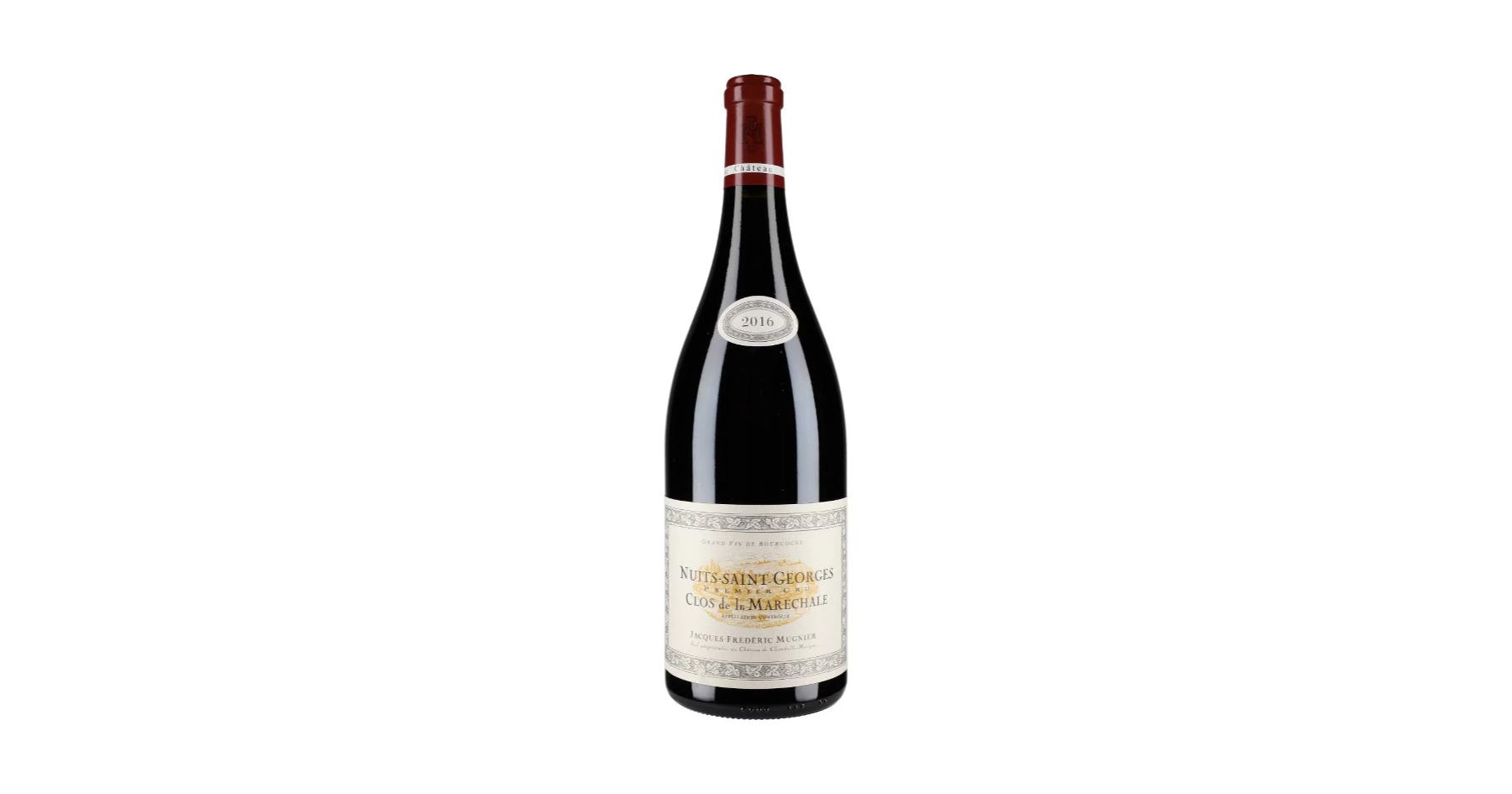
Introduction
At the southernmost extremity of the Côte de Nuits, where the premier cru vineyards of Premeaux-Prissey yield to the marble quarries of Comblanchien, lies a walled vineyard of singular importance to Burgundy’s contemporary narrative. The Clos de la Maréchale, encompassing 9.76 hectares of contiguous vines enclosed by nineteenth-century stone walls, stands as the largest monopole in the entire Côte d’Or—larger even than the celebrated Clos de Tart or Clos des Lambrays in Morey-Saint-Denis.
The wine occupies a distinctive position within the Nuits-Saint-Georges appellation. While administratively part of this commune, the Clos de la Maréchale is geographically situated in Premeaux, historically recognized as producing wines of particular elegance—less immediately ‘spirituous’ than those from the heart of Nuits-Saint-Georges, with what nineteenth-century commentators described as ‘exquisite finesse.’ This geographic and stylistic positioning has proven both blessing and burden: the wines possess a refinement that sets them apart from the robust character typically associated with the appellation, yet they have sometimes struggled against commercial perceptions that favor the more masculine reputation of Nuits-Saint-Georges proper.
The vineyard’s modern significance crystallized on November 1, 2003, when after fifty-three years under agricultural lease to Domaine Faiveley, the Clos de la Maréchale returned to active management by its owners, the Mugnier family. This date marks a critical inflection point not merely in the vineyard’s history but in the broader evolution of artisanal Burgundy. Under Frédéric Mugnier’s stewardship since the 2004 vintage, the wine has emerged as one of the most compelling expressions of premier cru terroir on the Côte de Nuits—a wine that offers access to the legendary Mugnier style at a scale impossible with the domaine’s minuscule Chambolle-Musigny holdings.
The historical nomenclature itself hints at the vineyard’s complex past. In Jules Lavalle’s 1855 classification, this site was recorded as ‘Clos des Fourches.’ By 1892, records refer to ‘Clos Maréchal,’ and only in the twentieth century did the feminine form ‘Clos de la Maréchale’ become standard. Historian Jean-François Bazin has investigated without conclusion whether the name references the wife of a Maréchal de Camp (a military rank equivalent to brigadier general), possibly connected to the Marey-Monge family who owned considerable vineyard holdings in the region. Frédéric Mugnier discovered documentation from 1833 in L’Almanach du commerce de Paris identifying the property as belonging to the Champy family, and according to wine historian Clive Coates, it was Louis Champy who constructed the stone walls that still enclose the vineyard today during the 1820s.
The Mugnier family’s acquisition in 1902 from the Marey-Monge estate marked the beginning of a century-long ownership that would see extended periods of both direct cultivation and lease arrangements. That the vineyard has now returned to hands capable of expressing its potential with sensitivity and precision represents one of the more fortunate outcomes in modern Burgundy’s often contentious landscape of ownership and cultivation rights.
Vineyard and Terroir
Location and Configuration
The Clos de la Maréchale occupies a precisely delimited rectangle of land on the eastern slope of the Côte, immediately adjacent to the Route Nationale 74. The vineyard faces east, capturing morning sunlight through the critical ripening hours while moderating afternoon heat exposure—a consideration increasingly relevant as climate change alters the calculus of viticulture throughout Burgundy. The walled enclosure measures 9.76 hectares according to current cadastral records, comprising a primary vineyard plot of 9.6251 hectares (cadastre number 1), a small building plot of 0.0753 hectares (cadastre number 2), and a forested plot of 0.1686 hectares outside the productive vineyard area but historically associated with the property.
The cadastral maps from 1827—the earliest available for Premeaux—already show the Clos in essentially its current configuration, confirming that this has functioned as a monopole for at least two centuries. This continuity of single ownership, rare in the fractured landscape of Burgundian viticulture, has important implications for the consistency and identity of the wine produced.
Geological Context
The geological stratum underlying the Clos de la Maréchale represents the final expression of the formations that define the Côte de Nuits before they plunge beneath the surface further south, only to re-emerge dramatically at Le Montrachet in the Côte de Beaune. This geological kinship with Burgundy’s greatest white wine vineyard, while scientifically imperfect as analogy, nonetheless points to the fundamental seriousness of the terroir.
The soils throughout the Clos are predominantly clay over oolitic limestone, with a significant presence of limestone pebbles throughout the profile. The clay component provides water retention during drought periods—increasingly valuable given recent climatic trends—while the limestone ensures adequate drainage and contributes the mineral backbone essential to fine Burgundy. The soil depth is notably shallow across most of the vineyard, with slightly deeper accumulations only in the southeastern corner. This relative homogeneity, unusual for a vineyard of nearly ten hectares, contributes to the consistency that Frédéric Mugnier has noted as one of the Clos’s particular advantages: the ability to blend across the entire surface allows for quality modulation that would be impossible with smaller, more heterogeneous holdings.
Jasper Morris MW, tasting with Mugnier in the vineyard itself in June 2018, noted that Mugnier ‘considers that there is a special atmosphere between the walls that make up the Clos.’ This observation, while difficult to quantify scientifically, speaks to the microclimate effects that enclosed vineyards can produce—protection from wind, heat retention from the stone walls, and perhaps subtle modifications to disease pressure and humidity that influence vine health and fruit development.
Historical Classification
The 1861 classification of Premeaux vineyards reveals interesting heterogeneity within the Clos des Fourches (as it was then known). While Lavalle’s 1855 assessment treated the vineyard as a uniform ‘Première Cuvée’—one rank below the ‘Hors Ligne’ status accorded to neighboring sites Aux Didiers, Aux Forêts, Aux Corvées, and Aux Pagets—the 1861 classification applied more granular analysis. The northern portion of the Clos was classified as ‘3e Classe,’ the upper sections as ‘2e Classe,’ and the middle and lower portions along the road as ‘1re Classe.’ This gradient from northwest to southeast suggests that even in the mid-nineteenth century, evaluators recognized qualitative variations within the enclosure.
The current premier cru classification, established with the appellation system in the twentieth century, treats the entire Clos as a single unit—a simplification that obscures historical nuance but permits the blending approach that Mugnier employs to create wines of consistent character and quality.
Vine Age and Plantings
The oldest vines in the Clos date to plantings made around World War I by the Mugnier family—now exceeding one hundred years in age. The average vine age across the property in 2009 was approximately 45 years, a figure that has naturally increased in the subsequent years to approximately 55-60 years today. The Mugnier forebears who planted these centenarian vines could not have foreseen the decades of lease arrangements that would follow, yet their viticultural decisions continue to shape the wines produced today.
The vineyard is predominantly planted to Pinot Noir for red wine production, with a small parcel in the northwestern corner dedicated to Chardonnay. This white wine component represents a revival of historical practice: Mugnier discovered bottles of 1943 Clos de la Maréchale Blanc in the family cellars, demonstrating that the terroir has long been recognized as capable of producing serious white Burgundy. The white wine tradition had been discontinued during the Faiveley lease period. Beginning in 2004 and 2005, Mugnier grafted Chardonnay cuttings onto existing Pinot Noir rootstocks in the northwestern corner, establishing approximately 0.6 hectares of white wine production. The first vintage of the revived Clos de la Maréchale Blanc was 2005.
Farming Philosophy
Frédéric Mugnier’s approach to viticulture reflects his engineering background—systematic, evidence-based, and deliberately resistant to ideological fashion. The domaine practices what is sometimes termed ‘lutte raisonnée’ or reasoned struggle, though Mugnier himself is uncomfortable with categorical labels. Industrial fertilizers were last used in 1986, herbicides in 1990, and insecticides in 1995. The vineyards are managed without herbicides, with traditional plowing maintained to control vegetation between rows.
Crucially, Mugnier has declined to pursue organic or biodynamic certification despite practices that largely align with these philosophies. His reasoning, articulated in numerous interviews, centers on the complexity of agricultural decision-making: ‘My job as a wine grower, as an engineer, is to make choices among solutions that all have down sides. My job is not to choose between good and evil, between organic and chemical.’ He notes that copper sulfate, the principal treatment permitted under organic viticulture for mildew control, accumulates in soils and carries its own environmental concerns. This nuanced position—maintaining environmentally sensitive practices without ideological commitment to any particular certification regime—reflects a pragmatism that distinguishes Mugnier from more dogmatic practitioners.
The return of the Clos de la Maréchale in 2004 necessitated substantial organizational expansion. The domaine workforce increased from two part-time employees to seven full-time staff plus seasonal workers. Mugnier estimates that from 2004 onward, the time devoted to each vine has tripled compared to the period when only the Chambolle holdings were in production.
Grape Composition and Viticultural Choices
The Clos de la Maréchale is planted almost entirely to Pinot Noir, with the small Chardonnay parcel in the northwestern corner representing approximately 0.6 hectares of the total surface. This varietal composition reflects both historical practice and the terroir’s evident suitability for red wine production.
Selection Massale and Clonal Diversity
The vineyard contains a mixture of massal and clonal selections, reflecting the different planting eras represented. The oldest vines, dating to the World War I era, necessarily represent pre-clonal selection material that would have been propagated from existing vines in the region. Subsequent replanting, particularly during the Faiveley lease period, would have incorporated clonal material that became increasingly available from the mid-twentieth century onward.
Mugnier’s philosophy favors minimal intervention in established vineyard material. The significant age of many vines—with the oldest now exceeding a century—contributes to the natural yield regulation that old vines provide. Deep root systems penetrating into the limestone subsoil both access mineral nutrients unavailable to younger vines and provide resilience during drought conditions.
Yield Control
Yields at the Clos de la Maréchale have been subject to significant viticultural attention since the vineyard’s return to Mugnier. The 2004 vintage notes from the domaine specifically reference the challenge of ‘controlling the unusually high vigour of the vines’—a legacy of the farming practices employed during the lease period. Over the subsequent vintages, canopy management and pruning protocols have brought vigor into better balance with quality objectives.
Recent climatic challenges have further influenced yields. As wine writer Charles Curtis MW noted regarding the 2021 vintage, ‘Mugnier’s nearly ten-hectare monopole at the southern extreme of Prémeaux-Prissey has suffered in recent years: hail in 2018, coulure in 2019, drought in 2020, and frost in 2021.’ These natural yield reductions, while economically challenging, have contributed to concentrated fruit quality in the resulting wines.
The establishment of the ‘Clos des Fourches’ second label allows Mugnier to declassify fruit from younger vines or parcels that do not meet the standards for the primary Clos de la Maréchale bottling. This quality sorting at the vineyard level ensures that the main cuvée reflects only the finest fruit from the property’s most mature plantings.
Vinification and Élevage
The winemaking philosophy at Domaine Jacques-Frédéric Mugnier can be summarized in Frédéric’s own words: ‘Wine is not about technology, and the winemaker just gives nature a helping hand.’ This non-interventionist credo, informed by decades of refinement, aims to produce wines where ‘the winemaker’s skills should not be something that is noticed. Just the beauty of the wine itself.’
Harvest and Sorting
Harvesting is conducted entirely by hand, with meticulous grape selection ensuring only healthy, properly ripened clusters enter the winery. Mugnier has shifted toward later harvest dates over the years—a calculated risk that can result in fuller aromatic expression when successful but requires careful vineyard monitoring to avoid over-ripeness or the onset of rot.
The grapes undergo rigorous sorting before fermentation. The return of the Clos de la Maréchale in 2004 necessitated the construction of new winemaking facilities beneath the courtyard of the Château de Chambolle-Musigny to accommodate the tripled production volume.
Fermentation
All fruit is completely destemmed prior to fermentation—Mugnier does not retain whole clusters. Fermentation proceeds in open wooden vats using exclusively indigenous yeasts. Temperature control is carefully monitored to ensure proper extraction without excessive heat that could compromise aromatic delicacy. The maceration period extends 15-20 days, with punch-downs conducted by hand.
Becky Wasserman, who has represented the domaine since its earliest days, recalls that ‘in the eighties and early nineties, there was a general tendency by winemakers to beef up the wines... with reds, it was achieved by cold soaking and vigorous, as well as frequent, punch downs.’ She notes that ‘even if Fred admits that he was also guilty of punching down too often in the beginning, his wines stood out from the outset. In the context of those years, the wines were shockingly pure and elegant, delicate even.’
Oak Treatment
The Clos de la Maréchale ages for approximately 18 months in French oak barrels, with only 15% new oak employed. This restrained approach to new wood represents a deliberate departure from the practices prevalent when Mugnier began making wine, when ‘a fair amount of heavily toasted new oak’ was standard. The reduced oak percentage allows the wine’s inherent terroir character to remain unobscured.
The wine is racked twice during élevage, then transferred in April to stainless steel tanks for an additional three months of aging before bottling. This period in neutral vessels allows the wine to integrate and stabilize before final preparation.
Bottling
Bottling occurs in June or July, with sulfur dioxide additions made only before fermentation and before bottling. The wines are bottled unfined and unfiltered, preserving the textural complexity and aromatic nuance that fining agents can strip from wine.
White Wine Vinification
The white Clos de la Maréchale follows a distinct protocol. Grapes are pressed directly upon arrival at the winery, with slow fermentation proceeding via ambient yeast in stainless steel tanks. The wine ages for 12 months on fine lees in used barrels before bottling in January. The absence of new oak preserves the mineral character of the northwestern corner’s limestone-rich terroir.
Vintage-by-Vintage Analysis
The following analysis covers every vintage of Clos de la Maréchale produced under Frédéric Mugnier’s direction, beginning with the inaugural 2004 vintage. For historical context, wines produced by Domaine Faiveley during the 1950-2003 lease period exist on the secondary market but represent a fundamentally different viticultural and winemaking approach. Collectors should treat pre-2004 and post-2004 vintages as essentially different wines sharing only geographic origin.
2004: The Return
The 2004 vintage marked the domaine’s first production since the Clos reverted from Faiveley. Mugnier describes the year’s challenge as ‘controlling the unusually high vigour of the vines’—a legacy of farming practices during the lease period. The growing season presented ‘very demanding weather conditions,’ but favorable weather from mid-August through harvest allowed grapes to achieve ripeness while ‘preserving the brightness of fruits grown under a cool climate.’ The resulting wine shows ‘liveliness, depth and typicity,’ though it remains the lightest and earliest-drinking of the Mugnier vintages. Critics have noted ‘fresh fruits dominant... light raspberry flavors with just a backbone of dry tannin.’ Current drinking window: now through 2028.
2005: The Proof of Concept
Only Mugnier’s second vintage from the Clos, 2005 demonstrated remarkable command of the terroir. The vintage year itself was exceptional across Burgundy—Mugnier describes the wines as showing ‘great depth, a velvety texture, but also a special delicacy and freshness of flavours, that give the wines brightness and elegance.’ Stephen Tanzer noted ‘powerful black cherry, crushed berry and mineral flavors sexed up by the uncanny sweetness of the vintage,’ with ‘substantial tannins’ that remain ‘supple.’ The wine demonstrates exceptional aging potential and represents one of the finest iterations of the cuvée. Current drinking window: now through 2045.
2006: Classical Reference
Mugnier characterizes 2006 as ‘a reference vintage, for its typicity and classicism.’ The weather was ‘less than perfect,’ but the wines emerged ‘distinguished, very pure, very close to the exceptional depth of texture of the 2005s, not quite as smooth or polished, but more vigorous, brighter, more vibrant.’ The tannins, initially ‘strong and dry and green,’ have evolved to reveal underlying fruit depth. Mugnier himself notes his appreciation for wines that are ‘not perfectly polished.’ Current drinking window: now through 2036.
2007: Accessible Charm
Following two vintages ‘made for a very long aging,’ 2007 arrived as something different: ‘soft and supple, but intense and accomplished with a rich and precise fruit.’ Mugnier describes these as ‘generous and joyful wines... made for drinking more than collecting.’ The lighter structure suggests evolution ‘slowly and regularly, without these frustrating ups and downs that affect many of the more tannic vintages.’ Tasting in the vineyard with Jasper Morris, Mugnier characterized the 2007 as ‘more physical’ where the 2008 is ‘more cerebral.’ Current drinking window: now through 2030.
2008: Intellectual Purity
The 2008 vintage displays what Mugnier terms ‘Cistercian’ character—’minimalist... the essence of the wine. Just the spirit.’ The silky texture and fine tannins distinguish this vintage from the more robust 2007. Critics have praised its ‘mineral-driven energy’ and balance. The wine rewards extended aeration and careful cellaring. Current drinking window: now through 2038.
2009: Ripe Generosity
A warm vintage that produced generous, approachable wines with dark fruit character. The ripeness levels required careful handling to maintain balance. The wine shows more immediate charm than some neighboring vintages but possesses underlying structure for medium-term aging. Current drinking window: now through 2034.
2010: Monumental Structure
One of the finest vintages of the modern era, 2010 produced wines of extraordinary depth and definition. Allen Meadows noted it as ‘easily the darkest and most tannic’ of Mugnier’s wines that year, with ‘marvelous depth and the richness to match its decidedly powerful, virile personality.’ The wine combines ‘fabulous inner perfume and mineral-driven energy’ with substantial structure requiring extended cellaring. Anticipated maturity: 2025-2045.
2011: Light and Fresh
A challenging vintage that produced lighter wines with fresh acidity and floral expression. The 2011 represents the cooler end of the stylistic spectrum, offering immediate drinkability with modest aging potential. Current drinking window: now through 2028.
2012: Precise and Pure
Small yields from challenging spring weather concentrated the remaining fruit. The wine displays purity and precision, with fine tannins and good acidity. A successful vintage that rewards patience. Current drinking window: now through 2035.
2013: Cool Elegance
Another cool vintage that emphasizes finesse over power. The wines show red fruit character with crisp acidity. Lighter in body than the 2010 or 2015 but possessing genuine elegance. Current drinking window: now through 2033.
2014: Balanced Achievement
A late harvest rescued by excellent September weather produced wines of unexpected quality. Sarah Marsh describes the 2014 as ‘really rather exuberant... fresh and tasting very well indeed. Soft, smooth tannins.’ The wine offers a lovely balance point between richness and freshness. Current drinking window: now through 2034.
2015: Extraordinary Depth
Mugnier describes 2015 as ‘an extraordinary vintage, but one made for people with cellars: the wines will be better at age twenty than they are at age ten.’ The combination of heat and well-timed rainfall produced wines of exceptional concentration and complexity. Sarah Marsh notes ‘ripe mulberries and white pepper... juicy and quite dense and the tannins are firm, plentiful and juicy.’ The energy and ‘delicious succulence’ mark this as one of the defining modern vintages. Anticipated maturity: 2028-2050.
2016: Frost-Reduced Concentration
Devastating spring frost reduced yields dramatically across Burgundy. The Clos de la Maréchale, particularly the white wine parcel, suffered significant losses. The wines produced show concentration born of low yields, with structural definition and aging potential. Current drinking window: 2024-2040.
2017: Finesse and Floral Character
Mugnier notes that 2017 ‘clearly falls into the category of cold years, synonymous with finesse and floral expression, but it also belongs to the 21st century with its velvety texture reflecting a much more meticulous work in the vineyard than in the past.’ The vintage demonstrates the evolution of viticultural practices at the domaine. Current drinking window: now through 2035.
2018: Hail and Heat
Mugnier recalls 2018 as ‘another year we will remember for those extreme climatic hazards with violent hail on Clos de la Maréchale.’ Despite these challenges, ‘2018 is surely a great vintage, but will require long aging to fully express the complexity of our terroirs.’ The heat of the vintage shows in the wine’s power; William Kelley notes that the 2018s ‘show the stress the vines experienced during the growing season.’ Anticipated maturity: 2028-2045.
2019: Joyous Depth
Mugnier characterizes the 2019s with the phrase ‘depth with joyousness.’ The vintage year saw ‘the hottest temperatures since the time of the Black Death 700 years ago,’ yet careful viticulture preserved freshness. William Kelley describes the wine as ‘showing beautifully, mingling aromas of cherries and cassis with hints of warm spices, loamy soil and subtle suggestions of the carnal. Medium to full-bodied, layered and multidimensional.’ He urges collectors to ‘spare neither effort nor expense in acquiring a few bottles.’ Current drinking window: 2025-2045.
2020: Modern Power
The drought conditions of 2020 produced wines of significant concentration. Mugnier describes the August conditions: ‘hardly a drop of rain had fallen since the end of June, and of the first thirteen days of the month, only one had not exceeded 30°C.’ Late August showers ‘modest enough to refresh and revitalize the grapes before the harvest’ reversed fears of ‘a freakish vintage, heavy, fruitless, loaded with alcohol and green tannins.’ The resulting wines show ‘clearly modern profile, quite different from the years of my youth, but surprisingly seductive in their brightness, energy and fullness.’ Anticipated maturity: 2026-2045.
2021: Classical Cool
Spring frost further reduced an already challenging crop. The cool conditions of the vintage produced wines of classical Burgundian character with bright acidity and floral expression. William Kelley notes the wine is ‘more overtly structured from bottle than I perceived from barrel,’ with ‘aromas of dark berries, cherries, vine smoke and earthy spices.’ Anticipated maturity: 2027-2040.
2022: Harvest of Surprises
Mugnier reports harvesting beginning on September 1, following a ‘hot dry year.’ He was ‘very pessimistic at the beginning of August,’ but ‘a little rain around 20 August helped.’ The wines show minerality and power with a ‘direct and muscular’ character. James Suckling praised the vintage as ‘stunning,’ noting ‘ripe red berries, orange peel and a touch of toasty oak’ with ‘crisp acidity and very silky tannins.’ Anticipated maturity: 2027-2045.
2023: The Current Release
The 2023 vintage continues the recent pattern of viticultural challenges paired with committed vineyard work. Pre-release assessments suggest wines of balance and typicity. Full evaluation awaits bottle aging.
Style, Identity, and Structural Sensory Profile
The Clos de la Maréchale under Mugnier’s direction exhibits a stylistic signature that distinguishes it from both historical iterations of the vineyard and from the broader Nuits-Saint-Georges appellation. Understanding this identity requires consideration of the wine’s position within multiple contexts: the Mugnier portfolio, the southern Côte de Nuits, and the arc of fine Burgundy more broadly.
Core Stylistic Signature
The defining characteristic of Mugnier’s Clos de la Maréchale is tension between the wine’s geographic origin and its maker’s aesthetic. Premeaux has historically produced wines of greater elegance and less ‘spirituous’ character than central Nuits-Saint-Georges, and Mugnier’s non-extractive winemaking amplifies this tendency. Yet the scale of the Clos—nearly ten hectares of mature vines—provides concentration and depth that smaller premier cru parcels cannot match.
Jasper Morris MW, tasting the vertical in the vineyard, observed that Mugnier ‘considers that there is a special atmosphere between the walls that make up the Clos’ and ‘feels that he can make wines of consistent quality here because of the ability to blend across the (nearly) 10 hectares.’ This blending capacity—unusual in estate-bottled Burgundy—allows Mugnier to craft wines of remarkable consistency while respecting vintage variation.
Mugnier himself draws a distinction when discussing approach to the Clos: ‘Many of my friends asked me about the Clos de la Maréchale and how I was going to make the new wine. I thought about it and finally it came to my mind that the only correct answer would be to make it the way I’m used to making wine. You can’t force it just to create something that people expect from a Nuits-Saint-Georges or the Clos de la Maréchale. Terroir will come through eventually, whatever I do.’
Structural Characteristics
The wines demonstrate medium to medium-full body with fine-grained tannins that require 5-10 years of bottle age to fully integrate. Acidity remains consistently bright even in warm vintages, reflecting both the Premeaux terroir and Mugnier’s commitment to harvesting at optimal rather than maximal ripeness. The texture Becky Wasserman describes as ‘shockingly pure and elegant, delicate even’ in the context of 1980s Burgundy has evolved with improved viticulture to incorporate greater depth without sacrificing precision.
Historical descriptions of Premeaux wines emphasize floral character: ‘The bouquet of the 1er crus of Premeaux is remarkable and persistent: one finds the aroma of iris mingled with raspberries. Even more so, that of white lilac.’ Contemporary tastings confirm this persistent terroir expression across the Mugnier vintages, though the specific manifestation varies with vintage conditions.
Comparison with Benchmark Wines
Within the Mugnier portfolio, the Clos de la Maréchale occupies a unique position. The Chambolle-Musigny wines—village, Les Fuées, Les Amoureuses, Bonnes-Mares, and Musigny—express the ethereal grace that defines that commune. The Clos de la Maréchale brings Nuits-Saint-Georges structure to Mugnier’s restrained winemaking, producing wines of greater breadth and power than the Chambolle bottlings while maintaining the aromatic purity and textural refinement that distinguish the domaine.
Against other Nuits-Saint-Georges premier crus, the Clos de la Maréchale stands apart both in scale and style. The monopole status ensures consistency impossible in multi-owner climats. The Premeaux location provides elegance that central Nuits vineyards cannot replicate. And Mugnier’s minimalist approach produces wines that feel more Chambolle-influenced than many tasters expect from Nuits-Saint-Georges.
Neighboring monopoles in Premeaux—Domaine de l’Arlot’s Clos des Forêts and Clos de l’Arlot, Domaine Prieuré-Roch’s Clos des Corvées—offer stylistic comparisons within the subregion. These wines share the refined character of Premeaux but reflect their respective makers’ distinct approaches. The Mugnier version stands as perhaps the most ethereal of these Premeaux monopoles, though never at the cost of structural integrity.
Aging Potential and Cellaring
The Clos de la Maréchale rewards patient cellaring, with optimal drinking windows that vary significantly by vintage character. Historical examples—including the 1943 white that inspired the revival of Chardonnay production—demonstrate the terroir’s capacity for exceptional longevity.
General Aging Guidelines
The domaine itself recommends 5-10 years of aging ‘before expressing their typically floral character.’ Mugnier’s description of the 2015 vintage—’the wines will be better at age twenty than they are at age ten’—suggests that the finest vintages may reward substantially longer cellaring.
Short-term aging (5-10 years): The wines begin to open, with initial fruit intensity mellowing and secondary complexity emerging. Most vintages become genuinely pleasurable at this stage, though serious collectors may prefer continued patience.
Medium-term aging (10-20 years): Peak drinking for many vintages. The floral Premeaux character fully expresses itself, tannins resolve completely, and the wine achieves the harmony Mugnier describes in his best work.
Long-term aging (20+ years): The finest vintages (2005, 2010, 2015, 2019) possess the structure and balance for extended evolution. The geological connection to Montrachet terroir suggests potential for the kind of minerally complexity that great white Burgundy achieves at advanced age.
Storage Conditions
Optimal storage requires temperature stability (10-14°C), high humidity (70%+), darkness, and vibration-free conditions. Given the wine’s refined structure, temperature fluctuations pose particular risk of premature aging or heat damage. Professional storage is recommended for long-term cellaring.
Risks of Extended Aging
Lighter vintages (2004, 2007, 2011) may not reward extended cellaring beyond their optimal windows. Cork quality becomes increasingly significant over time; the absence of widespread screwcap adoption for fine Burgundy means that even well-stored bottles face cork-related risk. Provenance verification is essential for any bottles purchased on the secondary market.
Market Value and Investment Perspective
The Clos de la Maréchale occupies an interesting position in the Burgundy market: a premier cru from one of Burgundy’s most esteemed producers, available in quantities impossible for the domaine’s Chambolle holdings, yet priced at levels that remain accessible to serious collectors rather than only ultra-high-net-worth investors.
Production Volume
The 9.76-hectare vineyard produces substantially more wine than Mugnier’s other cuvées. Compare this to annual production of just 900-2,700 bottles of Les Amoureuses, 900-1,500 bottles of Bonnes-Mares, or 2,000-5,000 bottles of Musigny. The Clos de la Maréchale thus represents the most available path to experiencing Mugnier’s winemaking.
Price Evolution
Current average prices (2024-2025) range from approximately $165-225 per bottle for recent vintages, with significant variation by market and vintage. The 2010 commands a premium around $340-380, while the 2005—often considered the finest vintage—trades at $300-350. Older vintages like the inaugural 2004 remain available at approximately $250.
Wine-Searcher data indicates relative price stability over the past year, with the broader market for fine Burgundy experiencing some correction from pandemic-era peaks. The Clos de la Maréchale has proven less volatile than the domaine’s rarer bottlings, which can see dramatic auction price swings.
Secondary Market Liquidity
The wine appears regularly at auction and through specialty retailers worldwide. The larger production volume compared to other Mugnier wines ensures reasonable availability, though demand from the domaine’s established customer base limits market supply of current releases. Back-vintages trade actively, with well-documented provenance commanding appropriate premiums.
Investment Considerations
Collectors should approach the Clos de la Maréchale primarily as a wine for consumption rather than speculation. While prices have appreciated since the 2004 release, the annual production volume limits the scarcity premium that drives investment returns in top-tier Burgundy. The wine’s value proposition lies in experiencing Mugnier’s craft at accessible price points, not in arbitrage potential.
Risks to market value include generational transition at the domaine (though no immediate succession questions have been publicized), regulatory changes affecting Burgundy viticulture, and the ongoing commercial challenge that Nuits-Saint-Georges wines face relative to more fashionable appellations. Climate change presents both risks and opportunities, as warmer conditions may enhance ripeness while potentially shifting the wine’s stylistic identity.
Cultural and Gastronomic Significance
Historical Presence
The broader Mugnier estate has historical connections to Paris’s legendary restaurant culture. Becky Wasserman records that in the first half of the twentieth century, ‘Mugnier wines did well. They were exported to the United States and sold to some of the best restaurants in Paris, like Maxim’s.’ While the specific presence of Clos de la Maréchale wines (as opposed to the Chambolle bottlings) in these historic contexts is not documented, the family’s commercial relationships established during this period contributed to the domaine’s reputation.
Contemporary Restaurant Context
Today the Clos de la Maréchale appears on wine lists at serious restaurants worldwide, often as the most accessible Mugnier offering given the allocation constraints on Les Amoureuses, Bonnes-Mares, and Musigny. The wine’s combination of producer prestige and relative availability makes it attractive to sommelier programs seeking to offer meaningful Burgundy experiences without the extreme pricing of grand cru bottlings.
Gastronomic Pairings
The wine’s structural profile—medium-plus body, fine tannins, bright acidity—suits a range of sophisticated preparations. Traditional Burgundian cuisine offers natural partnerships: the domaine suggests ‘œufs en meurette’—poached eggs in red wine sauce with bacon and sautéed mushrooms, served with chargrilled sourdough. This classic pairing honors both the wine’s regional origins and its structural requirements.
The wine’s elegance allows for more delicate proteins than many Nuits-Saint-Georges bottlings. Roasted duck represents a classic partnership, as does game birds where the wine’s secondary earthy notes can complement similar flavors in the protein. Vegetable preparations featuring mushrooms or root vegetables find harmony with the wine’s terroir expression.
As the wines age and develop tertiary complexity, pairings can evolve toward richer preparations: braised meats with complex sauces, aged cheeses, or truffle-based dishes where the wine’s earthy secondary notes provide complementary rather than competing flavors.
Conclusion
The Clos de la Maréchale under Frédéric Mugnier’s direction represents one of Burgundy’s most compelling stories of viticultural redemption. A vineyard that spent over half a century under lease has been transformed into one of the finest expressions of premier cru terroir on the Côte de Nuits—a wine that demonstrates what is possible when historical terroir encounters contemporary understanding and philosophical commitment.
The wine’s significance extends beyond its intrinsic quality. As the largest monopole in the Côte d’Or, it provides a unique lens through which to understand terroir expression at scale. As Mugnier’s most available bottling, it offers collectors and enthusiasts meaningful access to one of Burgundy’s most thoughtful producers. As a Premeaux premier cru, it contributes to the ongoing revival of this southern sector of Nuits-Saint-Georges, demonstrating that elegance and aging potential need not be sacrificed for the appellation’s traditional power.
Mugnier’s approach—methodical, evidence-based, resistant to fashion yet responsive to environmental reality—has produced twenty vintages that collectively document both the evolution of a single terroir under consistent direction and the broader changes reshaping Burgundy viticulture in an era of climate uncertainty. The wines reward serious attention: they require patience to reveal their full character, yet they repay that patience with complexity and longevity that justify their premier cru classification.
For collectors, wine professionals, and serious enthusiasts, the Clos de la Maréchale merits sustained engagement. Its accessibility relative to the domaine’s other offerings should not obscure its quality; its Nuits-Saint-Georges address should not predict its style. This is a wine that confounds easy categorization, that evolves unpredictably in bottle, that reveals new dimensions over decades of careful cellaring. It is, in short, precisely the kind of wine that rewards the serious attention this readership brings to Burgundy—and that repays that attention with experiences that simpler wines cannot provide.