
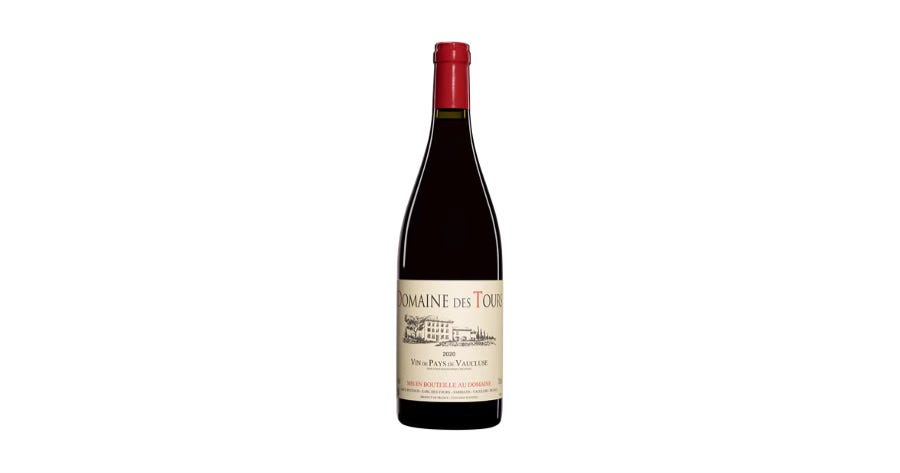
Domaine des Tours: IGP Vaucluse (Rouge)
Emmanuel Reynaud's IGP Vaucluse rouge: how a flatland plot in Sarrians became one of the southern Rhône's most coveted and misunderstood wines.
Introduction: Classification, Reputation and the Broader Narrative
At a time when the prestige hierarchy of French wine is still largely dictated by appellation geography and centuries of documented classification, Domaine des Tours manages one of the most improbable achievements in contemporary fine wine: it commands prices and collector passion that rival — and sometimes surpass — wines from the southern Rhône’s most celebrated appellations, despite carrying only an IGP designation.
The IGP Vaucluse (Indication Géographique Protégée) was formalized in its current regulatory form in 2009, succeeding the Vin de Pays de Vaucluse classification that had been recognized since March 1981. As a framework, it is among the most permissive in southern France: no mandatory minimum proportions, no ceiling on yields imposed by a conseil d’appellation, and latitude to plant varieties — including Merlot — that would be inadmissible in the region’s AOC appellations. For a winemaker of Emmanuel Reynaud’s philosophy, this regulatory latitude is not a limitation to be hidden but an honest reflection of what the vineyards actually contain. The IGP label on a bottle of Domaine des Tours is not a signal of lesser ambition; it is a declaration of viticultural honesty.
The estate’s standing within the Reynaud constellation is the key to understanding why a Vin de Pays commands such attention. Château Rayas, the Châteauneuf-du-Pape estate owned by the Reynaud family since Albert Reynaud acquired it in 1880, is by any reasonable account one of the transformative estates in the history of southern French wine. Jacques Reynaud — Emmanuel’s uncle, who guided Rayas from 1978 until his sudden death in January 1997 — created a style of Grenache-based wine so singular, so philosophically opposed to the muscle and volume celebrated by his contemporaries, that it effectively invented a paradigm: the idea that the south could produce wines of translucency, tension, and Burgundian-inflected precision. When Emmanuel Reynaud inherited the mantle of all three Reynaud estates — Rayas, Château de Fonsalette, and Château des Tours — in 1997, he did not merely inherit vineyards; he inherited a method of understanding wine that runs counter to most of what the Rhône had previously sold to the world.
Château des Tours, the family’s home estate in Sarrians, was purchased by Louis Reynaud (Albert’s son) in 1935. It is here that Emmanuel grew up, and it is from here that he manages all three properties. He took over Château des Tours from his father Bernard — Jacques’ brother — in 1989, eight years before he assumed control of Rayas and Fonsalette. The IGP Vaucluse rouge, released under the Domaine des Tours label (as distinct from the Château des Tours AOC wines), comes from the estate’s lowest-lying parcels: a plot of flatland with heavier soils where Merlot and Counoise alongside Grenache and Cinsault produce a wine that does not qualify under the Vacqueyras or Côtes-du-Rhône designations. The wine’s classification is, therefore, a function of terroir reality rather than ambition.
The critical turning point in the wine’s reputation came during the 2000s, when the global audience for Reynaud’s work at Rayas expanded dramatically with the rise of online communities, secondary-market transparency, and a broader collector appetite for wines that existed outside conventional prestige frameworks. By the early 2010s, any wine bearing the Reynaud name was effectively pre-sold before release; by the mid-2010s, the IGP Vaucluse rouge had begun appearing at auction and in secondary markets at prices no thoughtful observer would have predicted for a vin de pays even a decade earlier. The wine’s position today within the narrative of French fine wine is a study in how provenance, philosophy, and cult of personality can transcend regulatory hierarchy.
Vineyard and Terroir
The 40 hectares of Château des Tours encompass three geologically and topographically distinct plots, and it is the flattest, most fertile of the three — known locally as la plaine — that gives rise to the IGP Vaucluse rouge. The estate is located a few kilometres north of Sarrians in the Vacqueyras area of the Vaucluse, and it was purchased by the Reynaud family in 1935.
To understand the IGP plot, one must first understand the three-part structure of the estate. Le plateau sits on sandy soils with scattered galets roulés — rounded river stones similar to those found at Châteauneuf-du-Pape — producing the warmest and most forward fruit expressions, principally bottled as the Côtes-du-Rhône rouge under the Château des Tours label. Le décroché is a steep, sandy-soiled slope where vines dating back to the 1920s have their roots established in the same kind of deep, draining, sandy profiles associated with Rayas itself. This plot is considered by the Reynauds to be the finest of the entire estate, and it has historically given rise to the Vacqueyras, now reclassified as Côtes-du-Rhône Grande Réserve since 2014 when boundary modifications removed portions of the décroché from the appellation.
The IGP Vaucluse rouge is sourced from la plaine: the lowest, flattest section of the estate. This is where the soils become heavier — clay and silt-dominant, with alluvial deposits and, in some parcels, loam deep enough to support Merlot, which would be entirely miscast in the sandier, more draining upper plots. The locality of Bussière is specifically cited in estate documentation as one source zone for the Merlot component, with gravelly alluvial soils there lending that variety more structure than the heavy clay elsewhere on the plaine.
Drainage is the critical variable. Where the plateau and décroché allow water to pass quickly through sandy profiles — imposing stress on vines and limiting yields in a way that concentrates flavour — the plaine retains moisture longer. This makes it inherently less suitable for high-quality Grenache but more amenable to Merlot, Cinsault, and Counoise, varieties that cope better with fertility and benefit from water retention in dry, hot summers. The Mistral — the cold, dry northerly wind that sweeps the Rhône corridor with particular force in this part of Provence — provides natural ventilation across all three plots, a form of microclimatic disease management that allows organic farming to function without the safety net of preventive chemical intervention.
Altitude at the estate ranges from roughly 80 to 150 metres above sea level. The plaine sits at the lower end of this range, receiving maximum heat accumulation during summer but benefiting from nocturnal cooling that can be dramatic in the continental-Mediterranean transitional climate of the Vaucluse interior. Diurnal temperature variation in September — when late harvest at this estate routinely takes place — can reach 15 to 20 degrees Celsius, a figure that preserves acidity even in ripe, warm years.
The estate has operated under organic principles across all three of its plot types since at least the early years of Emmanuel Reynaud’s management. All viticulture is conducted without herbicides or synthetic pesticides. Ploughing — partially horse-drawn according to multiple sources — is the primary tool of soil management, and cover crops are maintained between rows to encourage biodiversity and control vigour. The combination of organic farming and deliberately late harvesting creates an unusual risk profile: in years where autumn rain arrives early, the estate faces the prospect of dilution or botrytis in a way that less patient producers would never encounter because they pick before the danger arises.
Grape Composition and Viticultural Choices
The IGP Vaucluse rouge is a multi-variety field blend whose precise proportions shift from year to year — one of the defining honest characteristics of this wine, and a source of complexity that single-variety wines simply cannot replicate.
The core assemblage is built on Grenache Noir, which forms the backbone of every vintage and imparts the wine’s distinctive warmth, texture, and aromatic generosity. Alongside Grenache sit Counoise, Cinsault, Syrah, and Merlot, with occasional contributions from rarer varieties including Dious, a very old and nearly extinct southern Rhône variety also known as Aubun or Camarèse. One documented description of the assemblage cites: Grenache, Counoise, Syrah, Cinsault, Merlot, and “divers” — the latter a catchall that confirms the field’s botanical complexity.
Counoise deserves particular attention. Rare even within the southern Rhône — where it is permitted in Châteauneuf-du-Pape but rarely planted above token percentages — Counoise brings acidity, freshness, and a characteristic peppery spice that acts as a counterweight to Grenache’s inherent roundness. The Reynaud family’s retention of Counoise across the estate reflects the same philosophical commitment to variety-as-terroir-expression that distinguishes their approach from the rationalized monovarietal trend of the late twentieth century.
The inclusion of Merlot is the anomaly that makes the IGP classification inevitable. Merlot is not permitted in any of the estate’s AOC appellations, and its presence on the plaine — where the deeper clay soils are more suited to its root system and its tolerance of moisture — is both pragmatic and deliberate. At the alcohol levels routinely achieved under the Reynaud late-harvest philosophy (the 2019 was declared at 14%), this Merlot is ripe by any standard, but the individual-variety fermentation and specific élevage for this component prevents it from dominating the final assemblage.
Clonal selection is not documented specifically for this estate, and the Reynaud philosophy is historically associated with massal (field) selection rather than certified clonal plantings. This preserves genetic diversity within each variety — particularly relevant for Grenache, where clonal homogenization has been identified as a contributing factor in the loss of aromatic complexity in modernized southern Rhône estates. Yields are not disclosed numerically, but all evidence points to low production as a structural outcome of late harvest, organic farming, and the soil stress inherent even on the plaine’s heavier profiles.
Vinification and Élevage
The cellar at Château des Tours in Sarrians operates as a direct expression of the same minimalist, patience-driven philosophy that governs Rayas. Where the latter occupies its own cellar and terroir context in Châteauneuf-du-Pape, the Domaine des Tours wines are vinified on-site at Sarrians.
Harvest is entirely manual. Given the estate’s late harvest calendar — consistently among the last in the region — this requires significant logistical coordination and the acceptance that autumn weather represents a real variable in final wine quality. Grapes arrive at the cellar sorted in the vineyard, with a second sorting performed on a receiving table. The Reynaud philosophy is to pick each varietal at its optimum moment; the multi-variety assemblage means harvest can extend across several weeks as different plots and varieties reach peak condition in succession.
Fermentation of each variety and each vineyard parcel is conducted separately. The individual-parcel approach allows Emmanuel Reynaud to assess each component independently before making assemblage decisions, and it prevents the dominant volume of any one variety from dictating the fermentation conditions of the others. Fermentation begins spontaneously with indigenous yeasts only, without inoculation. This is consistent with the approach across all three Reynaud estates and is non-negotiable as an expression of site identity. No temperature control is documented, meaning fermentation temperatures in the old cellar are ambient, subject to the natural rhythm of the Provençal autumn.
The primary fermentation vessels documented across sources include concrete vats (underground and of varying ages), enamel-lined tanks, and very old oak casks of multiple sizes. Maceration ranges from 12 to 15 days — notably shorter than the extended macerations associated with Châteauneuf-du-Pape’s more tannic producers, and consistent with a preference for fruit clarity and textural finesse over extraction. This shorter maceration is appropriate for the variety mix of the plaine, where Cinsault and Counoise in particular respond poorly to aggressive extraction.
The élevage differentiates this wine from its cellar-siblings in one important specific: the Merlot component receives 12 months in barriques with 30 per cent new oak. This is the one departure from the large-format, neutral-wood aging philosophy applied to the rest of the Reynaud range, and it is a concession to Merlot’s structural density — a way of integrating its natural richness and preventing it from sitting as a heavy, unresolved mass within the assemblage. The remaining varieties are aged in old foudres and various tanks for approximately 12 months total before assemblage. Assemblage takes place in enamel-lined tanks before final preparation for bottling.
Bottling is carried out without fining and without filtration, or with filtration kept to the minimum required for commercial stability. The estate’s documented philosophy explicitly avoids strong filtrations to preserve the raw and authentic character of the wine. The result is a wine that often throws sediment with age and benefits from decanting even in relative youth. The long bottle maturation at the estate before commercial release — routinely six to nine years from harvest — means that the wine arrives on the market in a more resolved state than is typical for the southern Rhône. This extended in-bottle maturation is not merely patience; it is a philosophical position that cellaring belongs, in part, to the producer.
Vintage-by-Vintage Analysis
The documented vintage range of the IGP Vaucluse rouge extends from the mid-1980s to the early 2020s. Because the estate withholds wines for extended bottle maturation, the release calendar does not align with the production calendar: a 2019 harvest may not reach the market until 2025 or later. The analysis below proceeds chronologically, framing each vintage within its climatic, viticultural, and structural context.
1984
Among the earliest documented vintages of this wine. 1984 was a cold, difficult year across the southern Rhône, with late-season warmth insufficient to compensate for a wet and uneven summer. Wines from this year were never prestigious by critical consensus, but the fact that any bottles still exist and trade at auction speaks to the Reynaud name rather than the wine’s intrinsic longevity. Of contextual interest only.
1990
One of the great southern Rhône vintages of the century. A long, hot summer with a late-season settling gave producers who waited for full maturity exceptional material. 1990 at the IGP level would have benefited fully from the warmth, with the plaine’s clay retaining just enough moisture to prevent the mid-summer stress that compromised some plateau fruit. What little remains is a historical document of pre-Rayas inheritance-era winemaking from a property Emmanuel had been managing for only a year. Wines at this age are well beyond any drinking window and serve primarily as benchmark reference.
1993
A cooling year following the heat of the early 1990s. 1993 was uneven across the Rhône, with rainfall at the wrong moments diluting concentration in lower-lying sites — precisely the profile of the plaine. The wine from this year was likely lighter in structure and earlier to develop than adjacent excellent years. Historical rather than cellarable at this remove.
1994
1994 presented a warmer summer but with late rains creating harvest-time tension. The resulting wine was serviceable, with a reported aggregate critic score of 82 points, suggesting competence without distinction in a year where the regional average was suppressed by humidity. Professionally interesting as a demonstration of how the estate navigates difficult harvests, but not a target for collectors.
1995
A return to quality. 1995 was warm and dry across the Vaucluse, and the estate’s organic viticulture — with its emphasis on deep root systems developed without irrigation — would have given the vines resilience during summer stress periods. The wine from this year is documented as traded at secondary auction. At three decades of age, any surviving examples would require careful assessment for premature oxidation given the estate’s low-sulfur philosophy.
1997
The year that changed everything for the Reynaud estate: Jacques Reynaud’s death in January 1997 and Emmanuel’s simultaneous assumption of responsibility for Rayas and Fonsalette alongside Château des Tours. Vinification in 1997 was therefore Emmanuel’s first fully independent year across all three estates. The 1997 IGP Vaucluse achieved an aggregate score of 86 points and remains historically significant as the beginning of the Emmanuel era proper. Structurally, 1997 was a warm, early-ripening vintage in the south; the wine would have been more forthcoming in youth than average.
1998 and 1999
Both years in the 83 to 84-point range. 1998 was a classic warm vintage for much of the southern Rhône but the plaine-sourced IGP wine was less celebrated, with the heavier clay soils possibly absorbing late-season rain in a way that limited concentration. 1999 was abundant and inconsistent; the estate’s documented approach of vineyard sorting would have been critically important. Both vintages represent the wine in an honest if unexceptional register.
2000 and 2001
Vintages in the 83-point range. 2000 struggled to live up to millennial expectations across much of France. 2001 saw late-season salvation from warm September sunshine, but the clay-heavy plaine is structurally disadvantaged in years where consistent summer warmth matters more than late-season rescue. Both vintages exist as historical footnotes rather than drinking targets.
2002
The catastrophic flood year. Devastating autumn rains across the southern Rhône in September made any wine production a statement of intent. The aggregate score of 86 points — higher than expected — may reflect the estate’s late harvest flexibility: if sufficient dry weather existed in the narrow window between rain events, the latest-picked parcels could have produced something of integrity. A curiosity for completists.
2003
The great heat year. The summer of 2003 broke modern temperature records across France, leading to widespread vine stress and accelerated ripening. At the IGP level, from the clay-heavy plaine, the 2003 would have benefited from the moisture retention that penalizes the plot in wet years. At 86 points aggregate, this is a wine that likely developed rapidly. The 2003 should be considered at or past its peak today.
2004
A return to something approaching normal conditions after the extremity of 2003. 2004 was a cooler, larger harvest across the south, with better natural acidity but lower concentration. The IGP registered 87 points, establishing it as a wine of reasonable balance whose acidity would have extended its drinking window compared to the 2003.
2005
A landmark vintage for the entire southern Rhône, and one of the clearest expressions of what the IGP Vaucluse rouge can achieve when conditions are ideal. 2005 combined a warm, dry summer with sufficient diurnal range and no disruptive autumn rainfall to sustain the late harvest calendar. The wine reached 90 aggregate points and has traded as high as 240 dollars on secondary markets — a striking validation for an IGP wine. Structurally, the 2005 would have possessed the kind of density and tannin integration that rewards extended bottle age. Secondary market availability at this vintage is minimal, reflecting the scarcity of bottles retained this long.
2006
A step down from 2005 in regional terms. The southern Rhône 2006 was warm but uneven. At 87 points aggregate, the 2006 represents modest quality within the estate’s range. High secondary-market prices (above 240 dollars) are explained entirely by old-stock scarcity rather than intrinsic quality ranking.
2007
2007 produced excellent wines across much of the southern Rhône, with a warm, dry summer and well-timed harvest. The IGP Vaucluse came in at 89 points aggregate — a well-balanced wine by the estate’s standards for this plot, now approaching genuine maturity if stored correctly.
2008
A more difficult year. 2008 brought rain and humidity at inopportune moments across the Vaucluse, creating rot pressure that demanded either early picking — antithetical to the Reynaud philosophy — or careful selection with potential losses. The 87-point aggregate reflects a respectable result under challenging conditions. The wine from 2008 would have been lighter and earlier to mature than surrounding strong vintages.
2009
A widely celebrated year for the southern Rhône: warm, ripe, and generous. 2009 produced wines of exceptional approachability but with enough structural framework for medium-term aging. The IGP Vaucluse registered 89 points. Now at 15 or more years of age from harvest, well-stored examples are in a fine drinking window but unlikely to improve further. The clay’s moisture retention in the warm 2009 summer may have slightly plumped the texture compared to the estate’s leanest expressions.
2010
Among the finest vintages of the modern era in the southern Rhône. 2010 achieved what few years do: the combination of natural acidity, full physiological maturity, and structural tension that rewards extended aging. At 90 aggregate points, the IGP Vaucluse rouge from 2010 is one of the estate’s benchmark wines of the decade, displaying the translucency and precision that the Reynaud philosophy aspires to even at the lower levels of the portfolio. Secondary market availability is essentially nil on aggregated searches, confirming that the wine was either consumed early or held in private collections. At over a decade from harvest, this is the window in which well-stored examples are at their most compelling.
2011
2011 was a mixed vintage in the Rhône. An early harvest season and some diluting rain events left the vintage structurally lighter than the exceptional years either side of it. The 88-point aggregate reflects this honestly: the wine is correct and pleasantly expressive but lacks the backbone of 2010 or 2013. Any residual bottles are now approaching a natural plateau in development, with diminishing upside from further cellaring.
2012
A return to quality. 2012 produced wines of genuine density and structure across the better sites of the southern Rhône, with Grenache achieving exceptional balance where summer warmth was regulated by sufficient diurnal cooling. The 89-point aggregate confirms strong performance. Secondary market at this vintage shows prices around 115 dollars per bottle, within the wine’s established range.
2013
One of the decade’s strongest performances at the IGP level, with 91 aggregate points. 2013 was a cooler year — one that many producers found difficult but that suited the late-harvest, tension-seeking philosophy of Château des Tours exactly. When physiological ripeness arrives slowly in a cool year, the gap between sugar maturity and phenolic maturity narrows, and the result is wine with better integrated tannin and more persistent acidity than a hot year accelerates. The 2013 IGP Vaucluse is a classic of this type: more structured than the plush warm-year expressions, likely still developing well. One of the better vintages to seek for current cellaring.
2014
2014 was a year of difficult growing conditions — rain early, disease pressure through summer — but a spectacular autumn that rescued much of what had been a challenging year. The Reynaud late harvest philosophy is almost uniquely suited to capitalize on such reversals: patience is rewarded when late-season sunshine does the work that a full summer was supposed to. At 90 points, the 2014 is a demonstration of how an estate with the will to wait can extract quality from a difficult vintage. Secondary prices have settled around 113 to 117 dollars.
2015
Widely considered one of the greatest vintages of the decade for the southern Rhône. An intensely hot summer, concentrated by drought conditions, produced wines of exceptional density and aromatic depth. At 90 to 91 aggregate points, the 2015 IGP Vaucluse represents the estate at peak form in a consensually great year. The clay soils of la plaine, which retain moisture in dry conditions, would have given the vines resilience that the sandier plateau plots may have lacked in the hottest months. Secondary market prices confirm collector enthusiasm at 119 to 121 dollars. This vintage has considerable residual aging potential and should not be hurried.
2016
Another strong year, with 91 aggregate points and secondary-market prices reaching 168 to 170 dollars — the highest documented average price in the wine’s modern history. 2016 was a year of concentration through drought across the southern Rhône, with small berries and intense extraction. A blind-tasting note recorded on CellarTracker captures the wine’s evolution: initial aromas of dark roasted coffee bean and opaque berry syrups before the wine opened to show trodden, over-ripe raspberries with succulent acidity accrued in the second half. Language that captures the dynamic evolution between initial reductive concentration and eventual aromatic resolution. The 2016 is a wine that rewards patience, and its high secondary prices likely reflect speculative purchasing ahead of the drinking window.
2017
A year defined by devastating spring frosts across much of France, which reduced volumes significantly without necessarily compromising quality. In the southern Rhône, yield reductions from frost were sometimes followed by generous summer warmth that concentrated the surviving crop further. At 89 aggregate points, the 2017 is good but not exceptional by this estate’s recent standards. Secondary prices settled in the 124 to 146 dollar range.
2018
2018 was a warm, generous vintage across the Rhône and Provence, producing wines of immediate appeal but variable longevity. At 90 to 91 aggregate points, the IGP Vaucluse performs solidly. The wine is likely in a forward phase of development and will appeal to those who prefer generosity and texture over structural austerity. Secondary prices in the 120 to 134 dollar range confirm solid commercial performance.
2019
One of the most consistent and highly regarded years of the recent decade. 2019 combined the warmth needed for full physiological ripeness with sufficient diurnal variation and a clean harvest window. At 91 to 92 aggregate points, the 2019 is one of the finest expressions of recent years. The wine is declared at 14 per cent alcohol and composed of Grenache, Counoise, Syrah, Cinsault, and Merlot in the characteristic assemblage. Secondary prices in the 105 to 110 dollar range reflect a wine still within its aging trajectory and well worth cellaring. The 2019 should prove to be one of the defining recent vintages of this label.
2020
The highest-scoring vintage documented in the aggregated Wine-Searcher data, at 93 to 94 aggregate points. James Suckling described the wine as showing so much texture, silky and caressing, with finely grained tannins and vivid and pristine character. 2020 was a warm but well-regulated vintage across the southern Rhône, with good structure beneath the generous fruit. The wine has reached secondary markets in the 99 to 103 dollar range — a notable pricing anomaly where the highest-scored vintage is not the most expensive, reflecting both the recency of the vintage and the relative abundance of 2020 stocks compared to scarcer older vintages. This is the vintage to acquire for the combination of quality and relative accessibility.
2021
Secondary-market data shows 2021 available in the 100 to 101 dollar range without a confirmed aggregate critic score at the time of documentation. 2021 across the southern Rhône was a challenging year with frost, drought, and mildew pressure creating significant yield reductions — in many cases more than 30 to 50 per cent relative to average. At an estate whose organic vineyard management and late harvest philosophy already emphasize concentration over volume, the reduced yields of 2021 may have produced exceptional material. Too early to assess with confidence, but worth monitoring as the wine is released and begins to circulate commercially.
Style, Identity and Structural Sensory Profile
The Domaine des Tours IGP Vaucluse rouge is structurally unlike any other wine produced in the same geographical and regulatory context. Its identity is defined less by appellation convention than by the Reynaud school of winemaking, and its closest structural reference points are found not among its IGP peers but among the Reynaud portfolio at higher price levels.
The wine’s most consistent structural characteristic across vintages is a combination of medium body with elevated aromatic intensity — a ratio that runs contrary to what the southern Rhône’s reputation might lead collectors to expect. The region is still, in the minds of many, associated with dense, extracted, high-alcohol wines built for power. The Domaine des Tours IGP occupies a fundamentally different register: wines of translucency and precise fruit articulation where the tannin structure, while present, is fine-grained and integrated rather than assertive.
This translucency owes much to the choice of plot. The plaine, with its heavier soils, might seem counterintuitive as a source of elegant wine — heavier soils generally produce higher yields and more dilute fruit. But under the Reynaud regime of late harvest, organic cultivation, and minimal extraction, the clay serves a different function: it moderates the extreme heat peaks of the Mediterranean summer, retains moisture that prevents vine stress-related bitterness, and produces Grenache that is ripe but never jammy, rich but never heavy. In blind tastings, the wine has been confused with mature Châteauneuf-du-Pape — a confusion that speaks to the shared DNA of the Reynaud method rather than any attempt to mimic the appellation’s character.
The Counoise component is one of the key differentiators between this wine and the broader Côtes-du-Rhône model. Counoise introduces a peppery, almost bitter-almond texture to the mid-palate that prevents the Grenache’s warmth from becoming cloyingly round. Cinsault adds aromatic lift — a characteristic floral, slightly vegetal note that, integrated with Grenache’s warmth, creates complexity of aromatic register beyond the expectations of a simple southern vin de pays. The Merlot, aged partially in new barrique, sits in the background as a textural contributor: its function is to add density and palate weight without dominating the aromatic frame.
Compared to benchmark wines of the broader IGP Vaucluse category — where the designation encompasses a huge range of styles from bulk cooperative production to estate-scale artisanal work — the Domaine des Tours is an outlier of extraordinary magnitude. It is more usefully compared to the middle tier of the Reynaud portfolio, the Côtes-du-Rhône from Château des Tours, and to ambitious Vacqueyras producers such as Domaine Le Sang des Cailloux or Château des Roques. Even these comparisons reveal the Domaine des Tours IGP as operating in a stylistic register of particular refinement: where its Vacqueyras neighbours are often more overtly structured and oak-influenced, the IGP wine is defined by a quieter, more patient expressiveness.
In bottle, the evolution of the IGP Vaucluse rouge follows a characteristic arc. In youth — even after extended in-cellar maturation at the estate — the wine often shows a degree of reductive tension: closed aromatic presentation, firm though fine tannin, and an impression of contained energy that can mislead tasters into underestimating its potential. A CellarTracker note on the 2016, tasted some 1,500 days after its release, describes the wine as initially porty and dark roasted before opening over time to show succulent acidity and a different, more resolved character — precisely the evolution pattern that typifies wines made without excessive intervention and with low sulfur additions.
Aging Potential and Cellaring
The question of aging potential for the Domaine des Tours IGP Vaucluse rouge is more complex than the wine’s classification might suggest, and the answer depends critically on two variables: vintage quality and storage conditions.
In the short term — within five years of the vintage, which broadly corresponds to the first years after commercial release — the wine arrives at market already partially evolved through its extended in-estate bottle maturation. By the time a given vintage is commercially available, typically six to nine years after harvest, the initial reductive phase has typically resolved and the wine is in an accessible, increasingly open phase. However, in the strongest vintages such as 2013, 2015, 2016, 2019, and 2020, this early release window is not the ideal drinking moment. The wine retains enough structural energy to continue developing, and consuming it within the first two to three years of commercial availability may mean encountering it before its textural integration is complete.
In the medium term — five to fifteen years of market release, roughly 12 to 22 years post-harvest — this is the primary drinking window for the wine’s great vintages. The Grenache-based structure, complemented by the acidity contributed by Counoise and the framework provided by the Merlot component’s oak élevage, gives the best examples the kind of mid-term aging trajectory more commonly associated with Burgundy than with the southern Rhône. In this window, the wine exhibits the textural complexity of properly aged Grenache: a silkening of tannin, a deepening of aromatic complexity from primary fruit into secondary development including dried herbs, leather, garrigue, and evolved stone fruit, and the kind of persistence that distinguishes genuinely mature wine from merely old wine.
In the long term — beyond 20 years of market release — the available evidence suggests that exceptional vintages such as 2005, 2010, 2015, and 2019 have the structural architecture to continue evolving beyond two decades from harvest. The critical risk factor is sulfur level: the Reynaud estates’ documented use of minimal or no added sulfur during vinification creates wines with diminished antioxidant protection relative to conventionally made wines. Extended cellaring therefore requires impeccable storage conditions: consistent temperature below 14 degrees Celsius, high humidity, and absence of vibration and light. A realistic assessment is that 20 years from harvest represents the peak for most vintages, with the greatest years showing continued development through 25.
The 2005, which has reached secondary auction at 240 dollars per bottle approximately 15 to 18 years after harvest, represents the strongest available evidence for extended aging: buyers at this price level continue to believe the wine’s trajectory is positive. This is the best empirical evidence available for the wine’s long-term potential, absent the kind of organized vertical tastings that would provide more systematic documentation.
Storage advice is consistent with any serious Rhône red: cellar temperature between 12 and 14 degrees Celsius, relative humidity around 70 to 75 per cent, bottles stored horizontally to keep corks moist, and complete absence of light and vibration. Given the low-sulfur winemaking, temperature fluctuation is particularly damaging, as thermal cycling accelerates oxidative development in wines with minimal antioxidant protection.
Market Value and Investment Perspective
The commercial trajectory of the Domaine des Tours IGP Vaucluse rouge is one of the more analytically interesting case studies in the contemporary fine-wine market: a wine that has achieved collector pricing disproportionate to its classification, driven almost entirely by provenance, scarcity, and the global appetite for wines made within the Reynaud orbit.
Looking at the pricing record by vintage, the 2005 and 2006 have traded above 240 dollars on secondary markets, with the premium in the case of the 2006 (a 87-point vintage) explained entirely by old-stock scarcity rather than quality. The 2016 at 91 aggregate points has reached 168 to 170 dollars and represents the peak in modern pricing. The 2017, a frost-reduced vintage, settled in the 124 to 146 dollar range; the 2018 in the 120 to 134 range; the 2015 at 119 to 121. The 2014 has traded around 113 to 117 dollars, the 2012 at 115 to 117. Most remarkably, the 2020 — the highest-scoring vintage on record at 93 to 94 aggregate points — has reached secondary markets at only 99 to 103 dollars, while the 2019 at 91 to 92 points sits at 105 to 110. The 2021 is available at around 100 to 101 dollars with no confirmed critic score yet.
Several structural dynamics define the market for this wine. First, absolute production volumes are small. The 40-hectare estate produces multiple cuvées under multiple appellations and labels; the portion dedicated to the IGP Vaucluse rouge is the plaine section, representing perhaps 10 to 20 of the estate’s total 40 hectares at most. This creates inherent scarcity that even a moderate collector base can exhaust in secondary market terms.
Second, the wine benefits from what might be called the Rayas gravitational effect. Château Rayas bottles — produced in quantities sometimes cited as fewer than 15,000 bottles per year — are essentially unobtainable through normal retail channels and trade at auction prices that place them among the most expensive wines of the entire Rhône. Collectors who cannot access Rayas are drawn to the next available point of entry: Château de Fonsalette, then the Côtes-du-Rhône Grande Réserve from Château des Tours, then the IGP Vaucluse rouge. Each step down the hierarchy attracts a new tier of buyers priced out of the level above, creating consistent demand pressure across the entire range.
Third, the wine’s historical price-quality relationship has been exceptional by any comparative measure. In the period 2010 to 2020, the IGP Vaucluse traded in the 80 to 130 dollar range, representing extraordinary value against Châteauneuf-du-Pape wines of equivalent critical acclaim. The question, analytically, is whether the convergence of secondary-market prices between the IGP and lower-tier Châteauneuf-du-Pape represents a correction toward fair value or an overshoot driven by the Reynaud halo effect.
The pricing anomaly where the highest-scoring vintage (2020) trades below the mid-tier vintages from 2015 to 2018 is a function of vintage recency. The older stock commands a premium not because it is better, but because it is rarer in the secondary market. Collectors buying at 165 to 170 dollars for 2016 are partly paying for age and an already-evolved bottle; those buying 2020 at 99 to 103 dollars are in theory acquiring the better wine at a lower price, accepting the position that it remains in a developmental phase.
For collectors assessing the wine from an investment perspective, the appropriate framework is one of cautious analytical interest rather than speculative enthusiasm. The wine’s primary risk factors include: the potential for stylistic evolution under Emmanuel Reynaud’s management as he ages, with the estate lacking a publicly documented succession plan; the structural limitation on aging imposed by low-sulfur winemaking; the possibility that the Rayas premium could moderate as broader market appetite for the southern Rhône cycles; and the relative illiquidity of a wine that, while sought-after, does not trade with the volume or depth of market that characterizes top Burgundy or Bordeaux. It is a collector’s wine, not a financial instrument.
Cultural and Gastronomic Significance
The Domaine des Tours IGP Vaucluse rouge occupies a specific cultural position in contemporary fine dining: it is the wine that sommelier-driven restaurants reach for when they wish to offer something within the Reynaud universe at a price that does not require justification to guests of ordinary means.
In the bistrot and wine bar culture of Paris — particularly among the generation of sommeliers and restaurateurs who came of age professionally during the 2000s natural wine movement — the Reynaud estates occupy a status closer to cult object than commodity. The Domaine des Tours IGP, being the most commercially accessible point of entry into this universe, appears on lists where Rayas itself would be too expensive to pour by the glass. It serves a function analogous to Burgundy’s village-level wines from great producers: the introductory expression that makes the aesthetic legible to new drinkers while satisfying the serious collector who wants something with dinner rather than something for the archive.
The wine has been noted as one of the few IGP wines to appear consistently on three-Michelin-star wine lists in France, not as a curiosity but as a serious and wholly credible representative of southern French fine wine. Gastronomically oriented sommeliers assess it by what is in the glass and what it does at the table, rather than by classification-based hierarchy.
In relative youth — the first years after commercial release — the wine shows generous fruit and textural warmth with firm but fine tannin, a combination that suits lamb preparations with herb crust, roast duck with Provençal aromatics, and aged hard cheeses from the region such as well-aged Comté or Ossau-Iraty. The Counoise-derived acidity ensures that the wine cuts through rich fat without the astringency that might accompany more extracted southern reds.
In mid-maturity, eight to eighteen years post-harvest, the wine develops secondary complexity — dried herbs, leather, garrigue, earthy notes — that shifts it into a register suited to more complex preparations: civet de lièvre, braised wild boar, game birds with aged wine reductions, and truffle-based dishes where the wine’s evolved aromatics interact with rather than compete against the ingredient’s own complexity. Aged Burgundy’s traditional pairings translate well to mature Domaine des Tours in this window.
In extended maturity, beyond eighteen years post-harvest, the wine enters a more fragile, contemplative phase where simple presentations allow its complexity to speak without competition: roast pigeon, aged farmhouse cheeses, mushroom-based risotto. It is no longer a wine to be cooked with in any sense; it demands dishes that frame it rather than challenge it.
The cultural significance extends beyond gastronomy to a philosophical statement about French wine. The Reynaud estates represent one of the clearest arguments available for the position that classification systems — however historically meaningful — are imperfect guides to wine quality, and that the most meaningful signals come from producer philosophy, land stewardship, and the willingness to make decisions that sacrifice convenience for authenticity. This is not a fashionable position constructed for marketing purposes; it predates the natural wine movement that would later adopt similar rhetoric, and it emerges from a family tradition running from Albert Reynaud’s purchase of Rayas in 1880 through Jacques’ reinvention of southern Grenache to Emmanuel’s quiet, dedicated perpetuation of methods that the market has now conclusively validated.
Conclusion
There is something philosophically clarifying about a great wine that wears the least prestigious classification available to it. It forces the assessor to abandon shortcuts and return to first principles: what is actually in the glass, who made it, and on what terms.
The Domaine des Tours IGP Vaucluse rouge answers all three questions with uncommon directness. What is in the glass is a southern French wine of genuine complexity, structural precision, and aging ambition — properties assembled not through technological intervention but through the patient application of a coherent agricultural philosophy, applied consistently across three generations of one family. Who made it is Emmanuel Reynaud, the most private and arguably most respected winemaker of the southern Rhône, whose work at Château Rayas has redefined what Grenache can achieve without apology for its origins or its character. And on what terms it was made is the IGP Vaucluse — a designation chosen not by failure to qualify for something better, but by the honest acknowledgement that the plaine’s soils, the Merlot’s presence, and the field’s varietal diversity belong outside the rigid frameworks of southern Rhône appellation law.
For the serious collector, the wine represents a compelling convergence of access and provenance. It remains one of the clearest value propositions within the entire Reynaud universe, in the sense that the stylistic and philosophical continuity between this IGP and its AOC siblings — including Châteauneuf-du-Pape Rayas itself — is real and documented, while the price differential remains significant. The best vintages — 2005, 2010, 2013, 2015, 2016, 2019, 2020 — have demonstrated aging trajectories that justify cellar investment, and the secondary market, while illiquid compared to Burgundy benchmarks, provides enough transparency to support informed decision-making.
For the wine professional, the wine is a teaching tool of unusual clarity: it demonstrates how terroir shapes and limits a wine’s potential in ways that can be read structurally, how the Reynaud fermentation and élevage philosophy operates differently from southern Rhône conventions even when working with the same grape varieties, and how the long in-estate bottle aging creates a product that arrives at market in a state of partial evolution rather than raw potential — a service to buyers who lack deep cellars of their own, and a statement of confidence in the wine’s current quality.
And for the serious enthusiast, it is simply one of the most honest bottles available in contemporary fine wine: a wine that has never pretended to be something it is not, made by a man who has never sought celebrity, from a plot of land that asked for nothing more than to be farmed with care. That the market has noticed, and that the prices reflect this attention, is not a cause for alarm but for quiet satisfaction. The wine earned its reputation the old-fashioned way.