
Domaine de la Romanée-Conti: Romanée-Conti Grand Cru
An all-vintages collector’s guide to Burgundy’s most coveted monopole, assessed for rarity, drinkability, provenance, and market strength
Introduction
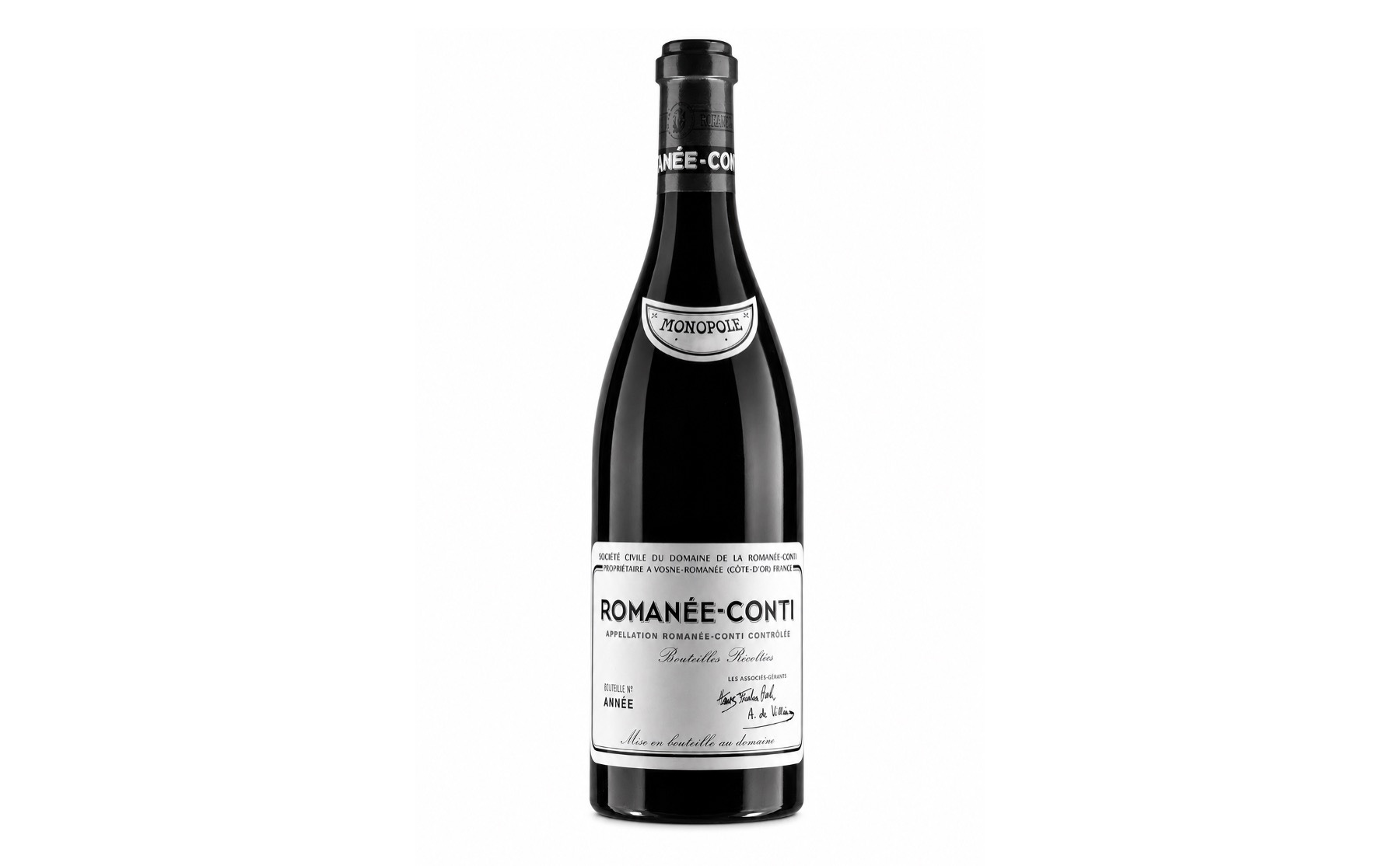
Romanée-Conti Grand Cru is the flagship red wine of Domaine de la Romanée-Conti and, in market terms, one of the most exalted and expensive regularly released wines in the world. Sotheby’s describes the vineyard as a 1.81-hectare monopole producing roughly 5,000 to 6,000 bottles per year, while Wine-Searcher’s 2026 market ranking places it clearly above every other red Burgundy by global average retail price. Auction history reinforces the point: Romanée-Conti is not merely scarce or prestigious, but structurally central to the modern fine-wine imagination.
Because the brief is for all vintages, this profile does not force a false single-vintage narrative. Instead, it examines Romanée-Conti as a long-cycle luxury asset and cultural benchmark, with emphasis on the physical site, domaine practice, benchmark years, aging behavior, critical standing, provenance sensitivity, and market liquidity across time. That is the proper framework for a wine whose value depends as much on continuity of reputation and condition as on the merits of one harvest.
Estate Background and Terroir
Domaine de la Romanée-Conti traces its history to the 13th century; Romanée-Conti itself acquired its modern prestige after the Prince de Conti purchased the vineyard in 1760, and the present estate took recognizable shape after the Duvault-Blochet family acquired it in 1869. Today the domaine is remarkable for an almost uniquely concentrated exposure to grand cru terroir, across Romanée-Conti, La Tâche, Richebourg, Romanée-Saint-Vivant, Grands Échézeaux, Échézeaux, Corton, Montrachet, and Corton-Charlemagne. Sotheby’s further notes that DRC is unique in producing wine almost exclusively from grand cru sites, a fact that helps explain why collectors treat the label as Burgundy’s apex franchise rather than simply one great producer among others.
For collectors, the domaine’s importance lies in the combination of historical legitimacy, small output, stylistic continuity, and auction centrality. Sotheby’s reports that in 2025 Burgundy accounted for 39% of the house’s wine auction sales and DRC alone represented 17% of Sotheby’s wine sales, underlining the estate’s exceptional gravitational pull in the secondary market. Romanée-Conti therefore sits not just at the summit of the producer’s portfolio, but near the summit of the entire global luxury-wine economy.
Physically, Romanée-Conti sits in Vosne-Romanée within the Côte de Nuits, on a slope facing east to slightly south-east, at a broader village altitude band of roughly 250 to 310 meters according to Burgundy Wines. Burgundy Wines also describes Romanée-Conti’s soils as brown limestone about 60 cm deep with a major clay component over hard Premeaux limestone, while Corney & Barrow’s producer profile characterizes the domaine’s Vosne holdings more broadly as iron-rich limestone over rock and marl on well-drained slopes.
Market-and-style interpretation: those site characteristics help explain why Romanée-Conti is so often described in terms that unite delicacy and authority. Clay within a shallow limestone matrix can generate concentration and textural depth, while fine drainage and eastern exposure favor aromatic lift and freshness. Sotheby’s description of the wine as “intense and brooding” yet “silky” with “profound length,” and Burgundy Wines’ appellation note emphasizing both power and sensuality, align closely with that reading of the terroir.
Viticulture, Winemaking, and Technical Profile
Corney & Barrow, DRC’s long-standing exclusive UK agent, describes the domaine’s vineyards as cultivated organically, with very old vines averaging around 44 years, compost-based soil supplementation, and horse plowing reintroduced in Romanée-Conti and Montrachet to reduce compaction. The same source describes biodynamic work in part of the estate and emphasizes very low average yields, around 25 hl/ha across the domaine, against a grand cru reference rendement of 35 hl/ha. Severe early pruning, green harvesting in July and August, and a final “passage de nettoyage” before harvest are all described as standard quality controls.
Harvest practice is equally severe. Corney & Barrow states that the grapes are collected in small baskets and examined individually on sorting tables before vinification. Aubert de Villaine’s and Nicolas Jacob’s recurring vintage reports, whether in low-yield years like 2010 and 2021 or more generous ones like 2022, repeatedly return to the idea of exacting selection and “haute couture” sorting. That matters greatly for collectors: Romanée-Conti’s reputation does not rest on maximal production from a famous climat, but on ruthless exclusion of anything that might dilute site expression.
In the cellar, Corney & Barrow’s technical profile describes a notably consistent philosophy: no destemming, long cuvaison of up to a month, fermentation at relatively low temperatures, maturation in 100% new oak from the Tronçais forest, gravity racking where needed, no filtration, and gravity bottling. If fining is required, fresh eggs may be used. Sotheby’s likewise highlights stem inclusion and 100% new oak as defining house signatures for the reds.
The wine is, by appellation, 100% Pinot Noir. What is not consistently public, however, is a complete all-vintages technical table for Romanée-Conti covering alcohol, pH, total acidity, residual sugar, sulfur metrics, and exact bottle counts. Burgundy Wines provides appellation-level identity and general aging guidance, while Corney & Barrow and Sotheby’s provide selected vintage and production data, but no unified all-vintages technical archive was publicly available in the sources reviewed for this report. That absence should be noted plainly rather than filled with estimates.
Vintage Architecture and Aging
The first indispensable point for collectors is that Romanée-Conti’s mythology is inseparable from its historical discontinuities. The 1945 vintage, produced from the old ungrafted vines before the vineyard was pulled out after harvest, yielded only about 600 bottles; modern auction discourse treats it as a singular relic rather than merely a great vintage. Vinous notes that the 1952 vintage marked the wine’s return after the old vines were pulled following 1945, from vines replanted in 1947. This is why 1945 sits above normal market logic: its rarity is biological and historical, not merely commercial.
In the modern era, several recent benchmark vintages illustrate the range of Romanée-Conti’s identity. The 2009 vintage report describes a season of abundant sun, hydric balance, straightforward fermentations, and a crop that combined generosity with small berries and great ripeness; the domaine itself explicitly compared it with other rich benchmark years such as 1999 and 2005. By contrast, the 2010 report details a difficult flowering, tiny volumes, incessant biodynamic disease pressure, and a late harvest, yet concludes that the wines possess intricately ripe fruit, subtle concentration, purity, and transparent fidelity to terroir. This 2009-versus-2010 contrast is central to understanding Romanée-Conti: one vintage can be ample and effortless, the next exacting and classical, yet both can reach the top rank.
The 2016 report is especially important because it shows how Romanée-Conti can emerge nearly unscathed from a region-wide catastrophe. Aubert de Villaine called 2016 one of the most perfect recent vintages despite the horrible spring conditions; the report documents record rain, severe mildew pressure, and devastating frost in several crus, yet Romanée-Conti was “almost completely spared,” with normal to average yields. Corney & Barrow’s detailed page lists Romanée-Conti at 24 hl/ha and 440 dozen, harvested on 25 September 2016, with a recommended window from 2030 to 2040+.
The 2021 vintage shows the opposite problem: scarcity born of frost and disease. Aubert de Villaine reported overall losses of half a harvest in Vosne-Romanée, around 80% in red Corton and 90% in Montrachet and Corton-Charlemagne, with Romanée-Conti itself yielding only about 22 to 23 hl/ha. He described the style as reminiscent of the 1970s and 1980s: less powerful, but finer, more delicate, and more elegant than the richer recent years. Decanter and other specialist coverage echoed that reading, framing 2021 as a classical, low-volume vintage.
The 2022 and 2023 vintages suggest a different phase: warmer, larger-crop years in which DRC’s success depends on preserving Burgundian shape. Aubert de Villaine called 2022 exceptional in both quality and quantity, comparing it to 2015, 1999, and even 1959 in quality/quantity terms, while noting harvest of Romanée-Conti on 1 September. For 2023, World of Fine Wine reported Romanée-Conti at 38 hl/ha and 675 dozen, above the 2010–17 average, while Decanter and The Buyer both stressed that the bottled wines retained freshness and structure despite the solar season.
For cellaring, the broad rule is conservative patience. Burgundy Wines advises that these grands crus generally should not be drunk much before ten years of age and may age twenty to thirty years or more; Decanter’s first look at the 2020s suggested they would benefit from five years in cellar and then drink over the next two to three decades, while the 2016 Corney & Barrow release recommended Romanée-Conti from 2030 onward. In practice, great bottles from exceptional years can remain compelling far longer, as the continuing auction status of 1945, 1971, 1978, and 1990 plainly demonstrates, but that longer life is highly conditional on immaculate provenance.
Proper cellaring is non-negotiable: stable low temperatures, darkness, humidity appropriate for long cork integrity, and minimal movement. Christie’s advises that visible warning signs of poor storage include seepage, low levels, poor color, and shrunken corks. For larger formats, Sotheby’s and Christie’s both note that magnums and bigger bottles are often more desirable because the lower air-to-wine ratio can support slower, more graceful maturation. For Romanée-Conti, that makes genuine magnums and larger formats especially attractive—but also even more dependent on impeccable authenticity checks.
Critical Reputation and Collector Appeal
A professional description of Romanée-Conti across vintages must be framed as a synthesis, not a single-bottle note. At appellation level, Burgundy Wines describes dark ruby color maturing toward crimson, aromatics moving through red and black fruits, violet and spice, and later into underbrush, truffle, leather, and fur. Sotheby’s speaks of intensity, complexity, a silky mouthfeel, and profound length; Decanter’s previews of recent vintages repeatedly depict a wine that can be reserved when young but grows in authority with air and bottle age. The recurring stylistic theme is not brute force but a paradoxical mixture of perfume, authority, and textural finesse.
That paradox is one reason the wine matters so much to sommeliers and advanced collectors. Romanée-Conti is rarely described as the most immediately explosive wine in the DRC cellar when young; indeed, Decanter’s 2019 and 2021 previews stress reserve and delayed self-revelation, while its 2020 note suggests that the wine’s greatness may initially remain obscured. Yet sources as different as World of Fine Wine, Decanter, and Burgundy Report all converge on the same judgment: the wine has a particular kind of authority that emerges with time rather than volume.
Publicly visible critic-score data for every vintage are not available in one open source, and many exact numbers remain subscription-gated. Even so, the public record is clear on direction. Wine-Searcher currently shows Romanée-Conti with an aggregated 98/100 in its 2026 red Burgundy ranking; World of Fine Wine publicly showed the 2023 Romanée-Conti at 97+; Decanter has issued scored tasting reports for 2019, 2020, 2021, and 2023; Vinous and Wine Advocate also maintain formal reviews for recent vintages, though not all exact ratings are visible without subscription. The critical consensus, therefore, is not ambiguous: Romanée-Conti lives in the high-90s, ultra-blue-chip tier even before one considers its scarcity premium.
Collectibility follows naturally from that reputation, but it is intensified by allocation discipline. Corney & Barrow’s older release documents state plainly that the domaine’s focus is on the private customer “as a consumer rather than a speculator,” that wines were allocated with strict controls, and that bottle numbering records were kept to protect the integrity of secondary-market distribution. The same archival material already referred to “almost unimaginable demand,” and to allocations being stretched by emerging Asian markets. That kind of distribution culture matters: Romanée-Conti is rare not only in production, but also in the way it is placed.
Counterfeit exposure is therefore a serious collector issue, not a footnote. Christie’s states bluntly that provenance is everything and that authenticity and condition require painstaking verification; a specialist interview cited Romanée-Conti among the world’s most counterfeited wines; and the broader rare-wine market has long treated DRC as a primary fraud target. For Romanée-Conti, the desirable bottle is never just the wine—it is the wine plus the chain of custody.
Market Position, Buying Guidance, and Verdict
In the present market, Romanée-Conti remains the category leader, but not immune to repricing. Wine-Searcher’s 2026 ranking puts its global average retail price at $24,288, down a modest 1.1% year over year, versus $7,116 for La Tâche and $5,086 for Richebourg. A comparable market summary of the 2025 Liv-ex Classification put Romanée-Conti at £172,461 per 12x75, ahead of La Tâche, Richebourg, Petrus, and Screaming Eagle. Liv-ex’s own current indices show Burgundy recovering somewhat in the shorter term, with the Burgundy 150 up 0.7% over one year but still down 11.9% over two years, while Decanter has reported rising bid-to-offer ratios and signs of stabilizing prices at the very top end.
Release pricing illustrates how far the wine has traveled, even before the secondary-market premium. Corney & Barrow listed the 2016 Romanée-Conti at £3,250 per bottle in bond; The Buyer reported the 2019 at £3,600 per bottle; Decanter and Club Oenologique reported the 2020 at £3,870; and Decanter reported the 2021 release at £4,250. Those are release-era allocation prices, not broad open-market clearing prices, but they show the steady upward ratchet in primary positioning.
Auction performance confirms the wine’s trophy status. In 2018, Sotheby’s sold a bottle of 1945 Romanée-Conti for $558,000; in 2026, Acker reset the world record at $812,500 for another 1945 bottle from the Robert Drouhin cellar. Sotheby’s also reports that Romanée-Conti 1990, in a 12-bottle lot, was its most expensive wine lot of 2025 at $449,890. Meanwhile, iDealwine reported a bottle of 2020 Romanée-Conti selling for €20,375 as its highest-priced wine of 2024, though the platform’s current live estimates for recent vintages tend to cluster materially lower depending on year and bidding stage. These figures show both strength and nuance: breathtaking peak outcomes coexist with a softer, more selective broader market.
Liquidity is strong relative to the price tier, but it is not frictionless. Liv-ex has recently shown DRC—and at times Romanée-Conti itself—among the top-traded wines by value, while Sotheby’s and Christie’s continue to transact Romanée-Conti in both mature bottles and large formats. Yet Vinum Fine Wines has also noted that DRC assortments have recently been harder to sell than the strongest single-line wines. This is exactly what sophisticated buyers should expect: Romanée-Conti has real liquidity, but mostly when provenance, format, vintage, and presentation are right.
For comparative context, Romanée-Conti sits above its closest peers on three axes at once: scarcity, symbolic prestige, and price. La Tâche is more available and often more demonstrative in youth; Richebourg is more muscular; Romanée-Saint-Vivant is more overtly ethereal. Outside DRC, Domaine Armand Rousseau’s Chambertin, Vogüé’s Musigny Vieilles Vignes, and Comte Liger-Belair’s La Romanée are all elite collector references, but none combine Romanée-Conti’s market ceiling, broad label recognition, and monopole mystique in quite the same way. In direct market terms, Wine-Searcher shows Romanée-Conti nearly quadruple the price of La Tâche, and many multiples above Musigny or Clos de Tart; in symbolic terms, Sotheby’s still calls it the most celebrated grand cru vineyard in Burgundy.
Buying guidance is correspondingly strict. The preferred acquisition route is direct release through a trusted merchant with allocation history, or through a major auction house that can document storage, ownership trail, inspection, and where possible original wooden case or original banding. Christie’s condition guidance makes fill levels, seepage, cork health, and color non-negotiable checkpoints. Sotheby’s provenance-led catalogues emphasize direct purchase from the domaine, long-term professional storage, OWC retention, and formal inspection. Unusually low prices, damaged capsules, inconsistent labels, broken provenance chains, or vague seller narratives should be treated as disqualifying rather than merely negotiable.
At table, Romanée-Conti deserves food only if the pairing respects its delicacy. Burgundy Wines recommends strong-flavored meats, feathered or furred game, Peking duck, braised dishes, grilled preparations, and roast veal; that guidance is especially apt for mature vintages showing tertiary notes of truffle, underbrush, leather, and spice. In practical fine-dining terms, youthful vintages suit pigeon, duck, or venison with restrained reduction, while mature bottles are best with game birds, veal, or truffle-accented dishes that echo the wine’s evolved register without overwhelming it.
Final verdict: Romanée-Conti Grand Cru is foremost a buy to cellar, buy as a collector trophy, and buy only with perfect provenance wine. For owners of sound, well-stored bottles from strong or mature vintages, it is also emphatically a hold. For collectors with access to impeccably sourced mature bottles, it can equally be a buy to drink wine of the highest order. What it is not is a casual speculative trade: provenance risk, counterfeit exposure, and a still-selective Burgundy market demand discipline. Within its appellation it remains the reference monopole; within the DRC portfolio it is the spiritual and commercial apex; within the global fine-wine hierarchy it continues to occupy the rarefied territory reserved for the very few labels whose cultural prestige, historical gravity, and market power are mutually reinforcing.