
Domaine de Courcel: Pommard Premier Cru Rugiens
A collector-grade study of de Courcel’s structural, long-lived Pommard from one of Burgundy’s defining premier crus
Introduction
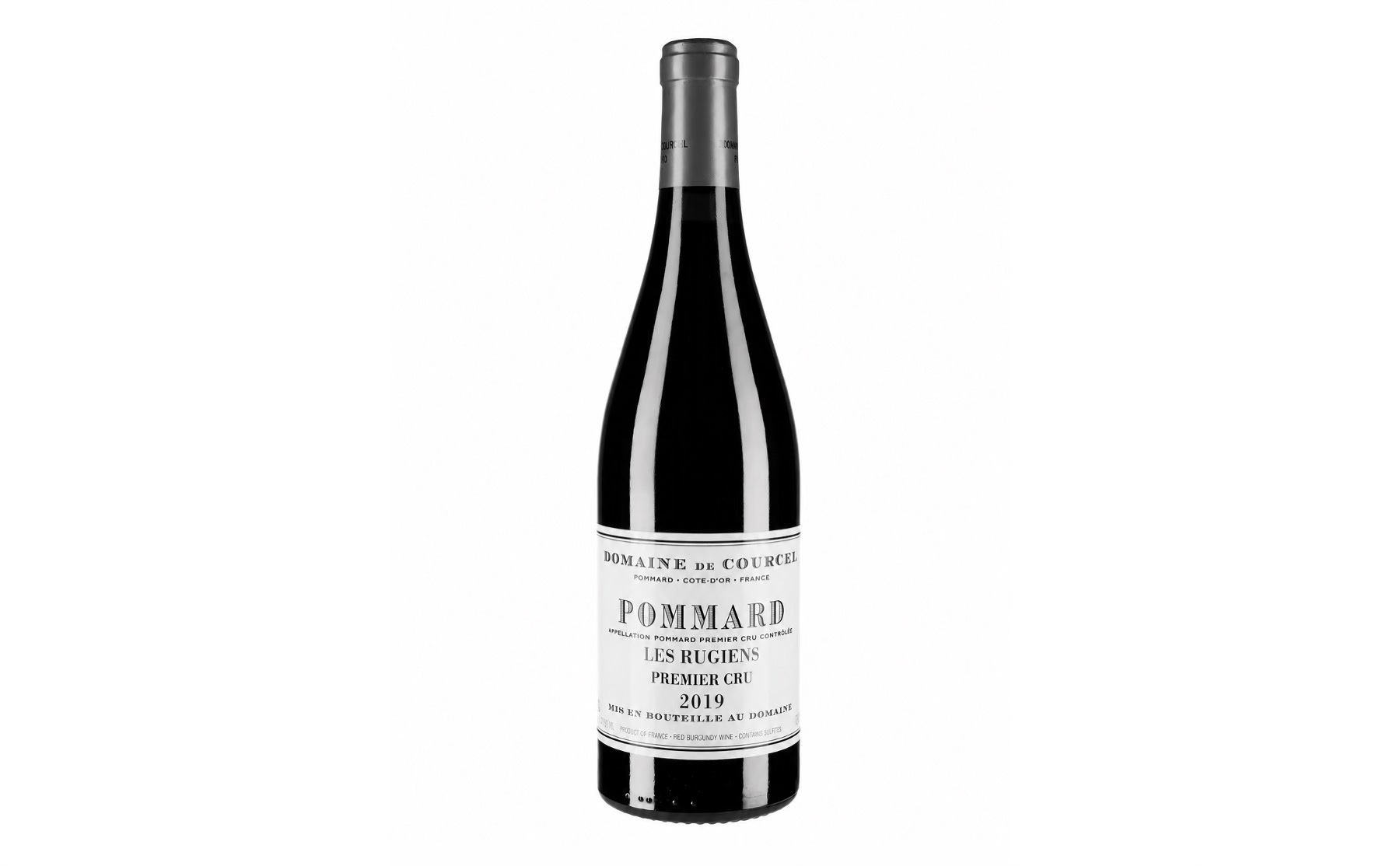
Domaine de Courcel’s Pommard Premier Cru Rugiens occupies a rarefied place within the Côte de Beaune: it is a wine from one of Pommard’s most serious terroirs, made by one of the village’s historic reference estates, and repeatedly judged by leading critics as a bottle for patience rather than early gratification. In collector terms, that combination matters. Rugiens is one of the sites most often discussed when the subject turns to premier cru wines of grand cru authority, and de Courcel’s holding in Rugiens-Hauts gives a distinct, clay-and-marl expression of that famous climat.
This is not a plush, quickly flattering Burgundy. The contemporary critical record instead points to a wine of massive extract, firm tannin, freshness, whole-cluster complexity, and long development in bottle. Even in more accessible years, the governing impression is architecture rather than charm. That profile is precisely why serious collectors continue to treat it as one of Pommard’s most consequential cellar wines.
Estate and Producer Background
Domaine de Courcel is a family-held Pommard estate with roughly four centuries of continuity, still owned by descendants of the founding line. Current leadership is associated with Gilles de Courcel, day-to-day management by Anne Bommelaer and Marie de Courcel, and winemaking direction by Yves Confuron, who has been in place since 1996. The estate’s identity is closely bound to Pommard itself: all seven climats farmed by the domaine are in the commune, and four of its principal wines are premier crus.
The domaine’s stated philosophy is unusually clear. It aims for intensity, tannic density, and precision of terroir expression, while preserving elegance; it explicitly combines traditional practice with modern precision and emphasizes respect for site and environment. This is consistent with how outside critics describe the estate. La Revue du Vin de Francehas called it one of Burgundy’s reference addresses for refined, racy Pinot Noir, while Bettane & Desseauve awards the domaine its highest five-star rating and praises both its haute-couture viticulture and very low yields.
That reputation also rests on stylistic conviction. Charles Curtis MW has described Domaine de Courcel’s wines as an “anti-glou-glou” proposition: substantial, cellar-worthy Pommards in an era when many producers chase earlier accessibility. For collectors, that is not a minor point of style; it is a cue about intended trajectory, about which vintages deserve time, and about where the wine sits on the spectrum between immediate appeal and long-haul authority.
Terroir Analysis
The domaine’s Rugiens parcel measures 1.07 hectares, sits mid-slope on the southern side of Pommard between Pommard and Volnay, faces east, and is planted to vines of roughly 60 years of age. The upper part of the holding has very shallow marlstone soils, around 0.2 m, while the lower section is deeper, reddish-brown clay-rich earth, around 0.8–1 m. The estate’s own description is telling: this is a terroir of marl and clay, finesse and concentration, sweet spice, blackberry, very ripe raspberry, and long finish.
In broader Pommard terms, that parcel location is decisive. Decanter’s overview of the commune explains that the best premier crus line the front of the valley, with Épenots to the north and Rugiens to the south. The northern side, influenced by alluvial deposits, trends toward greater finesse and elegance, while the southern side, with more clay, tends toward more power and tannin. That broad geological distinction maps neatly onto what experienced tasters see in bottle: de Courcel’s Rugiens is, by design and by site, more muscular and more ferrous than the finer-grained elegance associated with Épenots.
De Courcel’s holding is specifically in Rugiens-Hauts, not Rugiens-Bas. Charles Curtis MW notes that the domaine owns just over a hectare there, mid-slope, in clay and marl soils varying from 20 cm at the top to nearly one metre at the bottom. Stephen Brook’s Decanter feature adds a crucial nuance from Yves Confuron: Rugiens-Bas may be more homogeneous, but the difference between Hauts and Bas is not absolute; Hauts is steeper and rockier, while Bas has more clay and less sand. In other words, de Courcel’s bottling is not simply “less than” Rugiens-Bas. It is a distinct expression of the climat’s upper-sector mineral severity and tension.
This matters because Burgundy’s entire hierarchy is built on the logic of the climat: a precisely delimited parcel whose geology, exposure, hydrology, and accumulated human understanding produce a recognizably different wine. UNESCO’s description of Burgundy’s Climats as the world archetype of parcel-based terroir is highly relevant here. Rugiens is not important merely because it is famous; it is important because its identity is parcel-specific and repeatedly legible in the glass.
Viticulture, Winemaking, and Technical Composition
Domaine de Courcel’s publicly stated vineyard regimen is rigorous. The soils are ploughedto encourage biological life and deeper rooting; vines are carefully pruned; de-buddingand green harvesting are used to refine equilibrium; and the harvest is conducted relatively late in pursuit of full ripeness. The domaine further states that its vineyard techniques fall under organic agriculture, and Ecocert currently lists a valid Organic Agriculture Europe certification for Domaine de Courcel under the EU framework.
Vinification is equally distinctive. After severe sorting, the fruit is placed in vat as whole bunches, followed by cold maceration, low-temperature fermentation, and active extraction through pigeage and remontage. The cellar protocol then includes a post-fermentation carbonic maceration adapted to each cuvée. Élevage is long: 21 to 23 months in oak, with the barrel stock renewed by one third each year. Bottling is done without corrective handling: no fining, no filtration, no acid adjustment. For collectors, this is central to the wine’s identity. Whole-cluster ferment, long cask aging, and non-interventionist bottling all intensify structure and slow the wine’s timetable in bottle.
Technically, the cuvée is a red Pommard Premier Cru from Pinot Noir. The Pommard AOC cahier des charges sets a minimum natural alcoholic strength of 11% vol for wines labeled Premier Cru and a base yield of 40 hl/ha. Contemporary public technical material and Decanter’s current reviews describe Domaine de Courcel’s Rugiens as 100% Pinot Noir. The estate, however, targets yields far below the legal ceiling: it states an average of about 25 hl/ha, equivalent to roughly 30,000 bottles per year for the whole domaine. Applied arithmetically to a 1.07-hectare holding, that would imply only about 3,600 bottlesfor Rugiens at estate-average yields before losses from sorting or vintage adversity. That is an inference from the estate’s own numbers, but it is a useful one for anyone thinking about scarcity.
Vintage variation can tighten supply dramatically. Stephen Tanzer reported that the 2016 Rugiens was made from fruit yielding only 8 hl/ha, while Yves Confuron described 2021 as a year of rain, mildew, and very few grapes, with fruit picked at an average of 13.5% alcohol. Such data are not incidental. They explain why this wine can move from merely scarce to genuinely difficult to secure in certain years.
Vintage Report
Authoritatively traceable wine-specific records currently document Domaine de Courcel’s Pommard Premier Cru Rugiens across mature, modern, and very recent vintages, including 1962, 1988, 1990, 1993, 1995, 1996, and the sequence from 1999 through the early 2020s. The following vintage analysis should be read primarily as a Burgundy and Côte de Beaune vintage framework, applied carefully to this cuvée without overclaiming wine-specific conditions where direct domaine data are unavailable.
The 2024 vintage was one of pressure and selectivity. Rain, frost, hail, and disease pressure reduced volumes and demanded rigorous sorting. For a wine such as de Courcel’s Rugiens, whose identity depends on tannic density and phenolic maturity, this was not a year of automatic power. Its likely strength lies instead in aromatic clarity, freshness, and a more accessible, youth-oriented profile than the great solar vintages.
The 2023 vintage was exceptional in a different way: abundant, generous, and historically large for Burgundy. Despite an unstable summer, many growers were able to bring in healthy fruit after careful selection. For red Burgundy, the year tends toward purity, tenderness, and open fruit rather than severe structure. In the context of de Courcel’s Rugiens, 2023 may offer a more generous interpretation of the climat, though serious producers with low yields and strict sorting should still retain sufficient architecture.
The 2022 vintage combined heat and drought with a surprising preservation of freshness. It is widely regarded as a strong to excellent red Burgundy vintage, giving ripe Pinot Noir with classical balance, good concentration, and medium- to long-term aging potential. For Rugiens, a site already inclined toward structure and breadth, 2022 is particularly promising: the warmth supports fruit depth, while retained acidity prevents the wine from becoming heavy.
The 2021 vintage was defined by adversity. Frost, mildew, disease pressure, and very small yields made the year one of the most difficult of the modern period. The best wines are not powerful in the manner of 2015, 2019, or 2020; rather, they are lighter, more transparent, and classically proportioned. In de Courcel’s case, where the style is naturally firm and whole-cluster vinification can add further tension, 2021 should be approached as a vintage of precision, restraint, and delicacy rather than mass.
The 2020 vintage was very warm, very early, and very dry, yet the best red Burgundies retained far more freshness than the season initially suggested. Fruit quality was often excellent, with deep colour, concentration, and impressive aging prospects. For Domaine de Courcel’s Rugiens, 2020 belongs among the most structurally serious recent years: a vintage likely to combine dark fruit, tannic authority, and long cellar potential.
The 2019 vintage brought warmth, frost episodes, and heatwaves, resulting in reduced yields but impressive concentration. Many of the best red Burgundies from 2019 combine density with finesse, avoiding the overstatement that can accompany hot years. For collectors, 2019 is a highly desirable vintage of de Courcel Rugiens: concentrated, ageworthy, and likely to show both the darker register of Pommard and the precision of the domaine.
The 2018 vintage followed a wet winter and a hot, dry summer, producing a generous crop and wines that are often juicy, ripe, and immediately appealing. In some cases, red Burgundies from 2018 show softer acidity and a more flattering early profile. In Rugiens, where natural tannic power is rarely absent, the vintage’s generosity may round the wine’s formidable frame, giving a more ample and accessible expression than cooler years.
The 2017 vintage was marked by a welcome return to quantity after several short crops. The reds are generally fruity, moderately acidic, and supported by softer tannins. For Domaine de Courcel’s Rugiens, this is likely a more approachable vintage by the estate’s standards, though the wine’s inherent structure means it should not be mistaken for a simple early-drinking Burgundy.
The 2016 vintage was extremely challenging in the vineyards, with frost, hail, and mildew severely reducing yields. Yet Burgundy often produced outstanding wines where fruit survived and selection was exacting. For de Courcel’s Rugiens, 2016 is a particularly compelling collector vintage: scarcity is acute, and the best wines of the year combine intensity, energy, and a kind of dramatic concentration born from tiny yields.
The 2015 vintage was warm, ripe, and low-yielding, producing rich, powerful, deeply structured red Burgundies. This is a natural vintage for long-term cellaring, especially in a cuvée as tannic and extract-rich as de Courcel’s Rugiens. Collectors should expect a broad, dark-fruited, statuesque expression, with the vintage’s ripeness held in check by the domaine’s serious vinification and the mineral austerity of the site.
The 2014 vintage was shaped by a mild winter, a cool and wet summer, and hail in parts of the Côte de Beaune, before a fine September helped rescue the season. The reds are generally more classical than opulent: lighter in body than 2015, but often fresh, precise, and capable of graceful aging at the top level. In Rugiens, 2014 emphasizes tension, acidity, and tannic line rather than sheer fruit volume.
The 2013 vintage was marked by a cold spring, hail, rain, and a small crop. The resulting wines are typically moderate in body, fresh, and balanced, with less immediate generosity than warmer vintages. For de Courcel’s Rugiens, 2013 should appeal to drinkers who value classical Burgundy structure, savoury nuance, and firmness over plushness.
The 2012 vintage was another difficult year, with rot, mildew, irregular weather, and very small yields. Quality is variable across Burgundy, yet the best wines can be excellent, often combining concentration with notably supple tannins. In the context of Domaine de Courcel, 2012 is a vintage where rigorous viticulture and sorting are crucial; successful bottles should show density without the excessive hardness sometimes associated with cooler, troubled years.
The 2011 vintage began early and was complicated by summer rain, leading many observers to expect disappointment. In the best hands, however, the wines proved better than feared. For Rugiens, 2011 is unlikely to have the scale of 2010, 2015, or 2020, but it can offer a more moderate, savoury, earlier-maturing interpretation of the climat.
The 2010 vintage is notable for high acidity, low volumes, and very good quality. It is a year of freshness, definition, and classical proportion rather than opulence. For de Courcel’s Rugiens, 2010 is highly relevant to collectors because the wine’s natural tannic density is counterbalanced by the vintage’s energy and precision, giving strong aging potential.
The 2009 vintage was warm and dry, producing ripe tannins, lower acidity, and fleshy, hedonistic wines. Compared with 2010, it is broader, more generous, and more immediately seductive. In de Courcel’s Rugiens, 2009 is likely to show the domaine’s muscular style through a warmer lens, with more opulent fruit and a relatively earlier drinking curve than the most austere vintages.
The 2008 vintage faced coulure, mildew, hail, and a late-season rescue by September sunshine. The reds are typically high in acidity, tense, and sometimes angular in youth. For a structured Pommard such as Rugiens, 2008 is a vintage for drinkers who appreciate firmness, savoury tension, and a leaner expression of site.
The 2007 vintage was affected by damp summer conditions and rot pressure, particularly for Pinot Noir. Selection was essential, and the year is generally considered modest. De Courcel’s exacting approach would have been important here, but 2007 should still be understood as a lighter, less profound vintage than the strongest years surrounding it.
The 2006 vintage also presented challenges, including a poor summer and vine-health concerns. The best wines can be pure and expressive, while weaker examples are austere. For de Courcel’s Rugiens, 2006 is likely to sit in the more reserved, structural category, requiring careful provenance and realistic expectations.
The 2005 vintage is one of the great red Burgundy vintages of the modern era. The wines are powerful, concentrated, balanced, and often still youthful in their development. Domaine de Courcel’s Rugiens from 2005 should be considered a benchmark cellar vintage: a wine of formidable structure, long aging capacity, and significant collector interest.
The 2004 vintage produced a large crop and generally lighter, crisper wines. Many bottles were intended for earlier drinking, although top domaines and well-sited premiers crus can still surprise with age. For Rugiens, 2004 is less about grandeur than about freshness, maturity, and the interest of a fully evolved, cooler-profile Pommard.
The 2003 vintage was shaped by the historic European heatwave. Burgundy produced some monumental wines, but also examples marked by raisining, atypical ripeness, and loss of classical balance. In Rugiens, the vintage’s natural concentration may be amplified; collectors should be attentive to bottle condition and stylistic tolerance for heat-year character.
The 2002 vintage was a good and generally reliable red Burgundy vintage, with reasonably dry conditions and wines that offered charm from an early stage. For de Courcel’s Rugiens, 2002 is likely to combine mature complexity with enough underlying structure to remain compelling, assuming excellent storage.
The 2001 vintage was affected by a wet summer and heat spikes, leading to variable quality. Low-yielding and carefully made wines, however, have aged well. In the case of Rugiens, the domaine’s severe selection and low-yielding philosophy would have been particularly important in shaping the final result.
The 2000 vintage suffered from rain and rot at harvest, producing generally soft, easy wines. Stronger sites and disciplined producers performed best. For de Courcel’s Rugiens, 2000 should be regarded as a mature, less forceful vintage, best evaluated through provenance rather than reputation alone.
The 1999 vintage combined quantity and quality to an exceptional degree. The reds are powerful, charming, concentrated, and well balanced. For Domaine de Courcel’s Rugiens, 1999 is a major mature vintage: it has the scale, fruit density, and structural integrity expected of a serious Pommard premier cru, while now entering a stage of meaningful bottle complexity.
The 1996 vintage produced a large, healthy crop with high sugars, high acidity, and strong colour. Many wines are ageworthy, though some remain marked by tart acidity. In Rugiens, that acid spine can give impressive longevity, but the best bottles will be those in which fruit depth has remained sufficient to support the structure.
The 1995 vintage delivered good quality and good quantity, with wines that were initially structured and sometimes austere, but which have broadened with bottle age. For de Courcel’s Rugiens, 1995 should now be moving into a mature phase where tannic firmness has softened and tertiary complexity has become central.
The 1993 vintage has gained respect with time. Once underrated, it produced healthy, well-coloured, fruit-driven wines capable of serious development. In the hands of a producer such as Domaine de Courcel, 1993 is a vintage of real interest for collectors who value mature Burgundy with savoury depth and classical shape.
The 1990 vintage was a great success for red Burgundy, producing rich, fragrant, full, and often majestic wines at the top level. Domaine de Courcel’s Rugiens from 1990 belongs to the mature collector category, where provenance is decisive but the vintage’s inherent generosity and depth make it one of the most attractive older references.
The 1988 vintage produced tough, backward, concentrated wines that required long patience. For a naturally structured Pommard such as Rugiens, 1988 is stylistically coherent: firm, serious, and slow to yield. Well-stored bottles should now be judged on tertiary development, tannin integration, and remaining fruit.
The 1962 vintage produced fine, relatively light red Burgundies and is now of historical rather than developmental interest. Any bottle of Domaine de Courcel Rugiens from 1962 should be approached as a fragile, provenance-dependent rarity for immediate appreciation, not as an investment bottle with further aging upside.
Tasting Profile, Aging Potential, and Critical Reception
At professional level, the composite tasting profile of Domaine de Courcel’s Rugiens is remarkably consistent. In youth it tends toward deep ruby to dark ruby, often with an intense, saturated appearance. Aromatically, the family vocabulary is borne out by independent tasting: blackberry, very ripe raspberry, plum, cassis, boysenberry, kirsch, violet, clove, earth, smoke, tobacco, cedar, mineral notes, and often a sanguine or ferrous edge recur across vintages and critics. The result is less a pretty perfume than a layered scent architecture in which dark fruit, spice, and soil are inseparable.
On the palate, the defining vocabulary is structural. Decanter’s 2021 note describes a wine of “massive” texture, abundant extract, firm tannins, and fresh acidity; the 2022 retains firmness but is “supple,” with silky supportive tannins; 2014 shows elegant fruit fighting severe tannins on a long chewy finish; Stephen Tanzer’s 2016 captures the paradox perfectly, calling it dense and fine-grained yet light on its feet. These are not contradictory descriptions. They are different ways of saying that de Courcel’s Rugiens is a broad-shouldered Pinot Noir whose mass is disciplined by energy and mineral line.
Texture and balance are therefore central to understanding the wine’s quality. The best vintages unite dry extract, broad but not dry tannins, freshness, and lift, finishing on a line of spice, mineral persistence, and mouthwatering length. Typicity is strong: this is unmistakably Pommard, but rather than the old caricature of rusticity, it offers what the best Pommard should—power, gravitas, and nuance, with sufficient terroir transparency to justify its climat status.
Aging potential is substantial. Published windows range from 2018–2030 for the 2014 to 2018–2033 for the 2013, while Decanter states explicitly that the 2021 should live for decades. On that evidence, and as an inference from the wine’s consistently tannic, extract-rich construction, collectors should treat strong vintages as wines for 8 to 12 years minimum after harvest, with better years comfortably capable of 20 years or more in correct storage. In bottle, the wine should move from black-fruited severity toward more truffled, cedar-inflected, tertiary complexity, softening texturally while retaining backbone.
Critical reception is serious and sustained. Decanter rated the 2021 and 2022 both 95 points, praising the former’s massive extract and the latter’s supple firmness and length; Decanter scored the 2014 91 points with a drinking window through 2030. Vinous, via Stephen Tanzer, rated the 2016 at 93–95 and the 2015 at 94, describing the latter as a classic white-soil Rugiens demanding cellaring. La Revue du Vin de France scored the 2016 18.5/20, the 2015 18.5/20 in one major guide, and the 2017 18–18.5/20; Bettane & Desseauve rated the 2017 Rugiens 18/20 while awarding the domaine its maximum five stars. This is a pattern, not a one-off success: in demanding and generous years alike, the wine lands in the upper register of Pommard critical esteem.
Market Position, Comparative Context, and Gastronomy
For investors and collectors, scarcity is structural before it is fashionable. The domaine’s Rugiens holding is only 1.07 hectares, and the estate targets a dramatically low average yield of about 25 hl/ha, far below the AOC ceiling. iDealwine currently documents back vintages from 1962 onward and shows a live secondary-market ladder that includes a €187 estimate for 1962, €138 for 2019, €96 for 2021, and €92 for 2012; its current offers during this research included 2019 at €190 and 2004 at €102 per bottle. That is enough to show an active, persistent secondary market, but also a wine whose economics are still anchored more in specialist private-cellar demand than in ultra-liquid exchange trading.
Within Pommard, the closest collector comparisons are Domaine du Comte Armand’s Clos des Épeneaux, Domaine de Courcel’s own Grand Clos des Épenots, and Domaine de Montille’s Rugiens-Bas. The first is the famous monopole benchmark in Épenots; the second is de Courcel’s internal counterpoint; the third is the most obvious same-climat peer. The stylistic distinctions are instructive. Decanter’s topographical reading of Pommard frames Épenots as the more elegant, finer-faced pole and Rugiens as the more powerful, clay-weighted one. Charles Curtis MW goes further, noting that some authorities considered de Courcel’s Rugiens the superior wine, though observers favoring elegance may prefer Épenots. In Tanzer’s 2015 notes, de Courcel’s own Grand Clos des Épenots appears more delineated, while Rugiens feels darker, broader, and more inward. Meanwhile, Decanter’s 2022 de Montille Rugiens-Bas is explicitly described as more modern and approachable, even while remaining substantial. For collectors, that means de Courcel Rugiens sits in a fascinating niche: less sensual than some peers in youth, but more relentlessly architectural.
That helps explain what makes this wine distinctive even in a global context. As an inference from the terroir, élevage, and tasting record, Domaine de Courcel’s Rugiens is unusual among elite Pinot Noirs worldwide because it privileges structure, mineral authority, and delayed revelation over overt sweetness of fruit. Many highly rated Pinots—whether from Chambolle-Musigny, Sonoma Coast, or Central Otago—announce themselves with fragrance and texture first. De Courcel’s Rugiens often does the reverse: it establishes its frame, its tannin, and its site before allowing secondary and tertiary detail to unfold. For the serious cellar, that is a virtue, not a flaw.
At table, the wine calls for fine, protein-rich cuisine with savory depth rather than delicate dishes. iDealwine cites filet of beef with truffle, roast pheasant, and lamb stew; those references are entirely consistent with the wine’s tannic frame, spicy register, and earthy finish. In a luxury dining context, the best matches would be beef tenderloin with Périgueux sauce, venison loin with black cherries and juniper, roast pigeon, woodland mushroom preparations, and dishes with restrained truffle usage that echo rather than overwhelm the wine’s eventual tertiary profile. Younger, more muscular vintages benefit from jus-rich preparations; mature bottles reward feathered game and more nuanced reductions.
Conclusion
Domaine de Courcel’s Pommard Premier Cru Rugiens stands as one of the most authoritative wines of its appellation: historically rooted, terroir-explicit, technically serious, critically validated, and unmistakably intended for collectors rather than casual consumption. Its identity is not reducible to the generic phrase “great Pommard.” More precisely, it is a Rugiens-Hauts bottling of marl, clay, spice, mineral breadth, and disciplined severity, shaped by whole-cluster vinification and long élevage into a wine that often needs time to become fully legible.
Within Pommard, it belongs in the first conversation, alongside the village’s most pedigreed names and climats. Within Burgundy more broadly, it offers something increasingly rare: a premier cru that still behaves like a serious cellar wine, not merely a prestige label. For high-end enthusiasts, investors, and collectors, that is exactly its attraction. It is not the easiest Pommard to understand young. It is one of the most rewarding to understand fully.