
Domaine d’Auvenay: Mazis-Chambertin Grand Cru
Lalou Bize-Leroy’s ultra-rare Mazis-Chambertin assessed for prestige, provenance, aging and investment
Collector and investment thesis
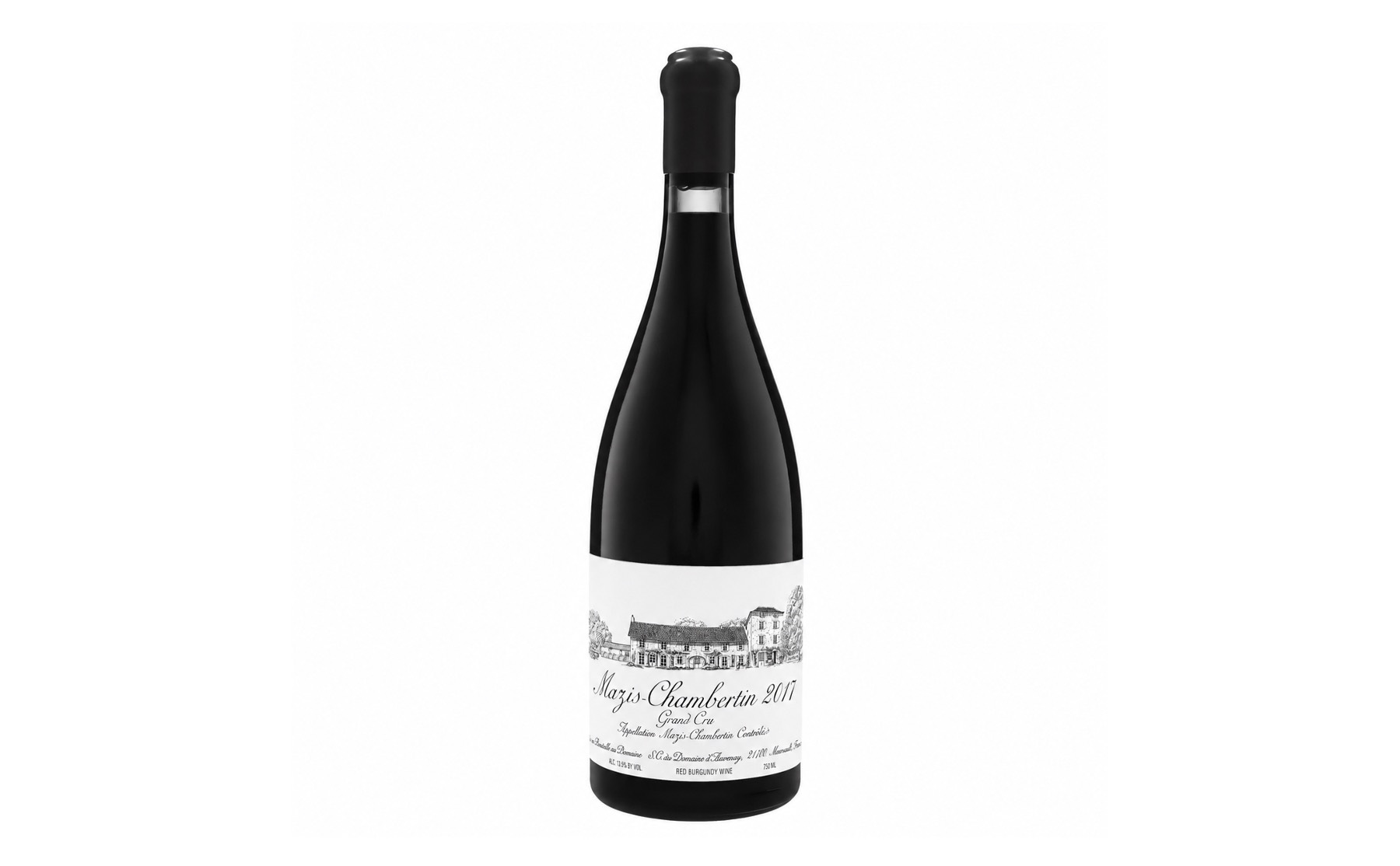
Domaine d’Auvenay Mazis-Chambertin Grand Cru belongs in the very top tier of collectible Burgundy, but it should be understood with precision. It is not a classic broad-liquidity blue chip in the way that Lafite, Latour, or even the most actively traded DRC wines are. Instead, it is a trophy-grade Burgundian asset whose market strength comes from the conjunction of extreme scarcity, Lalou Bize-Leroy’s authorship, and the prestige of a Gevrey-Chambertin Grand Cru site. One Christie’s catalogue recorded total 2014 production at only 977 bottles, and Liv-ex has recently listed Domaine d’Auvenay 2009 among the week’s top-traded wines by value, showing that despite the wine’s tiny float, serious capital does move when pristine stock appears.
For collectors, that combination places the wine in a hybrid category: prestige drinking wine, collector trophy, and niche investment-grade asset. The crucial nuance is that its investment case is not built on volume of turnover; it is built on rarity-supported repricing and the willingness of wealthy buyers in the UK, Europe, the U.S., and Asia to compete for tiny parcels when provenance is compelling. Burgundy represented 22.1% of Liv-ex traded value in 2025, and the Burgundy 150 index was still up 6.34% over five years as of May 2026, even after the broader market’s post-boom normalization. Against that backdrop, Auvenay sits in the portion of Burgundy that behaves more like a collectible luxury object than a purely financial instrument.
In portfolio terms, Mazis-Chambertin is also unusually interesting within the d’Auvenay range itself. Current iDealwine estimates place d’Auvenay Mazis 2014 at €4,375 per bottle, materially below the same estate’s 2014 Bonnes-Mares at €9,361 and far below the white grands crus such as 2014 Bâtard-Montrachet at €10,281. That makes Mazis not “cheap” in any normal sense, but relatively accessible within one of Burgundy’s most exalted portfolios. For a collector who wants d’Auvenay red without paying the very highest internal tariff, Mazis can be the estate’s most rational entry point.
Producer background and terroir foundations
Documented history matters here because d’Auvenay’s prestige is inseparable from Lalou Bize-Leroy’s broader place in Burgundy. A 2015 Wine Spectator profile republished by Martine’s Wines described Domaine d’Auvenay as personally owned by Bize-Leroy, distinct from the Leroy S.A. structure behind Maison Leroy and Domaine Leroy, and stated that the vineyards under the d’Auvenay label encompassed 12.35 acres, with annual production since 1988 hovering between 350 and 500 cases across the estate. The same profile places Lalou at the center of Burgundy’s modern fine-wine history, noting her long stewardship of Maison Leroy, her co-directorship at Domaine de la Romanée-Conti from 1974 to 1992, and her acquisition and development of her own estates from 1988 onward. Winehog adds that she expanded d’Auvenay in 1990 after taking over her father’s house and estate, building the boutique domaine alongside Domaine Leroy and Maison Leroy.
Mazis-Chambertin itself is one of Gevrey’s grand cru power sites, and official Burgundy sources define its physical framework clearly. Bourgogne Wines places the Gevrey grands crus on an east-facing slope at 240 to 280 meters. The hill is formed over hard rock; upper sections carry brown, partly alluvial and partly scree-derived soils, while lower sections are more clay-limestone, with Bathonian formations upslope and Bajocian marls and limestones lower down. Burgundy Report, citing BIVB data, specifies that Mazis-Chambertin is divided into the internal climats Les Mazis-Hauts and Les Mazis-Bas, lies entirely within Gevrey-Chambertin, and has been Grand Cru since 31 July 1937. Official area figures vary slightly by source and date, but they place Mazis at roughly 8.65 to 9.1 hectares in production.
Specialist Burgundy coverage pinpoints the estate’s place within that grand cru topography. Winehog describes Mazis as lying just north of Chambertin-Clos de Bèze and below Ruchottes-Chambertin, and calls the d’Auvenay bottling one of the rarest and most expensive wines of the appellation. iDealwine’s own appellation summary also situates the climat beneath Ruchottes and next to Clos de Bèze, emphasizing its structural power and long cellaring capacity. Put analytically, this is terroir that combines Gevrey muscle with enough altitude, stony definition, and slope structure to support aromatic lift and very long-term development—exactly the kind of site that can sustain Lalou’s low-yield, high-extract discipline without collapsing into heaviness.
Vineyard practice, cellar method, and technical profile
On viticulture, the publicly documented facts are unusually strong even if wine-specific technical sheets are not. The Wine Spectator profile states that Lalou Bize-Leroy stopped all chemicals, fertilizers, pesticides, and fungicides in 1988, moving first to organic farming for the 1988 harvest and then to biodynamics from September 1988 onward. Martine’s importer profile likewise describes Domaine d’Auvenay as producing biodynamic, estate-grown wines. The same Wine Spectator account emphasizes radically low yields as a core quality lever, quoting Lalou’s view that natural concentration depends on yields far below legal maxima.
The cellar philosophy is better documented than many collectors realize. According to the same Wine Spectator profile, the élevage at Leroy and d’Auvenay remained “classic”: one racking after malolactic, bottling after 14 to 18 months in barrel, and no fining or filtration. The producer’s commercial rhythm is also highly unusual. Wine Spectator reported that Lalou releases wines only when she judges them ready, and current merchant listings are consistent with that policy: Fine+Rare offered the 2016 as a “2025 Release” and showed a 2012 as a forthcoming “2026 Release.” That late-release discipline materially supports collector confidence, because it shortens the period during which wines circulate without professional storage and helps explain why d’Auvenay can enter the market already partially matured in estate or merchant care.
The technical profile available to the public is fragmentary, and it is important not to invent what the estate does not publish. Verified data show Pinot Noir as the grape, Grand Cru classification, and 13.5% alcohol on publicly accessible 2007 and 2014 merchant pages; one Christie’s lot gave the especially useful fact that the 2014 was bottle number 00180 from a total production of 977 bottles. I did not locate public official figures for pH, total acidity, residual sugar, release price history, or wine-specific yields by vintage. That absence is itself collector-relevant: transparency is not the strength of this wine; reputation, allocation discipline, and secondary-market validation are.
Vintage character, tasting identity, and aging horizon
Critical descriptions across available vintages reveal a consistent stylistic core. In David Schildknecht’s review of the 2007, the wine showed tiny yields, intense concentration without excess weight, ripe plum and blackberry fruit, floral notes, savoury meat and soy inflections, and pronounced iodine, peat, salt, and crushed-stone layering. William Kelley’s 2016 note described a wine of cassis, wild dark berries, peony, juniper, spice, dark chocolate, and game-bird nuance, all carried by satiny tannins, deep sappy fruit, and a long, penetrating finish. Fine+Rare’s account of the 2002, tasted at the estate, emphasized deceptive aromatic subtlety on the nose followed by enormous breadth on the palate, dark berries, floral lift, coffee, mocha, and powerful but refined tannins. Across these notes, the recurring markers are density, floral lift, savoury complexity, and mineral authority rather than sheer oak display.
For vintage targeting, the accessible record supports a hierarchy, though not a fully exhaustive one. The best-documented modern benchmark is 2016, which carries 98 points from William Kelley and a drinking window through 2070. The 2007, despite coming from a generally less monumental Burgundy year, still received 95 points from David Schildknecht and was explicitly described as worth revisiting in twenty years, which says much about the site and producer. The 2002, from direct merchant tasting commentary, emerges as a monumental, broad-shouldered bottle. Market evidence also suggests that certain vintages are structurally favored: current iDealwine estimates place the 2003 at €6,298, the 2002 at €4,767, the 2006 at €4,439, and the 2014 at €4,375, showing that vintage reputation can matter more than mere age. For investors, that means “oldest” is not the right heuristic; “best vintage plus best provenance” is.
Cellaring strategy should be conservative. Official Burgundy guidance gives Gevrey’s grand crus a minimum keeping potential of ten years, but the critical record on this bottling points to far longer arcs: Schildknecht’s 2007 comment about revisiting in twenty years and Kelley’s 2016 window to 2070 both support very long-term storage for great vintages. Standard bottles dominate public market evidence, yet larger formats do surface: Christie’s catalogued a lot containing six bottles and one magnum of the 2003, while original wooden cases are explicitly documented for the 2007 and in Bonhams publicity for the 1996. For fine-wine buyers, that means magnums and untouched cases are not just romantic extras; they are the most desirable storage and exit formats when they appear.
Critical reputation, collectibility, and market evidence
Critical reception is powerful but only partly visible in public sources because many top reviews sit behind subscriptions. What can be verified publicly is still impressive. Fine+Rare shows 98/100 from William Kelley for the 2016; Bordeaux Index lists 95 from David Schildknecht for the 2007; and an iDealwine 2014 lot page displayed a 100-point RVF notation for that vintage. More important than the raw numbers, however, is the stylistic consistency of the accompanying commentary: critics return repeatedly to extraordinary concentration, savoury-mineral depth, floral top notes, and finesse within power. That is precisely the sort of critical consensus that drives demand at the top of Burgundy, because it signals both complexity now and credible longevity later.
Collectibility begins with scarcity, and the documented scarcity here is severe. Wine Spectator’s 2015 profile put total d’Auvenay estate production at only 350 to 500 cases annually across all labels, while Christie’s identified the 2014 Mazis bottling at 977 bottles. Against an official five-year average production of 46,018 bottles for the Mazis-Chambertin appellation as a whole, that is minute. Add to that the facts that d’Auvenay’s public identity is dominated by its whites, that Mazis is one of the estate’s few red grand cru bottlings, and that late release compresses available float even further, and the result is a wine that is collectible not only because it is great, but because truly first-rate examples are genuinely hard to source.
Market evidence confirms both desirability and nuance. iDealwine’s current estimates show a broad but meaningful long-term value ladder: 1994 at €980, 1995 at €1,266, 1996 at €3,488, 1999 at €1,850, 2000 at €2,205, 2001 at €2,220, 2002 at €4,767, 2003 at €6,298, 2006 at €4,439, and 2014 at €4,375. For the 2002 specifically, iDealwine recorded auction history moving from roughly €3,526–€3,660 in 2019 to €5,008 in December 2024. Meanwhile, iDealwine’s April 2025 auction report noted that the 2014 Mazis sold for €7,825 despite a slight dip versus estimate, Christie’s sold a single 2011 bottle for CHF 6,250 and a single 2014 bottle for HKD 52,500, and Bonhams sold a 2000 bottle for £3,968 including premium. The analytical conclusion is straightforward: this wine has real monetary gravity, but value is highly vintage-sensitive and highly provenance-sensitive.
Liquidity exists, but it is selective rather than broad. Liv-ex recently listed Domaine d’Auvenay 2009 among the market’s top-traded wines by value in a given week, and another market update noted high-value d’Auvenay buying from U.S. buyers focused on Burgundy. That is strong evidence of elite demand. Yet the same broader Liv-ex data also show a Burgundy market that, while structurally important, has experienced normalization after earlier exuberance. In other words, Auvenay Mazis is investable, but it is not frictionless. It trades best in benchmark vintages, pristine formats, and fully documented provenance chains; outside those conditions, sellers should not assume instantaneous liquidity.
Provenance, comparisons, gastronomy, and final verdict
Buying discipline is not optional here. Auction descriptions repeatedly highlight the condition details that move value: old seepage, exposed corks, damaged wax, scuffed or stained labels, levels measured in centimeters below cork, and the presence or absence of original wooden cases. Christie’s recorded 2007 bottles with damaged wax, exposed corks, seepage, and levels as low as 4 cm below the cork; another 2014 lot noted a creased label; Bonhams described a 1997 with old seepage signs and bin-soiled labeling. For this wine, provenance sensitivity is extreme. Collectors should strongly prefer original case stock, direct specialist merchants, top-tier auction houses with transparent descriptions, and cellar histories that can be documented from release or long-term professional storage.
Comparatively, d’Auvenay Mazis is one of the clearest examples of producer power overwhelming appellation norms. On iDealwine’s 2014 estimates, d’Auvenay Mazis stands at €4,375 per bottle, versus €602 for Armand Rousseau’s 2014 Mazy-Chambertin. Dugat-Py’s Mazis is also marketed and valued in an entirely different bracket, with iDealwine showing a 2020 estimate of €537 and current fixed-price offers for the 2022 around €520. Stylistically, Rousseau’s Mazis is routinely presented as robust, muscular, and classically ageworthy; Dugat-Py’s version is described as pure, precise, and texturally seductive. D’Auvenay, by contrast, occupies the realm of Lalou-specific saturation and biodynamic intensity, yielding wines that accessible reviews describe as both more opulent and more otherworldly. Within the global hierarchy, the clearest analogy is not to Bordeaux first growth liquidity but to the rarest trophy Burgundies whose prestige is driven by scarcity, producer myth, and uncompromising secondary-market provenance.
For the table, the pairing logic should follow the wine’s structure and stage of maturity. Official Burgundy guidance for the Gevrey grands crus recommends feathered game, roast lamb, chicken in red wine sauce, rib steak, and certain soft-centered cheeses. iDealwine’s Mazis pages list civet de lièvre, roast rack of lamb, and pot-au-feu among classic matches. Given the 2016 note’s game-bird and dark-spice complexity, mature bottles should be superb with squab, pigeon, or venison preparations that emphasize jus, reduction, and woodland aromatics rather than sweetness.
The final collector verdict is clear. Domaine d’Auvenay Mazis-Chambertin Grand Cru is a Buy to cellar, Buy as a collector trophy, and Buy only with perfect provenance wine; for current owners of pristine bottles, it is also a credible Hold. It is best suited to Burgundy specialists, trophy collectors, diversified ultra-high-end cellar builders, and investors comfortable with thin but potent liquidity. The most attractive targets, on the evidence publicly available, are benchmark and highly regarded vintages such as 2002, 2003, 2014, and especially 2016, with 2007 offering an intellectually interesting and critically strong option for long-term drinkers. The balance of evidence supports a refined conclusion: this is one of Burgundy’s most desirable niche red collectibles, with immense prestige, very low supply, meaningful market strength, and a value proposition determined above all by bottle condition and chain of custody.