
Domaine d’Auvenay
Lalou Bize-Leroy’s tiny Saint-Romain estate, where microscopic yields and grands crus have made Burgundy legend.
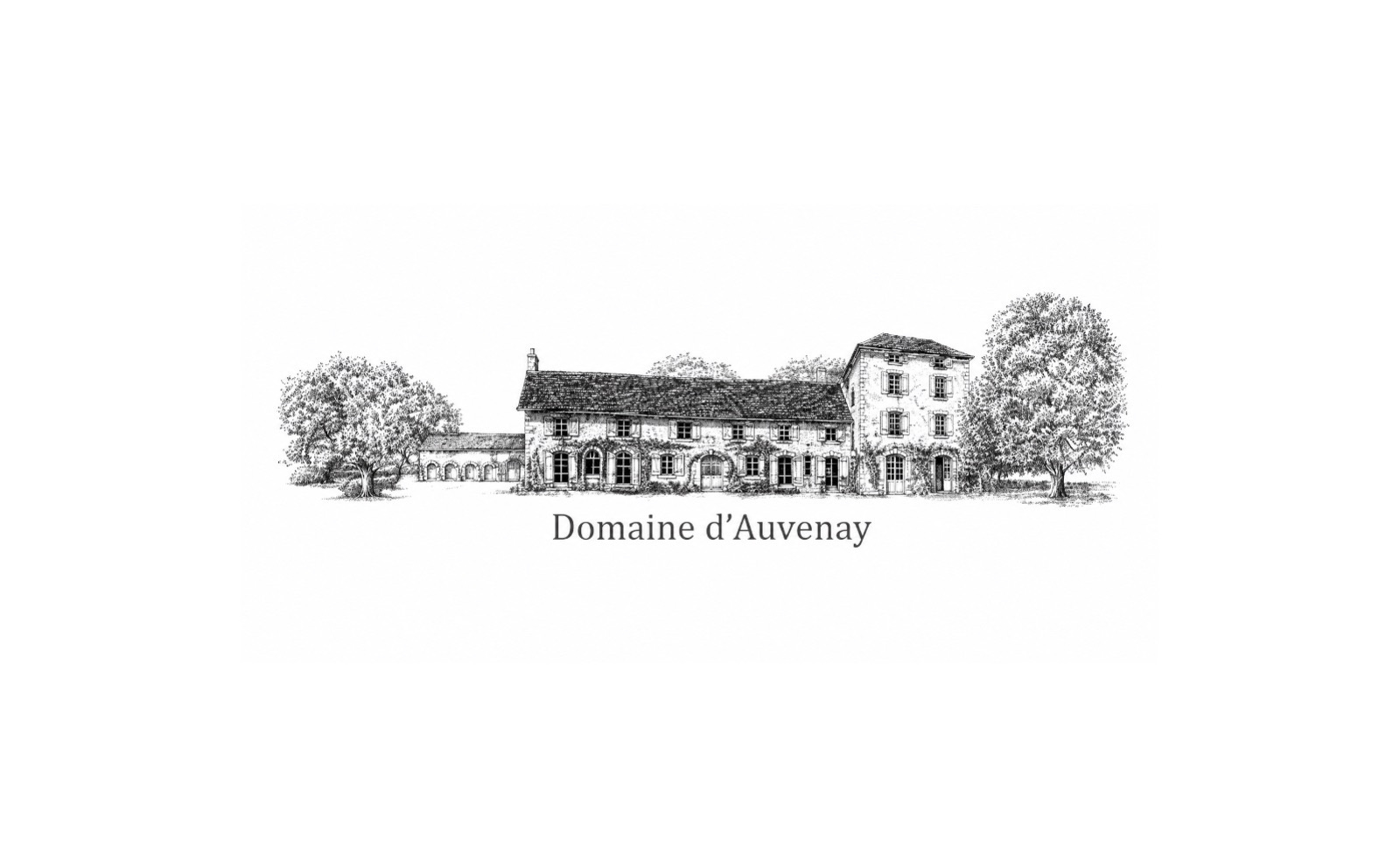
There are small Burgundy domaines, and then there is Domaine d’Auvenay. With just 3.87 hectares of vines according to La Revue du vin de France, this Saint-Romain estate is tiny even by Burgundy standards. Yet its name sits among the most coveted in fine wine, propelled by a combination of Lalou Bize-Leroy’s uncompromising viticulture, minuscule production and holdings that reach from village vineyards in Auxey-Duresses and Meursault to some of Burgundy’s most revered grands crus.
Its scale is almost difficult to reconcile with its reputation. La Revue du vin de France gives a general production figure of around 8,000 bottles per year, though that number should not be treated as a fixed annual total: output can fluctuate dramatically from vintage to vintage. In 2019, Fine+Rare reported that most d’Auvenay cuvées filled only a single barrel, while production of Criots-Bâtard-Montrachet amounted to less than 100 litres.
That tension between microscopic supply and global demand explains part of Domaine d’Auvenay’s aura. But scarcity alone does not explain why collectors, critics and Burgundy obsessives treat its bottles as objects of fascination. To understand that, it is necessary to understand Lalou Bize-Leroy.
Lalou Bize-Leroy and the creation of Domaine d’Auvenay
Marcelle Bize Leroy, universally known as Lalou Bize-Leroy, occupies an unusual place in modern Burgundy. Her career is connected not only with Domaine d’Auvenay but also with Domaine Leroy, Maison Leroy and, historically, Domaine de la Romanée-Conti, where La Revue du vin de France records her as co-manager from 1974 to 1992.
Those names are sometimes blurred together, but they are not interchangeable. Domaine d’Auvenay is a separate estate based in Saint-Romain. Domaine Leroy is the vineyard domaine in Vosne-Romanée, while Maison Leroy is the family’s négociant business. One particularly important distinction is that La Revue du vin de France records Domaine d’Auvenay as buying no grapes, reinforcing its identity as an estate-grown operation rather than a négociant activity.
The modern Domaine d’Auvenay project dates to around 1988. Sotheby’s and Fine+Rare both use 1988 as the establishment date, while The World of Fine Wine identifies 1989 as the first vintage. Further vineyard acquisitions followed during the first half of the 1990s. The most accurate way to describe its beginnings is therefore not to force everything into a single “founding year”: the estate took shape around 1988, produced its first vintage in 1989 and continued expanding its vineyard base thereafter.
Even the origin of the Auvenay property itself comes with a typical Burgundian wrinkle. Sotheby’s and The World of Fine Wine describe the Saint-Romain farm as a family property left or inherited from Lalou’s uncle Marcel Leroy. La Revue du vin de France, however, says she began by buying the farm that became her residence. Without deed-level documentation, the exact transfer remains unresolved. What is certain is that the property became the home base from which Domaine d’Auvenay developed.
A 3.87-hectare estate spread across extraordinary Burgundy terroirs
Domaine d’Auvenay’s power as a name in Burgundy comes partly from the extraordinary range packed into less than four hectares.
Its vineyards are predominantly white. La Revue du vin de France lists roughly 3.4 hectares of white varieties and 0.5 hectares of red, with the white plantings described as 90% Chardonnay and 10% Aligoté. The reds are Pinot Noir.
Different sources have described the estate as spanning 14 or 16 “appellations”, but that language can mislead. Domaine d’Auvenay bottles numerous individual climats and lieux-dits within the same formal appellation. Les Folatières and En la Richarde, for example, both belong to Puligny-Montrachet, while Meursault includes separate d’Auvenay bottlings such as Les Narvaux and Pré de Manche. It is therefore more useful to think in terms of individual vineyard sites and cuvées than to treat every label as a separate AOC.
At the summit of the range are five documented grand cru wines: the white Bâtard-Montrachet, Chevalier-Montrachet and Criots-Bâtard-Montrachet in the Côte de Beaune, and the red Bonnes-Mares and Mazis-Chambertin in the Côte de Nuits.
Chevalier-Montrachet illustrates the extreme scale involved. Sotheby’s reports Domaine d’Auvenay’s holding at just 0.16 hectare. Other parcel sizes frequently quoted for the domaine come largely from specialist merchant sources and are less securely documented, so they should be treated with more caution.
The white-wine portfolio extends beyond grand cru. Domaine d’Auvenay has produced Meursault Premier Cru Gouttes d’Or, Puligny-Montrachet Premier Cru Les Folatières and En la Richarde, village-level Puligny-Montrachet Les Enseignères and Meursault Les Narvaux, as well as a series of distinctive Auxey-Duresses wines.
En la Richarde deserves particular attention. French appellation regulations list “En la Richarde dit Les Folatières” within the Puligny-Montrachet Premier Cru parcel framework, making its identity more precise than the abbreviated “Puligny-Montrachet En la Richarde” wording sometimes seen in the market.
Auxey-Duresses is equally important to the d’Auvenay story. La Macabrée and Les Boutonniers remain among the estate’s documented bottlings, while Les Clous has its own historical significance. Fine+Rare reported that the parcel now associated with the white Les Clous bottling was once planted to Pinot Noir and was among vineyards originally belonging to Lalou’s father.
And then there is Bourgogne Aligoté. In almost any other context, Aligoté would sit at the modest end of Burgundy’s hierarchy. At d’Auvenay, Bourgogne Aligoté Sous Chatelet has become a cult wine in its own right. That inversion of conventional hierarchy is one of the most revealing aspects of the estate: producer, farming and scarcity can become as important to the market as appellation rank.
The 2023 range shows how wide the portfolio remains
A recent snapshot comes from the 2023 wines tasted for the Guide Vert 2026 by La Revue du vin de France. The whites included Auxey-Duresses La Macabrée and Les Boutonniers, Meursault Les Narvaux, Puligny-Montrachet Les Enseignères, En la Richarde and Les Folatières, Meursault Premier Cru Gouttes d’Or, Criots-Bâtard-Montrachet and Chevalier-Montrachet. The red wines included Mazis-Chambertin and Bonnes-Mares.
That list should not automatically be read as the complete current catalogue. Bâtard-Montrachet, Bourgogne Aligoté and Les Clous appear in the estate’s broader historical record but were not part of that particular 2023 tasting selection. Their absence from the tasting does not establish that they have been discontinued.
Biodynamic farming before it became fashionable
Domaine d’Auvenay’s reputation cannot be separated from Lalou Bize-Leroy’s vineyard philosophy.
Sotheby’s reports that biodynamic practices were applied at both Domaine Leroy and Domaine d’Auvenay from the beginning. It also notes an important distinction: the vineyards were already being farmed biodynamically before formal certification had been obtained in the early 1990s. Current public records for the agricultural entity identify it as an organic operation, but no current Demeter, Biodyvin or equivalent biodynamic certificate with a verifiable certificate number and validity period has been identified. “Biodynamically farmed” is therefore more precise than claiming that Domaine d’Auvenay is currently biodynamically certified.
The viticulture is famously labour-intensive. Fine+Rare’s account of a visit with Bize-Leroy describes unusually high vine canopies rather than conventional hedging. According to that report, she rejects hedging because she believes cutting the growing tips stresses the plant and may interfere with the following season’s flowering and pollination.
Fine+Rare also reported that Bize-Leroy had been analysing her soils since the 1990s because of concern over chemical treatments used in neighbouring vineyards. Harvesting is manual, according to the Guide Vert.
These choices are costly in human labour. Fine+Rare cited as many as 60 seasonal workers across Domaine Leroy and Domaine d’Auvenay combined. That figure applies to the two estates together, not to d’Auvenay alone, but it nevertheless conveys the intensity of the approach.
Tiny yields, but no single number tells the whole story
Very low yields are one of the recurring themes in descriptions of Domaine d’Auvenay, yet it is surprisingly difficult to attach one authoritative average to the estate.
Specialist merchant sources have quoted approximately 15 hectolitres per hectare. Sotheby’s has discussed yields in the broader Leroy and d’Auvenay context sometimes around 11 hl/ha and seldom far above 16 hl/ha. But the vintage variation can be enormous, as the exceptionally small 2019 crop demonstrates.
For that reason, “around 15 hl/ha” is best understood as a reported general indication rather than an official long-term average.
The broader production number requires similar care. The often-cited 8,000 bottles per year comes from La Revue du vin de France, but it is not tied to one named harvest or a published multi-vintage calculation. In a domaine where some wines can shrink to a barrel or less, annual output is inherently volatile.
What happens in the Domaine d’Auvenay cellar?
Publicly documented cellar information is less robust than the information available about the vineyards.
The most detailed account comes from specialist merchant La Souveraine, which describes winemaking in Saint-Romain using an old basket press for whites, indigenous yeasts, wooden fermentation vessels, élevage in new oak, transfer to barrel with lees, one racking and bottling without fining or filtration. It also names François Frères as the reported barrel source. These details are widely repeated, but they have not been matched to publicly available estate technical sheets, so they are better treated as reported practice than as officially published specifications.
What can be stated with greater confidence is the broader philosophy: extremely intensive vineyard work, very low production and separate vinification of tiny individual sites. At this scale, “micro-production” is not marketing language. In certain vintages, it is a literal description.
Why Domaine d’Auvenay is so difficult to buy
Scarcity begins in the vineyard but continues into distribution.
According to the current practical information published by La Revue du vin de France, Domaine d’Auvenay does not offer sales at the property or mail-order sales, and visits are by appointment and reserved for distributor clients. Those conditions help explain why normal consumer access is so limited.
There is also no publicly verified allocation list showing how many bottles are sent to each importer, distributor or country. Nor is there authoritative public information on how much wine is retained in the estate’s cellars. Attempts to convert market scarcity into precise allocation figures are therefore speculative.
This is one reason Domaine d’Auvenay bottles so often surface in the public imagination through auctions rather than conventional retail.
Domaine d’Auvenay at auction: when white Burgundy becomes a trophy asset
The secondary market gives the clearest numerical expression of the estate’s cult status.
In a December 2024 Decanter report based on iDealwine data, eight of the ten highest-ranking white Burgundy lots in the cited 2024 period were from Domaine d’Auvenay. A single bottle of 2005 Criots-Bâtard-Montrachet achieved a €16,902 hammer price, while a 1999 Chevalier-Montrachet reached €10,266. These are individual auction transactions rather than universal valuations, but they illustrate the market’s appetite for the estate.
The numbers moved into an even higher bracket in trade data reported by Decanter in August 2026. Bordeaux Index/LiveTrade placed Domaine d’Auvenay Chevalier-Montrachet and Bâtard-Montrachet in a £15,000–£20,000-per-bottle bracket for the first half of 2026. That should not be confused with an estate release price, and it should not be generalized across every wine or vintage.
Within the same dataset, those d’Auvenay wines sat above the quoted brackets for Domaine Leflaive Montrachet and Domaine de la Romanée-Conti Montrachet. It is an extraordinary comparison, but a very specific one: it reflects a particular period of secondary-market trading rather than a permanent ranking of producers.
The difference between rarity and myth
Plenty of wines are rare. Domaine d’Auvenay occupies another category because its rarity is multiplied across individual vineyard bottlings.
A 3.87-hectare estate producing around 8,000 bottles in a typical directory estimate would already be small. Divide that production among numerous separate wines, then reduce individual cuvées further in low-yielding vintages, and the number of bottles of any one wine becomes extraordinarily limited.
Then add the hierarchy of the vineyards themselves: Chevalier-Montrachet, Criots-Bâtard-Montrachet and Bâtard-Montrachet for white Burgundy; Bonnes-Mares and Mazis-Chambertin for Pinot Noir; Puligny-Montrachet and Meursault at Premier Cru and village level; Auxey-Duresses sites that become collector wines because of the person farming them.
Domaine d’Auvenay therefore challenges one of Burgundy’s simplest assumptions. The region is usually explained through a hierarchy of appellations, from regional wines through village and Premier Cru to Grand Cru. At Auvenay, that hierarchy still matters, but Lalou Bize-Leroy’s reputation has become powerful enough to elevate even ostensibly modest appellations into the realm of global collectibles.
A Burgundy estate whose legal structure is almost as complex as its vineyards
Behind the romantic image of a tiny Saint-Romain domaine lies a more complicated legal structure.
The vineyard operation is associated with SCE DU DOMAINE D AUVENAY, an agricultural company based in Saint-Romain. A second entity named DOMAINE D’AUVENAY was created in 2016 as a separate commercial SAS involved in the wholesale wine and spirits trade. The two should not be treated as the same company.
Wine publications regularly describe Lalou Bize-Leroy as Domaine d’Auvenay’s proprietor, and that remains the clearest description for wine readers. Current agricultural-company records, however, list multiple associates and do not make exact beneficial ownership percentages publicly available. The common description of d’Auvenay as her personal estate should therefore not be converted into an unsupported claim about sole legal share ownership.
The commercial SAS also files financial accounts, but those figures cannot simply be presented as “Domaine d’Auvenay winery revenue.” Its declared purpose includes the buying and wholesale trading of wine and spirits, and the 2024 accounts show substantial merchandise purchases. The agricultural vineyard entity does not publish equivalent standalone accounts through the reviewed public-record system.
Domaine d’Auvenay’s place in modern Burgundy
Critical attention has followed the estate for decades. Vinous devoted an entire retrospective to “The Magic of d’Auvenay: 1989–2011” in 2018, while La Revue du vin de France currently gives the domaine four stars in its Guide Vert. Sotheby’s has featured d’Auvenay Chevalier-Montrachet alongside Domaine Leroy Musigny in its fine-wine editorial coverage.
Yet the essence of Domaine d’Auvenay is not easily captured by scores or prices. It sits at the intersection of several forces that define modern Burgundy: obsessive attention to individual parcels, biodynamic farming, vanishingly low yields, tiny-scale vinification and the extraordinary global demand attached to the most celebrated growers.
Its grands crus are among the rarest wines in Burgundy. Its village wines can trade like other producers’ grands crus. Its Aligoté has become collectible. And its entire vineyard surface is smaller than some single holdings owned by larger domaines.
For collectors, that makes Domaine d’Auvenay one of Burgundy’s ultimate scarcity plays. For growers, it represents one of the most uncompromising expressions of Lalou Bize-Leroy’s philosophy. And for drinkers lucky enough to encounter a bottle, the name on the label signals something increasingly unusual in fine wine: a vineyard, a producer and a scale of production so small that every individual cuvée feels almost irreproducible.