
Domaine d’Auvenay: Criots-Bâtard-Montrachet Grand Cru
Microscopic production and grand-cru authority in Burgundy’s smallest white grand cru
Introduction
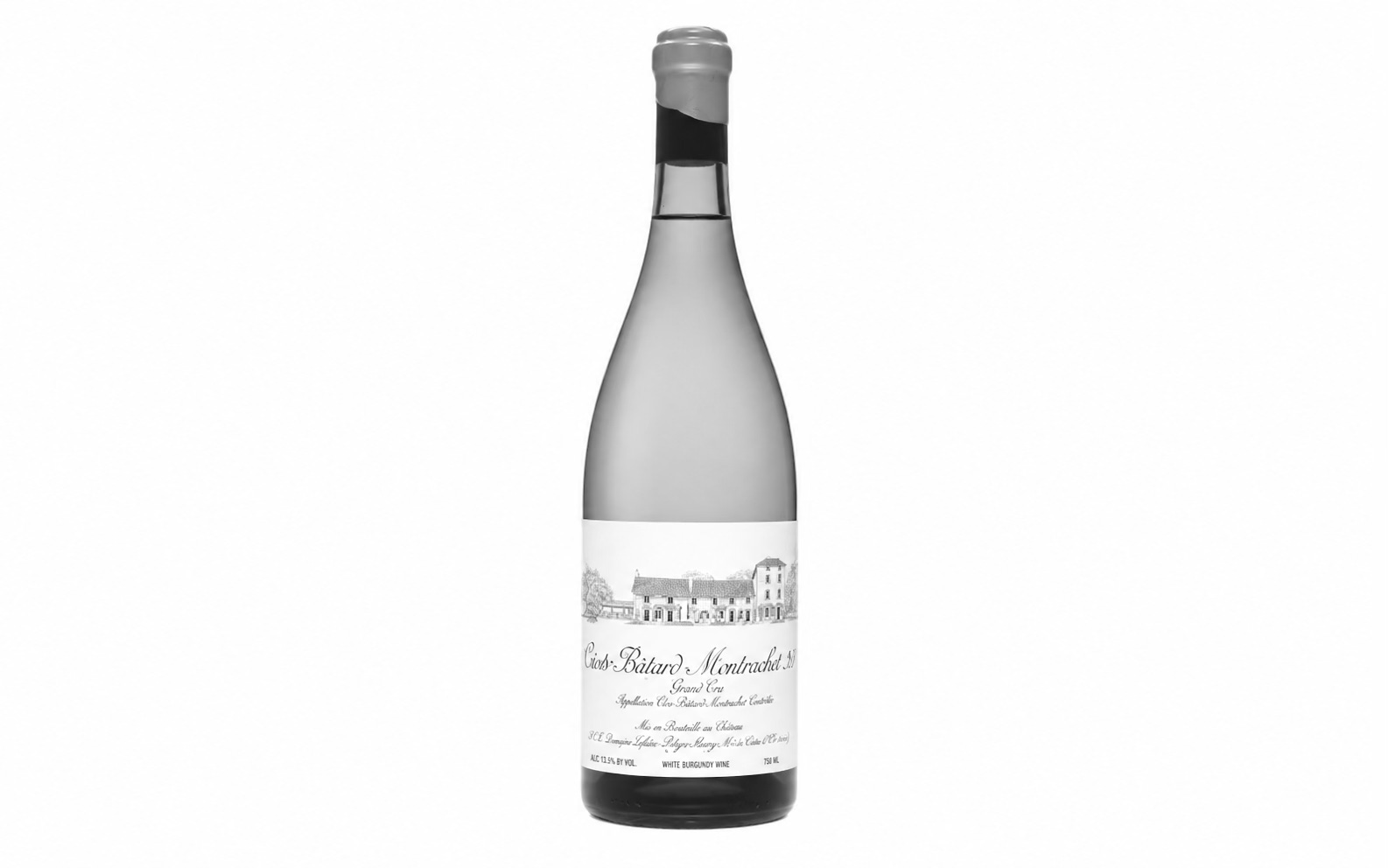
Domaine d’Auvenay’s Criots-Bâtard-Montrachet occupies a singular place in fine wine: a white grand cru from a minute holding in the smallest white grand cru climat in , made by , and priced by the market at a level usually reserved for the greatest labels of Montrachet and the most coveted red Burgundies. Publicly available market data from put it among the world’s most expensive wines in 2024, while specialist terroir sources describe Criots-Bâtard-Montrachet itself as only 1.57 hectares in total. This is, in other words, not merely a rare Burgundy; it is a micro-production grand cru whose scarcity, critical prestige, and global demand reinforce one another with unusual force.
Estate and producer background
Domaine d’Auvenay is the home estate of Bize-Leroy in , and serious Burgundy literature consistently treats it as a separate, intensely personal project within the wider Leroy universe. described the estate as roughly four hectares in Saint-Romain, while a later Decanter regional profile noted that Auvenay was established by Bize-Leroy and remains central to the family’s identity in the hills above the Côte de Beaune. adds that the parcels bottled under the Auvenay name were assembled between 1989 and 1995. In reputation, the domaine sits at the apex of white Burgundy; Decanter’s long-running classification placed it among Burgundy’s “superstar” estates and explicitly advised that the wines should be kept for a long time.
The estate’s philosophy is inseparable from Bize-Leroy’s role in the broader rise of biodynamics in Burgundy. and related Jancis Robinson reporting identify her as one of the region’s earliest and most famous biodynamic advocates; Decanter likewise notes that biodynamism was a foundational decision in her domaine work. Contemporary commentary on the estate’s vineyards repeatedly returns to the same points: old-vine continuity, radical crop-thinning, and a belief that the grower’s role is to preserve, not cosmetically “improve,” what the site gives. For collectors, that matters because Auvenay is not prestigious by brand architecture alone; its authority comes from a rigorously consistent viticultural aesthetic pursued over decades.
Terroir analysis
Criots-Bâtard-Montrachet lies in the northern sector of , immediately south of Bâtard-Montrachet. Specialist and official sources broadly agree on its geometry: a very small grand cru, predominantly south to south-east facing, with stony, well-drained soils over limestone and clay. Winehog’s terroir study places Auvenay’s holdings in the lower southern end of the climat and gives the estate’s exact surface area as 0.0637 hectares split between two cadastre parcels. Official descriptions from and characterize the cru as gravelly and stony, with Bathonian or Callovian limestone and mixed clay, and notably steeper and more angular than Bâtard itself.
That geology explains why Criots often combines the breadth and creaminess expected from the Montrachet hill with a more compact, chalk-marked structure than many Bâtard-Montrachets. Official and merchant-appellation descriptions repeatedly emphasize both power and finesse: richness, ripe orchard fruit, creamy texture, and pronounced mineral length. On Auvenay’s tiny holding, in the lower southern sector, that profile is intensified by very low yields and the estate’s exacting selection. The effect, in tasting terms, is a wine that reads less airy than top Chevalier-Montrachet and less overtly massive than the most opulent Bâtards, but often more concentrated and more internally driven.
Viticulture, winemaking, and technical composition
Reliable public sources converge on a few non-negotiable facts about Auvenay: biodynamic farming, hand work of extraordinary intensity, and yields far below appellation norms. Jancis Robinson recorded an average of just 10 hl/ha across Bize-Leroy’s biodynamic vineyards in 2010, against a normal level she gave as 24 hl/ha. reported that in 2019 most Auvenay cuvées amounted to only one barrel, and that the Criots-Bâtard-Montrachet yielded less than 100 litres. These are estate-wide data points rather than an uninterrupted technical sheet for Criots itself, but they are fully consistent with the domaine’s reputation for microscopic production and with the market’s chronic scarcity of bottles.
Published accounts of Bize-Leroy’s cellar doctrine are equally exacting. A major profile in Decanter of the wider Leroy cellar method describes severe sorting, lees retention, little or no filtration, and relatively early bottling to preserve fruit, alongside extensive use of new wood. A World of Fine Wine profile adds that the white grapes are usually pressed immediately, without crushing, in pneumatic press—while specifically flagging the tiny Criots parcel as an exception worth noting. Public importer and merchant profiles for Auvenay consistently add oak ageing and organic-biodynamic vineyard management. The prudent conclusion is that Auvenay’s Criots is not made by cosmetic intervention, but by an uncompromising upstream selection regime and a cellar practice designed to preserve density, extract minutiae of site, and bottle without polishing away texture.
On technical composition, the essentials are straightforward. Criots-Bâtard-Montrachet is a Chardonnay grand cru, and public lot sheets for Auvenay show 13.5% alcohol for the 2005 and 2006 wines, rising to 14% in a 2011 lot offered by iDealwine. Exact estate yields by vintage are not published in any consistent, public ex-domaine matrix that I could verify, which is itself typical of the domaine’s opacity. For collectors, the useful takeaway is that the wine is technically orthodox—Chardonnay, grand cru, natural cork, Burgundy bottling—but operationally extreme in its crop level, élevage philosophy, and bottle rarity.
Vintage chronicle
No public ex-domaine register appears to list every Auvenay Criots release in one place. To avoid inference, the chronology below covers the release vintages I could verify through authoritative auction and critic archives—1995 through 2007, then 2010 through 2012—plus the documented 2019 crop year. I have not treated missing years as either produced or not produced without equivalent public evidence.
1995 was a very small crop with real concentration. 1996 brought the famously high-acid profile of the vintage, producing potentially stunning but sometimes lean whites. 1997 yielded charming, earlier-drinking wines. 1998 was beset by frost, hail and mildew, and is respectable rather than monumental. 1999 saw a large crop ripened by fine late-season weather, generally crisper and potentially longer-lived than 2000.
2000 produced very ripe, immediately charming whites with fairly good acidity. 2001 was variable, with erratic weather and rot, rewarding growers who limited yields. 2002 offered both quality and quantity. 2003, by contrast, was the heatwave year: very difficult for white Burgundy, low in acid, and occasionally built from shrivelled rather than freshly ripened fruit. 2004 returned to higher acidities and more angular profiles.
2005 is a benchmark white Burgundy year, producing very concentrated wines expected to live unusually long lives; that context is central to understanding why the 2005 Auvenay has become such a market trophy. 2006 followed a poor summer with much-needed fine weather in early September, giving relatively consistent, early-maturing but quite fleshy whites. 2007was another difficult summer, but late-August drying winds rescued Chardonnay better than Pinot, resulting in crisp whites.
After a gap in the public source trail, 2010 reappears as a small, ripe, high-acid crop in which sorting was crucial after a stormy September. 2011 was chaotic and less ripe than the surrounding vintages, yet balanced and well-defined. 2012 was catastrophically small in volume across Burgundy, but the surviving whites were widely judged far better than the season had threatened. Finally, 2019 is not yet visible to me in a released, authoritative tasting archive for this bottling, but Fine+Rare’s visit report documents that Criots fruit was harvested in tiny quantity—less than 100 litres—after the difficult flowering and heat conditions of the year.
Tasting profile and aging trajectory
A professional tasting profile for this wine must be understood as a synthesis of published descriptions rather than a single monolithic house note, because so little is made and public access is sporadic. Across available sources, the visual register runs from pale gold in youth to deeper yellow-gold with age. The aromatic spectrum is notably broad for grand cru Chardonnay: lemon, orchard fruit, butter, almond, honey, spice, and an emphatically mineral undertow. The palate, in Robert Parker’s published 1999 note as reproduced in a merchant archive, was oily in texture, thick, fat and dense yet still elegant and focused, with a powerful mineral core and an extraordinarily long finish; the appellation-level and auction descriptions for 2005 and 2011 similarly stress power, complexity, creaminess and distinction.
Structurally, this points to a wine of full body, high dry extract, substantial glycerol impression, and the sort of acidity that is less obvious in youth than its density, but crucial to its eventual precision. Tannin is irrelevant, of course, but phenolic grip matters: the wine’s authority seems to come not merely from ripe fruit and oak but from a deep mineral and textural chassis. At its best, typicity lies in the tension between Criots’ inherent creaminess and Auvenay’s harder, more severe internal line. That is why this wine can feel both enveloping and almost architectural.
For collectors, the drinking window should be framed conservatively. Jancis Robinson’s Burgundy white chart suggests that 2005 has exceptional longevity, 2010 has the acid spine and fruit concentration for long aging, and 2012 combines very low yields with surprising quality. A reasoned collector window for the strongest Auvenay Criots vintages is therefore roughly 12 to 30 years from harvest, with 2005, 2010 and 2012 likely the most durable among the publicly verifiable post-2000 wines. 1997 and some 2003s should mature earlier; 1999 and 2002 can already be in a noble plateau. One further collector’s comfort point: Jancis Robinson specifically singled out Leroy/d’Auvenay among white Burgundy producers whose wines seemed relatively unaffected by the premature-oxidation problem that scarred the region.
Critical reception and market position
The publicly visible critical record is emphatic. On iDealwine, the 2005 carries 95 from , 96 from Burghound, and 100 from RVF. The 2006 appears on iDealwine with 94–97 from . A merchant archive reproducing Parker’s commentary gives the 1999 93 points and emphasizes its oily texture, density, focus and mineral persistence. Even allowing for the imperfect public availability of top-burgundy notes, the pattern is unmistakable: when critics see the wine, they treat it as a wine of the very highest rank.
The market has priced that reality with almost unnerving clarity. A 2005 bottle sold on iDealwine for €16,902 in 2024, and Decanter cited that wine among the top white Burgundy lots of the year. iDealwine’s current 2026 estimate for the 2011 stands at €16,151, while its March 2026 auction report records a 2011 bottle hammering at €17,152. The 2006 is equally instructive as a price-evolution case study: iDealwine’s current estimate is €4,815, and its auction history shows bottles selling below €1,000 in 2014 and around €3,400–€3,900 by 2019. That is not just expensive; it is a blue-chip trajectory built on authentic scarcity.
Context sharpens the point. Wine-Searcher ranked the wine fourth among the world’s most expensive wines in 2024, at an average price of $22,184, behind only Leroy Musigny, Romanée-Conti, and Auvenay Chevalier-Montrachet in that table. Decanter reported that Auvenay accounted for eight of the ten top white Burgundy lots it had sold in 2024 up to that point. For investors, the conclusion is not that the wine is “safe” in a simplistic sense—liquidity remains thin, price discovery is imperfect, provenance is critical, and condition differences matter enormously—but that it belongs to the narrow class of wines whose scarcity and symbolic capital are so extreme that they function as global luxury assets as much as as bottles of wine.
Comparative context, gastronomy, and final assessment
Within its own appellation, the clearest stylistic benchmark is . The domaine’s official material describes classical élevage—indigenous fermentations, 12 to 18 months in barrel, and 30–40% new oak for premiers and grands crus—aimed at wines that are generous, terroir-respectful, and approachable relatively young. iDealwine’s description of Fontaine-Gagnard’s 2020 Criots speaks of moderately pebbly soil, rich ripe fruit and imposing elegance, and current retail references put that wine around €300–360 per bottle, with auction bids around the low four figures. Auvenay, by contrast, sits not just above it in price but in another category of scarcity and concentration altogether.
Domaine Hubert Lamy offers a more radical counterpoint. Merchant and critic-facing materials on Lamy’s Criots Haute Densité emphasize adjacent high-slope fruit, one-barrel production, no new oak, racy acids, and a long chalky finish. That translates into a more tensile, more transparent, almost anti-luxurious expression of the same grand cru. , meanwhile, represents a more classical commercial grand-cru reading: broader, more overtly toasty, vanilla- and exotic-fruit inflected, with official pairings that include scallops, monkfish and lobster, and current fixed-price market availability around €420 on iDealwine. Auvenay’s distinction is that it combines the site’s natural power with cult-level concentration, ruthless crop selection, and a collector psychology that pushes it into direct comparison not only with other Criots, but with wines such as Domaine Leflaive Montrachet. Wine-Searcher’s 2024 price ranking makes that global positioning explicit.
Food pairing should therefore be approached not as an afterthought but as a calibration of luxury and precision. Based on the wine’s documented density, minerality and cream-textured power—and on the gastronomic register officially proposed for other top Criots bottlings—the finest matches are poached lobster with a restrained shellfish reduction, line-caught turbot with beurre blanc and caviar, saffroned monkfish, Bresse chicken with vin jaune and morels, or sweetbreads glazed rather than heavily sauced. Mature bottles can also absorb the nutty, crystalline savour of aged Comté. The key is to avoid sweetness, overt smoke and aggressive spice; this is a wine that demands dishes of amplitude and clarity rather than culinary theater.
Final assessment: Domaine d’Auvenay Criots-Bâtard-Montrachet Grand Cru is not simply the most prestigious wine of its appellation; it is one of the defining luxury white wines of the world. What separates it from its closest peers is not a single factor but the compound effect of a microscopic holding, a rigorously biodynamic and low-yielding culture, a terroir that marries power with chalky compression, and a market that has ratified its near-mythic status. For the collector, it is a wine to buy only with impeccable provenance and with patience. For the drinker fortunate enough to open it at maturity, it promises one of the most concentrated and intellectually complete expressions of white Burgundy available anywhere.