
Domaine d’Auvenay: Chevalier-Montrachet Grand Cru
A microscopic Chevalier holding that sits at the summit of white Burgundy and the top tier of global fine-wine pricing
Introduction
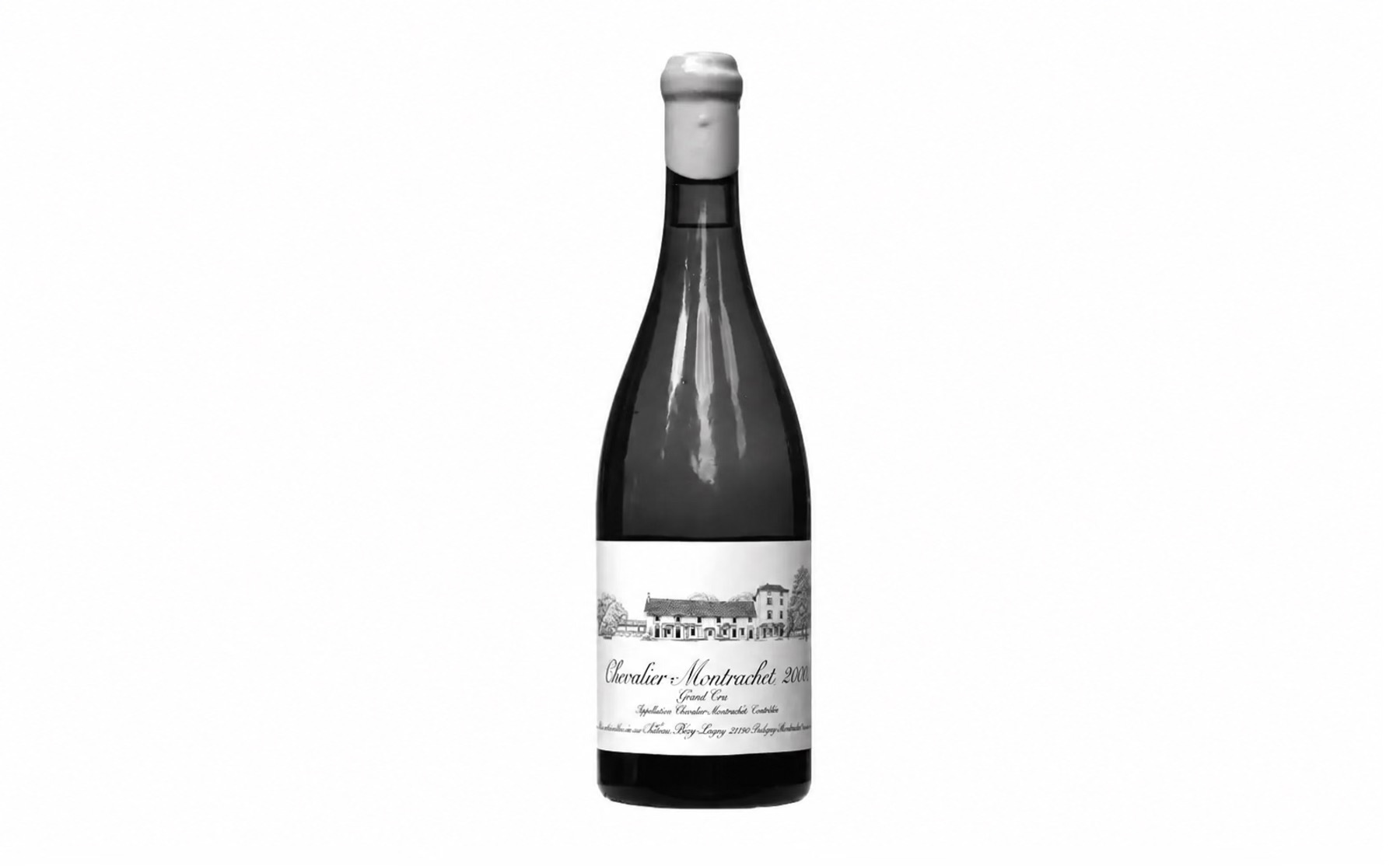
Domaine d’Auvenay Chevalier-Montrachet Grand Cru occupies an extreme position even by grand cru Burgundy standards. In the pricing and critic-aggregation data published by , it ranked first among the world’s Chardonnays in 2021 with an aggregated score of 98 and an average price of $30,946 per bottle across vintages; WineCap’s 2026 tracking page still places it at an average case price of £191,641, while a 2024 market summary cited it among the three most expensive wines in the world at roughly $23,306. That combination of microscopic production, elite critical standing, and sustained price altitude is what turns this wine from a mere luxury bottle into a collector’s object of reference.
Its importance is not simply monetary. Chevalier-Montrachet, at its best, is one of Burgundy’s most incisive white grand crus: less expansive than Montrachet, more linear, chalk-marked, and tensile. Domaine d’Auvenay’s rendering has become the category’s most severe interpretation of that template—rarer than most peers, generally more expensive than almost all of them, and repeatedly treated by leading critics as one of the great white wines of the modern era.
Estate & Producer Background
The wine is inseparable from Lalou Bize-Leroy, whose influence on modern Burgundy extends well beyond this single parcel. According to official history material from , Domaine Leroy was founded in 1988, with family roots reaching back to 1868 and the establishment of Maison Leroy; Sotheby’s notes that Domaine d’Auvenay also dates from 1988 and is named after the family farm above Saint-Romain, near the winery and cellars in Auxey-Duresses. Sotheby’s further describes Domaine d’Auvenay as a “minnow,” with an entire holding of about four hectares spread across 14 appellations, predominantly white, including five grands crus. More recent trade coverage places the estate at 3.87 hectares, which is effectively consistent with that broader description.
Just as important as scale is philosophy. Official Leroy material states that low yields have been a defining feature from the early years, tied first to organic and then biodynamic viticulture; the domaine’s homepage describes Bize-Leroy as one of the first Burgundy growers to introduce biodynamics locally. Jancis Robinson has also identified Lalou as an early Burgundian adopter of biodynamics, and a 2023 Sotheby’s essay emphasized that she applied biodynamic farming at both Leroy and d’Auvenay from the beginning. In the same Sotheby’s account, Burgundy is presented less as a place of “winemaking” than of allowing perfect grapes to translate site with minimal distortion—an idea reinforced by Robinson’s report of Lalou’s view that truly healthy vines and ripe fruit mean the wines “need no making.”
For collectors, this matters because Domaine d’Auvenay is not simply another prestige white Burgundy label attached to a grand cru name. It is the personal, radically small-scale white-wine project of one of Burgundy’s defining growers, executed under an uncompromising viticultural regime that has become part of the wine’s identity and part of its market mythology alike.
Terroir Analysis
Chevalier-Montrachet is a white-only grand cru in the commune of Puligny-Montrachet. The official Bourgogne appellation file places the climat at 265 to 290 meters in altitude, with east and south exposures, and describes its soils as thin, stony rendzinas derived from marls and marly-limestones. The same official source records a total surface area of 6.95 hectares in 2022 and a five-year average production of 258 hectoliters, equivalent to about 34,314 bottles for the whole appellation. This is already a tiny grand cru by any standard.
Within the Montrachet family, Chevalier sits immediately above Montrachet on the slope. Sotheby’s summarizes the distinction precisely: the vineyards are cooler and steeper than Montrachet, with shallower soils and more underlying limestone; the resulting wines are “more mineral and nervy,” “tightly sprung rather than explosive,” and slow to unfurl. That description aligns tightly with the official Bourgogne note that contrasts Chevalier’s thin, stony soils with the deeper, more clay-influenced brown limestone soils of Bâtard-Montrachet and the differently structured soils of Montrachet itself.
For style, the implications are fundamental. The altitude and exposition preserve tension; the shallow soils and marked limestone presence reduce any tendency toward broad, immediate opulence; and the stony, erosion-prone terrain favors concentration without heaviness. In practical tasting terms, Chevalier at this level is not usually about amplitude first. It is about verticality, minerality, line, and delayed authority. That is the key reason collectors often speak of great Chevalier-Montrachet as intellectually sterner than Montrachet, and why d’Auvenay’s version—given its even greater scarcity and very low yields—has a reputation for combining textural density with almost austere structural control.
Viticulture, Winemaking & Technical Composition
The technical base is clear because the appellation is tightly regulated. The INAO cahier des charges states that Chevalier-Montrachet is reserved for still white wines made exclusively from Chardonnay; the minimum planting density is 9,000 vines per hectare, irrigation is prohibited, the minimum natural alcoholic strength is 12%, and the standard yield is set at 48 hectoliters per hectare, with a ceiling yield of 54 hectoliters per hectare. The same document specifies pruning rules and a maximum average parcel crop load of 9,000 kilograms per hectare.
At the estate level, public documentation is far less abundant, which is itself characteristic of d’Auvenay. The most detailed public technical summary I could verify comes from , which states that Bize-Leroy acquired this tiny 0.16-hectare plot from the Chartron family in 1992 and that the old vines were planted in the 1940s. The same source describes biodynamically farmed, hand-picked fruit, traditional old-basket presses, indigenous-yeast fermentation in wooden vats, and élevage on lees in 100% new oak from François Frères, followed by bottling without fining or filtration. A separate profile from confirms biodynamic viticulture and presents the wine as the estate’s emblematic Chevalier bottling.
Technically, then, the composition can be stated with confidence as 100% Chardonnay. The plot is reported at 0.16 hectares. Exact finished alcohol is vintage-dependent and not systematically published in the authoritative sources I reviewed, so only the AOC minimum of 12% natural alcohol can be stated without overreach. Production is measured in numbered bottles rather than in broad commercial volumes: WineCap says often fewer than 500 bottles; trade and auction records show specific examples such as 730 bottles in 1993, 576 in 1995, 600 in 2002, 706 in 2007, and 808 in 1997. That makes scarcity structural, not rhetorical.
Vintage Report
Because the parcel was reportedly acquired in 1992, the public record I could verify surfaces with the 1993 vintage. The longest continuous market listing I found, from , runs from 1993 through 2013, and Robert Parker’s database confirms at least 2015 and 2016 as reviewed vintages. The notes below therefore cover the verified public release era as regional vintage context, without asserting a bottle-by-bottle release chronology for any year I could not independently verify to the same standard.
For 1993 through 1999, Burgundy’s white-vintage pattern was highly uneven but often rewarding at the top end. Jancis Robinson’s white Burgundy vintage chart describes 1993 as a large, ripe harvest struck by rain, with concentration problems; 1994 as generally better and more consistent for whites than reds; 1995 as a very small crop with real concentration; 1996 as a high-acid year whose best-balanced whites are stunning; 1997 as charming and relatively early-drinking; 1998 as a year in which frost, hail, and mildew all intervened; and 1999 as a large crop rescued by fine late-August and early-September weather, with the best wines slightly crisper and potentially longer-lived than the 2000s. Auction records illustrate the scale of production in these years: 730 bottles are recorded for 1993, 576 for 1995, 725 for 1996, and 808 for 1997.
From 2000 through 2006, the arc becomes especially interesting for collectors. Robinson describes 2000 as extremely ripe and healthy; 2001 as variable, with rot pressures but some surprisingly good whites from those who limited yields; 2002 as good in both quality and quantity; 2003 as a heatwave year with exceptionally low acidity and some shriveled fruit; 2004 as high-acid and angular; 2005 as very concentrated and built to outlast most white Burgundy vintages; and 2006 as a weaker summer redeemed by fine early-September weather, yielding relatively consistent, early-maturing fleshy whites. These general observations track well with bottle evidence: the 2002 d’Auvenay, with 600 bottles recorded, drew 18.5/20 from Jancis Robinson and 99/100 from Neal Martin, while Martin described the 2005 as one of the greatest white Burgundies he had ever encountered.
The 2007 to 2016 span contains many of the vintages most discussed in today’s market. Robinson characterizes 2007 as another rainy summer saved by late-August drying winds; 2008 as climatically difficult but classically fresh and high in acidity; 2009 as warm, healthy, and broadly high quality; 2010 as a small, ripe crop with high acidity and crucial sorting after September rot; 2011 as chaotic but balanced; 2012 as tiny in volume but much better than feared; 2013 as a short crop after a cold spring and erratic summer; 2014 as promising, with good acids and useful freshness; 2015 as early, warm, rich, and lower in acidity than 2014; and 2016 as frost- and hail-struck but classically proportioned in style. Critically, Parker’s database confirms 2015 and 2016 at 100 points, and Wine-Searcher’s aggregation notes that even the tricky 2013 is rated 97.
For practical collecting purposes, the strongest named candidates in the verified era are 1995, 1999, 2002, 2005, 2009, 2010, 2015, and 2016—years in which either vintage conditions, direct critical assessments, or both suggest the fullest convergence of concentration, precision, and longevity.
Tasting Profile & Aging Potential
Across reviewed bottles, the professional tasting profile is strikingly coherent. The 2010, tasted by Jancis Robinson, was described as “greenish gold,” “very refreshing and rewarding,” and markedly vivacious; Neal Martin’s 2002 note speaks of “pure liquid minerals,” a “silver bead of acidity,” lemon peel, spice, and grilled hazelnuts; and another review of the same 2002 records pineapple, citrus peel, wet stone, white flowers, smoky oak, explosive citrus fruit, and extraordinary mineral lift. For the 2005, Martin noted a breathtaking bouquet with a subtle tropical nuance woven into liquid minerality, then a saline, slightly viscous finish held firmly in line by razor-sharp acidity.
From those convergences one can define the wine professionally without resorting to ornament. Visually, it tends to move from pale or green-tinged gold in youth to deeper gold with age. Aromatically, primary notes lean toward citrus oil, orchard fruit, white flowers, and occasionally pineapple in warmer years; secondary notes include smoke, lees-derived creaminess, toast, and discreet oak spice; tertiary development introduces grilled nuts, hazelnut, butterscotch, and more overt reduction or savory complexity. On the palate, the signature is density without heaviness: high but not harsh acidity, substantial dry extract, pronounced mineral/saline drive, and a finish that often feels both expansive and tightly coiled. The typicity is Chevalier rather than Montrachet—more line than amplitude, more nerve than flamboyance.
Evidence on aging potential is unusually strong. WineCap states 20-plus years; Jancis Robinson suggested a 2018–2032 drinking window for the 2002 and commented that it tasted perhaps fifteen years younger than the 2003 served alongside it; Robinson’s vintage chart explicitly singles out 2005 as a white Burgundy built to last far longer than most; Antonio Galloni’s note on the 2010 emphasizes that it was still very young in 2018; and the 1995 was being spotlighted by Sotheby’s in 2023 for its concentration and ageworthy balance. A sensible collector’s rule, therefore, is not to think in terms of early accessibility. In strong vintages, this is a wine to buy for a second or third decade of life, not for immediate demonstration.
Critical Reception & Market Position
The critical record is emphatic. William Kelley gave the 2015 100 points, and Robert Parker’s review index shows the 2016 at the same level. Robinson scored the 2002 at 18.5/20. Neal Martin rated the 2002 99/100 and described it as near perfection, while another widely circulated Martin note called the 2005 one of the greatest white Burgundies he had ever tasted. Kelley also named the 1999 Domaine d’Auvenay Chevalier-Montrachet Grand Cru among his ten greatest wines drunk in 2018. This is not merely a pattern of high release scores; it is a pattern of sustained reverence in bottle.
From an investment standpoint, the price history is equally telling. Wine-Searcher’s 2021 study showed the wine rising from about $3,031 five years earlier to $9,042 in April 2021 and then to $30,946 by December 2021; a 2024 summary still placed it at $23,306, and WineCap’s current case-level tracking sits at £191,641 with an aggregated Wine Track critic score of 96.70. A Sotheby’s-related sale highlighted by WineCap saw six bottles of the 2009 bring €106,250 in Paris in 2024. At the same time, the broader Burgundy market has softened: Liv-ex’s Burgundy 150 is down 13% over two years, though still up 6% over five years. The implication—clearly an inference from those data points—is that d’Auvenay Chevalier-Montrachet behaves less like a broad-market Burgundy holding and more like a trophy asset whose pricing is determined primarily by scarcity, headline provenance, and top-vintage competition among a very small buyer pool.
Scarcity reinforces that investment logic. This is a 0.16-hectare holding with production often reported below 500 bottles and repeatedly documented in the hundreds rather than thousands. In real terms, that means allocation is not merely tight; it is structurally exclusionary. For the collector, ownership depends less on normal retail access than on pre-existing merchant relationships, elite allocations, and the auction circuit.
Comparative Context, Food Pairing & Conclusion
Within Chevalier-Montrachet itself, the most illuminating comparison is with Domaine Leflaive]. Leflaive farms a far larger 1.80-hectare holding across three parcels, also biodynamically, and publishes a relatively transparent technical regimen: long pneumatic pressing, fermentation in oak casks, 12 months in barrel plus 10 months in tank, and about 25% new oak. This generally translates, in market and stylistic terms, to a more classical, more openly architectural expression of the appellation. Domaine d’Auvenay, by contrast, is based on a far smaller 0.16-hectare parcel, with a far rarer physical supply and a publicly reported cellar approach involving full new oak and no fining or filtration. If Leflaive is the canonical, openly documented grand-seigneur reading of Chevalier-Montrachet, d’Auvenay is the hyper-concentrated micro-cuvée version. That distinction is reflected in pricing as well: Wine-Searcher’s 2021 Chardonnay ranking placed d’Auvenay at a 98 aggregated score and $30,946 average price, while Leflaive’s Chevalier appeared on the same list at 95 and $1,277.
A second useful comparison is with Bouchard Père & Fils, especially its La Cabotte bottling. Bouchard’s technical sheet stresses a distinct subparcel between geological faults, hand harvesting, restrained new oak at 10% to 25%, and a long but carefully staged élevage. The producer describes La Cabotte as joining the generous aromas of Chevalier with the depth and tension of Montrachet. That is revealing because it throws d’Auvenay’s identity into sharper relief: d’Auvenay is valuable precisely because it does not court resemblance to Montrachet as an ideal of breadth. Its prestige rests instead on driving Chevalier’s own virtues—limestone nerve, delayed power, incisive mineral authority—to an almost absolute conclusion. On the world stage, that is highly unusual: among the very highest-priced Chardonnays, many are Montrachet or cult California wines; d’Auvenay’s singularity is that a postage-stamp Chevalier parcel has entered that global echelon.
At table, the wine demands cuisine with both noble texture and restraint. Official Bourgogne guidance recommends foie gras, caviar, lobster, crawfish, firm-fleshed white fish such as monkfish, fine poultry with cream and mushroom sauce, and veal; iDealwine also lists langoustines, volaille à la crème, and scallops with mushrooms. The common denominator is not luxury ingredient for its own sake, but dishes with enough succulence and savory detail to meet the wine’s density without flattening its acidity or mineral detail. The most convincing pairings are therefore blue lobster or langoustines, scallops with mushrooms, monkfish in beurre blanc, and impeccably roasted poultry finished with cream and morels.
The final assessment is straightforward. Domaine d’Auvenay Chevalier-Montrachet Grand Cru is not simply one of the leading wines of its appellation; it is one of the decisive white wines of Burgundy and one of the most rarefied Chardonnay assets in the world. Its greatness rests on the convergence of a limestone-intense Chevalier terroir, an owner whose viticultural rigor altered Burgundy’s standards, a parcel so small that production remains in the hundreds, and a critical record that repeatedly validates the wine in bottle, not merely on release. Within Chevalier-Montrachet, it stands at the apex of scarcity and market prestige; within global fine wine, it is one of the very few white wines that can plausibly be discussed in the same breath as the most coveted reds.