
Domaine d’Auvenay: Bâtard-Montrachet
Domaine d’Auvenay’s Bâtard-Montrachet under the collector’s lens: terroir, production, style, pricing, and prestige
Introduction
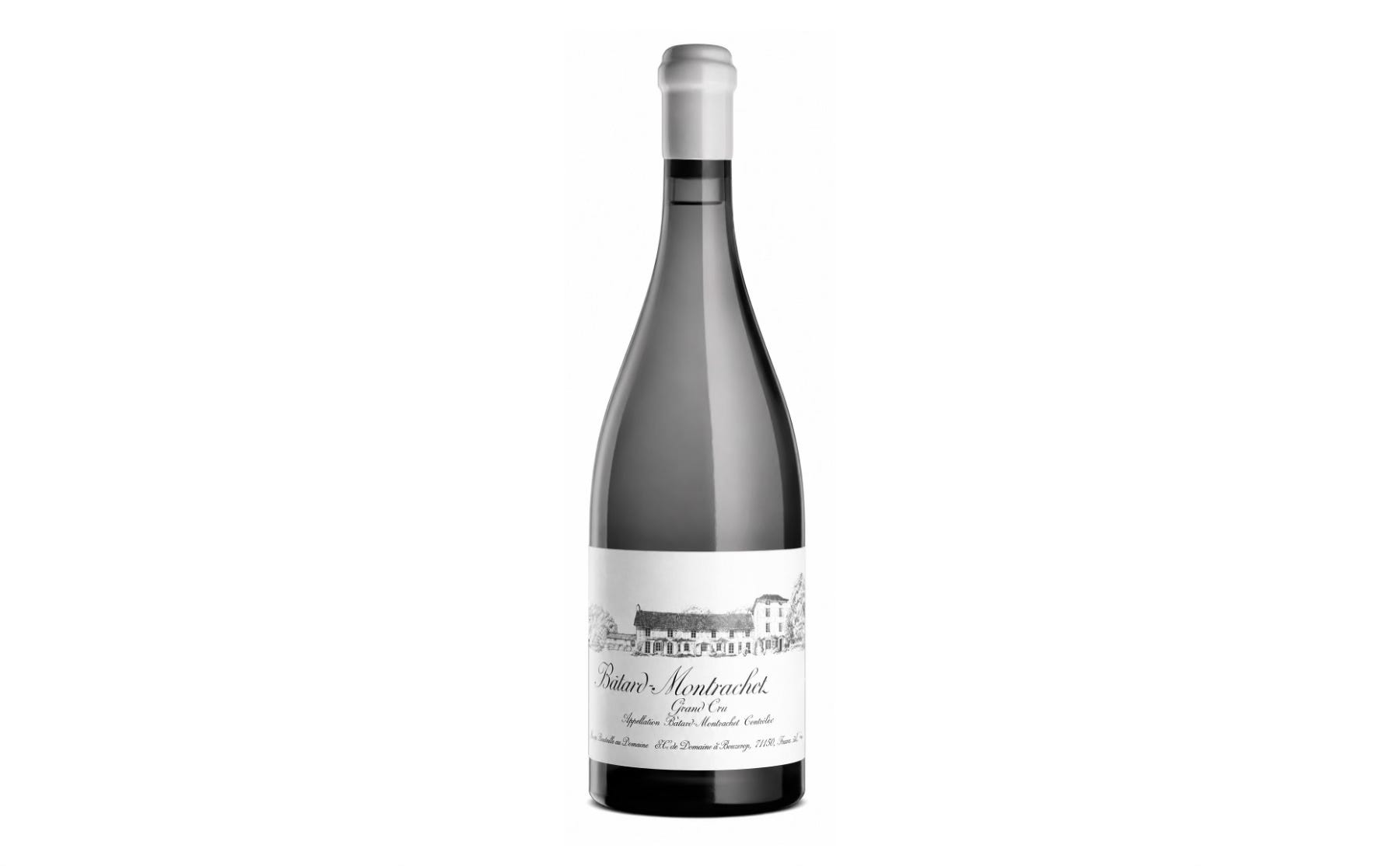
Domaine d’Auvenay Bâtard-Montrachet belongs to the very narrow stratum of white wines that matter simultaneously to collectors, critics, and investors. It is rare not merely by appellation standards, but by almost any standard in the fine-wine world: authoritative public market records document production of just 292 bottles for 2012, 958 for 2013, and 965 for 2015. Secondary coverage of Wine-Searcher’s 2024 data placed the wine among the most expensive Chardonnays in the world, with an average price around $20,690, and among the most expensive wines of any color or origin.
Its prestige is inseparable from the name behind it. Domaine d’Auvenay is the private estate of Lalou Bize-Leroy, whose reputation in Burgundy rests on uncompromising farming, extremely low yields, draconian selection, and an aesthetic that places texture, site expression, and longevity ahead of easy accessibility. In Bâtard-Montrachet—a climat already associated with breadth, mass, and authority—her interpretation has become a reference point for collectors who seek not just power, but power held in tension.
What makes this bottle especially distinctive, even beside other global icons, is the overlap of four factors that rarely coincide so completely: grand cru Burgundian origin, microscopic production, the cult aura of Lalou Bize-Leroy, and a market level that now sits in the same orbit as—or above—several more widely visible white-wine benchmarks, including Domaine de la Romanée-Conti Montrachet in Wine-Searcher’s 2024 Chardonnay ranking.
Estate and Producer Background
Domaine d’Auvenay is based at an old farm high above Saint-Romain. Decanter describes it as an ancient property whose records go back to the twelfth century, and notes that it was here that Lalou Bize-Leroy lived with her husband Marcel Bize, who ran the farm biodynamically until his death in 2004. Public reporting also places the first vintage of Domaine d’Auvenay in 1989. Today the estate remains very small—roughly four hectares—and far more discreet than Domaine Leroy, though equally revered in top collecting circles.
The estate’s Bâtard-Montrachet is a relatively recent chapter in that story. Decanter’s profile of Domaine Leroy records that Lalou Bize-Leroy made “a further purchase” in 2011: seven ouvrées of Bâtard-Montrachet, together with some Puligny-Montrachet Les Enseignères. That timing aligns with the first publicly documented Bâtard-Montrachet vintage appearing in 2012. In other words, this wine is both a modern cuvée and already a cult object.
The producer philosophy is well documented and unusually consistent over time. Decanter records that Bize-Leroy converted her holdings to biodynamism from the late 1980s and that she remains a firm believer in very low yields, calling 25 hl/ha an absolute maximum for a grand cru. Clive Coates MW’s Decanter profile adds more detail: the soils are farmed biodynamically, chemical treatments are eschewed except for minimal sulfur and copper, pruning is severe, massal selection is favored for replanting, horses are used as much as possible for ploughing, and the vines are not hedged in the conventional way.
This is not a domaine that courts visibility. Jancis Robinson’s 2012 Financial Times profile described the wines as strictly allocated, “without any possibility of negotiation,” and Decanter similarly notes that the quantities at Auvenay are minute and that the queue for allocations is long. For serious buyers, scarcity here is not a marketing theme; it is an operational fact.
Terroir, Technical Identity, and Cellar Practice
Terroir analysis. Bâtard-Montrachet is one of the five grands crus of the Montrachet family, lying between Puligny-Montrachet and Chassagne-Montrachet. Official Bourgogne Wines material places the climat at 240–250 meters, on east- and south-facing exposures. The same source states that Bâtard’s soils are deeper than those of Montrachet and are composed of brown limestone, becoming more clayey at the foot of the slope. Decanter’s survey of Montrachet and its satellite grands crus reinforces the point: Bâtard has more topsoil than Montrachet, with more limestone pebbles higher up and more gravel and clay below, giving the wines greater density and weight and making them potentially richer than Montrachet itself.
That official and critical description is central to understanding the wine’s style. The appellation is not generally prized for the airborne, chalk-cut profile associated with the highest parts of Chevalier-Montrachet. It is prized for amplitude—for volume of fruit, textural depth, and authority. Hospices de Beaune’s appellation profile characterizes Bâtard as balancing power and elegance, with ripe citrus, pear, stone fruit, wet-stone minerality, and, with age, honey, almond, hazelnut, and sweet spice. In Auvenay’s hands, those natural Bâtard attributes are refined rather than denied: the site provides the mass, while the farming and élevage prevent the wine from becoming merely heavy.
Technical composition. The Bâtard-Montrachet AOC is reserved for still white wines from Chardonnay. The official cahier des charges sets a minimum planting density of 9,000 vines per hectare, a maximum authorized yield of 48 hl/ha, a plafond limite of 54 hl/ha, and a minimum natural alcohol of 11.5%. It also requires élevage at least until 15 June of the year following harvest; wines may be released to consumers from 30 June of the year after harvest. Public bottle records for Auvenay’s Bâtard show 13.0% alcohol in 2013 and 13.5% in both 2014 and 2015.
Viticulture and winemaking. Producer-facing importer material states that Auvenay is farmed biodynamically and that the wines are fermented and aged in Lalou Bize-Leroy’s own cellars in Saint-Romain. Wine Spectator’s 2015 profile of Bize-Leroy adds the most concrete public detail on élevage: after alcoholic fermentation the wines go into 100% new oak, then follow a classic regime of one racking after malolactic fermentation and bottling after 14 to 18 months without fining or filtration; the article states that the same approach is used at Domaine d’Auvenay. The important caveat is that the estate does not publicly disclose a cuvée-by-cuvée white-wine technical sheet, so these points should be read as house practice rather than a parcel-specific protocol unique to Bâtard-Montrachet.
Vintage History and Critical Reception
Because Domaine d’Auvenay’s releases are opaque and can surface on the market with delay, the prudent collector should distinguish between regional vintage conditions and publicly verifiable bottlings. On that strict basis, I can verify Bâtard-Montrachet vintages from 2012 through 2015 from authoritative public records.
2012. The Bourgogne Wines Board describes 2012 as a “rollercoaster” year: mild winter, frost after an early March warm spell, then cold and rainy flowering conditions, followed by an unstable summer of heat, hail, and storms. The late season, however, was sunny and warm, bringing sound ripeness and relatively disease-free fruit. For the Côte de Beaune, BIVB emphasizes significant hail losses and very low volumes, but also concentration, aromatic complexity, vivacity, and clear ageing potential. Christie’s documents Auvenay’s 2012 Bâtard-Montrachet at just 292 bottles produced, making it the first publicly traceable vintage and one of the tiniest modern Bâtards of any leading domain.
2013. BIVB calls 2013 long-awaited, scarce, and difficult: a tricky spring, rain and cold at flowering, and volumes roughly 20% below average, followed by a hot summer but a very late harvest. For the Côte de Beaune whites, the Board cites violent hail in part of the sector and low yields, but also rich and intense aromas of citrus, apple, and dried fruit alongside lively, opulent palates with magnificent balance and length. Sotheby’s records total production of 958 bottles for Auvenay’s 2013 Bâtard-Montrachet. That is still extremely scarce, but materially more available than the embryonic 2012.
2014. BIVB’s assessment of 2014 is especially encouraging for white Burgundy collectors. The official report describes an excellent vintage in which September “made the wine,” with the return of sun and northerly wind bringing ideal conditions for full maturity and problem-free vinification. For the Côte de Beaune whites, BIVB highlights expressive lemony and floral aromas, notes of almond and dried fruit, fullness, roundness, and true ageing potential. Public market data from iDealwine identifies the 2014 Auvenay Bâtard at 13.5% alcohol and records 1,188 bottles produced—high by this wine’s standards, though still minute in absolute grand-cru terms.
2015. BIVB’s summary is straightforward: the grapes were “just perfect,” in impeccable health and at optimal ripeness. The year moved fast from early flowering to late-August harvest, and one year on BIVB described the wines as noteworthy, generous, and clearly marked by the sunny conditions. Auction records from Sotheby’s and Baghera document 965 bottles for Auvenay’s 2015 Bâtard—less than 2014, but still a meaningful recovery from 2012. In critic terms, this is the most visible vintage publicly: William Kelley for Wine Advocate rated it 96, describing aromas of ripe citrus zest, dried flowers, white peach, honeycomb, and smoky reduction, with a palate that is large-scaled, authoritative, saline, and remarkably weightless for its body.
Critical reception. Publicly accessible score data are sparse—partly because the most serious reviews are often behind paywalls—but what is visible is strong and consistent. Wine Spectator scored the 2012 Bâtard-Montrachet 94. Cru World’s market metadata, attributing the review to Vinous, gives the 2012 a score of 97 and summarizes it as “dense, rich and voluptuous” while retaining “superb finesse,” with a published drinking period of 2020–2032. Wine Advocate’s 2015 review at 96 confirms the same pattern in a warmer year: amplitude without heaviness, and site power without loss of definition.
Tasting Profile, Maturity, and Gastronomy
Tasting profile. On the available professional evidence, Domaine d’Auvenay Bâtard-Montrachet is not a pale, high-toned, linear grand cru in the Chevalier idiom. It is deeper in register and more textural. The appearance tends toward a luminous, sunny gold, consistent with both the appellation’s natural breadth and Hospices de Beaune’s observation that Bâtard shows a deeper color than some of its neighbors. The aromatic profile begins with ripe citrus zest, white peach, pear and dried flowers, then moves through honeycomb and a subtle smoky-reductive frame; with bottle age, the expected tertiary register is honey, almond, hazelnut, and sweet spice.
On the palate, the defining paradox is mass without coarseness. Vinous’s summary of the 2012 emphasizes density, richness, and voluptuousness, but also finesse. Kelley’s 2015 note adds a “glossily textural attack,” immense mid-palate depth, stony-saline character, and unusual weightlessness. Hospices de Beaune’s profile of the appellation likewise stresses a full, silky texture supported by lively acidity. In professional tasting terms, this means full body, high dry extract, elevated but not aggressive alcohol by Burgundy standards, discreet phenolic grip rather than tannic structure, and an unusually persistent finish for white Burgundy, where salinity and extract carry the wine long after the fruit has faded from first impression.
Complexity and typicity. The wine’s typicity is emphatically Bâtard rather than generic grand cru white Burgundy. The climat’s deeper, more clay-influenced soils confer breadth and weight, and critical descriptions of benchmark Bâtards from other producers repeatedly speak of volume, richness, and authority. What distinguishes Auvenay is that the domaine appears to narrow the gap between Bâtard’s customary power and Chevalier-level finesse. The result is not a denial of place, but an unusually disciplined expression of it.
Aging potential and drinking window. This is a wine for patience. Vinous publishes a 2020–2032 window for the 2012, while Wine Advocate gives the 2015 a far longer horizon of 2025–2055. Hospices de Beaune, discussing the appellation more generally, states that the best vintages can age for decades. In practical collector terms, that suggests a tiered approach: lesser or more evolved years may enter a first plateau after roughly ten years, but the top years—especially 2014 and 2015—should be expected to continue improving over considerably longer periods. The aromatic arc should move from citrus, flowers, stone fruit, and reduction toward honey, nuts, sweet spice, and deeper savory mineral expression.
Food pairing. Official Bourgogne sources and Hospices de Beaune both point in a clear gastronomic direction: this is a grand cru for noble textures rather than austere minimalism. Refined shellfish preparations work particularly well—poached oysters with herb butter, roasted langoustines with citrus jus, or scallops with a creamy risotto—because the wine’s density can match richness while its acidity and salinity cut through it. Firm white fish such as turbot or monkfish, Bresse chicken with cream and mushrooms, and fine veal preparations are equally apt. These are not pairings of contrast for its own sake; they are pairings based on textural correspondence and controlled richness.
Market Position, Comparative Context, and Conclusion
Market position and investment perspective. Here the wine’s case is unusually strong. iDealwine’s current estimate for the 2014 stands at €10,118, with a reported positive year-on-year trend of +1.27%; the 2013 showed a +1.68% trend. iDealwine also reported a 2013 bottle sold at auction for €20,832 in 2022. Current trade listings place the 2015 at about £15,790 in bond in the UK and about $24,734 retail in New York. Secondary coverage of 2024 Wine-Searcher data puts the wine’s average price around $20,690 and ranks it above several globally famous white wines on price alone.
For investors, however, the real point is not simply price. It is the interaction of price with verified scarcity and brand power. Production records for 2012–2015 range from 292 to 1,188 bottles. Allocations are minute, long-standing, and tightly controlled. That combination creates a market more like a blue-chip micro-float than a conventional luxury good: small visible supply, intense global demand, heavy importance of provenance, and a strong premium for clean, original-condition bottles. In this segment, condition and source are not secondary variables; they are central to value realization.
Comparative context. Within Bâtard-Montrachet itself, the leading comparison set includes Domaine Leflaive, Domaine Ramonet, Henri Boillot, and Pierre‑Yves Colin‑Morey. Decanter notes that Leflaive is the largest proprietor in the climat at 1.91 hectares and describes its Bâtard as buttery, rich, and perhaps the most decadent wine in the estate’s portfolio. Farr’s compilation of critical reviews shows Ramonet’s 2015 as broad, deep, very powerful, and somewhat blocky in youth. Stephen Tanzer’s note on Henri Boillot’s 2014 emphasizes precision, lift, and the producer’s own remark that it is “not a heavy Batard.” Tanzer’s description of Pierre‑Yves Colin‑Morey’s 2014 points to a more mineral-driven, light-touch, reductive style with outstanding definition. Auvenay, by contrast, appears to occupy the most difficult middle ground: the wine retains the density and authority expected of Bâtard, yet critics repeatedly return to finesse, salinity, and weightlessness. Add the drastically smaller publicly visible production, and its prestige position becomes easy to understand.
Final assessment. Domaine d’Auvenay Bâtard-Montrachet is not merely one of the elite wines of its appellation; it is one of the few dry whites in the world whose reputation now rests equally on intrinsic quality, microscopic scarcity, and market myth. The site gives it Bâtard’s natural authority—volume, density, and width. Lalou Bize-Leroy’s farming and élevage give it something rarer: definition under pressure. That is why, for serious collectors, it belongs in the same conversation as the world’s most exalted white Burgundies, and why, for investors, it operates at the top edge of the collectible white-wine market. Within Bâtard-Montrachet, it is not the most visible benchmark; it is arguably the most exclusive one.