
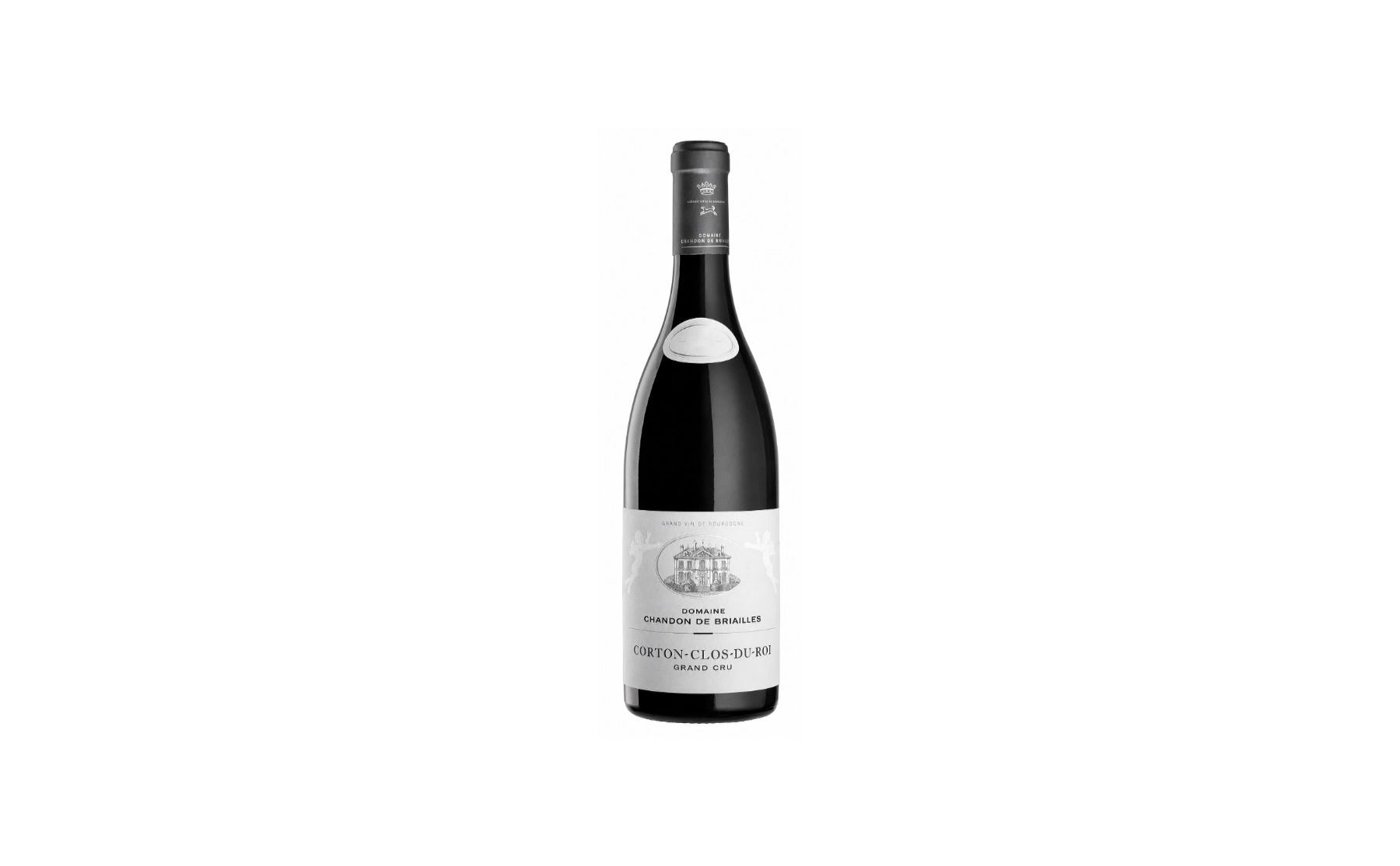
Domaine Chandon de Briailles: Corton Grand Cru Clos du Roi
An authoritative collector’s guide to Clos du Roi from Chandon de Briailles across vintages, terroir, aging, and market relevance.
Introduction
Domaine Chandon de Briailles’ Corton Grand Cru Clos du Roi occupies a compelling position in Burgundy collecting: it is not the most heavily traded Corton on the market, nor the most famous label in the appellation, but it is one of the most characterful and critically respected expressions of the site. The estate farms only 0.4465 hectares of Clos du Roi in two parcels, one planted in 1961 and a smaller parcel planted in 2018, in the highest part of the appellation. For collectors, that combination of grand cru status, tiny surface area, old vines, and an established biodynamic estate immediately makes the wine relevant.
This is best approached as an all-vintages collector profile, not as a single-vintage note. The wine matters because it shows an unusually consistent identity across very different years: floral lift, mineral drive, stem-derived complexity, and a more tensile, higher-toned profile than many richer Cortons. Recent critical landmarks reinforce that point. Decanter awarded the 2022 an emphatic 98 points, while William Kelley gave the 2018 and 2019 95 points, describing the latter as the most mineral and dynamic of the domaine’s grands crus that year.
For serious buyers, the central question is not whether this is a great Burgundy to drink. It is. The more important questions are whether it is sufficiently rare, sufficiently stable in reputation, and sufficiently liquid to merit cellar space or capital. The answer is nuanced: yes for collectors and long-term Burgundy buyers, more selective for investors seeking deep trading liquidity. Auction evidence shows that the wine appears only sporadically, which enhances exclusivity but reduces ease of exit.
Estate and Producer Background
Domaine Chandon de Briailles is a family estate since 1834 and is now run by siblings Claude and François de Nicolay. The estate converted from organic farming to biodynamics in 2005 and obtained Demeter certification in 2011. The domaine farms roughly 13.7 hectares across Savigny-lès-Beaune, Pernand-Vergelesses, and Aloxe-Corton, with significant holdings on the Hill of Corton.
That matters to collectors because Chandon de Briailles is not a négociant story or a brand-first story. It is a vineyard-first Burgundian domaine with a clear philosophical identity. Vinous characterizes the estate’s Corton-Bressandes and Clos-du-Roi as “classical, transparent Pinot Noir imbued with complexity and poise,” which is a concise description of why the wines have gained esteem among Burgundy specialists even without the market machinery of the very largest names.
The domaine’s importance within Corton is reinforced by the breadth of its holdings on the hill. Trade profiles and importer material describe Chandon de Briailles as a historic estate with a long-standing traditional style and serious grand cru credentials, with Claude de Nicolay leading winemaking and the family’s Corton parcels including Bressandes, Clos du Roi, and Maréchaudes.
For the fine-wine market, this places the estate in an interesting tier. It is below the global brand power of Domaine de la Romanée-Conti, Faiveley, or the largest blue-chip Burgundy houses in sheer market visibility, but it is firmly within the conversation of estates that informed Burgundy collectors actively seek out. That distinction is important: prestige here is driven more by credibility and terroir fidelity than by mass-market fame. Major merchants position Chandon de Briailles beside names such as Louis Jadot, Bouchard Père & Fils, Domaine Faiveley, Domaine de Montille, and Domaine de la Romanée-Contiwithin the Corton set.
Terroir, Viticulture, and Winemaking
The estate’s Clos du Roi comes from two parcels totaling 0.4465 hectares, situated in the upper part of the appellation, facing east to southeast, on a steep slope of calcareous, slightly sandy marl. The producer explicitly associates this site with mineral finesse and floral aromas. Burgundy’s regional authorities describe Corton as a large and geologically varied grand cru where upper and mid-slope sectors combine strong limestone influence, marl, good drainage, and exposures from east through south, with altitudes broadly ranging from about 230 to 325 meters on the hill.
For style, that terroir profile is highly revealing. Clos du Roi’s upper-slope setting and marl-limestone emphasis tend to produce a Corton that is less earthy and massive than some lower or clay-richer sectors, and more chalky, lifted, and tensile. Neal Martin’s notes on recent vintages repeatedly stress purity, floral detail, orange-zest or rose-inflected aromatics, and a vivid finish—exactly the kind of attributes one would expect from a higher, whiter-marl sector that privileges tension over brute force.
Viticulturally, the domaine is unusually distinctive. The estate farms biodynamically, uses Comtois horses in the Clos du Roi parcel, avoids bringing normal tractors into the plot, and manages disease pressure with methods that include skimmed-milk sprays in place of sulfur in some contexts. For collectors, this is not a marketing flourish; it is part of a house style built around living soils and relatively gentle extraction of site character.
In the cellar, the estate states that vinification is carried out in truncated wooden vats, without pumps and without sulphites at vinification, using whole clusters except in years of hail or frost. The élevage is in the domaine’s historic cellars for 15 to 18 months, with about 85% in older barrels and the balance in new oak. These choices explain much of the wine’s collector appeal: whole-bunch perfume, tactile structure, floral lift, and relatively restrained oak signatures allow the wine to age on terroir and tannin rather than oak sweetness. They also imply a practical consequence for buyers: cellar conditions and provenance matter greatly, because low-intervention wines can be less forgiving of poor storage. That last point is a market interpretation based on the estate’s methods, not an explicit producer claim.
Vintage Character and Technical Profile
Because this is an all-vintages profile, the clearest way to understand the wine is through benchmark years rather than a single “vintage report.” In 2022, the estate described a hot, very dry spring and summer, yet reported resilient vines, relatively abundant harvests, very healthy fruit, little sorting, and a harvest from August 25 to September 10. Decanter’s assessment of the resulting wine was extraordinary: 98 points, with black cherry, peony, smoke, spice, delicacy, structure, and the assertion that it should open more fully in five years and drink for at least another 50.
In 2023, the domaine reported a mild winter, humid March, slow early growth, pressure from oidium, localized storm rains that prevented severe water stress, and harvest from September 5 to 13 in canicular conditions, with morning picking only and severe sorting. The estate nevertheless described the wines as surprisingly fresh and typical despite the heat. Decanter rated Burgundy 2023 red wines 4.5/5 overall for the Côte d’Or, while Neal Martin described the Chandon de Briailles Clos du Roi 2023 as pure, rose-scented, smooth in texture, and vivid, scoring it 93.
In 2021, Martin’s barrel note placed the wine at 92–94, emphasizing kirsch, mint, orange rind, plummy development, white-pepper red fruit, and insistent grip. This matters because 2021 is widely regarded as a more classical, cooler Burgundy year after hotter vintages; on evidence, Clos du Roi handled it with distinction, retaining class and structure even if Martin found it marginally less elegant than the domaine’s Bressandes.
For older benchmarks, 2019 and 2018 stand out strongly. William Kelley’s 2019 note, reproduced by Wine.com, calls Clos du Roi “the king of the cellar” and describes it as wild-berried, peony-scented, lively, deeply mineral, and dynamic, rating it 95 with a 93–95 barrel range. For 2018, Kelley again gave 95, praising its perfume, layering, mineral breadth, fine tannins, and long finish, with an anticipated maturity of 2025–2050 in the cited merchant materials.
Technically, the wine is 100% Pinot Noir. Verified alcohol levels vary by vintage in the accessible public sources: 13.0% appears on Decanter’s 2017 page, and 12.5% appears in public merchant listings for 2022 and 2021. Exact public data for pH, total acidity, residual sugar, release price, annual bottle production, and vintage-by-vintage realized yieldswere not available in the sources reviewed, and should therefore be treated as undisclosed rather than inferred.
Professional Tasting Profile and Aging Potential
Across vintages, the professional tasting profile is unusually coherent. Aromatically, the wine tends toward wild red and black berries, peony or rose, blood orange or orange rind, sweet soil, spice, tea leaf, and a mineral or chalky register. William Kelley’s 2017, 2018, and 2019 notes; Neal Martin’s 2017, 2021, and 2023 notes; and Decanter’s 2022 review all align around that family of descriptors.
Structurally, this is not a soft, early-charming grand cru. Even in successful vintages, critics describe fine-grained but assertive tannins, brightness, mineral drive, and a finish that is more vivid than opulent. Decanter’s 2014 noted firm tannins dominating the fruit in youth and projected a 2018–2028 drinking window; their 2022 forecast was vastly longer. That spread is exactly what collectors should expect from a serious Corton from a traditional estate: vintage quality changes the time horizon dramatically, but the wine’s core identity remains one of structure before seduction.
The best vintages merit patient cellaring. On the evidence reviewed, 2018, 2019, 2022, and likely 2023 are the years most likely to reward long-term commitment. 2017 looks excellent rather than monumental, while 2014 appears to have been sound but less profound. For mature bottles, provenance becomes increasingly decisive. Auction houses routinely emphasize original merchant acquisition, constant-temperature cellars, level, label, and fill condition when offering older Chandon de Briailles lots, which is precisely what buyers should prioritize.
Magnums and larger formats deserve special attention. Public auction records show mature magnums of the wine trading, including a Christie’s lot of two magnums of 1996. While the producer does not publish a format hierarchy for collectors, larger formats are generally more desirable for long-term Burgundy cellaring, and here they add both aging insurance and rarity. That is a reasoned collector view supported by format availability in the market, not a producer directive.
Critical Reception and Comparative Status
Critical reception is the clearest pillar of this wine’s desirability. Recent and benchmark public scores available in the sources reviewed include Decanter 90 for 2014, Wine Advocate 94 and Vinous 92 for 2017, Wine Advocate 95 and Burghound 91–94 for 2018, Wine Advocate 95 for 2019, Neal Martin 92–94 for 2021, Decanter 98 plus Parker 92–94 and Neal Martin 93–95 for 2022, and Neal Martin 93 for 2023. Exact scores from Jancis Robinson and some Burghound vintages were not publicly visible in the materials reviewed, so they should not be invented.
What matters more than the numbers is the consensus. Critics repeatedly describe the wine as mineral, high-toned, floral, and serious, often distinguishing it from the domaine’s Bressandes by giving Clos du Roi the more tensile, deeper, or more dynamic profile. Kelley explicitly found the 2019 Clos du Roi the most mineral and dynamic of the domaine’s grands crus, while his 2017 note called it deeper and more serious than the fleshier Bressandes. Martin, by contrast, preferred the elegance of Bressandes in 2021, which is useful because it shows the hierarchy can shift with vintage rather than functioning as a fixed brand script.
In comparative collector context, that gives Clos du Roi a distinctive place inside the producer’s portfolio: it is often the most intellectual red Corton at the estate, less immediately plush than Bressandes and more site-driven in tone. In the wider appellation, it sits in a field that includes very high-prestige names such as DRC Corton, Faiveley’s Clos des Cortons Faiveley, de Montille’s Corton Clos du Roi, and the large historical houses. Chandon de Briailles generally lacks their trading breadth, but it compensates with stylistic identity and a strong reputation among Burgundy-focused buyers.
Market Position, Liquidity, and Buying Guidance
As a collectible asset, Clos du Roi’s strengths are obvious: tiny holding size, grand cru terroir, critical credibility, and a domaine identity that aligns with contemporary fine-wine demand for authenticity, site transparency, and biodynamic farming. Its weaknesses are equally clear: thin liquidity, uneven public price discovery across vintages, and greater sensitivity to provenance than a more conventionally made, more frequently traded label.
Auction and retail evidence support that reading. iDealwine reported fixed-price and auction activity for older and current vintages, including a 1994 bottle sold at €110, a 2002 three-bottle lot sold at €301.92 commission included, and current retail offerings for the domaine’s Corton range. The Drinks Business, summarizing iDealwine data, reported that only three bottles of Clos du Roi sold at auction on iDealwine in 2023 and only one by mid-2024, with prices reaching €275 for the 2017 vintage. Christie’s sold two magnums of 1996 for $375 in 2023, while Sotheby’s and Christie’s have both offered mature multi-bottle lots from 1993, 1999, 2003, and 2007, indicating that the wine does enter established auction channels but not in great volume.
Current merchant asks are meaningfully higher than some auction clears, which is normal for Burgundy but important for investors. Public listings reviewed showed 2021 at about €366.50 from a German specialist retailer and 2017 at €239 from a specialist French merchant; a Dutch retailer listed 2022 at €475.14. These are asking prices, not necessarily executable secondary-market levels, but they illustrate a real point for buyers: the spread between fair auction value and retail replacement cost can be wide.
The investment interpretation, therefore, is disciplined rather than promotional. This is not a wine one buys for high-turnover trading or for the broadest international liquidity. It is a specialist Burgundy asset that performs best in a patient cellar and in the hands of buyers comfortable waiting for the right selling venue and the right buyer. Its long-term desirability rests on reputation, scarcity, and maturing appreciation of biodynamic, site-specific Burgundy—not on rapid turnover.
Buying guidance should be exacting. Prioritize documented provenance, ideally from a leading merchant with direct allocations or from a professionally stored private cellar. For older bottles, insist on images or inspection of fill level, capsule integrity, label condition, and any original wooden case or original carton. Auction houses explicitly foreground original purchase history and constant-temperature storage in their better Burgundy consignments; collectors should do the same. Be cautious with unusually cheap bottles, vague storage history, damaged capsules, or seepage. Counterfeit exposure for this label appears lower than for the most famous blue-chip Burgundies, but any grand cru Burgundy from mature vintages warrants skepticism when provenance is weak.
Final Verdict
Domaine Chandon de Briailles Corton Grand Cru Clos du Roi is one of the most intellectually satisfying red Cortons available to serious Burgundy buyers. Its prestige is grounded in terroir precision, biodynamic credibility, minuscule surface area, and a coherent critical record, not in mass-market status. Within the domaine, it is often the most mineral, most dynamic, and most serious of the red grands crus. Within Corton more broadly, it belongs in the conversation with the appellation’s best terroir-driven wines, even if it does not match the market power of the very top trophy labels.
For collectors, the classification is clear: Buy to cellar. Buy to drink. Buy only with perfect provenance. For owners of strong recent vintages such as 2018, 2019, and 2022, hold is the sensible stance unless pricing is unusually strong or personal drinking horizons are limited. For lesser or earlier-drinking years such as 2014, the category shifts toward drink soon rather than indefinite retention.
At table, the wine deserves refined, structure-conscious pairings. In youth, think roast squab, duck, pigeon, veal, or venison with restrained reduction sauces and forest mushrooms; with maturity, the wine should excel with game birds, braised meats, and washed-rind or soft-centred cheeses. Burgundy’s regional authority specifically highlights Corton with roast or grilled beef, game, and strong cheeses, which accords well with its muscular but structured grand cru profile.
The concise collector’s assessment is this: a serious, small-production grand cru Burgundy with genuine aging capacity and excellent critical support, but with thinner liquidity than the market’s most financialized labels. In the hierarchy of Corton, it is a connoisseur’s wine before it is a trading wine; in the hierarchy of Chandon de Briailles, it is among the estate’s most compelling long-distance bottles; and in the global fine-wine market, it is best understood as a specialist collector asset of high quality and selective market depth.