
Domaine Albert Mann: Riesling Grand Cru Schlossberg
Granite, biodynamics, and patience: how the Barthelmé brothers craft one of Alsace's most compelling terroir-driven Rieslings
Introduction
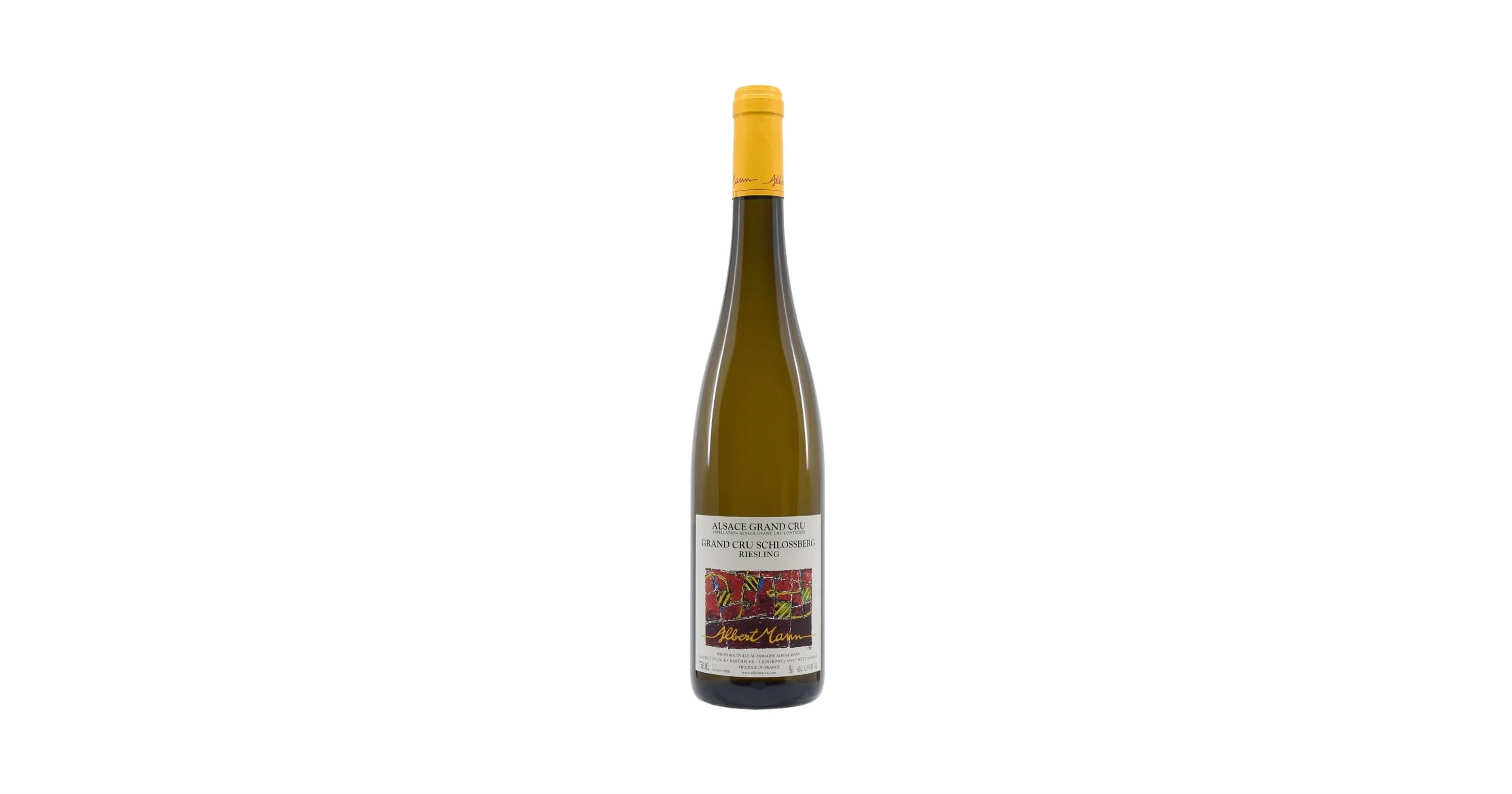
Among the wines of Alsace, few occupy a position as historically significant and qualitatively consistent as the Riesling Grand Cru Schlossberg produced by Domaine Albert Mann. Situated in the commune of Kientzheim, at the foot of the Vosges mountains in the Haut-Rhin, Schlossberg holds the distinction of being the first Alsatian vineyard to receive Grand Cru classification, in 1975—a designation that predates the broader formalization of the Alsace Grand Cru appellation by nearly a decade. That a family domaine rooted in biodynamic conviction should become one of its most respected interpreters is a story inseparable from the broader transformation of Alsatian fine wine over the last half-century.
Domaine Albert Mann is the product of two deeply rooted vigneronne families: the Mann family, whose winemaking lineage traces to the early seventeenth century, and the Barthelmé family, active since 1654. The domaine takes its name from the late Albert Mann, whose daughter Marie-Claire married Maurice Barthelmé. Maurice and his brother Jacky assumed stewardship of the property and have since transformed it into one of the most critically respected estates in Alsace, producing wines from six Grand Cru sites—Schlossberg, Hengst, Furstentum, Steingrubler, Pfersigberg, and Wineck-Schlossberg—across approximately 24 hectares comprising over 100 individual parcels.
The critical turning point in the domaine’s modern history came in 1997, when Maurice and Jacky Barthelmé began the transition to biodynamic viticulture, initially in three Grand Cru vineyards. By 2000 the estate had achieved organic certification through Ecocert, and by 2010 it held full biodynamic certification through Biodyvin and subsequently Demeter. This was not a marketing decision but a philosophical commitment: the Barthelmé brothers had observed a progressive decline in soil vitality under conventional farming and sought to reverse it. The results, particularly in their Schlossberg bottlings, have been unmistakable—wines of increasing precision, mineral density, and expressive complexity.
Within the context of French fine wine, the Schlossberg Riesling from Albert Mann occupies a distinctive position. It is neither a cult bottling sustained by artificial scarcity nor a monument to critical scores, but rather a wine whose reputation has been built incrementally through decades of consistent quality and a deepening relationship with its terroir. For collectors familiar with the great Rieslings of the Wachau, Mosel, or Rheingau, the Albert Mann Schlossberg offers a point of comparison that is at once distinctly Alsatian—marked by granitic minerality, structural tension, and a dry, savory finish—and wholly its own. It is among the wines that have done the most to demonstrate that Alsace Grand Cru, at its best, belongs in the conversation with the finest terroir-driven white wines produced anywhere.
Vineyard and Terroir
Location and Classification
The Schlossberg Grand Cru lies within the communes of Kientzheim and Kaysersberg, on a steep, south-facing hillside overlooking the Weiss valley. At 80.28 hectares, it is the largest of Alsace’s 51 classified Grand Cru sites, though this figure can be misleading: the vineyard’s considerable altitude range (230 to 400 meters) and its varied exposures create a mosaic of microclimates and soil conditions that render any generalization about “Schlossberg character” incomplete without reference to specific parcel location.
Schlossberg was the first Alsatian vineyard to receive official Grand Cru recognition in 1975, under a decree that would serve as the template for the broader Grand Cru classification formalized in 1983 and subsequently revised in 1992. This primacy was not accidental. The vineyard’s reputation predates its legal status by centuries; it had long been recognized as one of the region’s finest sites for Riesling, and its classification served as an implicit acknowledgment of what vignerons and merchants had understood for generations.
Geology and Soil Composition
The geological foundation of Schlossberg is granitic. The parent rock consists of metamorphic migmatites—a blend of gneiss and granite—overlain by two-mica biotite granite from the Kaysersberg pluton. The resulting soils are sandy and mineral-rich, with generally shallow topsoils of 30 to 40 centimeters that rarely exceed 125 centimeters in depth. The particle-size distribution is dominated by coarse granitic sand, with relatively low proportions of fine elements below 50 microns. This sandy-loam composition ensures rapid drainage and forces vine roots to penetrate deeply into fractured bedrock in search of moisture and nutrients.
The mineral content of these soils is notable: they are rich in potassium, magnesium, and phosphorus in concentrations found in few other Alsatian vineyards. These elements contribute to the distinctive saline, mineral-inflected character that distinguishes Schlossberg Riesling from wines produced on the clay-limestone or marl-based soils that predominate in many other Grand Cru sites. The granite also imparts a characteristic tension and linearity to the wines—a structural signature that is immediately recognizable to those familiar with the site.
Exposure, Altitude, and Microclimate
The majority of the Schlossberg vineyard faces due south, ensuring maximum solar exposure throughout the growing season. The site is sheltered by the Vosges mountain chain from prevailing westerly weather systems, which contributes to one of the driest microclimates in Alsace: annual rainfall in the Kaysersberg-Kientzheim corridor typically ranges between 500 and 600 millimeters, well below the regional average. Mean annual temperatures exceed 10°C, and the combination of altitude, exposure, and wind circulation promotes healthy fruit development while limiting disease pressure.
The steep gradient of the vineyard—particularly in the upper parcels above 300 meters—necessitates terracing with dry stone walls, a feature that has shaped the viticultural landscape of Schlossberg for centuries. These terraces create additional microclimatic variation, with retained heat from the stone walls extending ripening conditions in the upper reaches of the vineyard. Wind circulation through the Weiss valley further aids in drying berries after rain, reducing botrytis pressure in most vintages.
Albert Mann’s Parcels
Domaine Albert Mann’s holdings within Schlossberg are located within the commune of Kientzheim, distributed across terraced plots between 230 and 400 meters of altitude. The vines are approximately 35 years of age on average, though precise parcel-by-parcel age data is held privately by the estate. The domaine farms these parcels biodynamically, with specific interventions tailored to the granitic terroir: homemade compost to stimulate microbial life, plowing—in certain parcels by horse—and the maintenance of grass cover in alternating rows to promote biodiversity and control vigor. These practices have progressively deepened the root systems and intensified the mineral expression of the wines.
Sensitivity to Climatic Variation
The granitic soils of Schlossberg are notably responsive to vintage variation. In warm, dry years, the rapid drainage and low water-holding capacity of the sandy soils can accelerate ripening and reduce acidity, requiring careful yield management and precise harvest timing to preserve freshness. In cooler or wetter vintages, the same drainage characteristics become an advantage, as the soils shed excess moisture efficiently and the steep exposure ensures adequate phenolic maturity even when other sites struggle. The result is a vineyard that rewards attentive viticulture and punishes complacency—a dynamic that has served the Barthelmé brothers well, given their hands-on approach to farming.
Grape Composition and Viticultural Choices
The Albert Mann Riesling Grand Cru Schlossberg is a mono-varietal wine, produced exclusively from Riesling—the grape variety most closely associated with the Schlossberg vineyard and, indeed, with the granite terroirs of Alsace more broadly. The Grand Cru regulations permit Riesling, Gewurztraminer, Muscat, and Pinot Gris within Schlossberg, but the site’s granitic soils and southern exposure have historically favored Riesling above all, and the variety accounts for the majority of plantings across the vineyard.
The estate has not publicly disclosed specific clonal selections used in their Schlossberg plantings. In Alsace, both clonal and massal selections are employed, and the best producers typically favor a combination: clonal material for consistency and disease resistance, massal selections from older vines for genetic diversity and complexity. Given the Barthelmé brothers’ biodynamic philosophy and their emphasis on soil health and biodiversity, it is consistent with their approach to maintain a diverse genetic base within their plantings, though the precise composition remains proprietary.
Yield Control
Yields at Domaine Albert Mann are kept deliberately low, typically between 30 and 40 hectoliters per hectare—well below the maximum permitted by Grand Cru regulations. This is achieved through hard winter pruning, green harvesting where necessary, and the natural self-regulation of biodynamically farmed vines with deep root systems. The low yields contribute directly to the concentration and mineral intensity of the finished wines, and the Barthelmé brothers have consistently prioritized quality over volume in their approach to the Schlossberg parcels.
Manual harvest is standard practice. Grapes are picked selectively according to the physiological maturity of skins and pips, rather than sugar levels alone. This focus on phenolic ripeness—a relatively uncommon criterion in Alsatian white wine production—ensures that the wines possess the structural framework necessary for extended aging, while avoiding the overripe, broad character that can result from relying solely on refractometer readings.
Vinification and Élevage
The winemaking philosophy at Domaine Albert Mann for the Schlossberg Riesling is defined by restraint and non-intervention. Jacky Barthelmé, who oversees cellar operations, has consistently articulated a vision in which the winemaker’s role is to guide the wine rather than to shape it—a philosophy that has become increasingly prevalent among serious Alsatian producers but that the Barthelmé brothers adopted earlier and have applied with greater consistency than most.
Pressing and Fermentation
Following manual harvest and selection in the vineyard, the grapes undergo slow, gentle pressing designed to extract clear, pure juice with minimal phenolic extraction. The must is allowed to settle naturally, and fermentation proceeds spontaneously with indigenous yeasts—the estate uses no commercial yeast cultures. This choice, which the Barthelmés regard as essential to terroir expression, introduces an element of unpredictability but also contributes to the aromatic complexity and textural nuance that distinguish the Schlossberg bottling from more technically managed Rieslings.
Fermentation is slow, often extending over several months. The estate does not force fermentation to completion through temperature manipulation or nutrient additions; the wine finds its own equilibrium, which in some vintages results in bone-dry expressions (as in 2021, with 0 grams per liter residual sugar and 7.7 grams per liter total acidity) and in others leaves a trace of residual sweetness that is absorbed into the wine’s structural framework. This variability is accepted as a natural consequence of vintage character and terroir expression.
Élevage and Bottling
After fermentation, the wine remains in contact with its fine lees for an extended period. This lees aging serves a dual purpose: it nourishes the wine, contributing to textural richness and mid-palate weight, and it provides natural stabilization, reducing the need for interventionist fining or filtration. The estate employs no oenological additives beyond minimal doses of sulfur, and even sulfur use is kept to the lowest levels consistent with wine stability.
Bottling is timed according to the biodynamic lunar calendar, a practice that may appear esoteric to some but that the Barthelmé brothers and other biodynamic practitioners regard as important for preserving fruit expression and aromatic freshness. The wines are typically bottled when Jacky Barthelmé judges them to be ready—a decision guided by tasting rather than by a fixed timetable. This results in élevage periods that can vary significantly from vintage to vintage, with the wine’s own development dictating the timeline rather than commercial imperatives.
The overall approach produces wines of striking purity and mineral definition—Rieslings in which the granitic terroir of Schlossberg is the dominant voice, supported but never obscured by winemaking choices. For the informed consumer, the transparency of the vinification is one of the wine’s most compelling attributes: there is nowhere to hide in a wine made this way, and the quality of the fruit and the health of the vineyard are legible in every glass.
Vintage-by-Vintage Analysis
The following analysis traces the evolution of Domaine Albert Mann’s Riesling Grand Cru Schlossberg across available vintages, with attention to climatic context, stylistic expression, and aging trajectory. It should be noted that comprehensive vintage-by-vintage documentation for every release is not publicly available for this estate; the analysis below draws on critical assessments, technical data, and the broader vintage context in Alsace to construct as complete a picture as possible.
The Pre-Biodynamic Era (through 1996)
Before the adoption of biodynamic viticulture in 1997, the Albert Mann Schlossberg Riesling was already a respected wine, benefiting from the vineyard’s inherent quality and the Barthelmé family’s established viticultural competence. However, wines from this period—where they can still be found—tend to show a broader, less precisely defined mineral character compared to what would emerge from the biodynamic parcels. The soils, by the Barthelmés’ own account, had lost some of their microbial vitality under conventional management, and this was reflected in wines that, while technically sound, lacked the crystalline tension that would become the estate’s hallmark. These earlier vintages remain interesting historical documents but are not widely sought by collectors.
The Transitional Period (1997–2005)
The conversion to biodynamics beginning in 1997 inaugurated a period of progressive transformation. The early biodynamic vintages—1997 through approximately 2002—show incremental gains in soil health translating into increasingly precise, mineral-inflected wines. The 2000 and 2001 vintages, coinciding with organic certification, mark a noticeable step up in purity and aromatic definition. The 2004 and 2005 vintages, produced from vines that had been farmed biodynamically for seven to eight years, begin to display the full character of the mature biodynamic estate: wines of greater vertical structure, more pronounced salinity, and a textural refinement absent in earlier releases.
2007
The 2007 vintage in Alsace was characterized by a warm spring and an uneven summer, producing wines of moderate concentration. The Schlossberg’s granitic soils, with their efficient drainage, handled the variable conditions relatively well, and the Albert Mann bottling from this year shows good typicity if not exceptional depth. It is a wine best appreciated in its youth to mid-term, with a drinking window that is likely now past its optimal point for all but the best-stored bottles.
2008
A classically structured vintage throughout Alsace, 2008 produced Rieslings of notable acidity and linear precision. The cooler growing season preserved freshness and allowed slow, even ripening on the well-drained Schlossberg slopes. The Albert Mann 2008 is a vintage that rewards patience, with a taut, mineral-driven profile that has developed slowly in bottle. For those fortunate enough to hold well-stored examples, this represents one of the finer expressions from the post-biodynamic-conversion period.
2009
A warm and generous vintage, 2009 produced riper, fuller-bodied wines across Alsace. The Schlossberg’s altitude and granitic terroir provided a counterbalancing freshness that is not always present in lower-altitude sites from this year. The Albert Mann 2009 is likely to show more tropical and stone-fruit character than typical for the cuvée, with a broader structural profile. While appealing in its relative generosity, it may lack the razor-edged minerality of cooler vintages.
2010
Coinciding with the estate’s full biodynamic certification, 2010 was a vintage of great quality across the northern reaches of the Grand Cru vineyards. Cool conditions through much of the growing season gave way to a fine, extended autumn, producing wines of exceptional balance between concentration and acidity. The Albert Mann Schlossberg 2010, from fully certified biodynamic fruit, represents a milestone in the estate’s evolution. It is a wine of significant aging potential, combining mineral depth with the structural tension necessary for long cellar life.
2011
A challenging vintage in Alsace, with early budbreak followed by uneven summer weather. The Schlossberg’s south-facing exposure and well-drained soils offered some insulation against the difficulties of the year, but 2011 is generally regarded as a lighter, earlier-drinking vintage. The Albert Mann bottling received attention from both Decanter and Wine Spectator, though it is not among the estate’s most celebrated releases. It should be consumed within the near term.
2012
A return to more classical conditions produced a structured, well-defined Schlossberg in 2012. Aggregate user assessments place this at around 89 points, reflecting a solid if not exceptional vintage. The wine shows good granitic minerality and moderate aging potential—a reliable Schlossberg that performs well at the table without reaching the heights of the best years.
2013
The 2013 vintage delivered a Schlossberg of considerable aromatic intensity. Tasting notes from the period describe an intensely aromatic nose with super-ripe character, intertwining pineapple flavors with floral notes. On the palate, the wine displays crystalline acidity combined with great finesse and lightness—an elegant, stimulatingly saline Riesling that showcases the granitic terroir with particular clarity. This is a vintage that repays cellaring and demonstrates the transparency of the biodynamic approach: the terroir speaks clearly through the wine.
2014
A vintage of moderate warmth that produced approachable, fruit-forward wines in many sites. The Schlossberg, with its capacity to preserve structure even in generous years, delivered a wine of good balance if not commanding intensity. Suitable for medium-term cellaring, the 2014 represents sound Schlossberg character without the extra dimension that separates the great vintages from the good.
2015
A warm, dry growing season produced concentrated, powerful wines throughout Alsace. The Albert Mann Schlossberg 2015 reflects the vintage’s generosity, with aggregate assessments around 91.5 points. The warmth of the year is evident in the wine’s fuller body and riper fruit profile, but the granitic terroir provides a counterbalancing mineral tension that keeps the wine focused. This is a vintage with considerable aging potential, though the stylistic register is warmer and broader than the estate’s coolest-vintage expressions.
2016
One of the more acclaimed recent vintages for the cuvée, the 2016 Schlossberg is described in critical assessments as very closed and tight on the palate, yet simultaneously powerful and ripe. Saline, fresh citrus and smoky flavors mark a wine of significant structure and concentration. Aggregate scores of approximately 92.5 confirm its standing as one of the stronger recent releases. This is a wine that demands patience; its current reticence suggests considerable development still to come, and it should ideally be cellared for at least another five to seven years to show its full character.
2017
The 2017 vintage was one of the warmest on record in Alsace, yet the Albert Mann Schlossberg achieved a notable 94-point assessment, with critics praising its impressively defined lime, apple, and pear aromas and a gently flinty edge. On the palate, the wine is described as very sleek, fresh, and composed, with fine linearity. This represents the estate at or near its peak expression: a warm vintage tamed by granitic terroir and biodynamic farming into something precise and focused. It stands among the finest recent Schlossberg bottlings from this producer.
2018
Another warm vintage, 2018 produced a Schlossberg of immense concentration. Wine Enthusiast noted subtle but distinct lemon and grapefruit zest on the nose, with an intensely concentrated palate centered on vivid citrus. The wine is described as stony, bold, driven, and taut, with a bright, tingling midpalate that suggests excellent aging potential. The estate produced approximately 6,900 bottles. Separately, the estate released a Sélection de Grains Nobles “L’Épicentre” from Schlossberg in 2018, which received a 98/100 rating from Bettane+Desseauve—a score that places it among the finest sweet wines produced in Alsace that year, with a recommended drinking window extending to 2038.
2019
The 2019 vintage produced a citrus-driven Schlossberg with a powerful nose and ripe lemon character supported by fresh apricots and a subtle hint of developing petrol. The palate shows golden color with layers of peach, melon, and citrus, along with fine minerality and balanced acidity. A slight touch of residual sweetness gives the wine a voluptuous finish. With an aggregate assessment of approximately 92.9 across multiple reviewers, this is a generously styled Schlossberg that offers immediate appeal while retaining sufficient structure for medium-term aging.
2020
The 2020 growing season in Alsace was marked by early budbreak and a warm, dry summer, producing wines of notable concentration. The Albert Mann Schlossberg from this vintage has been released to the market and is available through specialist retailers including Alliance Wine. While comprehensive critical assessments are still accumulating, the vintage context suggests a wine of concentration and potential, consistent with the warm-vintage style that has characterized several recent releases.
2021
A cooler, more classically structured vintage that produced what may prove to be one of the finest recent expressions of the Schlossberg terroir. Technical data confirms a bone-dry wine: 13.5% alcohol, 0 grams per liter residual sugar, and 7.7 grams per liter total acidity—a profile of notable structural tension. The nose is complex, showing yellow fruits (apple, pear, peach, citrus) alongside a pronounced herbal register of fennel, coriander, and aniseed. On the palate, the wine is precise, slender, and clearly structured, with dominant herbal freshness, restrained fruit, lively acidity, and a harmonious interplay of citrus, bitterness, and extract. This is a Schlossberg built for long aging and one that exemplifies the virtues of cooler vintages on this site.
2022
The most recently released vintage at the time of writing, the 2022 Schlossberg displays what critics describe as a very clear, fresh, and complex character on a minerally intense and herbal nose. Layers of ripe fruit interweave with weathered granite, herbs, and flowers. On the palate, the wine is highly refined and elegant, full-bodied, intense, and rich, yet crystalline—a description that captures the paradox at the heart of great Schlossberg Riesling. Fine tannins and bitters resolve into a complex, endlessly saline, and well-balanced finish. This vintage represents a continuation of the estate’s recent run of excellence and deserves serious cellar time.
Style, Identity, and Structural Sensory Profile
The core stylistic signature of the Albert Mann Riesling Grand Cru Schlossberg is one of granitic minerality expressed through a framework of structural tension and textural refinement. Across vintages, whether warm or cool, generous or austere, the wine returns to certain constants: a sense of vertical lift, a saline minerality that persists through the finish, and a textural quality that might be described as crystalline—a word that recurs in critical assessments of this wine for good reason, as it captures both the transparency and the precision of the best bottles.
Unlike Rieslings produced on the clay-limestone or marl soils of other Grand Cru sites—Brand, Rangen, or Hengst, for example—the Schlossberg from Albert Mann never relies on weight or opulence to make its argument. Even in warm vintages like 2015 or 2018, the wine maintains a linear, almost chiseled quality that derives from the sandy granitic soils and their limited water-holding capacity. The roots must work for their sustenance, and the resulting wines carry an intensity that is felt as mineral tension rather than fruit concentration.
In its youth, the wine can appear austere and reticent, particularly in strong structural vintages like 2016 or 2021. The primary fruit expression is restrained, and the mineral and herbal elements dominate. With five to ten years of bottle age, a transformation occurs: the fruit broadens and deepens, petrol notes begin to emerge (more subtly than in Mosel Riesling), and the saline minerality integrates into a seamless, long finish. At twenty years and beyond—for vintages with sufficient structure—the wine achieves a state of remarkable equilibrium, where fruit, mineral, and secondary complexity exist in a kind of suspended harmony.
Compared to other benchmark Schlossberg producers, the Albert Mann bottling stands out for its mineral purity and precision. Domaine Weinbach’s Schlossberg Cuvée Sainte Catherine tends toward greater richness and a fuller fruit expression, while Paul Blanck’s rendition emphasizes a sumptuously mineral character with more prominent stone-fruit inflections. The Albert Mann expression is the most austere and granite-forward of the three, demanding the most patience but rewarding it with the greatest transparency of terroir. It is a wine that speaks of place before it speaks of variety, and of geology before it speaks of fruit—a hierarchy that aligns precisely with the aspirations of terroir-driven winemaking.
Aging Potential and Cellaring
Short-Term (1–5 Years)
In the immediate years following release, the Albert Mann Schlossberg Riesling is often at its most guarded. The primary fruit is present but frequently overshadowed by mineral austerity and structural acidity. For lighter vintages (2011, 2012), this window may represent an acceptable, if not optimal, drinking period. For the stronger structural vintages (2016, 2017, 2021, 2022), opening bottles within this window risks encountering a wine that has not yet resolved its component parts into a coherent whole.
Medium-Term (5–15 Years)
This is the period during which the Schlossberg Riesling begins to reveal its true character. The integration of fruit, acidity, and mineral elements proceeds steadily, and the wine develops the secondary complexity—waxy, herbal, subtly petrol—that distinguishes aged Alsatian Riesling from its youthful expression. For the majority of vintages, the window between eight and fifteen years of age represents the optimal drinking period, balancing youthful energy with developing complexity.
Long-Term (15–30+ Years)
The finest vintages from Domaine Albert Mann’s Schlossberg have demonstrated the capacity for significant longevity. The combination of high acidity (as exemplified by the 2021’s 7.7 g/l), dry extract, and mineral density provides the structural foundation necessary for extended aging. The 2010, 2016, 2017, and 2021 vintages are candidates for cellaring of twenty to thirty years, though such projections necessarily involve some uncertainty. Older vintages from the pre-biodynamic era are less likely to reward extended aging, as the wines lack the structural intensity of the later releases.
Storage Conditions
Ideal cellaring conditions for the Schlossberg Riesling are consistent with those for any fine white wine destined for long aging: stable temperatures between 10°C and 14°C, humidity between 65% and 75%, absence of light and vibration, and horizontal bottle orientation. Given the wine’s typically moderate alcohol levels and high acidity, it is relatively robust in storage, but temperature fluctuations remain the primary enemy of long-term development.
Risks and Rewards
The principal risk of extended aging is premature oxidation, a phenomenon that has affected Alsatian Riesling more broadly and that is not entirely predictable. The Albert Mann estate’s use of minimal sulfur additions, while philosophically consistent with their biodynamic approach, means that the wines have somewhat less chemical protection against oxidative development than more heavily sulfured competitors. In practice, well-stored bottles have shown excellent stability, but collectors should be aware of this variable and prioritize provenance when acquiring older vintages.
Market Value and Investment Perspective
Historical Price Evolution
The Albert Mann Riesling Grand Cru Schlossberg occupies a price tier that reflects its Grand Cru status and biodynamic certification without reaching the speculative heights of the most sought-after Alsatian bottlings. Current retail prices typically range from approximately 90 to 200 USD depending on vintage and market, with older or more acclaimed vintages commanding premiums at the upper end. The estate’s 2018 vintage, for example, has been observed at prices between 92 and 199 USD across various retail channels. Over the past decade, prices have appreciated modestly but steadily, reflecting both the general upward trajectory of Grand Cru Alsace pricing and the estate’s growing critical reputation.
Scarcity and Production Volumes
Production volumes for the Schlossberg Riesling are limited by the estate’s low-yield biodynamic viticulture. The 2018 vintage, for which production data is available, saw approximately 6,900 bottles produced—a modest figure that ensures a degree of market scarcity without creating the artificial limitation that characterizes some cult bottlings. Distribution is international but focused on specialist merchants and serious restaurant programs, which further limits casual retail availability.
Secondary Market and Liquidity
Liquidity on the secondary market for Alsatian wine remains lower than for Burgundy, Bordeaux, or Champagne, and the Albert Mann Schlossberg is no exception. The wine trades infrequently at auction, and when it does appear, it tends to be in mixed lots rather than as a standalone offering. For collectors whose interest is in drinking rather than trading, this relative illiquidity is largely irrelevant; for those with an investment perspective, it represents a structural limitation that should temper expectations of rapid capital appreciation.
Performance Relative to Comparable Wines
Within the Alsatian Grand Cru category, the Albert Mann Schlossberg is competitively priced relative to its quality. Comparable bottlings from Domaine Weinbach or Zind-Humbrecht’s top cuvées often command higher prices, as do the most celebrated single-vineyard Rieslings from producers like Trimbach (Clos Sainte Hune, though not technically Grand Cru) or Marcel Deiss. The Albert Mann Schlossberg therefore represents relative value within the upper echelon of Alsatian Riesling—a positioning that appeals to collectors who prioritize quality-to-price ratio over label prestige.
Risks
The principal risks to the wine’s market position include: the perennial challenge of consumer perception of Alsatian wine (which remains undervalued relative to Burgundy and Bordeaux in many markets); the potential for residual sugar variability to create confusion among buyers unfamiliar with the estate’s approach; and the broader regulatory uncertainty that periodically affects the Alsatian Grand Cru classification system. Climate change represents a longer-term risk, as warming temperatures may alter the balance of acidity and ripeness that defines the Schlossberg style, though the vineyard’s altitude and exposure provide more insulation against this risk than many lower-altitude sites.
Cultural and Gastronomic Significance
Domaine Albert Mann occupies a respected position within the cultural landscape of Alsatian wine, representing a generation of producers who have elevated the region’s standing through quality-driven viticulture and philosophical commitment to terroir. The estate’s tasting room in Wettolsheim, located approximately one kilometer from the center of Colmar, has become a notable destination on the Alsace wine route, receiving consistently high praise from visitors for its educational approach and the depth of its biodynamic tastings.
The Schlossberg Riesling has earned a place on the wine lists of serious restaurants internationally, particularly in establishments with strong sommeliers who value terroir-driven wines and seek alternatives to the Burgundian and Bordelais conventions that dominate many fine-dining programs. In New York, the wine has appeared on the lists of prominent restaurants including La Grande Boucherie and other establishments with dedicated Alsatian sections. In Europe, its presence on wine lists in France, Germany, and the United Kingdom reflects the estate’s broadening reputation among professionals.
Gastronomic Relevance
The Schlossberg Riesling’s dry, mineral-driven profile makes it exceptionally versatile at the table, though its structural intensity and saline character particularly suit certain food pairings. In its youth, the wine’s high acidity and mineral tension pair naturally with shellfish—oysters, langoustines, scallops in light preparations—as well as with the classic Alsatian repertoire of choucroute garnie, baeckeoffe, and fresh-water fish preparations. The granitic salinity provides a compelling counterpoint to the richness of foie gras, particularly in preparations that avoid excessive sweetness.
At maturity, as the wine develops secondary complexity and textural richness, the pairing possibilities expand to include aged hard cheeses (Comté, aged Gruyère), white-meat preparations with cream sauces, and even certain Asian cuisines where the wine’s combination of acidity, residual mineral tension, and aromatic complexity can navigate spice and umami with remarkable ease. The key principle in pairing is to respect the wine’s structure: it is not a background wine but a partner that demands—and rewards—consideration.
Within the broader narrative of French wine culture, the Albert Mann Schlossberg Riesling serves as an ambassador for the often-underappreciated complexity and ageability of Alsatian Grand Cru wines. In an era when the conversation around fine French white wine is increasingly expanding beyond Burgundy, the consistent excellence of wines like this one—rooted in a specific geology, shaped by biodynamic conviction, and expressed with transparency and restraint—makes a compelling case for Alsace’s place at the highest table.
Conclusion
The Riesling Grand Cru Schlossberg from Domaine Albert Mann is not a wine that announces itself through opulence, rarity, or critical hyperbole. Its significance lies elsewhere: in the fidelity of its relationship to a particular patch of granitic hillside in the Vosges foothills; in the philosophical consistency of the family that farms it; and in the patience it asks of those who cellar it. It is a wine that, tasted young, may not impress those accustomed to the immediate gratification of richer, more demonstrative styles. But for those willing to engage with its austerity and wait for its unfolding, it offers something increasingly rare in the world of fine wine: an unmediated expression of place.
The Barthelmé brothers’ biodynamic stewardship has deepened and refined the wine over the past quarter-century, and the trajectory is one of continuous improvement. From the transitional vintages of the late 1990s through the accomplished releases of the 2020s, each successive decade has seen greater precision, more transparent terroir expression, and more confident non-intervention in the cellar. The 2021 and 2022 vintages suggest an estate at the peak of its powers, producing Schlossberg Rieslings that stand comparison with any granite-terroir Riesling in the world.
For the serious collector, the Albert Mann Schlossberg represents an opportunity that the market has not yet fully priced in. The wine’s combination of terroir authenticity, biodynamic integrity, and proven aging potential places it in a category that, were it located in Burgundy, would command prices several multiples higher. Alsace’s persistent undervaluation in the global market is, for now, the collector’s advantage. Whether that advantage persists as the world increasingly recognizes the quality of wines like this one remains to be seen—but the arc of recent decades suggests that recognition is coming.