

Domaine Albert Mann: Riesling Grand Cru Schlossberg
Granite, conviction, and patience: how ancient terroir and biodynamic philosophy converge in one of France's most undervalued Grand Cru wines
Introduction
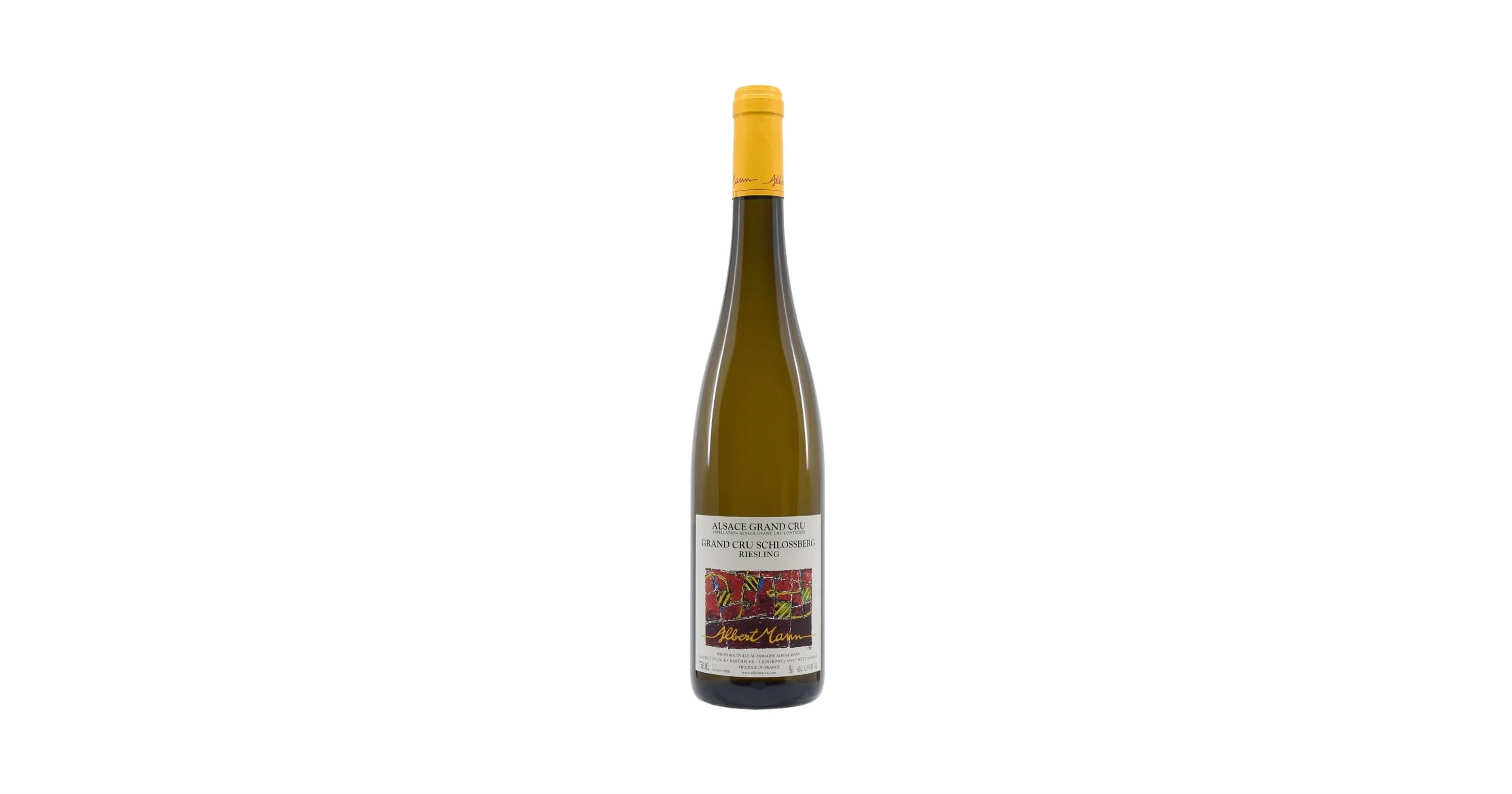
Among the quietly authoritative wines of Alsace, few occupy as singular a position as Domaine Albert Mann’s Riesling Grand Cru Schlossberg. It is a wine that stands at the intersection of historical prestige and contemporary ambition: rooted in the oldest Grand Cru classification in Alsace, shaped by two centuries of family viticulture, and redefined over the past three decades through a rigorous commitment to biodynamic farming and minimal-intervention winemaking. For collectors and professionals who track the arc of French fine wine beyond Burgundy and Bordeaux, this bottle represents one of the most compelling propositions in the country.
Schlossberg itself holds a foundational place in the story of Alsatian wine. In 1975, when the Institut National des Appellations d’Origine moved to establish a Grand Cru hierarchy for Alsace, Schlossberg was the first site to receive the designation—a recognition that ratified centuries of accumulated reputation. Its granite slopes above Kientzheim and Kaysersberg had been prized since at least the fifteenth century, and the winegrowers of the vineyard had codified their own quality standards as early as 1928, nearly half a century before formal classification arrived. The site’s primacy is not merely administrative; it reflects a terroir whose geological clarity and microclimate produce Rieslings of exceptional definition.
Domaine Albert Mann’s claim on Schlossberg is relatively recent in the vineyard’s long history, but it has become definitive. The estate, based in Wettolsheim near Colmar, traces its winemaking lineage through the Mann and Barthelmé families to the seventeenth century. When brothers Maurice and Jacky Barthelmé assumed management in 1984, they inherited holdings across multiple Grand Cru sites. It was their decision to convert to biodynamic viticulture beginning in 1997—among the earliest such conversions in Alsace—that marked a turning point not only for the estate but for the broader perception of what Alsatian Grand Cru wine could be. The Schlossberg Riesling became the flagship expression of this philosophy: a wine of granitic precision, textural complexity, and almost austere mineral focus that rewards patience.
The wine’s trajectory over the past two decades maps onto a broader shift in the market for serious white wine. As collectors have grown more attuned to site-specific, terroir-driven bottlings from regions outside the established Burgundy axis, Alsatian Grand Cru Riesling has drawn increasing attention. Within that movement, Albert Mann’s Schlossberg stands as a reference point—not the most expensive, not the most widely distributed, but consistently among the most structurally precise and intellectually rewarding wines of the appellation.
This study examines the wine in its full dimensions: the geology and microclimate that define its character, the viticultural and winemaking decisions that shape each vintage, the evolution of the wine across more than three decades of production, and its position within the collector and professional market. The aim is to provide a rigorous, factual account of a wine that merits sustained attention.
Vineyard and Terroir
Geographic Position and Parcel Composition
Grand Cru Schlossberg occupies the steep, south-facing hillside that rises above the communes of Kientzheim and Kaysersberg in the Haut-Rhin department of Alsace, overlooking the valley of the Weiss river. At 80.28 hectares, it is the largest of Alsace’s fifty-one Grand Cru sites—a size that encompasses meaningful internal variation but is unified by a dominant granitic substrate and a consistently favourable solar exposure.
The vineyard extends from approximately 230 metres to 425 metres above sea level, though the most intensively planted parcels occupy the band between 245 and 380 metres. The slopes are precipitous, in many sections exceeding thirty degrees, and have been terraced since the medieval period. Over one thousand metres of dry-stone retaining walls, originally constructed by craftsmen from the Aosta Valley, structure the hillside; their ongoing restoration remains a condition of viable cultivation. Plantation density averages approximately 5,000 vines per hectare.
Domaine Albert Mann sources its Schlossberg Riesling from five distinct parcels within the vineyard, with Tiefenthal and Kirrenbourg among the named sections. These holdings came to the Barthelmé family through their mother, a member of the Blanck family of Kaysersberg—one of the commune’s historically significant vigneronne dynasties. The vines on these parcels are predominantly old, averaging over thirty-five years with individual sections significantly older. The precise total hectarage under Albert Mann’s ownership within Schlossberg has not been publicly disclosed in estate communications, but the five-parcel structure allows for micro-vinification and blending that expresses the site’s internal diversity.
Geological Context
Schlossberg’s identity is inseparable from its granite. The parent rock results from the metamorphic crystallisation of migmatites—a blend of gneiss and granite—and biotite granite originating from Kaysersberg. This is a two-mica granite, sharing its broad geological classification with other premier Alsatian sites such as Brand and Sommerberg, but the specific weathering profile at Schlossberg produces a distinctive topsoil.
The granite weathers in a characteristic sequence: micas decompose first, followed by feldspars, leaving the most resistant component—quartz—as loose crystals in the upper soil horizon. These coarse, sandy arenas are rich in potassium, magnesium, and phosphorus, and they drain with exceptional efficiency. Water passes through the surface quickly, warming the root zone and reducing disease pressure. Deeper in the profile, lenses of clay minerals formed from the decomposition of feldspars and micas retain moisture, ensuring that vine roots that have penetrated to depth maintain access to water through dry spells. This dual structure—free-draining surface over moisture-retentive subsoil—is the geological engine of Schlossberg’s viticultural quality, encouraging deep rooting, natural yield limitation, and steady maturation.
The mineral composition of the granite directly informs the wine’s sensory character. Alsatian winemakers and geologists have long observed that granitic arenas constitute terroirs of excellent mineral fertility, and that the diversity of minerals encountered during weathering—particularly the presence of potassium and trace elements released from mica decomposition—determines the finesse and multiplicity of aromatics in the resulting wine. In practical terms, Schlossberg’s granite yields Rieslings of exceptional purity and linear tension, without the opulence or breadth associated with the marl-limestone terroirs that dominate other Grand Cru sites.
Exposure, Altitude, and Microclimate
The vineyard’s south to south-southeast orientation maximises solar exposure across the growing season, with vines receiving direct sunlight from mid-morning through afternoon. This aspect, combined with the steep gradient, produces a thermal environment significantly warmer than the valley floor, accelerating phenolic ripeness while the altitude preserves acidity through cooler nocturnal temperatures.
Schlossberg benefits from one of the most favourable mesoclimates in Alsace. The Vosges mountains to the west act as a natural barrier against Atlantic weather systems, creating a pronounced rain shadow. Colmar and its environs record among the lowest annual precipitation figures in metropolitan France—approximately 500 to 600 millimetres per year—and Schlossberg’s elevated position further reduces exposure to valley fog and humidity. Average summer temperatures reach 18°C, with peaks above 30°C during heat events, while winter temperatures average around 3.5°C.
A critical microclimate feature is the channel of fresh air that flows through the Kaysersberg valley in late August and September, passing directly over the Schlossberg slopes. This natural ventilation slows the final phase of berry ripening, extending the hang time during which flavour precursors develop without excessive sugar accumulation. The resulting wines combine physiological ripeness with the acidity structure necessary for long-term ageing—a balance that distinguishes Schlossberg from warmer, more sheltered Grand Cru sites.
Farming Philosophy
Domaine Albert Mann converted to biodynamic viticulture in 1997, an early and bold commitment for an Alsatian estate of this calibre. Organic certification from Ecocert followed in 2000, and biodynamic certification through Biodivin was achieved during the early 2010s. The conversion encompassed all of the estate’s holdings, including its Grand Cru parcels.
In the vineyard, this philosophy translates to the use of biodynamic preparations, cover crops, and compost teas; the elimination of synthetic herbicides, fungicides, and fertilisers; and a reliance on manual labour for canopy management and harvest. Jacky Barthelmé, who oversees viticultural operations, has described the approach as one of restoring the vine’s natural equilibrium with its environment—treating each of the estate’s approximately one hundred small parcels as an individual garden. The steep Schlossberg terraces demand particular physical commitment, as mechanisation is largely impossible.
The year-to-year sensitivity of the Schlossberg terroir to climatic variation is heightened by its granitic substrate. In years of adequate rainfall, the deep-rooting vines on well-drained granite achieve ideal balance. In drought vintages, however, the rapid drainage that is normally an advantage can become a liability, subjecting vines to hydric stress earlier than those on moisture-retentive soils. This sensitivity is a defining characteristic of the site and a key factor in vintage variation.
Grape Composition and Viticultural Choices
The wine is a pure Riesling, as mandated by Alsace Grand Cru regulations for Schlossberg. No blending with other varieties is permitted under the appellation rules, which restrict Grand Cru production to Riesling, Gewurztraminer, Pinot Gris, and Muscat—each bottled as a single-varietal wine. Riesling is the dominant planting on Schlossberg, and its affinity for granitic terroirs has been documented across centuries of Alsatian viticulture.
Albert Mann’s vine material on Schlossberg includes a mix of clonal and massal selections, reflecting successive planting campaigns over several decades. The oldest vines, exceeding sixty years in some parcels, derive from massal selections that predate the widespread adoption of clonal material in Alsace. These older plantings contribute concentration, depth, and a particular textural density to the wine. Younger replantings have been carried out with selections chosen for their compatibility with the granitic terroir and biodynamic management rather than for yield or early productivity.
Yield control is achieved through a combination of site constraints and deliberate viticultural choices. The steep slopes and thin granitic soils of Schlossberg naturally limit production, and the estate’s biodynamic management—including the avoidance of synthetic fertilisers and the use of cover crops that compete with vines for nutrients and water—further restricts vigour. Average yields tend to fall well below the Grand Cru maximum of 55 hectolitres per hectare, typically in the range of 35 to 45 hectolitres per hectare depending on the vintage. The estate does not publish exact yield figures for individual cuvees, but the concentration and density of the finished wine testify to restrained production.
Canopy management follows biodynamic principles, with leaf-pulling and shoot-positioning carried out manually to optimise sun exposure on the fruit while maintaining sufficient foliage for photosynthetic health. The timing of these interventions is attuned to the biodynamic calendar, though the estate has never been dogmatic about this: practical conditions in the vineyard take precedence over calendrical prescriptions. Harvest is conducted entirely by hand, as the steep terraces preclude machine harvesting even where it might otherwise be considered.
Vinification and Élevage
The cellar philosophy at Domaine Albert Mann is explicitly non-interventionist, guided by the conviction that grapes produced through careful biodynamic viticulture already contain everything necessary for the expression of terroir. Maurice Barthelmé, who oversees cellar operations, has articulated this position with characteristic directness: the winemaker’s task is to accompany the wine, not to construct it.
Harvest and Sorting
Grapes are harvested by hand in successive passes through the vineyard, allowing for selection at picking based on the ripeness and health of individual bunches. In vintages affected by botrytis or uneven ripeness, this selective approach is critical; in more uniform years, it serves primarily to ensure that fruit reaches the press at optimal maturity. Sorting is performed in the vineyard rather than at a conveyor table, consistent with the estate’s emphasis on vineyard-level decision-making.
Fermentation
Following pressing, the juice undergoes brief settling before being transferred to fermentation vessels. Albert Mann employs a combination of stainless steel tanks and large, semi-exhausted wooden casks—typically foudres of several hundred litres that have seen multiple vintages and contribute minimal flavour of their own. The choice of vessel for a given lot is determined by the character of the fruit in a particular vintage.
Fermentation is spontaneous, relying exclusively on indigenous yeasts from the vineyard and cellar. No commercial yeast strains, enzymes, or nutrients are added. This commitment to spontaneous fermentation carries inherent risk—slow or stuck fermentations are possible, particularly in years of high potential alcohol—but the estate regards indigenous yeast populations as an integral expression of the terroir. Fermentation temperatures are not aggressively controlled; the cellar’s natural cool environment moderates the process, allowing a slow, extended conversion that preserves aromatic complexity and textural nuance.
Élevage and Bottling
Following fermentation, the wine remains on its fine lees for an extended period, typically at least eighteen months. This prolonged lees contact is central to the wine’s structural identity: the autolysis of yeast cells enriches the wine’s mid-palate texture, stabilises it naturally against oxidation, and contributes to its capacity for extended bottle ageing. No stirring (bâtonnage) is practiced; the lees settle naturally and interact with the wine through passive contact.
The wine receives no fining or filtration—or, in some vintages, only a very light filtration before bottling. Sulphur additions are kept to a minimum, maintained well below the already stringent thresholds permitted under biodynamic certification. No other oenological products are employed at any stage of production.
Bottling is timed according to the wine’s development rather than a fixed calendar. The estate’s preference for extended élevage means that the Schlossberg Riesling is typically released later than many of its peers, arriving on the market with additional time in bottle that contributes to integration and early approachability without compromising ageing potential. Residual sugar levels vary by vintage, generally falling in the dry to just-off-dry range (commonly between 0 and 9 grams per litre), with the estate favouring completeness of fermentation where the vintage allows.
Vintage-by-Vintage Analysis
This section traces the wine’s evolution from its earliest documented vintages through the most recent releases, situating each year within its climatic context and the estate’s developing philosophy. Where critical reception has been significant, it is referenced analytically rather than as a score catalogue.
The Early Period: 1990s
1991–1994
The early 1990s represent the pre-biodynamic period of the estate’s Schlossberg production. These vintages were made under conventional viticulture but already reflected the Barthelmé brothers’ preference for restrained yields and minimal cellar intervention. The 1991 vintage, a challenging year marked by spring frost and uneven ripeness across Alsace, produced a lean, angular wine that nonetheless demonstrated the granitic site’s capacity for mineral expression even in difficult conditions. The 1993 was similarly marked by a cool growing season, yielding wines of higher acidity and less generosity than the warmer years that bookended it. The 1994 brought warmer conditions and a more complete ripeness, producing a wine of greater amplitude, though the absence of biodynamic viticulture limits comparisons with later vintages.
1995–1996
1995 was a strong vintage across Alsace, with a warm, dry growing season that favoured concentration on granitic terroirs. The Schlossberg from this year showed early generosity but sufficient acidity structure for medium-term development. The 1996 vintage, by contrast, was one of the most challenging of the decade—a cool, late-ripening year that tested growers’ patience and demanded rigorous selection at harvest. The resulting wine was taut and reserved in youth, requiring significant cellaring to reveal its qualities. It has since been referenced as a useful point of comparison for later cool vintages such as 2021, demonstrating the terroir’s consistency of expression under stress.
1997–1999
The 1997 vintage marks a watershed: it is the first year of biodynamic management in the vineyard, though the effects of conversion are gradual and would not be fully apparent in the wine for several years. The vintage itself was warm and generous across Alsace, producing a relatively opulent Schlossberg that masked the beginnings of a viticultural revolution. The 1998 continued in a warm register, yielding wines of body and early appeal. The 1999 vintage, benefiting from a cooler late season, reasserted the mineral tension that would become the wine’s hallmark, and early observers noted a shift toward greater precision and definition in the mid-palate—an effect that can reasonably be attributed to the early stages of biodynamic conversion and the consequent improvement in soil health and root activity.
The Biodynamic Maturation: 2000s
2000–2002
The year 2000 brought organic certification from Ecocert, formalising the estate’s commitment to chemical-free viticulture. The vintage itself was generous, with warm conditions producing wines of richness and accessibility. The 2001, cooler and more classical in profile, is among the first vintages where the influence of biodynamic viticulture begins to be legible in the wine’s structure: a finer-grained texture, more precise mineral expression, and greater aromatic complexity than comparable pre-conversion years. The 2002 was a difficult year across much of Alsace, with excessive rainfall creating disease pressure. The estate’s commitment to hand harvesting and parcel-level selection proved critical in preserving quality.
2003–2005
The 2003 vintage, defined by the extreme European heatwave, produced an anomalous Schlossberg: rich, broad, and atypically low in acidity. While impressive in its concentration, the wine lacked the linear tension that characterises the site’s best expressions and has aged more rapidly than its neighbours. It remains a useful study in the terroir’s response to thermal extremes. The 2004 returned to a cooler, more classical pattern, yielding a wine of elegant restraint that has aged gracefully. The 2005, widely regarded as one of the decade’s finest in Alsace, produced a Schlossberg of commanding structure: concentrated yet tensile, with a granitic minerality that has continued to deepen with cellaring. This vintage is considered among the estate’s benchmark releases.
2006–2009
The 2006 and 2007 vintages occupy a middle register—competent, well-made wines that express the site without reaching the heights of surrounding years. The 2007, in particular, showed early charm but has not developed the complexity of the better vintages. The 2008, by contrast, is a sleeper: a cool, late-ripening year that produced wines of extraordinary acidity and mineral intensity. Professional assessments at the time undervalued the vintage, but subsequent tasting has revealed a wine of remarkable depth and evolving complexity, rewarding collectors who had the patience to cellar it. The 2009 was warm and generous, producing a Schlossberg of ample fruit and immediate appeal. Community consensus places it around 91 points, reflecting strong quality without the tension of the finest cool-year wines.
The Contemporary Period: 2010s
2010–2012
The 2010 vintage is a milestone for the estate’s Schlossberg. A balanced growing season—warm but not excessively so, with sufficient rainfall—produced a wine of concentration, structural precision, and textural richness that integrates power and finesse with particular success. Wine Enthusiast awarded it 92 points, describing concentrated, full-bodied character with ripe fruit flavours cut by steel and acidity. The 2011, a forward vintage of early accessibility, offered immediate pleasure but less complexity than its predecessor. The 2012 proved divisive: an off-dry wine with lower acidity and more muted aromatics than the site typically delivers, it has struck some as atypically soft, though the purity of its mid-palate texture retains interest. Community scoring centred around 89 points.
2013–2015
The 2013 vintage, a return to classical Alsatian conditions after the variable trio of 2010–2012, produced a taut, mineral Schlossberg that professional critics scored at 93 points—one of the higher assessments in the wine’s modern history. The 2014, a challenging year requiring attentive viticulture, nonetheless yielded a wine that impressed Jancis Robinson for its commitment to site expression; she singled out Albert Mann’s Rieslings from Schlossberg and Furstentum for their precision. The 2015, warm and generous, produced a wine of peachy richness and citric brightness, with fine mineral freshness on the nose and considerable intensity on the palate. While slightly more opulent than the estate’s median style, its balance and structure suggest medium- to long-term ageing potential. Community scoring centred at 91.5 points.
2016–2019
The 2016 is a particularly accomplished vintage for this wine. Harvested on 17 October at 12.5% alcohol with approximately 8 grams per litre of residual sugar, it displays a delicate interplay of apple and lime aromas with a flinty edge, opening to fresh, nutty, and mineral-driven flavours on the palate. It was initially tight and closed, demanding cellaring, but has since revealed considerable depth. Community consensus of 92.5 points reflects its standing among the wine’s recent benchmarks. The 2017 and 2018, made in warmer conditions, represent solid if less distinctive vintages. The 2019, golden in colour and showing peaches, melons, and citrus alongside pronounced minerality, is fruit-driven yet structurally serious, close to bone-dry, and already enjoyable while promising further development. It has attracted a community consensus near 93 points, placing it among the strongest recent releases.
The Most Recent Vintages: 2020s
2020–2023
The 2020 vintage, shaped by a warm growing season tempered by sufficient precipitation, produced a Schlossberg of refreshing salinity and anise-accented complexity, with characteristic grapefruit and melon notes. Early petrol development has been noted by some tasters, suggesting relatively rapid aromatic evolution. The 2021 represents a fascinating counterpoint: a challenging vintage across Alsace, marked by frost, rain, and uneven ripeness, that demanded exceptional vigilance in the vineyard. Albert Mann’s wine from this year is bone-dry (0 grams per litre residual sugar, 13.5% alcohol), with a complex nose of yellow fruits and an unusually pronounced herbal character—fennel, coriander, aniseed, white pepper—that distinguishes it from warmer-year expressions. Its precise, slender structure recalls the cooler vintages of the 1990s.
The 2022 vintage has attracted the highest critical scores in the wine’s recent history, with assessments reaching 97 points. Opening with flint, iodine, and oyster shell aromas, it achieves a crystalline elegance and saline finish that multiple critics have described as a benchmark expression of the site. The five-parcel, old-vine sourcing is particularly legible in this vintage. The 2023, scored at 95 points, continues the run of exceptional quality, suggesting that the convergence of mature biodynamic viticulture, old vine material, and refined cellar practice is producing wines of a quality level that surpasses the estate’s already distinguished history.
Style, Identity, and Structural Sensory Profile
The core signature of Albert Mann’s Schlossberg Riesling, across vintages and stylistic variations, is one of mineral precision and structural tension. Where Rieslings from marl-limestone Grand Crus such as Schoenenbourg or Rosacker tend toward breadth, viscosity, and an almost glycerine richness, the Schlossberg asserts itself through linearity, salinity, and a textural quality that can only be described as granitic: a finely grained, almost powdery mid-palate sensation that carries the wine’s flavour through to a finish of considerable length.
In youth, the wine is typically reserved and slow to reveal itself. The first one to three years after release often present a tight, somewhat monolithic profile in which the mineral framework dominates over fruit expression. This initial austerity is a reliable indicator of quality and ageing potential; vintages that show overt generosity in their first years have generally proven less complex at maturity. Between five and eight years of age, the wine undergoes a marked transformation: the mineral scaffolding acquires flesh, the mid-palate gains in density and textural complexity, and a secondary aromatic register begins to emerge. The characteristic petrol or kerosene note of aged Riesling appears in Schlossberg with restraint and integration, never dominating but contributing to a profile of increasing complexity.
At full maturity—which, for the better vintages, arrives between ten and twenty years of age—the wine achieves a synthesis of fruit, mineral, and structural elements that is the ultimate expression of this terroir. The salinity that is present from the outset becomes more pronounced, the textural grain resolves into a silk-like fluidity, and the finish extends to a degree that distinguishes truly great Riesling from merely good examples. Older bottles, approaching or exceeding twenty years, can exhibit a honeyed complexity without any corresponding loss of freshness or structural definition—a paradox that is the hallmark of exceptional granitic Riesling.
Comparative Identity
Within Schlossberg itself, Albert Mann’s interpretation stands apart from those of Domaine Weinbach and Paul Blanck—the two other principal references for the site. Weinbach’s Schlossberg, produced from approximately ten hectares including old vine parcels of up to seventy years, tends toward greater opulence and body, with a broader mid-palate and more explicit fruit expression. Paul Blanck’s version, widely praised for its crystalline purity, shares Albert Mann’s emphasis on mineral tension but often reads as slightly more austere and vertically structured. Albert Mann’s wine occupies a middle ground—neither as generous as Weinbach’s nor as spartan as Blanck’s—but distinguishes itself through a textural complexity and aromatic layering that can be attributed to the biodynamic programme and the extended lees ageing.
Against the broader landscape of Alsatian Grand Cru Riesling, Schlossberg occupies the granitic pole of expression: leaner, more saline, and more slowly evolving than wines from volcanic terroirs (Rangen) or the warm limestone of Hengst. Within the granitic family—which includes Brand and Sommerberg—Schlossberg is typically the most approachable in medium-term ageing, lacking the extreme tautness of Sommerberg or the solar intensity of Brand, but offering a balance between tension and generosity that has broad appeal among serious collectors.
Aging Potential and Cellaring
The ageing potential of Domaine Albert Mann’s Schlossberg Riesling is substantial and well-documented, though the wine’s relatively modest public profile means that fewer older bottles circulate on the secondary market than for comparably long-lived wines from Burgundy or the Mosel.
Short-Term: One to Five Years
In its first five years, the wine is drinkable but rarely at its best. The initial release often presents a compact, tightly wound profile in which acidity and mineral structure predominate. Fruit expression is present but subdued. For those who prefer young Riesling’s vivacity, the wine offers clean, focused pleasure, but it does not yet display the complexity that distinguishes it from less distinguished cuvees. Professional consensus recommends opening current-release bottles only with substantial aeration.
Medium-Term: Five to Fifteen Years
The sweet spot for most vintages lies in this window. Between five and ten years, the wine begins to integrate its structural elements, the mid-palate fills out, and the secondary aromatic register—floral, herbal, lightly honeyed—emerges alongside the primary citrus and stone-fruit character. Between ten and fifteen years, the finest vintages reach a plateau of complexity that can be sustained for many years. The 2005, 2010, and 2016 vintages are currently in or approaching this optimal phase.
Long-Term: Fifteen to Thirty Years and Beyond
The granite terroir, combined with the wine’s natural acidity, low sulphur regime, and extended lees ageing, provides the structural foundation for very long ageing. Older vintages from the 1990s, now approaching or exceeding twenty-five years, continue to show vitality and evolving complexity where properly stored. The 1996, a difficult vintage at outset, has proven to be among the most rewarding at extended maturity—a pattern consistent with the site’s tendency to reward patience in cooler years. Professional assessments suggest that the best Schlossberg vintages can be held for twenty to thirty years with confidence, and that exceptional bottles may remain compelling beyond that horizon.
Storage Conditions
Ideal cellaring conditions are consistent with those for any fine white wine intended for extended ageing: a stable temperature between 10°C and 13°C, humidity between 65% and 80%, darkness, and absence of vibration. The wine’s low sulphur regime makes it somewhat more sensitive to temperature fluctuation and poor storage than conventionally made wines; bottles that have experienced warm or variable conditions may show premature oxidation. For collectors acquiring this wine with long-term intentions, provenance and storage history should be verified with particular care.
Market Value and Investment Perspective
Historical Price Evolution
Domaine Albert Mann’s Riesling Grand Cru Schlossberg has historically occupied a price point that represents exceptional value within the context of French Grand Cru wine. Current retail prices for recent vintages fall in the range of 45 to 90 euros (approximately 50 to 100 US dollars), depending on market, vintage, and retailer. The 2021 vintage, for example, has been offered at approximately 90 US dollars in the American market. Older vintages, where available, command modest premiums that reflect scarcity rather than speculative demand.
Prices have risen steadily over the past decade, tracking the broader appreciation of Alsatian Grand Cru Riesling among collectors and professionals. However, the rate of appreciation has been moderate compared to Burgundy, where equivalent quality levels now command prices an order of magnitude higher. This disparity is a recurring theme in discussions of Alsatian wine value: the region’s relative obscurity among mainstream collectors depresses prices below what quality alone would justify.
Scarcity and Production
Production volumes for the Schlossberg Riesling are small by any standard, constrained by the estate’s limited holdings within the vineyard and the naturally low yields of old vines on granitic soil. While the estate does not disclose precise production figures for individual cuvees, total estate production from 25 hectares suggests that the Schlossberg bottling represents a fraction of overall output. Availability is further limited by the estate’s broad international distribution, which disperses small allocations across numerous markets.
Secondary Market and Liquidity
The secondary market for Domaine Albert Mann Schlossberg Riesling is thin. The wine does not regularly appear in the catalogues of major international auction houses such as Sotheby’s, Christie’s, or Acker Wines, and online trading platforms show limited transaction history. This illiquidity is characteristic of the Alsatian Grand Cru category as a whole: wines of this quality are consumed rather than traded, and the collector base, while informed and loyal, is not large enough to support an active secondary market.
For investors accustomed to the liquidity and price transparency of Burgundy or Bordeaux, this profile presents both risk and opportunity. The risk is clear: resale channels are limited, and price discovery is imperfect. The opportunity lies in the wine’s fundamental undervaluation relative to its quality, its proven longevity, and the growing recognition of Alsatian Grand Cru among serious wine professionals. However, it would be misleading to characterise this as an investment-grade wine in the conventional sense. It is a wine for collectors who drink what they buy and who value quality-to-price ratio over liquidity.
Risk Factors
Potential risks to long-term value include the broader challenges facing Alsatian wine’s market positioning: the complexity of its classification system, the persistence of consumer confusion about sweetness levels, and the limited promotional infrastructure compared to Burgundy or Champagne. Additionally, the increasing frequency of extreme weather events under climate change poses viticultural risks to the steep, granite slopes of Schlossberg, where drought stress is a particular concern. Regulatory evolution—including potential reclassification of Grand Cru boundaries or permitted varieties—is a low-probability but non-trivial risk factor.
Cultural and Gastronomic Significance
Historical and Cultural Context
Schlossberg’s cultural significance extends well beyond its viticultural merit. The vineyard takes its name from the Château de Kaysersberg, a fortified castle built around 1220 for Albin Woelflin, imperial bailiff under Frederick II, Holy Roman Emperor. The castle’s strategic position—controlling a key route across the Vosges—made it a significant military and commercial asset throughout the medieval period. Kaysersberg itself was a member of the Décapole, the league of ten free Imperial cities in Alsace, and its prosperity was intimately linked to the wine trade from the surrounding hillsides.
Viticulture on the slopes below the castle dates to at least the Gallo-Roman period, with some historical accounts attributing the first plantings to the era of Emperor Probus, around 280 AD. The continuity of winemaking on this site—through the upheavals of the medieval period, the devastation of the Thirty Years’ War, the annexations and reannexations of Alsace between France and Germany, and the economic disruptions of the twentieth century—represents one of the longest unbroken viticultural traditions in Europe.
Within this deep history, Domaine Albert Mann’s contribution is modern but consequential. The estate’s early adoption of biodynamic viticulture placed it at the forefront of a movement that has reshaped the quality landscape of Alsatian wine. Its Schlossberg Riesling has become a reference point for professionals and educators seeking to demonstrate the potential of the region’s Grand Cru system—a system that, despite its administrative complexity, produces wines of a quality and distinctiveness that stand comparison with the finest site-specific bottlings in France.
Gastronomic Relevance
The gastronomic applications of this wine are shaped by its structural profile and its evolution in bottle. In youth, the wine’s acidity, salinity, and mineral tension make it a natural partner for shellfish and crustaceans, where its saline character complements the briny sweetness of the sea. Oysters, langoustines, and crab—prepared simply—are classical pairings that allow the wine’s mineral expression to resonate.
At medium maturity, as the wine’s mid-palate fills out and secondary aromatics emerge, it gains the complexity to accompany more elaborate preparations: river fish with herb sauces, veal blanquette, and the traditional Alsatian dishes of choucroute garnie and baeckeoffe, where the wine’s acidity cuts through richness while its developing complexity mirrors the layered flavours of slow-cooked preparations.
At full maturity, the wine’s honeyed depth and persistent freshness open possibilities for pairing with aged hard cheeses—Comté of eighteen months or more, Gruyère, aged Tomme de Savoie—and with dishes that bridge savoury and sweet registers, such as foie gras with fruit compote or roast poultry with autumnal root vegetables. The capacity to span this range of pairings across its ageing trajectory is a marker of the wine’s structural completeness.
Conclusion
Domaine Albert Mann’s Riesling Grand Cru Schlossberg is not a wine that announces itself. It does not trade on scarcity-driven hype, celebrity endorsement, or the kind of market machinery that propels prices in other regions. Its virtues are those of substance rather than spectacle: a terroir of ancient reputation and geological clarity, a farming philosophy of genuine conviction, a cellar practice of rigorous restraint, and a track record of vintages that reward attention and patience.
For the serious collector, this wine offers something increasingly rare in the contemporary fine wine landscape: authentic quality at a price that has not yet been inflated by speculation. The best vintages—among recent releases, the 2016, 2019, 2022, and 2023 stand out—represent investments in drinking pleasure that will compound over decades of cellaring. The less celebrated vintages offer their own rewards, revealing the terroir’s response to adversity and the estate’s capacity to produce wines of character even in difficult years.
For the professional, the wine serves as a benchmark for what biodynamic viticulture can achieve on a Grand Cru site: not as ideology but as practical method, producing wines of greater precision, complexity, and site expression than conventional approaches have historically delivered. It belongs in any serious conversation about the finest dry Rieslings produced in France—and, by extension, anywhere in the world.
Schlossberg has been making great wine for centuries. Domaine Albert Mann has been making it for decades. The convergence of ancient terroir and modern philosophy in this bottle is, for those who know where to look, one of the quiet triumphs of contemporary French viticulture.