

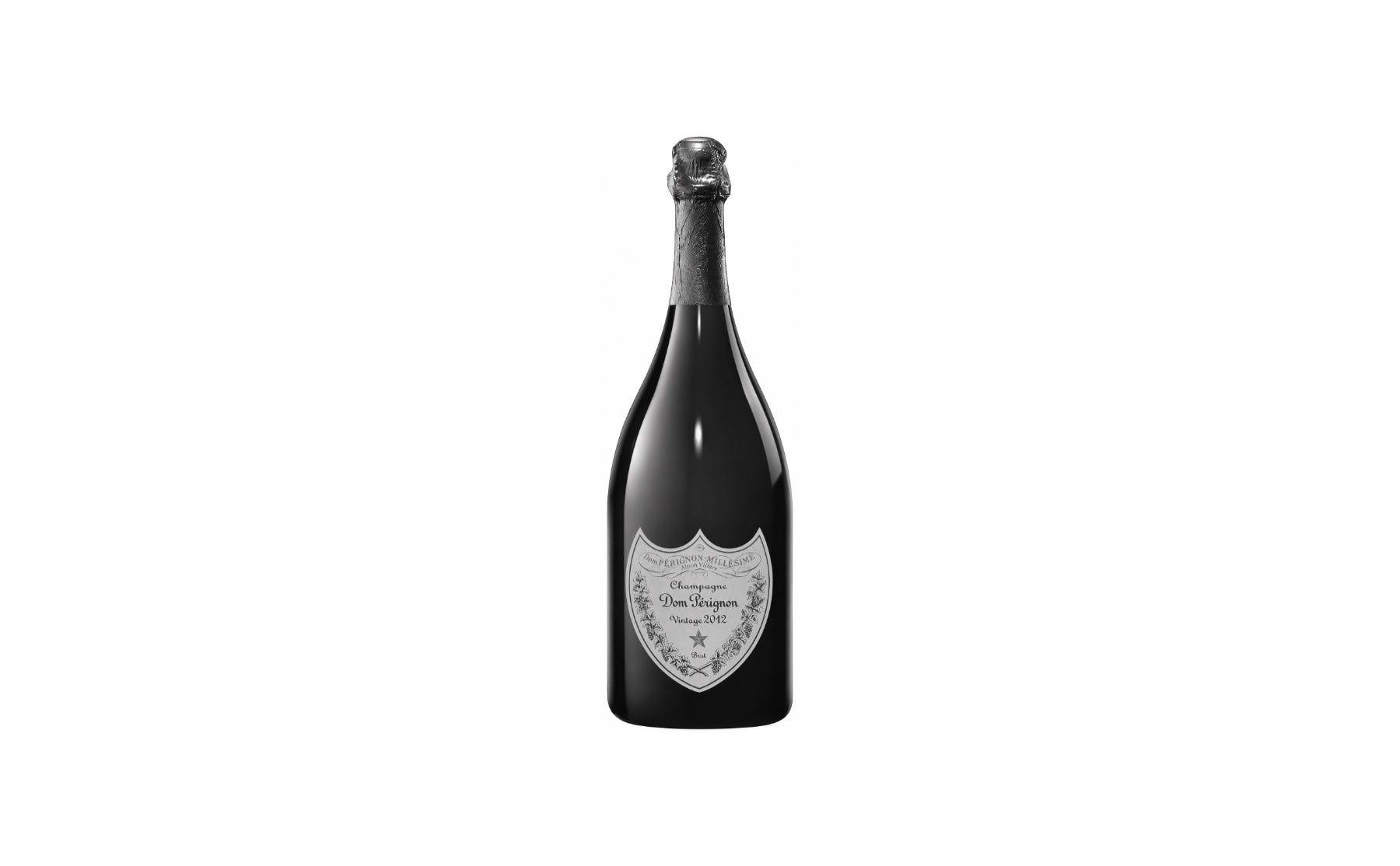
Few Champagnes combine international recognition, historical significance and serious ageing potential as convincingly as Dom Pérignon Vintage. Created exclusively from a single harvest, it brings together Chardonnay and Pinot Noir from some of Champagne’s most distinguished vineyards, followed by prolonged cellar maturation. Beyond its association with luxury, Dom Pérignon represents an ambitious interpretation of assemblage, vintage expression and time—qualities that have made its finest years enduring favourites among collectors and connoisseurs.
A prestige cuvée that helped define modern Champagne
Dom Pérignon occupies a distinctive position in the history of Champagne. It is both one of the region’s most recognisable luxury names and one of the wines that established the modern concept of the prestige cuvée.
Its origins lie with Moët & Chandon, the historic Épernay house that developed Dom Pérignon as an exceptional vintage Champagne during the early twentieth century. The first vintage was 1921, although the wine did not reach the market until 1936.
That separation between harvest and release was significant. At a time when Champagne was increasingly associated with international luxury, Dom Pérignon offered something more specific: a deliberately prestigious, vintage-dated wine whose identity depended on the character of a particular harvest and its capacity to develop through ageing.
Christie’s historical records describe an initial shipment of 100 cases to New York in November 1936, helping establish the wine among wealthy American consumers. Its early commercial success contributed to the emergence of prestige Champagne as a category in its own right.
The name reaches much further back.
Dom Pierre Pérignon was a Benedictine monk appointed procurator of the Abbey of Hautvillers in 1668. His work involved the management of the abbey’s vineyards and wines, and he became associated with improvements in grape selection, pressing and blending.
The familiar claim that he invented sparkling Champagne is a romantic simplification rather than an established historical fact. His more credible contribution lies in the pursuit of greater wine quality through careful viticulture and assemblage.
This distinction is particularly appropriate for the Champagne bearing his name. Dom Pérignon’s defining achievement is not the expression of one isolated vineyard, but the creation of a distinctive wine from numerous complementary origins.
Today, Dom Pérignon forms part of Moët Hennessy, the wines-and-spirits division of LVMH. Although its history remains closely connected with Moët & Chandon, it operates with a distinct identity, winemaking philosophy and collection of vintage Champagnes.
The white Vintage is the foundation of that identity, accompanied by Dom Pérignon Rosé and the later-release Plénitude expressions.
Unlike most Champagne houses, Dom Pérignon does not offer a non-vintage cuvée. Every bottle belongs to a declared harvest year, and the house may decline to release a vintage when it considers the result insufficiently representative of its ambitions.
A Champagne defined by assemblage rather than a single vineyard
Dom Pérignon differs fundamentally from the single-vineyard wines that dominate many of France’s most prestigious appellations.
There is no equivalent here of a Burgundy climat or an enclosed Alsatian grand-cru parcel. Its identity comes instead from the selection and blending of Chardonnay and Pinot Noir grown across an extensive network of distinguished Champagne vineyards.
Historically, its sourcing has centred on grands crus and the premier-cru village of Hautvillers, where the Benedictine monk lived and worked.
Among the important Chardonnay villages associated with Dom Pérignon are Avize, Chouilly, Cramant and Le Mesnil-sur-Oger in the Côte des Blancs. Pinot Noir sources have historically included Aÿ, Bouzy, Mailly and Verzenay.
These origins provide contrasting characteristics.
The Côte des Blancs is particularly celebrated for its chalk-rich vineyards and Chardonnay capable of combining citrus freshness, precision and delicacy with considerable ageing potential.
The Montagne de Reims and surrounding Pinot Noir territories offer a different palette, often contributing structure, breadth, aromatic depth and textural substance.
Champagne’s underlying geology plays an important role in the way these vineyards function.
Chalk is especially valuable because of its porosity and water-regulating properties. It can retain considerable moisture during wetter periods and make water available to vines during dry conditions. Combined with the region’s cool-climate heritage, this helps explain the capacity of many Champagne vineyards to produce grapes with both flavour development and natural freshness.
These geological characteristics do not mean that the chalky or saline sensations sometimes identified in Dom Pérignon are literally dissolved minerals transferred from soil to wine. Such descriptions are useful sensory interpretations; the more demonstrable influence of terroir concerns water availability, ripening patterns, fruit composition and acidity.
The blending philosophy brings these elements together.
Chardonnay can contribute precision, aromatic lift and structural freshness. Pinot Noir can supply concentration, body and depth. The precise proportions change from vintage to vintage, reflecting the character of the harvest rather than adherence to a rigid recipe.
This flexibility is essential to understanding Dom Pérignon.
A cool season may require one interpretation of balance; a particularly ripe year may demand another. The cellar master must preserve the individuality of the harvest while producing a wine recognisably belonging to the Dom Pérignon tradition.
The available vineyard palette is extensive, and the precise combination of parcels is not publicly disclosed for every vintage. The wine should therefore be understood as a carefully constructed expression of several Champagne terroirs rather than the transparent reflection of one narrowly defined site.
Its distinction lies in the quality and coherence of the assemblage.
Viticulture, selection and the challenge of a changing climate
The scale of Dom Pérignon’s vineyard sourcing creates both advantages and responsibilities.
Access to numerous crus provides a broad selection of grapes and allows the house to respond to differences in ripeness, acidity and growing conditions between individual parcels.
It also means that vineyard management cannot be described as a single uniform estate practice.
All Champagne grapes must be harvested by hand under the appellation’s regulations. For Dom Pérignon, selection is particularly important because the objective is not simply to produce sound Champagne, but to identify fruit capable of contributing to a complex wine intended for prolonged maturation.
That selection becomes especially demanding in difficult vintages.
Variations in spring frost, summer temperature, rainfall, disease pressure and harvest conditions can significantly alter the balance between Chardonnay and Pinot Noir. The house may consequently change both the relative proportions of the varieties and the vineyards represented in the final blend.
Environmental considerations have become increasingly prominent.
Recent reporting describes initiatives involving reduced chemical intervention, biodiversity, soil management and improved understanding of individual vineyard ecosystems. These developments form part of a broader movement within Champagne toward more sustainable viticulture.
However, Dom Pérignon’s entire grape supply should not be described as certified organic or biodynamic. The available information supports environmental initiatives and changing practices, but not a universal certification covering every vineyard contributing to the wine.
The technical challenges are also evolving.
Champagne has historically depended on relatively cool growing conditions to achieve the freshness essential to its traditional style. Warmer seasons can deliver greater sugar maturity, but they may also reduce acidity, alter phenolic development and require earlier picking.
The 2018 vintage offers a particularly revealing example of this changing environment.
Under cellar master Vincent Chaperon, who joined the Dom Pérignon team in 2005 and succeeded Richard Geoffroy, the house has placed increasing emphasis on understanding how individual vineyards respond to climatic variation.
Research into rootstocks, disease resistance, water stress and yeast selection reflects the need to preserve Champagne’s balance in a warmer and less predictable climate.
The central challenge is no longer necessarily achieving sufficient ripeness. In some years, it is maintaining freshness, definition and long-term balance despite abundant maturity.
For Dom Pérignon, whose reputation depends substantially on ageing potential, this is an especially important consideration.
Winemaking built around precision and patience
Dom Pérignon’s cellar philosophy is shaped by the relationship between vintage character, careful assemblage and extended maturation.
Following harvest, the grapes are pressed and the resulting wines are assessed for their suitability within the final blend.
The house historically moved from fermentation in wood toward stainless-steel vinification during the twentieth century. Its modern style has generally favoured precision and controlled, relatively reductive handling rather than conspicuous new-oak character.
The exact technical arrangements are not comprehensively disclosed for every vintage. Details such as fermentation temperature, individual yeast regimes, malolactic fermentation, pressing fractions and the precise treatment of each component wine should not be assumed to remain identical across years.
The decisive work occurs in creating the assemblage.
Each component must contribute to a coherent structure while preserving the personality of the harvest. The objective is not necessarily to maximise immediate fruit expression, but to create a wine capable of gaining complexity and harmony through prolonged maturation.
As a traditional-method Champagne, Dom Pérignon undergoes secondary fermentation in bottle, producing its characteristic mousse and beginning an extended period of contact with the lees.
During this maturation, yeast autolysis contributes compounds associated with bread, pastry, nuts and savoury complexity. The process also influences texture and the integration of the wine’s acidity, fruit and effervescence.
Time is therefore part of the wine’s construction rather than merely a period of storage.
The Champagne appellation requires vintage wines to mature for at least 36 months before release. Dom Pérignon goes substantially further.
According to the house, the standard Vintage requires at least eight years of elaboration before reaching its first expression.
This prolonged commitment helps explain the wine’s distinctive position within Champagne.
Holding inventory for many years creates significant production and commercial costs, but it also allows the house to release wines that have already undergone substantial development under controlled cellar conditions.
The result can be accessible on release without necessarily being at its peak.
Indeed, many of the most highly regarded Dom Pérignon vintages remain remarkably youthful when they first appear on the market.
Plénitude: The same vintage through different stages of maturity
One of Dom Pérignon’s most distinctive ideas is that a Champagne does not necessarily develop along a simple, continuous path toward maturity.
The house describes its development through successive stages known as Plénitudes.
The standard Vintage represents the first expression, sometimes referred to as the first Plénitude.
It is released after prolonged maturation, when the cellar team judges that the wine has achieved the balance and harmony appropriate to its initial presentation.
Plénitude 2, or P2, follows a different timetable.
Rather than simply ageing bottles of the first release after disgorgement, the house retains a portion of the same vintage in its cellars for longer maturation on the lees.
LVMH describes P2 as requiring at least 15 years of elaboration.
This distinction matters because continued lees contact influences the wine differently from ageing after disgorgement.
A P2 release may combine additional aromatic complexity and texture with a different impression of vitality from a conventionally disgorged bottle of the same harvest.
P3 represents a still later stage, associated with several decades of maturation before release. The precise period varies, and these bottlings are considerably more limited.
The Plénitude programme does not create separate vineyard wines. Rather, it presents different interpretations of the same vintage through contrasting maturation and disgorgement histories.
For collectors, this offers an unusual opportunity.
A comparison between Dom Pérignon Vintage 2008 and a later P2 expression of that harvest, for example, provides insight into how extended lees maturation can influence a wine already celebrated for its structure and longevity.
P2 and P3 also occupy distinct positions in the secondary market. Their later release, smaller availability and specialised collector following can command substantial premiums.
Those premiums reflect both the additional work involved and the commercial scarcity of the later bottlings. They do not automatically establish that the later release will be preferable to every drinker.
A well-preserved first-release Vintage can offer its own compelling expression of maturity.
A Champagne of texture, precision and evolving complexity
Dom Pérignon’s house style is often associated with a distinctive combination of aromatic restraint, fine texture and structural persistence.
In youth, the wine typically displays citrus fruit, green or yellow apple, pear and occasionally peach or apricot, depending on the ripeness of the harvest.
Floral notes can range from delicate white blossom to more expressive jasmine-like aromas in generous years.
A recurring feature is a smoky, flinty or lightly reductive character, particularly in younger bottles. This can lend the wine a sense of tension and aromatic complexity before the fruit becomes fully expressive.
On the palate, the impression is frequently more substantial than the initial bouquet suggests.
The mousse is fine and integrated, while fruit concentration, acidity and subtle phenolic structure create a textured mid-palate.
Chalky, saline and iodine-like descriptions recur in critical tasting notes. These are best understood as impressions of flavour and mouthfeel rather than direct chemical expressions of vineyard geology.
The finish can be particularly distinctive, combining persistent acidity with savoury depth and a fine, occasionally bitter grip.
Dom Pérignon is not generally a Champagne built around conspicuous oak influence or overtly oxidative richness. Its personality is more often defined by the interaction between fruit, reduction, autolysis and texture.
With age, these characteristics evolve.
Fresh citrus and orchard fruit can acquire notes of candied peel, baked apple, honey and dried fruits. Bread and pastry aromas may deepen toward toasted nuts, brioche, coffee or more complex savoury impressions.
The mousse gradually becomes softer, while acidity and fruit concentration determine whether the wine retains its balance.
In exceptional mature bottles, the result can be remarkably harmonious: tertiary aromatic richness supported by sufficient freshness to prevent the wine from becoming heavy.
However, the differences between vintages should not be underestimated.
Some are broad and generous; others are taut and restrained. Certain years offer immediate pleasure, while others require considerable patience before their structural qualities become fully apparent.
It is this interaction between a recognisable house signature and the individuality of each harvest that makes Dom Pérignon particularly rewarding to follow across vintages.
The vintages that define Dom Pérignon’s reputation
Dom Pérignon has accumulated an extensive history of notable vintages, giving collectors the opportunity to compare wines made across very different climatic periods and under successive cellar masters.
Among recent releases, 2008 occupies an especially important position.
Widely regarded as a modern benchmark, it combines remarkable freshness, structural definition and concentration.
The vintage was released after the 2009, an unusual reversal that reflected the additional maturation considered necessary for the 2008 to integrate its considerable energy.
Antonio Galloni, writing for Vinous, awarded it 98 points in a later assessment, while The Wine Advocate has rated it 96.
Its reputation rests on more than high scores. The wine’s tension, length and ageing capacity have made it one of the most desirable contemporary Dom Pérignon vintages for serious cellars.
The 2012 offers a different expression of excellence.
Its growing season was difficult, with frost, hail and disease pressure affecting vineyards before harvest. Low yields ultimately contributed to wines of substantial concentration.
Dom Pérignon 2012 combines muscular fruit, pronounced texture and considerable freshness. It is richer and broader than 2008, yet retains the energy necessary for long-term development.
Galloni awarded it 97 points in a 2024 reassessment, while William Kelley gave it 96 for The Wine Advocate.
Both vintages are compelling for collectors seeking a combination of established critical reputation and further ageing potential, although they represent different stylistic ideals.
The 2013 is more restrained.
A relatively cool, late-developing growing season produced a Champagne characterised by citrus, savoury salinity and a comparatively linear structure.
It lacks some of the immediate breadth of 2012, but its freshness and measured concentration offer considerable appeal to drinkers who favour classical Champagne tension.
Vinous awarded it 95 points, with an estimated drinking window extending to 2044, while Decanter rated it 96 and suggested potential development into the following year.
These are forward-looking assessments rather than guarantees of longevity.
The 2015 reflects the influence of a warmer, drier growing season.
After a cold spring, prolonged heat and limited rainfall accelerated ripening. Harvest began on 7 September under generally healthy conditions.
The blend contained approximately 51% Pinot Noir and 49% Chardonnay, creating a comparatively generous and textural expression.
Critics have generally recognised its quality while differing over its exact standing.
Vinous awarded 96 points, The Wine Advocate 95 and Decanter 94.
The disagreement centres partly on its ripeness and phenolic character. For some tasters, these qualities provide richness and accessibility; for others, they make the wine less classically structured than the strongest cooler-year releases.
For enthusiasts who prefer to drink Dom Pérignon relatively young, 2015 can be particularly attractive.
The 2017 is an important contrast.
Produced in exceptionally limited quantities, it required demanding fruit selection after a growing season complicated by adverse conditions affecting Pinot Noir.
The final blend was unusually Chardonnay-led, and critical assessments emphasise concentration, texture and a strong savoury character.
Galloni awarded it 97 points, while The Wine Advocate rated it 95+.
Its limited release gives it a different commercial profile from more abundant vintages, although the exact production volume has not been officially established in the available public documentation.
The 2018 marks another significant moment in Dom Pérignon’s history.
It is the first Vintage made entirely under the direction of Vincent Chaperon, following his long collaboration with Richard Geoffroy.
Champagne experienced an exceptionally generous and warm growing season, producing abundant ripe fruit.
The final assemblage comprises 54% Chardonnay and 46% Pinot Noir.
Early critical reception has been impressive but notably divided.
James Suckling awarded 99 points and Galloni 98, praising its refinement and precision. Kristaps Karklins, writing for The Wine Advocate, awarded 94, finding a softer, less concentrated structure than in 2017.
The contrast is revealing.
The 2018 demonstrates the house’s ability to maintain freshness and elegance in a ripe year, but its ultimate standing among the greatest vintages will depend on how its structure develops over time.
For collectors, it represents both a significant change in technical leadership and an opportunity to observe the longer-term consequences of Champagne’s increasingly warm growing conditions.
The rewards and uncertainties of bottle age
Dom Pérignon’s reputation for longevity is supported by a substantial history of mature-vintage tastings.
Older wines, including celebrated examples from the 1960s and 1970s, have demonstrated that carefully stored bottles can remain compelling many decades after harvest.
The 1975, for example, has been recognised by Decanter as one of the notable mature expressions in the wine’s history.
Nevertheless, exceptional longevity should not be confused with universal reliability.
A well-preserved Dom Pérignon may continue developing for decades, but the outcome depends on the vintage, disgorgement, cork integrity, storage and individual bottle condition.
Among recent releases, 2008 and 2012 remain persuasive long-term cellar candidates.
The 2008’s acidity and structural precision suggest particularly considerable potential, while 2012 combines concentration with enough freshness to support extended development.
The 2013 offers a different proposition: a more restrained wine whose complexity may become increasingly expressive as its structure relaxes.
The 2015 is comparatively approachable, although it can also benefit from additional bottle age.
The youngest releases, particularly 2017 and 2018, remain primarily wines for collectors prepared to follow their evolution.
Critical drinking windows provide useful guidance, but they are not definitive.
For 2018, The Wine Advocate has suggested a window from 2027 to 2042, whereas Galloni’s assessment for Vinousextends considerably further, from 2028 to 2058.
Such differences underline the uncertainty involved in predicting a Champagne’s development when it is still young.
Storage conditions can be just as important as the vintage itself.
A stable, cool, dark environment, free from excessive vibration and temperature fluctuation, is essential for preserving the qualities that make Dom Pérignon worth ageing.
Large formats, particularly magnums, can offer advantages for extended cellaring because of their different relationship between wine volume and oxygen exposure. They may also attract collector premiums, although condition and provenance remain decisive.
For mature bottles, the objective is not necessarily to find the oldest available vintage. It is to find a bottle whose history gives reasonable confidence that its ageing potential has been preserved.
Dom Pérignon in the fine-wine market
Dom Pérignon occupies an unusual position in the international fine-wine market.
Its name is familiar far beyond the specialist wine trade, yet its most desirable vintages are also actively collected and traded alongside leading Bordeaux, Burgundy and other prestige Champagnes.
This combination of luxury recognition and genuine fine-wine demand is commercially important.
The wine benefits from a deep historical catalogue, widespread international distribution, recurring critical attention and a substantial collector base.
Unlike extremely rare Champagnes produced in minute quantities, Dom Pérignon is available in meaningful volume in some vintages.
Exact annual production figures are not officially published. Historical accounts have suggested substantial output in certain years, while releases such as 2017 demonstrate that availability can contract sharply when conditions demand more selective production.
Its scarcity is therefore not uniform.
The strongest collector demand tends to focus on exceptional years, mature bottles with sound provenance, large formats and later Plénitude releases.
The secondary market provides evidence of that interest.
During one week in March 2026, Dom Pérignon 2013 was the most actively traded individual wine by value on Liv-ex, ahead of several prestigious Bordeaux and Burgundy names.
This does not imply that every vintage trades equally frequently, but it demonstrates the producer’s ability to attract meaningful demand within the professional fine-wine market.
More broadly, Champagne has experienced considerable price volatility.
After strong gains in the early 2020s, the market underwent a correction as speculative demand weakened and fine-wine prices adjusted.
At the close of October 2026, the Liv-ex Champagne 50 stood at 511.63, representing a gain of 3.83% since the beginning of the year and 3.11% over twelve months, but a decline of 2.62% over five years.
These figures suggest a market showing signs of recovery rather than one enjoying uninterrupted appreciation.
They also describe a regional index, not the investment performance of any individual Dom Pérignon vintage.
Retail prices illustrate another important distinction.
In early November 2026, advertised Dutch retail prices for Dom Pérignon Vintage 2018 generally ranged from approximately €200 to €255 per 75cl bottle, depending on the merchant.
The 2017 was offered by some merchants around €245–€250, reflecting differences in availability, release volume and commercial positioning.
These are retail asking prices, not completed secondary-market transactions. They include merchant margins and may differ considerably from prices available through professional in-bond trading.
For investors, the distinction is fundamental.
A bottle bought at retail cannot automatically be resold at the same price, even when the wine has a recognised secondary market.
Bid–offer spreads, storage charges, insurance, brokerage fees, auction commissions, duties and taxation can materially affect returns.
Dom Pérignon’s investment credentials therefore depend not simply on reputation, but on the vintage acquired, entry price and realistic exit opportunities.
Its strongest market advantage is not absolute rarity. It is the combination of established global demand and relatively meaningful liquidity within the prestige-Champagne category.
Auction performance and the importance of provenance
Dom Pérignon appears regularly at major international wine auctions, providing evidence of demand for both mature vintages and collectible formats.
Auction records also demonstrate how difficult it can be to establish a reliable value for older Champagne.
A bottle’s condition, provenance, format and history may influence its price as much as the reputation of the vintage.
In June 2026, Christie’s sold a single bottle of Dom Pérignon 1961 for £750 against an estimate of £600–£800.
The bottle was described as having a 4cm ullage, a bin-soiled label and a new capsule.
These details are important. They inform potential buyers about the bottle’s physical condition and help explain why two examples of the same vintage may command very different prices.
A rare old Champagne with an uninterrupted history of professional storage may inspire considerably greater confidence than one whose previous ownership and handling are uncertain.
Similarly, a magnum in excellent condition may attract a premium beyond the simple equivalent price of two standard bottles.
Original packaging can enhance desirability, particularly for complete cases, important anniversaries or later Plénitude releases.
However, presentation alone cannot guarantee authenticity or sound storage.
For serious collectors, the most persuasive provenance combines documented ownership, reliable storage conditions, careful transport and professional inspection.
Auction results must also be interpreted in context.
Published estimates are not realised prices, and realised prices may include buyer’s premiums or other costs depending on the auction house’s reporting convention.
A single exceptional sale should never be treated as an established market valuation.
This caution becomes especially important for older Dom Pérignon vintages, where few directly comparable bottles may be available.
What collectors should look for
Dom Pérignon appeals to several types of collector, each with different priorities.
For the vertical collector, its principal attraction is the depth of its vintage history.
A carefully assembled collection can reveal how Champagne’s growing conditions, winemaking decisions and climatic patterns have influenced the same prestige cuvée across successive decades.
The differences between 2008, 2012, 2013 and 2015 alone offer considerable insight into the house’s stylistic range.
For the mature-Champagne enthusiast, the greatest appeal lies in its ability to develop complexity while retaining freshness.
Well-stored bottles from the 1990s and 2000s can be particularly interesting, although their condition increasingly matters as much as their vintage reputation.
For the prestige-cuvée collector, the familiar shield-shaped label, historic name and long-established luxury identity provide strong visual and cultural appeal.
Special presentations, large formats and Plénitude releases add further collecting possibilities.
The investment-oriented buyer faces a more selective proposition.
Benchmark vintages such as 2008 and 2012 possess strong critical reputations, while smaller releases such as 2017 may attract interest because of restricted availability.
However, rarity and appreciation are not synonymous.
A vintage with a limited release may still be difficult to sell profitably if its initial price already reflects expectations of scarcity.
Authentication is another important concern.
The OECD has documented counterfeit Dom Pérignon bottles, including a case involving Luminous 2002 in China. Investigators identified inconsistencies in labels, packaging and vintage information.
For collectors, this reinforces the importance of examining the whole bottle rather than relying on a single visual feature.
Label typography, capsule condition, cork information, fill levels and packaging should be consistent with the wine’s age and known presentation, although legitimate variations can occur between markets and production periods.
Specialist authentication may be necessary for particularly valuable or historically significant bottles.
The more common risk for mature Champagne, however, may be compromised storage rather than outright forgery.
Temperature fluctuations, repeated transport and deteriorating closures can damage a wine whose value depends substantially on its ability to age gracefully.
For expensive mature bottles, professionally stored, well-documented stock should generally be preferred to anonymous individual bottles of uncertain history.
Serving Dom Pérignon and finding the right food
Dom Pérignon deserves attentive service, especially when opening older vintages.
The Comité Champagne generally recommends serving Champagne at approximately 8–10°C.
For a complex prestige cuvée, a slightly warmer presentation can be beneficial, particularly as the wine develops in the glass.
Young Dom Pérignon is often best approached around 9–10°C, allowing its fruit, texture and finer aromatic details to emerge gradually.
Mature vintages may benefit from temperatures closer to 10–12°C, although this is an editorial service preference rather than a universal producer instruction.
Serving too cold can suppress aromatic complexity and make acidity appear more pronounced.
Glassware also matters.
A tulip-shaped Champagne glass or a good white-wine glass provides sufficient space for the development of complex aromas while retaining the wine’s effervescence.
A very narrow flute may preserve visual elegance but can restrict the aromatic experience.
Routine decanting is generally unnecessary.
Young bottles may benefit from time in the glass, while older vintages should be assessed carefully before considering any aeration. Prolonged decanting can diminish mousse and cause fragile tertiary aromas to fade.
Food pairing should reflect the wine’s structure and stage of maturity.
Young, precise vintages such as 2008 or 2013 can be particularly successful with turbot, sole or langoustines.
Sole with beurre blanc is an especially convincing combination. The wine’s acidity and mousse offset the richness of the butter, while its concentration complements the delicate texture of the fish.
Scallops, particularly when gently seared, offer another attractive pairing. Their natural sweetness and subtle marine character can complement the wine’s citrus, savoury and saline impressions.
With richer or more mature vintages, the possibilities broaden.
Bresse chicken with morels is a natural choice. Its creamy texture, savoury depth and restrained aromatic intensity can complement Dom Pérignon’s developing notes of pastry, nuts and toast.
Veal with mushrooms, roast poultry or a delicate truffle preparation can be equally rewarding.
Particularly mature bottles may also pair with pigeon, provided the preparation is not excessively powerful or heavily spiced.
Aged Comté offers another possibility, combining nutty complexity and umami with enough character to engage the wine without overwhelming it.
The guiding principle is to match intensity and texture rather than simply selecting expensive ingredients.
Highly sweet dishes, aggressive chilli, strong vinegar and excessively dominant sauces are less reliable partners because they can obscure the Champagne’s delicacy and distort its balance.
Dom Pérignon is often served as a celebratory aperitif, but its concentration and complexity can make it considerably more interesting at the table.
How Dom Pérignon compares with other great Champagnes
The most relevant comparisons for Dom Pérignon lie among Champagne’s established prestige cuvées.
Louis Roederer Cristal is perhaps its closest commercial peer.
Both are internationally recognised, vintage-dated luxury Champagnes with strong critical reputations and established secondary-market demand.
Cristal, however, has a more explicitly estate-vineyard-driven identity, supported by the significant role of biodynamic viticulture within Roederer’s vineyard programme.
Dom Pérignon’s distinctive approach rests more visibly on the art of assemblage across a broad sourcing palette.
Krug Vintage offers another important comparison.
Krug’s philosophy generally places greater emphasis on vinous depth, the complexity of individual base wines and a richer, often more oxidative aromatic expression.
Dom Pérignon is typically more associated with reductive precision and a distinctive combination of fruit, texture and restraint.
Neither style is inherently superior; they represent different interpretations of great vintage Champagne.
Taittinger Comtes de Champagne provides a particularly interesting alternative.
Produced as a Blanc de Blancs from Chardonnay, it offers a more narrowly defined varietal expression, frequently emphasising citrus, chalky precision and exceptional ageing potential.
It can also offer attractive relative drinking value compared with some Dom Pérignon vintages, depending on current prices.
Bollinger R.D. is especially relevant to collectors interested in extended lees maturation.
Its Pinot Noir-led identity, greater stylistic power and late-disgorgement philosophy provide a compelling contrast to Dom Pérignon’s Plénitude programme.
Pol Roger Cuvée Sir Winston Churchill is another distinguished vintage prestige Champagne, often characterised by considerable structure, depth and long-term potential.
At the more exclusive end of the category, Salon represents a very different model.
Its Chardonnay comes from Le Mesnil-sur-Oger, and production is exceptionally limited. Its identity is based on a narrowly defined village and variety rather than a broad assemblage.
Salon therefore offers stronger structural scarcity, but generally at substantially higher prices and with a different liquidity profile.
Dom Pérignon’s principal advantage is the combination of recognised quality, historical breadth and widespread collector demand.
Its scale may limit the scarcity premium attached to some releases, but it also creates a more accessible and observable market than that of many extremely rare Champagnes.
For collectors wishing to build a substantial vertical collection, this accessibility is a meaningful strength.
Gallico Vinum Verdict
Dom Pérignon Vintage occupies a distinctive position among France’s great wines.
Its reputation is supported by a remarkable combination of historical importance, sophisticated blending, prolonged maturation and a convincing record of ageing potential. Rather than relying on the identity of a single vineyard, it demonstrates how carefully selected Champagne terroirs can be brought together to create a coherent, recognisable and enduring style.
The strongest vintages justify their standing on sensory grounds. Wines such as 2008 and 2012 combine concentration, freshness and structural depth at a level that places them among the region’s most accomplished prestige Champagnes. Other years, notably 2013 and 2015, offer contrasting expressions that enrich the appeal of a vertical collection.
For enthusiasts, Dom Pérignon is most compelling when approached as a serious wine rather than merely a symbol of celebration. Its evolving texture, aromatic complexity and ability to accompany refined cuisine reward the attention normally reserved for great Burgundy or Bordeaux.
For collectors, its advantages are substantial: a long vintage history, established critical recognition, distinctive later releases, strong international demand and meaningful opportunities for long-term cellaring. Provenance remains essential, particularly for mature bottles.
For investors, the assessment is more qualified. Dom Pérignon offers stronger market recognition and liquidity than many scarce Champagnes, but its production is not uniformly limited, and the secondary market remains exposed to luxury-demand cycles, vintage premiums and significant transaction costs.
Gallico Vinum considers Dom Pérignon Vintage most persuasive as a highly collectible, genuinely ageworthy Champagne with selective investment appeal. Its finest expression is not necessarily the newest release or the most expensive bottling, but a carefully chosen vintage opened at a point when fruit, texture and maturity have reached their most convincing balance.