
Copper, Pollinators and a Regulatory Maze in French Vineyards
As flowering begins, uncertainty over copper use exposes growing tensions between regulation, sustainability and viticulture.
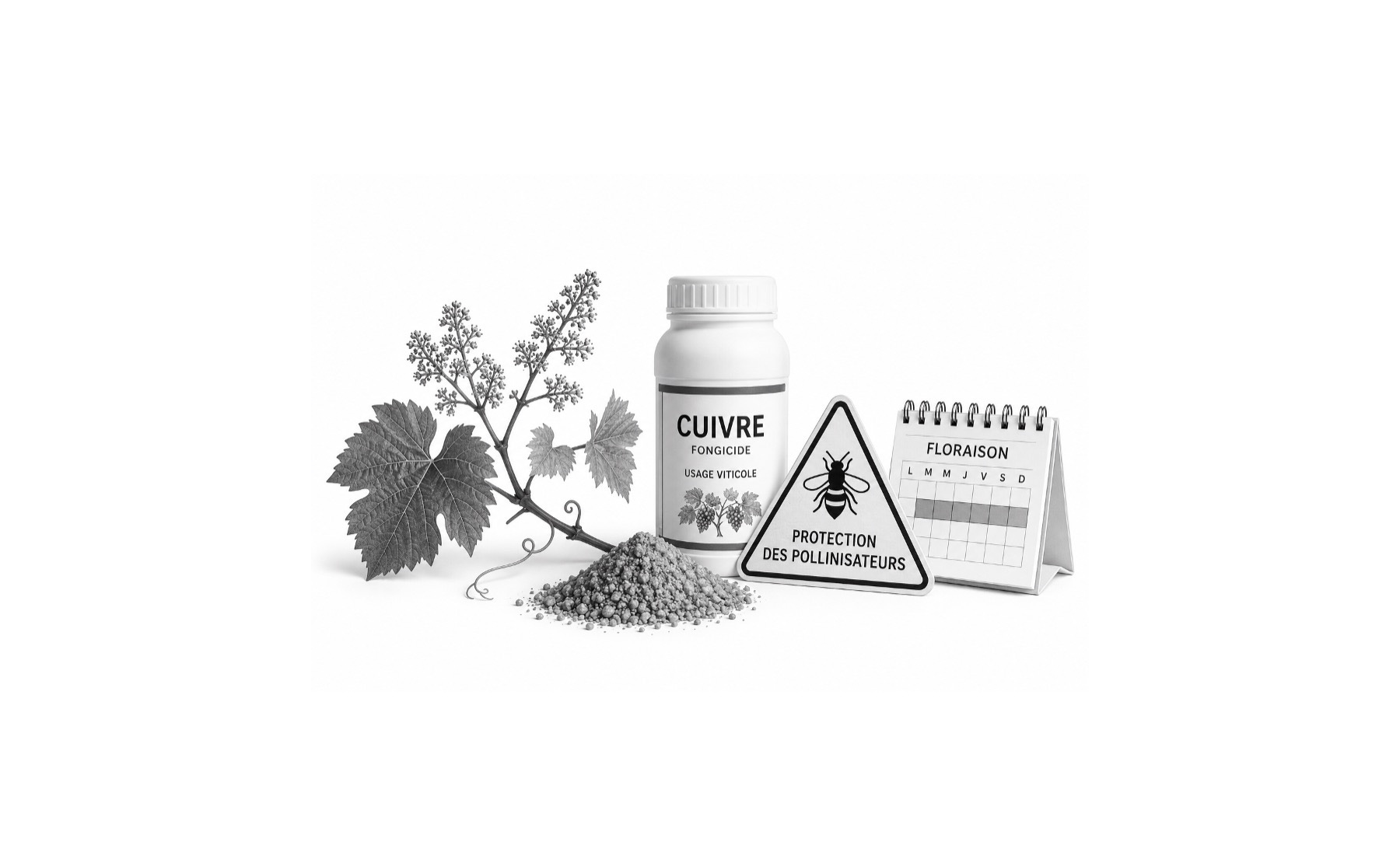
As flowering begins across France’s vineyards, a familiar viticultural challenge has been eclipsed by a regulatory one. The question troubling growers this spring is no longer simply how to protect vines from disease pressure, but whether some of the most widely used copper-based fungicides can legally be applied at all during one of the most sensitive moments of the growing season.
What might appear to outsiders as a technical administrative issue has rapidly become one of the most consequential debates in French viticulture. At stake are disease management strategies, organic wine production, pollinator protection, and the practical realities of vineyard management in an increasingly complex regulatory environment.
The controversy illustrates a broader challenge facing European wine regions: how to balance environmental objectives with workable agricultural policies.
Why Copper Matters in Viticulture
Copper remains one of the most important disease-control tools available to winegrowers, particularly for managing downy mildew.
Its significance is especially pronounced in organic and biodynamic viticulture, where alternatives remain limited. While conventional growers may have access to a broader range of fungicides, many sustainable producers continue to rely heavily on copper-based treatments as a cornerstone of vineyard protection.
The importance of copper becomes even greater during years marked by humid conditions and elevated disease pressure.
Without effective protection during critical growth stages, crop losses can be substantial, affecting both yield and grape quality.
For many growers, the issue is therefore not theoretical. It directly affects vineyard viability.
The Flowering Window
The timing of the current debate is particularly sensitive.
Flowering represents one of the most critical phases in the vine’s annual cycle. Successful flowering influences fruit set and ultimately determines potential yields for the vintage.
At the same time, flowering coincides with heightened concerns surrounding pollinator protection. Across Europe, regulators have strengthened rules governing pesticide applications during periods when bees and other beneficial insects may be active.
The objective is broadly supported throughout the wine sector.
The difficulty lies in interpretation.
Winegrowers, advisers, and technical institutes are now attempting to navigate a regulatory framework that many believe lacks sufficient clarity regarding specific copper formulations and their permitted use during flowering.
Regulatory Uncertainty and Vineyard Decisions
Recent regulatory changes have created a situation in which many producers struggle to determine which products remain authorised under particular circumstances.
The challenge is compounded by ongoing reviews of product registrations and differing interpretations of approval conditions. In some cases, vineyard managers are relying on product authorisations currently listed in official databases while awaiting further guidance from regulatory authorities.
This uncertainty is creating practical difficulties at precisely the moment when clear decision-making is essential.
Disease pressure does not pause while administrative questions are resolved.
Vineyards operate according to biological rhythms, weather patterns, and infection risks that often require immediate action. Delayed treatment decisions can carry significant consequences for growers attempting to protect their crops.
A Particular Challenge for Organic Producers
The debate has attracted particular attention within France’s organic wine sector.
Organic viticulture has expanded significantly across Bordeaux, Burgundy, the Rhône Valley, Languedoc, Alsace, Loire Valley, and other major regions over the past decade. As vineyard conversion accelerated, copper retained its role as one of the few broadly effective tools available against downy mildew.
Consequently, uncertainty surrounding copper use creates disproportionate concerns among organic producers.
Many argue that environmental objectives should be pursued alongside practical solutions that allow growers to maintain sustainable production systems. Others point to the importance of ensuring that pollinator protections are applied consistently and supported by robust scientific evaluation.
Both perspectives reflect legitimate priorities.
The challenge lies in reconciling them.
Pollinator Protection and Agricultural Reality
The broader European movement toward stronger pollinator protections reflects growing awareness of biodiversity loss and ecosystem health.
Bees and other pollinating insects play a crucial role in agricultural systems, and their decline has become an increasingly important policy concern.
Winegrowers are generally supportive of efforts to preserve biodiversity. Many estates have invested heavily in cover crops, hedgerows, agroforestry projects, beehives, and ecological management programs designed to improve vineyard ecosystems.
The current debate therefore does not represent a conflict between growers and environmental protection.
Rather, it highlights the difficulty of translating broad environmental goals into regulations that remain clear, practical, and adaptable to local conditions.
The Growing Burden of Compliance
Beyond the specific issue of copper, the situation reveals a broader trend within European agriculture.
Producers are increasingly required to navigate a dense network of certifications, environmental standards, approval procedures, reporting obligations, and compliance requirements.
While many of these measures pursue worthwhile objectives, their cumulative complexity can create uncertainty on the ground.
For vineyard managers already dealing with climate change, labour shortages, market volatility, and rising production costs, regulatory ambiguity adds another layer of risk.
Clear rules are not simply a matter of legal certainty. They are essential for effective vineyard management.
Lessons for the Future of Wine Regulation
The debate surrounding copper fungicides arrives at a pivotal moment for French viticulture.
Wine regions across the country are investing heavily in sustainable farming practices, biodiversity initiatives, and reduced chemical inputs. These efforts depend on trust between producers, researchers, technical institutes, and regulatory authorities.
That trust is strengthened when regulations are transparent, predictable, and supported by timely guidance.
As flowering progresses through the vineyards of France, the immediate concern remains practical: determining which products can be applied and under what conditions.
The longer-term question is perhaps even more important.
How can European wine regions continue advancing environmental objectives while ensuring that growers retain the tools, clarity, and confidence needed to produce healthy grapes and sustainable wines?
The answer will shape not only future disease-management strategies but also the broader relationship between regulation and viticulture in the decades ahead.