
Chavignol: A New Hand on Historic Slopes
Aymeric Fleuriet takes over Cotat’s parcels with a focused, mineral 2024 debut
A measured transition
There is nothing theatrical about succession in Chavignol. When Pascal Cotat stepped away, the transfer of his 2.5 hectares—spread across Monts Damnés and La Grande Côte—passed quietly to Aymeric Fleuriet. No reinvention was required, and none has been attempted.
Fleuriet arrives with the expected credentials: trained within a Sancerre winegrowing family, grounded in the practical realities of the appellation, and fully aware of the expectations attached to these particular slopes. That matters here. These are not vineyards that tolerate approximation.
Sites that dictate terms
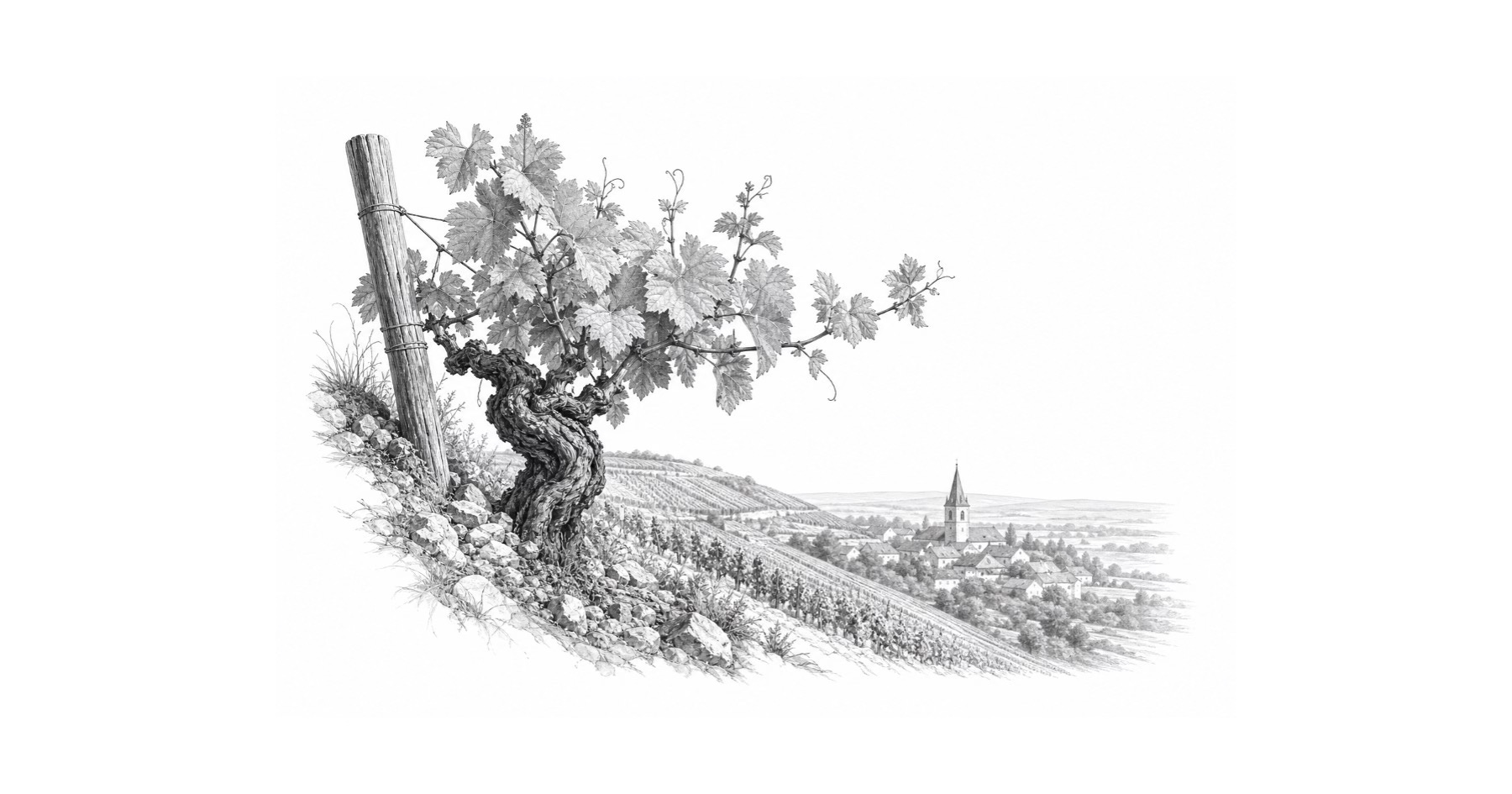
Monts Damnés and La Grande Côte sit among the most exacting terroirs in Sancerre. Their steep gradients impose manual work at every stage, from pruning to harvest. The soils—rich in Kimmeridgian marl—are unforgiving but precise, shaping wines with structure, tension, and a distinct mineral line.
In such places, the role of the grower is limited. Intervention is visible immediately; misjudgment even more so. The only viable approach is control without excess.
2024: a first reading
Fleuriet’s first vintage offers a clear indication of intent. The 2024 wines are not expansive or demonstrative. They are defined by structure, line, and restraint.
Monts Damnés shows its usual firmness: tight, mineral, and driven by acidity rather than fruit weight. The profile is direct, with no attempt to soften or broaden the wine beyond what the site delivers. It reads as a faithful rendering rather than an interpretation.
La Grande Côte is slightly more open but remains disciplined. The fruit sits in the background, supported by a saline edge and a controlled, steady length. There is no obvious cellar signature—no excess texture, no imposed richness.
Control, not expression
What stands out is not personality but control. Extraction is measured, élevage discreet, and the overall impression is one of balance maintained rather than style imposed.
This is a sensible approach for a first vintage in vineyards that already carry strong identities. Fleuriet has avoided the common error of trying to mark a clear stylistic break. Instead, he has chosen to read the sites carefully and respond accordingly.
A steady direction
One vintage is not enough to define a trajectory, but it can reveal priorities. Here, the emphasis is clearly on precision and consistency. There is no sign of drift toward weight or immediacy—temptations that often appear in transitional phases.
For now, the message is simple: the vineyards remain intact in character, and the new hand guiding them understands the limits within which he must work. In Chavignol, that is the only foundation that matters.