
Châteauneuf-du-Pape: 20 Years of Price Hierarchy
A data-led analysis of top cuvées reveals shifting values and enduring benchmarks in Châteauneuf-du-Pape
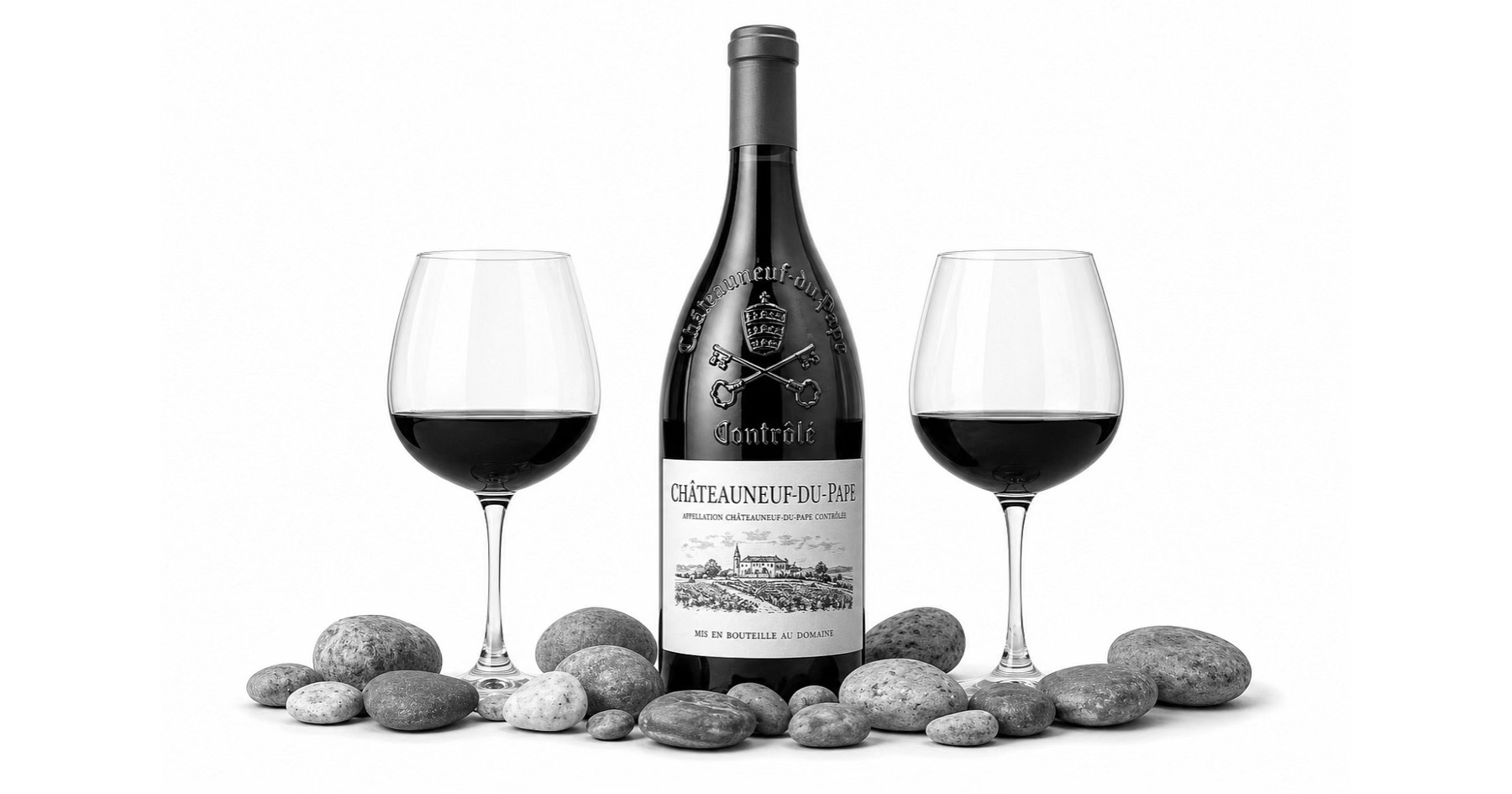
Spanning approximately 3,200 hectares, Châteauneuf-du-Pape remains one of the most structurally complex appellations in France. Its identity is shaped not only by the diversity of its permitted grape varieties—both red and white—but also by the heterogeneity of its soils, from galets roulés to sandy parcels. Yet beyond these well-documented factors lies a more discreet but equally decisive dynamic: the coexistence of two production philosophies.
On one side are estates that vinify a single, emblematic wine. On the other, producers who isolate specific parcels in favorable vintages to create prestige cuvées. Over the past two decades, this distinction has played a measurable role in price formation at the top end of the market.
2006: A Broad Pricing Spectrum
In 2006 (reflecting the 2000 vintage), the hierarchy was relatively open.
Hommage à Jacques Perrin, Château de Beaucastel: €178
Cuvée Da Capo, Domaine du Pégau: €162
Château Rayas: €105
La Reine des Bois, Domaine de la Mordorée: €73
Réserve, Domaine de la Vieille Julienne: €72
At this stage, Rayas was positioned below Beaucastel and Pégau in pricing terms. The spread between the highest and lowest wines in the top tier remained moderate, suggesting a market still forming its long-term hierarchy.
2016: Consolidation and Sharp Differentiation
By 2016 (2000s vintages entering maturity), the structure had become markedly more defined:
Château Rayas: €522
Réserve des Célestins, Domaine Henri Bonneau: €388
Hommage à Jacques Perrin, Château de Beaucastel: €325
Cuvée Da Capo, Domaine du Pégau: €324
Deus Ex Machina, Clos Saint-Jean: €230
Rayas had moved decisively to the top, more than doubling the price of its nearest competitor. This shift reflects the growing recognition of its singular production model: a single wine, released sparingly after extended élevage. In contrast, the emergence of prestige cuvées such as Bonneau’s Réserve des Célestins illustrates the increasing importance of parcel selection in price differentiation.
2026: A Stabilized but Evolving Hierarchy
In 2026 (with the 2020 vintage as reference), the ranking shows both continuity and selective renewal:
Hommage à Jacques Perrin, Château de Beaucastel: €345
Cuvée Da Capo, Domaine du Pégau: €300
Arioso, Rotem & Mounir Saouma: €138
Colombis, Famille Isabel Ferrando (Saint-Préfert): €113
Réserve Secrète, Domaine de la Solitude: €94
Rayas appears only twice across the broader dataset due to the delayed release of its 2020 vintage. Its absence from the 2026 ranking is therefore technical rather than structural. Given historical pricing trajectories, its eventual release is expected to exceed all listed wines.
The remaining hierarchy is led by Beaucastel’s Hommage à Jacques Perrin, created in 1989 and consistently positioned at the top of the multi-cuvée estates. Domaine du Pégau’s Da Capo remains closely aligned in pricing, confirming its status as a reference point within the appellation.
New Entrants and Parcel-Based Cuvées
The 2026 data introduces two notable entries:
Colombis, from a specific parcel of Saint-Préfert, vinified separately under the Famille Ferrando label
Réserve Secrète, Domaine de la Solitude
Their inclusion reflects a broader structural trend: the continued fragmentation of production into highly specific cuvées tied to terroir expression. These wines enter the hierarchy at lower price points but signal the ongoing expansion of the premium segment.
Structural Observations
Across the 20-year period, several patterns emerge:
Rayas establishes long-term price leadership, despite limited market visibility due to delayed releases
Beaucastel and Pégau provide consistent benchmarks, anchoring the upper tier of multi-cuvée estates
Henri Bonneau’s Réserve des Célestins illustrates the impact of artisanal scarcity, particularly following the domaine’s transition after 2016
New parcel-driven cuvées continue to enter the market, though at more moderate price levels
Conclusion: Dual Identity, Structured Market
Châteauneuf-du-Pape’s pricing hierarchy reflects its dual identity. The appellation accommodates both singular wines of extreme scarcity and a growing number of parcel-selected cuvées designed to express micro-terroirs.
Over time, the market has moved from relative openness to a more structured and stratified system, where price is determined by a combination of production philosophy, release strategy, and perceived rarity. The result is not a uniform escalation, but a clearly defined hierarchy—one that continues to evolve, vintage after vintage.