
Château Vignelaure Begins a New Chapter in Provence
A landmark Provence estate enters a new chapter under British ownership, with wine, art and long-term renewal at its core.
Château Vignelaure Changes Hands
Château Vignelaure, one of the more distinctive wine estates in the Coteaux d’Aix-en-Provence appellation, has entered a new period of British ownership after several financially difficult years.
The property has been acquired in full by Neil Utley, an English businessman best known for his career in insurance. His arrival brings an end to almost two decades of Scandinavian ownership and offers the estate an opportunity to renew its vineyards, winery and buildings while preserving the identity that has long set it apart within Provence.
The transaction comes at a sensitive moment. Château Vignelaure entered judicial restructuring proceedings at the end of 2025 after being declared unable to meet its financial obligations. The new owner is therefore taking on more than a celebrated vineyard. He is inheriting an estate in need of investment, stability and a clear long-term direction.
According to the plans presented following the acquisition, Vignelaure will remain a family-held property rather than being treated as a short-term financial asset. The intention is to restore the estate as a working wine domain and eventually pass it on to a future generation.
An Organic Estate in the Coteaux d’Aix-en-Provence
Located near Rians in the Var, Château Vignelaure comprises 58 hectares of organically farmed vineyards within the AOC Coteaux d’Aix-en-Provence.
Although Provence is now internationally associated above all with pale rosé, Vignelaure has always followed a broader path. Rosé accounts for only around half of its production, while red wine represents approximately 30 per cent and white wine the remaining 20 per cent.
That balance gives the estate an unusual profile in a region whose commercial success has become closely tied to a single colour. At Vignelaure, red wine has historically formed an important part of the domaine’s identity, placing it within a quieter Provençal tradition of structured, age-worthy wines alongside the more familiar rosés.
The challenge for the new ownership will be to reinforce that reputation without losing sight of the realities of the contemporary Provence wine market. Investment is expected throughout the property, from vineyard work and cellar equipment to the restoration and improvement of the estate’s buildings.
Its organic certification and existing appellation wines are to be maintained. The current team will also remain in place, including estate director Philippe Bru, who has overseen Château Vignelaure since 2008. That continuity may prove especially important while the property moves from financial uncertainty towards a more stable phase of development.
From Georges Brunet to Scandinavian Ownership
The story of Château Vignelaure is closely associated with Georges Brunet, who had previously owned Château La Lagune in the Haut-Médoc.
Brunet established Vignelaure as a serious wine property while also giving it a strong cultural character. Modern art became part of the estate’s identity, creating a dialogue between the vineyard, the architecture and the collection displayed on the property.
Following Brunet’s death in 2005, Château Vignelaure was acquired in 2007 by Mette and Bengt Sundstrøm. The Scandinavian couple were known for founding the Lauritz.com auction house and continued the estate’s association with modern art, exhibitions and collecting.
Their ownership eventually became overshadowed by financial pressure. Reports of difficulties emerged in late 2023, when the estate was said to have been placed on the market. By December 2025, the situation had developed into formal judicial restructuring.
Neil Utley’s acquisition therefore represents both a change of nationality and a change of financial circumstances. Yet the estate’s artistic inheritance is not expected to disappear. The new project intends to retain Vignelaure’s connection with modern art, treating it as part of the property’s character rather than as a decorative addition.
Château Vignelaure and the Need for Renewal
The financial difficulties at Château Vignelaure reflect broader pressures facing the French wine sector.
Provence has not been insulated from declining consumption, slower sales and tighter margins. Even a region with a powerful international image must contend with shifting demand and the costs of maintaining vineyards, cellars and historic properties.
For an estate such as Vignelaure, delayed investment can quickly become visible. Vineyards require continuous attention, winery equipment must be maintained or replaced, and estate buildings can absorb considerable sums. Restoring momentum will therefore depend not only on marketing but on practical improvements to the tools of production.
The announced preservation of the existing workforce is a positive sign. Wine estates are repositories of accumulated knowledge, much of it held by the people who understand individual parcels, seasonal conditions and the behaviour of wines in the cellar. Maintaining that expertise may help Vignelaure evolve without severing its connection to the past.
The acquisition also underlines the continuing attraction of Provence to wealthy international buyers. Economic difficulties within the wine trade have not diminished the appeal of its vineyards, landscapes and cultural prestige. Yet outside investment is most valuable when it supports the agricultural life of an estate rather than merely transforming it into a luxury address.
At Château Vignelaure, the stated emphasis is firmly on the long term.
Beyond Wine: Cosmetics and a Future Spa
The new project will not be limited to wine production.
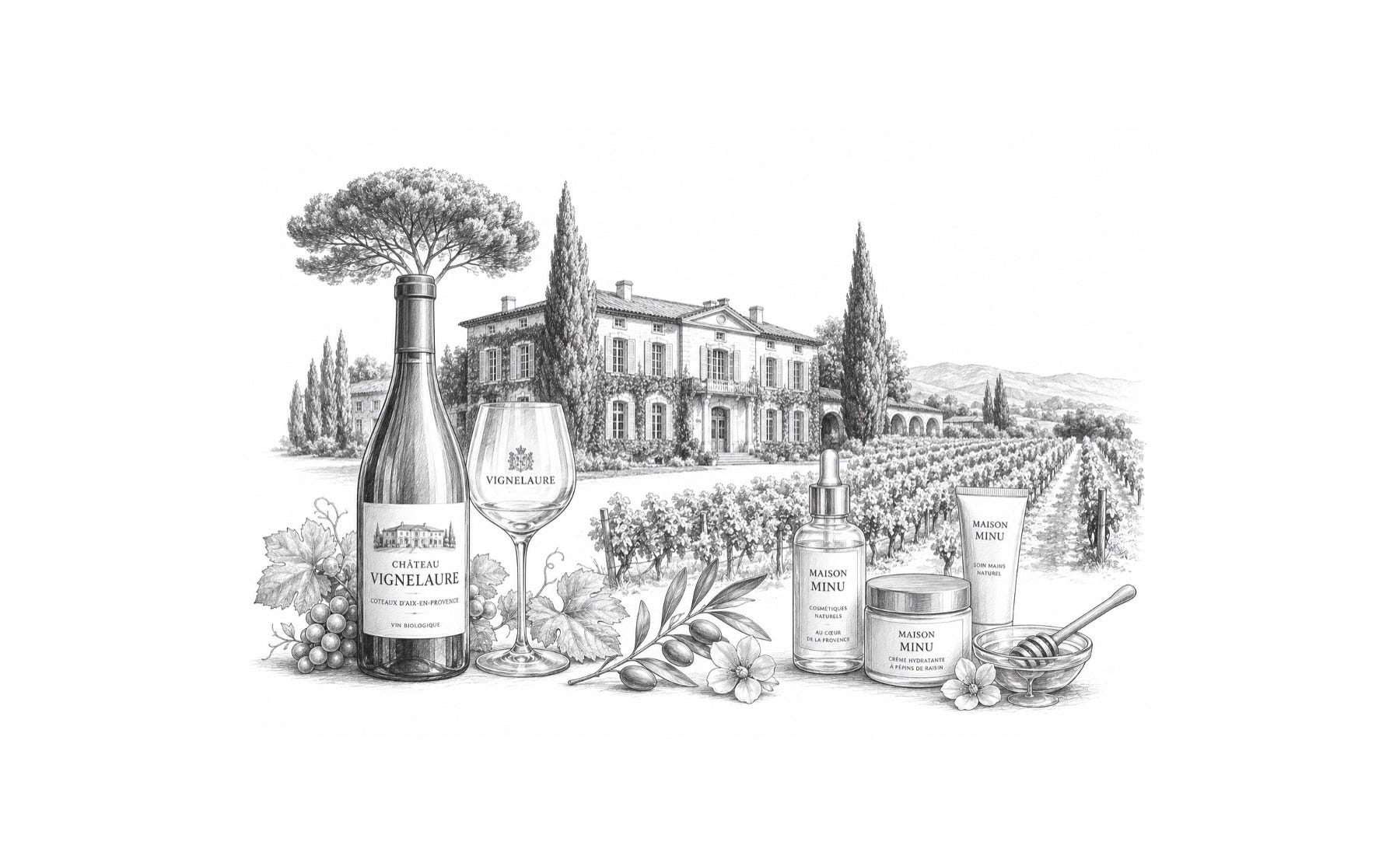
Plans include the creation of a natural cosmetics business using resources associated with the estate and its surroundings. Potential ingredients include grapeseed oil, olive oil and honey, all of which connect naturally with the agricultural landscape of Provence.
The cosmetics range is expected to be introduced under the name Maison Minu. A spa at Château Vignelaure is planned as a later stage of the development.
Such diversification is increasingly familiar among major wine estates. Vineyards require substantial capital, while wine sales alone may not always support the restoration and operation of a large property. Hospitality, wellness and estate-made products can provide additional revenue while bringing visitors into closer contact with the place.
The risk, however, is that wine becomes merely one element within a broader lifestyle concept. For Vignelaure, the credibility of the project will depend on whether these new activities reinforce the estate’s vinous identity rather than distracting from it.
Grapeseed oil, olive oil and honey belong convincingly to the Provençal agricultural world. A carefully conceived spa could also offer a contemporary use for the estate without compromising its character. But the vineyard and cellar will remain the true measure of the revival.
Wine, Art and the Identity of a Provence Estate
Château Vignelaure has never been easy to reduce to a standard image of Provence wine.
Its substantial production of red and white wines sets it apart from estates built almost entirely around rosé. Its connection with modern art gives it a cultural dimension. Its history links Bordeaux experience, Scandinavian collecting and now British investment to a vineyard in the northern reaches of the Var.
That mixture is part of its appeal, but it also requires careful stewardship. A coherent identity cannot be created simply by combining wine, art, cosmetics and wellness. Each element must feel rooted in the estate rather than attached to it for commercial effect.
The strongest foundation is already present: an organic vineyard, an established team, a recognised appellation and a history that distinguishes Vignelaure from many of its neighbours.
The new ownership now has the opportunity to translate those assets into a sustainable future. Investment in the winery and vineyards may help restore confidence in the wines, while the art collection can continue to provide a distinctive setting. Diversification may strengthen the business, provided it remains in service of the estate rather than becoming its principal story.
A Long-Term Test for Château Vignelaure
The purchase of Château Vignelaure is not simply another high-profile acquisition in Provence. It is a test of whether patient private capital can restore a financially troubled estate without erasing the qualities that made it worth saving.
Neil Utley arrives with the means to invest and an expressed intention to keep the property within his family. The existing staff, organic status and appellation identity are set to remain intact. The vineyards, cellar and buildings are expected to receive the resources that were unavailable during the estate’s recent difficulties.
Those are promising foundations, but the real outcome will emerge gradually—in the health of the vines, the precision of the wines and the ability of the estate to recover its standing.
For lovers of Provence wine, Château Vignelaure will be worth following. Its next chapter brings together many of the questions facing historic French estates today: how to secure investment, preserve agricultural integrity and find new sources of income without allowing heritage to become a marketing costume.
At Vignelaure, the ambition is broad. The vineyard must now remain at its centre.