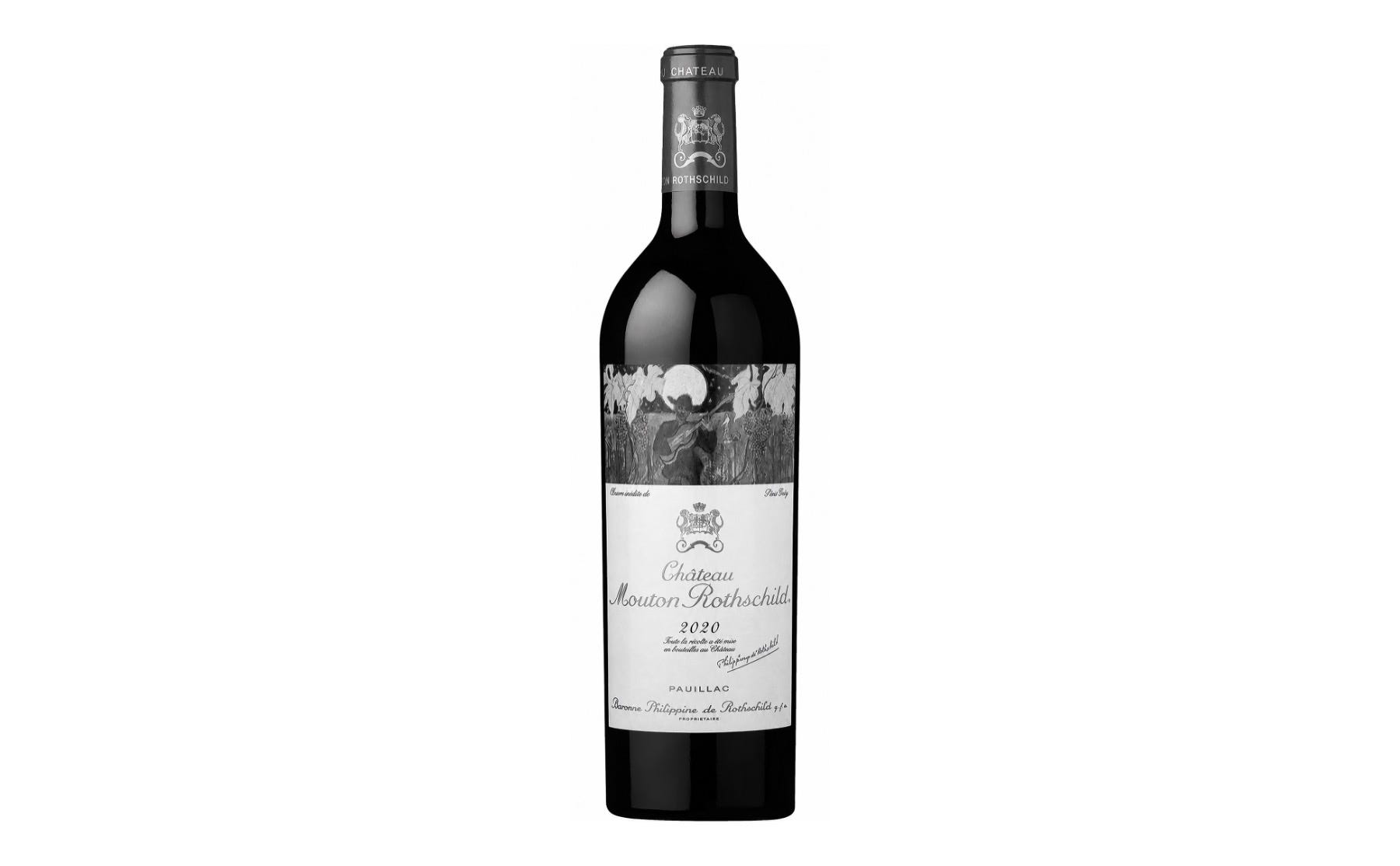
Château Mouton Rothschild, Pauillac
First Growth power, legendary vintages, and art labels that define wine history.
Identity and Historical Position
Château Mouton Rothschild stands among Bordeaux’s elite. Located in Pauillac, a commune renowned for Cabernet-centric wines, it is one of only five estates classified as Premiers Crus (First Growths) under the 1855 Médoc ranking. Uniquely, Mouton was not originally part of that top tier – it was listed as a Second Growth, despite its noble terroir and ancient reputation. This “unfair deprivation,” as family lore would have it, spurred decades of ambition. The Rothschild family’s stewardship began in 1853 when Baron Nathaniel de Rothschild purchased the estate (then called Château Brane-Mouton) to serve his own distinguished guests. Renaming it Château Mouton Rothschild, he placed the family name on a Pauillac property that would, over time, help shape the narrative of French fine wine.
Throughout the late 19th and early 20th centuries, Mouton Rothschild’s reputation grew, yet it was often overshadowed by its neighbor and sibling in name, Château Lafite. Baron Philippe de Rothschild’s takeover in 1922 marked a turning point. A visionary and showman, he revolutionized Bordeaux practices and redefined Mouton’s identity. In 1924, defying convention, he insisted on bottling the entire vintage at the château – a radical quality control move at a time when most Bordeaux was shipped in barrels to merchants. To commemorate that first estate-bottled vintage, he commissioned Cubist artist Jean Carlu to design a special label, a bold marriage of wine and art. This was a precursor to the now-famous tradition of original artworks on Mouton’s labels, which properly began with the celebratory “V for Victory” illustration on the 1945 vintage, marking the end of World War II. Each year since, a renowned artist—from Dalí and Picasso to Warhol and Hockney—has lent their vision to the label, making every bottle a collectible piece of art as well as a grand vin.
Mouton’s ascent from respected Second Growth to bona fide First Growth was sealed in 1973. After a long campaign by Baron Philippe, the French government granted an unprecedented reclassification: Mouton Rothschild was elevated to First Growth status by decree of the Minister of Agriculture, Jacques Chirac. It remains the only change ever made to the 1855 Classification’s top tier, a correction that acknowledged Mouton’s de facto standing alongside Lafite, Latour, Margaux, and Haut-Brion. To commemorate the victory, Baron Philippe coined a triumphant motto for the 1973 label: “Premier je suis, Second je fus, Mouton ne change” – “First I am, Second I was, Mouton does not change”. This wry phrase speaks to the estate’s self-belief and consistency of character despite its late-coming official recognition. Indeed, by the latter 20th century, Mouton had indisputably joined the ranks of Bordeaux’s icons, contributing an especially flamboyant personality to the Pauillac triumvirate of First Growths.
In the broader context of French wine, Mouton Rothschild embodies both tradition and innovation. It shares with its peers a centuries-old Médoc legacy and a commitment to terroir-driven excellence. At the same time, it has often broken with tradition: whether through its embrace of marketing and branding (the Baron’s creation of Mouton Cadet in the 1930s as a second wine-turned-global brand), its artistic collaborations, or its technical innovations, Mouton has been a trendsetter. The estate’s history has notable inflection points that echo far beyond its own gates. For instance, the introduction of château bottling and the elevation to First Growth status both had ripple effects on Bordeaux’s hierarchy and practices. Mouton also played a role on the world stage of wine in 1976, when a 1970 vintage was included in the famous “Judgment of Paris” tasting. In that historic blind competition between top French wines and upstart Californians, Mouton 1970 was the highest-ranked Bordeaux wine on average, finishing just behind the leading Californian Cabernet and reinforcing Pauillac’s classic quality even in the face of new challengers.
Over time, Château Mouton Rothschild has cultivated an almost cult-like following among connoisseurs. Certain vintages have achieved legendary status – none more so than the 1945, often regarded as one of the wines of the century. Produced under wartime privations and released in the first flush of peace, the 1945 Mouton is extraordinarily long-lived and complex, still noted for its power and richness even after many decades. Michael Broadbent, the doyen of British wine critics, famously awarded it a rare six-star rating, and modern tasters continue to be amazed by its youthful vigor well into the 21st century. Such wines have cemented Mouton’s iconic status. They are not merely fine Bordeaux; they are cultural artifacts, traded at auction for record sums and treasured in private cellars as touchstones of wine history. Through highs and the occasional low, Mouton’s trajectory—from the ambition of Baron Nathaniel, through the showmanship of Baron Philippe, to the steady stewardship of his daughter Baroness Philippine and now her children—mirrors the evolution of fine wine in France. It remains a “reference point” Pauillac, a wine against which others are measured, and a centerpiece in the narrative of Bordeaux’s grandeur.
Vineyard and Terroir
Château Mouton Rothschild’s vineyard extends over roughly 84–90 hectares (about 210 acres) of prime Pauillac terroir. The estate lies on a rise known as the Plateau de Mouton, a mound or hillock that rises to about 27–29 meters elevation, making it one of the higher points in the Médoc’s low relief. In fact, the very name “Mouton” is thought to derive not from the French word for sheep, but from motte or mothon – old words for a small hill. This gentle height advantage, though modest, is significant: the slopes provide superb natural drainage and increased exposure to sunlight, factors that are vital in Bordeaux’s marginal climate. Rainwater runs off the gravelly knolls efficiently toward lower land, and the vines bask in whatever extra ripening warmth the elevation affords.
The soils of Mouton are classically Médocain and enviable even by Pauillac standards. They are dominated by deep beds of gravel, mixed with sand and a scant clay content over a limestone subsoil. This gravel was deposited by ancient rivers and is poor in nutrients – excellent for viticulture, as vines on meager soil tend to produce smaller, concentrated berries. The gravel stones, from pebbles to larger quartz chunks, have the added benefit of soaking up daytime heat and radiating it by night, buffering the vines from cold and aiding phenolic maturity. Under the topsoil, cores of clay, marl, and chalky limestone can be found in places, but notably Mouton’s terroir is almost pure gravel in its best sections. In some plots the gravel layer extends five meters deep with barely any clay. This unique profile contributes to the wine’s character – the saying goes that “great Cabernet loves to suffer,” and at Mouton the grape finds just enough water stress and mineral challenge to develop profound flavors and ripe tannins. The limestone sublayer helps retain some moisture in drier years, and can impart a certain mineral freshness, while the surface gravels ensure that excess rain (not uncommon in Bordeaux) drains away from the root zone.
Geographically, the estate sits at the north-western edge of Bordeaux’s Médoc peninsula, quite close to the Gironde estuary on one side and not far from the Atlantic influence on the other. The broad Gironde river moderates temperatures and reduces frost risk, acting like a giant heat sink. Meanwhile, to the west, the vast Landes pine forest provides shelter from fierce Atlantic winds and storms. This fortunate positioning gives Pauillac a temperate, relatively mild maritime climate – warm summers, cool but not harsh winters, and ample rainfall with a drying estuarine breeze. However, the microclimate at Mouton can show nuances year to year. Being on a slight rise, Mouton’s vineyards are a touch more exposed; they can ripen a few days ahead of lower-lying neighbors in a sunny year, yet also feel the brunt of any drought or heat extremes more quickly due to the fast-draining soils. As climate trends shift toward warmer, drier summers, Mouton’s vines have sometimes been tested (for example, in the heatwave 2003 vintage). Generally, the terroir’s natural advantages – excellent drainage to handle deluges, proximity to water bodies to mitigate heat spikes, and slopes to catch breezes – help the estate navigate Bordeaux’s notorious vintage variability. In very wet seasons, the gravel mounds are especially prized for keeping vine roots from getting waterlogged. In very dry seasons, certain parcels with a bit more clay or lower elevation in Mouton’s holdings can provide relief and balance, producing the Merlot or Cabernet Franc lots that flesh out the grand vin’s blend.
The vineyard is planted almost entirely to red Bordeaux varieties, and vine age is impressively high. The average age of the vines hovers around 40–50 years, but many blocks boast much older plants. In fact, some merveilleux survivors date back to 1890, meaning a few tiny parcels of Mouton Rothschild still contain vines that are well over 130 years old. These venerable vines (planted soon after the phylloxera reconstitution of Bordeaux’s vineyards) are among the oldest productive vines in all the Médoc. They yield very little fruit, but what they do yield can be extraordinarily concentrated. The estate carefully maintains these ancient vines, and when one finally dies, it is replaced not with a commercial clone from a nursery but with cuttings derived from Mouton’s own massal selections. This practice – propagating new vines from the budwood of their best old vines – helps preserve genetic diversity and the estate’s unique vine heritage. In essence, the vineyard renews itself from its past, keeping a continuity of plant material that ties the modern wines to those of a century ago.
Viticulture at Mouton is meticulous and embodies what the French term lutte raisonnée, or reasoned (sustainable) agriculture, although the estate does not heavily publicize any organic or biodynamic certifications. The approach is pragmatic: traditional hands-on farming augmented by modern knowledge. The vine density is classic for top Médoc estates at about 10,000 vines per hectare, forcing each vine to compete and thus yield less volume but higher quality fruit. Each plot of vines is tended by the same team of vineyard workers year after year – a labor-intensive practice that fosters an intimate understanding of every row’s quirks. Throughout the growing season, these experts perform manual pruning, careful training of the shoots (tying them along wires to optimize leaf exposure), and ébourgeonnage (bud thinning) to manage the crop load. In difficult vintages, they may green harvest in mid-summer, dropping excess or underripe grape clusters to concentrate the vines’ energy into the remaining bunches. This yield control is critical to ensuring the concentration and balance that a First Growth demands, especially in years when nature’s generosity might otherwise dilute quality. By harvest time, the fruit hanging on Mouton’s vines represents a ruthless selection made in the vineyard itself: fewer clusters per vine, ideally all evenly ripened and free of disease.
Mouton’s terroir also has a storied relationship with the Cabernet Sauvignon grape. While today Cabernet is king up and down the Haut-Médoc, in the 18th and early 19th centuries it was not a foregone conclusion that Cabernet would dominate these vineyards. In fact, Château Mouton (then Brane-Mouton) played a pioneering role in proving the grape’s supremacy on gravel. Baron Hector de Branne, who owned the estate in the early 1800s before the Rothschilds, was one of the first to plant Cabernet Sauvignon extensively on a Médoc estate. His forward-thinking approach led to some 19th-century vintages of Mouton being made from 100% Cabernet Sauvignon – an almost unheard-of practice at the time. Those experiments demonstrated how well Cabernet could thrive on these rises of quartz and pebble. The legacy endures: Cabernet Sauvignon today reaches perhaps its finest expression on the plateau of Mouton, giving wines of formidable structure and longevity. The estate’s deep understanding of its land – which plots give more powerful tannins, which lend aromatic finesse, which retain acidity – is evident in the nuanced blending and consistency of the grand vin from year to year. Mouton’s vineyards, in short, marry an exceptional site with attentive human stewardship. Each vintage they yield grapes that reflect the particular weather of the year, but always within the recognizable frame of this Pauillac landmark: ripe Cabernet family tannins, vivid Pauillac cassis fruit, and a touch of exoticism that seems to rise from Mouton’s gravel mound as unmistakably as the château itself rises above the vine rows.
Grape Composition and Viticultural Choices
The grand vin of Château Mouton Rothschild has long been a Cabernet Sauvignon–dominated blend, in keeping with Pauillac tradition. The exact cépage in the vineyards is roughly 80–82% Cabernet Sauvignon, with about 16–18% combined of Merlot, plus small amounts of Cabernet Franc and Petit Verdot. A recent breakdown puts it at 81% Cabernet Sauvignon, 15% Merlot, 3% Cabernet Franc, and 1% Petit Verdot planted. These proportions have evolved subtly over the decades – in the mid-20th century Mouton actually had an even higher Cabernet share, but since the 1990s the estate has inched up its Merlot plantings slightly and reduced Cabernet Franc in the vineyard mix. This reflects both the replanting cycles (Franc vines that grew tired were often replaced with Merlot or more Cab) and a desire to add a touch more flesh to the blend via Merlot’s plump fruit, as climate change has made achieving full phenolic ripeness more reliable. Nonetheless, Cabernet Sauvignon remains the heart and soul of Mouton’s identity. In most vintages, the final blend of the grand vin skews even more Cabernet-heavy than the vineyard: it is not unusual to see Mouton’s assemblage contain 85, 90, even 95% Cabernet Sauvignon in a great year, depending on what Mother Nature delivers. Merlot typically plays a supporting role, contributing roundness to the mid-palate and early charm, while Cabernet Franc (when included) and Petit Verdot (very sparingly used) can add aromatic lift or spice notes. Notably, there were stretches when certain grapes disappeared from the blend entirely – for example, Petit Verdot was omitted in every vintage from 2004 through 2015, and Cabernet Franc was left out from 2006 through 2010. These decisions indicate how the estate adapts to vintage conditions and vine age; if Franc struggled with ripeness or disease in a string of years, the winemakers had no hesitation in excluding it from the mix. The guiding principle is quality and consistency of style rather than a fixed recipe. As the château itself emphasizes, the blend “varies according to the character of each vintage” even though Cabernet Sauvignon always predominates.
One reason Mouton’s Cabernet is so superb is the clonal material and the old vines from which it hails. Through massal selection, the estate has propagated cuttings from its oldest, best vines to plant new rows, rather than relying solely on commercial clones. This preserves a diversity of vine genetics, including low-yielding, small-berried Cabernet vines that may be unique to Mouton’s terroir. The viticultural team keeps close track of vine vigor and cropping levels. Yields are controlled not only by the aforementioned green harvesting, but also by modest winter pruning that limits the number of buds per vine. Château Mouton Rothschild historically produced quite large volumes for a top growth (in bountiful years of the past, up to 25,000–30,000 cases of the grand vin were bottled). In recent times, however, a stricter selection regime in both vineyard and cellar has reduced the output of the grand vin to nearer 20,000 cases or less. This means that only about half of the estate’s total production now goes into the flagship wine, whereas in earlier decades 80% or more of the crop might have been deemed worthy. The remainder is redirected to the second wine (Le Petit Mouton, established 1993) or a third label, ensuring that only the finest grapes and lots represent Château Mouton Rothschild. The effect of this draconian selection is a higher average quality – especially evident since the 2000s – and also a denser, more age-worthy style, as barrels that once would have slightly diluted the blend are today kept out.
In tending the vines, Mouton follows practices that enhance the grapes’ concentration and balance. By tying and training the shoots between trellis wires, they optimize sunlight interception and aeration, reducing the risk of rot and helping grapes ripen evenly. Crop thinning in July (if necessary) further concentrates flavor by dropping under-ripe clusters. Leaf removal around the grape clusters may be done judiciously to improve exposure and mitigate mildew, though in hot years the estate will be careful to leave enough canopy to prevent sunburn on the berries. The vineyard is managed sustainably, with chemical interventions minimized – many top estates in Bordeaux, including Mouton, have been moving toward organic practices even if not officially certified. Cover crops and ploughing between rows are employed to manage soil health and competition. Each sub-plot is harvested at optimal maturity, sometimes with multiple passes through the same vineyard if, for example, younger vines ripen at a different pace than old vines or one grape variety lags behind another. By harvest time, the painstaking viticulture yields grapes that are small, thick-skinned, and packed with phenolic compounds – the raw material for the powerful, aromatic and longevity-bearing wine that Mouton Rothschild is known for.
Another viticultural choice crucial to Mouton’s style is the use of old vines. With average vine age around 50 years, many vines have roots plunging deep into the gravel and limestone, extracting complex mineral nuances. Older vines also tend to self-regulate yields, producing fewer clusters that ripen more uniformly. The presence of centenarian vine parcels at Mouton is not just for show; these gnarled veterans (in vintages when they produce at all) add a rare depth and intensity to the must. The estate’s willingness to keep such ancients in the mix underscores a philosophy of respecting heritage vines for as long as they contribute quality. In short, every viticultural decision at Mouton – from grape composition and cloning choices to yield management and harvest timing – aims at capturing the quintessence of the terroir in a bottle. The resulting wine is invariably Cabernet-dominated, but it is the careful inclusion of Merlot, Franc, or Petit Verdot in just the right measure that polishes the final balance. These choices, season by season and vine by vine, ensure that Château Mouton Rothschild’s grand vin remains both profoundly concentrated and harmonious, capable of immense power without sacrificing finesse. Longevity begins in the vineyard; by growing grapes with high natural tannin, vivid acidity, and ripe fruit, Mouton sets the stage for a wine that will not only impress in youth but also thrive over decades.
Vinification and Élevage
Turning superb grapes into a legendary wine requires equal parts technology, tradition, and fastidious care – all of which are on display at Mouton’s winery. Harvest time at Château Mouton Rothschild is an all-hands, all-eyes operation, conducted entirely by hand as it has been for generations. Teams of pickers move through the rows with small open baskets (about 12 kg capacity) that prevent crushing and pre-fermentation juice leakage. The timing of the harvest is decided parcel by parcel, often with the Cabernet Sauvignon picked later (into late September or even early October in classic years) to achieve full ripeness, while Merlot and younger vines come in earlier. In the exceptional year 2023, for instance, harvesting stretched from 7 to 30 September to capture each plot at optimal maturity. The triage (sorting)process at the winery is rigorous. After destemming, clusters and individual berries are sorted on vibrating tables by hand, with only pristine fruit making the cut. At Mouton, they even conduct a berry-by-berry selection, often using optical sorters in modern vintages, to eliminate any raisins, underripe grapes, or impurities and ensure a homogeneous crush. This painstaking selection further concentrates quality: only the best berries go into the vats, echoing the strict selection principle that removed lesser grapes already in the vineyard.
Since 2012, Mouton’s vinification has taken place in a spectacular new gravity-flow vat house – a blend of cutting-edge technology and venerable tradition. The fermentation room features two levels, with the upper level receiving the sorted grapes which are then fed into fermenters purely by gravity (no pumps to bruise the juice). Uniquely, Mouton maintained its heritage of fermenting in oak: there are 44 large oak fermentation vats, each corresponding to specific vineyard parcels, alongside 20 modern stainless steel vats for additional flexibility. The oak vats are a nod to history but also a technical choice; oak is a neutral but thermally insulating material, and these vats (225 hectoliters each) are equipped with transparent glass panels that allow winemakers to visually monitor the cap of skins during fermentation. This innovation – windows into the vats – was introduced during the 2013 renovation and lets the winemaking team literally see the extraction happening inside. Each vat can be temperature-controlled, and fermentations are run at carefully managed temperatures to extract color, flavor, and tannin without bitterness. Typically, the must will ferment for a week or more, followed by an extended maceration on skins to further draw out structure, depending on the year’s tannin ripeness. Gentle pump-overs or even rack-and-return (délestage) might be employed to submerge the cap. The aim is to achieve maximum extraction of Mouton’s hallmark richness – those deep pigments and muscular tannins – but in a controlled, polished manner. The fact that Mouton’s vats are sized to plot yields means each section of the vineyard can be vinified separately, preserving their character until the blending stage. This is crucial in a property with varied parcels: it gives the winemaker a full palette of components (perhaps 40 or more different base wines) to assess for the final assemblage.
After alcoholic fermentation, the new wine is drained off and the skins gently pressed. Malolactic fermentation typically occurs in tank (usually stainless steel or concrete) rather than in barrel, ensuring a clean conversion of sharp malic acid to softer lactic without oak influence at that stage. Once “malo” is complete, usually by year’s end, the grand vin lots are chosen and the young wine is transferred into 100% new French oak barrels for élevage. Mouton’s commitment to new oak is absolute – every vintage sees its grand vin aged entirely in new barriques from top-coopered French oak, medium toast, often sourced from forests like Allier or Tronçais. This use of new oak contributes to the estate’s signature vanilla, coffee, and cedar notes in youth, and it provides abundant tannins for long aging. The typical maturation period is about 19 to 22 months in barrel. During this time, traditional practices are followed: the barrels are kept in Mouton’s famous Grand Chai (a monumental 100-meter long barrel hall built in 1926) and later moved to cooler second-year cellars below ground. The wines are racked regularly – at first every three months or so – using the classic Médoc à l’esquive method (racking from barrel to barrel by candlelight to leave sediment behind). This aerative racking helps clarify the wine and soften tannins. Each barrel is also topped up (ouillage) as needed to replace wine lost to evaporation (the “angels’ share”), maintaining full barrels to avoid oxidation.
Crucially, Château Mouton Rothschild still practices the time-honored technique of fining with egg white before bottling. Fresh egg whites are added to the barrels in the latter months of élevage; the proteins bind with microscopic suspended solids and bitter tannins, precipitating them to the bottom. This gentle fining clarifies and stabilizes the wine, polishing its texture by removing astringency without the need for filtration (in many vintages Mouton is bottled unfined and unfiltered except for this traditional fining step). By the end of roughly 20 months, the wine has harmonized with its oak, picking up nuances of spice and toast while shedding its youthful turbidity. Each lot is then blended (if not already done earlier) and prepared for bottling. Bottling at Mouton – done entirely at the estate since 1924 – is a carefully overseen affair, with inert gas to avoid oxygen pickup and strict quality control so that every bottle is a faithful copy of the blend. The estate bottles in a range of formats, from half-bottles to the legendary imperial and nebuchadnezzar sizes, all adorned with that vintage’s unique art label. It’s worth noting that in vintages of lighter structure, the château has shown flexibility in its oak regimen. For example, in the diluted 2013 vintage, they reportedly used only about 80% new oak (with 20% one-year-old barrels) to avoid overwhelming the delicate wine. Such adjustments underscore the winemaking philosophy: tailor the élevage to the vintage. In strong years, the muscular wine can devour 100% new oak and come out roaring; in weaker years, a slightly softer touch is used to keep the wood from dominating.
From fermentation through élevage, the goal is to produce a wine that is both powerful and polished. The modern facilities have given the winemakers (until recently Philippe Dhalluin, and now Jean-Emmanuel Danjoy) fine control, yet the methods remain grounded in tradition – wooden vats, long barrel aging, egg fining – that have served Mouton for a century. This blend of innovation and respect for classic techniques results in a grand vin that is remarkably consistent in quality. By bottling at the château (an early innovation that Baron Philippe championed), Mouton also ensures that the wine’s journey from cask to bottle is uncorrupted. Early in the 20th century, many Bordeaux were bottled by merchants in variable conditions, but Mouton’s insistence on estate bottling guaranteed provenance and uniformity. Collectors of old Bordeaux note that vintages post-1924 from Mouton tend to show greater longevity and reliability than those before, in part due to this change. Every bottle that leaves the château today does so with a final layer of quality control: high-speed optical inspection, labeling, capsule sealing, and now even RFID tracking to combat fraud. The bottling choices at Mouton – from large formats (which age more slowly and gracefully) to special label designs – also have implications for aging. A double magnum of Mouton, for instance, will evolve at a glacial pace, often tasting younger at 40 years than a 750ml bottle does at 25. The estate embraces these variations, occasionally releasing sets of large formats or special cases (such as the “Versailles Celebration” cases with historic vintages) aimed at enthusiasts and investors. Ultimately, Mouton’s vinification and élevage combine to forge a wine that is robust enough to improve for decades yet refined enough to be enjoyed at various stages of its life, carrying the imprint of both its terroir and the guiding hand of the château’s cellar.
Complete Vintage-by-Vintage Analysis
Tracing every vintage of Château Mouton Rothschild from its first bottling to the present is akin to reading a chronicle of Bordeaux itself. While a full accounting of every single year would fill volumes, certain eras and milestone vintagesilluminate how this wine expresses time, circumstance, and the decisions of its makers. What follows is a narrative overview of Mouton Rothschild’s performance across the decades – highlighting climatic conditions, challenges, and the character of the wine – from the estate’s earliest days in the 19th century to the current release. This journey reveals not only the consistency of Mouton’s identity but also its adaptability and evolution through wars, market swings, and changing climate.
Early Years and 19th-Century Foundations
Château Mouton Rothschild’s recorded vintages reach back into the 1800s, though few bottles from that era survive today outside of museums or legendary collections. In the mid-19th century, before the Rothschild acquisition, the estate (as Château Brane-Mouton) produced wines that were well-regarded but arguably less fabled than some neighbors. Nonetheless, certain pre-phylloxera vintages stand out in historical accounts. For example, 1847 and 1848 in the Médoc were excellent years, and one can surmise Mouton made commendable wine then. The first great vintage under Rothschild ownership was likely 1858 – an early indicator that the new owner’s investment in vineyard care was paying off. By the late 1800s, Mouton had hit its stride, even as phylloxera ravaged Bordeaux. The year 1870 was celebrated across the region (a hot, dry year yielding powerful wines), and contemporaries noted Mouton’s wine for its richness; a few dusty bottles of 1870 Mouton opened in the 20th century showed it to be remarkably vigorous for its age, suggesting the longevity potential was present even then. Likewise, 1899 was another heralded vintage – coming after phylloxera and the fungal scourge of downy mildew were finally under control – and Mouton 1899 earned praise for its depth and balance in early 20th-century tastings. These 19th-century high points, though far removed from modern experience, established patterns: Mouton shone in the warm, dry years that favored Cabernet Sauvignon and could produce wines of sturdy constitution that survived far beyond their youth. Conversely, difficult years (such as 1860, 1871, 1887 – marked by frost or excessive rain) likely saw lighter, short-lived wines. In those days, there was no second wine; even weaker vintages were bottled as Mouton, which means consistency was more variable. Nonetheless, by 1900 Château Mouton Rothschild had built a historical reputation as a leading Pauillac, if not yet considered equal to the First Growths in price or cachet.
Between the Wars: Innovation amid Uncertainty
The early 20th century brought a rollercoaster of vintages and fortunes for Mouton. The 1900 vintage itself was superb across Bordeaux, capping the century with wines of great opulence and aging power (indeed, Mouton 1900 is remembered as a lush, almost Port-like claret; one of the best of that era). But the subsequent decade saw more middling years. Notably, 1904 and 1906 were very good for the Médoc, and Mouton likely produced structured wines, whereas 1902, 1903 were weaker. World War I disrupted vineyard work and markets; vintages like 1914–1917 were made under hardship and few were exceptional (1916 perhaps the best of that bunch, but still modest).
The 1920s signaled a renaissance, both viticulturally and organizationally. Baron Philippe de Rothschild, taking charge in 1922 at only 20 years old, injected youthful energy and new ideas. He caught a stroke of luck with 1924, an excellent vintage weather-wise (hot summer, fine harvest conditions) and an epochal year for Mouton. The ’24 Mouton was the first to be bottled entirely at the estate, and the Baron celebrated it with that special art deco label. The wine itself was robust and long-lived – not on par with the mythical 1921 or 1929 in Bordeaux, but a critical success. In fact, surviving bottles of Mouton 1924 have shown vigorous tannin and depth even 80+ years later, perhaps benefiting from consistent château bottling. The 1928 and 1929 vintages were back-to-back legends for Bordeaux, and Mouton crafted masterpieces in both years. 1928 was a classic long-growing season producing very tannic, tightly wound wines built for longevity; for decades the 1928 Mouton was forbiddingly firm, but those patient enough were rewarded with a complex cedary bouquet when it finally softened. The 1929, by contrast, came from a warmer year and was more immediately rich and velvety – early tasters loved its plush fruit. Both vintages attested to Mouton’s ability to translate great climatic conditions into great wine, with 1929 being approachable sooner and 1928 developing more slowly. A fun historical footnote: in 1929 the Baron had not yet started the annual label artist series (that would come after WWII), so these wines bear the classic pre-war label, but the contents were as grand as any art.
The 1930s were challenging. Three consecutively dismal vintages – 1930, 1931, 1932 – produced such thin, unsatisfactory wine that Baron Philippe famously chose to declassify much of it. Instead of selling a dubious “Château Mouton Rothschild,” he bottled a simple second wine from these years under the name Mouton Cadet (literally “Mouton the Younger Brother”), inadvertently creating what would become a massively successful branded Bordeaux négociant wine. This decision, born of quality concerns, presaged the modern practice of rigorous selection. It shows that even then, Mouton would rather protect its reputation than release a sub-par grand vin. The mid-30s saw improvement: 1934 was decent, and 1937 a very good vintage – Mouton 1937 earned admiration for its elegance and was a hit at late-1930s dinner tables, though not quite as sturdy as the ’20s greats. The run-up to World War II included the 1939 and 1940 vintages, both overshadowed by turmoil; they were of only fair quality (with rain at harvest), and few bottles were cellared for long. Little did anyone know the monumental wine that would arrive when peace returned.
Post-War Triumphs: 1945 to 1960s
Emerging from World War II, Bordeaux experienced one of its most celebrated vintages: 1945. In Pauillac, the weather was near-perfect – a small crop due to earlier frost, but then a hot, dry summer that produced intensely ripe, thick-skinned grapes. Château Mouton Rothschild 1945 became the wine of the vintage, rivaled only by its First Growth peers. It was bottled with an iconic label featuring Churchill’s “V” for Victory sign, and its contents have entered legend. Rich, almost massive at bottling, the 1945 Mouton astonished critics with its concentration (well over 13% natural alcohol, very high for that era) and vigorous tannin. Over the many decades since, it has aged gracefully and tremendously slowly – even at 75+ years old, bottles have shown opulent aromas of dried blackberries, spices, leather, and a sweetness of fruit that belies their age. This longevity can be attributed to the great structure of the year and the low yields. Some who have tasted it in recent years still find it astonishingly fresh and powerful, “one of the very best wines” of a lifetime. It stands as proof that Mouton, when all stars align, can create a wine for the ages.
Following 1945, the late 1940s offered a string of good-to-excellent years. 1947 was another hot year (more famous on the Right Bank, but the Médoc also fared well); Mouton 1947 was lush and heady, though slightly less structured than ’45. 1948 produced a smaller, more classic style – interestingly Mouton 1948 is noted as a sleeper: perfumed and long-lived (Jeff Leve includes 1948 in a list of the estate’s best vintages, suggesting its underrated quality). 1949 was outstanding across Bordeaux. Mouton 1949 combined the charm of ’47 with more freshness – a beautifully balanced wine that aged into the late 20th century with silky harmony; many connoisseurs rank it just a notch below the hallowed ’45. The decade of the 1950s saw Bordeaux in boom and occasional bust. Mouton had some très grands millésimes to work with: 1953 and 1955 in particular. 1953 was a warm, even year yielding wines of elegance rather than brute force. Mouton 1953 was immediately appealing, with an aromatic finesse and softer tannins; it became a favorite in England for its dinner readiness by the 1970s. 1955 was a bit more robust – a dry August and harvest made for concentrated must. Broadbent gave a high evaluation of Mouton 1955, noting “full of fruit and life” even at 40 years old. These vintages also coincided with a time of estate improvements and the strengthening reputation under Philippe’s showmanship. Conversely, off-years like 1950, 1951, 1956 saw lighter wines, many of which have long faded.
The twin peaks of the 1950s were 1959 and 1961, two legendary vintages in Bordeaux as a whole. Mouton Rothschild 1959 is often mentioned in the same breath as 1945 – it was a superlative vintage for Pauillac, with a hot growing season and ample crop. The ’59 Mouton is remembered for its extravagantly rich, exotic profile. At release it stunned tasters with lush fruit and heady aromatics (Broadbent waxed poetic: “magnificence piled upon magnificence” about the best ’59s). Over time, Mouton 1959 has remained opulent but gained layers of spicy, gamey complexity; some who have done vertical tastings feel it vies with 1945 as one of the greatest ever Moutons. It also has remarkable staying power – even well-stored bottles into the 2020s can be profound, a testament to its concentration and balance of tannin/acidity. 1961, despite a smaller crop, delivered equally concentrated wines. The weather featured a difficult spring (frost reducing yields) but a superb late season that ripened tiny berries. Mouton 1961 came out deeply colored, muscular, and initially very tannic. For a long time it was somewhat overshadowed by the legendary Latour 1961 (often deemed wine of the vintage). However, Mouton 1961 has proven highly age-worthy, now showing the dried cassis, cigar box, and earthy truffle notes that mark a fully mature claret, still carried by firm structure. Some have observed that Mouton ’59 and ’61, tasted side by side, reveal different virtues: the 1959 seduces with richness and flamboyance, whereas the 1961 impresses with purity, backbone, and a certain “cool” fruit aspect. Interestingly, Christie’s Tim Triptree opined that 1959 might edge 1961 in sheer richness and could even outlast it, despite being two years older – a rare case where a slightly lesser-acid, more voluptuous year outlives the classic year, possibly due to absolute ripeness levels. Either way, both vintages firmly cemented Mouton’s post-war reputation. These were wines that demanded – and rewarded – long cellaring, consistent with a First Growth calibre.
The 1960s beyond ’61 were a mix of moderate successes and challenges. 1962 and 1964 were decent (’64 benefitted Graves and Saint-Émilion more, but Pauillac’s Mouton still made a pleasantly aromatic wine). 1966 was notable as a high-quality vintage for the Left Bank: Mouton 1966 is a fine example of a more “classic” Mouton from a non-hot year – it had a leaner fruit profile and stern tannins in youth, but collectors who opened it at 40-50 years found a wine of elegant proportion, with cool cedar and pencil-lead notes, if slightly austere. The late ‘60s were marred by difficult weather: 1967 was dilute from rain, 1968 a washout (very little Mouton was deemed worthy of bottling, and what existed is now long gone), and 1969 only marginally better. These less heralded vintages, while largely forgotten, played a role in driving innovation: it was in part the frustration with such years that led Bordeaux estates to refine techniques and consider second wines. Indeed, by the end of the 1960s, Mouton (like others) was looking to modernize its cellar to handle vintage variability better. Little did they know the 1970s would soon bring a new set of trials and triumphs.
Challenges and Change: The 1970s
Entering the 1970s, Château Mouton Rothschild – now officially recognized as a First Growth as of 1973 – faced a decade of inconsistent vintages but important transitions. 1970 itself was a strong year in Bordeaux, especially for the northern Médoc. Mouton 1970 was a bold, assertive wine, if a tad rustic by today’s standards. It boasted robust tannins and a powerful earthy blackcurrant character. Interestingly, this vintage earned a footnote in history for its role in the 1976 Judgment of Paris tasting: the 1970 Mouton was included as a representative of Bordeaux and, when the judges’ scores were averaged, it actually placed among the top wines (indeed second in the red wine rankings) behind only the Californian Stag’s Leap. Some judges were shocked – it underscored that even in an unfancied decade for Bordeaux, Mouton could compete with the best of the New World. However, the broader 1970s were not always kind. 1971produced light, early-drinking wines; Mouton 1971 was elegant but faded within a couple of decades. 1972 and 1973were washouts – 1972 saw dilute wines (Mouton made a paltry and unremarkable wine that year), and 1973 fared only a little better, noteworthy mainly because the label was designed by Picasso in honor of Mouton’s First Growth promotion. It was an irony that the first vintage bottled as a First Growth (1973) was one of poor quality, but Mouton could hardly control the weather.
1975 was the next year to give pause: heralded early on as very promising (hot summer, large crop), it yielded extremely tannic wines, many of which turned out rather hard and lean after aging. Mouton 1975 fit that mold – massive in tannin, lacking the flesh to outlast the drying structure. Some bottles in recent decades have been found still stern and not particularly pleasurable, indicating that not all strong-looking vintages produce genuinely balanced Moutons. In contrast, 1976 was a hot drought year; the grapes were healthy but in some cases baked. Mouton 1976 had lush elements but also some overripeness; it showed better young than old. 1978 and 1979 ended the decade on a relative high note. Both were cooler years with late harvests that rewarded those who managed tannins. Mouton 1978 is actually an underrated classic – it had an aromatic complexity (a whiff of Pauillac cedar and Mouton’s hallmark spice) and in good bottles has drunk very nicely at 40+ years, albeit in a lighter register. The 1979 vintage was charming and balanced, and Mouton ’79 reflected that: medium-bodied, with a lovely perfume that developed by the 1990s into soft cedar and tobacco notes. These ’78 and ’79 vintages were perhaps overshadowed by the monumental 1982 to come, but they indicated that Mouton, through all the variability, retained its house style: the spice, the rich texture (when nature allowed), and the capacity to age into a silky claret.
The challenges of the 1970s also prompted some internal changes. By the late ’70s, the estate was experimenting with more modern winery equipment and refining vineyard practices. The importance of selection became evident: in 1975, for example, Baron Philippe quietly acknowledged that maybe some of the harsher lots should have been excluded. This set the stage for the big improvements of the 1980s and beyond. Culturally, the 1970s also saw Mouton continuing to solidify its brand aura – the artist labels now featured Chagall, Dalí, Miró and others, elevating Mouton’s visibility even in off-years. And critically, in 1978 and 1979, one Robert M. Parker, Jr. tasted and rated Mouton highly in his then-new Wine Advocate, hinting at a coming shift in critical influence that would favor Mouton spectacularly in the next decade.
Revival and Rise: The 1980s and 1990s
If any single vintage can be said to have changed Bordeaux’s trajectory (and certainly Mouton’s market fortunes), it is 1982. The 1982 growing season was near ideal: a warm spring, a hot July and August with just enough rain, and an easy September harvest. Mouton Rothschild 1982 emerged as a blockbuster – incredibly ripe and fruit-saturated, with a flamboyant richness that captivated critics and consumers alike. Robert Parker famously fell in love with the 1982s and gave Mouton 1982 a perfect score. This wine epitomized what makes Mouton special: an extravagantly perfumed nose of cedar, cigar box, sweet cassis and mocha, coupled with a velvety yet massive palate. On release it was nearly hedonistic in its layered fruit and low acidity, yet it had the tannic stuffing to age. Indeed, 40 years on, it remains a stunner – fully mature perhaps, but still opulent and generous, a testament to both vintage and estate. The success of 1982 reinvigorated the market for Bordeaux and put Mouton squarely in the limelight of a new generation of collectors, especially in America. It also coincided with Baron Philippe’s passing in 1988, meaning the Baron at least saw Mouton fully vindicated in the court of world opinion (one imagines he took deep satisfaction in having his wine crowned by critics as the equal of any First Growth).
The 1980s overall were a strong decade for Mouton Rothschild. 1983, while overshadowed in many regions by the legendary ’82 and later ’86, was actually an excellent Pauillac year – Mouton 1983 is often overlooked but showed a balance of ripe fruit and fresh acidity, and has aged better than expected (it’s one of those wines that at 30 years was still lively, offering a fine, if not profound, Mouton experience). 1985 brought another charming, high-quality vintage; Mouton 1985 was supple, aromatic and beautifully knit – a wine that by the 2010s was in a gorgeous drinking window, all silk and refined sweetness. Then came 1986, which for Mouton was a crowning achievement. In 1986, nature provided a long, slow ripening with a late harvest into October, yielding very high tannin Cabernets. The château crafted a monumental wine – many (including Parker and others) consider Mouton Rothschild 1986 not only the finest wine of that year in Bordeaux but one of the greatest Moutons ever made. It has a classic First Growth blend: roughly 80% Cabernet Sauvignon, 20% Cab Franc/Merlot/PV combined. At bottling it was almost inky black and massively structured – “brooding, rich and concentrated, tannic red with considerable ageing potential”. Early on it was impenetrable. But decades later, bottles (especially well-cellared ones) have revealed tremendous depth: layers of blackcurrant, graphite, Asian spice and roasted meats, still underpinned by huge tannins. The wine remains youthful even at 40 years of age and likely will live on for many more. It vied with 1982 as Mouton’s best of the 1980s, and some argue it surpasses 1982 in the long run due to its more classic structure. In any case, 1986 firmly established that Mouton in top form was a Bordeaux benchmark, a wine to measure others against. Fittingly, the label for 1986 was by the great painter Bernard Séjourné (notably, the estate often chooses especially significant artists for significant years; 1982’s label, for example, was by John Huston).
The latter ’80s had more solid vintages: 1988 produced a very tannic, firm Mouton (somewhat reminiscent of 1975 in structure but riper); it has never been the showiest of wines but is valued by those who like classic, austere claret. 1989 and 1990 were warm, much-lauded vintages on the Right Bank and in Graves, but in Pauillac they were a bit irregular. Mouton 1989 was considered good but not outstanding – it had an attractive roasted fruit character but came off a bit rustic and has generally matured faster than expected. 1990 Mouton was an interesting case: while many first growths made exceptional 1990s (Latour and Margaux notably), Mouton’s 1990, though very good, didn’t reach the heights of its ’82 or ’86. Some critics initially found it somewhat softer in structure, with lots of rich fruit but perhaps lacking a bit of the grip and acidity for the very long haul. That said, with time, Mouton 1990 has proved a delicious, if forward, wine – at 30 years it showed plush textures, sweet secondary flavors of tobacco and spice, and was thoroughly enjoyable, if not as immortal as the ’86. The relative underperformance of Mouton in 1989/1990 might be attributable to extremely hot weather that perhaps led to a touch of overripe flavors or lower acid. It’s a reminder that each vintage’s style can interact with Mouton’s approach in different ways.
The 1990s saw Château Mouton Rothschild consolidating quality and making some important adjustments. In 1991 a severe frost resulted in a tiny crop and a rather dilute wine – an anomaly best forgotten. 1992 and 1993 were also weaker Bordeaux vintages generally. However, one key development: 1993 was the first vintage of Le Petit Mouton, the official second wine. By creating this second label, Mouton could divert more of the less intense lots away from the grand vin, thus raising the quality of what went into Château Mouton Rothschild. We see the effect by mid-decade: 1995 and 1996were back-to-back excellent vintages for the Médoc, and Mouton produced two stunning wines, arguably its best since ’86. The 1995 Mouton is a blend of about 72% Cabernet Sauvignon, 19% Merlot, 9% Cabernet Franc. It had a rich, ripe style with lush tannins and plenty of spicy black fruit – more immediately generous than the 1986, but with structure to age. Many have enjoyed its generous Pauillac character, noting it still has a long life ahead. The 1996 is a touch more classically Pauillac: higher Cabernet (77%) and picked later, it delivered a firmer, more focused wine with powerful graphite, cassis, and a bit more austerity in youth than the 1995. Over time, 1996 Mouton has blossomed into a highly expressive, harmonious wine; its Cabernet component from that stellar year for northern Médoc is evident in the wine’s aristocratic structure and aromatic depth. Both ’95 and ’96 are considered long-distance runners, still on an upward trajectory in the cellar. Tasting them now, one finds the 1995 perhaps entering peak with sumptuous layers, while the 1996 remains vigorous, with a long life ahead – it wouldn’t be surprising for the ’96 to ultimately outlast the ’95 by some years. These successes cemented the improvement narrative: by the 1990s, with second wine in place and better sorting, Mouton was attaining a new level of consistency.
Late 90s had more variability: 1997 was a very light, early-drinking vintage (Mouton 1997 is pleasant but not profound, best consumed relatively young). 1998 was a year of two halves – superb for Merlot (especially on Right Bank) but more challenging for Médoc’s Cabernet due to an August rain. Mouton 1998 ended up solid, with good ripeness but perhaps lacking the density of the mid-90s greats. 1999 was underrated; though not powerful, it produced a charming Mouton with silky texture – those who opened Mouton ’99 in the 2010s found it surprisingly developed and enjoyable, with soft fruit and gentle spice. As the 20th century closed, Château Mouton Rothschild had fully re-established itself as a pillar of Bordeaux, delivering first-growth quality consistently. The stage was set for the estate to face the challenges of the new millennium – including further technological upgrades and the accelerating effects of global warming – with the experience and confidence gained over 150 years of winemaking.
Into the 21st Century: 2000s and 2010s
The year 2000 heralded not just a new century but also one of the most celebrated Bordeaux vintages in modern times. In the Médoc, growing conditions were excellent, and Château Mouton Rothschild crafted a wine worthy of the millennial hype. The 2000 Mouton is a blend of 86% Cabernet Sauvignon and 14% Merlot, deeply colored and profoundly concentrated. It was special not only oenologically but also symbolically – the Baroness Philippine de Rothschild commissioned a unique bottle design featuring the “Augsburg Ram,” a golden enameled ram figure from Mouton’s art museum, directly on the glass. This departure from the usual paper artist label (no external artist in 2000) underscored that it was a once-in-a-lifetime vintage. In youth, Mouton 2000 was massive, with layers of cassis, espresso, and roasted herbs under a cloak of sweet oak. Now, more than two decades on, it is only beginning to reveal the complexities born of bottle evolution. Tasters report that while approachable, it still feels youthful, with its core of dark fruit and powerful tannins intact; many believe it will be a long-haul wine, capable of improving over another several decades. The collectible nature (and distinctive bottle) of 2000 also made it soar in value, exemplifying how a great vintage of Mouton straddles fine wine and art object.
The early 2000s had their ups and downs. 2001 was a very good, somewhat understated year – Mouton 2001 is elegant, with a cedar and blackcurrant profile, drinking beautifully at around 15–20 years of age but likely not meant for the extremely long term. 2002 was cool and rain-affected in parts; many Left Bank wines turned out lean. Mouton 2002 is on the lighter side for a First Growth, though its winemaking polish gave it charm and a decent backbone of tannin; it’s considered an early-drinking vintage in the grand scheme. 2003 stands out as a singular vintage: the infamous heatwave year that produced super-ripe, voluptuous, and sometimes atypical wines. Mouton Rothschild 2003 captured Parker’s heart (he awarded it 100 points). It is immensely rich, high in alcohol and glycerin, a lavish, hedonistic Moutonoverflowing with crème de cassis, blackberry liqueur, and roasted espresso notes. However, the 2003’s structure was softer (acidity is low, tannins velvety) due to the heat. Some critics wondered about its aging curve. As of the 2020s, the 2003 Mouton is an opulent treat – fully open and plush – but it may not have the longevity of a more classically structured year. It exemplifies how Mouton responded to an extreme climate: with decadence and generosity, if less classical poise.
After the exotic 2003, 2004 and 2005 were back to a more typical style. 2004 was a cool, late vintage yielding aromatic, medium-bodied wines. Mouton 2004 turned out refined and balanced, if not massive – it actually shines in blind tastings for its classicism, with lead pencil, floral and redcurrant notes. It will not be remembered as a powerhouse, but at around 15–20 years it was showing very well, a testimony to Mouton’s ability to make lovely wines even in “average” years. 2005, on the other hand, was an exceptional vintage in Bordeaux, often compared to 1996 or 1986 in its combination of ripeness and firm structure. Mouton Rothschild 2005 is a big wine – dense, brooding, loaded with cabernet fruit and tannin. Early on it was quite closed, but critics identified it as a “wine for the ages.” Indeed, Jeff Leve notes 2005 as one of the great vintages of Mouton. It has the balance, density, and vibrancy that mark a future legend (in some tastings, it outshone even the flashier 2003 or 2000). Still young at 15–20 years, its future is measured in decades; one can expect it to be a centerpiece of vertical tastings in 2050, much as the 1986 or 1961 are today.
The 2006 vintage was initially overshadowed by 2005, but with time many 2006 Médocs have impressed. Mouton 2006, while from a slightly cooler year with some August rain, benefited from low yields and modern selection. The estate produced a wine of remarkable concentration for the year – so much so that some have called it a candidate for wine of the vintage. It possesses intense black fruit, strong tannins and an authoritative structure, akin to a “classic claret with a modern gloss.” It is still on the youthful side as of the mid-2020s, likely to improve further. 2007 was a light, rainy year – Mouton 2007 is one of the weakest recent vintages, suitable for early enjoyment (the château reportedly used only ~50% new oak that year to avoid swamping the delicate fruit). 2008 was much better – a late rally in weather saved the vintage. Mouton 2008 came out with fresh acidity, fine tannins, and a purity of cassis fruit; it was underrated at release but has gained esteem as a “classic Pauillac year.” Notably, 2008’s label features Chinese artist Xu Lei to honor burgeoning Asian interest.
Then the back-to-back blockbusters: 2009 and 2010. These two vintages, though consecutive, offered different virtues and Mouton excelled in both. 2009 was very hot and fairly low in acidity, resulting in what many describe as a voluptuous, “opulent” Mouton. It is lavishly textured, with layers of dark fruit, mocha, and that exotic spice Mouton often shows. Despite its immense richness, tasters note it’s showy and accessible relatively early – a product of ultra-ripe tannins. 2010, by contrast, had a cooler backbone with higher acidity and perhaps the highest tannin levels recorded in modern times. Mouton 2010 is a titan: incredibly dense, structured, with more mineral and graphite notes joining the powerful blackcurrant fruit. It’s less immediately flamboyant than 2009, but might prove even greater over time. One critic said the 2010 “is just as good, but different in style from the opulence of 2009” – here one finds intensity, vibrancy, lift, and an almost peerless purity to the fruit. These twin vintages delighted investors and drinkers alike; they reaffirmed that in the new century, Mouton remains at the top of its game, able to capture the character of each growing season while still imprinting the Mouton signature.
The 2011–2014 period had more mixed results. 2011 suffered from a hot spring and then a cool summer; Mouton 2011 is fine but somewhat green-edged and lighter-bodied – destined for earlier drinking. 2012 was better (especially in Pauillac); Mouton 2012 has a generous core of fruit, with a higher Merlot fraction lending charm. Jeff Leve actually counts 2012 among successful Mouton vintages, perhaps due to the estate’s careful extraction avoiding any hardness. 2013 was a notoriously poor year (rain, rot, tiny crop). Yet even here, Mouton took extraordinary measures: severe selection meant only 49% of the harvest became Mouton, and they adjusted élevage (using 80% new oak rather than 100%). The result is a light, bright-fruited Mouton 2013 – the weakest of recent decades but still carrying the estate’s hallmarks in miniature. Interestingly, due to the minuscule yield, 2013 represents the smallest production of Mouton since 1969. 2014 saw a return to form: a long, cool summer saved by a warm, dry autumn (a textbook “Indian summer”). Mouton 2014 is considered excellent – its Cabernet ripened perfectly late, giving a wine of fresh acidity, classic tannins and beautiful clarity of flavor. Many see it as a modern version of 1986 or 1996 in style, albeit not as dense as 2010.
Then came a trio of outstanding years: 2015, 2016, 2018 (with 2017 a weaker interlude, and 2019 and 2020 equally superb, making a remarkable sequence). 2015 was a ripe, sunny vintage yielding plush wines. Mouton 2015 is sumptuous and fruit-saturated, with a creamy texture and relatively low acidity – approachable even now, though certainly capable of long aging. It delivers grand vin weight with a certain seductive softness that makes it enjoyable young, much like a modern cousin of the 1985 or 1990. 2016 might well be the modern classic – a cool start, a very dry summer, then just enough late rain and a pristine harvest. Everything aligned for Cabernet Sauvignon. Mouton Rothschild 2016 is often hailed as one of the finest ever from the estate. It has extraordinary balance: concentrated and powerful yet effortless, with a vibrant freshness underpinning deep ripe fruit. Critics have lavished praise, noting its structure is monumental but tannins are incredibly refined; it’s Pauillac perfection in a way, combining the richness of a ripe year with the lift of a cooler year. The estate itself considers 2016 a contender for wine of the vintage (as do many – it earned extremely high ratings across the board). It will be a very long-lived wine, likely improving for 40+ years. After a frost-affected 2017 (where Mouton made a lighter, forward wine, still pleasant but not in league with the big years), 2018 brought a new challenge: extreme mildew early, then one of the hottest, driest summers on record. Mouton 2018 ended up a majestic wine, described by some as a blend of 2009’s opulence with 2016’s intensity. It’s massive (13.8% alc, very dark, very extracted), yet the winemaking managed to preserve energy and precision. Jeff Leve said it’s “clearly going to be one of the great vintages of Mouton ever produced”, calling it even better than the lauded 2009. It has layers of sumptuous fruit and velvety tannin, and interestingly, a large proportion of the crop (66%) made it into the grand vin, showing the vines bore high-quality fruit despite the heat. Time will tell if 2018 joins the pantheon of ’45, ’59, ’86, ’16, but it is certainly on that trajectory. 2019 and 2020 continued the stellar run – both are outstanding, with 2019 perhaps the more aromatically crystalline and 2020 the denser and more tannic due to another drought year. Early tastings of Mouton 2019 point to a wine of remarkable poise and florality, often compared favorably to 2016 but a notch more plush. The 2020, still in barrel, has been described as extremely rich and structured, likely needing considerable aging. With these, Mouton shows no sign of slowing down; each vintage is handled to bring out its best, and increasingly, the estate handles extremes (be it heat or rain) with seasoned expertise.
In the most recent vintage released, 2021, Bordeaux faced a cooler, very challenging year (frost and mildew made it the hardest since 2013). Yet reports suggest Mouton 2021, while lighter and more classically proportioned, is a fine wine with vivacious character – a throwback to earlier eras of elegance over power. And looking beyond, 2022 turned out to be a scorching year but initial reviews of the embryonic Mouton 2022 speak of a potential great (Bordeaux managed surprisingly fresh acidity in 2022 wines despite heat). It appears the story of Mouton Rothschild’s vintages is one of resilience and excellence: through each decade’s trials, from wartime shortages to modern climate stress, the estate harnesses technique and terroir to produce wines that reflect both the year and the timeless house style.
The vintage analysis underscores several key points. First, the structural style and balance of Mouton’s wine have evolved: older vintages (pre-1980s) often needed decades to shed their tannins, sometimes outliving their fruit if the year was less ripe. Modern vintages achieve greater ripeness and softer tannin by default, allowing even big years like 2000 or 2010 to be somewhat approachable in relative terms (though still very firm). Yet the inherent Mouton character persists – a certain opulence, a “spread” of flavor across the palate that other First Growths (more linear Lafite, for instance) might not have. From vintage to vintage, one notes that when the year provides heat (1945, 1982, 2009), Mouton leans into that generosity and produces a flamboyant wine; when the year is more austere (1966, 1988, 2014), Mouton emphasizes purity and classical structure to yield a wine that is perhaps less exotic but still unmistakably Mouton. Comparative strengths and weaknesses within Mouton’s own history become clear: vintages like 1945, 1959, 1982, 1986, 2016 stand at the summit – they marry great natural material with great extraction and élevage, producing wines of unrivaled depth and longevity. Lesser vintages, such as 1963 or 1992 or 2013, while certainly the weakest links, often still deliver a measure of the estate’s personality (a light echo of the spice or a graceful softness) even if they lack weight. What emerges is that decision-making – whether to green harvest, how much to sort out, how long to macerate, how to handle oak – has been finely tuned to each year. For instance, the château’s move to reduce use of Petit Verdot in blends after 2003 (not reintroducing it until 2015) was based on whether it added anything in particular vintages. Or take 2013’s reduced oak; these adjustments reflect a sensitivity to vintage character, ensuring the grand vin remains balanced.
Critical reception has often validated these efforts. The late 20th century saw an era of scores and critical consensus that placed Mouton at or near the top in many vintages. Notable is that critics like Parker adored the richly endowed vintages (1982, 2003, 2009) and often gave Mouton perfect or near-perfect scores for those. Meanwhile, more restrained years like 1988 or 2014 might receive less fanfare but later gain appreciation by European critics for their classical virtues. There have been moments of debate, too: for example, Parker at one point suggested Mouton 1986 was “one of the greatest clarets produced in the 20th century,” while some British critics early on found it too tannic; by now there’s consensus it is a legend after all. Another interesting case: Mouton 1990 initially got a lukewarm Parker score (mid-80s) which shocked the market, but over time many realized the wine was better than that and Parker himself later revised some views. This shows that while critical scores can shape perceptions, Mouton’s wines often outlast short-term judgments. They express time in that sense as well – sometimes needing many years to reveal their ultimate quality, at which point history may “rewrite” their standing (e.g., 1970 Mouton’s historical significance now outweighs what critics thought of it upon release, thanks to events like the Paris Tasting).
Through the vintage chronicle, Château Mouton Rothschild demonstrates an extraordinary narrative: from a second-growth underdog challenging convention, it has grown into a first-growth titan that both honors tradition and embraces innovation. Each vintage is a chapter, showing how nature’s script and human direction converge. Whether in the austerity of 1917 or the opulence of 2018, the wine speaks of its year and its enduring identity. To taste across the decades of Mouton is to taste history – from peace treaties to market booms, from analog cellars to digital sorting tables – all captured in nuanced shades of Pauillac terroir and Rothschild craftsmanship.
Style, Identity, and Structural Sensory Profile
Château Mouton Rothschild is a First Growth with a style often described in contrast to its peers: where some Pauillacs exude aristocratic reserve or stoic power, Mouton wears a more flamboyant robe. It is regularly noted as the most opulent and exotic of the Médoc First Growths. The house style is characterized by rich, layered textures and a hedonistic streak of flavor, without sacrificing the fundamental structure that defines great Pauillac. Young Mouton can be almost flamboyant in aroma: one may encounter a heady bouquet of cassis and blackberry enfolded in sweet spices (star anise, vanilla), flashes of incense or Asian spice, and often a telltale hint of toasted oak that comes across as espresso, cocoa, or warm cedar. There is a certain seductive warmth and complexity in Mouton’s aromatics – descriptors like “spicy,” “exotic,” and “sumptuous” frequently appear. Indeed, Sotheby’s describes Mouton as having “deep, spicy aromas, [and] sumptuous, velvety texture”. That velvety mouthfeel is a hallmark: on the palate, even in youth, a good Mouton will display a rounded, mouth-coating richness. The tannins, while plentiful, tend to be lush rather than angular (at least in ripe vintages), contributing to a full-bodied, plump mid-palate. This generous fruit core sets Mouton apart; whereas a wine like Lafite might be defined by its linear finesse and fragrant lift, Mouton’s signature is the voluptuous weight and enveloping nature of its fruit.
Crucially, this opulence is balanced by Pauillac’s inherent rigor. Mouton’s structure is formidable – beneath the plush surface lies a framework of strong tannins and solid acidity, especially evident as the wine ages. In its youth, Mouton is often “far too tannic, concentrated, and reserved” to be drunk without extensive aeration. The aging trajectory typically involves a closed period: for perhaps 8–15 years after bottling (depending on vintage power), Mouton can be brooding and unyielding, its elements not yet integrated. During this time, the wine’s identity is one of potency and potential rather than harmony. The flavors are dominated by primary black fruits, dense and sweet, interlaced with new oak vanilla and graphite from the terroir. As it matures, usually after 15–20 years for good vintages, a metamorphosis occurs. Mouton develops a complex secondary bouquet: classic notes of cigar box (fine tobacco leaf, cedar) emerge, along with nuances of leather, truffle, forest floor, and often an intriguing iodine or mineral element. There is also what one might call the “Mouton sweetness” – not literal sugar, of course, but a sense of glycerol warmth and fruit sweetness on the palate that in great vintages can last for minutes in the finish. The finish of a mature Mouton is frequently described as everlasting, echoing with residual notes of spice (sometimes a curiously persistent hint of peppermint or Asian five-spice in very old bottles), and a plume of ripe fruit that refuses to quit. The texture becomes silky and supple while still being full-bodied – the transformation of those youthful tannins into a fine-grained, cashmere structure supporting the wine’s weight.
Comparatively, among Pauillac’s elites, Mouton is often the “showiest” wine. As one insider succinctly put it: “Mouton Rothschild is the most flamboyant style of wine of all the First Growths.” It tends to have an extroverted personality: think of Latour as the stern, immovable object; Lafite as the elegant, nuanced aristocrat; and Mouton as the charismatic, passionate artist – bold, generous, occasionally extravagant. Yet these metaphors should not obscure the fact that Mouton is also a wine of nobility and class. When at peak, it presents an aristocratic harmony where its initial flamboyance is married to refinement. A great vintage of Mouton that’s fully mature can be as complete an experience as any Bordeaux: aromatic complexity, depth of flavor, structural integrity, and an ineffable “joyous” quality that some tasters note – perhaps the residue of Baron Philippe’s spirited influence on the wine’s ethos. Sotheby’s notes that “within the Bordeaux First Growths, Château Mouton Rothschild is a wine of flamboyance, nobility and unmistakable class,” praising its spicy aroma, velvety texture, and everlasting finish. That captures the dual nature: flamboyant and noble.
Structurally, one can outline Mouton’s sensory profile as follows: Color tends to be deep garnet to impenetrable ruby-purple in youth, often among the darkest of the First Growths due to high Cabernet content and extraction. The nose in youth is richly fruited (cassis liqueur, ripe plum) with toasty oak and spice; with time, it becomes a perfume of cedarwood, pencil shavings, dried fruits, and spices like cinnamon or saffron, sometimes with a whiff of game or earthy mocha. The palate is full-bodied with a notable attack – a burst of sweet fruit at entry – then a broad, fleshy middle. Tannins are robust but when ripe they glide rather than grit. Acidity is medium (Mouton is seldom as high-acid as, say, a classic Montrose or even Lafite; warm vintage Mouton can be relatively low in acid, contributing to that sense of roundness). The finish is typically very long, carrying a symphony of flavors. In less ripe years, the finish might show a touch of herbaceous Cabernet Franc or astringency, but in great years it’s pure and lingering. The core stylistic signature across vintages thus includes: opulent fruit, spice complexity, a certain “brio” or exuberance, and a long sweet finish anchored by serious Pauillac gravitas.
In terms of bottle evolution over decades, Mouton has proven to be remarkably long-lived. The best vintages from mid-century – like 1945, 1959, 1961 – are still spoken of with reverence when opened at 50 or 60+ years. They often still retain fruit along with profound tertiary layers. Even vintages not thought to be immortal have surprised: e.g., 1953, a more delicate year, in great storage has shown charm at 60 years of age, if fragile. The general pattern is that Mouton needs at least 15 years to approach maturity (for robust years, 20-25 is safer). The plateau of maturity can then extend for several decades. For example, the 1986, having entered its harmony in perhaps the late 2010s (after 30+ years), could well stay at peak through 2040 and beyond, given its concentration. A fully mature Mouton, say at age 40–50, often exudes an alluring combination of freshness and mellowness – fresh in its still-present fruit and acidity, mellow in its integrated tannins and developed bouquet. Unlike some lighter clarets which can become ghostly and pale with too much age, a great Mouton remains vigorous; as Tim Triptree MW recounted, a 1945 tasted at 76 years old was “bowled over by the youthfulness and sheer exuberance” still present. This almost defiant longevity is part of Mouton’s identity as well – no doubt aided by its fruit concentration and high extract. In lesser years or smaller-scaled wines, of course, one should not wait so long: a wine like 1981 or 1999 Mouton may give all it has by 20–25 years. But with the strong years forming the backbone of any vertical, Mouton can truly evolve for ages, rewarding those with patience.
Stylistically, one should also address what Mouton is not. It is not typically a wine of ethereal lightness or ephemeral aromas – it tends toward the dramatic rather than the understated. Nor is it usually described as austere (except during its youthful closed phase or in the hardest vintages like 1975); instead, even when firm, there’s a sense of richness waiting to unfurl. Mouton also differs from, say, a Saint-Julien like Léoville-Las Cases or a Margaux like Palmer in that it doesn’t emphasize floral delicacy or loamy warmth – its register is darker, spicier, more baritone. These distinctions become evident in comparative tastings. Seasoned tasters can often pick out Mouton blind due to that signature extravagance on the nose and that plush mid-palate. One might call it the “peacock’s tail” effect (to borrow a term often used for Burgundy finish): Mouton’s finish fans out in an array of flavor, certainly more so than the typically more linear finish of some leaner Pauillacs. This is part of what makes it such a benchmark wine: it has both the pedigree of place and a uniqueness of character.
Finally, while Mouton’s style has gradually been refined (tannins are handled more gently now, and there is perhaps a touch more focus on purity of fruit vs. overt oak than in mid-20th century), the estate has consciously aimed to keep its identity consistent. The official site even notes that Cabernet Sauvignon “gives Mouton its rich tannins, wealth of aroma and flavor, and ageing capacity, while Merlot...brings suppleness, roundness and exceptional length”, highlighting that combination of power and plushness. The phrase “Mouton ne change” (Mouton does not change) may have been a triumphant motto in 1973, but it also underlines a philosophy: through all the modernizations, the soul of the wine – the exuberant ram among the First Growths – remains intact.
Aging Potential and Cellaring
Château Mouton Rothschild is famed for its longevity. Properly stored, top vintages can thrive for a half-century or more, developing ever-greater complexity. But what is perhaps most impressive is how Mouton’s different tiers of vintages map to different aging trajectories. In great years with high structure (e.g. 1945, 1986, 2016), the wine is almost undrinkable young due to formidable tannins and concentration. These require patience measured in decades, not years. In fact, it’s often advised that young Mouton (say under 10–15 years) should be approached only with extended decanting, if at all. A 5-year-old Mouton will be dense, monolithic, and dominated by its oak and tannin; many Pauillac enthusiasts won’t touch a First Growth until it hits its 15th or 20th birthday. Even then, Mouton at 15 can still be on an upward swing. The anticipated maturity for classic vintages is often around 18–30 years of age, with a plateau that can extend much further. For example, a vintage like 2000, approaching its 25th year, is just entering a prime window but shows no rush, and likely has 20 more excellent years ahead. The estate’s own experience is that Mouton “is not a wine to drink on the young side” and typically shows its best after at least 15 years in bottle. This is in line with how First Growths are generally treated – they are marathon runners, built to go the distance.
In the short term (0–10 years), a Mouton Rothschild will be vigorous and tightly coiled. Aromas are primary (fruit, oak) and the structure is front and center. It’s possible to enjoy the youthful power – especially in a generous vintage like 2009 or 2015, where the sheer hedonistic fruit can be appealing – but one must accept a more one-dimensional experience dominated by intensity rather than nuance. If one insists on opening a young bottle, decanting for 3–6 hours is recommended to let it soften and open. Often, even after decanting, a youthful Mouton will still flex its tannic muscles on the finish.
In the medium term (10–20 years), many vintages begin to show secondary notes. The tannins start integrating, the fruit is still present and lush, but layers of cedar, graphite, and savory elements creep in. This might be a sweet spot for those who like a mix of fresh fruit and emerging complexity. For instance, at around 15 years, a strong vintage like 2005 was still quite youthful but one could find immense pleasure if patient with a decanter; a slightly earlier-maturing one like 2004 at 15 years was beautifully balanced and drinking at peak. Between 15 and 25 years, Mouton’s balance comes to the fore – the once separate components knit into that seamless experience of power and elegance. Many 1980s Moutons showed their best around 20-25 years (e.g., 1985 was glorious in the mid-2000s).
For long-term aging (20–50+ years), the rewards are evident in those storied bottles from mid-century. With proper cellaring (constant cool temperature around 12°C, high humidity ~70%, dark and vibration-free environment), Mouton can “evolve for decades, even half a century, and still offer vivacity” – as proven by that 1945 still being superb at nearly 80. The proven longevity is also seen in 1959 and 1961, both still outstanding at 60+ years. Not every vintage will make it that far in good shape; it takes exceptional structure and extract for a wine to be alive and kicking after half a century. But Mouton has more candidates for that club than most. Essentially, vintages like 1945, 1959, 1961, 1986, 2006, 2010, 2016 contain such high tannin and acidity (or dry extract) that they act as natural preservatives, keeping the wine fresh. The large phenolic content also allows more oxygen buffering – slow oxidation over decades yields tertiary flavors but doesn’t break the wine. It’s these vintages that become the stuff of legend at auctions and tastings. Meanwhile, lesser years (say a 1981 or 1994) might peak at 15-20 and then gradually decline.
A note on format: Mouton, like all wines, ages more slowly in larger bottles. A magnum (1.5L) of Mouton will generally outlast a 0.75L by some years, maintaining greater freshness due to the lower oxygen-to-wine ratio. The estate periodically releases special large formats (double magnums, imperials) and these can be astonishingly youthful even when the same wine in regular bottle is fully mature. For example, double magnums of 2004 Mouton were served at a state banquet in 2023, and by accounts they were in glorious form – likely fresher than 750ml bottles of 2004 opened now. Collectors often prefer storing First Growths in magnum for long-term cellaring when possible, to harness this effect. It’s also standard that at chateau libraries, many old bottles are actually large formats to better preserve them.
Ideal storage conditions for Mouton are no different than any fine Bordeaux: around 12–14°C (54–57°F) consistently, with high humidity (~70-80%) to keep corks moist. Avoiding temperature swings is crucial; a wine that travels from warm to cool repeatedly will age faster and unevenly. Darkness and stillness matter to prevent lightstrike and disturbance of sediment. The Rothschild family, famously, has their own deep cellars and museum storage for older vintages (one can imagine the 1870 or 1945 resting in perfect conditions under the château). For a private collector, investing in a proper cellar or temperature-controlled wine fridge is essential if planning to keep Mouton long-term. With such care, the risks of extended aging – drying out, oxidation, cork failure – are minimized. However, even under perfect conditions, each bottle is an individual; cork variability can cause some bottles to tire earlier. That’s why collectors sometimes note that a 50-year-old Mouton might show bottle variation: one bottle transcendent, another slightly muted. It’s wise to have a contingency plan (a backup bottle, or be mentally prepared that very old bottles can be glorious but occasionally disappointing).
The rewards of extended aging, on the other hand, are immense for Mouton. A fully mature Mouton becomes a kind of liquid time capsule, a complex weave of flavors that simply cannot be found in younger wine. The tertiary notes – truffle, cigar box, antique furniture polish, dried rose petal, sometimes a balsamic sweetness – create a profound tasting experience. Moreover, there’s the intangible reward of drinking history: sipping a Mouton from 1945, one senses the victory spirit of that year; from 1970, reflecting on how that wine inadvertently helped put Napa on the map; from 2000, celebrating the millennium and Baroness Philippine’s golden ram. Each bottle carries narrative weight, especially after decades. As a cultural artifact, an old Mouton is not just a drink but an event.
One should also consider the risk of over-aging: even the sturdiest wines have a peak and then a decline. Some tasters feel, for instance, that the monumental 1986, while still on the rise now, could eventually hit a plateau in perhaps another 20 years and then gradually dry out by 50-60 years old. Pushing beyond optimal maturity can result in a wine that is all silk and tea-like aromas, but missing fruit – intellectually interesting but less pleasurable. Determining that peak is tricky; it’s safer to open a tad too early than too late. Many advise that once a Mouton reaches, say, 30-40 years, it’s good to check in on it if you have multiple bottles, to gauge its evolution. The old adage, “there are no great old wines, only great bottles,” applies particularly beyond 40-50 years. The cork is the critical component – after several decades, corks can fail (crumble or lose elasticity, letting in oxygen). The château does offer re-corking clinics occasionally, where older bottles can have their corks replaced and topped up with the same vintage wine. A re-corked bottle (with documentation) might last even longer. Collectors should weigh the risk: re-corking can refresh a wine’s longevity, but some argue it may slightly alter the wine’s character or there’s risk in the process.
In terms of drinking windows, Jeff Leve suggests Mouton is best from ~18 to 60 years of age after vintage for reaching peak, at least in the case of similarly styled Latour. That’s a wide window, but it implies top vintages can indeed hold for 50+ years of enjoyable life. Not many wines in the world can claim that. The bigger risk factors to longevity nowadays are perhaps external: climate change raising alcohol could affect balance over time (though so far Mouton’s high-octane years like 2003 have stayed sound). Also, provenance is key – a bottle that spent five decades in the château cellar will outshine one that bounced around auction houses or sat in someone’s overheated closet for a summer. Thus, investors and collectors of very old Mouton pay premiums for impeccable provenance.
Short-term aging expectations: If one buys a recent release (e.g., the 2018 or 2019), it’s prudent to set it aside for at least 8-10 years minimum. If curiosity demands an earlier taste, decant heavily and pair with something that mitigates tannin (like rare roast beef or lamb) to help manage the onslaught. But truly, even at 10 years, it’s a shadow of what it will become. Medium-term (10-20), the wine will start to strut; this can be a thrilling time when primary and secondary overlap. Long-term (20-50), one gets into the sublime territory where the wine becomes an experience of layered history – the fruit that grew in a certain summer long ago, now transformed into scent and flavor that evoke memories or imagery.
Anecdotally, wines like Mouton 1945 have been enjoyed at 70+ years and left seasoned tasters in awe of their endurance. On the other hand, something like Mouton 1949, while also great, perhaps didn’t make it as long with as much vitality (reports of ’49 in the 2010s suggested it was lovely but gently fading). So it varies. One might conclude that, barring cork failure or poor storage, a great Mouton is reliably a 40-50 year wine; an extraordinary one could be a 70-80 year wine; a weaker one might be a 15-25 year wine. Knowing which is which requires understanding the vintage and sometimes just the gamble of cellaring.
In sum, the aging potential of Château Mouton Rothschild cements its status as a long-term reference point in any collection. For those inclined, holding multiple bottles to enjoy at intervals (say at 15, 25, 35 years) can be a rewarding strategy, seeing how the wine transforms. There is a risk in holding all bottles too long – but with Mouton, that risk is mitigated by the track record of longevity. And should one ever have the chance to taste a truly ancient bottle in sound condition, it offers not just flavors, but a portal into the past of wine.
Market Value and Investment Perspective
Château Mouton Rothschild occupies a lofty position in the fine wine market, not only as a drinking experience but as an investment commodity and collectors’ trophy. Historically, Mouton’s price trajectory has been shaped by its unique journey from Second to First Growth and by broader market trends. In the mid-20th century, before its promotion, Mouton traded at slightly lower prices than Lafite or Latour. Baron Philippe’s relentless marketing (and the 1973 status upgrade) helped close that gap. By the time the blockbuster 1982 was released, Mouton’s price and prestige were firmly in the First Growth league. In fact, the Parker-fueled demand for 1982 saw futures prices and later auction prices for Mouton soar, making it one of the poster-children of the 1980s wine investment boom. The wine’s tangible scarcity adds to its allure: with about 20,000 cases produced in a typical year nowadays, it is limited relative to global demand. And older vintages are ever dwindling in supply as bottles are consumed. Combine that with the collectible artist labels – some collectors aim to have every label, and certain labels (like 1973 Picasso, 1975 Dalí, 1990 Francis Bacon) have their own following – and you get a wine that has layers of value beyond the liquid.
One measure of Mouton’s market value is auction performance. Christie’s, Sotheby’s and others regularly sell rare Mouton vintages. Arguably the most famous is 1945: a case of 12 bottles of Mouton 1945 can fetch astronomical sums (in the tens of thousands per bottle). For instance, 8 bottles of 1945 sold for HK$1.06 million in 2023, roughly translating to over US$17,000 per bottle. This reflects both the wine’s legendary status and the historical “V” label. Other sought-after vintages include 1959 and 1961; Michael Broadbent rated both extremely highly (six stars for ’45 and ’59), which bolsters their auction appeal. In modern vintages, 1982 and 1986 often see intense bidding – cases of 1982 have been known to fetch $70,000-$100,000 at auction for 10-12 bottles, indicating how time multiplies value. Notably, certain vintages get extra bump due to label art or cultural appeal: e.g., 2000, with its special bottle, traded at significant premium over equally high-scoring peers like Latour 2000 (collectors love that gold ram). The Chinese market influence around 2010 gave a huge boost to First Growth prices – Lafite soared due to a lucky ‘8’ on the 2008 bottle, but Mouton also was ahead of the curve, courting China by commissioning a Chinese artist for its 2008 label. This savvy move not only cemented loyalty but likely supported demand (indeed, 2008 Mouton spiked in value after release beyond what its quality alone might dictate, partly thanks to the Xu Lei label in a booming China market).
In terms of liquidity on the secondary market, Mouton is one of the most traded fine wines. Alongside Lafite, Latour, Margaux, and Haut-Brion, it’s part of the “First Growth basket” often used by wine investment indices (like the Liv-ex indices). Collectors and funds buy cases en primeur (futures) to hold or flip, and older vintages regularly appear in estate sales, etc. The presence of the Rothschild family’s own reserves and re-releases (sometimes they re-release library vintages with new labels and proof of provenance) also occasionally influence supply. But generally, demand consistently outstrips supply for good years – as wine is consumed, the remaining gets rarer, driving up price. Over the last few decades, Mouton’s average prices have seen periods of rapid inflation (late 1980s with Japan’s interest, mid-2000s with China’s interest) and some corrections (e.g., after the 2008 financial crisis, prices dipped before recovering strongly). Nonetheless, the long-term trend is upward, reflecting how fine wine has become a recognized asset class and how Mouton’s brand has global resonance.
One interesting aspect is performance relative to comparable wines. For a long time, Lafite was the most expensive of the Firsts (especially during the 2008-2011 China craze), with Mouton sometimes in the middle of the pack. But Mouton’s unique appeal – its artistry and story – means it doesn’t always move in lockstep with the others. For instance, when Baron Philippe died in 1988, there was a sentimental uptick in interest for Mouton vintages associated with his era. Or when Baroness Philippine passed in 2014, likewise Mouton interest spiked momentarily. These human and cultural factors can set it apart from a more staid property. Another factor is Parker’s retirement: his palate loved Mouton’s lush style, and now that other critics (like Neal Martin, Lisa Perrotti-Brown, etc.) weigh in, they also rate Mouton highly, but the market doesn’t revolve around a single score as much. Still, Mouton 2016 and 2018 garnered huge scores from across critics, thus their prices on release were high and have remained buoyant.
For collectors versus investors, Mouton straddles both camps. Collectors – those who truly love drinking the wine – are drawn by its historical significance and aesthetic (the labels make a complete vertical a visually stunning collection too). Many collectors feel a personal attachment, citing the audacity of the Baron, the uniqueness of each year’s label, etc. For them, owning Mouton is owning a piece of vinous culture. They might chase rare vintages like 1924 (first label by Carlu) or 1973 (promotion year with Picasso), even if they never plan to drink them, just to have the lineage. On the other side, investors see Mouton as a blue-chip asset. It has all the hallmarks: pedigree, rarity, an established track record of appreciation. During bullish market periods, cases of Mouton often trade hands purely as investments. For example, after initial release, a wine like 2010 Mouton might have been bought at say £7,000 per case and within a decade climbed to double that, offering a return better than many stocks. Part of the reason is also that Mouton’s brand is globally recognized and sought after – from London to New York to Hong Kong, it’s on the list of must-haves for any serious cellar. This wide demand base cushions it; if one region’s demand wanes (say Europe), another (say the US or Asia) picks up slack.
Risks do exist in the market perspective. One is the general volatility of luxury goods markets – wine can go down as well as up in price, especially if there is economic downturn or oversupply of certain vintages. Mouton might be less “objectively scarce” than, for example, top Burgundies or cult California wines – after all, 20,000 cases means 240,000 bottles, which is a lot more than a 600-bottle production from a tiny Burgundy domaine. So, if interest faded, theoretically supply could saturate. However, given Bordeaux’s global distribution and the fact that Mouton rarely floods the market (they hold a lot back in reserves), this hasn’t been a serious issue historically. Another risk is climate change: as Bordeaux experiences hotter vintages, the style of the wines is shifting. Some worry that if alcohol levels creep too high (say consistently 15%+), it might alienate some classic collectors. On the flip side, many new markets appreciate plush, ripe styles, and Mouton’s quality control ensures they won’t release a flawed hot-year wine. Also, the estate’s adaptation (like earlier picking for freshness) may mitigate extremes.
There’s also regulatory risk or classification risk – albeit minimal. The 1855 Classification is static (aside from Mouton’s own rise). There’s no suggestion Mouton’s position would ever be challenged; if anything, others might join (but that’s unlikely). One regulatory consideration is anti-alcohol measures or tariff changes; heavy import tariffs (like the 25% US tariff briefly on French wines in 2019) can dampen short-term demand. But such blips usually even out as markets adjust. Another modern risk is counterfeiting: Because of its value, Mouton Rothschild has been a target for counterfeiters. Infamous fraudster Rudy Kurniawan, for instance, counterfeited a lot of top Bordeaux including Mouton. Collectors must be cautious to source from reputable channels or ones with proof of provenance. The unique labels ironically help here – faking a specific artwork and bottle embossing convincingly is not easy (especially to fool experts), so it’s safer than some wines, but caution is warranted. The château has also introduced tech solutions, like bubble codes or RFID on newer vintages, to guarantee authenticity.
From an investment perspective, Mouton has shown solid returns historically, though not always the highest. For a period, Lafite soared more due to Asia’s craze; since then, Mouton often trades a bit below Lafite or equal to Latour depending on vintage. But certain Mouton vintages can outperform – e.g., 2000’s relative rarity and collectibility might make its appreciation outpace others. As with any single asset, diversification is key, but as part of a fine wine portfolio, Mouton is a cornerstone, offering both relative stability and growth. It’s often said that in any given strong vintage, you won’t lose money holding First Growths long-term – they appreciate as they become rarer and as quality is recognized. Mouton fits that bill, with the added kicker of the labels which make complete sets more than the sum of parts.
Scarcity and production volumes tie in here: while Mouton makes more wine than, say, Pétrus (which is ~4,000 cases), it makes far less than a big brand like Mouton Cadet (millions of bottles). And among the First Growths, production is in the same ballpark (Lafite ~15-20k cases, Latour ~20k, etc.). So supply is limited by nature of being estate-grown in 90 hectares. They can’t just ramp it up; in fact, as we noted, they often use only ~50% of crop for grand vin now, effectively reducing supply compared to historical levels. Meanwhile, global wealth and the population of wine aficionados has grown. This imbalance underpins the price rises.
Finally, thinking of market appeal to collectors vs. investors: some wines have split identities (one group buys to flip, another to cherish). Mouton appeals strongly to both, which creates a robust market. There are those who meticulously collect each vintage’s label (the cultural/visual appeal) – these folks might be less price-sensitive, more interested in completeness or sentiment, and they remove bottles from the market to their collections (further reducing supply). Then there are those who buy cases to sell later – they actually help create market liquidity and price discovery. Mouton benefits from having a storied brand that “checks all boxes”: it’s a trophy (to show off in a cellar or to guests), an art piece (some bottles have been auctioned empty just for the label art), and an investment (tracked by indices). Few wines have that triple threat.
Looking ahead, some risks one can foresee: if climate change drastically altered Bordeaux’s style (say turning wines pruney or too alcoholic consistently), interest could wane. But Mouton’s 2018 at 13.8% abv shows that even hot years can maintain balance; plus the château invests in techniques (like shade canopies, maybe in future cooling irrigation if allowed, etc.) to cope. Another risk is generational preference shifts – will younger wine drinkers in 20 years care about 1855 First Growths or will they chase natural wines or different regions? This is a mild worry; while tastes evolve, the top Bordeaux have proved remarkably resilient in cultural importance. Also, estates like Mouton actively engage with modern audiences through events, art, museum, etc., keeping the brand relevant. They even collaborate cross-industry (like donating special cases for charity auctions at Versailles, which adds to narrative and scarcity).
Thus, from a market perspective, Mouton Rothschild remains one of the blue-chip wines, performing in line with or occasionally outperforming its First Growth peers. It carries an added intangible premium due to its art labels and unique history, which can insulate and enhance its value. The long-term trend has been that anyone who cellared Mouton for a couple of decades not only got to drink something spectacular but, if they sold a portion, likely saw significant profit. Many collectors thus fund their drinking of Mouton by selling a few bottles later to pay for the ones they consume – a testament to its investment credibility.
In conclusion, Mouton’s market value is anchored in its quality and reputation, buoyed by scarcity, and buoyant due to global demand and its dual role as both drink and art. Like the famous ram emblem, it has charged ahead in auctions and cellars worldwide, making it a keystone of fine wine portfolios and a glittering jewel in connoisseurs’ troves.
Cultural and Gastronomic Significance
Few wines occupy a cultural space as prominent as Château Mouton Rothschild. Beyond the ratings, prices, and even the liquid in the bottle, Mouton looms large in the cultural imagination of wine. It’s a wine woven into stories, celebrations, and art in a way that transcends mere consumption. From a cultural standpoint, one cannot talk about Mouton without mentioning its unparalleled tradition of label art. Since 1945, each new vintage has been anointed with a unique artwork by a notable artist, turning every bottle into a miniature canvas. This practice, visionary when Baron Philippe introduced it, has elevated the wine into an intersection of oenology and fine art. A Mouton Rothschild isn’t just a Bordeaux premier cru; it’s also a Picasso (1973), a Chagall (1970), a Warhol (1975), a Bacon (1990), a Hockney (2014). This melding of disciplines has made Mouton a darling of museums and exhibitions – for instance, the estate’s Paintings for the Labelsgallery displays the original artworks, underscoring the estate’s view of their wine as both art and artifact. The label series has itself become a chronicle of cultural epochs: during the 1970s energy crisis, Mouton 1978’s label by John Huston depicted wine’s warmth; the 2012 label honored the Olympics in London (designed by Hirst). In 2017, they chose a Chinese artist (Xu Bing) writing the word “Mouton” in stylized calligraphy, bridging cultures. Even royalty has contributed – HRH Prince Charles painted the label for 2004. Thus, Mouton stands as a cultural symbol of how wine can engage with the broader world of creativity and commentary.
In legendary wine circles, Mouton is frequently present. It has graced the tables of kings, presidents, and popes. For example, at a state banquet at the Palace of Versailles in 2023, to honor King Charles III’s visit to France, among the wines poured was Château Mouton Rothschild 2004 (from large format). This is emblematic: when France wishes to showcase its heritage and hospitality at the highest level, a First Growth like Mouton is a natural choice. Similarly, we see Mouton served to Queen Elizabeth II at a dinner hosted by President Chirac – reportedly the 1988 vintage was chosen for Her Majesty in 1996. These instances aren’t just about flavor; they carry diplomatic and cultural weight. Serving Mouton Rothschild at such occasions signals prestige, continuity (a link to Bordeaux’s centuries-old tradition), and also a subtle Franco-British connection (given the Rothschild family’s roots straddling those nations). Heads of state dinners often feature it because it’s a universally understood marker of luxury and refinement.
In the realm of historic tastings and wine lore, Mouton has its chapters. Consider the famous “Judgment of Paris” 1976 tasting: a bottle of 1970 Mouton Rothschild was the ringmaster for Bordeaux, holding its own against California upstarts. The fact it placed highly under blind conditions surprised some at the time, but later it became part of the narrative of that event: Bordeaux First Growths are the benchmarks that newcomers aspire to beat. Mouton’s inclusion ensured that Pauillac’s voice was heard in that pivotal moment in wine history. Additionally, vertical tastings (same wine across vintages) of Mouton are the stuff of legend among collectors. There’s a near-religious reverence for doing a Mouton vertical because one is essentially tasting history in a glass, tracking not only the wine’s evolution but the world’s (through labels, climate, etc.). These tastings often get written up in magazines like The World of Fine Wine or Decanter, adding to Mouton’s aura.
Culturally, Mouton also runs the Museum of Wine in Art at the estate – an extraordinary collection of wine-related art and artifacts from antiquity to modern times, inaugurated by André Malraux in 1962. This museum underlines the Rothschilds’ philosophy that wine is deeply intertwined with human culture and creativity. By curating ancient drinking vessels, medieval tapestries of wine harvests, paintings and porcelain, Mouton positions itself not just as a producer but as a guardian of wine civilization’s heritage. Visitors to Mouton can thus experience not only the barrel halls and vineyards, but also this cultural context, heightening the sense that Mouton Rothschild is a cultural institution.
Within French wine culture, Mouton holds an affectionate yet singular place. Bordeaux enthusiasts know the saying attributed to Baron Philippe regarding the 1855 ranking: “Premier ne puis, Second ne daigne, Mouton suis.” (“First I cannot be, Second I do not deign to be, I am Mouton.”). That motto was both a clever marketing quip and a statement of identity – Mouton saw itself as beyond the classifications, a bit of a rebel and self-affirmed legend. After 1973, when it finally became Premier Cru, the updated motto – “Premier je suis…” – became part of French wine lore, often cited as an example of tenacity. Many in France and abroad admire the Rothschilds’ relentless push to have Mouton recognized; it adds a human story of triumph to the estate. Mouton also appears frequently in literature and film as the epitome of fine wine. In Ian Fleming’s James Bond novel Goldfinger, Bond is served a Mouton Rothschild (1953 in the film adaptation), and he remarks on it casually as a sign of his sophistication – an example of how writers use Mouton as shorthand for luxury. Indeed, in the movie Diamonds Are Forever, Bond, ever the connoisseur, tastes a glass of wine and comments, “I believe that’s a Château Mouton Rothschild ’55” (then quips he expected claret, meaning red Bordeaux – ironically Mouton is a claret). This little cinematic moment cemented Mouton’s image in pop culture as the drink of the refined and worldly.
In gastronomy, Mouton Rothschild has a proud place on the greatest wine lists. Three-star Michelin restaurants in France (and around the world) list multiple vintages of Mouton; it’s the kind of wine serious sommeliers love to pour for special occasions. Its robust structure and complex flavors make it a classic partner to the grand cuisine of France, especially the robust dishes of southwestern France. A quintessential pairing often cited is Pauillac lamb (agneau de Pauillac) – a local delicacy of milk-fed lamb – with an aged Pauillac wine. Mouton Rothschild, with decades of age, develops notes of rosemary, leather, and savory spice that beautifully echo the herbal and gamey notes of roast lamb. Traditional French gastronomy finds some of its highest expressions with such pairings: think a roast rack of lamb crusted with herbs alongside a 20-year-old Mouton, where the wine’s tannins have softened to embrace the succulence of the meat. Another classic match is beef – whether a fine cut of roast beef or a richly sauced filet mignon. The structure and fullness of Mouton, especially when mature, complements beef’s umami and can stand up to reductions of truffle or foie gras accompaniments.
At different stages of maturity, Mouton can pair with different cuisines. In youth, it demands hearty protein and fat to counterbalance tannin – rare steaks, lamb chops, perhaps a dense game dish like venison with berry sauce. The weight of the wine and the grip of tannin find their counterpoint in the protein, creating a harmonious balance on the palate. As Mouton ages and mellows, it broadens its repertoire. A 30-year-old Mouton with its aromatics fully developed can pair sublimely with roasted game birds (pheasant, pigeon) especially if truffles or mushrooms are in the preparation, since the wine by then often has truffle-like nuances. It also suits classic French haute cuisine like Tournedos Rossini (tenderloin with foie gras and truffle) – here the richness of foie gras is cut by the wine’s remaining acidity and the layers of flavor in both dish and wine mirror each other.
Interestingly, Mouton’s exotic spice notes allow it to pair with some non-traditional cuisines as well. Baron Philippe was known to experiment; in modern times, sommeliers sometimes successfully pair a plush vintage of Mouton with certain Chinese dishes (like Peking duck or Cantonese roast meats) – the wine’s sweetness of fruit can match the sauces, and its spice complements five-spice and hoisin flavors. Jeff Leve suggests Mouton “is also good when matched with Asian dishes, rich fish courses like tuna, salmon, mushrooms, and pasta”. The latter part (rich fish, pasta) likely refers to more aged, lighter expressions – e.g., a 25-year Mouton might pair with a dish like tuna steak with mushroom sauce, the wine acting almost like a red Burgundy in weight by that point. For pasta, one might think something like a truffle cream sauce or wild mushroom ravioli, where an older Mouton’s earthy notes can resonate. These are more eclectic pairings and would likely only work with fully mature bottles that have softened significantly. It underscores that as a wine evolves, so too can the range of appropriate pairings. A youthful powerhouse Mouton would overpower a delicate dish, but a graceful old Mouton can be surprisingly versatile.
Throughout French wine culture, Mouton Rothschild is often spoken of with a sense of romance and affection. It’s not just about the quality – which is a given – but also the stories that come with it. Perhaps an enthusiast will recount how at the Fête de la Fleur (the annual Bordeaux grand fête), a Mouton Rothschild was the centerpiece. Or how at a wedding or anniversary, a bottle of Mouton of the couple’s birth year was opened, adding to the significance of the occasion. The wine, with its iconic label art, is an immediate conversation piece at dinner: one might turn the bottle to show guests the art and share the story behind that year’s label and vintage conditions. This interactive, narrative quality gives Mouton unique gastronomic relevance beyond flavor – it contributes to the ambiance and intellectual enjoyment of fine dining.
In fine restaurants worldwide, Mouton’s presence on the wine list is a badge of honor. Sommeliers often note that customers celebrating life milestones (a 50th birthday, a golden anniversary, a business deal) might specifically seek out a First Growth like Mouton to mark the event. And when those bottles are poured, they often steal the show. The synergy of a chef’s cuisine and a great bottle of Mouton can create an unforgettable experience – what some might call la grande gastronomie.
Finally, in terms of French wine culture and lore, Mouton has a certain joie de vivre associated with it – likely emanating from the personality of Baron Philippe and then Baroness Philippine. It’s a serious wine that doesn’t take itself too seriously. This is exemplified by things like the museum’s sometimes whimsical pieces (e.g., Bacchanalian artifacts), or the fact that Mouton Cadet – a mass-market Bordeaux created by them – shows they engaged all levels of consumers. Mouton, the grand vin, however, remains the jewel – featured in countless books about wine, from scholarly texts to travelogues. People make pilgrimages to the château not just to taste, but to see the art and stand in the vat room where oak tanks with glass windows line up like something out of a steampunk dream. It’s an experience that merges aesthetics, history, and taste.
As a cultural artifact, therefore, Mouton Rothschild matters not just because it’s delicious, but because it encapsulates a rich tapestry of history, art, and human endeavor. It has been present at, and part of, many significant moments – from epochal tastings to state banquets to personal celebrations. In the gastronomic world, it’s a cornerstone around which great meals are built. In the art world, it’s a gallery that refreshes itself every year. In French heritage, it’s a monument as surely as any grand château on the Left Bank. And in wine literature, its name carries a weight of prestige and fascination.
To share a bottle of Mouton Rothschild with friends at dinner is to partake in this legacy: you savor not only the complex interplay of Cabernet and terroir, but also the legacy of the Barons de Rothschild, the brushstrokes of famous artists, the echoes of toasts made by figures of world importance, and the diligent hands of generations of winemakers. Little wonder that even among First Growths, Mouton is often spoken of with a special sparkle in the eye – it brings together le vin et l’art de vivre, wine and the art of living, in a way few others can.
Conclusion
Château Mouton Rothschild Pauillac endures as far more than a luxury wine. It is a living chronicle of Bordeaux – a nexus where history, art, and terroir converge. From its 19th-century origins under a bold new owner to its 20th-century reimagining as both grand cru and canvas, Mouton has continually reinvented itself without losing its soul. Each bottle carries the imprint of its year – the weather that shaped it and the artist who interpreted it – making the wine a tangible cultural artifact as well as a sensory delight. Critically and chemically, it stands among the most powerful and long-lived of wines, yet it is the intangible qualities that truly define its significance. A bottle of Mouton Rothschild can spark conversation about a war ended or a century begun, about a painter’s vision or a baron’s tenacity. It invites us to reflect on the artistry of winemaking and the fellowship of the table. In the cellar it rewards patience; in the glass it demands attention; at the table it inspires conviviality.
Through changing tastes and times, Mouton Rothschild remains a steadfast reference point – not as a static monument, but as a dynamic piece of living history. It matters not because of myth or marketing alone (though its mythos is rich, its marketing savvy), but because in each era it has proven itself a wine of substance and style, a product of human passion and a mirror to its cultural context. It has turned the act of pulling a cork into an occasion of art appreciation and historical remembrance. As we swirl a mature Mouton, inhaling its mélange of fruit, spice, and antique aromas, we engage in a ritual that spans generations and borders. Chateau Mouton Rothschild continues to matter because it reminds us that wine can be more than a beverage – it can be a cultural legacy, a document of its time, and yet timeless. Long after the last drop from a great vintage is savored, the story of Mouton will be told and retold, ram emblem shining, inviting future generations to join in the grand conversation between past and present that each bottle represents.