
Few Bordeaux estates have been examined as closely as Château Haut-Brion. Its wines, history and place among the great names of the region have inspired generations of scholarship. Yet behind that familiar story lies a far less visible part of the estate: the Château Haut-Brion library, an extraordinary private collection devoted to wine, food and the culture that has grown around them.
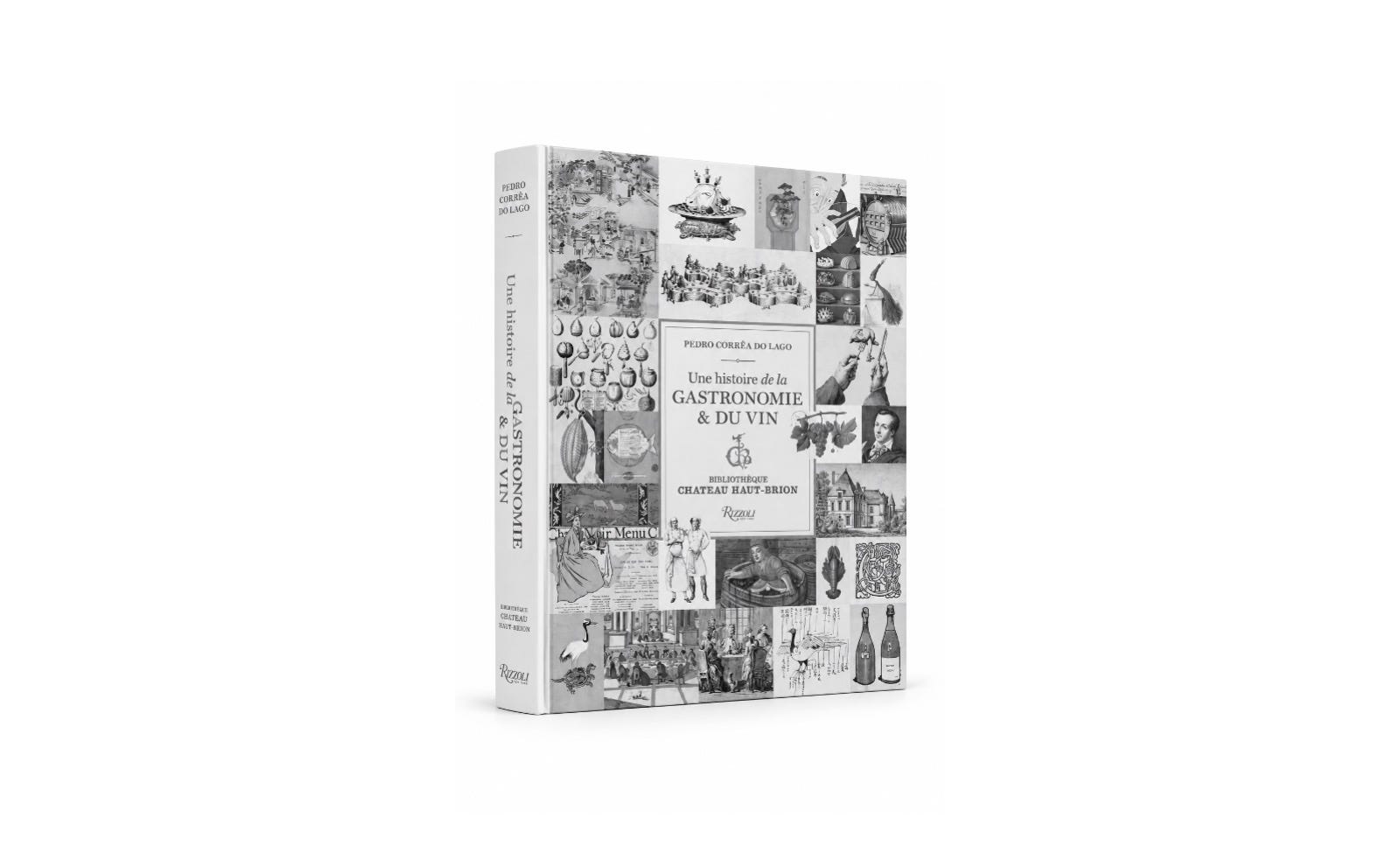
A new, lavishly illustrated volume now offers an unprecedented look inside that collection. Across 448 pages, it moves far beyond the history of a single château. Ancient documents, manuscripts, restaurant menus, engravings, letters and early printed books together trace some 1,500 years of changing attitudes towards wine and gastronomy.
What emerges is not simply the portrait of a remarkable library, but a history of taste itself.
How the Château Haut-Brion Library Took Shape
The setting is suitably atmospheric. The collection occupies a former ruined tower on the estate, restored and transformed into a library lined with dark wood. Yet the apparent age of the surroundings disguises something surprising: the collection itself is comparatively recent.
Rather than being assembled gradually over centuries by successive owners of Haut-Brion, it was largely created over roughly 15 years by Prince Robert of Luxembourg, managing director of Domaine Clarence Dillon, the family company that owns Château Haut-Brion.
The Dillon family has been associated with the estate since 1935, but this particular archive is the product of a much more recent passion for collecting.
It has grown to around 7,000 objects and documents. The scope is deliberately broad. Rare books share space with historical engravings, handwritten correspondence, manuscripts, restaurant wine lists and menus. Together they approach wine not merely as an agricultural product, but as part of a wider history of dining, science, trade, ceremony and social life.
That breadth is what gives the collection its particular fascination. Haut-Brion may provide the setting, but the subject is much larger than Bordeaux.
A Library That Treats Wine as Cultural History
To present the collection in book form, Prince Robert worked with Brazilian collector Pedro Corrêa do Lago, whose own expertise lies in historical manuscripts and autographs. Corrêa do Lago had also played a role in encouraging Prince Robert’s interest in collecting.
For the volume, he selected approximately 700 illustrations from the library and arranged them to tell a wider story about humanity’s relationship with food and wine.
The result moves across centuries and continents rather than following a narrow chronology of fine wine.
Among the oldest pieces reproduced is a sixth-century papyrus containing an early reference to wine. Elsewhere, medieval illuminated manuscripts sit alongside an incunable dating from 1495 that considers wine and its properties.
Such objects provide a reminder that the written history of wine long predates modern classifications, appellations and tasting culture. Wine appears instead as medicine, nourishment, commerce, ritual and pleasure — its meaning changing according to the society recording it.
The Château Haut-Brion Library Beyond Bordeaux
One of the strengths of the Château Haut-Brion library is that its perspective is not confined to France.
Its pages move from European culinary traditions to material from the Middle East and Asia. A seventeenth-century example of Arabic calligraphy preserves a poem devoted to wine, while eighteenth-century Japanese engravings reveal aspects of confectionery and culinary knowledge.
That geographical range prevents the collection from becoming a simple celebration of French gastronomic heritage. Instead, it places French wine within a broader history of how different cultures have recorded, discussed and ritualised eating and drinking.
There are also documents whose importance lies less in gastronomy itself than in the unexpected places where wine enters political and military history.
A handwritten letter from General Bonaparte during the Egyptian campaign, for example, details quantities of wine to be distributed among military divisions. It is precisely the sort of document that reveals how deeply wine was woven into everyday systems of supply, authority and social organisation.
Menus as Windows Into a Lost World
Some of the most evocative material comes not from grand historical texts but from the ephemeral documents of dining.
Restaurant menus and wine lists preserve a culture that would otherwise have disappeared almost entirely. The collection includes material connected with celebrated restaurants around Paris’s Palais-Royal, including Véry and Les Trois Frères Provençaux.
Such documents allow the reader to see gastronomy as it was actually presented to diners: the dishes considered fashionable, the hierarchy of a meal and the changing relationship between cuisine and wine.
Menus are often treated as minor historical curiosities. Seen in sufficient numbers, however, they become valuable records of taste.
They can reveal how dining fashions evolved, how restaurants presented themselves and how wine gradually assumed an increasingly articulate role at the table. For anyone interested in the history of French gastronomy, they offer a perspective quite different from that of recipe books or cellar records.
From Renaissance Kitchens to Nineteenth-Century Cookery
The collection also brings together some of the figures who helped codify European cuisine.
Among them is Bartolomeo Scappi, the celebrated Renaissance cook whose work documented the sophisticated cooking of sixteenth-century Italy and whose career was closely connected to the papal court.
Later culinary publishing is represented by authors such as Grimod de La Reynière, an influential chronicler of French dining culture, and Jules Gouffé, whose nineteenth-century cookery and pastry books made striking use of colour illustration.
Placed alongside wine documents, these works help show how the histories of the cellar and kitchen continually intersect.
The story of wine cannot be separated neatly from the history of cooking, service and hospitality. Changes in cuisine alter the way wine is consumed; changes in dining culture alter the language used to describe it.
The library makes those connections visible.
Wine, Hospitality and Diplomacy
Another recurring theme is the role of the table as a place where social and political relationships are formed.
Wine and gastronomy have long been instruments of hospitality, but they have also played their part in diplomacy, hierarchy and representation. Banquets, formal dinners and elaborate service were never simply about satisfying hunger. They communicated power, status, generosity and cultural refinement.
Historical menus, correspondence and manuscripts offer evidence of that function in a way that conventional wine histories often overlook.
For the modern wine lover, this broader perspective is especially rewarding. It reminds us that the prestige surrounding great bottles did not develop in isolation. It emerged within changing customs of hospitality, collecting, restaurant culture and the art of receiving guests.
What the Château Haut-Brion Library Adds to Wine History
Perhaps the most interesting aspect of the Château Haut-Brion library is the way it expands the definition of a wine archive.
A cellar records vintages. Estate documents preserve ownership and production history. A library of this kind attempts something different: it collects evidence of the ideas, customs and pleasures that have surrounded wine across centuries.
Its 7,000 pieces therefore tell many overlapping stories. There is the development of culinary technique, the rise of restaurants, the evolution of printed books, the relationship between wine and medicine, the aesthetics of menus and illustration, and the use of food and drink in diplomacy and ceremony.
Haut-Brion itself remains present in the background, but wisely does not dominate the narrative.
That may be the collection’s greatest strength. A château of Haut-Brion’s stature could easily have made the project primarily about its own past. Instead, the library uses collecting to place wine within a much longer cultural continuum.
A Different Way to Read the History of Wine
Wine history is often organised around regions, estates, grape varieties and vintages. Those are essential frameworks, but they capture only part of the subject.
The materials gathered at Haut-Brion suggest another way of looking at it.
A sixth-century papyrus, a Renaissance cookery book, a military letter, a restaurant menu and an Arabic poem may appear to have little in common. Place them together, however, and they begin to show how wine has moved through societies: as daily ration, luxury, medicine, artistic subject, diplomatic tool and companion to food.
That is what makes this glimpse into the Château Haut-Brion library valuable. Its significance lies not simply in the rarity of individual objects, but in the connections between them.
For lovers of French wine, those connections offer a welcome reminder that every bottle belongs to a story far older and wider than the vineyard printed on its label.