
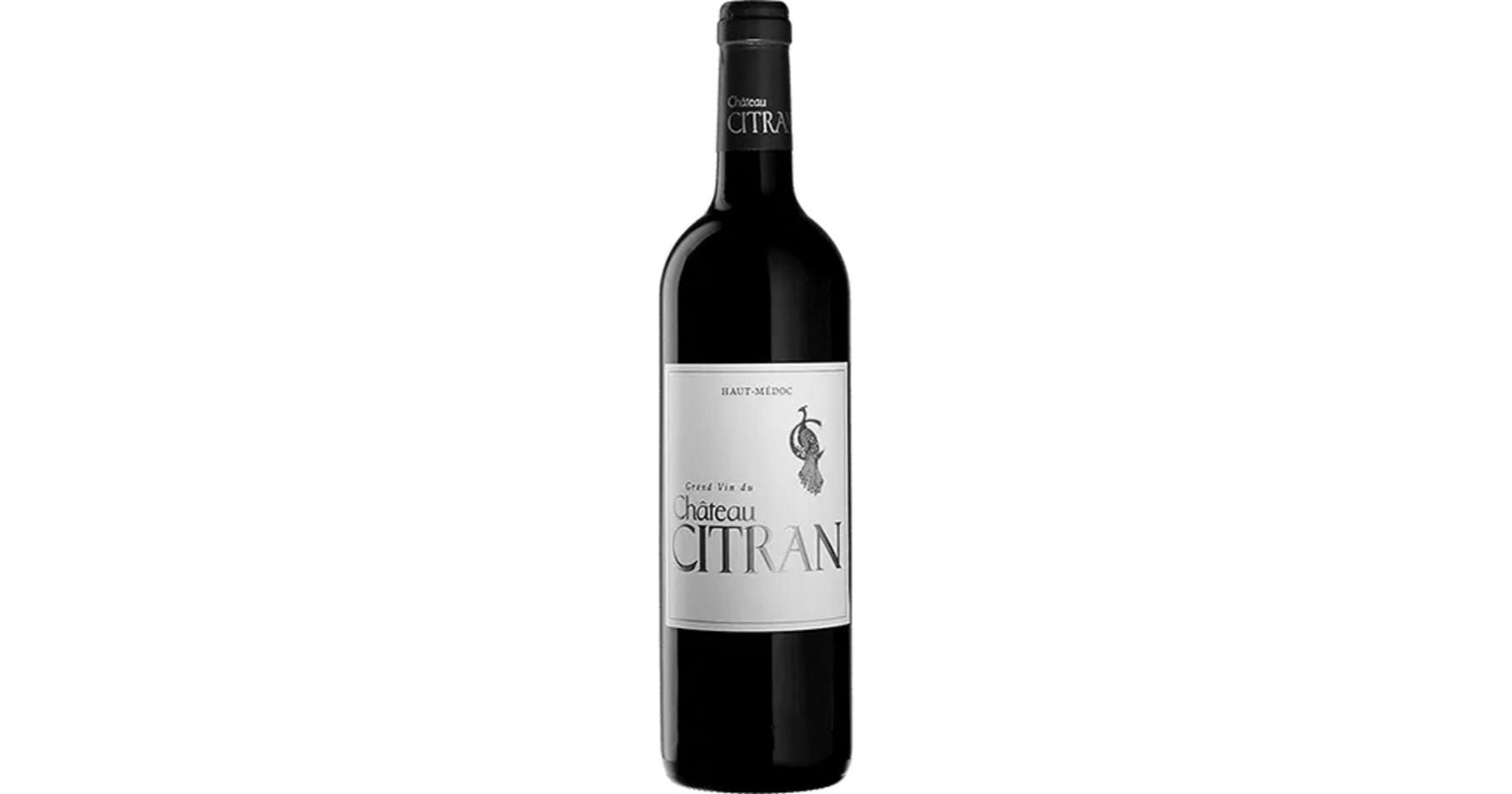
Château Citran
Historic Haut-Médoc depth and collector value in one of the Médoc’s oldest estates.
Introduction
Château Citran occupies an unusual and increasingly attractive place in the southern Médoc hierarchy. It is neither a speculative trophy wine nor a merely anonymous value claret. Rather, it is a historic estate with documented medieval roots, meaningful technical ambition, and a stylistic signature shaped by mixed sandy-gravel and limestone-clay soils rather than by the uninterrupted deep gravels that define many more famous classed-growth neighbors. For serious collectors, its interest lies in that combination of heritage, terroir complexity, and pricing discipline: the estate is deep enough in pedigree and structure to reward cellaring, yet sufficiently accessible in market terms to remain a buying decision governed by judgment rather than by fashion.
The wine’s prestige is therefore relative, not absolute. In regional terms, Citran belongs to the enduring Cru Bourgeois sphere and appears on the roster of the Union des Grands Crus de Bordeaux, while trading and critical databases continue to identify it as a Haut-Médoc Cru Bourgeois. In collector terms, that positions it as a serious “second-tier fine wine”: not scarce enough to drive blue-chip scarcity premiums, but far better resourced and more historically grounded than the bulk of generic left-bank Bordeaux.
Estate and Producer Background
Official estate and UGCB material traces the property to the Donissan de Citran family, which held the seigneury until 1832. The current château was rebuilt between 1862 and 1864 on the site of the medieval stronghold, and the estate remains a listed historical monument set in parkland and moats. Since 1996, the property has been in the hands of the Merlaut family, an established Bordeaux wine family whose stewardship frames Citran today as an estate balancing patrimonial continuity with technical renewal.
The producer’s stated philosophy is classical but not inert. Estate materials emphasize a “healthy balance” between traditional and modern methods in both vineyard and cellar, while the public-facing wine narrative emphasizes repeated tastings, selection, and blending as the core of the grand vin’s identity. That is not empty marketing language: the estate specifically discloses regular blending work with consultant oenologist Eric Boissenot, a figure whose name carries weight throughout the Médoc, and the technical sheets consistently describe a disciplined élevage rather than a heavily interventionist one.
It is also worth noting a point of technical transparency that collectors should appreciate. Public documents are not perfectly harmonized on scale: the UGCB page currently states 100 hectares, 350,000 bottles, and an estate-level varietal distribution of 50% Merlot, 45% Cabernet Sauvignon, and 5% Cabernet Franc, while recent technical sheets for the 2021 and 2022 vintages specify 86 hectares under vine. That discrepancy likely reflects the difference between broader estate area and currently productive vineyard surface, but it is best stated plainly rather than smoothed over.
Terroir Analysis
Citran is based in Avensan, in the southern part of the Haut-Médoc. Trade material describes the vineyard as divided into two sectors: one around the château and another closer to Avensan, with one block near the Margaux boundary. The wider appellation benefits from the regulating influence of the Gironde Estuary, whose thermal moderation helps temper summer heat and winter volatility; Bordeaux’s own appellation material also explains the Haut-Médoc soils as a combination of Quaternary sandy-gravel deposits over older clay-limestone formations. Citran’s disclosed geology fits that pattern precisely: sandy-gravel over asteriated limestone and clay-limestone subsoils.
Why this matters stylistically is where Citran becomes more interesting than its price suggests. Academic work by Cornelis van Leeuwen and colleagues shows that climate, soil, and cultivar all matter in Bordeaux, but that much of terroir expression is mediated through vine water status. Their work further demonstrates that gravel, heavy clay, and sandy soils differ materially in berry size, acidity, phenolic development, and eventual wine quality. In broad terms, very water-supplied sandy sites can yield larger berries and more dilute wines, while clay and certain gravel contexts can favor better concentration and phenolic maturity; the exact effect depends on season and cultivar. Applied to Citran, the coexistence of sandy-gravel and limestone-clay substrata helps explain a wine that tends to combine Médoc freshness and framework with a softer mid-palate and earlier accessibility than many all-gravel, Cabernet-dominant left-bank peers. That last point is an inference, but a well-supported one.
The terroir therefore pushes Citran toward balance rather than monumentality. Bordeaux’s own Haut-Médoc definition emphasizes structure, elegance, and aging potential, with Cabernet Sauvignon supplying spice and frame, Merlot adding roundness, and Cabernet Franc and Petit Verdot contributing complexity and freshness. Citran’s mixed soil base and variable vintage blends mean the estate can move materially from year to year: in stronger, hotter seasons it can absorb more Cabernet structure without losing drinkability, while in cooler or more difficult years Merlot and Cabernet Franc can play a more visible balancing role.
Viticulture, Winemaking, and Technical Composition
The estate’s vineyard work has undergone visible modernization. On the producer’s own site, Citran states that it has reoriented vine rows to improve light interception, installed or renovated drainage, ended herbicide use, and shifted part of the vineyard into organic farming, with roughly one-third of the estate described as organic. That matters because those measures are not decorative; on mixed Médoc soils, drainage, canopy exposure, and disease pressure control can decisively affect ripening regularity and fruit selection.
In the cellar, the stylistic logic is consistent across sources. The estate describes traditional vinification, parcel selection, and blending as central, while technical sheets for 2009, 2010, 2021, and 2022 specify temperature-controlled fermentations, malolactic fermentation partially in new barrels, French oak élevage, periodic racking, egg-white fining, and bottling at the château. The recent 2021 and 2022 sheets state 35% new oak; the UGCB page gives a rounded current figure of 30% new barrels over 15 months of rearing. Taken together, these disclosures point to a classical Médoc élevage calibrated for polish and structure, not for overt barrel signature.
The technical composition is notably less static than some peers. Estate-level plantings are currently presented by the UGCB as 50% Merlot, 45% Cabernet Sauvignon, and 5% Cabernet Franc, but the finished wine varies materially by vintage. The 2021 technical sheet gives 60% Cabernet Sauvignon, 20% Merlot, and 20% Cabernet Franc at 13% alcohol. The 2022 sheet shows 62% Cabernet Sauvignon, 28% Merlot, and 10% Cabernet Franc at 13.5%. Jancis Robinson’s tasting page for the 2023 notes a blend of 52% Merlot, 36% Cabernet Sauvignon, 10% Cabernet Franc, and 2% Petit Verdot. Merchant release material for 2024 lists 55% Cabernet Sauvignon, 40% Merlot, and 5% Cabernet Franc. For collectors, that variation is important: Citran is better understood as a terroir- and season-led estate than as a formula wine.
Vintage Report
For historical context, auction and pricing sources show that bottles of Château Citran circulate on the secondary market at least back to 1952, while Jancis Robinson’s Bordeaux red vintage chart provides regional vintage summaries from 1970 onward. For practical collector use, however, the most reliable estate-specific and critic-supported documentation available in this research covers roughly 2005 through 2025, and that is the period on which a serious buying judgment can be made without guesswork.
From 2005 to 2010, the estate moved through a classic sequence of modern Bordeaux vintages. Jancis Robinson characterizes 2005 as textbook perfection, 2006 as a stop-start year that often produced crisp wines, 2007 as mildew-ridden and early-drinking, and 2008 as another difficult season salvaged by improved late weather. Then came the celebrated pair: 2009, which Jancis describes as long, fine, warm, and especially seductive on the left bank, and 2010, which Bordeaux’s official vintage page calls a standout year with sunny late-season conditions, fresh structure, and 20–30 years of regional aging potential. Citran’s own technical sheets confirm how favorably those two years landed at the estate. In 2009 the château reported irreproachable fruit health, a 55/42.5/2.5 Merlot–Cabernet Sauvignon–Cabernet Franc blend, 13.5% alcohol, and a recommended 10–15-year horizon. In 2010 it reported optimal sanitary condition, 55/42/3, 13.5% alcohol, and 38% new oak. Those remain among the estate’s clearest collector vintages.
The 2011–2014 run is more selective. Jancis Robinson calls 2011 forgettable and 2012 tricky, wet, and late, with Cabernet success limited to estates capable of real vineyard micro-management. She regards 2013 as a universally poor, dilute vintage that should not be kept, while 2014 was saved by a dry, warm autumn but is more for drinking than for investment. Citran’s 2013 review in Decanter reflects that reality exactly: 86 points, a meaty black-fruit nose, mid-term tannins, and a drinking window of 2017–2024. In other words, the wine was competent in a weak year, not transcendent.
The 2015–2020 sequence restored momentum. Jancis Robinson describes 2015 as generous and healthy, though later overshadowed by 2016; 2016 as one of the finest recent Bordeaux vintages, marked by ripe small berries, high tannin, and high acidity; 2017 as frost-reduced but often pleasant; 2018 as a year of mildew threat followed by a hot, dry, highly successful second half; 2019 as hot and dry but remarkably fresh and consistent; and 2020 as early, drought-affected, tannic, and relatively small in crop. The official Bordeaux vintage pages describe 2018 as full-bodied and long-lived, 2019 as supple, balanced, and moderate in alcohol, and 2020 as one of harmonious balance and 15–25 years of aging potential. Citran itself performed particularly well in 2019: Decanter rated it 91, calling it fragrant, supple, bright, juicy, and full of personality, with a drinking window to 2034. James Suckling’s note on the 2016 emphasizes integrated tannins and cool, fresh fruit, which is consistent with the best recent Citran style: structured, but not forbiddingly austere.
The current sequence is equally instructive. Jancis Robinson describes 2021 as frost-affected, cool, damp, low-yielding, and highly heterogeneous, which aligns with Citran’s 60/20/20 blend at 13% alcohol and James Suckling’s description of a medium-bodied, balanced wine. Jancis’s 2022 weather report describes a hot, dry, heatwave year in which many well-placed vineyards nevertheless held up remarkably well; Citran’s 2022 technical sheet records 62/28/10 at 13.5%, and Jancis’s producer page ranks 2022 among the estate’s top three reviewed wines. For 2023, Jancis reports severe mildew pressure and a stylistic edge for Cabernet Sauvignon over Merlot, and Citran’s documented 2023 blend indeed shifts back toward Merlot while adding 2% Petit Verdot. Bordeaux’s official 2024 page calls that year wet, mildew-pressured, very small in crop, but precise and fresh, with 8–15 years of aging potential; merchant release material shows Citran at 55/40/5. Finally, Jancis’s 2025 harvest report and recent Decanter coverage both describe 2025 as hot, dry, extremely small, and potentially excellent, but it remains a futures-stage wine rather than a finished-bottle collector object.
Tasting Profile, Aging Potential, and Critical Reception
On a professional composite reading of recent documented vintages, Citran shows a fairly consistent visual and aromatic profile. The color is typically ruby to deep ruby with purple reflections and good intensity. The aromatic register centers on blackcurrant, blackberry, and morello cherry, often joined by cedar, tobacco, toast, and a subtle floral or menthol lift. The palate is generally medium-bodied to medium-plus rather than massive, with a supple or smooth attack, fresh supporting acidity, and tannins that recent notes describe as noble, integrated, silky, or finely grained rather than aggressively stern. The finish is usually persistent and savory, with freshness preserved even in warm seasons. All of this places Citran well within the left-bank canon, but on the fresher, more open-knit, less monumental side of it.
Its typicity, then, is not that of a miniature classed growth built for 30 years of silence. It is typicity understood as Médoc clarity: cassis and cedar, moderate alcohol by contemporary standards, oak used to frame rather than smother, and a tannic spine that invites cellaring without demanding heroic patience. In weaker years, that frame can show rusticity or reduction in complexity; in stronger years such as 2009, 2010, 2019, and 2022, the wine reaches a notably more complete equilibrium.
The drinking window is correspondingly attractive for collectors who prize turnover as much as longevity. Citran’s own technical sheets suggested 10–15 years for 2009 and 8–10 years for 2010; Decanter’s 2019 review extends that specific vintage out to 2034, while the 2013 was already framed for consumption by 2024. A sensible estate-level conclusion is that Citran is usually best approached from about five to seven years after the vintage, with top years capable of rewarding 12 to 15 years and occasionally more, but with less evidence for the multidecade grandeur of the highest-ranking classed-growth Haut-Médocs.
Critical reception is consistent rather than sensational. Decanter scored the 2019 at 91 and the 2013 at 86. James Suckling’s notes on 2016, 2021, and 2022 emphasize silky structure, balance, and savory blackcurrant fruit. Jancis Robinson’s database shows 2022, 2000, and 2014 as the producer’s top three-reviewed wines on her platform, while her recent tasting pages confirm ongoing attention to 2022, 2023, 2024, and 2016. Older auction catalogues and trading pages citing Robert Parker and Wine Spectator place the 2000 vintage at 88 and 91 points respectively. The overall message is clear: Citran’s critical ceiling is usually in the high-80s to low-90s, with the best vintages punching above price but not rewriting the regional hierarchy.
Market Position, Comparative Context, and Gastronomy
From a market perspective, Citran is compelling chiefly as value, not as a speculative instrument. iDealwine currently shows a generic price estimate of €16 for the wine, with a listed 2026 trend of -16.93% versus 2025. More importantly, its vintage-by-vintage estimates cluster in a narrow and revealing band: €11 for 2019, 2020, and 2021; €13 for 2016 and 2018; €19 for 2000 and 2010; and €26 for 2009. Current sale listings on the same platform show 2017 around €15.33 per bottle by the 12-bottle lot. On James Suckling’s official pages, average ex-tax prices sit around $23 for 2021, $27 for 2022, $28 for 2019, and $30 for 2016. That is emphatically not blue-chip behavior. It is the pricing profile of a wine bought for intelligent consumption and disciplined cellar-building.
Production figures explain part of that. Citran’s 350,000 bottles place it above many prestige-peer volumes in the appellation. By comparison, Château La Lagune discloses 150,000 bottles from gravel soils and 50% new oak; Château de Camensac, 180,000 bottles; and Château Belgrave, 200,000 bottles. Château Cantemerle is actually larger at 400,000 bottles, but it is also more firmly installed in the 1855 classed-growth market. Citran’s relative abundance makes it easier to source in mature vintages and reduces allocation drama; that is advantageous for drinkers, neutral to slightly negative for investors seeking scarcity premiums.
For collectors, the comparative lens is decisive. La Lagune is more aristocratic in profile and more ambitious in élevage, with Decanter scoring its 2019 at 94 compared with Citran’s 91; its gravel terroir, classed-growth status, and lower production give it a more persuasive prestige claim. Cantemerle is more Cabernet-led and more resolutely gravel-defined, with a classical frame and larger historical footprint in the classified-growth market. Belgrave, on deep gravel and clay, offers more classed-growth authority and a somewhat sterner left-bank outline. Camensac is perhaps the closest comparator in value logic: another Haut-Médoc wine where terroir seriousness and relative affordability intersect. Citran’s differentiator is that it often carries more overt Merlot-and-Cabernet-Franc suppleness over mixed sandy-gravel and limestone-clay soils, producing a style that is easier to read young and less dependent on prolonged cellaring for harmony.
Set against leading Cabernet blends globally, that also makes Citran distinctive. This is not the glycerol-rich opulence associated with top Napa Valley Cabernet Sauvignon, nor the more polished Mediterranean-inflected sheen that often marks leading Bolgheri blends. Citran is cooler in bearing, generally lower in alcohol in the recent documented vintages at about 13–13.5%, less oak-driven at roughly 30–35% new barrels, and more explicitly organized around freshness, savory detail, and classical Médoc proportion. That comparison is interpretive, but it is grounded in the disclosed technical parameters.
At table, Citran is far more versatile than prestige cues might suggest. iDealwine’s pairing guidance highlights roast lamb, peppered beef fillet, and wild boar, and those recommendations are entirely coherent with the wine’s cedar-cassis frame, moderate body, and tannic freshness. In refined service, the most convincing pairings would include rack of lamb with mustard seed and jus réduit, duck breast with black cherry and cep, veal sweetbreads with woodland mushrooms, or simply a well-rested côte de boeuf where protein and char can absorb the wine’s structural line. The important point is not luxury for its own sake, but the alignment of savory depth with a wine that values shape over sheer weight.
Conclusion
Château Citran sits in a particularly useful place within the contemporary collector’s cellar. It does not compete directly with the great classed-growth Haut-Médocs on status, depth, or long-horizon investment logic, and the market data does not support treating it as a trophy asset. But it does offer something increasingly valuable: a historically serious Médoc estate with clear terroir identity, transparent technical practice, credible critical recognition, and prices that still permit case purchases rather than symbolic single-bottle gestures. In a Bordeaux market that remains selective and price-sensitive, that combination is not weakness. It is, increasingly, a virtue.
For the discerning buyer, the best way to understand Citran is not as a bargain-bin alternative to a classified growth, but as a distinct proposition: a southern Haut-Médoc with medieval roots, mixed-soil nuance, vintage-led blending, and a drinking profile that prizes equilibrium over grandeur. The finest bottles—especially 2009, 2010, 2019, and, on present evidence, 2022—deserve a place in the cellar of any collector who values typicity, finesse, and intelligent capital allocation as much as prestige.