

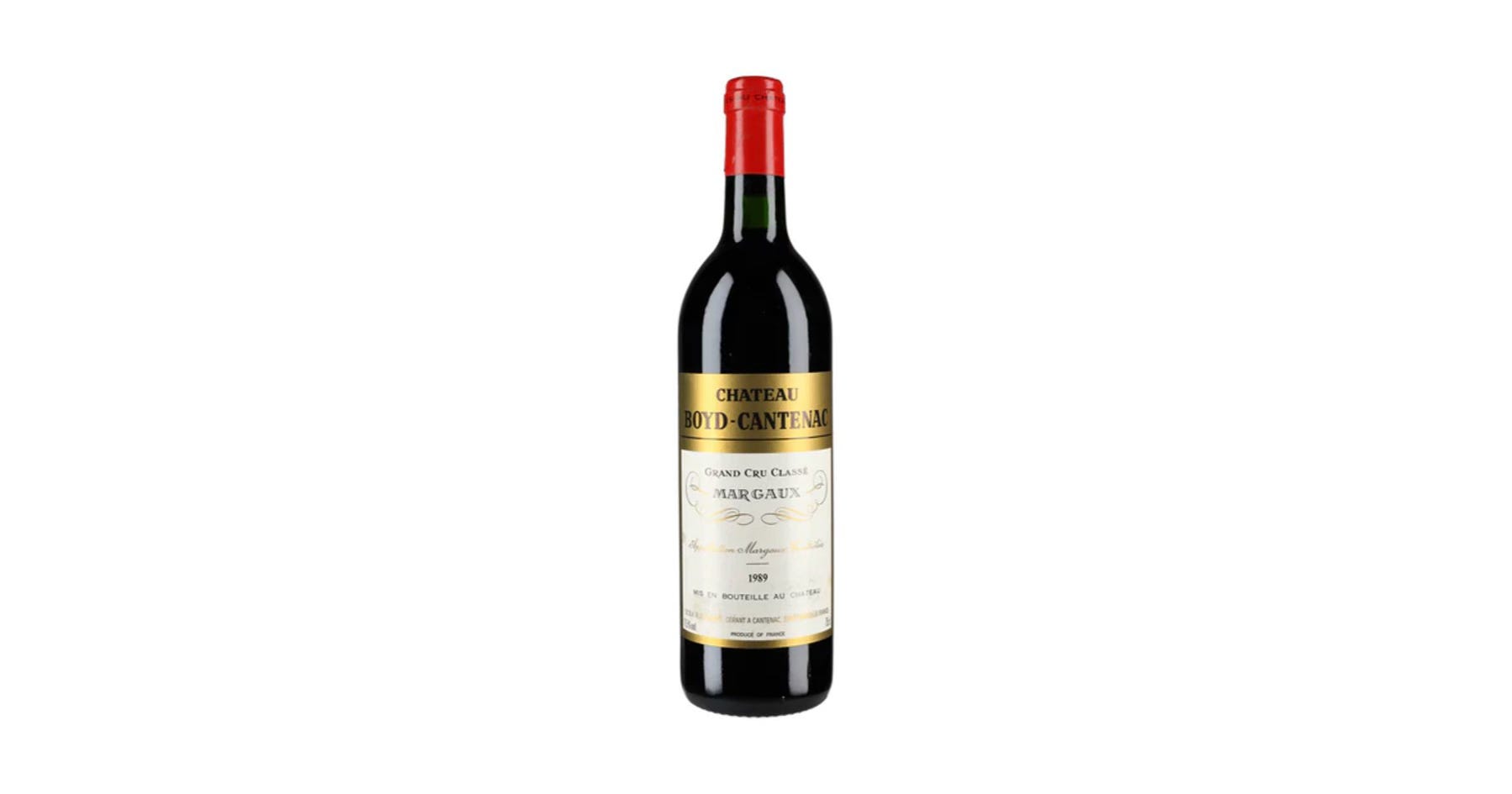
Château Boyd-Cantenac, Margaux
Traditional Margaux winemaking at accessible prices: a Third Growth offering classified quality without the promotional hype
Introduction
Château Boyd-Cantenac occupies a singular position within the Bordeaux hierarchy: a Third Growth of the 1855 Classification that has operated largely outside the promotional machinery of the modern wine trade, yet has preserved an authentic connection to the traditional Margaux style that many of its more visible neighbors have either abandoned or diluted. For collectors and professionals seeking to understand the full breadth of classified Bordeaux, Boyd-Cantenac represents both an historical curiosity and a contemporary opportunity—a wine that often outperforms its market positioning while remaining faithful to the restraint and elegance that once defined the commune of Cantenac.
The estate’s origins trace to 1754, when Jacques Boyd, an Irish-born merchant descended from Scottish wool traders in Belfast, acquired vineyards on the Cantenac plateau from Bernard de Sainvincens. The Boyd family had been present in Bordeaux since the seventeenth century, part of the substantial wave of Irish and Scottish merchants who established themselves along the Gironde following religious and economic upheavals in the British Isles. Jacques Boyd was ennobled by Louis XV—becoming, in the French manner, Jacques Boyd—and his wines quickly gained recognition. As early as 1776, the courtier Labadie ranked Boyd’s production as a “troisième cru de Cantenac,” foreshadowing by nearly eighty years the formal classification that would cement this status.
The 1855 Classification, commissioned for the Paris Exposition Universelle, listed the property simply as “Boyd” among the fourteen Third Growths. At that time, the estate was substantially larger than today, encompassing parcels that would later be divided. The marriage of John Lewis Brown—himself of Scottish descent—into the Boyd family in 1806 initiated a period of expansion, with Brown acquiring additional vineyard land. This union, however, contained the seeds of the estate’s eventual partition: following financial difficulties and the death of Brown, the property was sold in 1843 to banker Gromard and merchant Verrière, who separated it into two distinct entities. One portion retained the Boyd name, eventually becoming Boyd-Cantenac; the other took Brown’s name, becoming Château Cantenac Brown. This division remains visible today in the geography of the appellation, with both estates bearing witness to their shared heritage.
The late nineteenth century brought devastation: phylloxera, oidium, and mildew swept through the Médoc, and Boyd-Cantenac effectively ceased to exist as a functioning estate for several decades. The wines were absorbed into the production of Abel Laurent, who controlled multiple properties. It was not until the early twentieth century that the vineyard was reconstituted, first by the Laurent family, then by the Ginestets—the powerful négociant dynasty that at various times controlled Château Margaux, Château Lascombes, and numerous other classified properties. The Ginestet ownership proved brief: struck by the financial crises of the 1920s and 1930s, they were forced to liquidate. In 1932, Pierre Élies Guillemet, already proprietor of neighboring Château Pouget (a Fourth Growth), acquired Boyd-Cantenac, reuniting under single ownership two estates that shared ancient roots in the ecclesiastical lands of the Prieuré de Cantenac.
The Guillemet family has now held Boyd-Cantenac for four generations. The current proprietor, Lucien Guillemet, assumed control in 1996 from his father Pierre. Trained as both an oenologist and agronomist—having studied at Montpellier and the Bordeaux Faculty of Oenology before working at the négociant Barton & Guestier and then at Château Giscours—Lucien represents one of the increasingly rare cases in classified Bordeaux of an owner who also serves as winemaker without external consultancy. This autonomy extends to the estate’s commercial strategy: Boyd-Cantenac operates outside the Union des Grands Crus de Bordeaux, forgoing participation in the promotional tastings and marketing activities that have become central to the visibility of most classified estates. Distribution has historically favored the French domestic market and Belgium, leaving the wine underrepresented in the United Kingdom and United States—a commercial posture that has simultaneously limited awareness and preserved value.
Within the broader narrative of French fine wine, Boyd-Cantenac serves as a counterpoint to the trajectory of modernization and internationalization that has transformed much of classified Bordeaux since the 1980s. Where many estates have embraced concentration, extraction, and the stylistic preferences of influential critics, Boyd-Cantenac has maintained continuity with older winemaking philosophies. This is not a wine of cult following or speculative frenzy; it is, rather, a wine of quiet persistence—one that rewards patient collectors willing to seek out bottles that rarely appear in the bright lights of major auctions or high-profile tastings, but which speak with unforced eloquence of the Cantenac terroir and the Margaux appellation’s enduring capacity for elegance.
Vineyard and Terroir
Location and Parcel Composition
The vineyard of Château Boyd-Cantenac comprises seventeen hectares situated in the commune of Cantenac, at the southern end of the Margaux appellation. The estate’s geographic coordinates—approximately 45°01’22”N, 0°39’22”W—place it on the central plateau that constitutes the appellation’s finest viticultural land. The parcels abut those of Château Brane-Cantenac and Château Kirwan, neighbors that share the geological heritage of the Cantenac rises. The estate lacks a grand château building of its own; winemaking facilities are shared with Château Pouget, the Fourth Growth also owned by the Guillemet family, though since 1983 the two wines have been vinified separately and maintain distinct identities.
Geological Context and Soil Composition
The terroir of Boyd-Cantenac represents one of the finest expressions of the Margaux appellation’s signature gravel soils. The vineyard rests on siliceous gravels dating to the Quaternary period—alluvial deposits transported from the Pyrenees by the ancestral Garonne River and laid down across a series of terraces formed during successive glacial periods. These gravels, known locally as graves, constitute an essential component of the Left Bank’s viticultural identity, providing the drainage and thermal properties that favor Cabernet Sauvignon cultivation.
The specific character of the Boyd-Cantenac soils combines large siliceous pebbles with fine gravel in a matrix of sand and minimal clay. This composition creates exceptionally lean, well-draining conditions that force vine roots to penetrate deeply in search of water and nutrients—a natural mechanism of stress that promotes concentration in the berries. The gravel layer’s depth varies across the estate but is substantial enough to encourage root systems extending several meters into the subsoil, where they encounter the older Tertiary-era substrates of clay-limestone and marl that underlie much of the Médoc. This geological stratification provides both the drainage of the surface gravels and access to mineral nutrients and moisture reserves in the deeper horizons.
The thermal properties of the gravel soils contribute significantly to grape ripening. The pebbles absorb solar radiation during daylight hours, storing heat that is gradually released during the cooler nights—a natural temperature regulation that extends the effective growing season and promotes phenolic maturity. This warmth is particularly important for Cabernet Sauvignon, which requires extended hang time to achieve full physiological ripeness. The Margaux appellation, being the most southerly of the major Haut-Médoc communes and closest to the moderating influence of the Gironde estuary, generally experiences slightly warmer conditions than Pauillac or Saint-Estèphe, though the microclimate can vary considerably across its dispersed vineyard parcels.
Exposure, Altitude, and Microclimate
The Cantenac plateau sits at modest elevation—rarely exceeding twenty to twenty-five meters above sea level—yet these gentle rises represent some of the highest ground in the immediate vicinity, providing both drainage advantages and exposure to the maritime breezes that flow from the Atlantic through the Gironde corridor. The orientation of the Boyd-Cantenac parcels benefits from this air movement, which reduces humidity, limits disease pressure, and promotes even ripening. The proximity to the estuary moderates temperature extremes, protecting against both spring frosts and excessive summer heat.
The microclimate of the estate reflects the broader Margaux pattern: maritime influences predominate, with rainfall distributed relatively evenly throughout the year, though summer drought periods are common and increasingly frequent with climate change. The gravel soils’ exceptional drainage means that even substantial rainfall is rapidly absorbed, reducing waterlogging risks while maintaining subsoil moisture reserves accessible to deep-rooted vines. In dry vintages, this deep water access becomes crucial for maintaining vine health and preventing excessive stress.
Vine Age and Planting Strategy
The average vine age at Boyd-Cantenac ranges between thirty-eight and forty-two years, depending on the source and vintage—a mature population that contributes to the wine’s concentration and complexity. Planting density follows the traditional Médoc standard of 10,000 vines per hectare, ensuring competition between individual vines and promoting the natural yield restriction that characterizes fine wine production. The estate has historically favored maintaining old vines rather than aggressive replanting programs, preferring the qualitative advantages of mature root systems and reduced vigor over the practical convenience of younger, more productive plantings.
Farming Philosophy
Lucien Guillemet has practiced what might be termed traditional sustainable viticulture—organic principles without formal certification—for decades. Chemical fertilizers have not been used on the estate since the 1960s, a commitment spanning over sixty years that predates the contemporary organic movement by generations. The focus remains on maintaining biological equilibrium in the vineyard soils, encouraging the microbial activity and natural nutrient cycling that synthetic inputs can disrupt. This approach reflects both ecological conviction and practical wisdom: the lean gravel soils of the Médoc do not require heavy fertilization to produce quality wine, and excessive nitrogen in particular can promote unwanted vegetative vigor.
Vineyard management follows the rhythms of traditional Médoc practice. Winter pruning is conducted entirely by hand, with careful attention to controlling vigor and preparing the vine architecture for the coming season. Green harvesting—the removal of excess grape clusters in summer—is employed as needed to ensure concentration, though the naturally modest yields of the old vines and lean soils often limit its necessity. Leaf removal and canopy management are calibrated to balance sun exposure for ripening against the risk of sunburn in increasingly warm summers. The workforce is scaled according to seasonal demand, with labor doubling from May through July and quadrupling during harvest.
Climatic Sensitivity and Vintage Variation
The terroir of Boyd-Cantenac demonstrates the characteristic sensitivity of the Margaux appellation to vintage conditions. The deep gravel soils provide a buffer against drought, but their relatively low water-holding capacity can become a liability in extreme heat waves, particularly affecting younger plantings with shallower root systems. The maritime climate brings vintage-to-vintage variation in rainfall patterns, flowering success, and ripening conditions that are directly expressed in the wines. In great years, the terroir produces wines of remarkable concentration and complexity; in difficult vintages, the same lean soils can struggle to fully ripen, particularly the Cabernet Sauvignon. This variability is reflected in the stylistic range across the estate’s production history—a feature that some view as inconsistency and others as the authentic mark of terroir-driven winemaking.
Grape Composition and Viticultural Choices
Current Encépagement
The vineyard of Château Boyd-Cantenac is planted predominantly to Cabernet Sauvignon, which accounts for approximately sixty to sixty-seven percent of the total area, depending on the source and vintage. Merlot follows at twenty-four to thirty percent, with Cabernet Franc and Petit Verdot sharing the remaining eight to ten percent. This blend reflects the traditional Left Bank hierarchy that places Cabernet Sauvignon at the foundation, supported by Merlot for flesh and Cabernet Franc and Petit Verdot for aromatic complexity and structural interest.
The precise proportions vary slightly between sources and have evolved over time. The relatively high representation of Petit Verdot—sometimes cited at seven percent—is notable for a Margaux estate, as this variety’s demanding ripening requirements make it challenging in all but the warmest vintages. When successful, Petit Verdot contributes deep color, tannic backbone, and distinctive spice notes; when underripe, it can introduce harsh edges. The presence of Cabernet Franc, typically around eight percent, adds aromatic lift and freshness—a variety that, like Petit Verdot, is increasingly valued as climate change facilitates more consistent ripening.
Historical Encépagement
Prior to the phylloxera crisis and the subsequent replanting of French vineyards on American rootstocks, Boyd-Cantenac—like most Médoc estates—cultivated varieties that have since disappeared from the appellation. Records indicate that Tarney Coulant, a vigorous variety valued for its productivity, was present in healthy proportion before the 1855 Classification. The post-phylloxera reconstruction, which fundamentally reshaped Bordeaux viticulture between the 1880s and early twentieth century, eliminated these historical varieties in favor of the modern encépagement based on Cabernet Sauvignon, Merlot, and their supporting cast.
Clonal and Massal Selection
The estate’s replanting and replacement strategy favors the preservation of genetic diversity through a combination of clonal and massal selection. Like many traditional Médoc properties, Boyd-Cantenac has retained vine material propagated from existing plantings rather than relying exclusively on certified clones from nurseries. This approach maintains the complexity that comes from slight variations within the vineyard population while accepting the marginally higher disease risks of unselected material. The old average vine age—approaching forty years—reflects a preference for maintaining mature plantings over rapid turnover.
Yield Control
Average yields at Boyd-Cantenac have historically remained moderate, reflecting both the naturally restrictive conditions of the lean gravel soils and deliberate viticultural choices. The estate reports average production of approximately forty hectoliters per hectare over the past two decades—a figure consistent with quality-focused Médoc viticulture. Annual production varies considerably with vintage conditions, ranging from 45,000 to 90,000 bottles, with the grand vin typically representing roughly two-thirds of total production and the remainder directed to the second wines.
Yield control begins in the vineyard with winter pruning decisions and continues through green harvest as needed. The old vines naturally produce moderate crops, reducing the necessity for aggressive cluster thinning. The goal is not the extremely low yields that have become fashionable among some Bordeaux properties seeking concentration at all costs, but rather the balance that allows full physiological ripeness without excessive must weight or alcohol levels. This moderate approach aligns with the estate’s broader philosophy of restraint and elegance over power and extraction.
Vinification and Élevage
Harvest and Reception
Harvest at Boyd-Cantenac is conducted entirely by hand, a practice that permits careful selection in the vineyard and gentle handling of the fruit. The picking team, which expands significantly during harvest season, works parcel by parcel according to ripeness, with Merlot typically harvested first, followed by Cabernet Franc, and finally Cabernet Sauvignon and Petit Verdot. This sequential approach allows each variety to be picked at optimal maturity rather than compromising on timing for the sake of logistical convenience.
Sorting at the winery ensures that only healthy, ripe berries enter the fermentation vessels. The scale of production—between 5,000 and 6,000 cases annually—permits the intimate, hands-on approach that larger estates cannot replicate. Lucien Guillemet’s direct involvement in every stage of production, from vineyard to bottle, ensures continuity of vision and immediate responsiveness to vintage conditions.
Fermentation
Vinification takes place in a combination of temperature-controlled stainless steel tanks and traditional cement vats, with vessel sizes ranging from fifty to one hundred fifty hectoliters. This mixed infrastructure allows flexibility in handling the different parcels and varieties separately, preserving the distinct characteristics of each component for the eventual blending. The cement vats, valued for their thermal inertia and textural influence, represent a traditional element maintained alongside modern stainless steel technology.
Fermentation temperatures are carefully controlled to balance extraction with preservation of fruit purity. The maceration period varies according to vintage character, ranging from eight to thirty-five days in exceptional cases, with two to five weeks being typical. Pump-overs (remontages) during fermentation circulate the must over the floating cap of skins, extracting color, tannin, and flavor compounds. The philosophy of extraction at Boyd-Cantenac emphasizes balance over maximization: excessive extraction, particularly from seeds, can introduce bitterness and harshness that compromise the elegance central to the Margaux style. Younger vines, which tend toward greener, more herbaceous character, receive lighter extraction and are typically directed to the second wines.
Malolactic Fermentation
Malolactic fermentation is conducted partly in tank and partly in barrel, a divided approach that allows modulation of the wine’s texture and aromatic complexity. Completing malo in barrel promotes micro-oxygenation and lees contact that can add richness and integrative qualities; completing in tank preserves fruit freshness and precision. The proportion varies by vintage, reflecting Lucien Guillemet’s responsive approach to each year’s particular character.
Oak Aging
The wine is aged for twelve to eighteen months in French oak barrels, with the precise duration determined by vintage conditions and the wine’s evolution. The proportion of new oak varies according to the vintage’s concentration and tannic structure, typically ranging from thirty to sixty percent for the grand vin, though some sources cite ranges as high as sixty to eighty percent for certain vintages. The more recent trend—particularly in the 2020s—appears to favor higher new oak percentages, with the 2023 vintage reported at ninety percent new wood.
The barrels are constructed from French oak, with merrains (staves) sourced from forests whose specific origins are not publicly disclosed. The estate’s sister property, Château Pouget, has been noted for purchasing and aging its own fresh staves at the château for three years before barrel assembly—a practice that ensures quality control over the seasoning process. Whether Boyd-Cantenac follows the same protocol is not confirmed, but the shared winemaking facilities suggest a unified approach to barrel procurement.
Extended lees contact during barrel aging adds textural complexity and promotes the integration of oak with fruit. The wines are racked periodically to clarify and aerate, with the timing and frequency adjusted according to the wine’s development. No filtration has been employed since 1997, allowing the wine to preserve all its natural components at the cost of slightly less visual clarity in the finished product—a trade-off that prioritizes substance over cosmetic appeal.
Blending and Bottling
The harvest, vinification, and élevage are conducted parcel by parcel, maintaining the identity of each component until the final blending decisions. Tasting sessions throughout the aging period assess the evolution of different lots, guiding the eventual selection for the grand vin versus the second wines. The lots showing the greatest concentration, complexity, and aging potential are assembled as Château Boyd-Cantenac; the remainder, along with production from younger vines, is directed to Jacques Boyd, La Croix de Boyd-Cantenac, or Joséphine de Boyd.
Bottling occurs at the estate, typically in the spring or early summer following the second harvest. The absence of filtration means that sediment formation is expected during bottle aging—a natural consequence of unmanipulated winemaking that requires decanting for older vintages. The estate’s commitment to traditional methods extends through the entire production chain, resulting in wines that require and reward patient cellaring.
Vintage-by-Vintage Analysis
The production history of Château Boyd-Cantenac must be understood against the backdrop of the estate’s discontinuous existence. Wine was produced under the Boyd name from Jacques Boyd’s acquisition in 1754 through the division of the property in 1843, and then only intermittently through the subsequent decades as phylloxera, ownership changes, and economic disruptions interrupted production. The modern era of continuous production effectively begins with the Guillemet family’s acquisition in 1932, though the first decades under their stewardship were marked by ongoing challenges. The analysis below addresses key vintages across this complex history, acknowledging gaps in the documentary record for periods when the estate either did not produce wine or production was absorbed into other properties.
Pre-Classification and Nineteenth Century
1776: The earliest documented assessment of Boyd’s wines appears in the courtier Labadie’s rankings, where the estate was placed among the “troisièmes crus de Cantenac”—a classification by market price that presaged the 1855 official ranking by nearly eighty years. No bottles from this era are known to survive, but the documentary evidence establishes Boyd’s early reputation.
1855: At the time of the Classification, the property was listed simply as “Boyd” and ranked among the fourteen Third Growths. The estate was then under consortium ownership, the Boyd and Brown families having sold decades earlier. The wine from this period represented the unified production of what would subsequently be divided into Boyd-Cantenac and Cantenac Brown.
The decades following the classification brought devastation. Phylloxera reached the Médoc in the 1860s and progressed relentlessly through the 1870s and 1880s, destroying vines faster than they could be replanted on resistant American rootstocks. Boyd-Cantenac, like most estates, effectively ceased to exist as a distinct producer during this period of reconstruction.
Early Twentieth Century Through 1945
The estate’s reconstitution under the Laurent family in the early twentieth century restored Boyd-Cantenac to production, though on a diminished scale compared to its pre-phylloxera extent. The subsequent ownership by the Ginestet family, followed by sale to the Guillemets in 1932, established the modern era. However, the absence of a dedicated winery—necessitating vinification at Château Lascombes for some years—limited the estate’s ability to fully express its potential.
1928, 1929: Exceptional pre-war vintages that produced wines of legendary longevity. The 1928 and 1929 are cited among the estate’s historical peaks, though surviving bottles are exceedingly rare and their condition highly variable given the intervening decades.
1945: The wartime vintage, produced under extreme constraints but favored by ideal weather conditions, yielded wines of exceptional concentration throughout the Médoc. Boyd-Cantenac 1945 is considered a landmark vintage, though virtually impossible to find in commerce.
Post-War Classics: 1947-1970
1947: Widely regarded as one of the estate’s greatest achievements. The torrid conditions of 1947 produced extraordinarily concentrated, opulent wines throughout Bordeaux, and Boyd-Cantenac captured this vintage’s lavishness while maintaining the finesse expected from Margaux. This vintage remains a benchmark for the property’s potential.
1949: A more classical vintage than the hedonistic 1947, offering structure and elegance in addition to concentration. Cited among the estate’s finest productions of the immediate post-war era.
1953: A legendary Margaux vintage characterized by perfume and silkiness. Boyd-Cantenac 1953 exemplifies the appellation’s ideal of aromatic complexity combined with textural grace. This vintage is consistently mentioned in historical assessments as among the estate’s best.
1955: An excellent vintage that has aged gracefully, though overshadowed in reputation by the 1953 and 1959. Wines from this year show the typical development trajectory of mature Margaux: dried flowers, cedar, tobacco, and earth layered over faded fruit.
1959: Another outstanding year for the estate, benefiting from warm, dry conditions that produced powerful yet balanced wines. The 1959 Boyd-Cantenac offers a richer, more assertive expression than the delicate 1953, with greater tannic structure and aging potential.
1961: The famous frost-reduced vintage yielded tiny quantities of intensely concentrated wine throughout the Left Bank. Boyd-Cantenac 1961 is recognized as an exceptional production, though critical assessments vary and some tasters have found it less successful than the estate’s other mid-century peaks.
1966: A strong vintage offering classic structure and balance. Critical scores average around ninety points, indicating a successful expression of the vintage character.
1970: The end of the 1960s brought this substantial vintage, producing wines with firm structure and considerable aging potential. Boyd-Cantenac 1970 shows the tannic backbone typical of the year, requiring extended cellaring to show its best.
The Transition Years: 1975-1996
1975: A powerful, tannic vintage that divided critical opinion across the appellation. Boyd-Cantenac 1975 reflects the year’s demanding structure—wines that required decades to become approachable and that in some cases never fully resolved their aggressive tannins. Still drinking, for those who appreciate mature austerity.
1982: The vintage that transformed Bordeaux’s commercial trajectory produced mixed results at Boyd-Cantenac. While many estates crafted legendary wines in this hot, early-ripening year, critical assessments of the estate’s 1982 have been notably modest—some professional scores placing it in the low eighties. This vintage illustrates the inconsistency that characterized the property during this period.
1983: A more successful showing than 1982 at this estate, with the 1983 offering better structure and typicity. The vintage generally favored Margaux over other Left Bank communes, and Boyd-Cantenac benefited.
1985: An excellent vintage marked by charm and approachability. Boyd-Cantenac 1985 shows the year’s seductive quality—ripe fruit, supple tannins, and early drinkability combined with genuine aging capacity. Critical consensus places this among the estate’s stronger productions of the 1980s.
1986: A more structured vintage than the graceful 1985, requiring patience. The 1986 Boyd-Cantenac offers firmer tannins and slower evolution, with assessments around eighty-eight points suggesting solid quality without exceptional distinction.
1989 and 1990: The celebrated pair of back-to-back great vintages produced successful wines at Boyd-Cantenac, though perhaps not at the level achieved elsewhere in the appellation. The 1989 shows the vintage’s warmth and early appeal; the 1990 offers more classical structure and greater aging potential.
The early 1990s—1991, 1992, 1993, 1994—represent a challenging sequence of vintages across Bordeaux, with frost (1991), rain at harvest (1992, 1993), and uneven ripeness (1994) limiting quality. Production data for Boyd-Cantenac during these years is sparse, and the wines are rarely encountered.
1995 and 1996: These vintages marked the transition to Lucien Guillemet’s management. The 1995 shows the year’s ripe, approachable character; the 1996 offers more tension and structure. Critical scores in the mid-eighties suggest wines of respectable quality but without breakthrough distinction. These were the final productions of the previous regime before Lucien’s reforms took hold.
The Modern Era: 1997-Present
Lucien Guillemet’s arrival in 1996 initiated a gradual transformation of the estate’s qualitative performance. The creation of the Jacques Boyd second wine in 1997 allowed stricter selection for the grand vin, while investments in winemaking facilities and the application of Guillemet’s formal oenological training began to address the inconsistency that had marked previous decades.
1998: A successful vintage for Margaux that produced a respectable Boyd-Cantenac, though assessments remain modest (mid-eighties range). The wine shows the vintage’s ripe Merlot influence and moderate structure.
2000: The millennium vintage arrived with exceptional conditions throughout Bordeaux. Boyd-Cantenac 2000 represents a significant step forward for the estate under Guillemet’s management, earning critical scores around ninety-one points and recognition as one of the property’s stronger modern productions. The wine combines concentration with Margaux elegance, requiring extended cellaring to show its potential.
2005: The drought vintage produced wines of exceptional concentration across the Left Bank. Boyd-Cantenac 2005 demonstrates the estate’s capacity when conditions permit: dense color, complex aromatics blending dried flowers, red currants, and tobacco, with a tannic structure that demanded—and repaid—patience. Critical consensus places this among the estate’s finest modern efforts, with scores around ninety-one points. The wine remains drinking well with significant life ahead.
2009: Another landmark vintage at Boyd-Cantenac. The warm, generous conditions of 2009 yielded an opulent, saturated wine with exceptional depth and extract. Tasters noted intensity, layered blackcurrant and plum fruit, and spicy oak—a full, lush expression that nonetheless retained the freshness essential to longevity. Drinking windows extend to 2030 and beyond; critical scores around ninety-one to ninety-two points.
2010: The counterpart to the lavish 2009 offers greater tension and structure. Boyd-Cantenac 2010 shows deep color, lifted blackcurrant aromatics with earthy undertones, and substantial tannic presence. Some tasters detected dryness on the finish that required further integration, but the wine’s concentration and complexity suggest excellent aging potential through 2030 and beyond. Critical scores align with the 2009 at around ninety-one points.
2011: A challenging vintage that required careful selection. Boyd-Cantenac 2011 represents a lighter, earlier-drinking style—medium-bodied, fresh, and classical rather than concentrated. Scores around ninety points indicate success relative to vintage expectations.
2012: Despite a difficult growing season, the 2012 delivered good quality at this estate. Ninety-point assessments suggest a wine of substance and balance, performing well relative to the vintage context.
2013: A modest vintage across Bordeaux that yielded a respectable Boyd-Cantenac—lighter in style but clean and fresh. Berlin Wine Trophy Gold recognition indicates at least regional appreciation.
2014: A return to form after the difficult 2013. The 2014 Boyd-Cantenac shows good depth and structure, with critical scores around ninety points. A classic expression of the property’s modern style, suitable for medium-term aging.
2015: An excellent vintage throughout Bordeaux, characterized by ideal summer conditions following wet spring weather. Boyd-Cantenac 2015 earns scores around ninety-one points, showing the vintage’s balance of ripeness and freshness. Drinking window extends from the mid-2020s through 2040 or beyond.
2016: Another strong showing. The Guide Hachette des Vins awarded the wine three stars and a “coup de coeur”—recognition of exceptional quality. Critical assessments hover around ninety points, describing dense, fruity, full-bodied wine with silky tannins. Requires time to show its best; drinking windows suggest 2025-2045.
2017: The frost-affected vintage required severe selection throughout the Médoc. Boyd-Cantenac 2017 shows the vintage’s lighter, fresher character—medium-bodied, juicy, fruity, with round tannins. An earlier-drinking style with scores around eighty-nine points.
2018: Following six months of persistent rain through mid-July, hot and dry conditions from August through harvest yielded a powerful vintage. Boyd-Cantenac 2018 shows fine toasty aromas, cassis, licorice, and attractive bouquet, with taut, integrated tannins and mineral finish. Scores around ninety-one points; drinking window 2025-2040.
2019: Another strong production showing grilled cedar, smoked coffee bean, vanilla, with blackberry and damson fruit beneath. Grip and structure combine with enjoyment. Drinking windows suggest 2027-2042; scores around ninety points.
2020: Deep garnet-purple color with broody, cedary scents giving way to cassis and juicy blackberries, charcoal, and wild sage. Medium-bodied, lively and taut with muscular fruit framed by fine-grained tannins. A long, refreshing finish. Scores around ninety-one points indicate a strong vintage; drinking windows 2027-2042.
2021: A challenging vintage requiring rigorous selection. The 2021 Boyd-Cantenac shows the year’s fresher, leaner profile with scores around eighty-nine to ninety points—respectable given the context.
2022: Extreme heat and drought conditions produced concentrated wines across Bordeaux. Boyd-Cantenac 2022 shows the vintage’s power and density, with scores around ninety points. Annual production cited at around 80 barrels (approximately 24,000 bottles for the grand vin).
2023: The most recent vintage at the time of writing. Vines with average age around thirty-eight years on siliceous gravel produced wine aged for seventeen to eighteen months with ninety percent new oak—a notably high proportion suggesting confidence in the vintage’s concentration. Critical assessments place the wine around eighty-nine points, indicating solid quality. Full evaluation must await bottle age.
Style, Identity, and Structural Sensory Profile
Core Stylistic Signature
Château Boyd-Cantenac embodies a traditional Margaux style that prioritizes elegance over extraction, finesse over power. The wine is recognized for being among the most distinctive expressions of the appellation—subtle, fine aromatic bouquet combining elegance, complexity, and density with freshness and length on the palate. This is not a wine that announces itself with the immediate impact of modern, heavily extracted claret; rather, it reveals itself gradually, rewarding attention and patience.
Recent vintages have shown a shift toward darker, more intense expression than the historically lighter, more floral Margaux profile. This evolution reflects both Lucien Guillemet’s winemaking refinements and the broader influence of climate change, which has facilitated greater phenolic ripeness across the Left Bank. Yet the essential character remains: a wine that balances substance with restraint, offering depth without overwhelming weight.
Structural Framework
The tannic architecture of Boyd-Cantenac has historically been firm rather than supple, reflecting the Cabernet Sauvignon dominance and the traditional winemaking approach. In youth, the wines can present dry, slightly austere tannins that require cellaring to integrate. The absence of filtration since 1997 has preserved this tannic presence, contributing to the wines’ aging capacity while demanding more patience than softer, early-drinking styles.
Acidity levels remain lively, providing the freshness essential to longevity and food compatibility. The Margaux terroir’s maritime influence, combined with careful harvest timing, maintains the tension that prevents the wines from becoming flat or cloying even in warmer vintages. This balance of firm tannin and bright acidity creates the classic Left Bank structure—wines built for the long term.
Evolution in Bottle
Boyd-Cantenac follows the classic Margaux trajectory of evolution. In the first five to nine years, the wines remain somewhat closed, with primary fruit still dominant and tannins still resolving. The optimal drinking window typically opens between ten and twenty years after vintage, when tertiary characteristics begin to emerge—cedar, tobacco, leather, dried herbs, and earth layering over the fruit foundation. The best vintages continue to develop and improve well beyond two decades, though the lighter years reach their plateau sooner and decline thereafter.
The historical vintages that survive—1947, 1953, 1961, and the like—demonstrate the estate’s capacity for extreme longevity when conditions permit. These ancient bottles, properly stored, can still deliver profound drinking experiences, though bottle variation increases dramatically with age and the risks of disappointment grow correspondingly.
Comparative Identity
Within the Margaux appellation, Boyd-Cantenac occupies a distinctive position. It lacks the opulence and celebrity of Château Palmer or the architectural grandeur and critical adulation of Château Margaux itself. It does not pursue the modern, concentrated style that has elevated some lesser-classified estates to commercial prominence. Rather, it maintains continuity with older traditions of restrained, terroir-focused winemaking that have become increasingly rare.
Comparison with its immediate neighbors is instructive. Château Brane-Cantenac, the Second Growth adjacent to Boyd-Cantenac, produces wines of greater richness and earlier appeal—more Merlot-influenced, more immediately seductive. Château Kirwan, also neighboring, has pursued modernization and extraction more aggressively. Boyd-Cantenac’s relative austerity and Cabernet dominance place it closer to the classical Médoc paradigm than many of its Margaux peers, though it lacks the concentration and intensity of the leading Pauillac or Saint-Julien estates.
Aging Potential and Cellaring
Short-Term (1-5 Years)
Young Boyd-Cantenac can be consumed with pleasure, particularly in more approachable vintages like 2017 or 2021, though it will not show its full potential. Decanting for one to two hours is recommended to soften tannins and open the aromatic profile. The wine at this stage offers primary fruit character, showing dark berries, plum, and spice notes from oak, with firm tannic structure. Those who prefer immediate gratification may find the style too restrained; those seeking future pleasure should cellar.
Medium-Term (5-15 Years)
This is the transition period when Boyd-Cantenac begins to reveal its character. Tannins soften and integrate, primary fruit recedes as secondary and early tertiary notes emerge—cedar, tobacco, leather, dried herbs. The wine gains complexity and aromatic interest while retaining sufficient fruit for balance. Most vintages enter their optimal drinking window during this period. Decanting remains advisable, though shorter durations may suffice as the wine becomes more expressive.
Long-Term (15-30+ Years)
The finest vintages of Boyd-Cantenac reward extended cellaring with profound evolution. At this stage, the wine shows full tertiary development—dried flowers, forest floor, mushroom, truffle—layered over the structural framework of resolved tannins and persistent acidity. Color shifts from ruby toward garnet and brick. Sediment accumulates and careful decanting becomes essential. The estate’s historical peaks—1947, 1953, 1959—demonstrate that exceptional vintages can remain compelling decades beyond their creation, though such bottles have become exceedingly rare and their condition highly variable.
Storage Requirements
Optimal storage conditions follow standard requirements for fine wine: constant temperature between 10°C and 14°C (50°F and 57°F), humidity between sixty and seventy percent, darkness, absence of vibration, and bottles stored horizontally to keep corks moist. The absence of filtration in modern Boyd-Cantenac increases sediment formation, making gentle handling particularly important for older vintages. Bottles should be stood upright for twenty-four hours before serving to allow sediment to settle, followed by careful decanting.
Risks of Extended Aging
The rewards of extended aging must be balanced against inherent risks. Cork failure, storage disruption, bottle variation, and the natural decline of lighter vintages all threaten the anticipated pleasures. Boyd-Cantenac’s firm tannic structure provides a margin of safety—the wines do not fade as quickly as softer styles—but even the finest vintages eventually pass their peak. Conservative collectors should consume wines before the upper limits of suggested drinking windows; adventurous ones may be rewarded by patience or disappointed by patience in equal measure.
Market Value and Investment Perspective
Historical Price Evolution
Château Boyd-Cantenac occupies an unusual position in the Bordeaux market: a classified Third Growth that has never commanded prices commensurate with its historical ranking. This persistent undervaluation reflects the estate’s commercial strategy—limited international distribution, absence from major promotional circuits, preference for domestic and Benelux markets—rather than any fundamental quality deficit. For collectors, this gap between classification and market price represents an opportunity; for investors, it represents a risk of limited liquidity and appreciation.
Current retail prices for recent vintages (2020-2022) range from approximately $50 to $70 per bottle in the United States market, with some variation by vintage and merchant. This positions Boyd-Cantenac significantly below comparably classified estates—many Third Growths trade at multiples of these prices—and below many unclassified wines that have attracted critical attention. Older vintages command modest premiums: the 2010 averages around $190, the 2005 around $90, and mature vintages from the 1980s and earlier range from $140 to $170, with exceptional historical years like 1961 reaching $400 or more when available.
Production Volume and Scarcity
Annual production of the grand vin varies between 45,000 and 90,000 bottles, with approximately 5,000 to 6,000 cases representing typical output. This relatively modest scale—considerably smaller than larger classified estates—creates theoretical scarcity, but the limited demand has historically prevented price appreciation. The second wines (Jacques Boyd, La Croix de Boyd-Cantenac, Joséphine de Boyd) account for roughly one-third of total production, offering entry points at lower price levels.
Secondary Market Liquidity
Boyd-Cantenac’s secondary market presence is limited. The wine does not appear on major fine wine trading platforms with the frequency of more commercially prominent estates, and auction appearances are sporadic. This illiquidity creates challenges for those seeking to buy or sell: prices can be difficult to establish, and finding willing counterparties may require patience. For investors seeking readily tradable assets, Boyd-Cantenac offers poor liquidity; for collectors seeking drinking wine at reasonable prices, the same characteristic works in their favor.
Performance Relative to Comparables
Against its classified peers, Boyd-Cantenac has underperformed consistently. While the Liv-ex indices tracking Third Growth Bordeaux have shown appreciation over time—reflecting the broader rise in fine wine values—Boyd-Cantenac’s returns have lagged. The wine’s absence from benchmark indices and limited trading volume mean that direct comparison is imprecise, but the qualitative assessment is clear: this is not an investment-grade wine in the conventional sense.
Collector Versus Investor Appeal
Boyd-Cantenac’s market position favors the collector over the investor. For those who intend to drink their wine, the estate offers classified Margaux quality at prices comparable to bourgeois estates—a value proposition that few competitors can match. For those seeking capital appreciation, the limited visibility, thin trading, and absence of speculative interest suggest that other wines offer better prospects. The ideal owner is one who values authenticity and drinking pleasure over resale potential—someone who appreciates wine on its intrinsic merits rather than its market heat.
Risks and Considerations
Several factors could affect future market positioning. Generational transition at the estate, were it to occur, might bring changes in commercial strategy that increase visibility. Climate change poses ongoing challenges for the Médoc, with extreme heat events and drought affecting even well-drained gravel soils. Regulatory pressures around sustainability and organic certification continue to evolve. Shifts in critical taste could either elevate or further marginalize traditional styles. Collectors should monitor these developments while recognizing that Boyd-Cantenac’s value proposition has remained stable across decades of market evolution.
Cultural and Gastronomic Significance
Position in French Wine Culture
Château Boyd-Cantenac embodies a strand of French wine culture that has become increasingly rare: the family-owned classified estate operating outside the promotional machinery of modern commerce. The Guillemet family’s four-generation stewardship, Lucien’s dual role as proprietor and winemaker, and the estate’s preference for domestic markets over international spectacle all reflect values of continuity and authenticity that predate the globalization of fine wine.
The estate’s Irish heritage—one of fourteen Bordeaux properties bearing names that trace to the substantial Irish and Scottish merchant presence of the seventeenth and eighteenth centuries—connects it to a broader history of migration, commerce, and cultural exchange that shaped the region’s identity. Names like Boyd, Barton, Clarke, Kirwan, Phelan, Lynch, and Lawton remain inscribed across the Médoc landscape, testimony to the international character of Bordeaux long before the modern era.
Presence in Notable Contexts
Boyd-Cantenac’s low commercial profile means it rarely appears on the legendary wine lists or at the historic tastings that establish a wine’s cultural credentials. The estate does not participate in Union des Grands Crus promotional events; it does not seek the critical endorsements that generate media attention. This deliberate obscurity has insulated the wine from the vagaries of fashion while limiting its presence in the cultural narratives that shape perceptions of greatness.
Within France, and particularly in Belgium, the wine maintains a following among those who have discovered it—professionals, restaurants, and informed amateurs who appreciate its quality-to-price ratio and its faithful expression of traditional Margaux character. These relationships, often long-standing, constitute a form of cultural significance even in the absence of broader visibility.
Gastronomic Relevance
The food compatibility of Boyd-Cantenac reflects its structural balance and moderate intensity. The wine’s firm tannins and lively acidity make it a natural partner for rich, fatty dishes: roasted lamb, duck confit, grilled entrecôte, and game preparations all provide the protein and fat that soften tannins and harmonize with the wine’s complexity. Asian dishes with earthy, umami-rich profiles—mushroom preparations, braised meats—also pair effectively, the wine’s structure providing counterpoint to richness.
For mature vintages, where tertiary characteristics dominate, food pairing should complement the wine’s evolved character. Hard aged cheeses—Manchego, aged Comté, Berkswell—echo the nuttiness and earthiness of older claret. Simply prepared meats, roasted rather than heavily sauced, allow the wine’s complexity to emerge without competition. The classic Bordeaux combination of lamb and claret remains valid across the wine’s lifespan.
Serving temperature should remain on the cooler side of red wine norms—around 15.5°C (60°F)—to preserve freshness and lift. Older vintages benefit from careful decanting to remove sediment and allow aeration; younger wines may require longer decanting (one to two hours) to soften their tannic grip.
Conclusion
Château Boyd-Cantenac occupies a singular position in the landscape of classified Bordeaux: a Third Growth that has operated largely outside the promotional circuits that have elevated many lesser wines to greater commercial prominence, yet which has preserved an authentic connection to traditional Margaux winemaking that many of its more visible neighbors have abandoned. For the serious collector, wine professional, or informed enthusiast, this estate offers rewards that extend beyond the wine itself—an encounter with a philosophy of continuity, restraint, and terroir-focused authenticity that has become increasingly rare.
The quality case for Boyd-Cantenac rests on its terroir, its history, and the commitment of the Guillemet family. The seventeen hectares of siliceous gravel on the Cantenac plateau, cultivated without chemical fertilizers for over sixty years and planted with mature vines at traditional density, constitute a viticultural asset of genuine distinction. The winemaking, conducted by an owner-winemaker without external consultancy, reflects personal conviction rather than market-driven calculation. The wines, firm-structured and built for aging, demand the patience that modern consumption patterns rarely permit—but repay that patience with complexity and depth.
The market case for Boyd-Cantenac rests on its persistent undervaluation. Prices significantly below comparably classified estates create a value proposition for those who intend to drink rather than trade. The wine’s limited distribution—concentrated in France and Belgium, underrepresented in Anglo-American markets—means that discovery remains possible for those willing to search. In an era of inflated prices and speculative frenzy, Boyd-Cantenac offers classified Margaux quality at accessible cost.
The challenges are real. Historical inconsistency, particularly in the decades before Lucien Guillemet’s reforms, means that older vintages require careful selection. Limited liquidity makes the wine unsuitable for investment portfolios seeking tradable assets. The absence from major promotional circuits limits awareness and appreciation outside a narrow circle of devotees. These factors explain the market discount; they do not invalidate the quality proposition.
For those who value authenticity over celebrity, substance over spectacle, and the quiet satisfactions of traditional craftsmanship over the loud excitements of fashion, Château Boyd-Cantenac offers something increasingly precious: a genuine, unmanipulated expression of one of Bordeaux’s finest terroirs, made by a family with deep roots in the land and a philosophy of stewardship that prioritizes continuity over disruption. Such wines do not announce themselves; they must be sought. But for those who find them, the rewards are considerable—and the prices, remarkably, remain within reach.